








Opening
Two-Factor Authentication Statistics: Today, it is among the most prominent security layers provided for users to counter advanced cyber threats. It requires the users to confirm identification through two separate methods, allowing one more layer of protection against unauthorized access. In 2026, 2FA is expected to be increasingly embraced by organizations and individuals on a personal basis as they discover the importance of cybersecurity.
This article attempts to address some of the latest two-factor authentication statistics in terms of how much it is used and how effective it is, as well as the financial implications for businesses and users.
Editor’s Selected Must Reads
- According to two-factor authentication statistics, with an objective to improve the rate of adoption of two-factor authentication (2FA), over 55% of developers worldwide treated it as a priority by 2025, as secure sign‑in and MFA became default in most new apps.
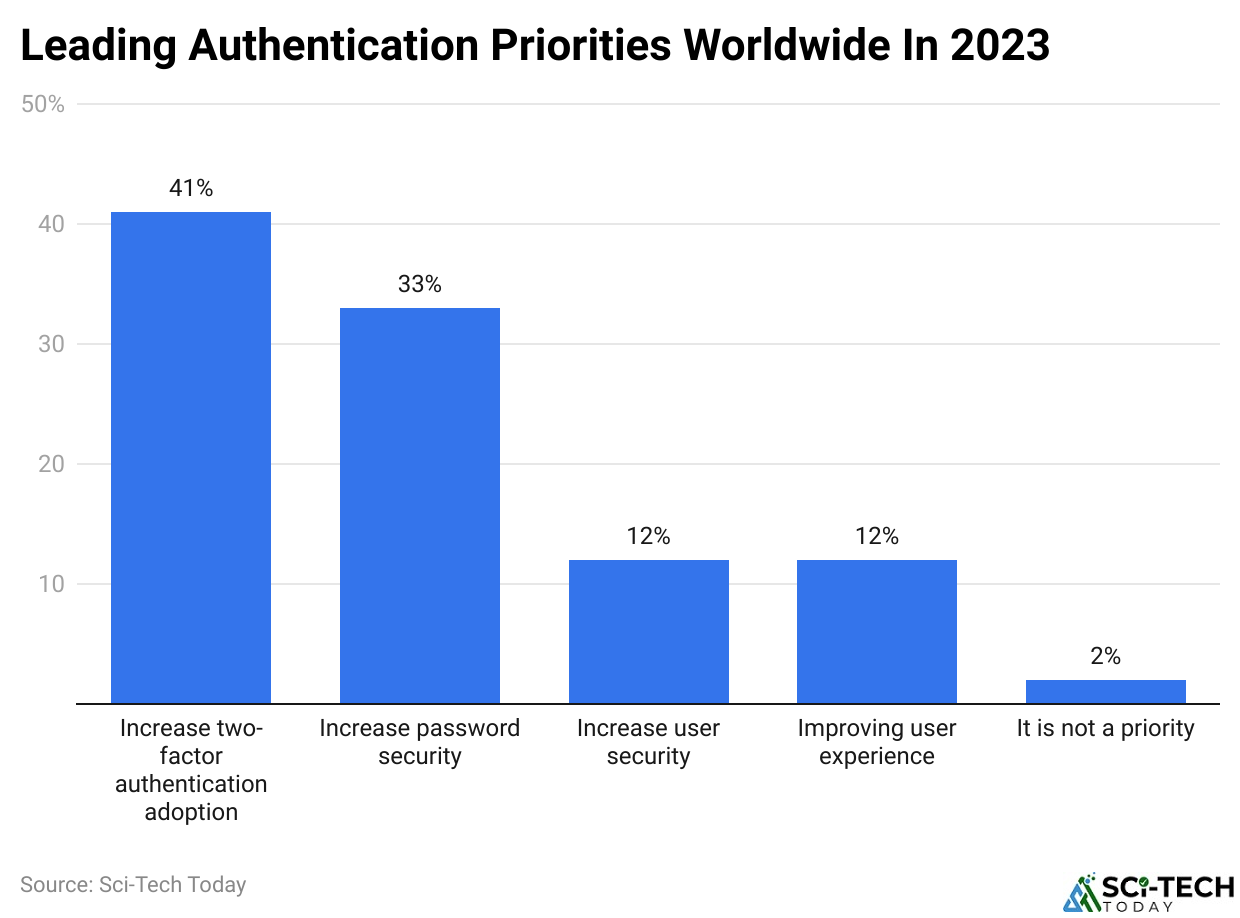
- In addition to this, a third were concerned about the improvement of password security, while 2% did not make authentication one of their priorities.
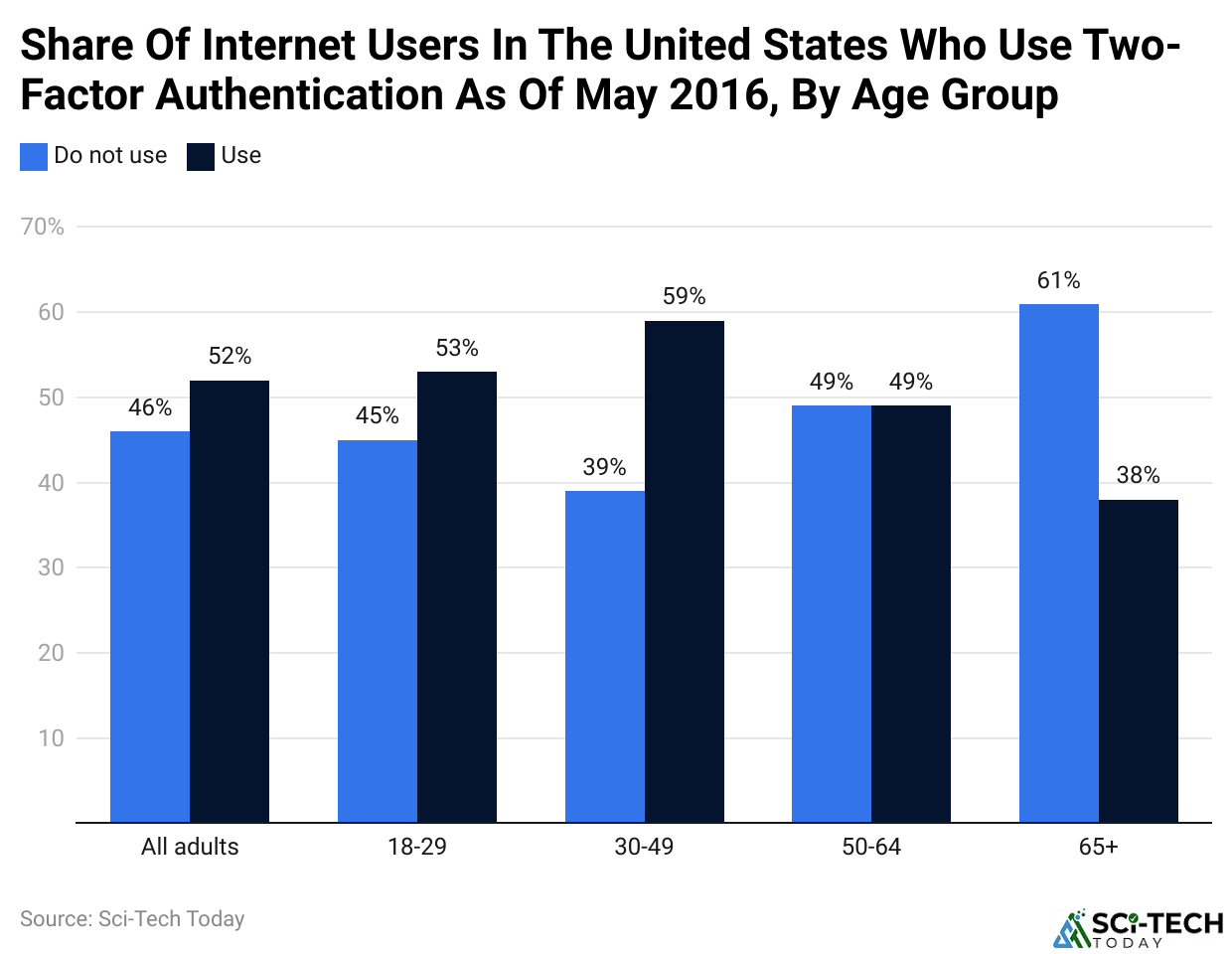
- In May 2016, 52% of Internet users in the United States claimed to use 2FA to secure online accounts. By 2025, workforce MFA adoption in organizations reached about 70% of users, though consumer adoption still lagged this enterprise rate.
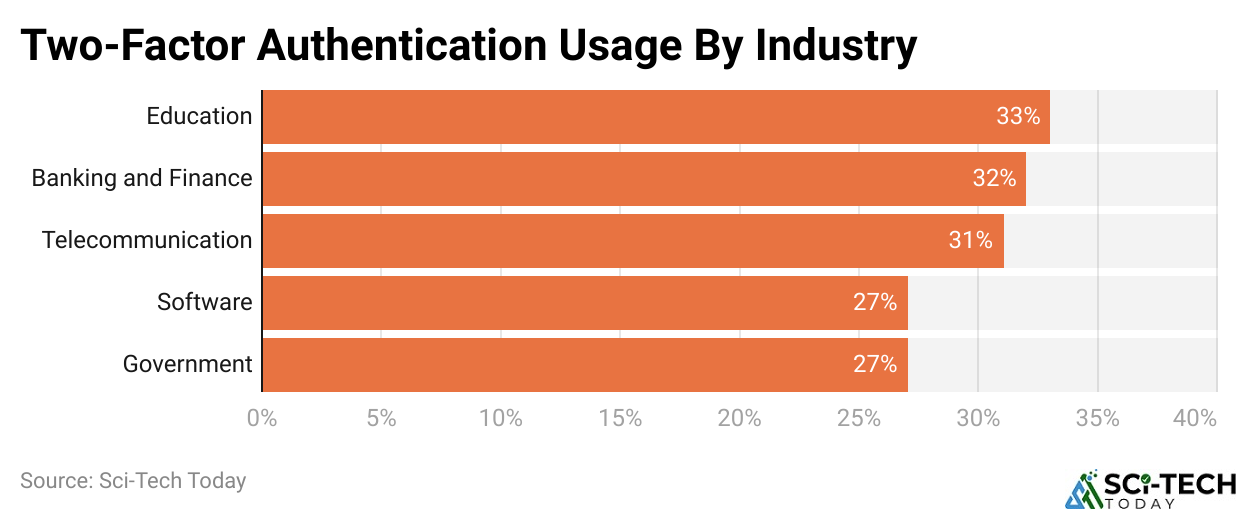
- Educational institutions top the list of 2FA users at 33%, followed by banking and finance (32%), telecom (31%), software (27%), and government (27%).
- RSA SecurID stands first in the 2FA/MFA software market, with a share of roughly 21% of the enterprise authentication segment in 2025, as part of the broader top‑3 pack (Microsoft, Okta, RSA) that collectively holds about 42% of the identity and access management market.
- Two-factor authentication statistics state that the US leads the 2FA adoption with 47.13%, followed by the UK (13.54%) and the Netherlands (11.20%).
- Small enterprises tend to use 2FA for about 885 companies, ranging from 0-8 employees.
- The 2FA market was valued at USD 25 billion in 2024 and will rise to USD 33 billion by 2030, registering a CAGR of 15%.
- 2FA has a 32% reduction in phishing attacks and can give an ROI of 300% by preventing cybersecurity breaches and fraud.
- Biometric authentication is expected to represent about 32% of the two-factor authentication market by 2026.
- Two-factor authentication statistics reveal that the 2FA market is highly consolidated with the following giants: RSA SecurID at 33.82%, Yubico at 22.20%, Microsoft Azure MFA at 13.62%, Clef at 11.69% while Google Continue holds 5.60%.
- 2FA has 1,420 customers in the US, followed by the UK (266), Germany (124), Canada (118), India (101), Australia (97), and the Netherlands (89).
General Facts of 2FA
- By 2025, about 70% of companies across the globe have implemented 2FA/MFA for their systems, up from 67% in 2024 and 56% in 2022.
- Among individuals and netizens, usage continues to rise: around 55% of internet users have 2FA enabled on at least one account by 2025, up from 52% in 2024.
- Two-factor authentication statistics show that among users, 41% prefer their 2FA to be in SMS, while 28% use authentication apps like Google Authenticator or Authy.
- Biometric 2FA, fingerprint, and facial recognition methods are on the increase. By 2025, roughly 42% of MFA implementations include a biometric factor, up from about 21% of users considering it in 2024 and 12% in 2022.
- Accounts that are protected by 2FA are 99.9 times less prone to compromise than those that are only guarded by a password.
- As of 2025, around 45% of attempted cyberattacks on protected accounts are blocked thanks to 2FA/MFA, preventing an estimated USD 18 billion in potential losses for companies as attack volumes and average breach costs continue to rise.
- The average annual cost levied upon organizations to implement 2FA is USD 15 per user, compared to the average USD 3.86 million losses incurred from a data breach.
- More small businesses are likely to adopt cheaper 2FA solutions, with 58% already reporting lower premiums for cybersecurity insurance directly linked to their use.
- Two-factor authentication statistics reveal that although useful, 33% of users cite inconvenience as their reason for not enabling 2FA.
- Among businesses, 19% face difficulty due to the cost of implementation, while 22% report employee resistance to the use of the 2FA system, citing perceived complexity as a barrier to use.
- North America leads in 2FA adoption, with 74% of all companies using it, followed by Europe at 68%.
- In its 62% national uptake, the Asia-Pacific region has become popular in adopting 2FA due to awareness building for cybersecurity and governmental regulation.
- Africa and South America follow in lack of resources and infrastructure, getting adoption rates of 48% and 50%, respectively.
Top Authentication Priorities Worldwide
(Reference: statista.com)
- According to two-factor authentication statistics conducted in the year 2025, about 55% of developers worldwide considered boosting two-factor authentication adoption as their top priority for authentication.
- Along with this, around 35% of the respondents considered improving password security as their main focus.
- Compared to the others, only about 1% of the participants said that authentication was not a priority for them.
Two-Factor Authentication By Age Group
(Reference: statista.com)
- A study conducted in 2025 found that in the United States, about 60% of netizens surveyed reported using two-factor authentication (2FA) to secure at least one of their online accounts.
- Thus, approximately over half of the population surveyed embraced the security measure during that period.
- The data regarding two-factor authentication statistics also indicates the rapid growth of awareness and usage of authentication as a means of preventing personal and confidential information from compromising or being compromised or exposed online.
- In protecting identity over alternative verification methods, two-factor authentication also received a great deal of attention as a grounded solution against unauthorized entry and cyber threats.
Use Two-Factor Authentication by Industry
(Reference: enterpriseappstoday.com)
- Protection of sensitive information and digital assets is the most difficult hurdle to cross in today’s globally connected environment.
- Two-factor authentication (2FA) has emerged as a very effective way to strengthen online security. 2FA eliminates the risk of unauthorized access to a greater extent by incorporating it into the password.
- Different people use 2FA depending on the field and the extent to which the users in that field require better security.
- Two-factor authentication statistics state that in the educational sector, 33% of employees use 2FA, making it the sector with the leading rates of adoption.
- Next in line is banking and finance, with 32%, a clear reflection of this whole industry’s compelling need for the best protection of highly sensitive financial data and unauthorized access to the information. The telecom sector comes close behind with an adoption rate of 31%.
- This is exemplified by its concern with the protection of customer data and communication networks.
- The software and government sectors are also at a 27% adoption rate. That reflects the growing demand for secure development environments and user accounts for the software industry, while the government emphasizes the protection of classified information and secure access to its systems.
- As of 2025, RSA SecurID holds an estimated 16% share of the enterprise 2FA/MFA market, and is part of the top‑3 authentication vendors (Microsoft, Okta, RSA Security) that together account for about 42% of the global authentication solutions market.
- In terms of adoption, the United States tops the list, using 47.13% of businesses implementing two-factor authentication software.
- The UK and the Netherlands rank second and third, respectively, with adoption rates of 13.54% and 11.20%.
- Globally, 885 companies with fewer than nine employees are using 2FA, compared to companies with 20-49 employees, which number just 511.
- According to two-factor authentication statistics by Cyber Security Breaches Study, only one in three organizations has mandated two-factor authentication.
- Two-factor authentication is very beneficial for retail, as it will verify people coming into networks over remote desktops or mobile devices accessing them.
Two-Factor Authentication by Technology
(Source: 6sense.com)
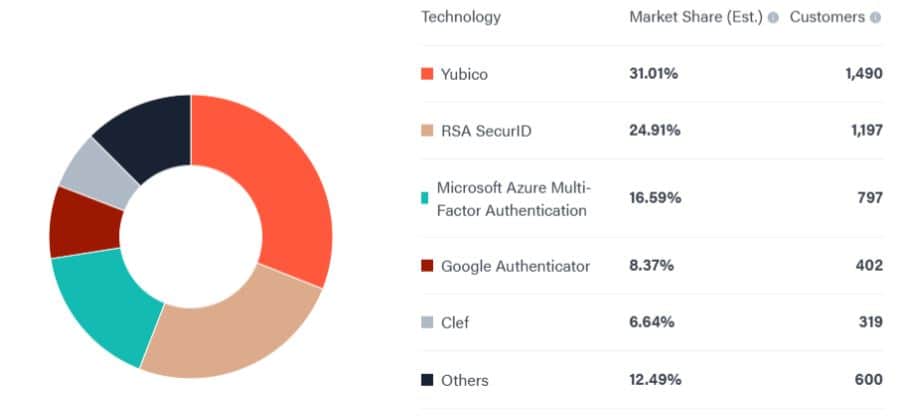
- In 2026, future technologies on Two-Factor Authentication (2FA) will bring various innovations that cater to the different levels of security needs.
- Yubico leads the authentication technology market with an estimated 31.01% market share, serving 1,490 customers, making it the dominant player in the security authentication space.
- RSA SecurID holds the second-largest market share at 24.91%, with 1,197 customers, reflecting its long-standing reputation as a trusted enterprise security solution.
- Microsoft Azure Multi-Factor Authentication captures 16.59% of the market, serving 797 customers, showcasing the growing adoption of cloud-integrated security solutions among businesses.
- Google Authenticator accounts for 8.37% market share with 402 customers, highlighting its popularity as a free and widely accessible two-factor authentication tool.
- Clef holds a smaller but notable market share of 6.64%, serving 319 customers, indicating its niche presence within the authentication technology landscape.
- The “Others” category represents 12.49% of the market with 600 customers, showing that a significant portion of the market is distributed among smaller or emerging authentication providers.
- It highlights the face of competition that 2FA solutions entail, with many features focusing on the growing demand for secure authentication.
Two-factor Authentication Customers by Employee Size
- Large enterprises with 10,000+ employees make up the largest segment, occupying the biggest share of the distribution, highlighting strong adoption among major global corporations.
- Small businesses with 0–9 employees form the second-largest group, indicating significant interest and usage among micro-businesses and startups.
- Mid-to-large companies with 1,000–4,999 employees represent a substantial portion, reflecting solid engagement from established mid-sized organizations.
- Companies with 100–249 employees account for a moderate share, showing consistent adoption among growing small-to-medium enterprises.
- Businesses with 20–49 employees make up the smallest segment, suggesting relatively lower representation from very small companies within this specific range.
Two-factor Authentication Customers By Geography
(Reference: 6sense.com)
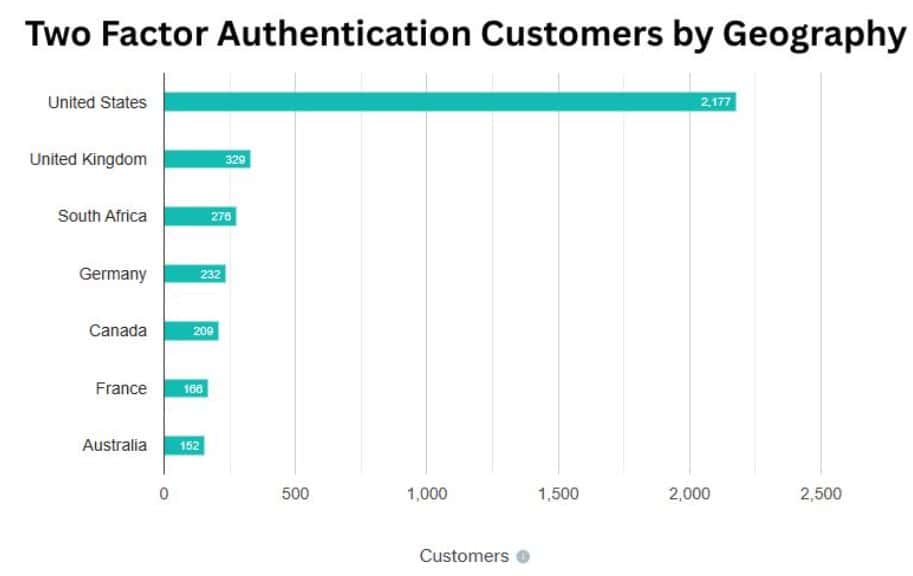
- Two-factor authentication statistics show that the use of two-factor authentication is pretty much varies across countries. For instance, the United States overwhelmingly leads in Two Factor Authentication adoption with 2,177 customers, far surpassing all other countries and highlighting its dominant position in the global cybersecurity market.
- The United Kingdom ranks second with 329 customers, reflecting steady adoption of 2FA solutions among businesses and individuals prioritizing enhanced security measures.
- South Africa follows closely with 278 customers, indicating growing awareness and implementation of two-factor authentication across the region’s digital security landscape.
- Germany holds the fourth position with 232 customers, showcasing the country’s strong emphasis on data protection and cybersecurity compliance.
- Canada accounts for 209 customers, reflecting consistent adoption of authentication technologies within North America outside the U.S.
- France recorded 166 customers, demonstrating moderate but steady interest in two-factor authentication solutions across the country.
- Australia rounds out the list with 152 customers, representing the smallest customer base among the top seven countries analyzed.
- These figures indicate the widespread acceptance of 2FA as a critical security measure all over the globe.
Multi-factor Authentication (MFA) Statistics
- In fact, the adoption of Multi-Factor Authentication (MFA) can eliminate 80% to 90% of cyber-attacks, as cited by the United States national security cyber chief.
- In a survey done by Google in 2017, more than 250,000 login credentials are stolen from the web every week by hackers.
- Over 55% of companies adopt MFA to ensure security.
- According to Microsoft, it is possible to avoid 99.9% of identity and data theft using MFA.
- As reported by the Cyber Signals Report, 22% of identities of Azure Active Directory uses strong authentication in the form of MFA.
- Through the adoption of MFA, the organization will save costs related to security and privacy by 50%.
The Financial Impact of Two-Factor Authentication
- The organization, which is then implementing two-factor authentication, can also provide much-needed financial assistance, as it not only provides security for organizations against cyber threats but also fits into a much larger general picture:
- Save businesses with 2FA from 32% of phishing attacks associated with incidents.
- Two-factor authentication statistics reveal that the global market for 2FA solutions is expected to reach about USD 29 billion by the end of 2025, up from USD 25 billion in 2024.
- The use of two-factor authentication saved a company 300% ROI on saving costs due to cybersecurity breach incidents and fraud, in addition to instilling greater trust in customers.
Future Trends in Two-Factor Authentication
- AI-based systems stretch out the convenience and adaptation of such systems to learn the behavior of individual users for security through adaptive authentication.
- As users desire seamlessness and security, by 2026, a study projected that 32% of the market would prefer some form of biometric authentication.
- Governments of the world are passing bills that will put that policy into mandatory dimensions in critical sectors, with 15 countries implementing one law in 2024.
Summary
Two-factor authentication is necessary in the battle against cybercrime. More and more people and organizations are taking it up and starting to use it for the protection of data and for the cost savings that are realized. It has proven again and again to be effective in preventing breaches; people learning of the benefits it will gain have put it on their agendas.
Even so, the adoption will increase further as technology continues to advance and awareness is raised. According to two-factor authentication statistics, all numbers will clearly show that it is indeed a sound investment in 2FA, both financially and security-wise.
FAQ
Two-factor authentication (2FA) is a security process that requires two different ways to prove your identity before you can log into an account.
Two-factor authentication (2FA) works by requiring two different types of proof to verify your identity.
OTP (One-Time Password) and 2FA (Two-Factor Authentication) are different security concepts. OTP is a temporary code used to verify identity, 2FA is a security method requiring two separate proof types, and an OTP is often used as one of those pieces.


