









Overview
Employee Recognition Statistics: Employee recognition is more than just rewarding good work; it is about making employees feel valued and appreciated. When people receive recognition for their efforts, they feel motivated, confident, and connected to their organization. A simple thank-you, public praise, or a meaningful reward can improve morale, increase productivity, and encourage employees to perform at their best. It also helps build a positive workplace where people enjoy their work and remain loyal to their employer.
This article explains the importance of employee recognition, its benefits, popular recognition programs, emerging trends, and practical ways organizations can create a culture of appreciation.
Key Highlights
- Only 17% of employees receive weekly recognition, yet those who do are 2.6x more likely to perform at their best.
- Employees who receive meaningful weekly recognition are 9x more likely to feel a strong sense of belonging and 17x more likely to see a long-term future with their employer.
- Organizations with formal recognition programs report 31% lower voluntary employee turnover than those without.
- Employees who do not feel appreciated are 2x more likely to leave their job within a year, while effective recognition programs can reduce turnover by 25% or more.
- Around 91% of organizations have rewards programs, and 94% have recognition programs, but only 31% rate them as highly effective.
- Workplaces with consistent recognition report about 14% higher employee engagement, productivity, and customer service performance.
- Employees who expect recognition are 2.7x more likely to be highly engaged, while regular recognition makes employees 23.3% more motivated at work.
- Formal recognition programs increase employee performance by 25%, improve job satisfaction by 63%, and reduce absenteeism by 31%.
- 94% of Gen Z employees want frequent recognition, compared with 68% of Baby Boomers.
- Replacing an employee costs organizations 50%- 200% of the employee’s annual salary, with skilled roles exceeding USD 150,000 per departure.
What is Employee Recognition?
A successful business is well acknowledged, and the more gratitude an organization has, the better it performs. Relevant recognition from colleagues and managers, along with connecting with people to share the reason through a compatible stream of acknowledgment and gratitude. Employee recognition, also called Social Recognition, is a way of publicly greeting your people for who they are and what they do.
Along with the workers’ appreciation, employees recognize each other, and therefore, the office is more human and inclusive. Employee recognition is among the essential factors in making workers feel valued, improving office morale, employee retention, and productivity.
Why Does Workers’ Recognition Matter?
- Improving worker motivation – By customizing worker recognition, organizations ensure that workers feel motivated. Just 20% of workers state that their manager has asked them how they would like to be recognized. This shows that there is huge room for opportunities and growth in that area.
- Building employer branding – By adopting a culture of worker recognition, an organization builds a brand, and the word-of-mouth publicity speaks for itself. The high-quality workers in the organization show this, which increases the company’s potential for success.
- Strengthening the organization’s values – Practices like “equal recognition” strengthen the organization’s values. All workers, regardless of their gender, background, race, or various other characteristics, can receive equal recognition for the quality of their work.
- Establishing a culture of recognition – Recognition should be part of the organization’s everyday life, not only a quarterly activity. Money-related incentives and formal programs make it easy to fortify this rule of gratitude.
- Encouraging work relations and teamwork – The workers’ appreciation promotes good work relations and teamwork, and decreases burnout. It fosters a collective sense of collaboration and purpose.
- Increasing the workers’ engagement – Workers are prone to being engaged in their jobs if they are acknowledged for their work.
- Increasing worker retention – If the workers witness that the amount of acknowledgment they get is equal to their work, they experience involvement and tend to stay in their positions for a longer time.
Top 10 Employee Recognition Methods That Improve Engagement, 2026
- Recognition analytics: Employees who feel appreciated are 17x more likely to see a long-term future with their company.
- Weekly manager recognition: Only 17% of employees receive it, yet those who do are 2.6x more likely to perform at their best, according to Achievers.
- Personalized recognition: Tailored appreciation feels more meaningful, and 28% of employees value recognition from managers the most.
- Public recognition: Praising employees during meetings highlights achievements and motivates teams.
- Peer recognition: Employees recognized by coworkers are 33% more likely to feel a sense of belonging.
- Digital recognition: Using Slack, Teams, or email makes appreciation quick and consistent.
- Values-based awards: Linking recognition to company values strengthens workplace culture.
- Tangible rewards: Gifts, experiences, bonuses in USD, or extra leave increase motivation.
- Career recognition: Promotions or added responsibilities show trust and encourage growth.
- Wellbeing recognition: Wellness support and flexible time off improve employee satisfaction.
General Employee Recognition Statistics
- Nearly 82% of workers report that being recognized for their hard work and involvement makes them happier in their jobs.
- 60% of organizations that execute peer-to-peer acknowledgment report an increase in worker engagement.
- The workers’ productivity grows by 25% to 35% when they witness that their work is acknowledged.
- Almost 91% of human resource employees believe that rewards and recognition make them more likely to stay.
- Roughly 65% of the workers have not received any form of recognition for their hard work in the past years.
- The Professionals who do not feel acknowledged are two times more likely to say they will quit in the next year.
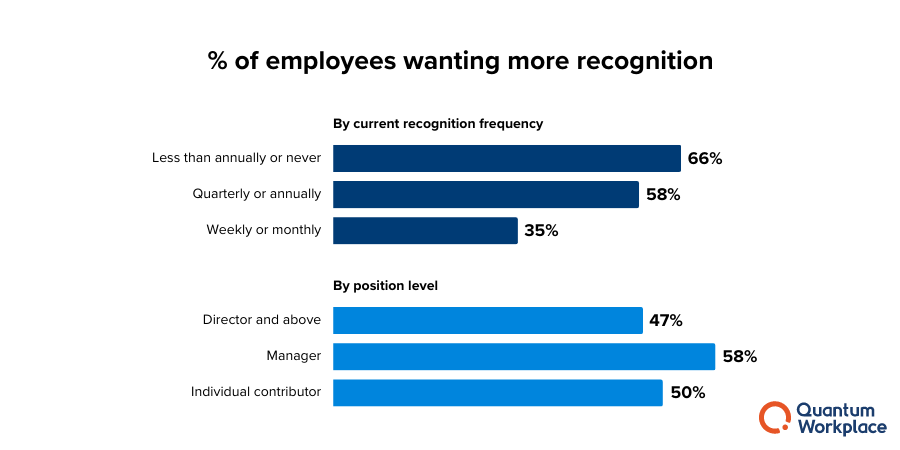
(Source: quantumworkplace.com)
- Around 66% of employees who receive recognition less than once a year or never want more appreciation.
- Among those recognized quarterly or annually, 58% still want more, while 35% of employees recognized weekly or monthly also seek additional recognition.
- By job level, 58% of managers, 50% of individual contributors, and 47% of directors or senior leaders want more recognition.
- About 83% of professionals say recognition for their contributions is more meaningful than rewards or gifts.
Business Impact of Employee Recognition
- According to nectarhr.com, around 72% of organizations believe recognition programs improve employee engagement.
- Recognition increases employees’ sense of purpose by 40% and reduces workplace frustration by 23%.
- About 58% of employees believe peer recognition improves performance, while 69% say they work harder when appreciated.
- Highly engaged companies report nearly 21% higher profits, and 41% of organizations using peer recognition achieve better customer satisfaction.
- Formal recognition programs improve employee performance by 25%, increase job satisfaction by 63%, reduce absenteeism by 31%, strengthen manager trust for 50% of employees, and lower voluntary turnover by 31%.
Key Insights on Employee Recognition and Rewards (R&R) Programs, 2026
- A report published by Worktango stated that 91% of organizations have rewards programs, and 94% have recognition programs, but only 31% rate them as highly effective.
- Around 38% cite weak leadership support as a key challenge.
- 61% use a mix of formal and informal recognition, yet only 41% focus on results-based nominations.
- Employers value recognition for making employees feel appreciated (65%) and improving morale (49%), but often overlook its role in performance and career growth.
- Only 43% regularly review program effectiveness, while 33% strongly consider employee feedback.
- 46% plan to improve recognition programs, and about 50% expect to use technology for better analytics.
- High-performing programs are 13x more likely to recognize employees daily and 7x more likely to allow self-nominations.
Positive Effects of Employee Recognition and Satisfaction Statistics
- Getting recognition leads to growth in workers’ happiness, which results in a 13% boost in productivity compared to unsatisfied workers.
- Acknowledging workers plays an essential role in the success of any prosperous organization. It serves as a genuine expression of gratitude to your colleagues for their dedication and hard work.
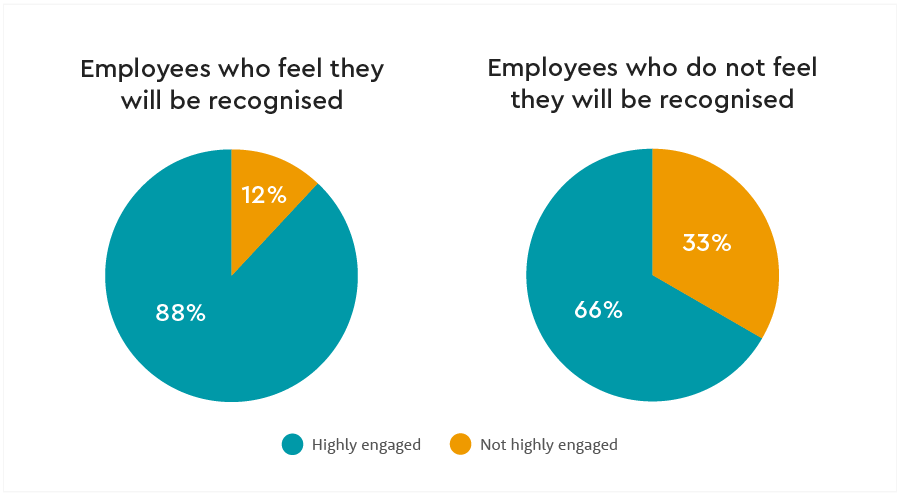
- Almost 40% of employees think that demanding workers will acknowledge their hard work, and as such, workers are 2.7 times more likely to be highly engaged at the office.
- Worker recognition is one of the potent methods of promoting employee retention and motivation in the office.
- Around 42% of the employees believe they got the right amount of acknowledgment, whereas 3% think they received too much.
- Nearly 24% of workers would feel more valued if the organization organized events like the Christmas party.
- Almost 20% of employees get recognition each quarter, 11% get recognition every week, and almost 2% receive it every day.
- Around 40% of the people in the US state that increased acknowledgment will encourage them to increase their performance.
- Roughly 78% of almost 33,000 employees think that how an organization treats its workers indicates its reliability.
- Normally, 44% of the employees have changed jobs because of the lack of recognition and consultation.
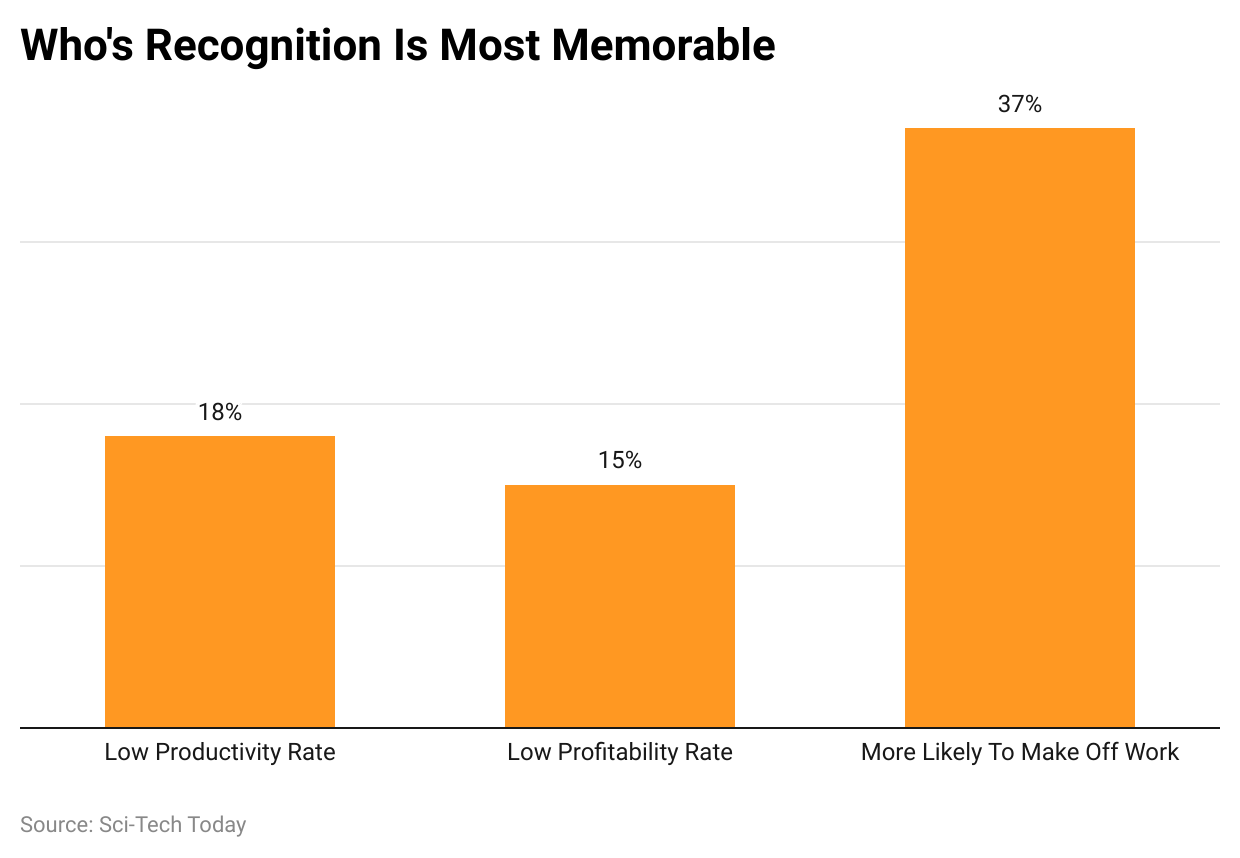
(Reference: flair.hr)
- In the above chart, we can see that recognition is the most memorable. Almost 18% have a low productivity rate, 15% have a low productivity rate, and 37% are more likely to take time off work.
- Employees working from home are around 16% less prone to feel involved in goal setting by their administration than those working in the office.
- Workers acknowledged that they are 63% more likely to remain in their present position for the next 3 to 6 months.
- The workers state that almost 65% vigorously agree that nonmonetary gifts like trips and goods have a longer-term effect than monetary income.
- Recognizing employees in the workplace goes beyond making them feel good—it’s crucial for business success.
- Higher employee satisfaction is closely linked to increased revenue, productivity, and accuracy in tasks.
- Employees crave acknowledgment from their leaders, and companies benefit significantly from meeting this need through improved job quality and reduced absenteeism.
- Neglecting employee recognition can lead to higher turnover rates. Interestingly, even a simple acknowledgment from the CEO can have a lasting positive impact.
- Cultivating a culture of appreciation not only enhances employee engagement but also significantly boosts a company’s income and performance.
- These insights underscore the strong connection between employee recognition and positive business outcomes.
- Nearly 91% of Human Resources employees think that praising and rewarding workers increases the probability of retaining them.
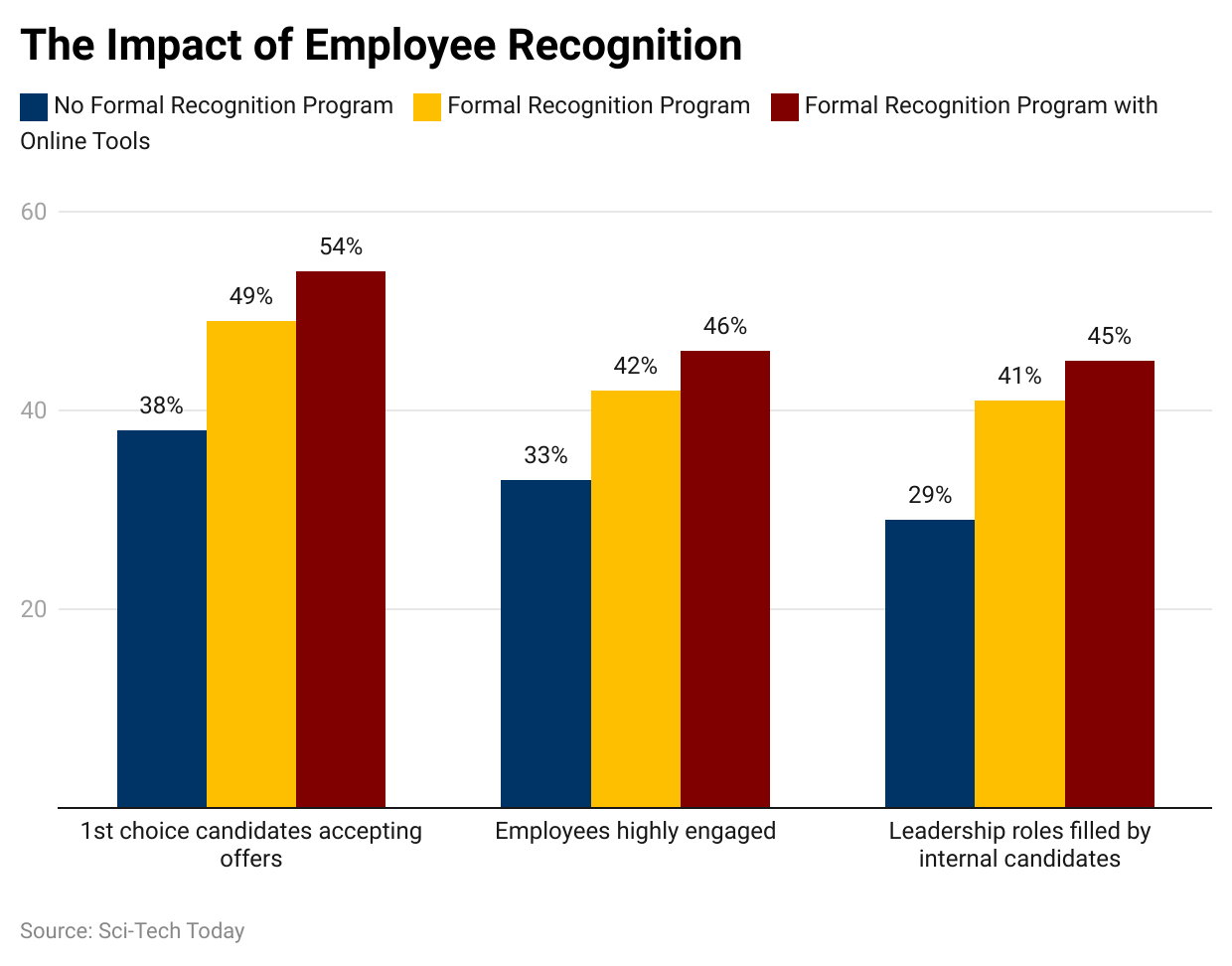
(Reference: ovationincentives.com)
- Roughly 24% of employees have mentioned that the most recognition they get comes from the CEO.
- A company survey states that 90% of employees think that their work strategies chiefly affect the company’s business performance.
- Doubling the frequency of employee recognition each week can lead to a 24% improvement in job quality and a 27% decrease in company absenteeism.
- Organizations with continuous recognition programs experience 28.6% lower irritation levels compared to those without such programs
- According to the extensive 11-year-long survey, organizations with strong corporate cultures have experienced almost 682% growth in their income.
- Workers’ recognition directly affects productivity, as 77% of employees are ready to work more if they get better acknowledgment, whereas 39% of employees feel that they are not valued at their offices.
- A profuse 79% of the workers believe that getting more gifts and rewards will grow their loyalty towards their job.
- Lack of acknowledgment plays a notable role in employee turnover, with almost 44% of employees changing jobs because they need to be credited for their hard work.
- A significant majority, 85% of employees, feel that managers and leaders should promptly recognize exceptional performance and provide consistent praise throughout the year, a sentiment shared by 81% of workers.
- HR experts suggest that managers should frequently recognize and appreciate their staff, with 58% believing this approach can boost engagement.
- Enhancing employee satisfaction significantly impacts various aspects of business and education. It leads to a 37% increase in revenue, a 31% rise in productivity, and a 19% improvement in task accuracy, along with various health and quality of life benefits.
Importance of Employee Recognition in the Workplace
- Employee recognition is a key driver of engagement, retention, wellbeing, and workplace culture in 2026, especially in hybrid and remote work environments.
- Employees who receive meaningful weekly recognition are 9x more likely to feel a strong sense of belonging and 2.6x more likely to perform at their best.
- Around 32% of employees say recognition improves productivity, while 29% say it reduces their intention to look for another job.
- Organizations with strong recognition programs report about a 14% increase in engagement, productivity, and overall performance.
- Employees who feel appreciated are 17x more likely to see a long-term future with their employer, while those who feel ignored are 2x more likely to leave.
How Employee Recognition Reduces Turnover, 2026
- The Stribe report also mentioned that organizations with formal recognition programs report 31% lower voluntary employee turnover than those without.
- Employees who do not feel appreciated are 2x more likely to leave their job within a year.
- According to Awardco, effective recognition programs can reduce employee turnover by 25% or more.
- Companies with strong recognition cultures also achieve 23%+ lower turnover by making appreciation part of everyday work.
- Around 60% of employees say regular recognition reduces their desire to search for a new job or respond to recruiters.
- Replacing an employee costs employers 50%- 200% of the employee’s annual salary, while skilled roles can exceed USD 150,000 per departure.
- Replacement costs average 30%50% of salary for entry-level roles, 150% for mid-level managers, and 213% for C-suite executives.
Employee Retention and Peer-to-Peer Recognition-Related Statistics
- According to Achievers, almost 55% of employees plan to change their jobs, and a lack of acknowledgment was the first reason they made this decision.
- Gallup states that the basic reason for the majority of workers leaving their jobs is a lack of acknowledgment.
- According to SurveyMonkey and Bonusly, around 63% of workers who are recognized are prone to looking for a new job.
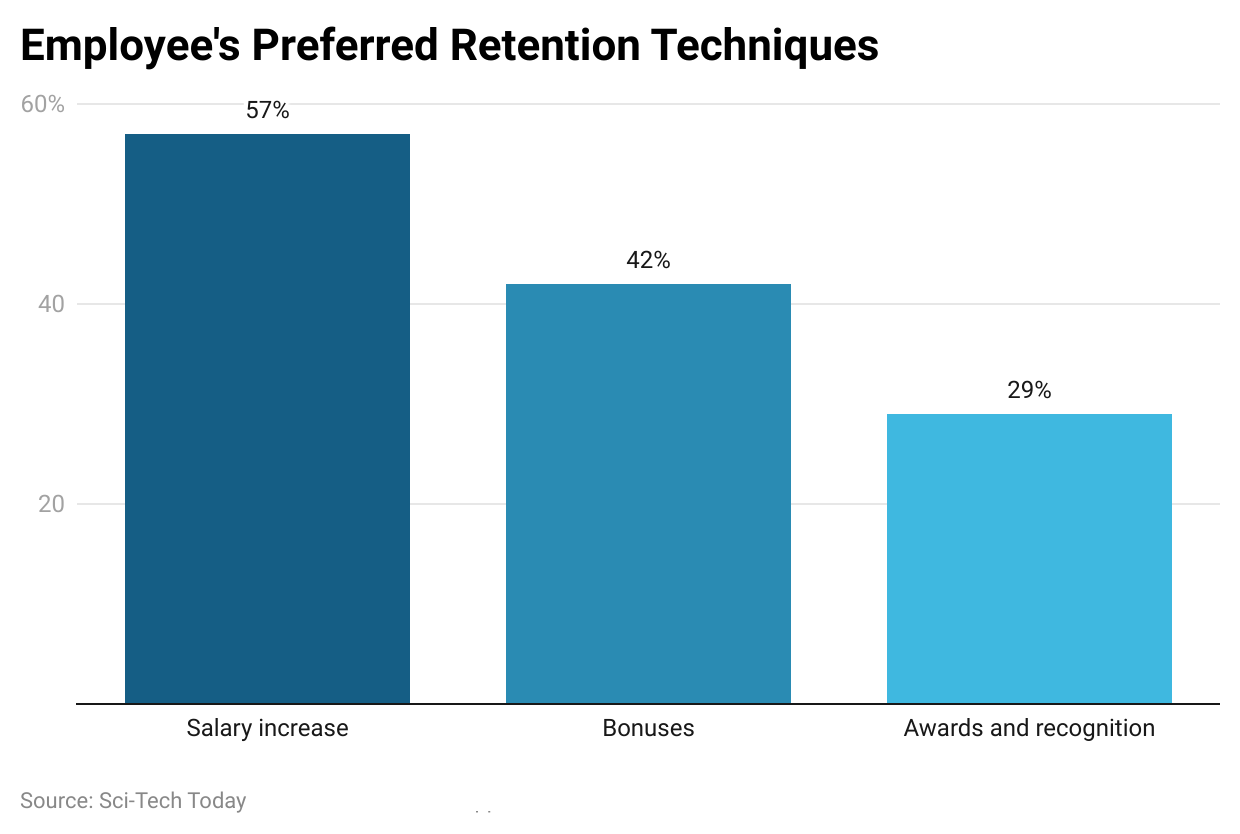
(Reference: fitsmallbusiness.com)
- The above chart shows that almost 57% of salary growth, 42% of bonuses, and 29% of recognition and awards are techniques for employee-preferred retention.
- According to Reward Gateway, almost 73% of employees who plan to resign from their current jobs state that they would stay if they were offered more recognition.
- Qualtrics states that workers who supervisors continuously recognize for their hard work are five times more likely to stay at the company.
- According to LinkedIn, almost 32% of workers left their jobs because they were not happy with the recognition of their hard work and efforts.
(Reference: fitsmallbusiness.com)
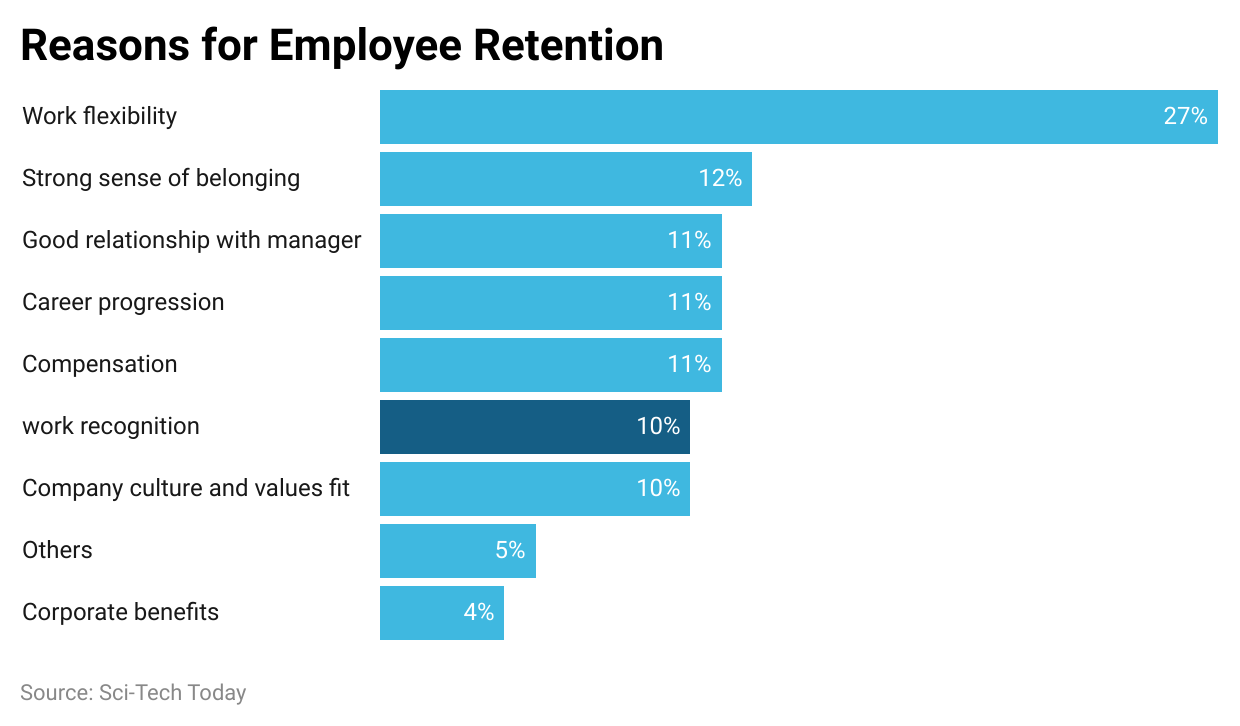
- In the above chart, we can see the reasons for the retention of employees.
- Almost 27% of the employees remain in the existing company due to work flexibility, 12% due to a strong sense of belonging, 11% due to a good relationship with the manager, 11% due to career progression, 11% of compensation, 10% by work recognition, 10% by company culture and value fit, 5% by others and 4% by corporate advantages.
- According to Glassdoor, around 62% of workers state that peer acknowledgment makes them feel more connected to their team.
(Reference: compensationcafe.com)
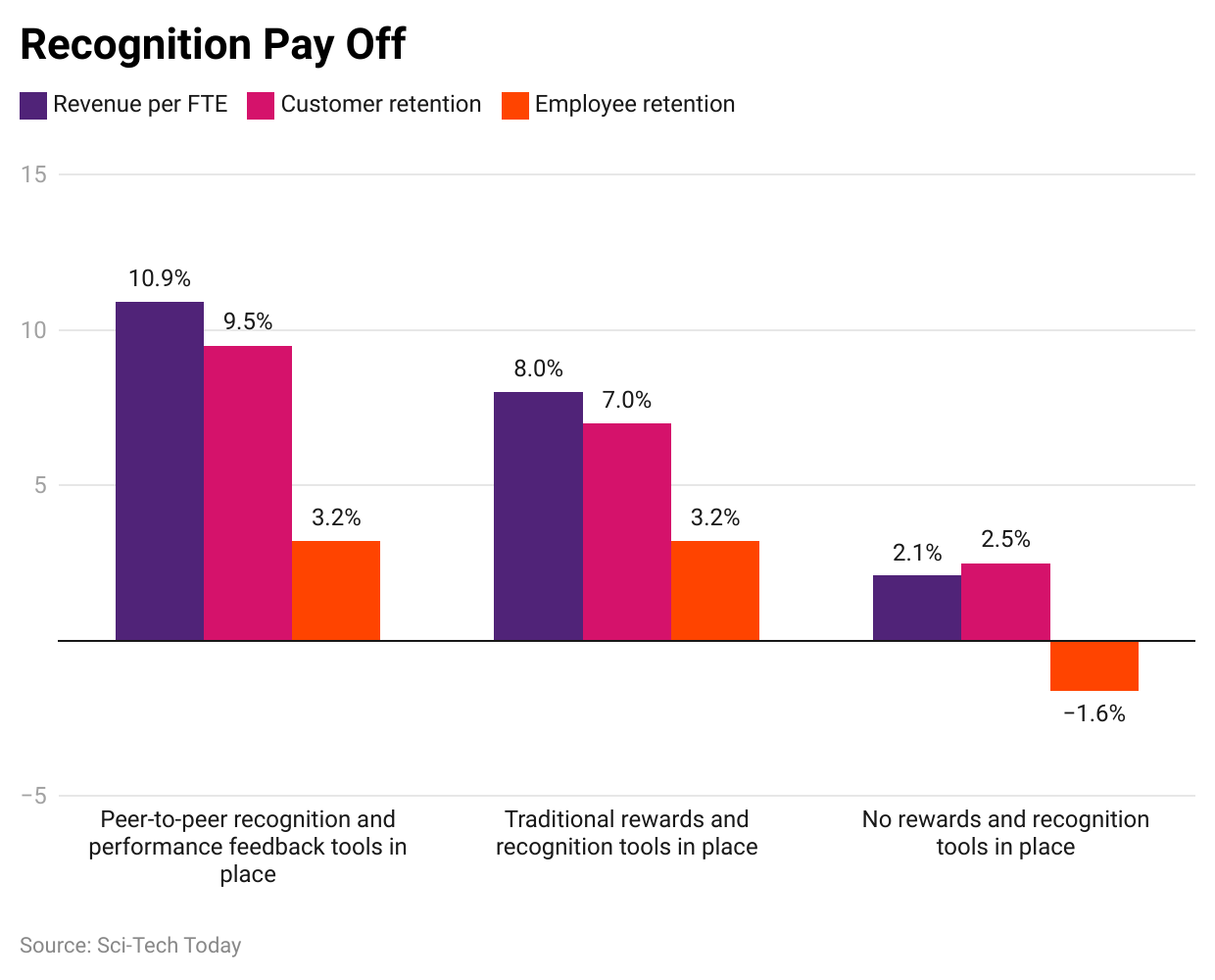
- In the above chart, we can see the peer-to-peer recognition payoffs and employee retention.
- Forbes states that almost 65% of workers state that peer acknowledgment makes them feel more encouraged to do their work to the best of their ability.
- Around 41% of the companies that use peer-to-peer acknowledgment have witnessed a positive growth in the satisfaction of the employees, as per Globoforce.
- The People Pulse states that companies using the strategy for peer acknowledgment programs are almost 48% more likely to report high staff engagement.
- Peer-to-peer acknowledgment is almost 35.7% more likely to have a positive effect on the financial results of states than just the superior acknowledgment.
Statistics About Productivity
- As per Gallup, the highly engaged business units get almost 20% growth in sales.
- According to Officevibe, around 69% of workers would work harder if they felt that their efforts were being acknowledged
(Source: efx.co.uk)
- Gallup states that organizations with an acknowledgment program are highly efficient at improving workers’ experience of engagement by almost 22%, which increases productivity.
- The workers who get regular acknowledgment are almost 23,3% likely to be motivated and concentrated at the workplace, which leads to growth in productivity.
- Gallup states that companies with acknowledgment programs are highly effective at growing workers’ engagement and experience 22% higher productivity.
- The workers who consistently get acknowledged are almost 23.3% likely to be engaged at work, which leads to growth in productivity.
- Oxford University’s Said Business School states that workers who are connected to their work are almost 13% more productive than those who are not.
- The workers who witness acknowledgment at the workplace are almost 2.5 times more likely to be happy with their workplace and peers, and 1.5 times more likely to feel encouraged to perform better.
Employee Recognition Demographic Statistics by Generation
- According to Yomly, 94% of Gen Z employees want frequent recognition, compared with 68% of Baby Boomers.
- Workers born after 1989 are 73% more likely to expect recognition several times a month.
- 78% of Millennials prefer experience-based rewards, while only 30% of Baby Boomers favor material gifts.
By Gender
- 53% of men receive weekly recognition from managers, compared with 41% of women.
- 37% of men receive daily peer recognition, compared with 26% of women.
- Around 36% of women prefer written appreciation, 54% prefer verbal recognition, and 47% value career-growth rewards.
By Work Arrangement
- 82% of remote employees feel under-recognized.
- Virtual recognition programs can increase engagement by 30%.
- Besides, 31% of remote or hybrid organizations have formal recognition programs.
- About 43% of remote mothers feel overlooked for promotions.
By Company Size and Region
- Only 52.6% of organizations have formal recognition programs.
- Where programs exist, 92% of employees feel valued, compared with 70% without them.
- Small businesses report 18% lower turnover and 20% higher engagement, while medium-sized firms improve retention by 25%, and large organizations reduce absenteeism by 28%.
- Recognition is meaningful for 60% of U.S. employees compared with a 52% global average.
- In Australia, 52% receive monthly recognition.
- Only 15% find it meaningful, while 60% believe it strengthens culture.
- In Singapore, 32% consider leaving because they feel unrecognized.
Cross-Demographic Insights
- Recognized employees are 7x more likely to be fully engaged.
- Around 91% say recognition motivates better performance.
- About 66% would leave if they felt unappreciated; 79% say recognition increases loyalty; 53% would stay longer with better appreciation; and unrecognized employees are 2x more likely to quit within a year.
Employee Engagement Trends
- According to Quantum Workplace, 81% of hybrid employees are highly engaged, compared with 78% of remote employees and 72% of in-office employees.
- Around 82% of employees say workplace recognition makes them happier.
- 72% of organizations believe employee recognition improves engagement.
- Workplaces with regular recognition achieve about 14% higher productivity, customer service, and employee engagement.
- Employees who expect recognition are 2.7x more likely to be highly engaged.
- In the U.S., 36% of employees are engaged, while 15% are actively disengaged.
- High employee engagement can increase customer ratings by nearly 10%.
- Employees who receive regular recognition are 23.3% more likely to feel motivated at work.
Workplace Experience and Retention
- A report published by WorkL for business shows only 22% of employees are highly engaged, while 46% fall into the “moderately engaged” group.
- 62% believe they are paid fairly, but only 49% of women share this view.
- Just 54% receive meaningful recognition, while 66% report a healthy work-life balance.
- About 63% feel safe sharing their opinions, 62% believe their company follows its values, and 66% are confident in its future.
- Strong workplace relationships are reported by 83% of employees, but only 45% rate internal communication highly.
- Around 57% enjoy their company culture, 74% are proud to work for their employer, 71% would recommend their workplace, and 71% say engagement influences long-term retention.
- 56% believe employee engagement is a company priority, while 43% say wellness initiatives improve engagement, and 46% credit coworkers as the biggest influence on engagement.
Summary
Employee acknowledgment is not only a feel-good factor but a necessity in today’s ever-changing corporate environment. In these employee recognition statistics, we have shed light and underscored the notable effect of workers’ acknowledgment on productivity, trust, retention, and engagement.
Whereas human resources workers are critical to understanding workers’ efforts, upper management must see this not as an expense but as a strategic investment that can yield a good return.
FAQ
Employee recognition includes formal, informal, peer-to-peer, manager-led, milestone, performance-based, social, and monetary recognition for employee achievements.
Employees should be recognized regularly, ideally every week or whenever they achieve something meaningful.
Yes, they can easily implement employee recognition programs using simple, affordable, and meaningful rewards.