








Introduction
AI in Healthcare Statistics: Artificial Intelligence (AI) in healthcare is growing rapidly, helping doctors and healthcare providers improve patient care. AI uses machines and algorithms to analyse data, such as medical records or images, to help diagnose diseases and suggest treatments faster and more accurately. AI technologies like machine learning, natural language processing, and robotic surgery are driving this growth.
AI helps in areas like medical imaging, drug discovery, and personalised treatment, making healthcare more efficient. This technology is transforming healthcare by reducing costs, speeding up diagnoses, and improving the accuracy of treatments, all while supporting healthcare professionals in delivering better care.
Editor’s Top Picks
- The global generative AI in healthcare market landed at $0.8 billion in 2022, and is expected to reach $17.2 billion by 2032, with around a 37% CAGR
- In 2025,North America share at 45% of the AI healthcare market, then Europe sits landed at 27% , and Asia-Pacific sits at 22%.
- For the U.S. specifically, the AI healthcare market is said to be $11.66 billion in 2025, and it could reach $236.56 billion by 2035, growing at a 35.12% CAGR.
- The global AI drug discovery segment is forcasted to jump from $1.9 billion in 2024 rose to $12.8 billion by 2032, with a 27.5% CAGR.
- 72% of physicians reported actively using at least one AI tool in 2026.
- 72% feel AI can improve clinical decision accuracy, 69% expect efficiency gains, and 61% anticipate better patient outcomes.
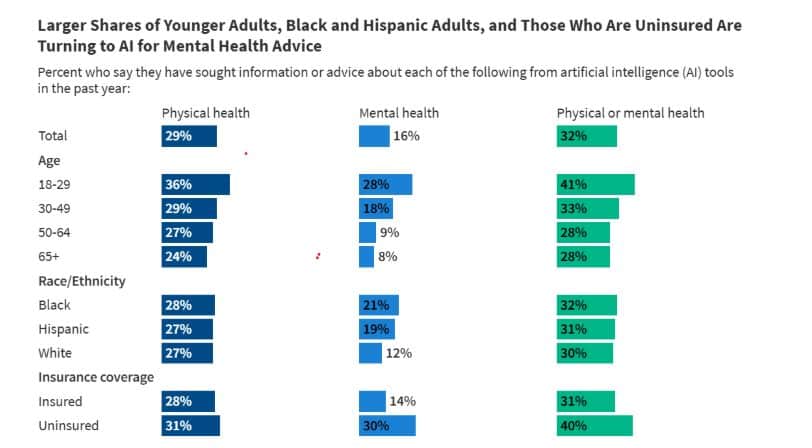
- According to Pew Research Center 29% of U.S. adults used AI for physical health information, and for mental advice they use 16%.
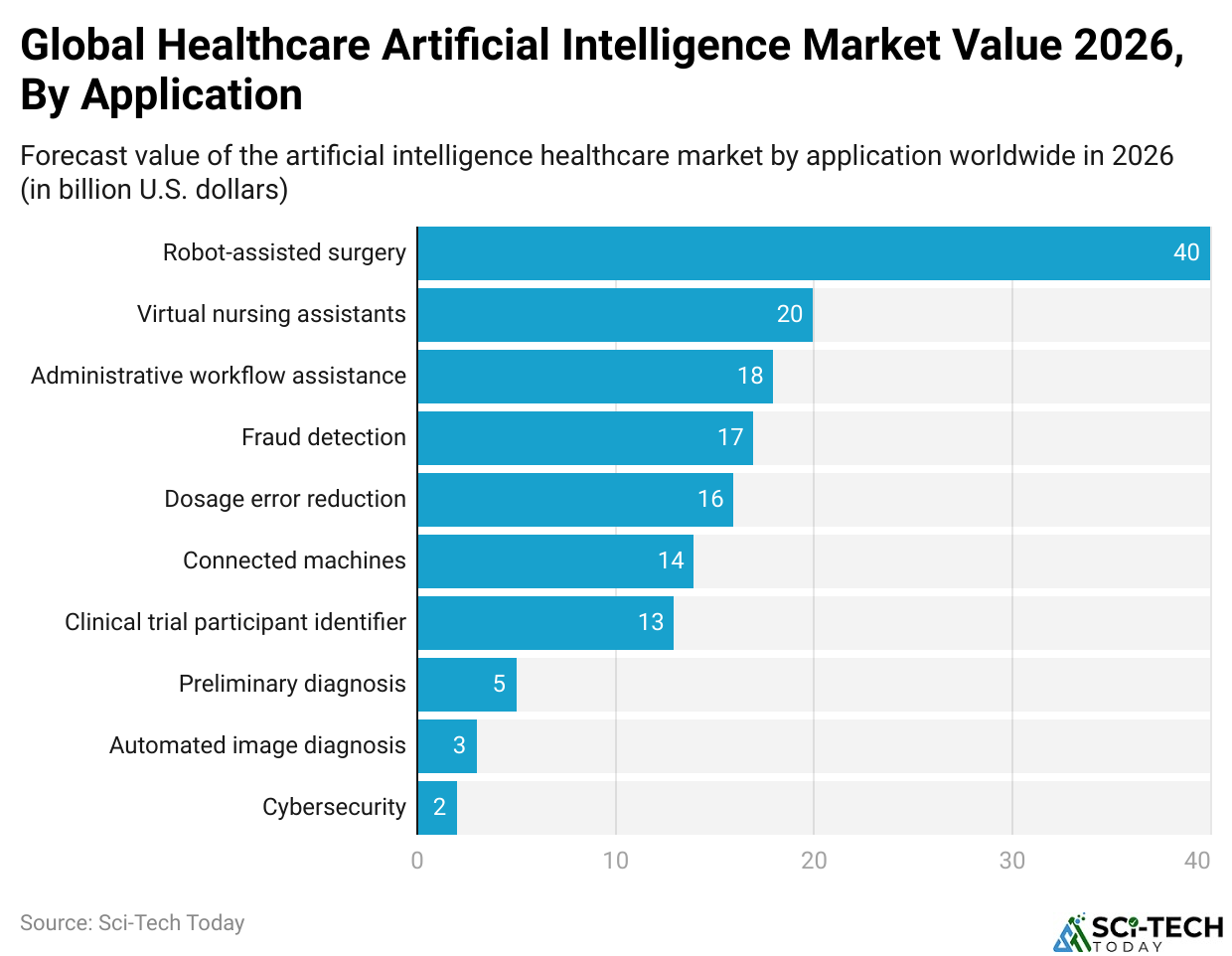
- AI-assisted robotic surgery is projected to hit $40 billion by 2026 on the market side, while virtual nursing assistants are expected around $20 billion.
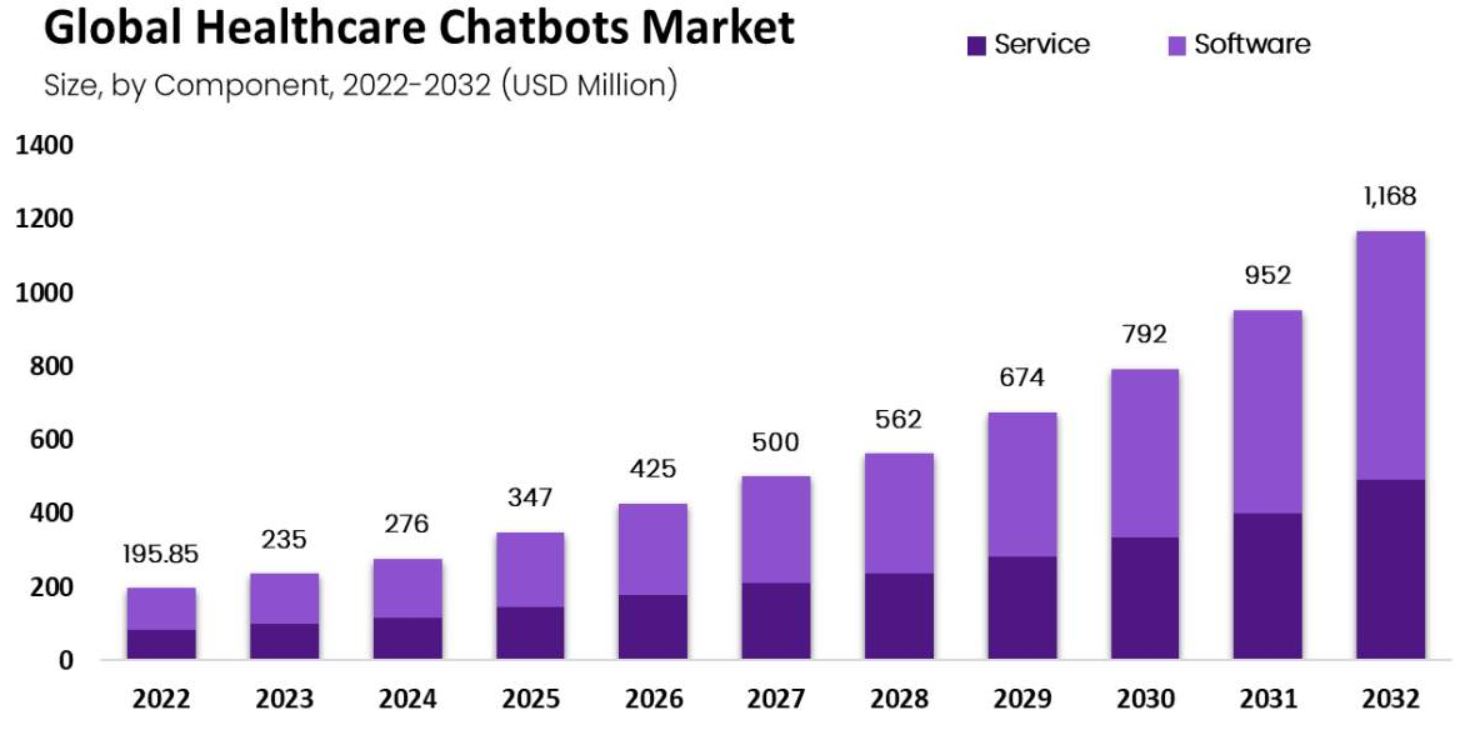
- The global market of healthcare chatbots expected to reach $1.17 billion by 2032, with a 20.1% CAGR rom 2023 to 2032.
AI In Healthcare Market Share Statistics
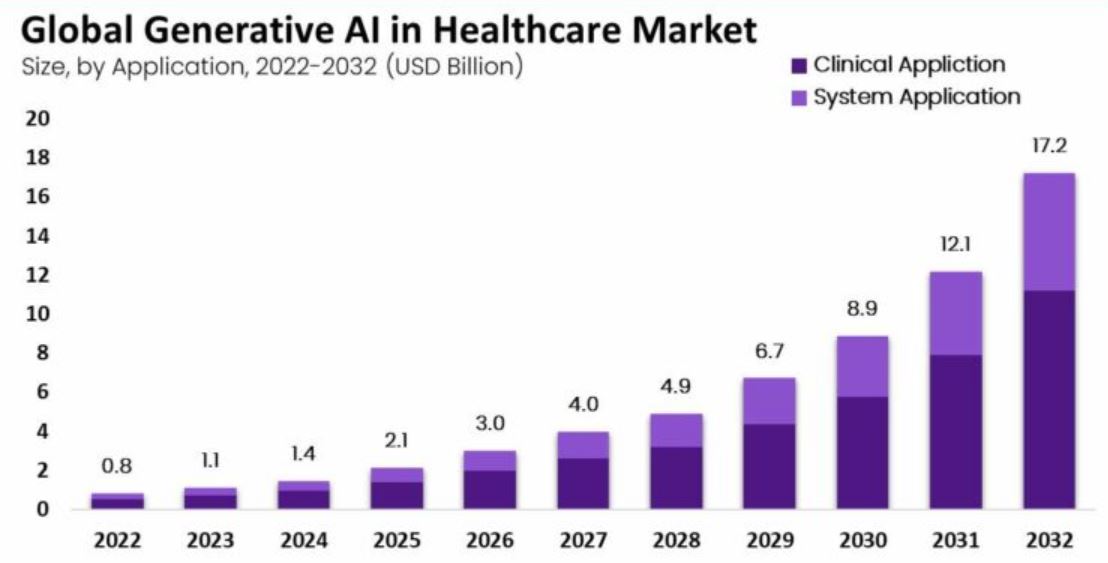
(Source: market.us)
- According to market.us, in 2022, the Global Generative AI in Healthcare Market was valued at USD 0.8 billion and is expected to be valued at USD 17.2 billion in 2032.
- Between 2023 and 2032, this market is estimated to register the highest CAGR of 37%.
- Market growth is driven by the surging number of patient health-related digital data, the growing need for personalized medication, and rising healthcare costs.
AI in Healthcare Regional Market Share
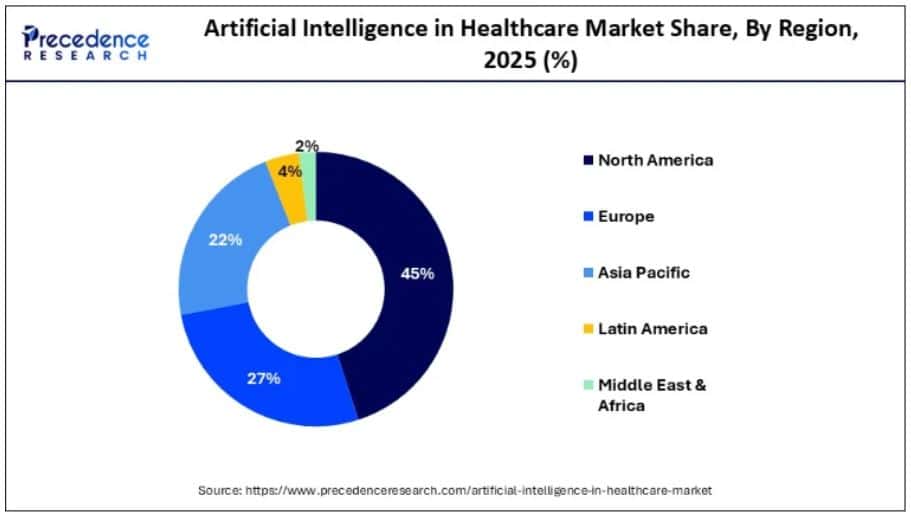
(Source: precedenceresearch.com)
- In the 2025 regional picture, the market leader of the global AI healthcare market is still North America, which takes about 45%, showing a strong footing in adoption, investment, and also in innovation.
- Europe came in with 27%, and Asia Pacific stands at 22%, and the regional market insights draw attention for its growing weight and potential for quicker expansion.
- Latin America is just 4%, while the Middle East & Africa only add up to 2%.
- The above regional AI in healthcare market expansion which showing together control roughly 94% of the share, so the remaining places are smaller.
- The most noticeable growth chances could more and more show up in developing regions, as AI healthcare uptake spreads out more widely.
US Artificial Intelligence (AI) In Healthcare Market
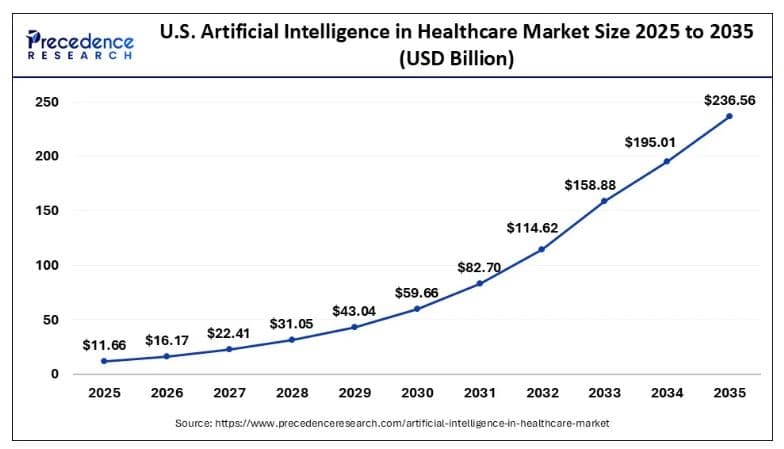
(Source: precedenceresearch.com)
- The above char is interpreting the U.S. Artificial Intelligence (AI) in Healthcare Market Size and Growth 2026 to 2035.
- The U.S. artificial intelligence (AI) in healthcare market size was valued at USD 11.66 billion during 2025, and it is forecasted to reach about USD 236.56 billion by 2035.
- The growth in the market at a CAGR of 35.12% from 2026 to 2035, which is showing steep growth in the overall market.
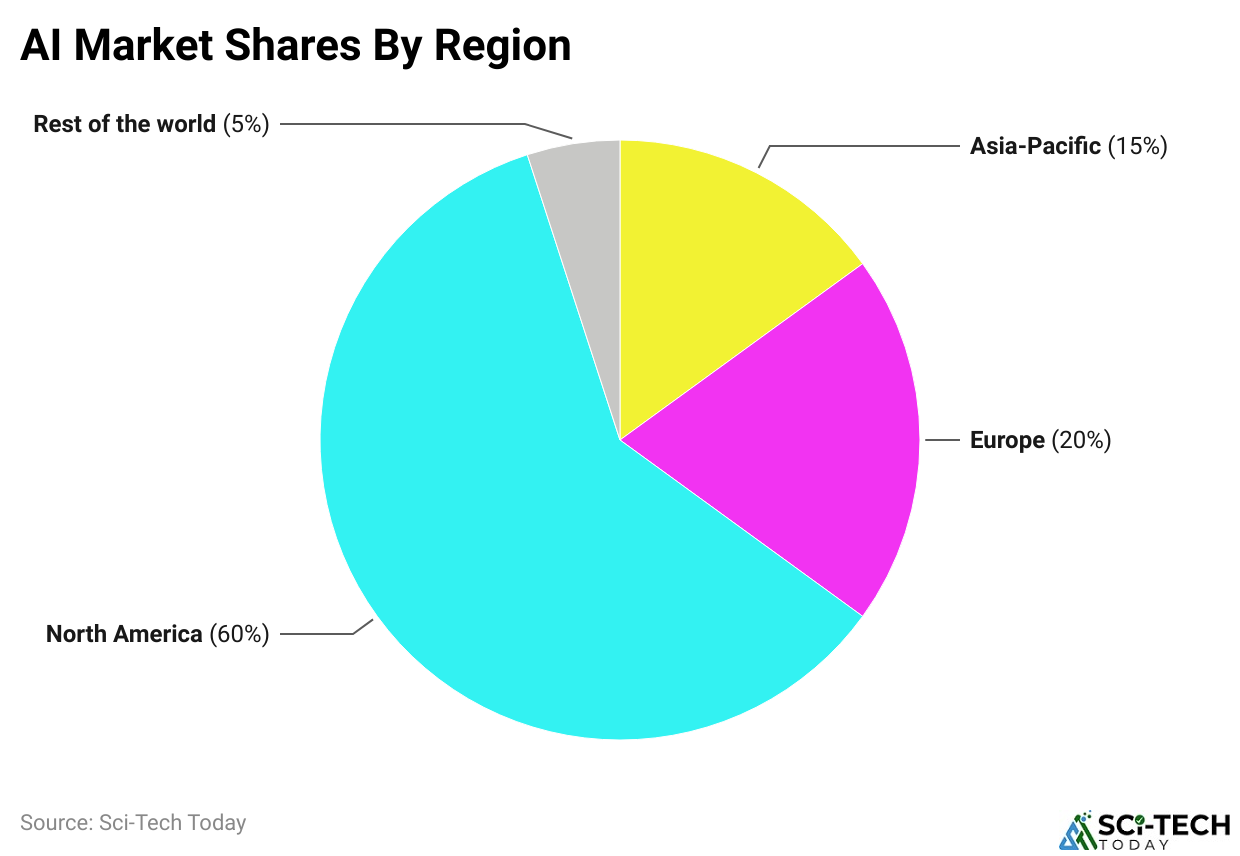
(Reference: allaboutai.com)
- As of May 2024, the North American region earned the highest revenue, accounting for over 60% of the total share.
- Europe holds 20% of the market, marking a notable presence, though significantly smaller compared to North America’s dominance.
- In addition, other regions’ revenue share is followed by Asia Pacific (15%) and the rest of the world (5%).
Artificial Intelligence In The Drug Discovery Market
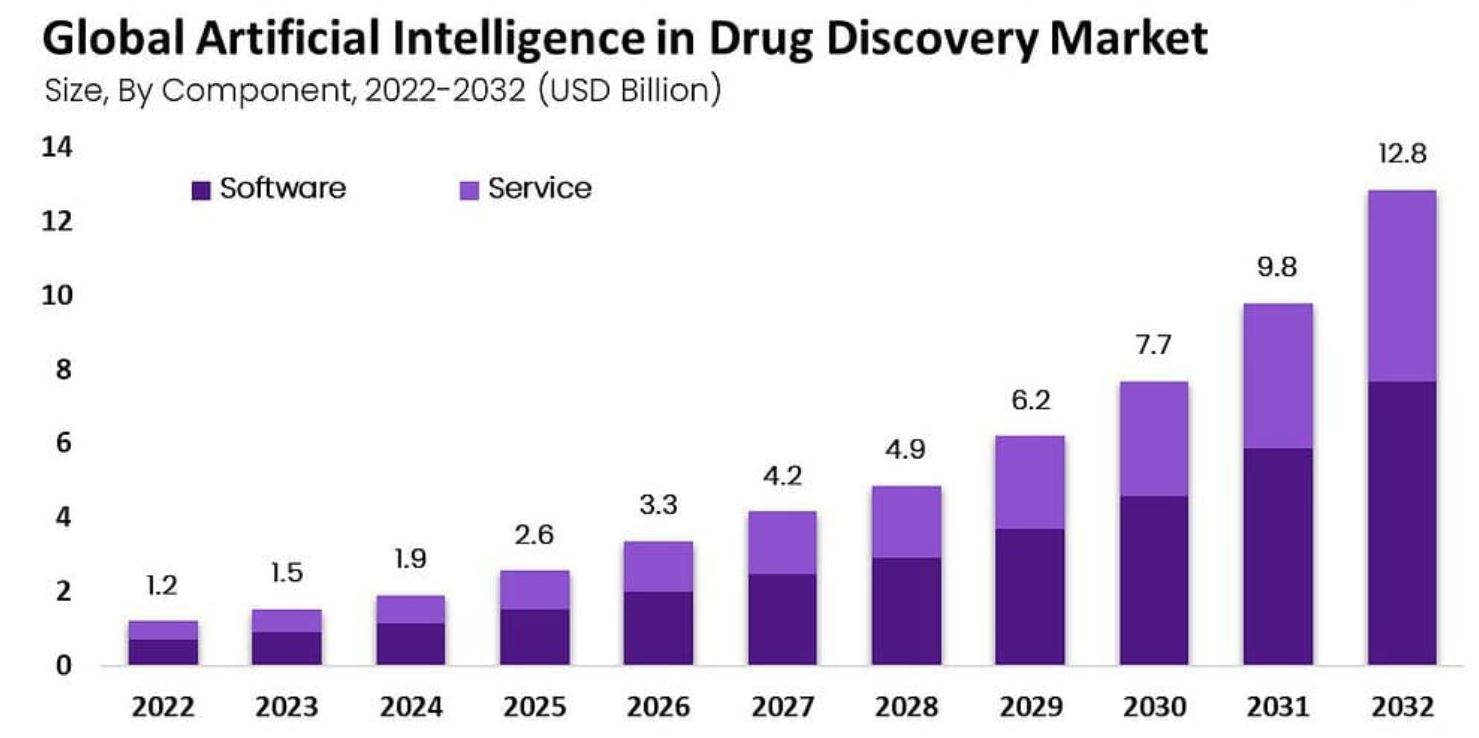
(Source: market.us)
- A report published by Market.us elaborated that the global AI in drug discovery market will be worth USD 1.9 billion by 2024.
- It is supposed to grow at 27.5% annually and reach USD 12.8 billion by 2032.
- The North American region secured the highest revenue in the AI drug discovery market, with USD 0.68 billion.
- AI in Healthcare Statistics also reports that over 40% of experts use AI to analyze medical images, such as CT scans and X-rays, to detect diseases early.
- Deep learning can do the same tasks as human experts, with 86.4% sensitivity and 90.5% accuracy.
- Meanwhile, a recent study found that machine learning performs like human experts, with 87% sensitivity and 92% accuracy.
AI’s Growing Role in US Healthcare
(Source: litslink.com)
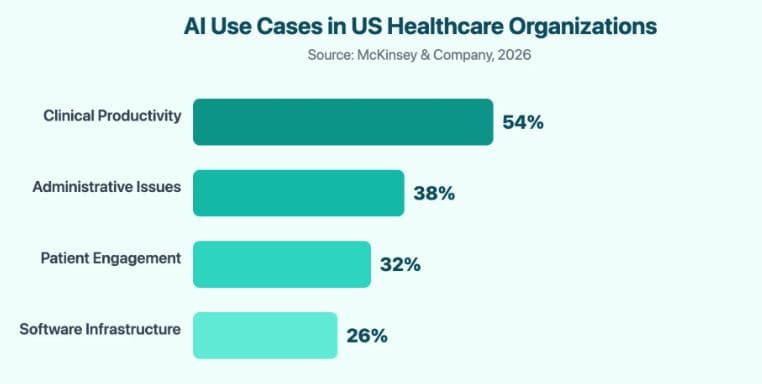
- AI is sliding from an emerging technology into something more practical across US healthcare, and it seems like adoption keeps moving across multiple operational pockets.
- According the McKinsey & Company, 2026, the statistical figures really suggest that healthcare organizations are adopting and relying into AI most for the utmost efficiency, back care delivery, and daily work running smoother.
- Clinical productivity shows up first at 54%, which is the highest share among the categories that were measured.
- It showing these organizations are concentrating their biggest effort on how clinical work gets handled , and also on giving that work more support.
- Administrative problems reached at 38%, and is showing AI is getting traction outside of direct clinical tasks too. The adoption levels also pointing to a growing desire to use tech to reduce operational pressure and streamline workloads.
- Patient engagement is at 32%, which is another notable pocket for AI use.
- Furthermore, software infrastructure sits at 26%, which means the organizations are not only “using AI” but also putting money into the base systems that are needed for wider deployment.
- AI adoption is already meaningful in several healthcare functions, rather than being useful only for one segment.
- The difference between the top and bottom categories is 28%, and three out of the four measured areas hit at least 32% adoption.
AI Adoption among physicians From Experiment to Everyday Practice
(Source: resourcera.com)
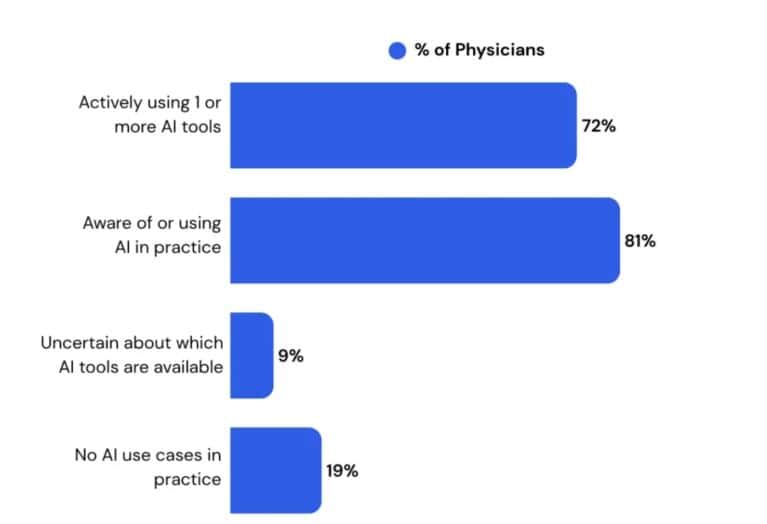
- The above chart is showing the AI is growing quickly and becoming mostly promising factor in a practical healthcare tool.
- About 80% of Americans think AI can make healthcare quality better, cut costs, and widen access, and around 60% of healthcare leaders who are already using generative AI say they’re getting (or expecting) a positive ROI.
- In 2026, 72% of physicians said they are actively using at least one AI tool, while 81% were aware of AI or already using it in practice.
- Still, 9% sounded unsure about what AI tools are actually out there, and 19% said they didn’t have AI use cases.
- AI adoption is climbing, but it’s not completely everywhere yet. More than 53% of organizations also mentioned a high degree of success with AI, which is completely an achievement.
- The AMA survey, covering more than 1,000 physicians, shows a pretty optimistic tilt.
- About 81% think generative AI can improve the way care teams and patients interact.
- Furthermore, 41% said they feel both excitement and concern in equal measure, so trust, safety, and risk management stay front and center, even as people keep adopting.
- Clinical decision-making is starting to look like one of the strongest value areas.
- 72% of physicians believe AI can help make clinical decisions more accurate, 69% see efficiency wins, and 61% expect better patient outcomes.
- The above figure shows that healthcare AI is being evaluated less on the shiny novelty and more on things you can measure, like accuracy, productivity, access, and day-to-day patient care.
AI in Healthcare Demographics
(Source: pewresearch.org)
- AI is becoming a great source for health sengment, by the way people use it varies a lot by age, race and insurance status, like noticeably.
- The above chart point to one big thing, younger folks and people with less coverage seem to lean on AI more often, and especially when it comes to mental health.
- In general, 29% of adults used AI for physical health information, while 16% used it for mental health advice and physical mental health climbs to 32%.
- On the age side, adults between 18–29, 36% used AI for physical health and 28% for mental health, but among adults 65 and older it declining to 24% and 8% respectively. This shows the younger adults are at least three times more likely to look for mental health guidance through AI.
- According to Race and ethnicity the adoption is also come through with clear differences, mainly for mental health use.
- 21% of Black adults and 19% of Hispanic adults sought AI based mental health advice, compared with 12% of White adults.
- On physical health, the figures are roughly 27% to 28% across groups.
- Insurance status shows around 30% of uninsured adults used AI for mental health advice, compared to insured adults with 14%. For physical health, the gap is smaller, 31% compared with 28% .
- The above figures intrepeting how AI adoption by demographics in the field of healthcare which making them more technologically advanced.
Global AI In Healthcare Market Value Statistics, By Application
(Reference: scoop.market.us)
- The AI-assisted robotic surgery market will grow the fastest and reach USD 40 billion by 2026, while virtual nursing assistants will generate USD 20 billion by the same year.
- Furthermore, the estimated market valuation of other applications is represented as administrative workflow assistance (USD 18 billion), Fraud detection (USD 17 billion), Dosage error detection (USD 16 billion), Connected machines (USD 14 billion), Clinical trial participant identifier (USD 13 billion), Preliminary diagnosis (USD 5 billion), Automated image diagnosis (USD 3 billion), and Cybersecurity (USD 2 billion).
Healthcare Chatbots Market Statistics By Component
(Source: market.us)
- The global market valuation of the global healthcare chatbots market size (both in service and software components) will reach around USD 276 million by the end of 2024, up from USD 235 million in 2023.
- The market is supposed to grow at a CAGR of 20.1% from 2023 to 2032, resulting in USD 1,168 million.
AI Healthcare Regulation By FDA
(Source: litslink.com)
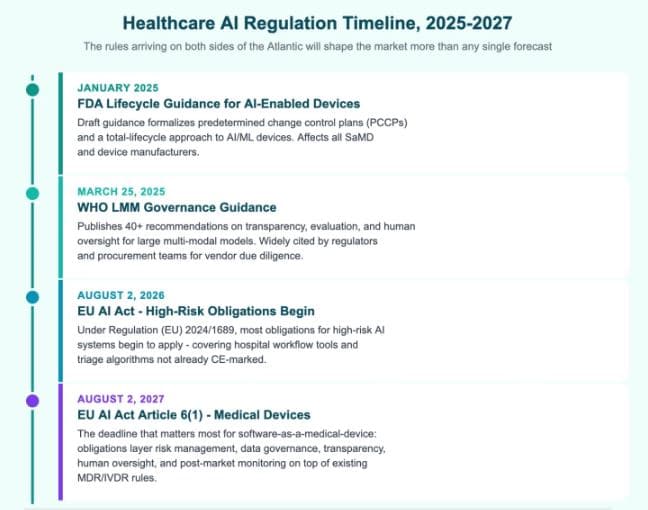
- AI healthcare regulation is heading into a critical two-year stretch, where rules are getting more involved in how medical AI gets made, authorized, watched, and honestly, marketed.
- According to ipartisan Policy Center, 2025, the timeline begins in January 2025, when the FDA made the draft lifecycle guidance for AI enabled medical device software, which has focus is really on predetermined change control plans, PCCPs, and continuous lifecycle management. It ends up touching SaaMD providers and the broader device manufacturers.
- According to WHO, On March 25, 2025, WHO released guidance for large multimodal models in healthcare, and it includes something like over 40 recommendations. These cover transparency, evaluation, and human oversight, and they’re pretty direct about it.
- Regulation (EU) 2024/1689, the most important compliance checkpoint reached August 2, 2026, when major parts of the EU AI Act start applying for high risk AI systems, which includes some hospital workflow and triage applications too.
- The next big deadline is August 2, 2027, where Article 6(1) requirements expand to relevant CE marked medical devices, especially ones that are under Notified Body review.
- The additions in the time bring in risk management, data stewardship, transparency, human oversight, and post market surveillance, and they layer on top of what MDR/IVDR.
- Between 2026 and 2027, healthcare AI competition will shifted from “just innovate” toward “innovate while also being compliance ready”, whether it is liked by vendor or not.
Top AI Healthcare Companies
| Company | AI Healthcare Focus | Reported Scale / Impact |
| Prosper AI | Patient access, scheduling, revenue-cycle automation | 60%+ appointment scheduling automation; ~50% call-cost reduction |
| DeepScribe | Clinical documentation | Nearly 1,000 oncologists; ~75% documentation-time reduction |
| Suki | Ambient documentation and coding | 72% median documentation-time reduction |
| Abridge | Clinical documentation and EHR intelligence | 200+ health systems |
| Augmedix | AI medical documentation | Up to 3 hours/day saved on documentation |
| Hippocratic AI | Patient outreach and care navigation | 500,000+ calls; 7,000+ clinicians in testing |
| Aidoc | Medical imaging and radiology AI | 1,600+ hospitals; 18 FDA clearances |
| RapidAI | Stroke and neurovascular imaging | 2,200+ hospitals; up to 37-minute treatment-time reduction |
| Viz.ai | Imaging intelligence and care activation | 1,700+ hospitals |
| Qure.ai | X-ray and CT analysis | 4,800+ sites; 19 FDA clearances |
| Nym | Autonomous medical coding | 6M+ charts annually; 250+ facilities |
| Fathom | AI medical coding | 63M+ encounters; 3,000+ sites |
| SmarterDx | Revenue integrity and clinical documentation | 60+ health systems; average 5:1 ROI |
| CodaMetrix | Autonomous medical coding | 95%+ reported accuracy |
| K Health | AI-powered virtual healthcare | Millions of users |
| Teladoc Health | Virtual care and AI-enabled healthcare | Millions of members worldwide |
| Medtronic | AI-enabled medical devices | AI across surgical, diabetes and cardiac technologies |
New AI Product Launches In Healthcare Statistics 2026
- Every new release in AI in healthcare stuff like automated detection, image reconstruction, segmentation, quantification, and workflow triage riding on top of older scanner and diagnostic software.
- A bunch of big names like GE HealthCare, Siemens Healthineers, Philips, Canon Medical, Samsung Medison, plus specialist vendors, stay really central here.
- Cardiovascular AI keeps widening, mostly through ECG interpretation, remote vital-sign monitoring, pulmonary-hypertension detection, ultrasound, and also digital-stethoscope products. In 2026, the FDA’s listings reported Anumana’s ECG-AI pulmonary-hypertension algorithm, Oxehealth’s Vital Signs product, SafeBeat Rx, and the Tyto Stethoscope G3.
- AI-supported remote care and home monitoring are moving forward too, through connected devices and software that gather symptoms, vital signs, cardiac signals, medication details, and longitudinal patient info.
- The new launches are usually made for supporting chronic-disease management, earlier intervention, and lower-cost level care delivered outside the hospital.
- AI for clinical documentation and administration is also one of the quickest commercial lanes.
- Ambient “AI scribe” systems, coding assistants, patient-message drafting, contact-center automation, and prior-authorization tools are all getting rolled out, because they target administrative workload, not actually replacing clinical judgment.
- The advancements in healthcare are returning to trimming clinician documentation time and smoothing up workflow capacity, so teams can deliver the utmost care to more patients without everything turning into a bottleneck.
- Drug discovery and life-sciences AI launches usually come with generative models for things like molecular design, target selection, clinical-trial matching, trial operations, real-world evidence, and biomarker evaluation.
- The newly launched products are aimed to make a advacement change for pharmaceutical companies, biotechnology organizations, contract research organizations, and academic research institutions.
Challenges And Barriers To Implementing AI Healthcare Features
- AI in healthcare keeps moving forward, but adoption still runs into a real trust-and-investment gap.
- 77% of organizations say immature or unreliable AI tools are the biggest barrier because the quality of the technology is still the main worry in high-stakes medical settings.
- On the Money side, 47% flag financial concerns, and 40% point to regulatory uncertainty as yet another big obstacle.
- 86% of Americans worry that generative AI doesn’t clearly show where its information comes from, or how it was validated.
- 89% of physicians want vendors to disclose sources, creators, and data origins, as among medical professionals the concern looks even sharper.
- At the same time, 82% of U.S. consumers worry that AI could lean on unfiltered internet information, with no guardrails.
- 80% of Americans see insufficient understanding and limited proof of better health outcomes as a serious adoption risk.
- From a human-care point of view, 53% feel AI cannot, really, substitute the experience of healthcare professionals, while 43% still prefer human interaction and that personal.
- The above challenges depicting that the healthcare AI needs better reliability, stronger transparency, clearer regulation, measurable ROI, and human oversight before adoption can scale confidently.
Conclusion
AI in healthcare is growing rapidly and changing how healthcare is delivered. Technologies like machine learning, natural language processing, and robotic-assisted surgery are helping doctors diagnose diseases faster and more accurately. The market will keep expanding, with North America leading and Europe and Asia-Pacific following close behind. With continued advancements, AI will become even more important in the healthcare industry in the coming years.
This article on AI in Healthcare Statistics covers all the current statistics about the global healthcare market, so please go through it and share your reviews.
FAQ
The global generative AI in healthcare market was about $0.8 billion in 2022, and it is projected to hit $17.2 billion by 2032.
North America still leads at roughly 45% of the global market share, for 2025.
Around 72% of physicians said they actively use at least one AI tool in 2026.
In medical imaging, clinical documentation, drug discovery, robotic surgery, patient engagement , diagnosis, and also for administrative workflows.
The top issues are unreliable AI tools (77%), financial concerns (47%), and regulatory uncertainty (40%).