









Overview
Employee Referral Statistics: Finding the right employees is one of the biggest challenges for any company. One of the easiest and most effective ways to hire talented people is through employee referrals. In this method, current employees recommend people they know for job openings. Since employees understand the company’s work culture and job requirements, they are more likely to refer suitable candidates.
Employee referrals help companies save time, reduce hiring costs, and find quality talent faster. They also improve employee engagement because staff feel involved in the hiring process. As competition for skilled professionals continues to grow, employee referral programs have become an important part of successful recruitment.
This article explains what employee referrals are, their benefits, and why they are valuable for both employers and employees.
Best Pick
- Employee referral statistics reveal that in 84% of companies with employee referral programs, the practice is common.
- Referred candidates are 15 times more likely to be hired compared to non-referred applicants.
- Candidates referred by others are 4x more likely to be hired than job board applicants in 2026.
- Approximately 71%-84% of organizations globally run formal employee referral programs.
- Around 47% of frontline employees first learn about referral programs through SMS campaigns.
- Employee referrals improve retention by 40%, helping companies reduce hiring risks.
- 88% of employers say employee referrals give the highest return on investment for hiring.
- Up to 45% of internal hires come through employee referrals.
- Primary connections rank highest among the reasons employees give for referring candidates, with 35% of referrals potentially stemming from social obligations.
- 69% of companies give referral bonuses, with amounts going up to USD 5,000.
- The technology sector offers the highest referral bonus at USD 2,400, followed by healthcare at USD 1,700 and finance at USD 1,400.
- Employee referral hiring costs about 55% less than job board recruitment.
- Wednesday is the most active day for submitting employee referrals.
- Employee referral programs deliver about a 5x return on investment relative to hiring spend.
General Employee Referral Statistics
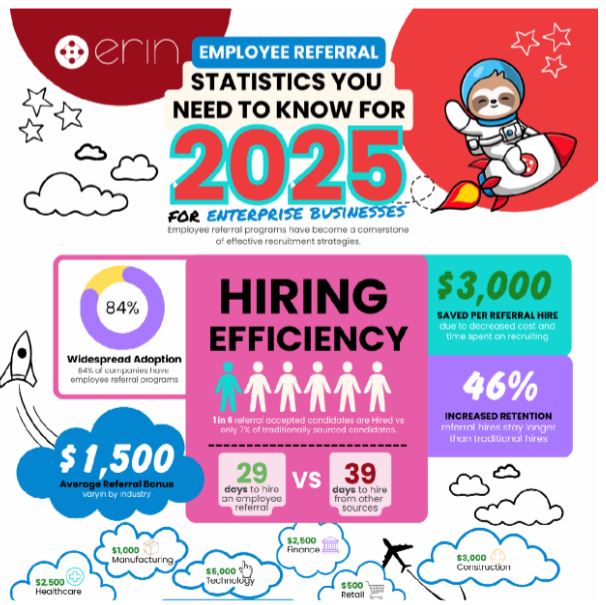
- Employee referral statistics reveal that in 84% of companies that operate employee referral programs, it appears to be common practice. It isn’t surprising—these programs allow companies to reap many benefits while giving their employees something good to talk about when they go home.
- Referrals foster a culture of cooperation and trust, thus serving as invaluable tools for organisations of any size.
- Employers find their best source of hires in referrals as compared to traditional means of recruitment: hiring managers will cull one hire in six from candidates accepted through referral programs, whereas that figure dwindles to just 7% for candidates gained through more traditional sourcing mechanisms.
- Referrals also get hired more promptly, taking an average of 29 days as opposed to 39 days with other forms of recruitment.
- Because of reduced recruitment costs and time, hiring via referral saves companies an average of USD 3,000.
(Source: erinapp.com)
- Referral hires do more than just save costs; they deliver on job performance and retention.
- Employee referral statistics state that employees who were hired through referrals outperform their non-referral counterparts by 33% and add 25% more profit to their companies’ bottom lines.
- Referred employees also stay longer; 46% of referred employees stay longer than those hired by more traditional means. The variances in referral bonus amounts according to industry are a direct reflection of the demand for skilled workers.
- The average bonus in the technology sector is USD 5,000, with healthcare and finance coming second at USD 2,500.
- On the lower end of the spectrum, manufacturing pays USD 1,000, followed closely by retail at USD 500 and construction at USD 3,000.
- This financial motive serves to encourage employees to recommend strong candidates from their personal networks.
- Interestingly, monetary rewards have a place, but by far, the majority of employees refer candidates for other reasons.
- Of this group, about 35% do so to help their friends look for opportunities, while only 6% do so for the money. This indicates that employees perceive referrals as opportunities to help improve their workplace rather than just a means of earning some cash.
- The effects of referrals vary by the size of the company; in companies with fewer than 5,000 employees, 15% of the hires come through referrals.
- That percentage then slightly decreases in larger companies, at 12% for organisations with between 5,000-10,000 employees and 11% for companies employing 10,000-50,000 employees.
- In companies with over 50,000 employees, only 9% of hires are through referrals.
- However, organisations utilising ERIN have over 15% of their hires through referral programs, thus showing the platform’s efficacy in scaling referral success.
Latest Trends and Key Insights in Employee Referral Hiring
- Referred candidates are 15 times more likely to be hired compared to non-referred applicants.
(Source: vercel-storage.com)
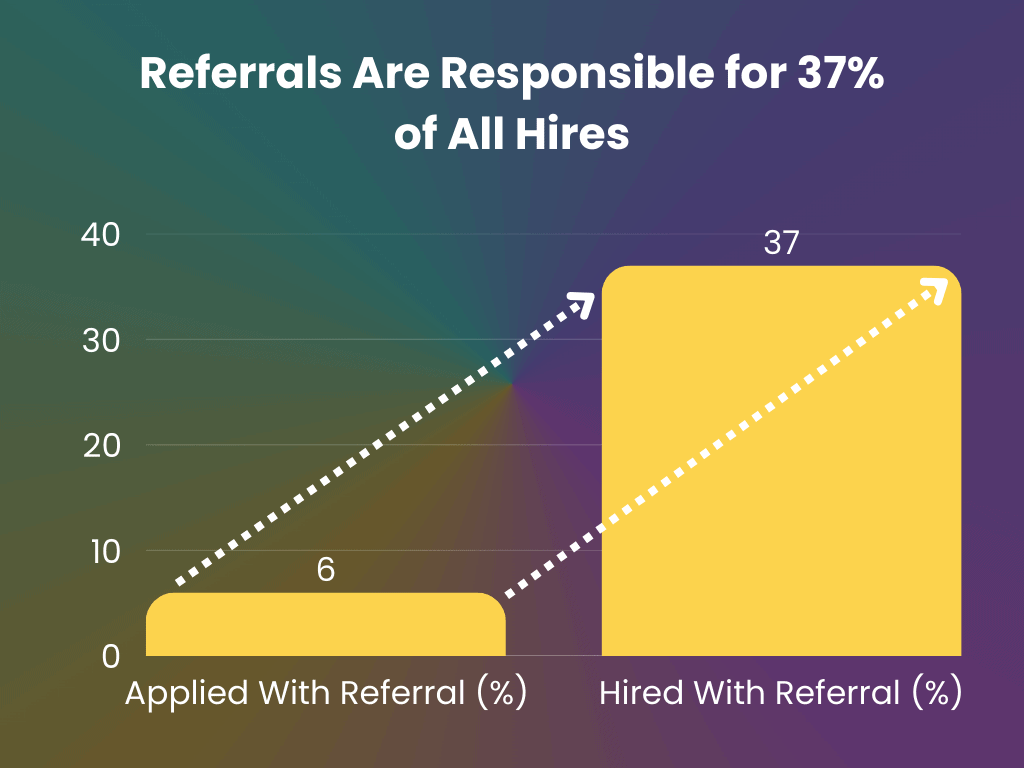
- Only 6% of job applications come from referrals, yet referrals account for 37% of total hires.
- Referral-based applications are often seen as more trustworthy because they are pre-vetted by current employees.
- Studies show a 34% hiring rate for referred candidates, compared to around 2% for non-referred applicants.
- Job performance among referral hires is 33% higher than that of non-referred employees.
- Around 67% of recruiters say referral hiring is faster than other recruitment methods, reducing the average hiring time to 15 weeks.
- Employee referral programs also reduce screening time and improve hiring efficiency.
- The average referral bonus is about USD 1,200, which is still lower than typical recruiter or job board costs.
- 51% of recruiters say referral hiring is cheaper than other recruitment methods.
- Referred employees show 33% higher job performance than non-referred hires.
Employee Referral Hiring Insights
- According to Zippia, candidates referred by others are 4x more likely to be hired than job board applicants in 2026.
- 45% of referred hires stay over 4 years vs 25% from job boards.
- Employee referrals make up 30%-50% of all hires.
- Cost per hire via referrals is about USD 1,000 lower than other channels.
- 88% of employers say referrals are the best source of quality candidates.
- Referred candidates are 2.6%-6.6% more likely to accept offers.
Employee Referral Program Adoption and Best Practices
- Approximately 71%-84% of organizations globally run formal employee referral programs.
- Strong programs see 15%-20% employee participation each year.
- Referral hiring accounts for about 30%-35% of all external hires in top-performing companies.
- A report published by Erin App shows that about 63% of small and medium businesses use referral platforms to stay competitive.
- SMBs typically source around 32% of their total hires through employee referrals.
Employee Engagement in Referral Programs
- The report published by Eqorefer further stated that around 47% of frontline employees first learn about referral programs through SMS campaigns.
- On average, each employee submits about 1.63 referrals.
- Nearly 29.4% of employees who participate in referral programs make a second referral.
- 12.1% of employees submit 3 or more referrals, showing consistent engagement.
- A small but active group, around 3.7%, became “super referrers” by making 5 or more referrals.
Employee Referral Statistics by Retention
- Employee referrals improve retention by 40%, helping companies reduce hiring risks.
- Referred employees show a 46% retention rate, compared to 33% for job board hires.
- This higher retention leads to about 41% lower employee turnover costs.
- Referred hires stay 70% longer than employees hired through non-referral channels.
- Around 50% of referred employees stay at least 3 years, while 50% of non-referrals leave after about 1.5 years.
- Referral hiring can reduce overall turnover by up to 20%.
- Even when referrals are only 30% of hires, companies still see about a 6% drop in turnover.
By Performance
- 88% of employers say employee referrals give the highest return on investment for hiring.
- Companies find referrals cost less and help improve overall hiring efficiency.
- Referral hiring also helps maintain a steady talent pipeline and reduce understaffing.
- Referred employees are about 25% more profitable due to better performance and lower hiring costs.
- Employers save around USD 1,000 per hire compared to other recruitment channels.
- 70% of businesses believe referral hires fit better with company culture and values.
By Frequency
- Up to 45% of internal hires come through employee referrals.
- About 71% of U.S. employers run formal referral programs, often supported with incentives and bonuses.
- Referrals make up only 7% of total applicants, but still account for 30%-50% of total hires.
- In hiring scenarios, referrals show a 28.5% hiring rate compared to 2.7% for non-referrals.
- Companies like Booz Allen Hamilton report that 55% of hires come from referrals, with bonuses of up to USD 3,000 per successful referral.
- Firms aged 0-20 years rely more on referrals (around 30% of hires), compared with 21% in firms aged 41-60 years.
- Across company sizes, more than 20% of hires come from referrals.
- Referrals account for 72% of interviews despite making up only 7% of applicants.
Reasons For Referring a Candidate
(Reference: zippia.com)
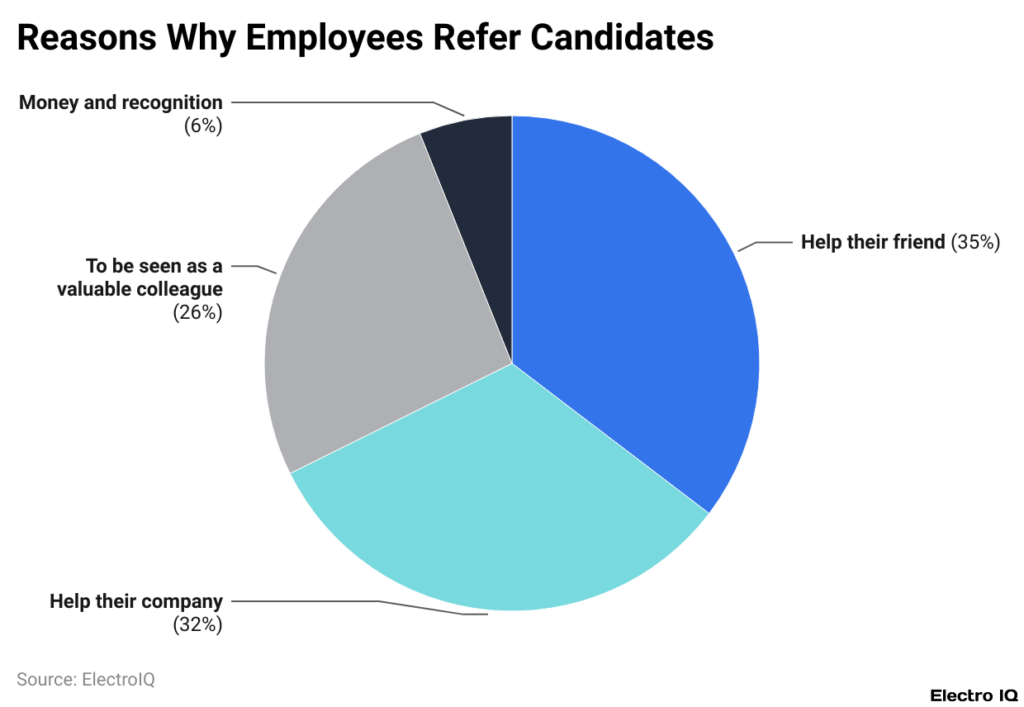
- Primary connections rank highest among reasons given by employees to refer candidates, with 35% of referrals potentially springing from social obligations.
- Most employees are keenly interested in helping their friends get job opportunities, and the strongest reason for referral is personal connections.
- A slightly less significant 32% refer candidates out of concern for how the person will fit into the company. These employees see referrals as a means to introduce skilled talent that fits into the company’s culture and needs and to the company’s collective success.
- Employee referral statistics reveal that about 26% of employees use referrals to advance their workplace reputation. They want other colleagues to see them as worthy members of the team who promote team growth and success and enhance their standing in the community.
- On the contrary, financial rewards and recognition count little in motivating people to refer.
- Very few employees, just 6%, actually refer others primarily for the gain, suggesting that monetary incentives alone may not serve the best interest of stimulating registration participation.
- Instead, personal friendship, loyalty to the firm, and professional reputation are the leading factors in eligibility.
Cash And Non-Cash Incentives for Employee Referrals
(Reference: enterpriseappstoday.com)
- Most employers have recognised the effectiveness of employee referrals and tend to reward employees for them.
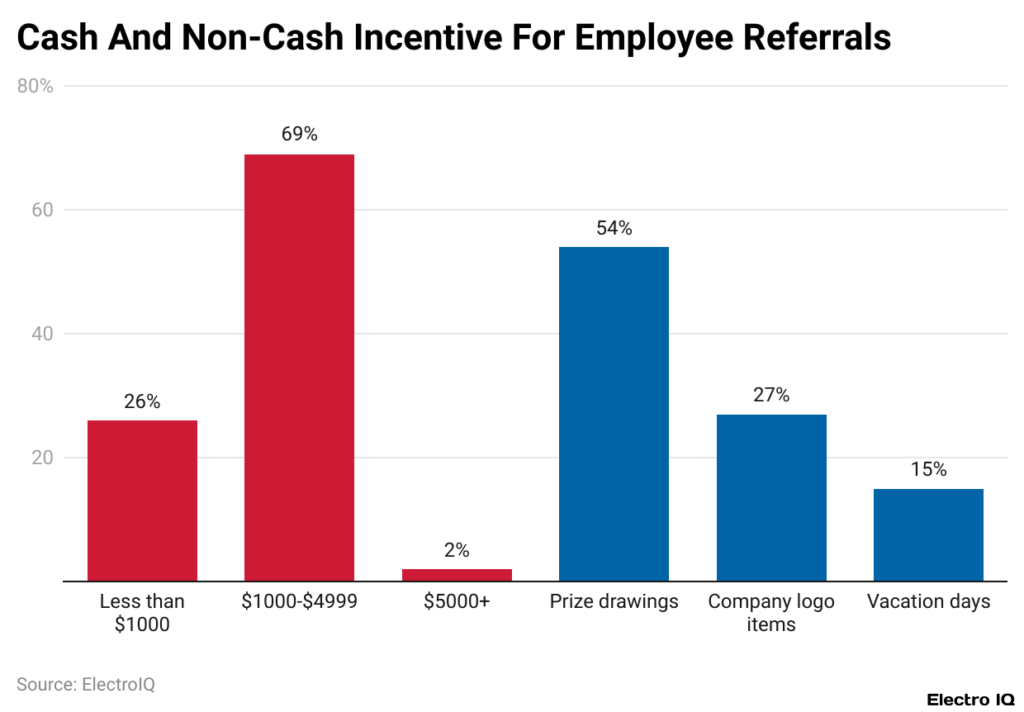
- Approximately 69% of companies give referral bonuses, with amounts going up to USD 5,000. Salary incentives may not be present in every organisation, although most would give the referring employee a rewarding incentive for a successful referral.
- The average monetary referral incentive is set anywhere between USD 1,000 and USD 5,000; thus, it is the ones that receive uptake from employees to recommend whoever they know. With referral schemes of this nature, many companies consider non-cash incentives as well.
- About 27% of employers offer branded company merchandise, while 15% reward employees with extra vacation days. Moreover, 54% of the companies use a prize-draw system in which employees are entered into a drawing to win valuable prizes for referring candidates.
- Organisations that provide cash and non-cash incentives aim to create buzz around referral programs while attracting the best talent through the networks of their employees.
Top Employee Recruitment Methods in 2026
| Recruitment Method | Key Statistics |
| Employee Referrals | Account for 30%-50% of all hires; referred candidates have a 30% hire rate vs. only 7% from job boards; companies save USD 3,000-USD 7,500 per referral hire. |
| Social Media Recruiting | Used by 92% of employers; LinkedIn dominates at 90% usage; social media yields 2x higher conversion rates than job boards. |
| Job Boards | Generate 61% of applications but convert to only 42% of actual hires; company career pages produce just 13% of applicants yet deliver 26% of hires. |
| AI-Powered Hiring Tools | The recruitment technology market, adopted by 99% of Fortune 500 companies, is valued at USD 17.5 billion in 2026 and projected to reach USD 46 billion by 2034. |
| Internal Hiring | Reduces recruitment time by up to 20 days; internally promoted employees are 70% more likely to stay long-term |
| Multi-Channel Recruiting | Companies using 3+ channels see 287% more engagement, and conversion rates jump from 5.1% to 15.6%. |
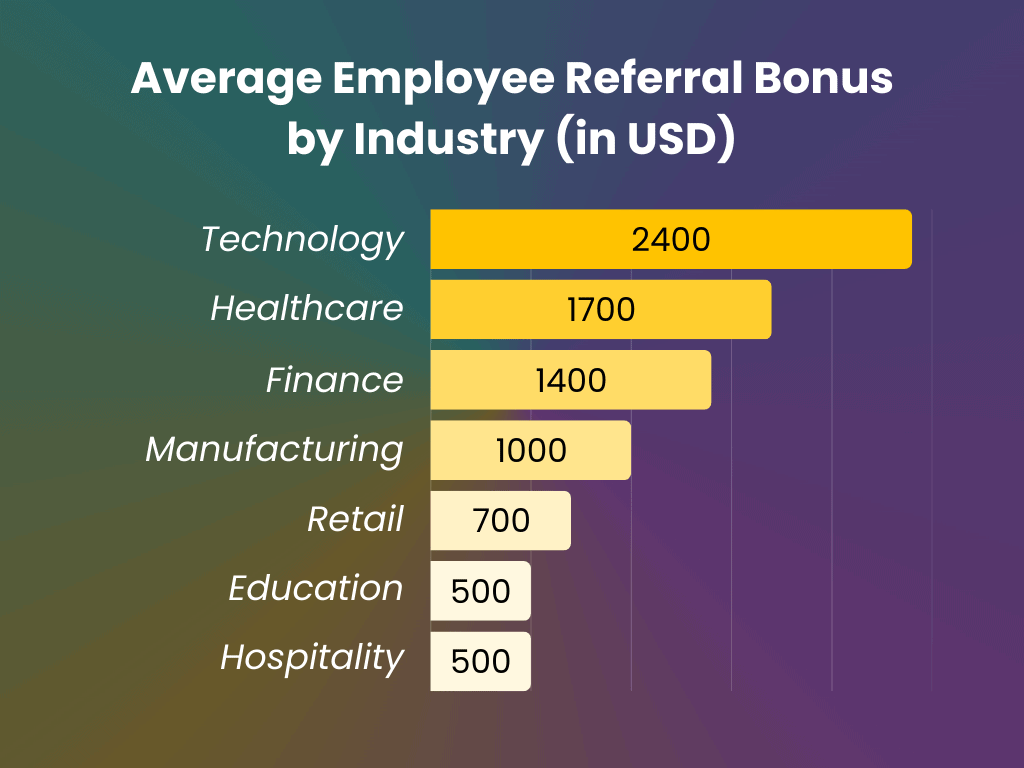
Average Employee Referral Bonus by Industry
(Source: vercel-storage.com)
- The technology sector offers the highest referral bonus at USD 2,400, followed by healthcare at USD 1,700 and finance at USD 1,400.
- Manufacturing provides USD 1,000, while retail offers USD 700.
- Both education and hospitality offer the lowest bonuses at USD 500 each, which is 79% lower than the technology sector’s average.
Referral Hiring by Company Size
| Company Size | Share of Hires from Referrals |
| < 5,000 employees | 16% |
| 5,000-10,000 employees | 13% |
| 10,000-50,000 employees | 12% |
| > 50,000 employees | 10% |
| Companies using ERIN | >32% |
Cost Benefits of Employee Referral Hiring
- Employee referral hiring costs about 55% less than job board recruitment, according to Wifi Talents.
- The average cost per referral hire is around USD 1,000, compared to USD 4,000 for other sources.
- Companies save approximately USD 7,500 per hire through referral programs.
- Strong referral systems reduce job board spending by up to 70% and lower overall recruiting budgets by about 40% in SMBs.
- Tech firms report savings of nearly USD 20,000 per referral hire, while healthcare sees costs as low as USD 2,500 versus USD 10,000.
- The manufacturing and energy sectors report savings of around 45%-65% in hiring and sourcing costs.
- Finance companies achieve about 60% lower recruitment costs, and education sees up to 80% savings.
- Global firms reduce hiring costs by nearly 50%, while non-profits save up to 75%.
- Retail and hospitality often incur zero or minimal advertising costs for up to 40% of hires.
- Overall ROI from referral programs is strong, with an estimated 4:1 cost return and reduced agency or headhunter fees across industries.
When Employee Referral Activity Peaks and How Timing Drives Engagement
- Wednesday is the most active day for submitting employee referrals.
- Around 4 pm EST is the peak time for submitting referrals.
- 14.7% of referrals are made on weekends, showing continuous engagement outside workdays.
- Nearly 47% of referrals are submitted outside regular working hours (9-5 pm EST).
- Only 1 in 4 employees want automatic alerts about new referral-eligible job openings, yet referrals drive 42.4% of hires.
- Around 35% of candidates accept a referral invitation when they receive one.
- Of those who accept, about 84.2% apply, which is much higher than the typical 7%-10% conversion rate on career sites.
Impact of Employee Referrals on Hiring and Retention
- Referral hiring is faster, taking about 22 days compared to 37 days for job board hiring, according to hiressprad.io.
- Referred employees stay longer, with 45% remaining for at least 4 years, compared with 25% from job boards.
- Employee referrals improve retention and reduce the need for frequent rehiring.
- Referral hires are about 25% more profitable for employers overall.
- Companies save around USD 1,000 per hire due to lower hiring costs and turnover.
Key ROI and Business Performance Gains from Employee Referral Programs
- Employee referral programs deliver about a 5x return on investment relative to hiring spend.
- An investment of USD 3,000 in referrals can generate around USD 27,000 in hiring value.
- Technology firms report up to 10:1 ROI from referral bonuses, with a global average of about 4.5:1.
- The finance and healthcare sectors show strong returns, with ROIs of 6.5x and 7x, respectively.
- Manufacturing reports around 550% ROI, while non-profits see nearly 300% value return.
- Retail companies experience an 18% sales lift from referral hires.
- Automotive firms report up to 600% ROI, and energy shows around 8x ROI in productivity.
- Education and pharma also benefit significantly, with 250% impact and 9x ROI in output performance.
- Media and telecom sectors see additional gains, including 20% audience growth and 15% higher ARPU from referral hires.
Closing
Employee referral statistics are an excellent method for sourcing talent that will yield business value. Hiring via referrals saves both time and money. Employee referrals are one of the fastest ways to fill such positions with candidates who match the company’s needs. The entire process is satisfactory for all. The referring employee gets rewarded for providing a referral.
FAQ
Companies use referrals to hire faster and find trusted, skilled candidates through employees’ networks.
Most companies allow referrals for technical, non-technical, and managerial roles.
Referrals may speed up screening, but selection still depends on performance in interviews.