








Prelude
Work-Life Balance Statistics: Work-life balance refers to the equilibrium between the time and energy you dedicate to your job or career and the time and attention you give to your family, personal life, and leisure. People worldwide are recognizing the importance of maintaining a healthy work-life balance.
A positive work-life balance is linked to increased productivity and a happier workforce, although it’s important to note that work-life balance can vary widely between different organizations within the same industry. The conversation about work-life balance is growing rapidly, and in this article, we will provide detailed statistics on work-life balance.
Curated Choice
- 77% of employees say they have a good work-life balance, down from 79%, while Baby Boomers (85%) are more satisfied than Gen Z (69%).
- Around 52% of employees say working more than 40 hours a week has become the new normal, and another 52% report working about 45 hours weekly.
- Nearly 60% of workers globally report having a healthy work-life balance.
- On average, 48% of workers call themselves workaholics.
- In Bhutan, men work an average of 55.30 hours per week, while women work 53.77 hours per week, resulting in an overall weekly average of 54.68 hours.
- Around 65% of employees believe they must sacrifice work-life balance to achieve career success.
- Hybrid work is now the leading model, offered by 77% of organizations, with 61% also providing flexible hours or flextime.
- Almost 40% of workers said their work-life balance affects their decision to stay with their current company.
- 76% of organizations provide flexible work arrangements to help employees achieve a better work-life balance.
- Employees with poor work-life balance are 2.6 times more likely to leave their jobs.
Key Work-Life Balance Trends and Employee Well-Being
- A blog published by Hubstaff says around 77% of employees say they have a good work-life balance, down from 79%, while Baby Boomers (85%) are more satisfied than Gen Z (69%).
- About 50% of workers in the US and Canada feel stressed every day, 90% experienced burnout in the past year, and only 54% rate their well-being as good, compared with 63% previously.
- Excessive workload causes burnout for 43% of employees, while 54% of US workers link stress to job insecurity.
- Around 54% of senior managers work longer hours than preferred, compared with 29% of individual contributors.
- Financial pressure affects 55% of employees, 52% want fair pay, and 40% are seeking a second job.
- About 71% say remote work improves work-life balance, 56% report higher productivity, and 76% of parents benefit from it.
- Around 69% work in their preferred setup, 81% report better mental health, 72% have a good relationship with their manager, and 48% stay in their job because of work-life balance.
- A 4-day workweek also reduces burnout and improves well-being.
Employee Views on Work-Life Balance
(Source: jobera.com)
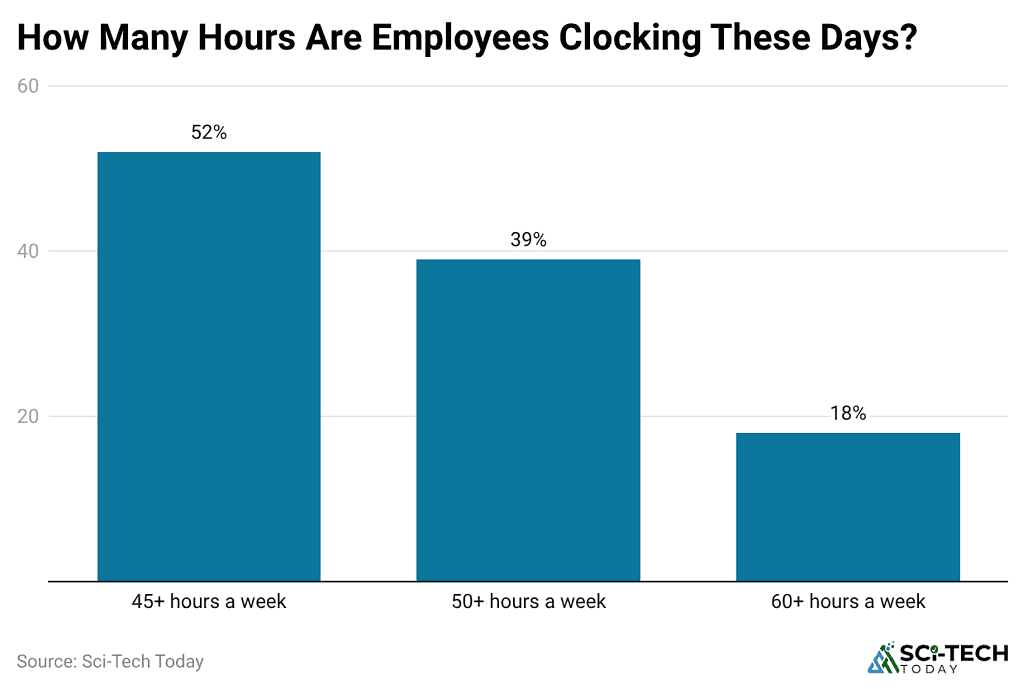
- Around 52% of employees say working more than 40 hours a week has become the new normal, and another 52% report working about 45 hours weekly.
- Nearly 39% work over 50 hours each week, while 18% work more than 60 hours weekly.
- 94% believe maintaining a healthy work-life balance is essential, and 78% feel they currently have a good balance.
- 61% would accept a job even if it negatively affected their work-life balance, but 56% would reject any salary increase that required them to sacrifice it.
- In the United States, 87% say remote work improves work-life balance.
- Satisfaction varies by generation, with 77% of Baby Boomers, 63% of Gen X, and 33% of Millennials and Gen Z reporting a positive work-life balance.
- Additionally, 24% of Gen Z value flexible work, while 71% consider work-life balance important when choosing a new job.
Work-life Balance With the Employee’s Perspective
- Nearly 60% of workers globally state that having a healthy work-life balance.
- Of many people with a poor work-life balance, just 67% say the same feature of work or culture creates the imbalance.
- Almost 33% of workers with a positive work-life balance plan to continue with their existing jobs.
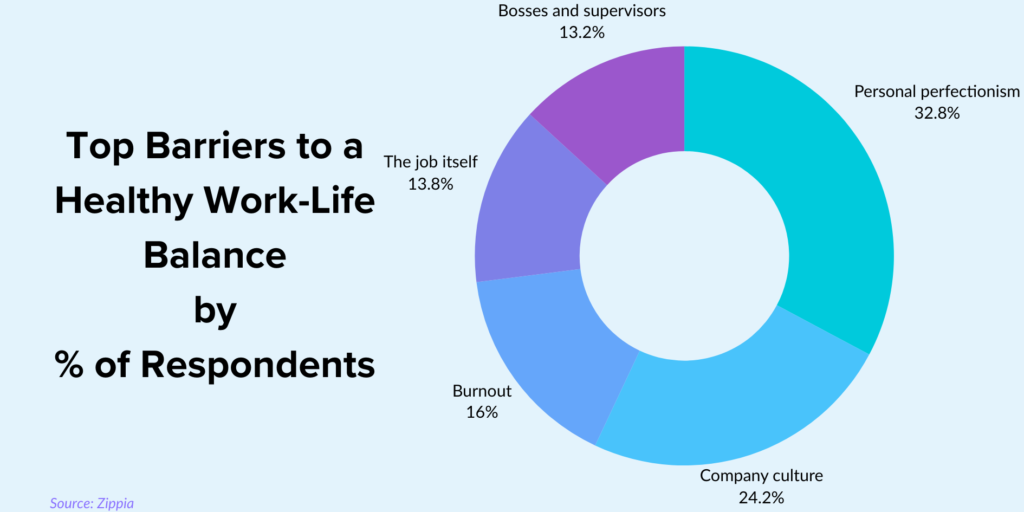
- Roughly 33% of people state that personal perfectionism causes their work-life imbalance.
(Source: hubstaff.com)
- 26% of workers with a salary work outside business hours.
- Around 73% of employers think that work-life balance is a major factor in choosing a job, apart from salary.
- Just 57% to 61% of employees say that a negative work-life balance will prevent them from accepting a new job offer.
- Around 48% of the population would have left their jobs if it had prevented them from staying happy in life.
- Just 30% of the population states they are performing at their lowest minimum at work because of their work-life imbalance.
- Nearly 67% of the population believes that work-life balance has improved once they began working from home.
- According to the survey, 77% of employees say that they have witnessed burnout at their current job.
- Most employees say that they check their work email regularly during their off hours.
- On average, 48% of the workers call themselves workaholics.
- According to the work-life balance statistics, 72% of workers state that a positive work-life balance is essential to them.
(Reference: zippia.com)
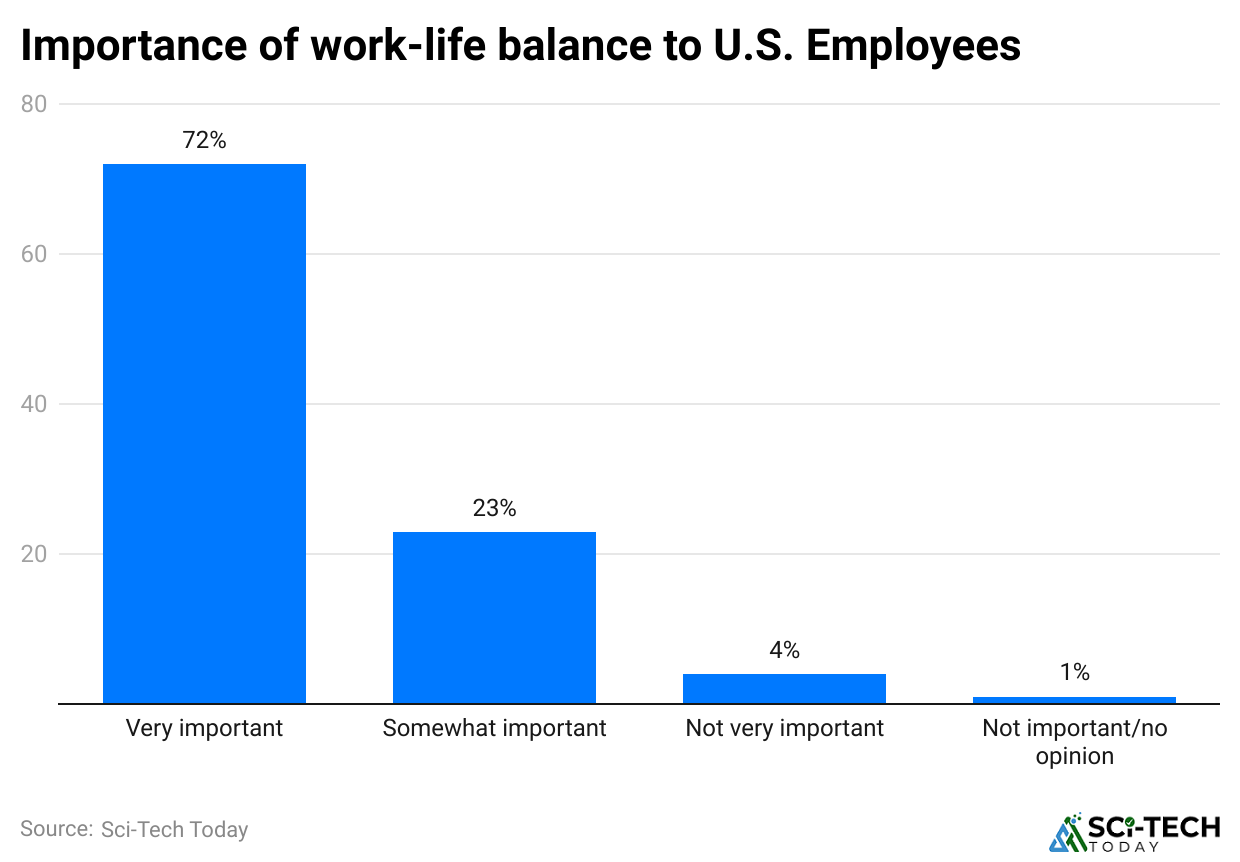
- The above chart shows the importance of work-life balance to employees in the United States.
- As the statistics above show, work-life balance is very important for 72% of United States employees.
- Around 23% of the employees think that work-life balance is somewhat important.
- Nearly 4% of the employees believe that work-life balance is not very important.
- Finally, just 1% of employees think that work-life balance is not important or don’t have an opinion.
- Almost 57% of people surveyed state that a poor work-life balance is a deal breaker when considering a job.
- Nearly 66% of the employees think that they often skip one meal every day because of work.
- 79% of the employees think that having a flexible working schedule allows for a good work-life balance.
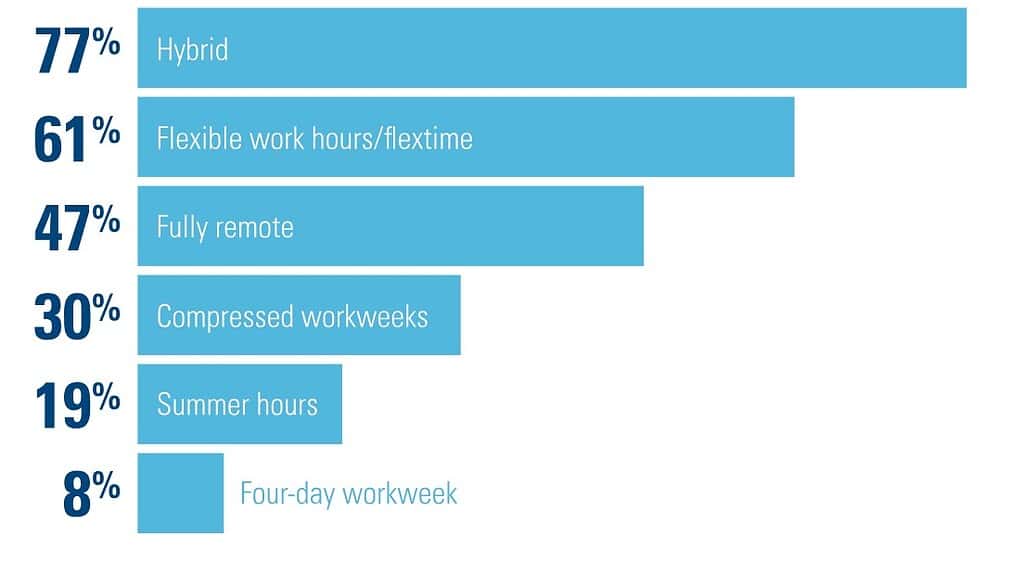
Key Insights on Flexible Work Models – By Types of Arrangements Offered
(Source: ifebp.org)
- Hybrid work is now the leading model, offered by 77% of organizations, with 61% also providing flexible hours or flextime.
- Fully remote roles are available in 47% of organizations, while 30% use compressed workweeks.
- Seasonal and reduced‑week formats are emerging: 19% implement summer hours, and 8% have adopted a four‑day workweek.
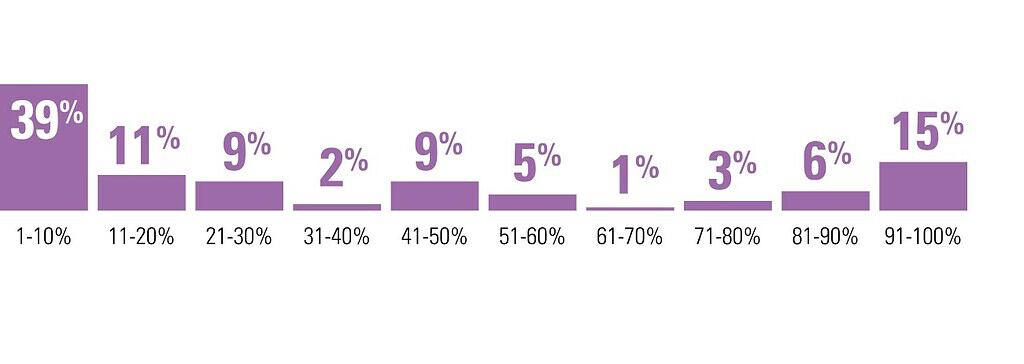
Full‑time Remote Work Patterns
(Source: ifebp.org)
| Share of staff working fully remotely | Share of organizations reporting this level |
| 1%-10% | 39% |
| 11%-20% | 11% |
| 21%-30% | 9% |
| 31%-40% | 2% |
| 41%-50% | 9% |
| 51%-60% | 5% |
| 61%-70% | 1% |
| 71%-80% | 3% |
| 81%-90% | 6% |
| 91%-100% | 15% |
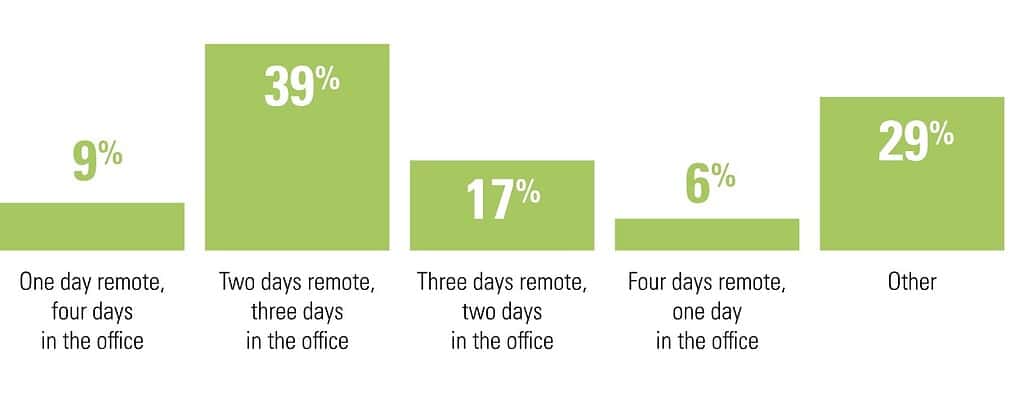
Hybrid Work Structures
(Source: ifebp.org)
- One day remote and four days in the office is used by 9% of organizations, while 39% adopt two days remote and three days in the office as their primary hybrid pattern.
- Three days remote and two days in‑office arrangements account for 17% of responses, and four days remote with one day in the office account for 6%.
- The remaining 29% use other hybrid combinations beyond these standard mixes.
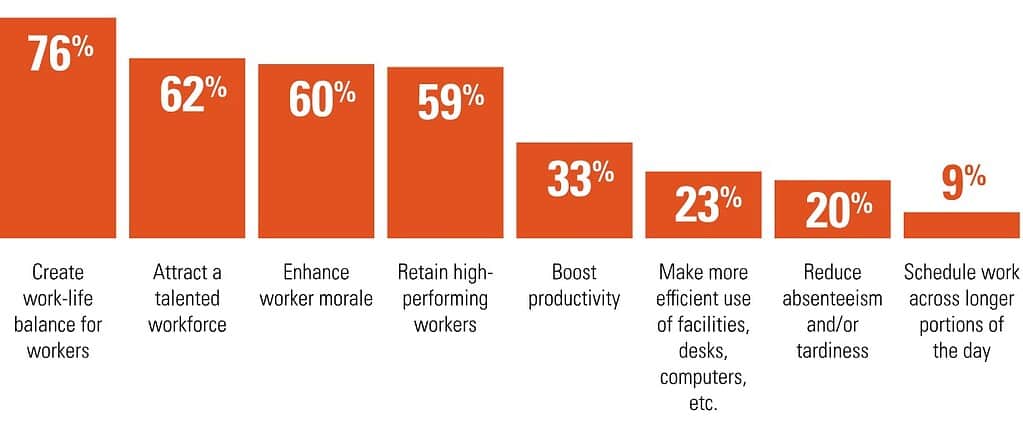
Motivations for Flexible Work
(Source: ifebp.org)
- Around 76% of organizations provide flexible work arrangements to help employees achieve a better work-life balance.
- 62% use flexible work to attract skilled talent, while 59% offer it to retain high-performing employees.
- Nearly 60% believe flexible work improves employee morale and job satisfaction.
- 33% of organizations report that flexible work increases productivity.
- Operational benefits also play a role, with 23% aiming to improve facility use, 20% aiming to reduce absenteeism and tardiness, and 9% aiming to extend work coverage into longer hours.
Benefits of Work-Life Balance Statistics
- According to Kronos Incorporated, almost 40% of workers claimed that their work-life balance affects their decision to stay with their current company.
- According to Mental Health America, almost 81% of workers think that work-life balance contributes to a healthy overall lifestyle.
- According to a Stanford University study, employee engagement and contentment levels rise by 11% when workers have a flexible work-life balance.
- Work-life balance is ranked fourth as the most important aspect in a job, with around 64% of employees considering it as a top option.
- Businesses lose almost USD 1.9 trillion each year due to stress and burnout, which can be linked to a lack of work-life balance.
- According to the Monster survey, almost 42% of the workers think that their work-life balance is median, whereas 45% of the people feel “burned out” from work.
(Reference: clockify.me)
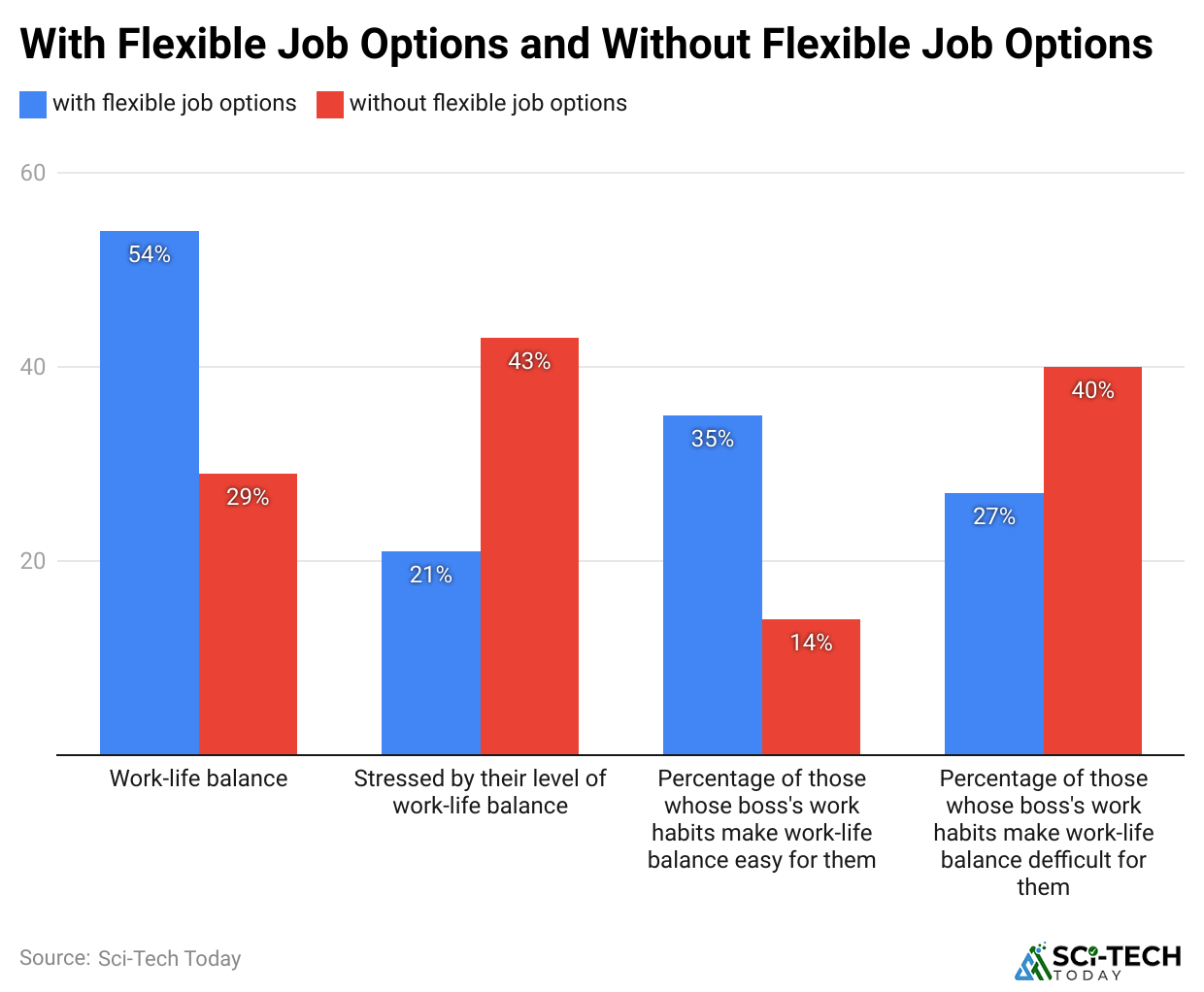
- The chart above shows the responses from the employees with and without flexible job options.
- Almost 54% of the employees have a better work-life balance with flexible job options, whereas 29% of the employees who have a better work-life balance do not have flexible job options.
- Around 21% of employees are stressed by their work-life balance with flexible job options, whereas 43% are stressed by their work-life balance without flexible job options.
- Around 35% of employees are employees whose work habits make work-life balance easy for them with flexible job options, whereas 43% of those whose work habits make work-life balance easy for them are without flexible job options.
- Almost 27% of employees are the percentage of employees whose bosses’ work habits make work-life balance difficult for them with flexible job options, whereas 40% are employees’ percentage of those whose bosses’ work habits make work-life balance difficult for them without flexible job options.
- As per a survey by The Future of Work, 56% of employees think that work-life balance will exceed their ability to stay on top of talent in the workforce.
- According to the Randstad study, 80% of workers think that a flexible work scheme will increase their job satisfaction.
- According to the OECD Better Life Index, Denmark has the best work-life balance in 41 countries, whereas just 2% of workers work long hours.
(Source: 3blmedia.com)
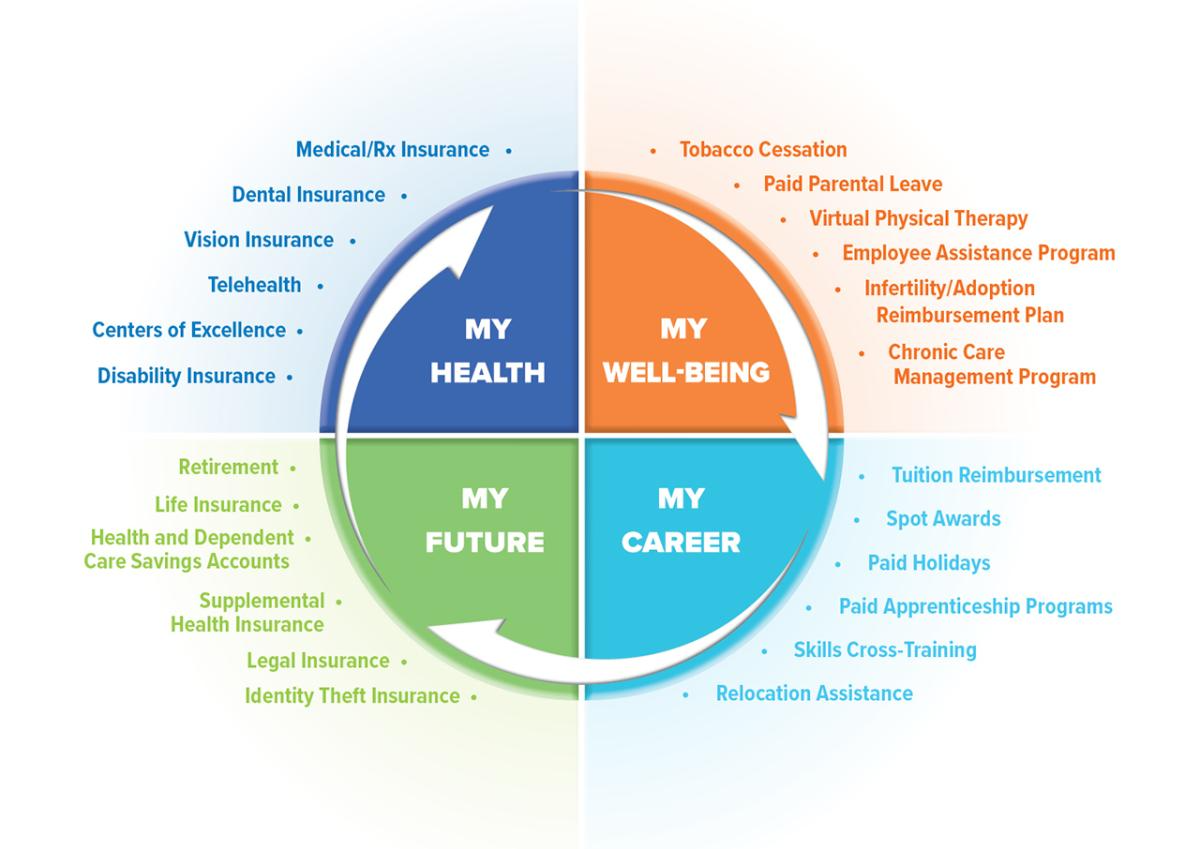
- A report published by the American Psychological Association shows that workers with work-life balance have lower stress levels and improved mental health.
- In a survey done in the United Kingdom, almost 89% of job candidates consider flexible working options important when scrutinizing job offers.
- According to EY’s Global Generations Research, 76% of workers state that they struggle with work-life balance.
- According to Gallup, 60% of workers view their work-life balance as an important factor in their job decisions.
- According to Harvard Business School, companies that enforced work-life balance programs had a 25% reduction in employee turnover.
- Employees who maintain a proper work-life balance are around 21% more productive than those who don’t.
- According to Deloitte, 94% of managers and 88% of workers state that a diverse work-life balance is internal to job contentment.
Employees Value Work-Life Balance Over Higher Pay
(Source: yomly.com)
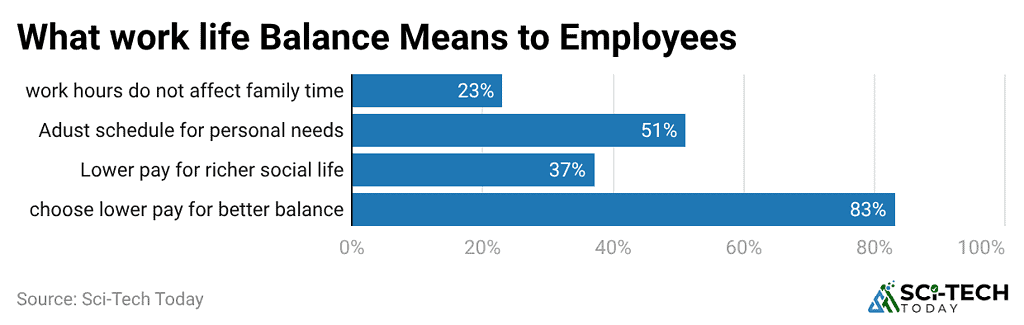
- Around 83% of employees consider work-life balance their top priority, slightly higher than the 82% who rank salary as most important.
- Another 83% of workers would accept a lower-paying job if it offered a healthier work-life balance.
- About 37% are willing to earn less for a job that allows a better social life.
- Around 51% define work-life balance as having the flexibility to adjust their work schedules to meet personal needs, while 23% believe it means work hours that do not interfere with family and personal time.
Countries with the Best Work-Life Balance
(Source: makerstations.io)
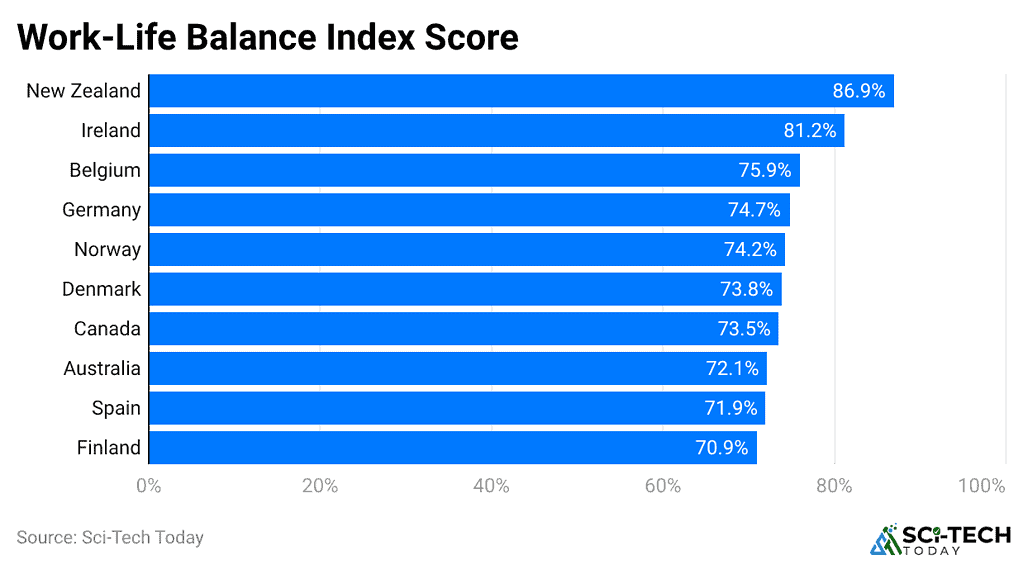
- New Zealand ranks 1st in 2026 with a work-life balance score of 86.87/100, marking its 3rd consecutive year at the top.
- Ireland ranks 2nd with 81.17, followed by Belgium (75.91), Germany (74.65), Norway (74.20), Denmark (73.76), Canada (73.46), Australia (72.10), Spain (71.94), and Finland (70.86).
- 7 of the top 10 countries are located in Europe, highlighting the region’s strong focus on employee well-being.
- Germany records the shortest annual working time among OECD countries at about 1,340 hours.
- The United States ranks 59th out of 60 countries with a score of 31.17.
- In New Zealand, employees receive 32 days of paid annual leave, 26 weeks of fully paid maternity leave, earn a minimum wage of USD 16.42 per hour, work an average of 33 hours per week, and report a happiness score of 6.95/10.
Average Workweek by Top 10 Countries, 2026
| Country | Weekly hours worked | By men | By women |
| Bhutan | 54.68 | 55.30 | 53.77 |
| Lesotho | 49.98 | 51.39 | 48.08 |
| São Tomé and Príncipe | 49 | 47.89 | 50.12 |
| Republic of the Congo | 48.86 | 49.37 | 48.30 |
| Jordan | 48.49 | 48.82 | 46.99 |
| United Arab Emirates | 48.28 | 48.24 | 48.42 |
| Burkina Faso | 48.19 | 50.88 | 45.06 |
| Liberia | 48.12 | 49.59 | 46.51 |
| Pakistan | 47.63 | 51.28 | 35.05 |
| Mongolia | 46.58 | 49.24 | 43.21 |
Impact of Long Work Hours and Always-Connected Work Culture
- Around 65% of employees believe they must sacrifice work-life balance to achieve career success, with managers expressing this view more often than others.
- About 85% receive work-related messages outside regular working hours at least a few times each month, while 60% receive them several times a week or more.
- According to Yomly, 58% regularly reply to work messages after hours, whereas only 6% never respond outside scheduled work time.
- Nearly 30% expect after-hours messages, 25% feel appreciated when they receive them, and 10% enjoy this communication.
- However, 34% worry that ignoring after-hours messages could harm their reputation at work.
- 55% say constant availability is normal in their organization, and 45% work longer hours than they prefer.
- Moreover, 14% of men and 6% of women work more than 50 hours per week.
- Additionally, 14% feel anxious, and 18% feel annoyed by after-hours work messages.
How Flexible Work Arrangements Improve Work-Life Balance
- Work-life balance (WLB) helps employees manage their work and personal responsibilities more effectively.
- Poor work-life balance increases stress, work pressure, and unhealthy behaviors, reducing job performance, life satisfaction, and mental well-being.
- Flexible work arrangements (FWAs), such as remote work and flexible schedules, give employees greater control over when and where they work, making it easier to balance family and personal commitments.
- However, flexible work can also blur the boundaries between work and home, increasing work-family conflict (WFC) for some employees.
- Employees who feel supported through flexible work policies are more likely to develop stronger organizational commitment (OC).
- This meta-analysis reviewed global research to examine how FWAs affect WLB, WFC, and OC across 3 country groups: high-income, middle-income, and low-income economies, providing a clearer understanding of workplace outcomes in the post-pandemic era.
Impact of Poor Work-Life Balance
- According to Aglied, employees with poor work-life balance are 2.6 times more likely to leave their jobs.
- Burned-out employees have 37% higher absenteeism than others.
- Productivity falls by 18% among employees who are consistently overworked.
- Medical costs are 46% higher for burned-out employees than for those without burnout.
Wrap-up
The above work-life balance statistics show us that having a better work-life balance is a priority for some people. Some employees are even ready to leave their jobs and search for a new job with a good work-life balance system in place. The current numbers show that, regrettably, lots of organizations do not take it seriously.
Companies need to decide whether their employees are given the chance, but will also give advantages to the company itself. Work-life balance is important for employers as well as employees. As we all know, the happier the workers are, the better the employees.
FAQ
Constant stress, burnout, long working hours, poor sleep, declining health, strained relationships, and little personal time.
If overtime is expected regularly, clarify expectations, know your rights, set healthy boundaries, and communicate workload concerns professionally.
It reduces stress, improves health, boosts productivity, strengthens relationships, and increases overall happiness and satisfaction.