








Overview
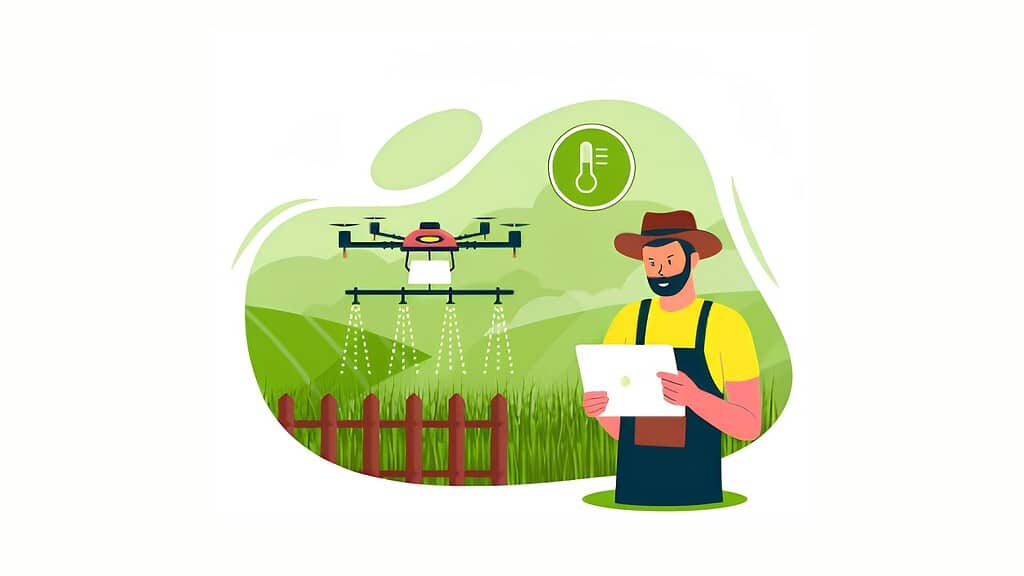
Smart Irrigation System: Water is very important for farming, but much of it is wasted with old irrigation methods. A Smart irrigation system is a modern way to solve this problem. It uses sensors, IoT devices, and simple automation to check soil moisture and weather conditions. Based on this data, it gives plants only the water they need, at the right time.
This helps save water, reduce costs, and improve crop growth. Farmers can also easily monitor and control irrigation. With water becoming limited and farming needs increasing, smart irrigation is a helpful and sustainable solution. It makes farming more efficient, smarter, and better for the environment.
Researcher’s Pick
- The smart irrigation market grew from USD 2.14 billion in 2025 and is projected to reach USD 2.44 billion by the end of 2026.
- The U.S. Smart Irrigation System Market was valued at USD 595.9 million in 2025.
- In 2026, the Controller segment leads the market at USD 1,093.04 million.
- Government water-use regulations and subsidies are expected to increase the market CAGR by 4.2% from 2025 to 2030.
- Open-field cultivation is expected to account for 45.8% of the micro-irrigation market in 2026.
- Smart irrigation systems can reduce water use by up to 50% compared with conventional timers.
- In 2026, North America leads the global smart irrigation market, with a value of approximately USD 1.1-1.2 billion.
- Weather-Based (ET) Controllers held the leading market share of 35.64% in 2025 and are projected to grow at a 13.1% CAGR during 2026-2033.
- Netafim (Orbia) partnered with Amazon India and is undergoing an ownership transition valued at USD 1.3 billion.
- The IoT-based irrigation controller market is valued at USD 1.25 billion in 2026 and is projected to reach USD 4.15 billion by 2033, growing at a 16.8% CAGR.
- Smart irrigation controllers can reduce outdoor water use by 20%-50%, while agricultural applications save 10%-40% of water.
What is Smart Irrigation?
Smart irrigation systems for farming automatically adjust the timing and schedule of watering to meet the soil’s specific needs. These systems greatly improve water use efficiency. Traditional irrigation systems operated on a fixed schedule with preset timers. In contrast, smart irrigation systems monitor various factors like soil conditions, weather, plant water use, and evaporation to change watering plans. In agriculture, about 50% of water is wasted due to inefficient methods. Smart irrigation systems improve efficiency by using sensors to detect real-time watering needs. Since water costs are high, these systems save water and lower utility bills.
Smart irrigation systems are categorized by control type and delivery method. For control types, weather-based and soil-based systems use different methods for sensing and transmitting data. For delivery methods, smart irrigation systems include surface, sprinklers, trickle, and subsurface. Weather-based systems, or ET systems, use water schedules based on local temperature, humidity, and wind. Soil-based systems use data from soil moisture sensors to set watering schedules. These sensors are placed in the ground to monitor moisture levels and manage the irrigation system.
Core Features and Capabilities of Smart Irrigation Systems
- Soil Moisture Sensors: Measure soil water levels and irrigate only when needed, reducing water waste.
- Weather Forecast Integration: Uses weather updates to adjust watering schedules based on rainfall and temperature.
- Remote Monitoring and Control: Allows users to manage irrigation systems through mobile apps or online platforms.
- Automated Flow and Leak Detection: Detects leaks or unusual water flow and sends alerts or stops irrigation automatically.
- Data Analytics and Reporting: Tracks water use and weather data to improve irrigation efficiency and crop performance over time.
Key Growth Drivers of the Smart Irrigation Market
- Mordor Intelligence shows that government water-use regulations and subsidies are expected to increase the market CAGR by 4.2% from 2025 to 2030, while the rapid adoption of IoT sensors and cloud analytics will contribute 3.8%.
- Rising demand for high-value horticulture and turf management is projected to add 2.9%, with satellite-based evapotranspiration scheduling contributing 2.1%.
- Irrigation-as-a-service business models and carbon-credit opportunities are expected to support market growth by 1.8% and 1.4%, respectively.
Smart Irrigation Market Valuation
(Source: thebusinessresearchcompany.com)
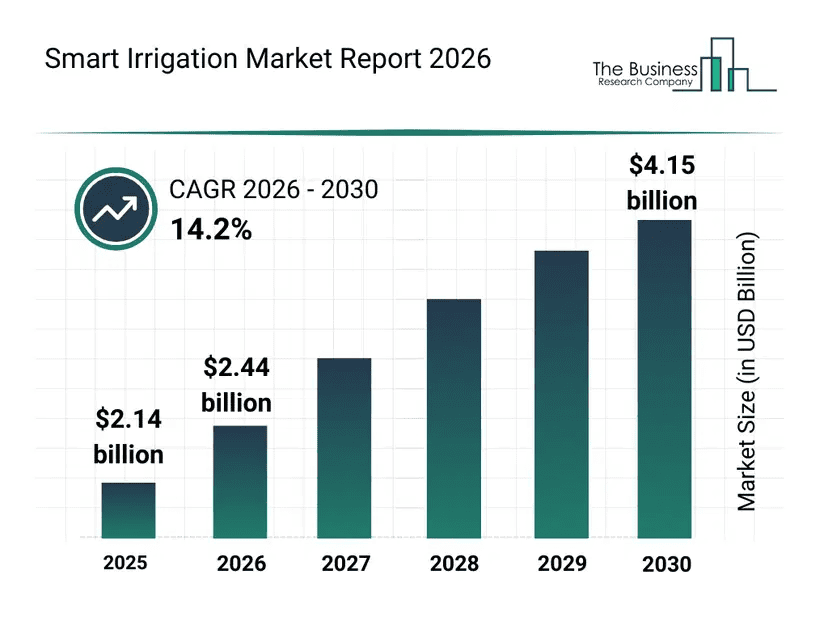
- The smart irrigation market grew from USD 2.14 billion in 2025 and is projected to reach USD 2.44 billion by the end of 2026.
- It is projected to reach USD 4.15 billion by 2030.
- The market will grow at a compound annual growth rate of 14.2% from 2026 to 2030.
In the United States
(Source: psmarketresearch.com)
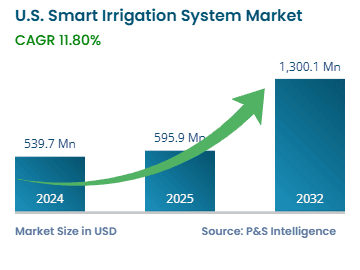
- The U.S. Smart Irrigation System Market was valued at USD 539.7 million in 2024 and grew to USD 595.9 million in 2025.
- The market is expanding at a strong 11.80% CAGR from 2024 to 2032, resulting in USD 1,300.1 million by 2032.
Market Value of Smart Irrigation Worldwide by Components
(Reference: statista.com)
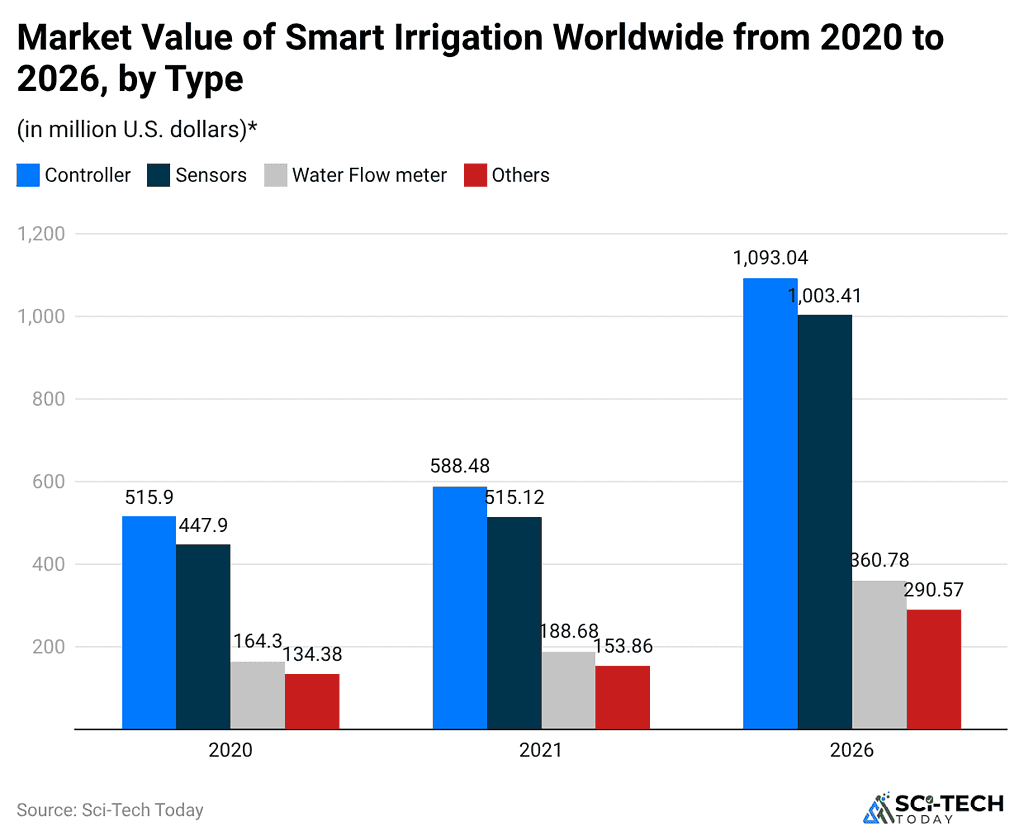
- In 2026, the Controller segment leads the market at USD 1,093.04 million.
- Sensors followed closely at USD 1,003.41 million.
- Water Flow Meters reached USD 360.78 million, while the other segments recorded USD 290.57 million.
Smart Irrigation Market Statistics by System Type
| System Type | Market Overview | Forecasted Growth Rate |
| Weather-Based (ET) Controllers | Accounted for the largest revenue share of 35.64% in 2025. | 13.1% CAGR during 2026-2033. |
| Drip Irrigation Systems | Estimated at approximately USD 3.3-6.2 billion in 2026. | 7%-10% CAGR. |
| Micro Irrigation Systems | The market is valued at USD 10.20 billion in 2026. | 6.2% CAGR. |
| Smart Landscape Irrigation | The market is estimated at approximately USD 8.78 billion in 2026. | 12.4% CAGR. |
| Soil Moisture Sensor Market | Estimated at around USD 450 million in 2026. | 14.33% CAGR. |
By Application
Agricultural (Open Field)
- Future Market Insights reports that open-field cultivation is expected to account for 45.8% of the micro-irrigation market in 2026.
- The market is expected to reach USD 13.1 billion in 2026 and USD 33.0 billion by 2036, at a 9.7% CAGR.
- Drip irrigation systems are expected to hold a 77% market share, while orchards and vineyards will represent 41.0% of crop-type demand.
- The precision farming market is valued at USD 16.8 billion in 2026 and is forecast to reach USD 38.8 billion by 2033 at a 12.7% CAGR.
- According to Fortune Business Insights, the greenhouse irrigation system market is valued at USD 2,543.09 million in 2026 and is projected to reach USD 5,028.06 million by 2034 at an 8.89% CAGR.
- The greenhouse smart irrigation segment was valued at USD 1.4 billion in 2024 and is expected to reach USD 3.2 billion by 2033.
Non-Agricultural
- Residential irrigation solutions are expected to grow at a 10.5% CAGR during 2026-2033.
- According to a report published by Imarc Group, the U.S. smart irrigation market is valued at USD 563.5 million in 2025 and is projected to reach USD 1,903.2 million by 2034 at a 13.90% CAGR.
- Smart irrigation systems can reduce water use by up to 50% compared with conventional timers.
- The landscape irrigation market reached USD 7.81 billion in 2025 and is expected to grow to USD 19.87 billion by 2033 at a 12.4% CAGR.
- The irrigation automation market is valued at USD 7.76 billion in 2026.
- Data Insights Market shows the golf course irrigation system market reached around USD 2.5 billion in 2025 and is projected to grow at a 6% CAGR through 2033.
- The pitch irrigation system market is valued at USD 610.0 million in 2026 and is forecast to reach USD 1,222.6 million by 2036 at an approximate 7.2% CAGR.
Smart Irrigation Market Regional Insights
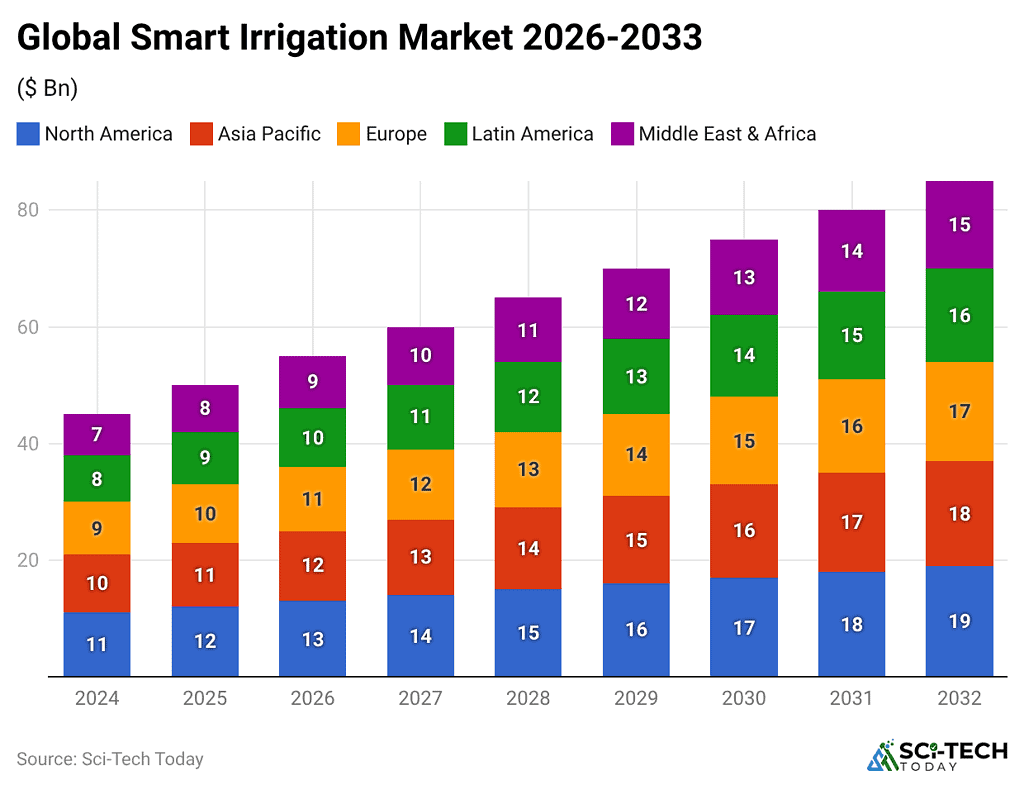
(Reference: skyquestt.com)
- In 2026, North America currently leads the global smart irrigation market, with a value of USD 1.3 billion.
- Meanwhile, Asia Pacific, Europe, Latin America, and the Middle East & Africa are followed by USD 1.2 billion, USD 1.1 billion, USD 1 billion, and USD 0.9 billion, respectively.
Top 5 Companies Investing in Smart Irrigation Systems
- Netafim (Orbia) expanded its manufacturing footprint with a new USD 30,000 m² plant in Hermosillo, its 21st global facility; it launched AI Dosing 5G.
- The company partnered with Amazon India and is undergoing an ownership transition valued at USD 1.2-1.4 billion, according to The Jerusalem Post.
- According to Businesswire, Valmont (Valley) reported a record Q1 2026 EPS of USD 5.51.
- The company also plans to allocate USD 170-200 million toward capital expenditures to launch the AgSense 365 platform and deploy AI sensors on more than 150,000 machines.
- According to sec.gov, Lindsay Corporation secured a USD 80 million MENA irrigation contract, with USD 70 million expected in 2026.
- It acquired a 49.9% stake in Pessl Instruments and increased backlog to USD 151.8 million.
- Toro Company introduced Aqua-Traxx Azul REvive, expanded IntelliDash, and continues to invest 3%-4% of annual revenue in R&D.
- Rain Bird Corporation acquired the assets of OtO Inc. and Adritec Group, while maintaining a combined 52%-62%.
IoT and Smart Irrigation Technologies Market Overview, 2026
- A report published by LinkedIn shows the IoT-based irrigation controller market is valued at USD 1.25 billion in 2026 and is projected to reach USD 4.15 billion by 2033, growing at a 16.8% CAGR.
- Soil moisture sensors provide real-time soil water data to cloud platforms, enabling automatic irrigation adjustments. More than 25% of global irrigated land uses soil moisture monitoring, while agriculture accounts for over 60% of total sensor demand, according to S&S Insider.
- The market is expected to grow from USD 337 million in 2023 to USD 985.31 million by 2032 at a 14.33% CAGR.
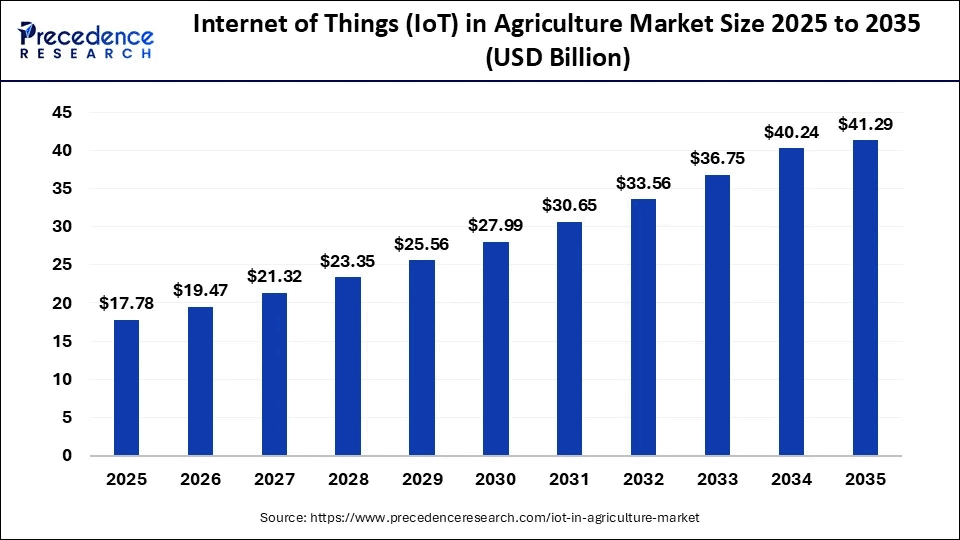
(Source: precedenceresearch.com)
- The broader IoT in Agriculture market is estimated at USD 19.47 billion in 2026 and is forecast to reach USD 41.29 billion by 2035, expanding at an 8.79% CAGR.
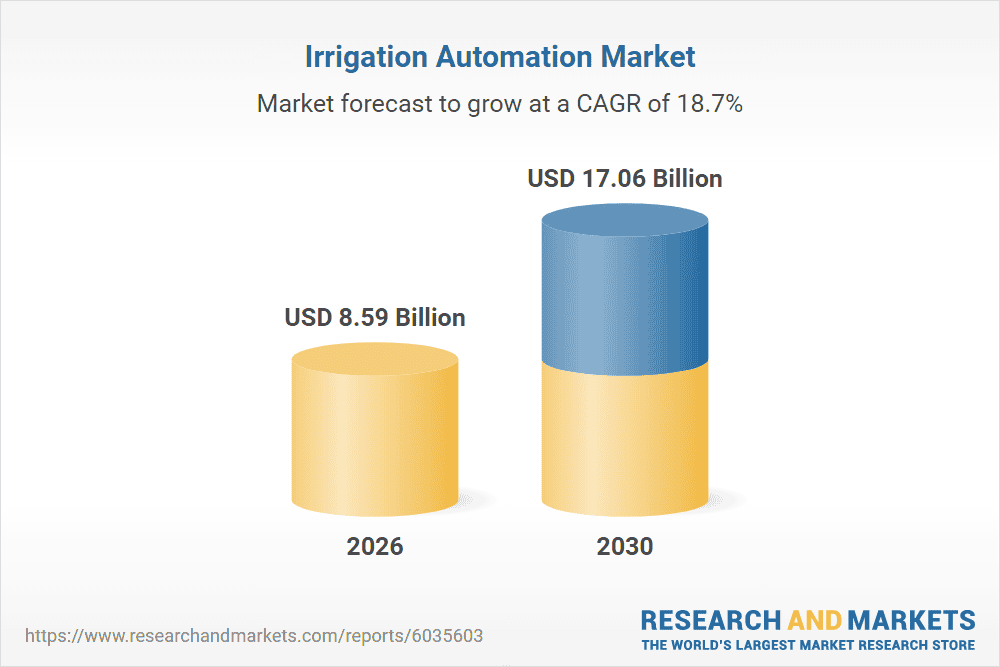
(Source: researchandmarkets.com)
- The Irrigation Automation market is valued at USD 8.59 billion in 2026, up from USD 7.22 billion in 2025, and is expected to reach USD 17.06 billion by 2030 at a 19.0% CAGR.
- IoT- and AI-enabled systems can reduce water use by 20–50% compared with traditional irrigation.
- According to Grand View Research, the Precision Irrigation market is valued at USD 9.3 billion in 2026 and is projected to reach USD 16.6 billion by 2033.
- IoT-enabled sprinkler systems can reduce water consumption by 20%-30% and improve crop yields by 20%-27%.
- The IoT Wireless Irrigation System market is estimated at USD 3.7 billion in 2026, up from USD 3.2 billion in 2025, and is projected to grow at a 14.2% CAGR through 2033.
- Market Research Future also reports that the Digital Agriculture market is valued at USD 28.94 billion in 2026, up from USD 26.15 billion in 2025, and is expected to reach USD 68.42 billion by 2035 at an 11.28% CAGR.
- Hardware, including IoT gateways, sensors, and smart irrigation equipment, accounted for 40.2% of the market in 2025 and remains a key growth driver in 2026.
Water Efficiency and Operational Benefits of Smart Irrigation
- According to epa.gov, smart irrigation controllers can reduce outdoor water use by 20%-50%, while agricultural applications save 10%-40% of water.
- Commercial landscapes, such as parks and golf courses, can achieve water savings of 30%-60%.
- An Arxiv report further stated that IoT-based irrigation systems can save up to 30% of water, while AI-powered irrigation reduces water use by up to 25%.
- Smart sensor systems can reduce water consumption by 47% and increase crop yields by 43%.
- AI-driven precision farming can increase crop yields by 20%-30%.
- Subsurface drip irrigation improves crop water yield by about 25% and reduces evapotranspiration by up to 26%.
- Neural network-based irrigation scheduling lowers water use by 20%-46% while maintaining similar crop yields.
Conclusion
In conclusion, smart irrigation systems are a major advancement for sustainable farming. By using technology to improve how we water crops, these systems help save water and support a greener, more cost-effective way of farming.
As the global population grows, using smart technologies like these is essential for securing food supplies and protecting our planet’s valuable resources. We have shed enough light on Smart Irrigation System Statistics through this article.

Sources
- The Business Research Company
- P&S Intelligence
- AutomatWorld
- Mordor Intelligence™
- Environmental Protection Agency (EPA)
- Arxiv
- Jerusalem Post
- Business Wire
- Lindsay
- SEC.gov
- Precedence Research
- Grand View Research
- Market Research Future
- Future Market Insights
- Fortune Business Insights
- IMARC Group
- Environmental Protection Agency (EPA)
- Data Insights Market