









Overview
Genomics Statistics: Genomics is the study of an organism’s complete set of genes, called the genome. It helps scientists understand how genes work, how they affect health, and how living things grow and change. Unlike traditional genetics, which studies one gene at a time, genomics looks at all genes together and how they interact. With modern DNA sequencing and computer technology, researchers can study genetic information faster and more accurately than ever before.
Genomics has many uses in medicine, agriculture, biotechnology, and disease research. It supports the development of better treatments, early disease detection, and improved crops. As this field continues to grow, genomics is playing a key role in improving healthcare and shaping the future of biological science.
Top Pick
- By 2026, the global genomics market size is projected to reach USD 53.74 billion.
- Pharmaceutical and biotechnology companies are the largest buyers in the genomics market, accounting for 39.8% of total revenue.
- The U.S. genomics market size is expected to reach USD 14.43 billion in 2026.
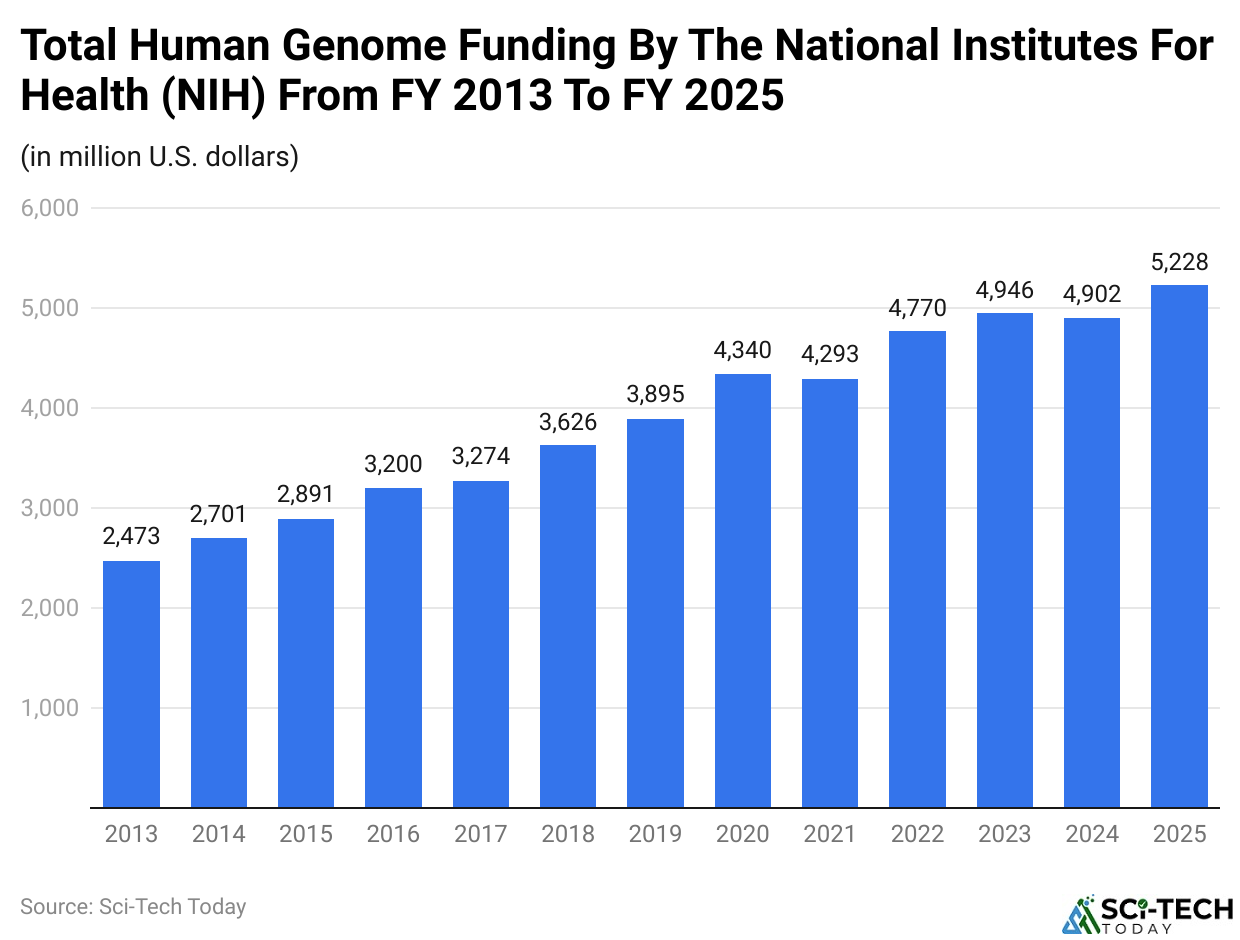
- As of 2025, funding reached around USD 5,228 million, increasing from USD 4,902 million in 2024.
- In FY 2025, NIAID received USD 6.562 billion, making it the second-largest NIH institute.
- The global genetic testing market is valued at USD 21.67 billion in 2025.
- The global direct-to-consumer genetic testing market is valued at USD 3.05 billion in 2025 and is expected to grow to USD 3.79 billion in 2026.
- About 50% of rare diseases are linked to genetics.
- The human genome contains about 28 million methylated CpG sites on average.
Key Facts and Trends in Clinical Genomics
- According to Worldmetrics, about 50% of rare diseases are linked to genetics.
- Exome sequencing finds a cause in 25-30% of children with unexplained intellectual disability.
- Warfarin dosing depends on CYP2C9 (20% variability) and VKORC1 (30%).
- BRCA1 raises risk: 65% breast cancer, 45% ovarian cancer; BRCAness appears in 15% of cases.
- Rett syndrome is due to MECP2 mutations in 95% of patients.
- 23andMe detects cystic fibrosis mutations with 99.9% accuracy.
- Duchenne muscular dystrophy comes from the DMD gene in 90% of cases.
- PKU is found in 1/10,000-15,000 newborns.
- Factor V Leiden occurs in 5%-10% of Europeans; CYP2D6 metabolizes 25% of drugs; approximately 100,000 variants; ACMG lists 59 conditions; the MRCP score helps assess porphyria risk.
- Whole-genome sequencing costs about USD 400; NGS has cut diagnosis time from 5.5 years to 3 months; CRISPR has 500+ trials, with 10% targeting genetic diseases.
DNA Methylation in the Human Genome
- The human genome contains about 28 million methylated CpG sites on average, meaning many DNA locations are chemically modified with methyl groups.
- These methyl marks usually occur at CpG sites, which are specific DNA regions where cytosine is followed by guanine.
- DNA methylation plays a key role in controlling gene activity by turning genes “on” or “off” without changing the DNA sequence itself.
- In simple terms, a large portion of our genetic material is chemically regulated, helping cells decide which genes to use and which to silence.
- This widespread methylation is essential for normal development, cell identity, and maintaining genome stability.
Evolutionary Genomics
- The silver fox (Vulpes vulpes) was domesticated from wild fox populations in less than 50 years through controlled breeding experiments.
- Selection focused mainly on tameness, where only the least aggressive and most human-friendly foxes were bred each generation.
- This short time period led to clear behavioral changes, including reduced fear and increased social behavior toward humans.
- Genetic studies show that multiple loci (different regions of DNA) were involved, meaning domestication was not controlled by a single gene but by many genes working together
Total Human Genomics Funding By The National Institutes of Health (NIH)
(Reference: statista.com)
- The NIH allocated funding for studies associated with the human genome for over ten years. FY 2013-FY 2023 would have most likely shown fluctuations or steady growth in the levels of funding, reflective of the increasing importance and advancement made in research for genomics.
- Genomics statistics reveal that in FY 2023, NIH spent US$5 billion on research in the human genome.
- It thereby supported projects such as genome sequencing, functional genomics studies, bioinformatics development, and clinical applications such as precision medicine.
- As of 2025, funding reached around USD 5,228 million, increased from USD 4,902 million in 2024, indicating a clear growth trend in federal investment in human genome programs.
- The budget assigned for these fiscal years reinforces the initial intent to make genomics a continued priority area for research.
- The NIH base budget remained nearly unchanged at USD 47.1 billion in FY 2024 and FY 2025.
- Around 83% of the NIH budget funds 50,000 competitive grants across 2,500 U.S. research institutions.
- In FY 2025, NIAID received USD 6.562 billion, making it the second-largest NIH institute.
- NIAID supports research on immunity, chronic diseases, HIV/AIDS, influenza, H5N1 bird flu, and COVID-19.
Genomics Market Size
(Source: market.us)
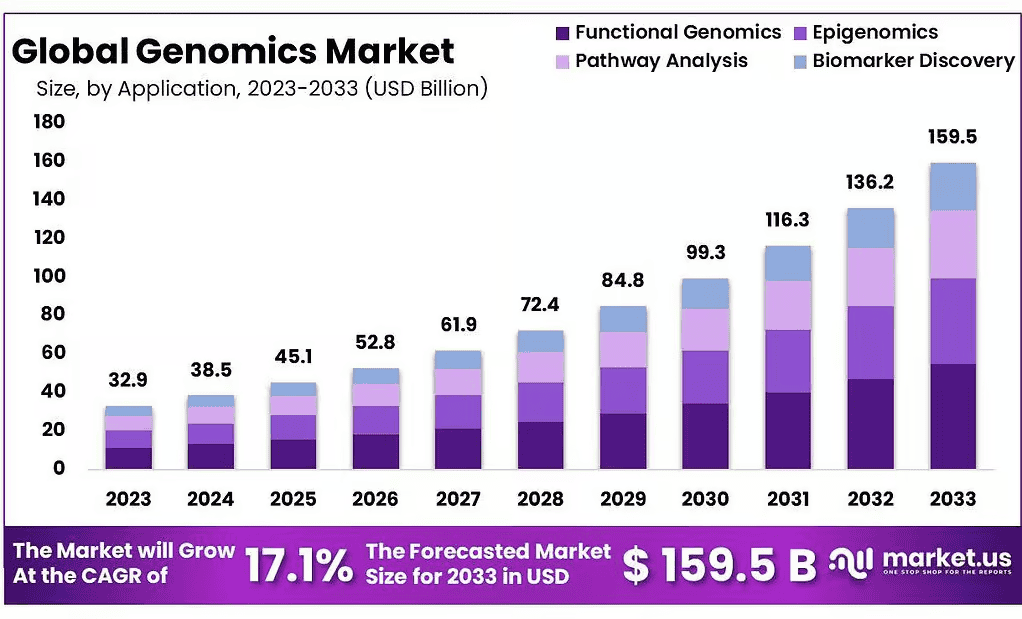
- In 2025, the global genomics market size is USD 46.09 billion, showing strong demand for genetic testing and precision medicine.
- By 2026, the market is projected to reach USD 53.74 billion.
- By 2033, the genomics market is expected to rise sharply to USD 157.47 billion.
- The U.S. genomics market size is expected to reach USD 14.43 billion in 2026 and USD 57.57 billion by 2034, growing at a CAGR of 16.61% from 2025 to 2034.
By Segmental Analyses
(Source: futuremarketinsights.com)
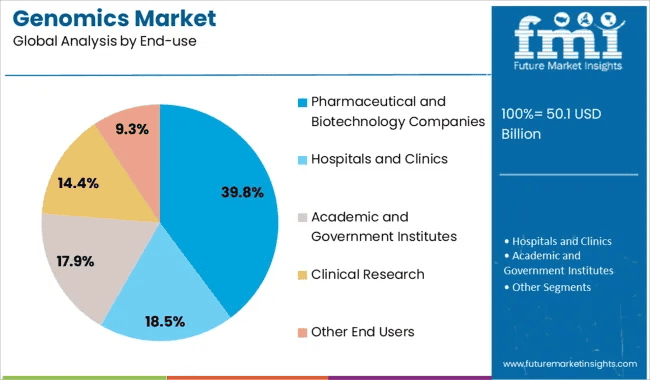
- Pharmaceutical and biotechnology companies are the largest buyers in the genomics market, accounting for 39.8% of total revenue.
- Hospitals and clinics account for 18.5%, while academic and government research institutes account for 17.9%.
- Clinical research organizations represent 14.4%, and other end users account for 9.3% of the market.
- In terms of offerings, genomics products dominate, accounting for 63.1% of total market value, while services account for 36.9%, indicating a clear product-led structure.
- By application, pathway analysis leads with 49% share, followed by biomarker discovery at 32.3% and functional genomics at 18.7%.
- According to Future Market Insights, nearly 40% of demand comes from pharma and biotech firms, and over 81.3% of applications are concentrated in pathway analysis and biomarker discovery.
Genetic Testing Market Size
(Source: snsinsider.com)
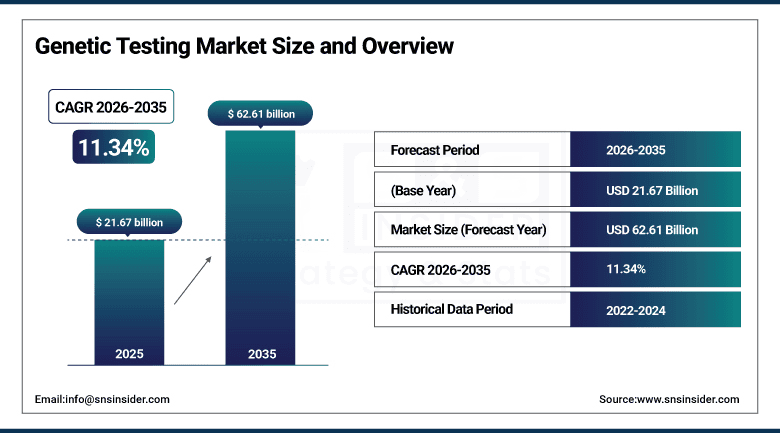
- The global genetic testing market is valued at USD 21.67 billion in 2025.
- The market is expected to reach USD 62.61 billion by 2035.
- The market is projected to grow at a CAGR of 11.34% from 2026 to 2035.
- In 2025, the offline sales channel accounted for 60.32% of the genetic testing market’s revenue.
- The online sales channel is expected to grow at the fastest CAGR of 12.07% during the forecast period.
- Next-Generation Sequencing led the technology segment with a 49.15% market share in 2025.
- The health and wellness predisposition, risk, and tendency segment held the largest share at 51.23% in 2025.
- Regionally, the leading countries were the United States (88%) in North America, followed by Germany (25%) in Europe, China (45%) in the Asia Pacific, Israel (35%) in the Middle East & Africa, and Brazil (48%) in Latin America.
Direct-to-Consumer Genetic Testing Market Highlights
(Source: towardshealthcare.com)
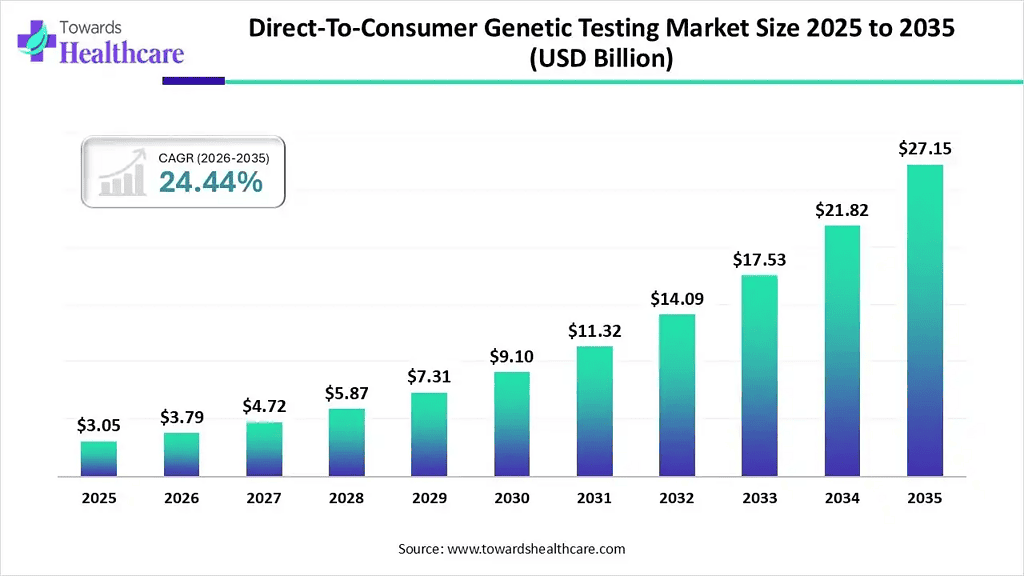
- The global direct-to-consumer genetic testing market is valued at USD 3.05 billion in 2025 and is expected to grow to USD 3.79 billion in 2026.
- The market is projected to reach USD 27.15 billion by 2035, growing at a CAGR of 24.44% from 2026 to 2035.
- North America led the market with a 40% share in 2025, while Asia Pacific held 15% and is expected to record the fastest growth.
- By testing type, genetic health testing accounted for 45% in 2025, while pharmacogenomic testing accounted for 10%.
- By technology, next-generation sequencing captured 50% of the market, and online platforms led the service segment with a 60% share.
Key Trends Shaping the Genetic Testing Market
- Revvity is expanding its genomics strategy with a strong focus on growth in 2026.
- The company is advancing research in multiomics, AI-powered base editing, next-generation sequencing, and immunotherapy.
- NGS is gaining wider use in newborn screening to improve early detection of rare genetic diseases and support personalized treatment.
- Experts believe that stronger collaboration among healthcare providers, researchers, and regulators will accelerate global adoption of NGS.
- Multiomics is helping researchers better understand diseases and improve drug development and clinical trials.
- AI-based base editing is expected to enable safer, more precise gene therapies.
- Automation, AI, and standardized diagnostic tools are improving laboratory efficiency and reducing testing costs.
- Faster regulatory pathways may accelerate the approval of innovative genomic therapies.
Genomics Project Statistics By Country
United Kingdom: 100,000 Genomes project
- In July 2018, Genomics England announced that it had sequenced 71,095 genomes. It was also well set to get to its 100,000 genome target by the end of the year.
- This project will run with around 70,000 NHS patients and will integrate genome sequencing for routine care through the Genomic Medicine Service (GMS), concerning any discoveries in the medical field or the genomics industry of the United Kingdom.
- Genomics statistics state that Illumina has sequencing services, with further support from Genomics England to the tune of £78 million and additional funding from partners such as The Wellcome Trust and the NHS.
Japan – Initiative On Rare And Undiagnosed Diseases (IRUD)
- Launched in 2015, IRUD has now expanded to be a consortium that engages more than 2000 registrants, including around 34 clinical centres and over 400 hospitals, with a network of about 500 physicians.
- There is an annual budget ranging between CNY¥600 million and CNY¥700 million.
- The program aims to take advantage of international data-sharing and develop high-tech solutions to unsolved cases.
China-100,000 Genomes Project
- Launched in 2017, China’s first national genome research effort involves diverse ethnic groups.
- The project, aided by the Ministry of Science and Technology with a budget of RMB 89.85 million (approximately US$13.2 million), is being headed by Harbin Institute of Technology, and its purpose is to map out health-genomic interactions.
- The study project is divided into three phases, which will sequence and analyse 100,000 genomes in four years.
Australia – Genomics Health Futures Mission
- The Genomics Health Futures Mission, which was rolled out in May 2018, is funded to the tune of AUS$500 million over a period of 10 years into research, clinical trials, and technology development.
- Mackenzie’s Mission is said to spearhead the flagship project of the health mission; thus far, it focuses on prenatal genetic screening.
- The mission accentuates discussion, nationally standardises, and encourages partnerships with philanthropists and businesses.
Saudi Arabia – Saudi Human Genome Program
- The Saudi Human Genome Program, a five-year private initiative that is estimated to cost about US$200 million, will sequence 100,000 genomes to help the Kingdom tackle problems regularly evident in consanguinity-associated genetically inherited diseases and chronic diseases such as diabetes.
- As of 2016, the project has sequenced more than 10,000 samples and discovered over 2,000 disease-related variants.
United States – All Of Us Research Program
- The NIH program collects data from 1 million Americans regarding all possible factors affecting health.
- Their focus will particularly be on underrepresented groups, and they plan to sequence 200,000 genomes every year through genome centres, along with surveying health-related and lifestyle information.
- This is part of the Precision Medicine Initiative, where the total inception funding was given to US$130 million in 2016.
France: Genomic Medicine 2025
- Massive investments amounting to €670 million will be injected into the establishment of sequencing centres and bioinformatics platforms within a period of five years in France.
- As of 2020, the aim was to sequence 235,000 genomes with a focus on cancer, rare diseases, and diabetes towards the integration of genomic medicine in enhancing patient care.
Final Remarks
Genomics has changed the way we study genes and understand living organisms. It helps doctors find better treatments, supports the growth of healthy crops, and improves research on diseases. As technology continues to develop, genomics will become even more useful in healthcare and agriculture.
At the same time, it is important to use genetic information carefully and responsibly. With continued research, genomics will help create a healthier and better future for everyone
FAQ
Genetics studies individual genes and inheritance; genomics studies the entire genome and the interactions among all genes.
No, Genomics studies all genes and helps understand many diseases, not one specific disease.
Genomics predicts disease risk by analyzing genetic variants associated with inherited health conditions.

Sources