





At a Glance
Sleep Statistics: Sleep is one of the most important parts of a healthy life. It gives your body time to rest, repair, and recharge for the next day. Good sleep helps improve memory, mood, focus, and overall health, while poor sleep can affect your energy, productivity, and immune system. Yet, many people struggle to get enough quality sleep because of stress, busy schedules, or too much screen time.
Learning why sleep matters and building healthy sleep habits can make a big difference. Even small changes to your daily routine can help you sleep better, wake up refreshed, and enjoy a healthier, happier life.
In Focus
- 30.5% of U.S. adults, or about 1 in 3, sleep for less than 7 hours each night.
- Sleep deprivation costs the U.S. economy up to USD 411 billion every year.
- Around 83.7 million U.S. adults have obstructive sleep apnea.
- Poor sleep causes more than 6,000 fatal road crashes in the U.S. every year.
- Up to 70% of people who snore have sleep apnea, while 80% to 90% of sleep apnea cases remain undiagnosed worldwide.
- About 91% of women surveyed sleep for less than 8 hours each night.
- Around 83% of adults with depression experience at least one symptom of insomnia.
- Melatonin use among adults increased by 425% between 1999 and 2018.
- About 53% of people now use wearable devices to track their sleep, compared with 16% in 2025.
- Nearly 40% of people with obesity worldwide have sleep apnea, and 70% of people with sleep apnea are obese.
General Sleep Statistics
- Whereas sleep cycles differ in length, every sleep cycle can last for almost 90 minutes.
- Rapid Eye Movement (REM) sleep accounts for almost 20% to 25% of a well-grown adult’s total sleep time.
- As the sleep cycle progresses through non–rapid eye movement (NREM) sleep, different bodily functions slow down or stop altogether. Metabolism decreases by almost 15%, and both the heart rate and blood pressure also decrease.
- In the median, we all spend almost 2 hours every night dreaming, generally during Rapid Eye Movement.
Key Facts and Trends of United States Sleep Statistics by Duration and Cycles
- Most adults need 7 or more hours of sleep each night, yet over 33% sleep for less than 7 hours.
- A normal night’s sleep includes 4 to 6 sleep cycles, with each cycle lasting about 90 minutes.
- REM sleep makes up 20% to 25% of total sleep, while metabolism drops by around 15% during NREM sleep.
- Adults spend about 2 hours dreaming each night, mainly during REM sleep.
- People sleep on their side 54%, back 38%, and stomach 7% of the time.
- Hawaii has the highest share (43%) of adults sleeping 7 hours or less, while Boulder County, Colorado, has the lowest (23%).
Work and Sleep
- Poor sleep costs the U.S. economy over USD 411 billion each year.
- Around 4.8 in 10 workers feel tired during the day, while 7 in 10 are tired after work.
- Active-duty military members are 34% more likely to report insufficient sleep.
- About 55% of nurses experience insomnia.
- Drowsy driving causes over 6,000 fatal crashes annually.
- Workplace errors related to insomnia cost about USD 31.1 billion every year.
Snoring and Sleep Disorders
- More than 70 million men, 50 million women, and nearly 20 million children snore in the U.S.
- Around 57% of men, 40% of women, and 27% of children snore.
- Up to 70% of snorers have sleep apnea.
- Obstructive sleep apnea affects about 1 billion adults worldwide, and 80% to 90% of cases remain undiagnosed.
- A 10% increase in body weight can increase the risk of obstructive sleep apnea by 6 times.
Insomnia and Other Sleep Disorders
- Up to 66% of adults experience occasional insomnia symptoms.
- About 10% to 15% have chronic insomnia.
- Women are 40% more likely than men to have insomnia.
- Around 50 million to 70 million people have ongoing sleep disorders.
- Sleep disorders affect 39% to 47% of perimenopausal women and 35% to 60% of postmenopausal women.
- Restless legs syndrome affects 5% to 10% of adults, while narcolepsy affects about 1 in 2,000 adults.
Pregnancy, Children, and Parents
- Around 50% of pregnant people experience insomnia-like symptoms, and up to 50% snore during pregnancy.
- Obstructive sleep apnea affects up to 1 in 5 pregnant people.
- Babies need 12 to 16 hours of sleep daily, while children aged 1 to 12 need 9 to 14 hours, depending on age.
- Around 20% to 30% of children have trouble falling or staying asleep.
- About 58% of middle school students and 72% of high school students get less sleep than recommended.
- New mothers lose an average of 62 minutes of sleep, compared with 13 minutes for new fathers.
Mental Health and Lifestyle
- Around 40% of people with insomnia have a diagnosable mental health condition.
- About 83% of adults with depression have at least one insomnia symptom.
- Stress and anxiety are the top sleep problems for 54% of adults.
- Watching TV before bed is common, with 53% of adults doing so.
- Adults spend about 3 hours 30 minutes on social media before bedtime.
Sleep Aids, Diet, and Environment
- About 56% of adults used a sleep aid in the past month, and 49% used melatonin.
- Melatonin use increased by 425% between 1999 and 2018.
- Around 88% of melatonin products have inaccurate labels.
- Drinking more than 2 alcoholic drinks daily for men and more than 1 for women can reduce sleep quality by 39%.
- About 94% of Americans consume caffeinated drinks, and 64% do so every day.
- The ideal bedroom temperature for sleep is around 65°F, while infants may sleep better at up to 69°F.
Sleep Health Among Children
- The National Sleep Foundation (NSF) recommends 14-17 hours of sleep for newborns, 12-15 hours for infants, 11-14 hours for toddlers, 10-13 hours for preschoolers, and 9-11 hours for school-aged children.
- About 44% of children do not regularly get the recommended amount of sleep.
- Only 14% of newborns meet the recommended sleep duration, while 66% of toddlers get enough sleep.
- Around 57% of parents underestimate how much sleep their children need.
Parents’ Sleep Estimates vs. NSF Recommendations
| Age Group | NSF Recommended Sleep (hours) | Average Parent-Reported Need | Parents Underestimating |
| 0-3 months | 14-17 | 10 hours 34 minutes | 78% |
| 4-11 months | 12-15 | 10 hours 33 minutes | 68% |
| 1-2 years | 11-14 | 10 hours 10 minutes | 61% |
| 3-5 years | 10-13 | 9 hours 28 minutes | 46% |
| 6-13 years | 9-11 | 8 hours 42 minutes | 49% |
Women’s Sleep Health Statistics
- Around 91% of respondents slept less than 8 hours per night, while 30% slept under 6 hours.
- About 48% said poor sleep affected their mental health or overall well-being, and 37% felt exhausted on at least 3 mornings each week.
(Source: cdn.shopify.com)
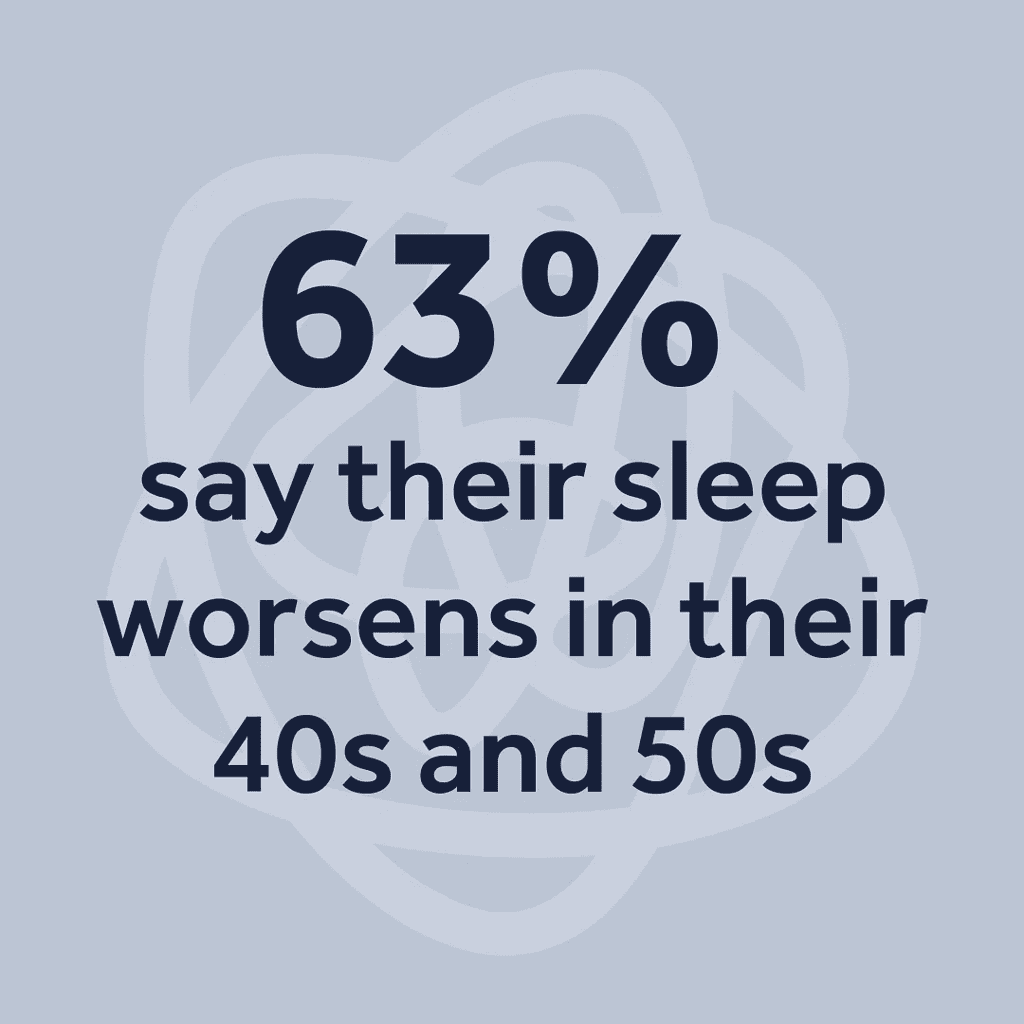
- Around 63% reported worse sleep, especially during their 40s and 50s, when sleep becomes lighter and more interrupted.
- About 66% took more than 10 minutes to fall back asleep after waking, while 25% needed over 30 minutes. Nighttime waking reduced sleep by 20 to 90 minutes.
- Around 30% said pain disturbed their sleep, and 56% of people with insomnia also had neck or back pain. Only 9% with neck pain slept 8 hours.

(Source: cdn.shopify.com)
- About 40% of women rated their sleep as poor, 75% experienced sleep disruption, and 12% had disruptions most nights.
- Only 16 respondents reported no sleep or pain symptoms. Around 29% consulted a GP, 7% saw a specialist, 7.5% received hormone therapy, and women with 3 or more symptoms were 2.5 times more likely to receive medication than a referral.
Top Barriers to Good Sleep
- A survey published by Resumed, stress or anxiety is the biggest barrier to good sleep, affecting 39% of people.
- Work-related demands reduce sleep quality for 22% of adults.
- Screen use before bed affects 21% of people.
- Household responsibilities disrupt sleep for 19% of adults.
- Sleep disorders are a major barrier for 18% of people.
People Often Ignore Sleep Problems
- Around 20% of people do not think their sleep problems are serious.
- About 17% consider poor sleep a normal part of life.
- Nearly 15% wait until health problems become severe before seeking help.
Health Problems Affecting Sleep
(Reference: healthmatch.io)
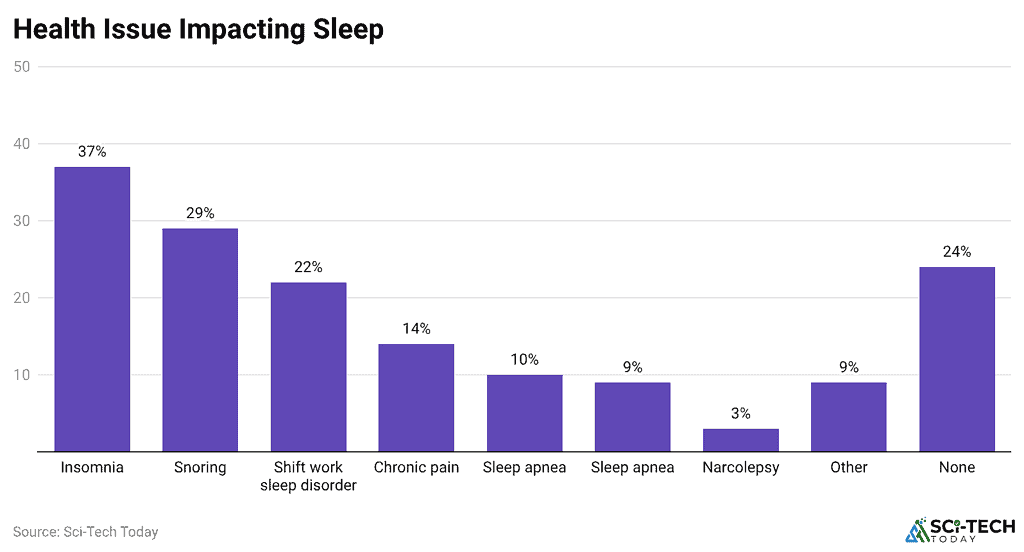
- Insomnia is the leading health issue, reported by 37% of respondents, indicating a major unmet need in sleep management solutions.
- Snoring affects 29%, while shift work sleep disorder impacts 22%, highlighting lifestyle-linked sleep disruption.
- Chronic pain (14%), sleep apnea (10%), and additional sleep apnea cases at 9% further weaken overall sleep quality.
- Narcolepsy is less common at 3%, other conditions account for 9%, and 24% report no sleep-related health issue.
Global Sleep Gap Overview
| Country | Sleep Quality Rank | Share Who Rank Sleep as Important | Share Who Take Action to Improve Sleep |
| Japan | #1 | 76% | 22% |
| China | #2 | 86% | 78% |
| India | #3 | 90% | 78% |
| Brazil | #4 | 94% | 86% |
| Poland | #5 | 79% | 68% |
| Korea | #6 | 85% | 49% |
| Mexico | #7 | 90% | 85% |
| Singapore | #8 | 79% | 60% |
| Germany | #9 | 81% | 59% |
| US | #10 | 76% | 62% |
| Australia | #11 | 79% | 64% |
| France | #12 | 61% | 59% |
| UK | #13 | 80% | 55% |
Chronic Health Conditions by Sleep Duration
(Source: healthmatch.io)
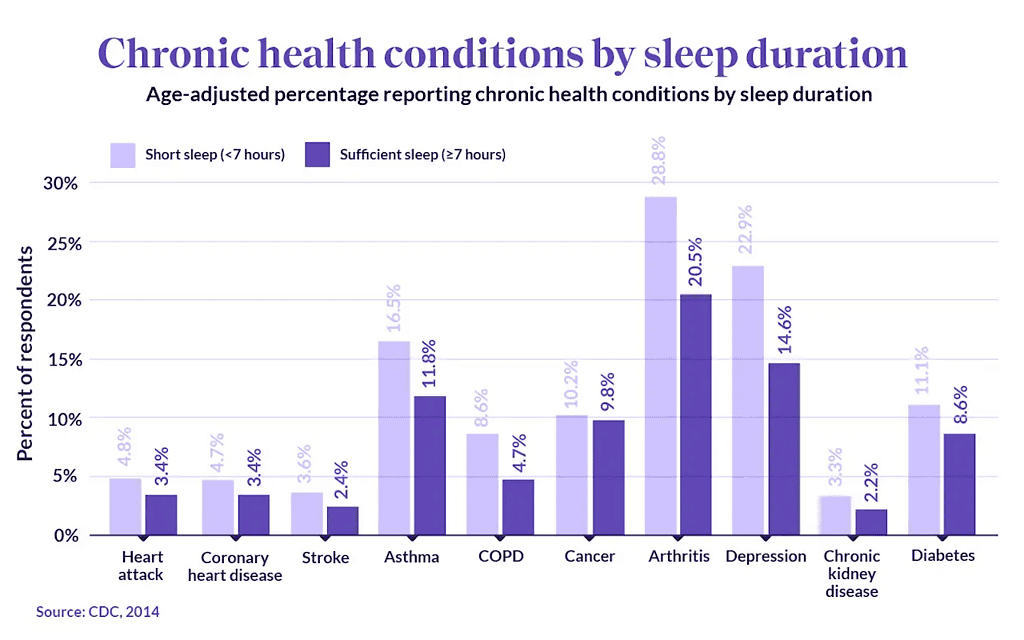
- The chart compares adults with short sleep (less than 7 hours) to those with sufficient sleep (7+ hours) across major chronic diseases.
- For heart attack, 4.8% of short sleepers report the condition, versus 3.4% among sufficient sleepers, suggesting higher cardiovascular risk when sleep is reduced.
- Coronary heart disease shows 8.4% prevalence in short sleepers compared with 6.3% in sufficient sleepers, while stroke affects 3.9% versus 2.4%, respectively.
- Asthma is reported by 15.5% of short sleepers against 11.8% of sufficient sleepers; COPD impacts 10.6% versus 4.7%, indicating notably higher respiratory burden with limited sleep.
- Cancer prevalence is 9.8% among short sleepers and 7.3% among those sleeping 7+ hours.
- Arthritis shows the largest gap: 28.8% of short sleepers compared with 20.5% of sufficient sleepers, underlining a strong association between pain-related conditions and reduced sleep.
- Depression is reported by 25.2% of short sleepers versus 14.6% of sufficient sleepers, signaling a major mental health impact of inadequate sleep.
- Chronic kidney disease affects 3.2% of short sleepers and 2.3% of sufficient sleepers, while diabetes is seen in 11.1% versus 8.6%.
Wearable Devices and Professional Sleep Care Statistics
- About 53% of people use wearable devices to track their sleep, up from 16% in 2025.
- According to ResMed, nearly 39% check their sleep at least once a week using a wearable device.
- The most popular sleep trackers are smartwatches (58%), fitness bands (36%), and smart rings (22%).
- Around 62% of wearable users would seek medical advice if their device showed a possible risk of sleep apnea.
- Although 66% say they would seek professional help for sleep problems, only 23% have done so.
- People also rely on friends (24%), family (24%), and search engines (22%) for sleep advice.
- Globally, 48% have received sleep guidance from a doctor, while 34% have never sought professional advice.
Sleep Deprivation Statistics
(Source: mybigcommerce.com)
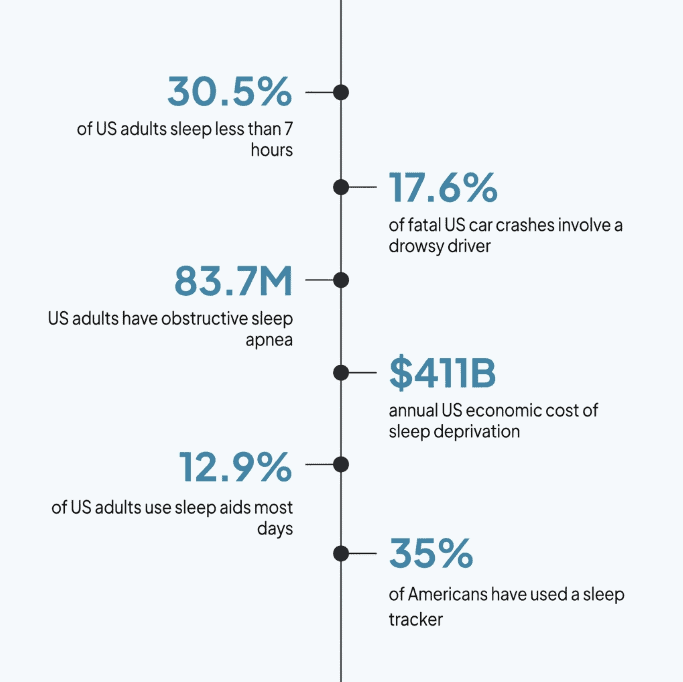
- 30.5% of U.S. adults, or about 1 in 3, sleep for less than 7 hours each night.
- About 17.6% of fatal car crashes in the U.S. involve a drowsy driver.
- An estimated 83.7 million U.S. adults have obstructive sleep apnea.
- Sleep deprivation costs the U.S. economy up to USD 411 billion every year.
- Around 12.9% of U.S. adults use sleep aids on most days or every day.
- 35% of Americans have used an electronic sleep tracker to monitor their sleep.
Financial Impact of Sleep Loss
- A report shared by Mysleepage shows that insufficient sleep costs the U.S. economy up to USD 411 billion each year, equal to about 2.28% of the country’s GDP.
- Employees who sleep less than 6 hours per night lose about 6 working days each year because of absenteeism and reduced productivity.
- Increasing average sleep from under 6 hours to 6-7 hours could add nearly USD 226 billion to the U.S. economy.
- Drowsy driving causes an estimated USD 109 billion in annual economic losses in the U.S., excluding property damage.
Global Sleep Apnea Device Market Outlook
(Source: market.us)
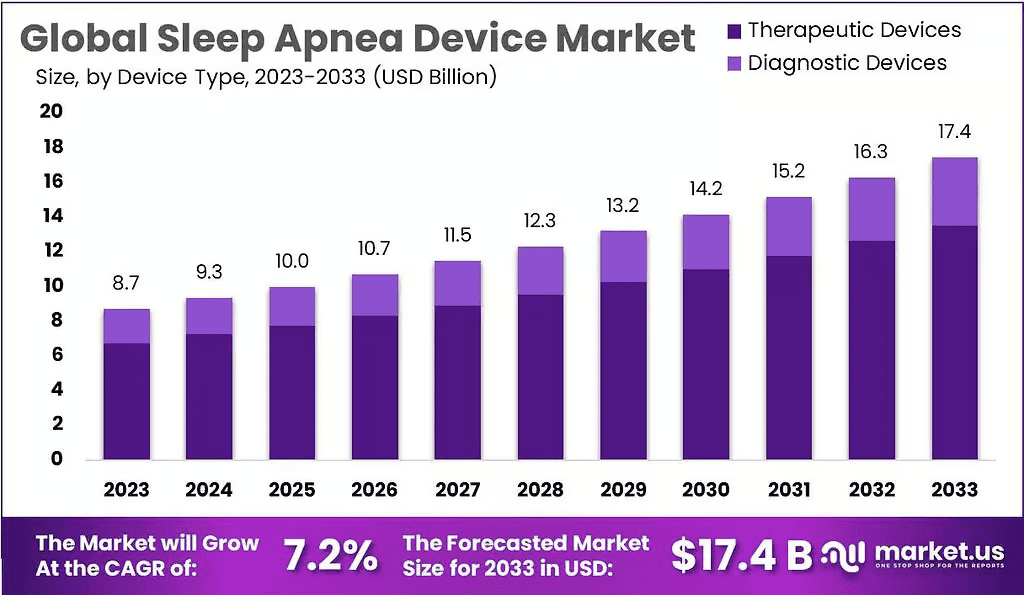
- In 2025, the global sleep apnea device market is valued at about USD 10.0 billion.
- In 2026, the market is projected to reach roughly USD 10.7 billion.
- By 2033, the market size is forecast to grow to around USD 17.4 billion, driven by a CAGR of 7.2% from 2023 to 2033.
- Nearly 40% of people with obesity worldwide have sleep apnea.
- About 70% of people diagnosed with sleep apnea are obese.
- In the U.S., sleep apnea devices such as CPAP and PSG typically cost between USD 600 and USD 800.
- Therapeutic devices account for 76.8% of the global sleep apnea device market.
- North America holds 47.6% of the global market revenue.
- Globally, sleep apnea affects 2% to 5% of women and 3% to 7% of men.
Wrapping Up
Good sleep is one of the best things you can do for your health. It helps your body recover, keeps your mind sharp, and gives you energy for the day. Poor sleep can affect your mood, focus, and overall well-being.
By following a regular sleep schedule and healthy bedtime habits, you can enjoy better rest and improve your quality of life. Small changes today can lead to healthier, happier days ahead.
FAQ
Most adults need 7-9 hours of sleep each night for good health.
Stress, caffeine, irregular schedules, and screen time before bed are common causes.
Yes, short naps of 20-30 minutes can boost energy without affecting nighttime sleep.
Foods rich in magnesium, melatonin, and tryptophan, such as almonds, bananas, and cherries, may help.

Sources