









Overview
Vitamin and Supplements Industry Statistics: People today are paying more attention to their health than ever before, and vitamins and supplements have become part of their daily routine. Many use them to boost immunity, improve energy, support fitness, and fill nutritional gaps in their diets. Growing health awareness, busy lifestyles, an aging population, and easier access through online shopping are driving demand worldwide. As a result, the vitamins and supplements industry continues to grow at a steady pace, with companies introducing new products to meet changing consumer needs.
This article explores the latest vitamins and supplements industry statistics, including market size, consumer habits, spending trends, and the key factors shaping the future of this fast-growing market.
Spotlight Feature
- The global vitamins and supplements market was valued at USD 138.7 billion in 2025 and is projected to reach USD 242.5 billion by 2033, growing at a 6.4% CAGR.
- The global dietary supplements market is expected to increase from USD 265 billion in 2025 to USD 280 billion in 2026 and USD 308 billion by 2028.
- Asia-Pacific (APAC) leads the market with a 48.9% share, valued at USD 63.7 billion.
- North America generated USD 82.4 billion, accounting for 39%-39.1% of the global market.
- Multivitamins dominate with a 47.5% market share, while tablets lead product formats with 38.5%.
- Adults represent the largest consumer segment with a 46.5% share, and pharmacies account for 43.4% of sales.
- The multivitamin capsules and tablets market will grow from USD 29.95 billion (2025) to USD 40.6 billion (2030) at a 6.20% CAGR.
- Around 75% of U.S. adults use supplements, 91% believe they support health, and 69% prefer personalized supplement plans.
- Beauty-from-within (11.4%), gut health (11.2%), and postbiotics (10.9%) are the fastest-growing supplement categories.
- In the U.S., vitamins (27.5%) remain the largest supplement category, while sports nutrition is growing the fastest at 8.4% annually.
Global Vitamins and Supplements Market Outlook
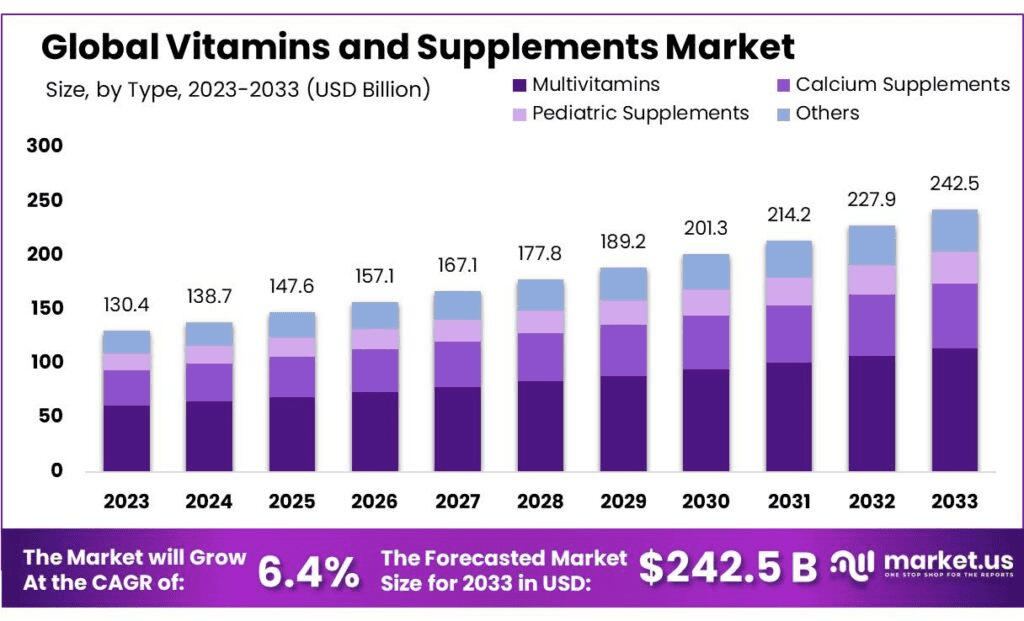
(Source: market.us)
- The global vitamins and supplements market was valued at USD 138.7 billion in 2025.
- It is projected to reach USD 148.6 billion (approx.) in 2026 and is expected to expand further to USD 242.5 billion by 2033.
- This growth reflects a compound annual growth rate of 6.4% between 2023 and 2033.
- Multivitamins lead the market with a 47.5% share because they provide a wide range of essential nutrients in one product.
- Tablets hold the largest product share at 38.5%, mainly due to their convenience and accurate dosage.
- Adults account for the biggest consumer segment with a 46.5% share, supported by growing health awareness.
- Pharmacies and drugstores are the top sales channel, capturing 43.4% of the market as consumers trust them for health products.
- The Asia-Pacific (APAC) region leads the market with a 48.9% share, valued at USD 63.7 billion.
Average Revenue Per Capita Trend
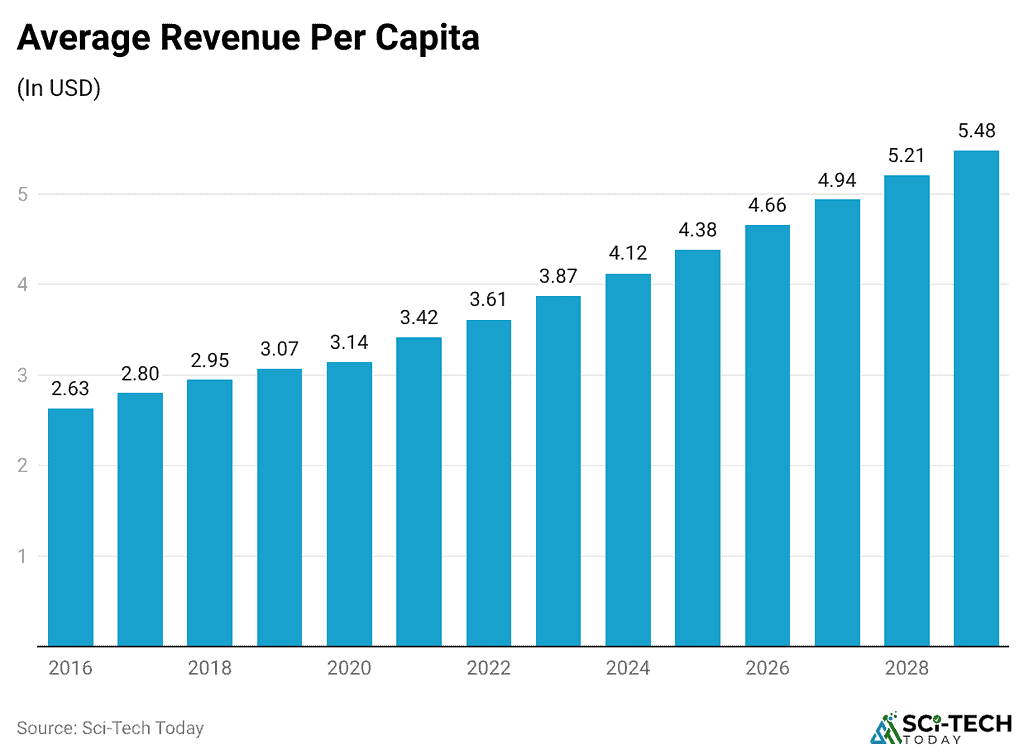
(Reference: statista.com)
- In 2025, average revenue per capita is estimated at around USD 4.66, indicating healthy growth.
- By 2026, it is projected to rise further to USD 4.94.
- Looking ahead, average revenue per capita is expected to reach USD 5.48 by 2029.
Global Dietary Supplements Market Size Outlook
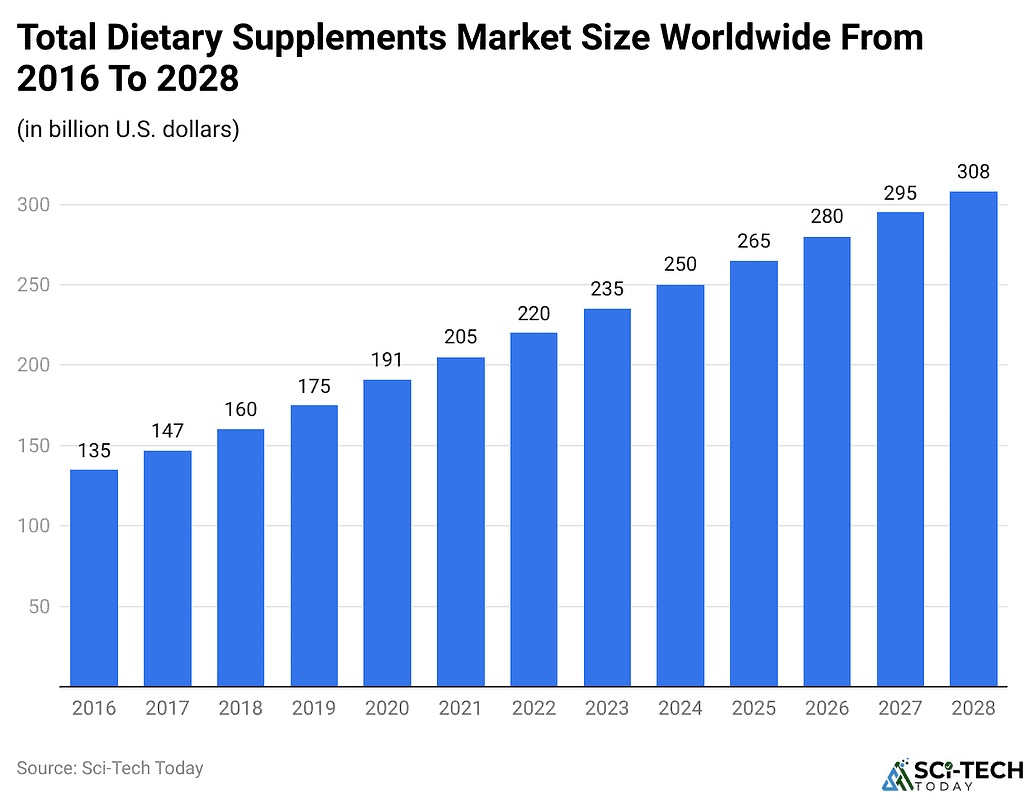
(Reference: statista.com)
- The global dietary supplements market is valued at about USD 265 billion in 2025, and by 2026 it will reach around USD 280 billion, supported by rising health awareness.
- By 2027, it is projected to climb to USD 295 billion, and further to USD 308 billion in 2028, indicating a steady upward trend.
U.S. Dietary Supplement Usage Overview
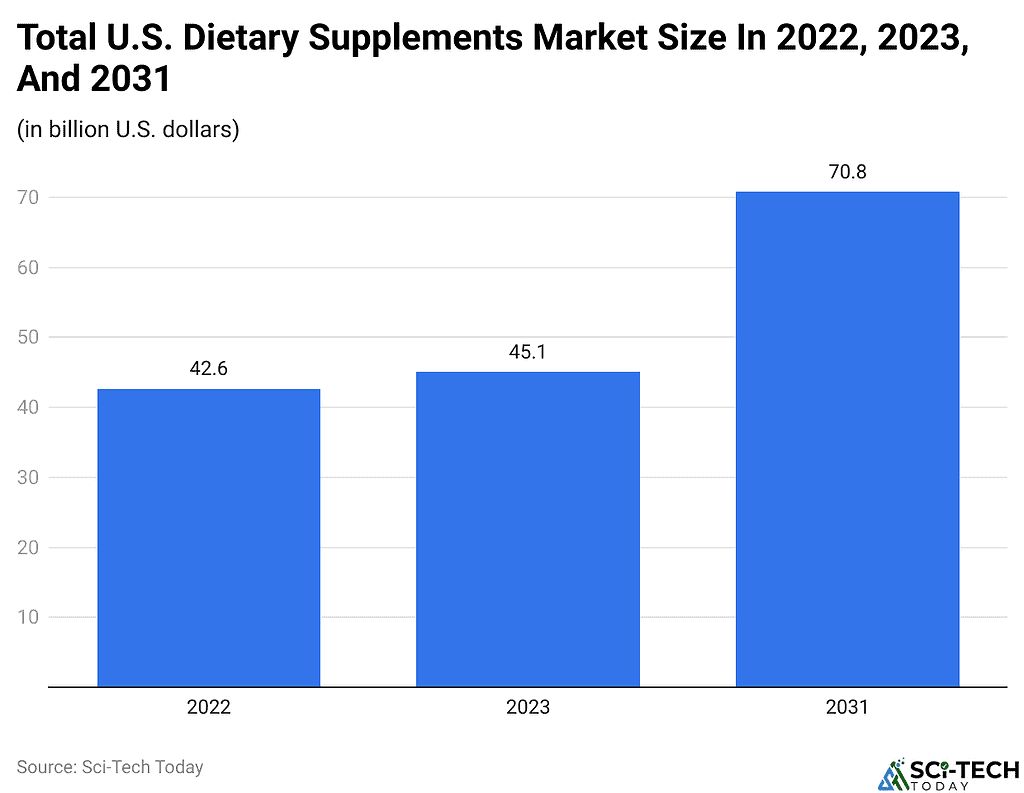
(Reference: statista.com)
- The U.S. dietary supplement market is projected to exceed USD 70 billion by 2031, rising from roughly USD 43 billion in 2022.
- Kantar’s 2024 survey data indicates around 15.8 million “Heavy users” and 1.7 million “Medium users” of vitamin and supplement products in the U.S.
Regional Insights of the Vitamins and Supplements Market
- Persistence Market Research reported that North America leads the market with USD 82.4 billion in sales, accounting for around 39%-39.1% of the global market.
- Europe follows with an estimated USD 48-52 billion, supported by strong preventive healthcare habits.
- According to Market Data Forecast, Asia-Pacific is expected to generate USD 54-59 billion, driven by rising health awareness in China and India.
- Latin America (USD 11-13 billion) and the Middle East & Africa (USD 9-11 billion) remain smaller but growing markets.
Multivitamin Capsules and Tablets Market Outlook
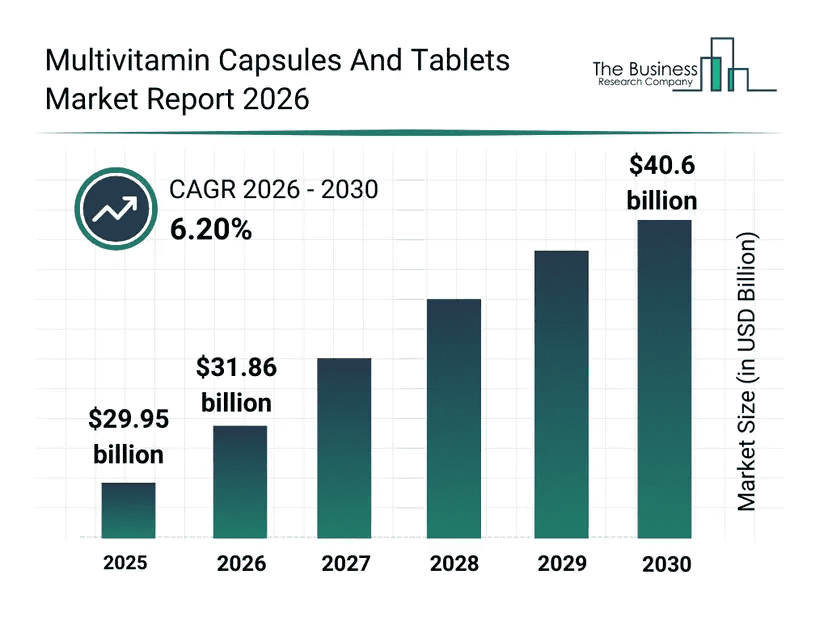
(Source: thebusinessresearchcompany.com)
- The global multivitamin capsules and tablets market was valued at USD 29.95 billion in 2025 and is expected to reach USD 31.86 billion in 2026.
- The market is projected to grow at a 6.20% CAGR from 2026 to 2030.
- By 2030, the market is forecast to reach USD 40.6 billion.
Intake of Vitamins And Supplements
- The most recent figures available from the vitamin and supplement industry show that 63.7% of adults and 44.9% of children who reported taking multivitamins (MVM) did so consistently throughout 30 days.
- Of those who took vitamin D, 33.9% of children and 66.9% of adults continued to take it every day for the whole month.
- With a predicted value of USD 2,520.1 million in 2024 and a CAGR of 4.7% through 2034, the children’s health supplement market is expected to be valued at USD 3,985.4 million by 2034, according to current figures from the vitamin and supplement industry.
| Attributes | Key Insights |
| Global Children’s Health Supplement Market Size (2024E) | USD 2,520.1 million |
| Market Forecast for Children’s Health Supplement Industry (2034F) | USD 3,985.4 million |
| Value-based CAGR (2024 to 2034) | 4.7% |
- With 74% of American adults using dietary supplements and 55% identifying as “regular users”, the topline results from the 2023 CRN Consumer Survey on Dietary Supplements validate the mainstream position of supplements and the significant role they play in the lives of most Americans.
Health Purposes
- Recent figures from the vitamin and supplement business show that 25% of customers worldwide have utilised supplements to improve their physical health.
- 22% of customers worldwide have used vitamins to improve their emotional and mental health. According to the most recent data from the vitamin and supplement business, key constituents in this category, such as omega-3 fatty acids, B vitamins, and adaptogenic botanicals, have been demonstrated to assist memory, stress management, and cognitive performance.
Gummy Vitamins
The global market for gummy vitamins is projected to be valued at USD 4.3 billion in 2023 and USD 6.9 billion by the end of 2033. From 2023 to 2033, the global market for gummy vitamins is expected to grow at a 4.8% compound annual growth rate.
Weight Loss Supplements
By 2032, the value-based compound annual growth rate (CAGR) of the weight loss dietary supplement market is projected to reach USD 55,574.6 million, representing a rise in revenue from USD 31,032.6 million in 2032.
Vitamin and Supplements Industry User Statistics, 2026
- According to crnusa.org, around 75% of U.S. adults use dietary supplements, showing that these products have become a regular part of daily health routines.
- Nearly 91% of users believe supplements help maintain their overall health.
- About 69% of consumers consider a personalized supplement plan important when choosing products.
- Multivitamins remain the most commonly used supplements, while omega-3s, probiotics, melatonin, collagen, and fiber continue to gain popularity. Supplement users are also more likely to follow healthy lifestyles than non-users.
- Among non-users, 41% say they do not feel they need supplements, while 27% identify cost as the main reason for not using them.
- More than 8,850 supplement users found growing demand for personalized supplement recommendations and digital health tools.
Global Supplement Categories Growth Outlook
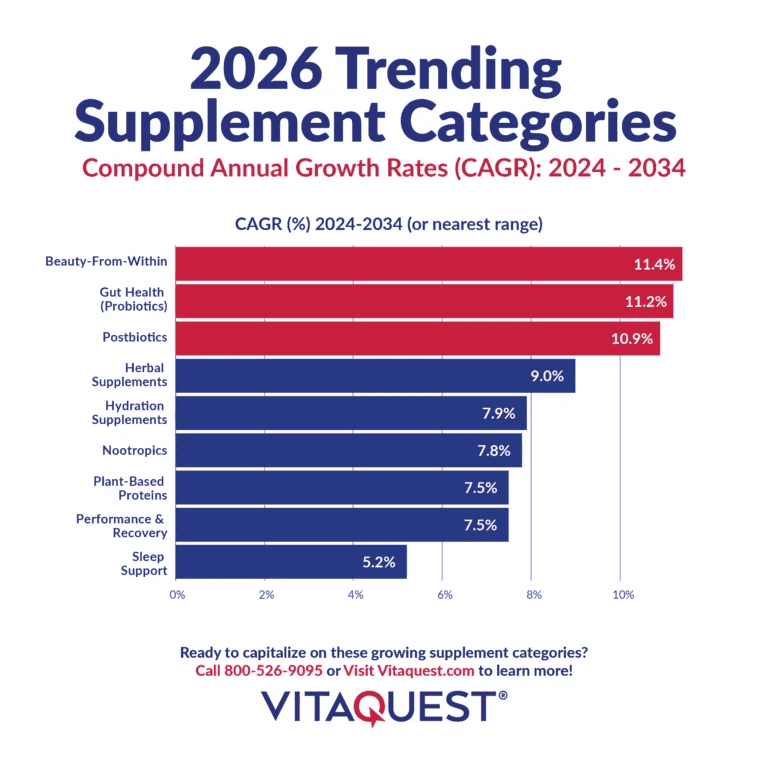
(Source: vitaquest.com)
- Beauty-from-within supplements are expected to grow the fastest at 11.4%, followed by gut health (probiotics) at 11.2% and postbiotics at 10.9%.
- Herbal supplements are projected to grow at 9.0%, while hydration supplements (7.9%) and nootropics (7.8%) continue to expand as consumers focus on natural and cognitive health products.
- Plant-based proteins and performance & recovery supplements are each forecast to grow at 7.5%, while sleep support shows a slower growth rate of 5.2%.
United States Dietary Supplement Category Trends
- According to Vitaquest, vitamins lead the U.S. dietary supplement market with a 27.5% share, followed by specialty ingredients (21.8%), herbs and botanicals (19.2%), sports nutrition (15.2%), meal replacements (10.3%), and minerals (5.9%).
- Sports nutrition is the fastest-growing category, increasing 8.4% year over year and expected to add USD 3.86 billion by 2028.
- Specialty supplements grew 6.3% and are projected to contribute USD 4.71 billion by 2028.
- Other categories also expanded, including meal replacements (5.7%), herbs and botanicals (5.4%), minerals (4.1%), and vitamins (2.7%).
Final Thoughts
The vitamins and supplements industry is growing as more people focus on staying healthy and preventing illness. Better awareness, new products, and easy online shopping continue to increase demand.
People now look for safe, high-quality, and trusted supplements to support their daily health. As health trends keep changing, the industry is expected to grow steadily and remain an important part of the global wellness market.
FAQ
No, supplements are meant to support a balanced diet, not replace healthy eating habits.
Vitamin D, vitamin C, multivitamins, B-complex vitamins, and omega-3 supplements are among the most popular.
Vitamins are essential nutrients, while supplements include vitamins, minerals, herbs, proteins, and other health products.

Sources