









Introduction
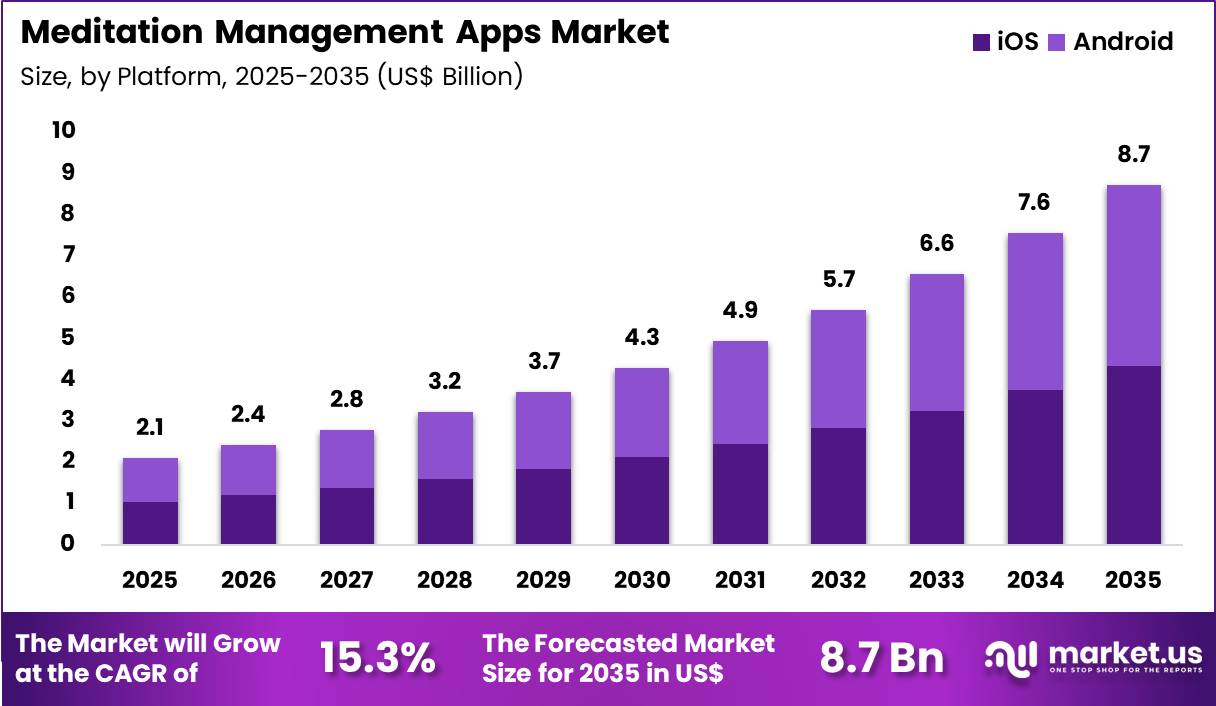
The Global Meditation Management Apps Market is projected to grow from about US$ 2.1 Billion in 2025 to nearly US$ 8.7 Billion by 2035, registering a robust CAGR of 15.3%. This surge is powered by rising awareness of mental health, increasing anxiety and stress levels, and deeper penetration of smartphones and wearables worldwide.
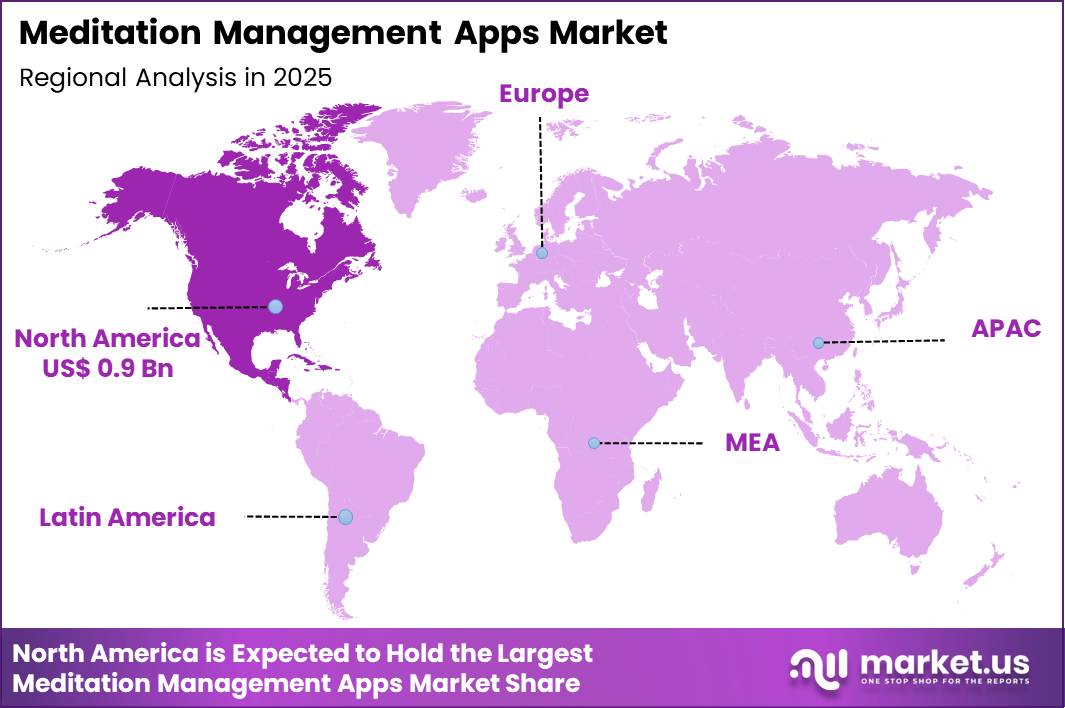
In 2025, North America held around 41.4% revenue share, reflecting strong adoption of digital self-care solutions and corporate wellness integrations. Freemium models (about 62.2% share) and iOS platforms (49.6%) lead usage, highlighting users’ preference for low-barrier access and premium upgrades in structured mindfulness and sleep support.
Get lastest insights and updates at @ https://market.us/report/meditation-management-apps-market/free-sample/
Key Takeaways
- In 2025, the market generated revenue of US$ 2.1 Billion and is projected to reach US$ 8.7 Billion by 2035, registering a CAGR of 15.3% during the forecast period.
- Based on platform, the market is segmented into iOS and Android, with iOS leading the segment and accounting for a 49.6% market share.
- By revenue model, the market is categorized into free (freemium) and paid, where the free (freemium) segment dominated with a 62.2% share.
- In terms of deployment type, the market is divided into cloud-based and on-premise, with cloud-based solutions holding the largest revenue share of 56.5%.
- Based on application, the market is segmented into anxiety and stress management, improved mental health, relaxation and focus improvement, and sleep management. The anxiety and stress management segment led the market with a 56.0% share.
- North America dominated the market, accounting for a revenue share of 41.4%.
How Growth Is Impacting the Economy ?
Rapid expansion of meditation management apps is adding a new layer to the global digital health economy by monetizing previously informal wellness behaviors like breathing exercises and mindfulness routines. Subscription and freemium revenue streams are supporting high-margin, asset-light business models that rely on cloud infrastructure, AI personalization, and content libraries instead of physical clinics. This is creating jobs in software development, clinical content design, behavioral science, and data analytics, while also stimulating demand for ancillary services such as telehealth integration and wearable-device ecosystems.
At the macro level, governments and employers view these apps as cost-effective tools to help reduce stress-related absenteeism and productivity losses, especially where traditional mental health services are constrained. Corporate wellness contracts and insurer partnerships are reallocating health budgets toward preventive digital tools and outcomes-based solutions. Over time, improved stress and sleep management could lower the economic burden associated with anxiety, burnout, and related chronic conditions, helping health systems manage demand more efficiently.
Key Segmentation
- Platform Analysis: iOS accounted for 49.6% of growth within the platform segment, driven by higher in-app spending and strong penetration of premium smartphones. Higher subscription conversions, wearable integration, secure payments, and enhanced App Store visibility supported engagement, while increasing adoption of structured digital wellness tools sustained segment growth.
- Revenue Model Analysis: Free (freemium) models represented 62.2% of growth, supported by low entry barriers and broad accessibility. Free sessions attract large user bases, while premium upgrades offer personalization, analytics, and offline access. Gamification, push notifications, and corporate wellness partnerships improved retention, supporting continued leadership of freemium monetization strategies.
- Deployment Type Analysis: Cloud-based deployment accounted for 56.5% of growth due to scalability, real-time updates, and cross-device synchronization. Cloud infrastructure supports analytics integration, rapid feature deployment, and global accessibility. Enhanced security, reduced maintenance, and continuous content updates improved engagement, ensuring sustained dominance of cloud-based digital wellness platforms.
- Application Analysis: Anxiety and stress management contributed 56.0% of growth, driven by rising workplace pressure and mental health awareness. Users adopted guided mindfulness and breathing tools for daily stress relief. Corporate wellness integration, telehealth adoption, and measurable outcomes improved credibility, supporting continued dominance of stress-focused meditation applications.
Sector-Specific Impacts
Meditation apps are reshaping multiple sectors including healthcare IT, corporate wellness, hospitality, and education by embedding digital mindfulness into everyday environments. Healthcare providers and telehealth platforms are incorporating app-based meditation as adjunctive support for anxiety, insomnia, and stress, gradually normalizing digital therapeutics within care pathways. Employers in high-pressure industries (technology, finance, healthcare, first responders) are buying enterprise licenses to mitigate burnout and enhance productivity, shifting part of their health spend to scalable mental-wellness software.
In hospitality, partnerships such as hotel chains integrating in-room meditation and sleep content demonstrate how guest experience is being upgraded with embedded wellness features. Education and child-focused sectors are adopting kid-friendly mindfulness modules to support emotional regulation and concentration, opening new B2B and B2G (schools and public programs) revenue channels. Overall, the sector is catalyzing a broader digital-wellness ecosystem that complements traditional services rather than replacing them.
Engage with Our Expert Team at [email protected] for Data-Driven Solutions
Strategies for Businesses
Businesses operating in or entering the meditation management apps market should prioritize personalization through AI-driven recommendations, mood tracking, and adaptive session plans to differentiate in a crowded freemium landscape. Leveraging cloud-based deployment enables rapid feature rollouts, cross-device synchronization, and scalable global expansion while maintaining performance and security for sensitive mental-health data.
Strategic partnerships with employers, insurers, healthcare providers, and hospitality brands can unlock stable B2B revenue streams and improve user acquisition efficiency versus relying solely on app-store marketing. Developers should localize content for multiple languages and cultural contexts, especially in fast-growing regions like Asia Pacific, while integrating wearables and biofeedback for deeper engagement. Addressing subscription fatigue through flexible pricing, bundles, and loyalty programs will be critical to reduce churn and extend customer lifetime value.
Analyst Viewpoint
From a present-day lens, the meditation management apps market is in a high-growth, consolidation-prone phase characterized by strong consumer demand but rising competition and subscription fatigue. Leading platforms are leveraging brand recognition, high-quality content, and differentiated features like AI-based journeys and live sessions to secure share. The economics remain attractive, with scalable cloud delivery, global reach, and expanding B2B demand from employers and healthcare stakeholders.
Looking ahead, analysts see a positive trajectory anchored in growing mental-health awareness, supportive policy environments, and deeper integration into clinical and corporate ecosystems. As evidence-based protocols, outcome tracking, and reimbursement policies mature, meditation apps are likely to evolve from “nice-to-have” wellness tools into recognized components of digital mental-health infrastructure. This should sustain double-digit growth while rewarding players who excel in personalization, data privacy, and multi-channel distribution.
Use Cases and Growth Factors
| Use Case / Growth Driver | Description & Role in Growth |
| Workplace stress reduction | Short, app‑based sessions integrated into corporate wellness programs to reduce burnout, absenteeism, and turnover, driving large enterprise licenses. |
| Clinical adjunct for anxiety | Guided meditation and breathing routines used alongside therapy or telehealth to manage generalized anxiety and insomnia, boosting adoption among patients. |
| Sleep improvement programs | Bedtime stories, soundscapes, and body scans that help users fall asleep faster and improve sleep quality, expanding engagement time and upsell potential. |
| Youth and education modules | Child‑focused mindfulness exercises for emotional regulation and focus in schools and homes, opening new demographic and institutional segments. |
| AI‑personalized journeys | Algorithms tailoring content to mood, behavior, and biofeedback, raising perceived value and conversion from free to paid tiers. |
| Wearable‑linked coaching | Integration with heart‑rate variability and sleep tracking to provide real‑time stress insights and coaching, strengthening ecosystem stickiness. |
| Global localization | Multilingual, culturally relevant content supporting penetration across Asia Pacific, Latin America, and MEA markets. |
| Corporate and hospitality bundles | Deals with employers, hotels, and insurers that package access into broader benefits, improving scale and recurring revenue. |
Regional Analysis
North America currently leads the meditation management apps market with about 41.4% share, supported by high smartphone penetration, strong in-app payment adoption, and a mature culture of therapy and mindfulness. Employers in the region are rapidly expanding corporate wellness subscriptions, viewing digital meditation tools as cost-effective levers to address stress, burnout, and related productivity issues. Healthcare providers increasingly recommend these apps for anxiety, insomnia, and burnout, embedding them into hybrid care pathways.
Asia Pacific is expected to post the highest CAGR over the forecast period, driven by rising urban stress, younger demographics, and expanding internet and smartphone access across major economies such as China, India, and Southeast Asia. Governments and employers are promoting digital well-being initiatives, while regional developers are localizing content and partnering with telehealth platforms to enhance cultural relevance. Europe, Latin America, and the Middle East & Africa also contribute meaningfully, with adoption patterns linked to mental-health awareness, digital infrastructure, and payment ecosystems.
Engage with Our Expert Team at [email protected] for Data-Driven Solutions
Business Opportunities
Meditation management app providers can tap significant opportunities in enterprise wellness by offering tailored packages for healthcare professionals, first responders, and high-stress sectors, where the ROI on stress reduction is particularly compelling. There is rising potential to integrate with telehealth and digital therapy platforms, enabling bundled offerings that combine clinical support with daily self-care routines. B2B2C collaborations with insurers, employers, and hospitality brands can drive distribution at scale while lowering customer acquisition costs.
In high-growth regions like Asia Pacific, localized content, tiered pricing, and offline features can unlock large, price-sensitive segments. Developers can also explore niche verticals such as athlete performance optimization, chronic-illness coping, or specific religious and cultural practices adapted into mindfulness formats. AI-driven personalization, biofeedback-based coaching, and community features offer additional monetization paths through premium tiers, microtransactions, and specialized programs.
Report Scope
| Report Features | Description |
| Market Value (2025) | US$ 2.1 Billion |
| Forecast Revenue (2035) | US$ 8.7 Billion |
| CAGR (2026-2035) | 15.30% |
| Base Year for Estimation | 2025 |
| Historic Period | 2020-2024 |
| Forecast Period | 2026-2035 |
| Report Coverage | Revenue Forecast, Market Dynamics, COVID-19 Impact, Competitive Landscape, Recent Developments |
| Segments Covered | By Platform (iOS and Android), By Revenue Model (Free (Freemium) and Paid), By Deployment Type (Cloud-Based and On-Premise), By Application (Anxiety and Stress Management, Improved Mental Health, Relaxation and Focus Improvement and Sleep Management) |
| Regional Analysis | North America – US, Canada; Europe – Germany, France, The UK, Spain, Italy, Russia, Netherlands, Rest of Europe; Asia Pacific – China, Japan, South Korea, India, Australia, New Zealand, Singapore, Thailand, Vietnam, Rest of APAC; Latin America – Brazil, Mexico, Rest of Latin America; Middle East & Africa – South Africa, Saudi Arabia, UAE, Rest of MEA |
| Competitive Landscape | Headspace Inc., Calm, Simple Habit, MindApps, Breethe, Meditation Moments, Aura Health, InnerExplorer, Ten Percent Happier, Meditopia, Insight Network Inc., Smiling Mind, Meditation Studio App LLC, Buddhify, The Mind Company, BetterMe, Oak Meditation. |
| Customization Scope | Customization for segments, region/country-level will be provided. Moreover, additional customization can be done based on the requirements. |
| Purchase Options | We have three licenses to opt for: Single User License, Multi-User License (Up to 5 Users), Corporate Use License (Unlimited User and Printable PDF) |
Key Player Analysis
Leading players in the meditation management apps market compete on differentiated content, user experience, and ecosystem integration rather than hardware assets, enabling capital-efficient scaling. They invest heavily in original guided meditations, sleep stories, and structured programs tailored to varying levels of experience, age groups, and use cases (stress, focus, sleep, resilience). Many platforms are enhancing engagement via AI-driven personalization, streaks, gamified progress tracking, and community spaces that create habit-forming environments.
Strategically, key vendors pursue partnerships with employers, healthcare providers, insurers, and hospitality brands to embed their solutions into corporate wellness, clinical pathways, and guest experiences. Geographic expansion across North America, Europe, and Asia Pacific diversifies revenues, while continuous innovation around wearable integration and analytics strengthens switching costs. Overall, the competitive landscape favors companies that combine strong brand equity with data-driven product evolution and trusted handling of sensitive mental-health information.
Top Key Players
- Headspace Inc.
- Calm (Market leader in consumer spend)
- Simple Habit
- MindApps
- Breethe
- Meditation Moments
- Aura Health
- InnerExplorer
- Ten Percent Happier
- Meditopia
- Insight Network Inc. (Insight Timer)
- Smiling Mind
- Meditation Studio App LLC
- Buddhify
- The Mind Company
- BetterMe
- Oak Meditation
Recent Developments
- Calm (March 2025): Calm deepens its hospitality footprint through an exclusive partnership with a leading global hotel group, bringing in-room sleep stories, soundscapes, and guided meditations to thousands of connected rooms worldwide.
- BetterMe (July 2025): BetterMe refreshes its Mental Health app with broader guided-meditation libraries and habit-building tracks on Google Play, tying mindfulness more tightly to everyday routines like sleep, stress management, and self-care.
- Meditopia (July 2025): Meditopia upgrades its Sleep & Meditation app with over 1,000 guided sessions, daily themed meditations, challenges with friends, and deeper multilingual support, underlining its push as a global-first mindfulness brand.
- Market-wide (February 2025): Independent 2025 rankings place leading apps such as Headspace, Calm, Simple Habit, Insight Timer, Aura, and Smiling Mind among the top mindfulness solutions, reinforcing their brand strength in structured learning, sleep, and quick-session formats.
- Headspace Health (March 2026): Headspace and Ginger finalize their combination into a unified digital mental-health company valued at around $3 billion, integrating meditation, coaching, therapy, and psychiatry in a single platform for employers and health plans.
Conclusion
The meditation management apps market is experiencing sustained expansion, driven by rising mental-health awareness, corporate wellness adoption, and scalable cloud-based delivery models. Freemium monetization and iOS-led engagement continue to support user acquisition and premium conversions, while anxiety and stress management remain the dominant application areas.
North America leads revenue share, whereas Asia Pacific is projected to deliver the fastest growth due to increasing digital adoption and urban stress levels. Strategic partnerships, AI-driven personalization, and wearable integration are strengthening competitive positioning.
Overall, the market is transitioning toward an evidence-based digital wellness ecosystem, with strong double-digit growth expected as employers, healthcare providers, and consumers increasingly prioritize preventive mental-health solutions.