








Introduction
The global Energy Storage for Microgrids market is projected to grow significantly over the coming decade, reaching an estimated value of USD 20.4 billion by 2034, up from USD 5.8 billion in 2024. This reflects a strong compound annual growth rate (CAGR) of 13.4% between 2025 and 2034. In 2024, the Asia-Pacific (APAC) region dominated the market, accounting for over 41.2% of the global share and generating approximately USD 2.3 billion in revenue.
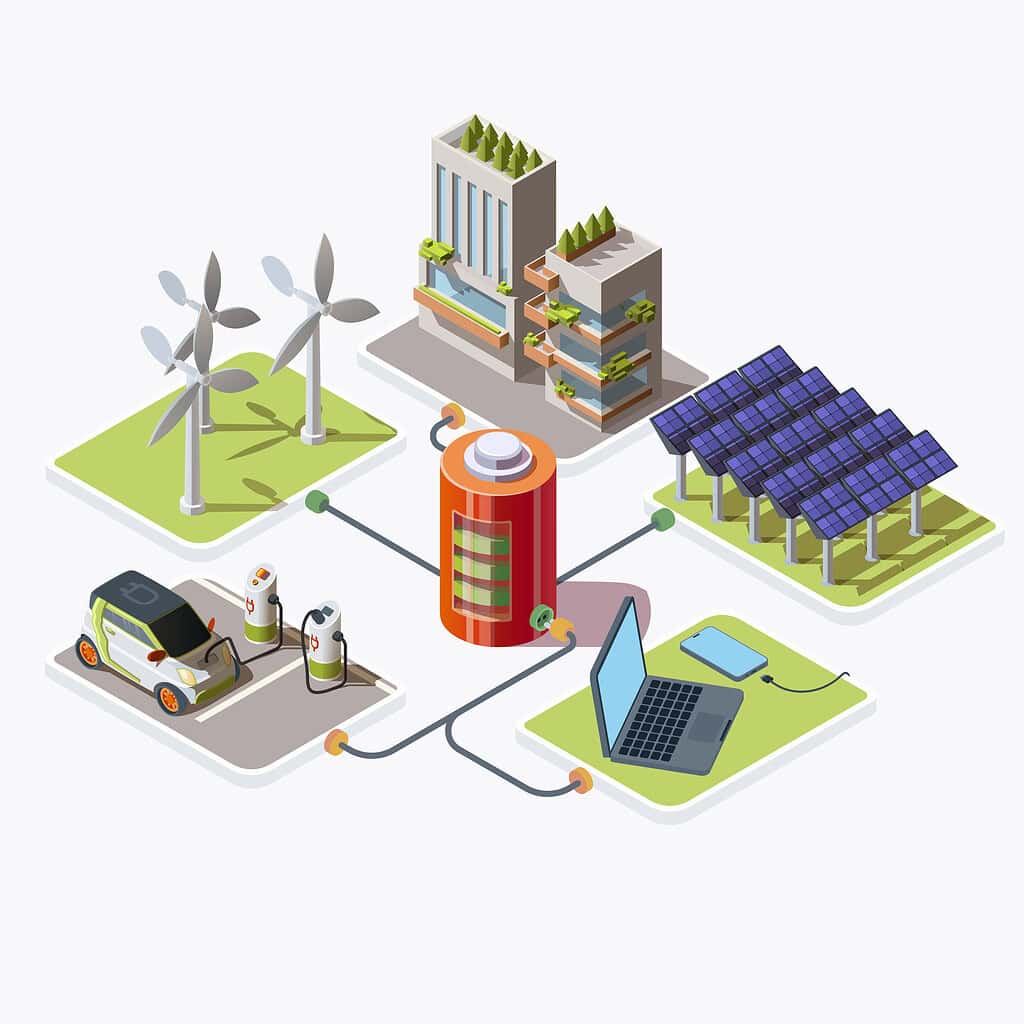
Energy storage has emerged as a critical component in enabling distributed, resilient, and low-carbon power systems. The increasing integration of variable renewable energy sources, along with growing concerns about grid reliability, has accelerated demand for microgrid storage solutions. Under ambitious decarbonization scenarios, global grid-scale battery capacity is expected to expand rapidly, potentially reaching nearly 970 GW by 2030 according to projections from the International Energy Agency.
Get a comprehensive report summary that describes the value and forecast along with methodology. Download the PDF brochure
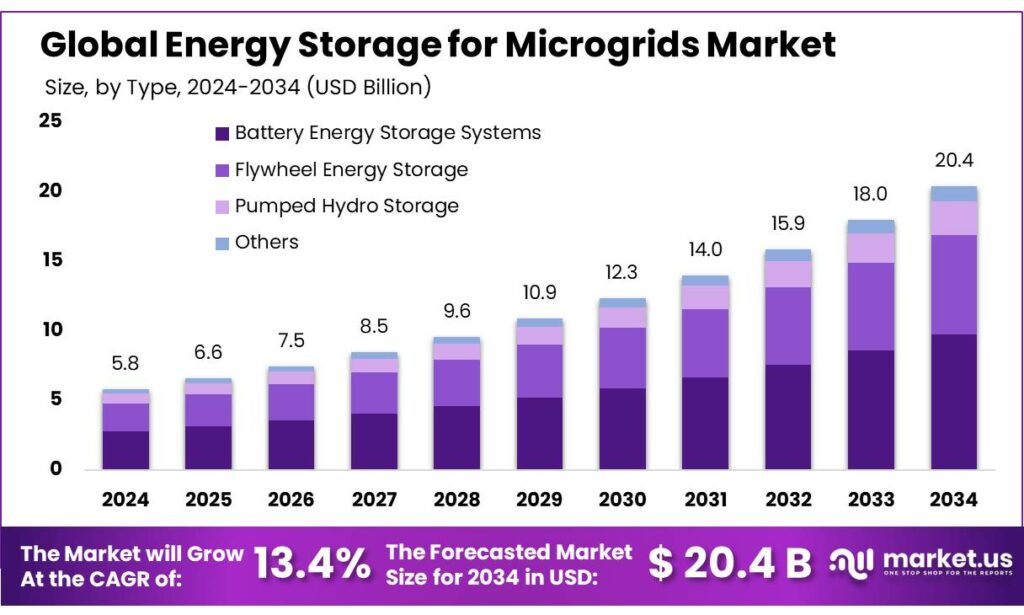
Significant investment activity and large-scale deployments are already evident across major regions. For instance, Europe’s cumulative battery storage capacity reached 61.1 GWh, with an additional 21.9 GWh installed in 2024 alone, highlighting strong momentum in battery energy storage system (BESS) adoption at scale.
Several key factors are driving this market growth. Firstly, the substantial decline in battery costs has improved the economic feasibility of microgrids. According to the International Renewable Energy Agency, the cost of fully installed battery storage dropped to around USD 192 per kWh in 2024, marking a dramatic 93% reduction compared to 2010 levels. Secondly, increasing concerns over energy resilience—due to extreme weather events and grid disruptions—are encouraging both public and private sector investments. Governments and institutions, including the U.S. Department of Energy, have also provided frameworks and cost benchmarks to support deployment.
Additionally, regulatory reforms and evolving market mechanisms have enhanced the ability of microgrid operators to generate multiple revenue streams, improving overall project viability. The development of circular economy practices within battery supply chains is also contributing to cost reductions and faster adoption.
Government policies and initiatives are playing a vital role in accelerating market growth. For example, India’s Ministry of Power has introduced a National Framework for Promoting Energy Storage Systems, along with operational guidelines for viability gap funding. Furthermore, measures such as transmission charge waivers and an approved support package of approximately ₹54 billion aim to support the development of around 30 GWh of battery storage capacity by 2028.
Top Market Takeaways
- Energy Storage for Microgrids Market size is expected to be worth around USD 20.4 Billion by 2034, from USD 5.8 Billion in 2024, growing at a CAGR of 13.4%.
- Li-ion Battery held a dominant market position, capturing more than a 47.7% share.
- Smartwatches held a dominant market position, capturing more than a 58.9% share.
- Consumer Electronics held a dominant market position, capturing more than a 23.4% share.
- Commercial held a dominant market position, capturing more than a 33.1% share.
- Asia-Pacific (APAC) stands out as the dominant region, accounting for around 41.20% of global demand, valued at roughly USD 2.3 billion.
Scope and Research Methodology
The Energy Storage for Microgrids market study provides a comprehensive analysis of industry trends, growth drivers, challenges, and future opportunities across the global landscape. The scope covers key storage technologies such as lithium-ion batteries, flow batteries, lead-acid batteries, and other emerging solutions. It also includes applications across residential, commercial, industrial, and utility-scale microgrids.
The report evaluates both grid-connected and off-grid microgrid systems, with a focus on their role in enhancing energy reliability, integrating renewable energy, and supporting decarbonization goals. Geographically, the study spans major regions including Asia-Pacific, North America, Europe, Latin America, and the Middle East & Africa, offering insights into regional demand patterns, policy frameworks, and investment trends. Additionally, the scope includes analysis of key market participants, competitive positioning, and recent technological advancements shaping the industry.
The research methodology for the Energy Storage for Microgrids market combines both primary and secondary research approaches to ensure accuracy and reliability of the data. Primary research involves interviews and discussions with industry experts, including manufacturers, system integrators, policymakers, and stakeholders across the value chain. Secondary research includes the analysis of company reports, industry publications, government databases, and credible sources such as energy agencies and regulatory bodies.
Quantitative data is validated using market modeling and forecasting techniques, including top-down and bottom-up approaches, to estimate market size and growth rates. The study also incorporates data triangulation to cross-verify findings from multiple sources. In addition, macroeconomic indicators, technological developments, and regulatory scenarios are analyzed to provide a holistic view of market dynamics and future outlook.
By Type Analysis
In 2024, lithium-ion batteries dominated the Energy Storage for Microgrids market within the Battery Energy Storage Systems segment, accounting for over 47.7% of the total share. Their widespread adoption is largely attributed to advantages such as high energy density, compact size, and longer lifecycle compared to alternative battery technologies. These characteristics make them highly suitable for both commercial and community-level microgrid applications.
By Microgrid Type Analysis
Grid-connected microgrids emerged as the leading segment in 2024, capturing more than 58.9% of the market share. Their dominance reflects the growing preference for systems that can operate both independently and in coordination with the main power grid. These microgrids offer significant flexibility, allowing users to draw electricity from the grid during normal conditions and switch seamlessly to local generation and stored energy during outages.
By Application Analysis
In 2024, enhanced grid stability was a key application area, accounting for over 23.4% of the market share in the Energy Storage for Microgrids sector. This growth is driven by the increasing adoption of intermittent renewable energy sources, which often lead to fluctuations in voltage and frequency. Energy storage systems designed for grid stability help maintain consistent and reliable power supply, especially during peak demand periods or unexpected disruptions.
By End-use Analysis
The commercial sector held a leading position in 2024, capturing more than 33.1% of the Energy Storage for Microgrids market. This dominance is largely driven by rising electricity costs, growing concerns over grid reliability, and the need for uninterrupted power supply in industries such as retail, hospitality, data centers, and corporate offices. Many businesses have adopted microgrid storage solutions alongside renewable energy systems to reduce operational costs and maintain continuity during power outages. Furthermore, energy storage has supported sustainability initiatives by lowering carbon footprints.
Regional Analysis: Asia Pacific
The Asia-Pacific (APAC) region leads the Energy Storage for Microgrids market, holding approximately 41.20% of the global share, with a market value of around USD 2.3 billion. This strong position is driven by rapid expansion in renewable energy capacity, increasing electrification demands, and proactive government initiatives promoting decentralized energy systems across key countries such as China, India, Japan, South Korea, and Southeast Asian nations.
The region’s growth is further supported by its significant contribution to global renewable energy development. In recent years, Asia has accounted for more than half of the world’s newly installed renewable power capacity, with total capacity exceeding 1,800 GW, largely fueled by solar and wind energy. This rapid expansion has created a strong need for efficient energy storage solutions.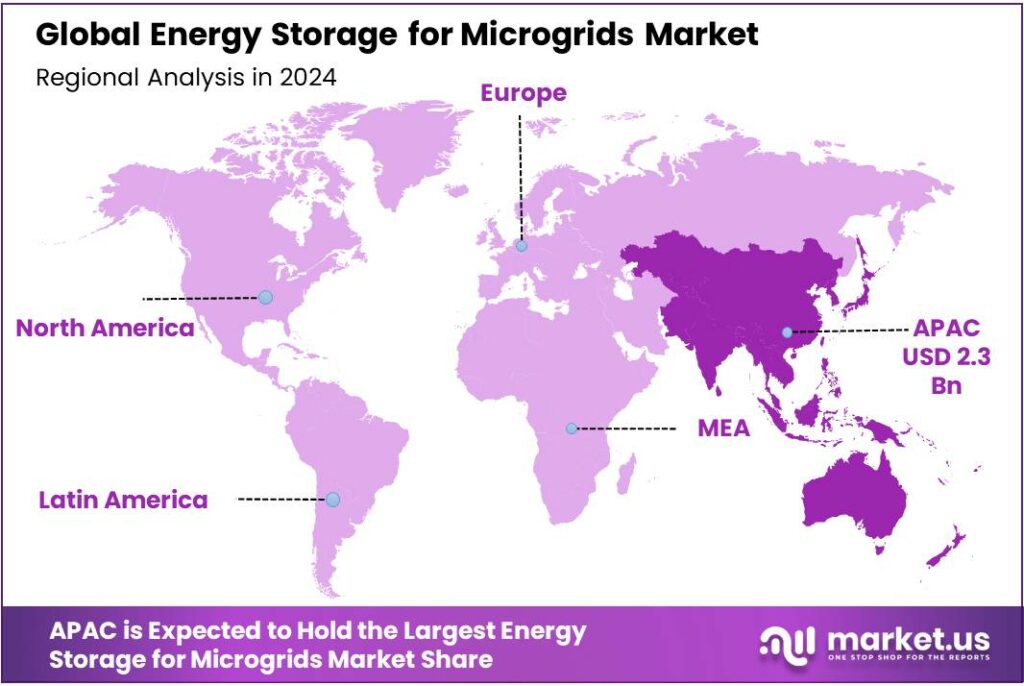
Key Regions and Countries
- North America
- The US
- Canada
- Europe
- Germany
- France
- The UK
- Spain
- Italy
- Russia & CIS
- Rest of Europe
- APAC
- China
- India
- Japan
- South Korea
- ASEAN
- Rest of APAC
- Latin America
- Brazil
- Mexico
- Rest of Latin America
- Middle East & Africa
- GCC
- South Africa
- Rest of Middle East & Africa
Top Key Players
- S&C Electric Company
- ABB
- Saft
- Siemens
- Eaton
- GE Vernova
- PowerSecure,
- Bloom Energy
- BoxPower Inc.
- Gridscape
Recent Developments
In 2024, GE Vernova—following its spin-off as an independent entity—generated around USD 35 billion in revenue, highlighting its strong presence in electrification and energy storage solutions.
During the same year, Siemens AG reported approximately €20.8 billion in revenue from its industrial business segment, while quarterly orders reached €22.9 billion, indicating rising demand for electrification and grid infrastructure technologies.
Report Scope
| Report Features | Description |
|---|---|
| Market Value (2024) | USD 5.8 Bn |
| Forecast Revenue (2034) | USD 20.4 Bn |
| CAGR (2025-2034) | 13.4% |
| Base Year for Estimation | 2024 |
| Historic Period | 2020-2023 |
| Forecast Period | 2025-2034 |
| Report Coverage | Revenue Forecast, Market Dynamics, Competitive Landscape, Recent Developments |
| Segments Covered | By Type (Battery Energy Storage Systems, Flywheel Energy Storage, Pumped Hydro Storage, Others), By Microgrid Type (Grid-connected Microgrids, Remote Microgrids, Hybrid Microgrids), By Application (Enhanced Grid Stability, Backup Power and Islanding, Peak Shaving and Demand Response, Improved Renewable Energy Integration, Others), By End-use (Residential, Commercial, Industrial, Military) |
| Regional Analysis | North America – US, Canada; Europe – Germany, France, The UK, Spain, Italy, Rest of Europe; Asia Pacific – China, Japan, South Korea, India, Australia, Singapore, Rest of APAC; Latin America – Brazil, Mexico, Rest of Latin America; Middle East & Africa – GCC, South Africa, Rest of MEA |
| Competitive Landscape | S&C Electric Company, ABB, Saft, Siemens, Eaton, GE Vernova, PowerSecure,, Bloom Energy, BoxPower Inc., Gridscape |
| Customization Scope | Customization for segments, region/country-level will be provided. Moreover, additional customization can be done based on the requirements. |