









Overview
Online Review Statistics: Online reviews help people make better choices before buying a product or using a service. Many customers read reviews to determine whether a product is worth their money or whether a business offers good service. Real experiences shared by other users build trust and give useful information. Good reviews attract more customers, while honest negative reviews help businesses improve.
From shopping and food delivery to hotels and healthcare, online reviews influence many everyday decisions. Knowing how to read and write genuine reviews can help customers avoid bad experiences and encourage businesses to provide better products and services.
Best of the Best
- 93% of consumers read online reviews before making a purchase, with 81% using Google Reviews.
- Products with customer reviews can achieve up to 270% higher conversion rates, while luxury products with 200+ reviews can see conversions increase by 380%.
- 72% of consumers take action only after reading positive online reviews.
- Visitors who read reviews are 3.5× more likely to convert and spend 31% more than those who do not read reviews.
- 97% of consumers who read reviews also check how businesses respond.
- Businesses that reply to customer reviews receive an average of 12% more reviews than those that do not respond.
- 89% of consumers expect businesses to respond to reviews, and 51% expect a reply within 1 day.
- 94% of online shoppers read Amazon reviews before purchasing, while 91% also check reviews on retailer websites.
- Google removed or blocked 240 million fake or policy-violating reviews in one year.
Interesting Online Review Facts Every Business Should Know
- According to SearchLab, around 97% of consumers who read online reviews also check how businesses respond.
- 62% of consumers read more reviews today than they did two years ago because online shopping has grown, and fake reviews are more common.
- Consumers spend an average of 13 minutes and 45 seconds reading reviews before deciding to buy.
- Around 40 reviews are the minimum most consumers want to see before they trust a business’s star rating.
- 73% of consumers focus only on reviews posted within the last month because recent feedback feels more reliable.
- 53% expect businesses to reply to reviews within 7 days.
- Reviews with 100+ words are viewed as 2× more useful than short comments.
- 89% of consumers are willing to leave a review after a positive experience when a business simply asks.
How Online Reviews Improve Sales and Conversions
(Source: searchlab.nl)
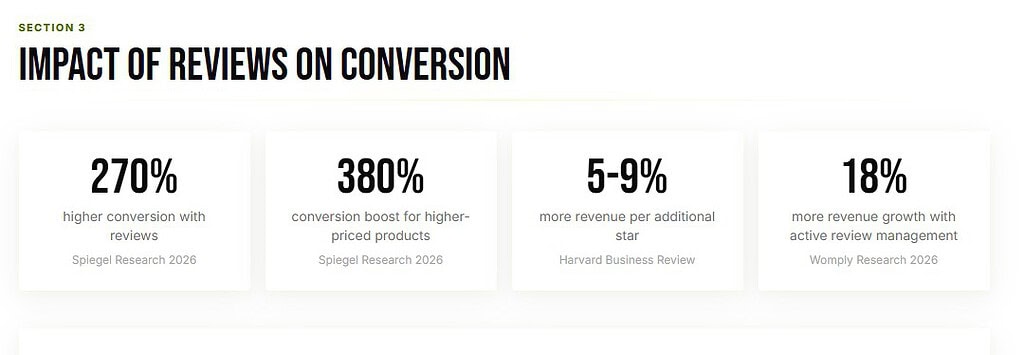
- Products with reviews achieve up to 270% higher conversion rates, while expensive products with 200+ reviews can see conversion increase by 380%.
- Even 1-10 reviews improve conversions by 52.2%.
- Each additional star rating can increase business revenue by 5%-9%, while active review management supports 18% higher revenue growth.
- Online reviews generate an estimated USD 31 billion in value for small and medium-sized businesses worldwide.
- 72% of consumers take action only after reading positive reviews.
- The best-performing rating is 4.2-4.5 stars, as perfect 5.0-star ratings may seem less believable.
- Visitors who read reviews convert 3.5× more often and spend 31% more.
- Reviews with customer photos increase conversions by 15%, while user-generated review content delivers 6.9× higher engagement than brand-created content.
Product Reviews Statistics By Built Trust
- According to online review statistics, 66% of consumers claim that online reviews are an effective factor in building online trust in a brand.
- A website or product without any negative reviews is considered genuine by 68% of online buyers.
- Businesses without online reviews are not trusted by 15% of online buyers.
- If there are no fake reviews, then 95% of users suspect that the website has many unauthentic reviews by the company itself.
By Online Conversions
- Without any online product review, 72% of customers won’t buy any products or services.
- The total conversion rate increased by 3% by adding product reviews to your online stores.
- As per Online Review Statistics, a single review can increase conversion rates by 10% or more.
- Besides, other percentages of improved conversions include 30 online reviews (25%) and 100 online reviews (37%).
- For higher-priced, cheaper, and more expensive products, online reviews helped increase conversion rates by 380%, 190%, and 380%, respectively.
Online Review Platform Market Share
| Review platform | Market share/ consumer usage |
| Google Reviews | 81% |
| Facebook Reviews | 45% |
| Trustpilot | 38% |
| TripAdvisor | 28% |
| Amazon | 24% |
| Yelp | 16% |
Online Review Platforms: Key Statistics and Consumer Trends by Google Reviews
- According to searchlab.nl, 81% of consumers use Google Reviews, making it the most popular review platform.
- Google’s share of new reviews increased from 54% in 2022 to 63% in 2026.
- 71% of consumers check Google first when searching for local business reviews.
- Businesses typically respond to Google reviews within 2.3 days, while top-performing businesses reply within 24 hours.
By Trustpilot and Amazon
- Trustpilot hosts 310+ million reviews, growing by 28% annually, and 67% of users prefer businesses rated above 4.0 stars.
- Amazon has 1.5+ billion product reviews. Products with 5+ reviews sell 4.6× as much as those without reviews, and have an average rating of 4.2 stars.
By Travel and Social Media Reviews
- TripAdvisor features 1.1+ billion reviews across 8.1 million travel businesses.
- 83% of travelers read reviews before booking, while hotels that respond to reviews receive 21% more booking inquiries.
- 45% of consumers use Facebook Reviews, 38% of Millennials and Gen Z rely on Instagram user-generated reviews, and 28% of Gen Z consider TikTok their main source for product reviews.
Local business review platform share, 2026
(Reference: wisernotify.com)
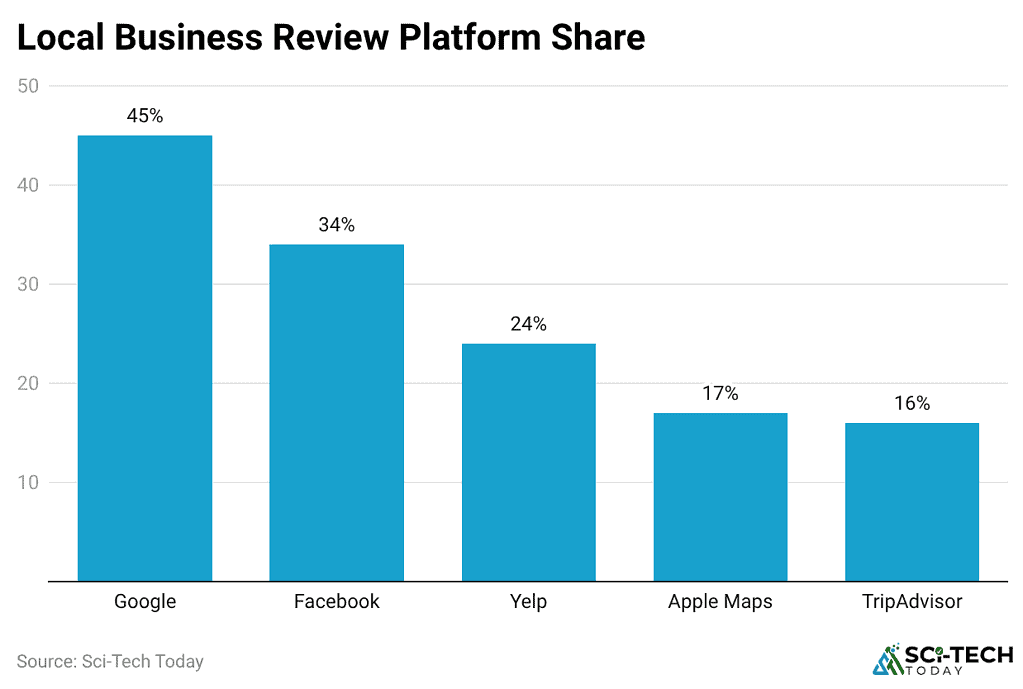
- According to Wisernotify, Google is the primary review hub, with 45% of consumers leaving local business reviews on this platform.
- Facebook ranks 3rd at 34%, indicating strong engagement with community-based feedback.
- Yelp attracts 24% of reviewers, while Apple Maps captures 17%.
- TripAdvisor accounts for 16% of the market, mainly for travel-related local businesses.
Online Review Conversion Rate Statistics
- Products with ratings between 4.75 and 4.9 out of 5 achieve the highest conversion rates.
- In 2025, 25% of consumers discovered new products through customer reviews.
- 70% of consumers rarely visit an unfamiliar business without first reading online reviews.
- Displaying customer reviews increases sales by 19.8%, while verified buyer reviews improve conversions by 15%.
- Conversion rates rise by 76.7% when product reviews are displayed and by 143% when products have 100+ reviews.
- Review displays increase conversions by 380% for luxury products and 190% for lower-priced items, while the first 5 reviews have the greatest influence on purchasing decisions.
Online Review Statistics By Number of Reviews
(Reference: imagedelivery.net)
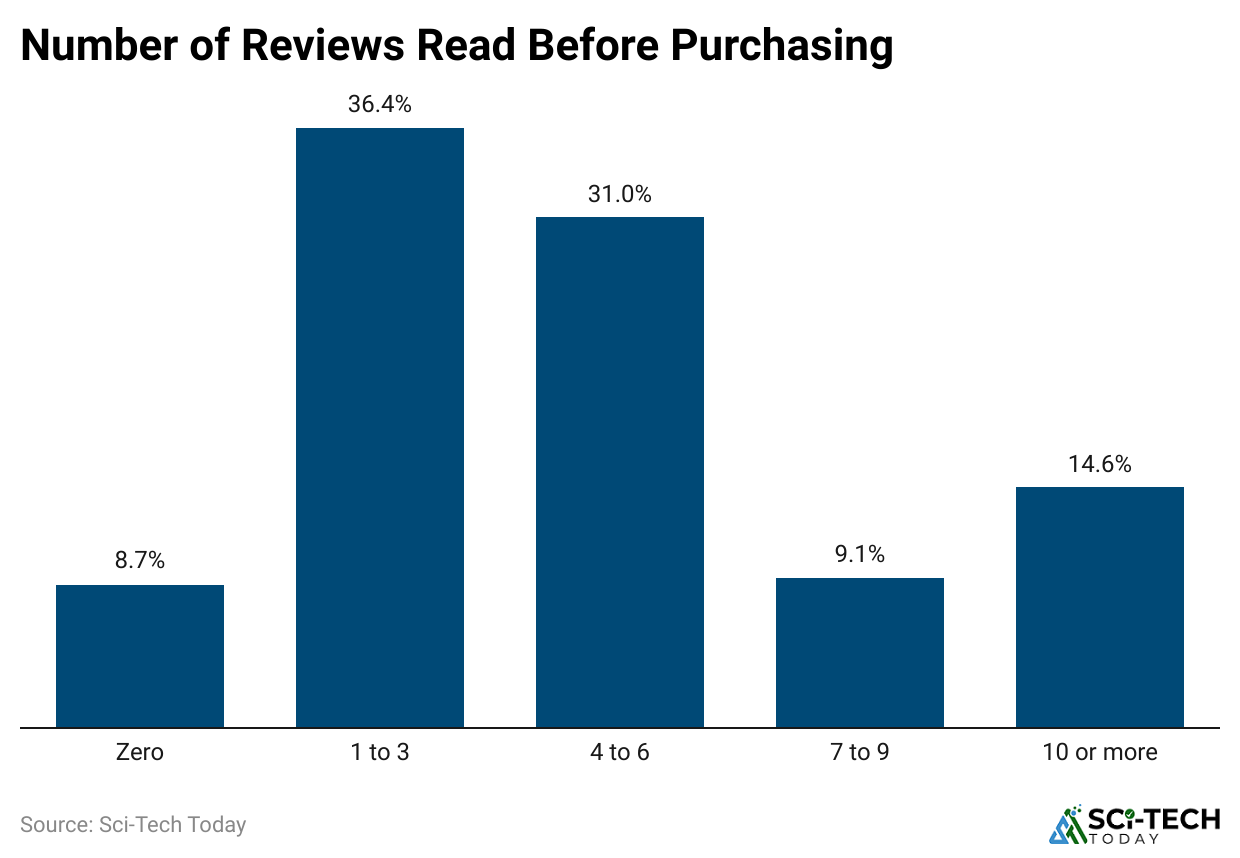
- The above graph shows that in the United States of America, 36.4% of consumers read 1 to 3 online reviews before making a purchase.
- 4 to 6 reviews and 10 or more reviews are observed before purchasing any product or service by 31% and 14.6% of consumers, respectively.
- 1% of consumers preferred reading 10 or more reviews, and 8.7% of consumers did not read reviews.
(Reference: trustpulse.com)
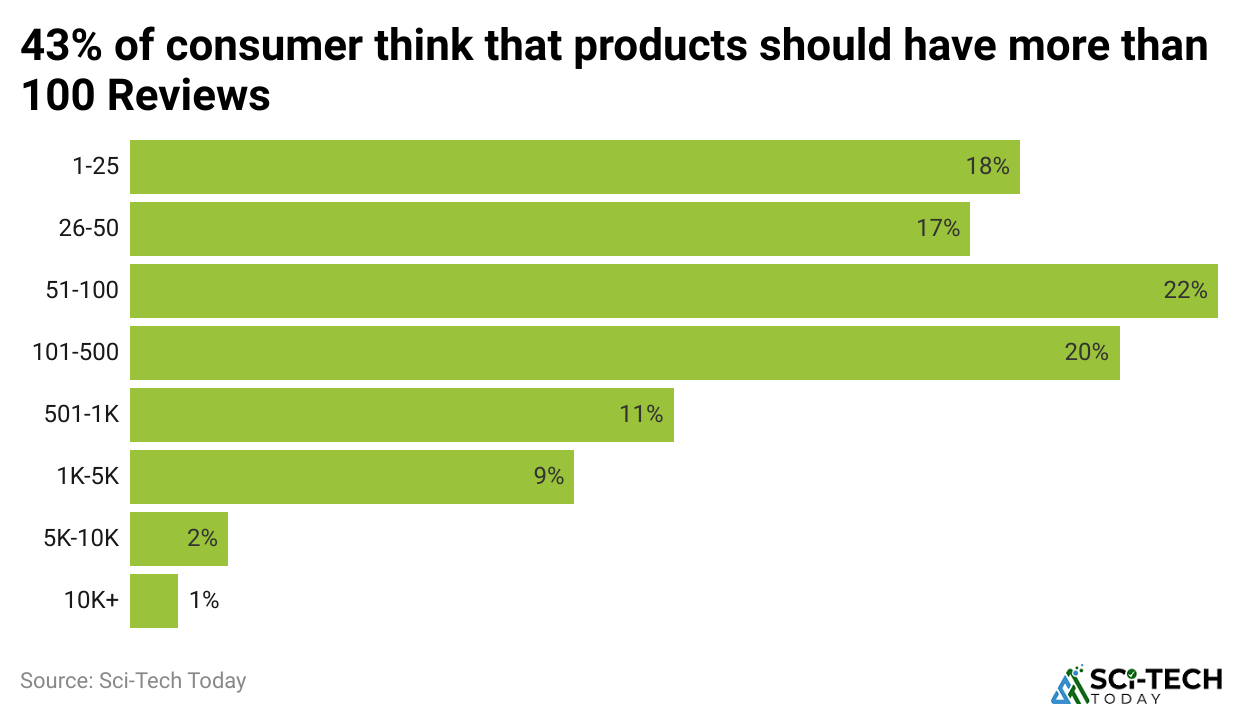
- In 2023, worldwide, only 1% of online consumers claimed that a product must contain more than 10K online reviews, followed by 2% (5000 to 100,000).
- In addition, the total number of expected online reviews shared by consumers was 1 to 25 (18%), 26 to 50 (17%), 51 to 100 (22%), 101 to 500 (20%), 501 to 1000 (11%), and 1000 to 5000 (9%).
By Sources
(Source: b2bsaasreviews.com)
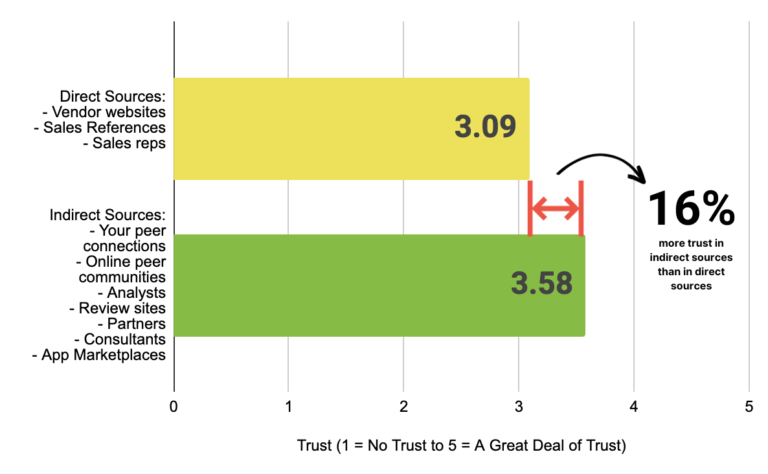
- In contrast to Online Review Statistics, if it’s about a B2B buyer’s trustworthy source that allows for enhancing the overall buying process, it is called an indirect Information Source, which is preferred by 16% over ‘Direct Information Sources.’
- The indirect sources are peer connections, online communities, online review sites, partners, consultants, App marketplaces, etc.
- Whereas direct sources are vendor websites, sales references, and sales representatives.
- The trust ratings of direct and indirect sources were 3.09% and 3.58%, respectively.
By Social Platforms
(Reference: birdeye.com)
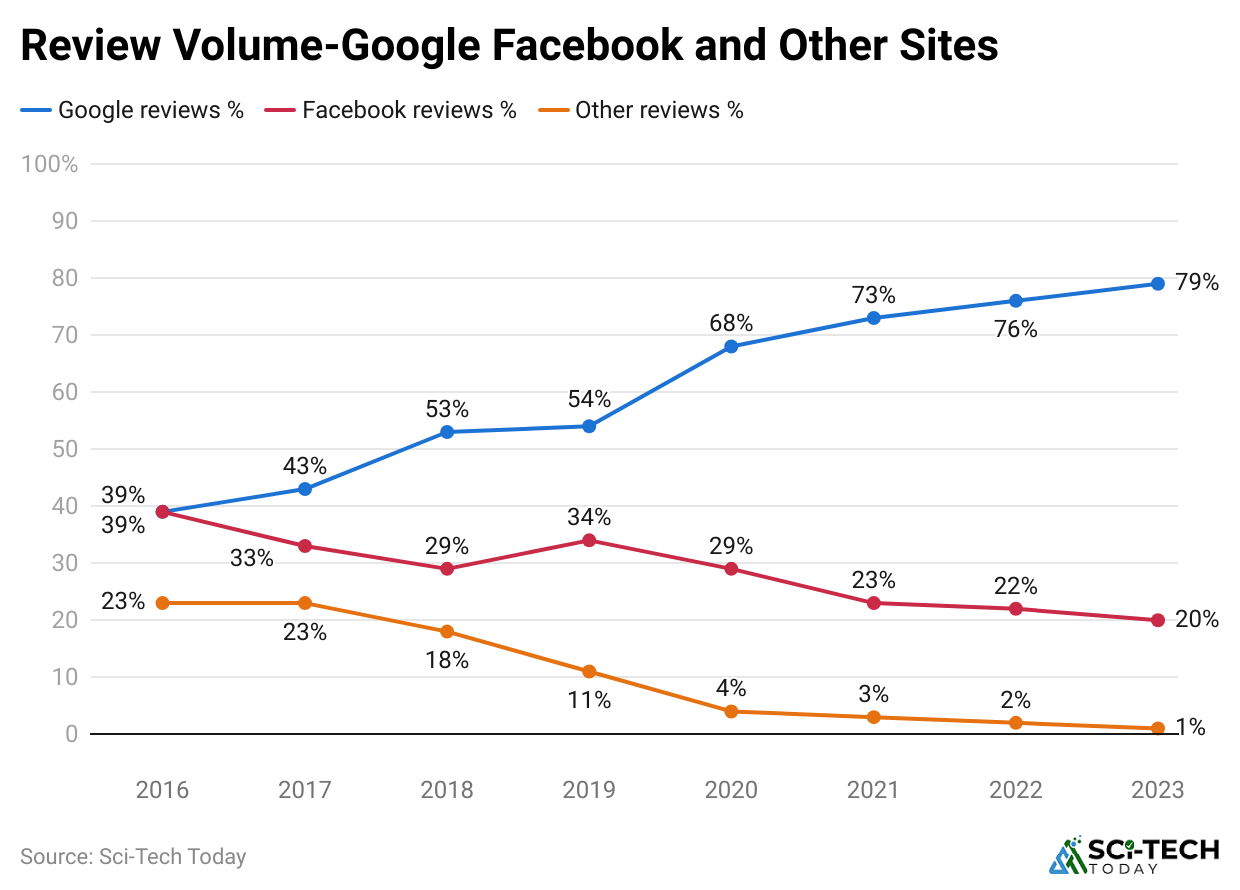
- In 2023, Google-based reviews captured 79% of the share across all other online reviews, an increase of 3% from last year.
- In each business, Google reviews have received up to 66 reviews on average.
(Reference: birdeye.com)
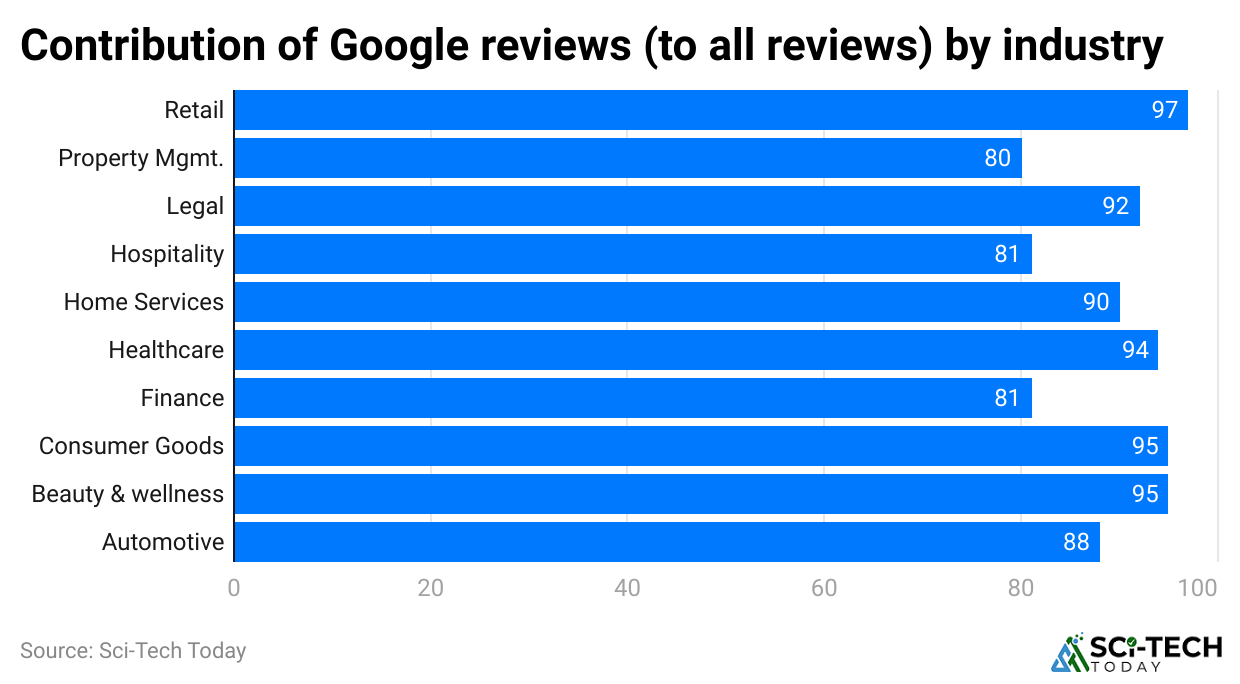
- The top three Google reviews based on the industry in 2024 are Retail (97%), Consumer Goods (95%), and Beauty and Wellness (95%).
- Other industries shared by Google review: Healthcare (94%), Legal (92%), Home services (90%), Automotive (88%), Hospitality (81%), Finance (81%), and Property Management (80%).
(Reference: trustpulse.com)
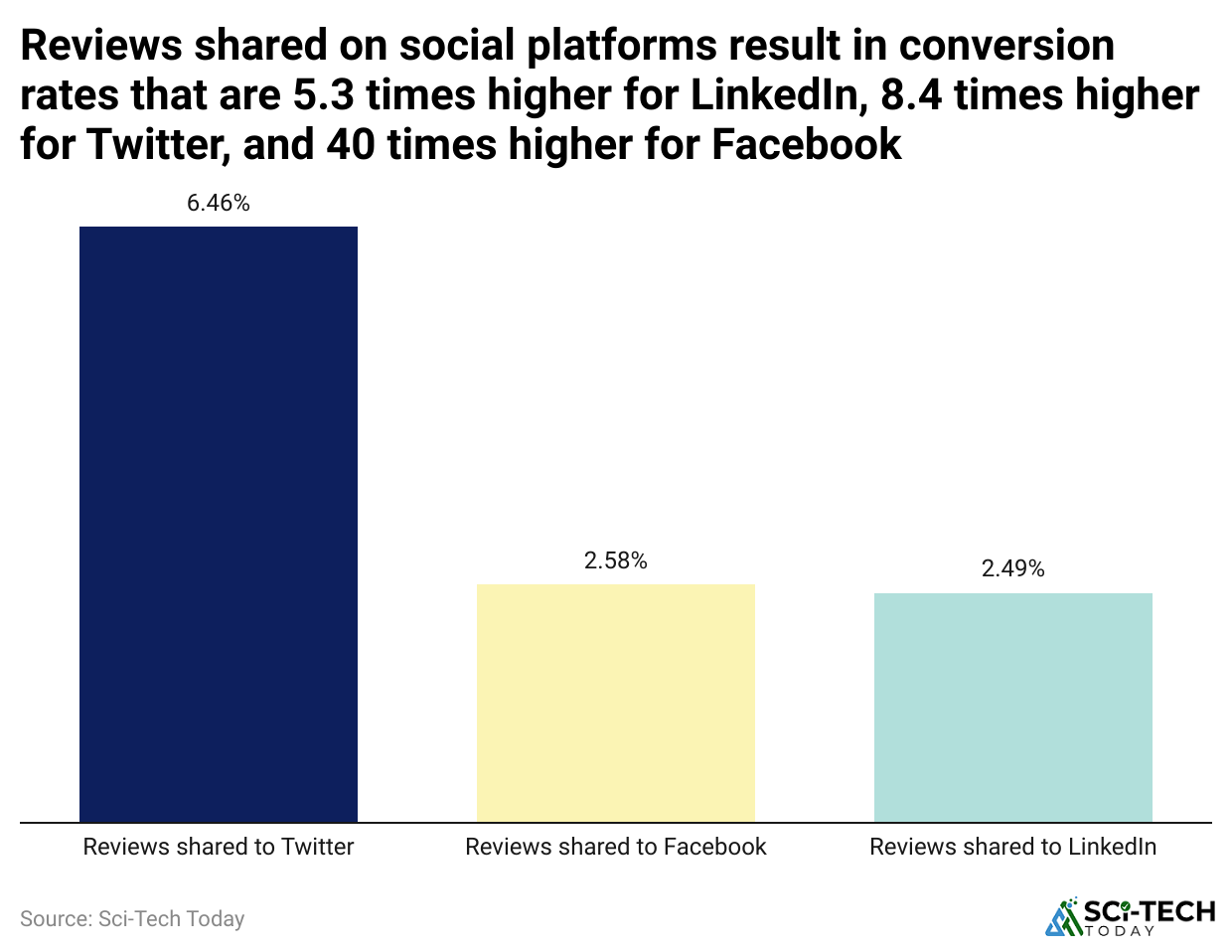
- The above graph shows that the average conversion rate of Twitter’s online reviews remained the highest in 2023, resulting in 6.46%.
- Facebook (2.58%) and LinkedIn (2.49%) have the second and third-highest conversion rates for online review share.
Popular Local Businesses By Platform
(Source: embedsocial.com)
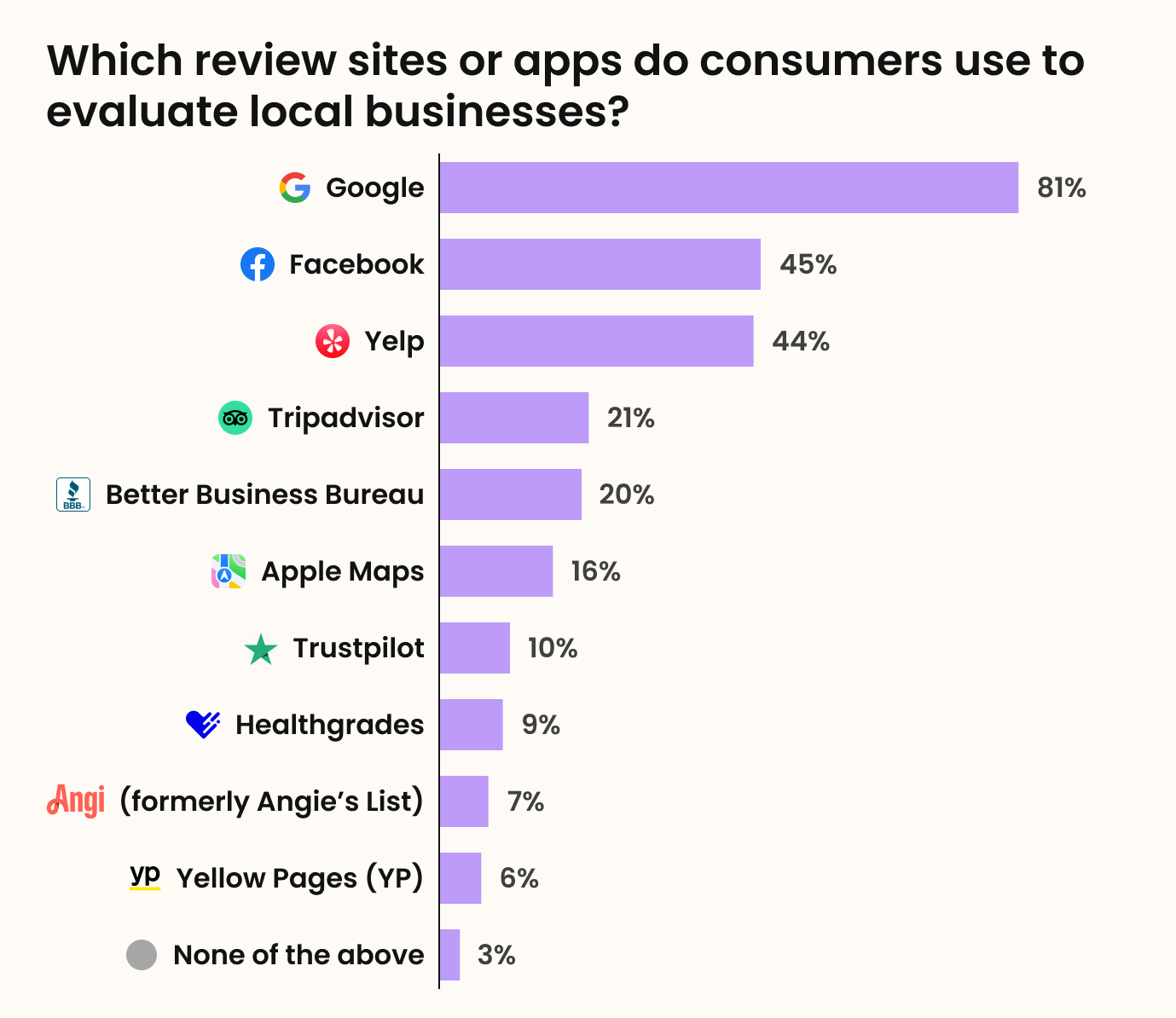
- Based on Online Review Statistics 2024, 81% of the online reviewers visit Google.
- Meanwhile, reviews from Facebook are preferred by 45% of people, and through these reviews, 52% of them purchase both online and offline.
- Other online review sites or apps used by consumers in the 1st quarter of 2024 are Yelp (44%), Tripadvisor (21%), Better Business Bureau (20%), Apple Maps (16%), Trustpilot (10%), Healthgrades (9%), Agni (7%), Yellow Pages (6%), and none of them (3%).
- In businesses, reviews with photos and videos help enhance the click-through rate by 35%.
- In the small business sectors, Yelp recorded more than 244 million online, making it a significant player, with a profit of 9%.
- In mobile devices, approximately 48% of Yelp reviewers enable top ratings.
- In 2023, 34% and 23% of online buyers used Instagram and TikTok for online reviews, respectively.
- With respect, on TrustRadius and Co,plaintsBoard+, the longest reviews are observed.
- In 2024, almost 10% of online customers are currently using GenAI and ChatGPT tools to analyze online reviews.
Important Factors in Purchasing Decisions
(Reference: bizrateinsights.com)
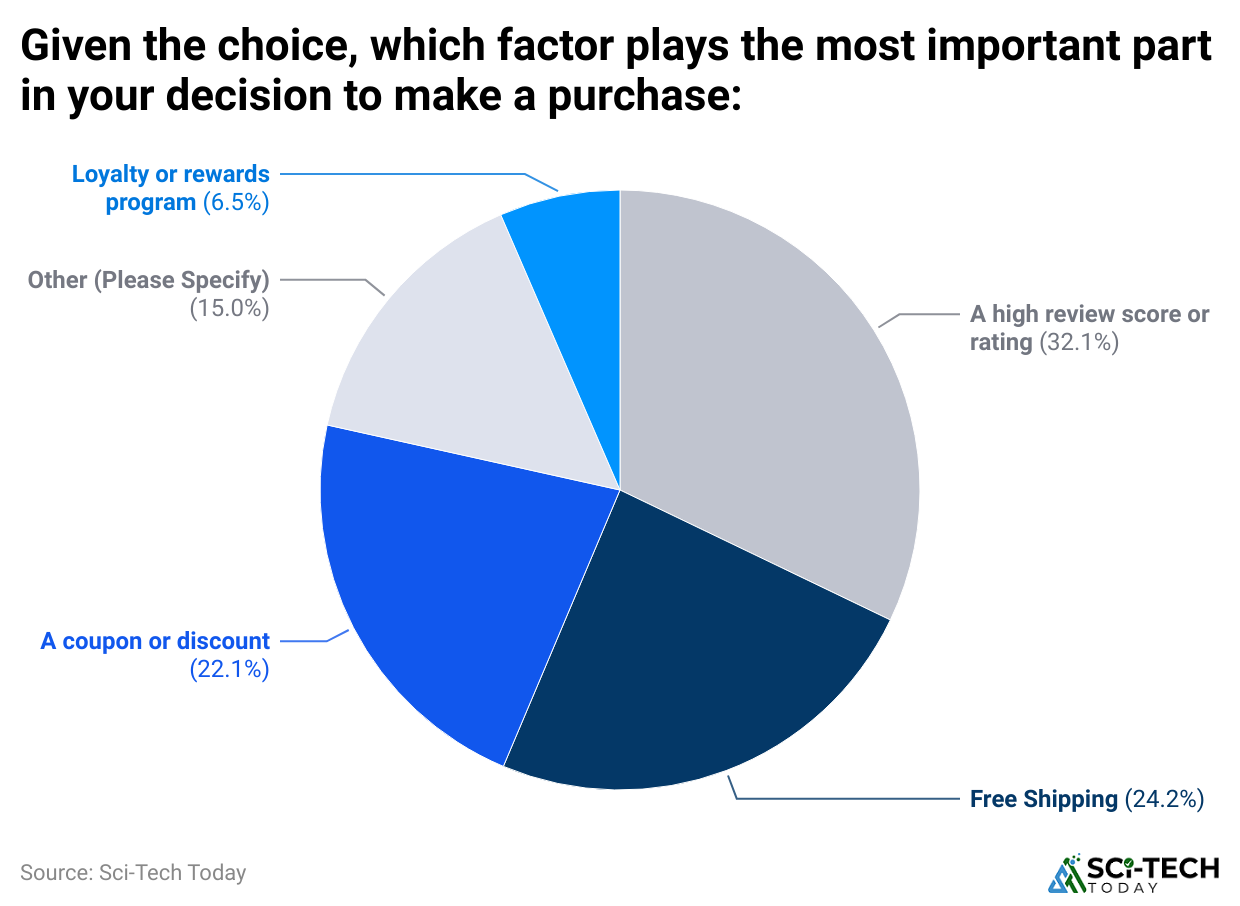
- For B2C consumers, a high online review score or rating is the most important factor, holding a share of 32.1%.
- The next factors that play the most important role in online shopping are free shipping (24.2%), Coupons or discounts (22.1%), loyalty or rewards programs (6.5%), and others (16%).
- Additionally, 23% of B2B buyers preferred faster delivery, followed by easier returns (22%) and online reviews (20%).
Online Review Ratings During Offline Shopping
(Source: bazaarvoice.com)
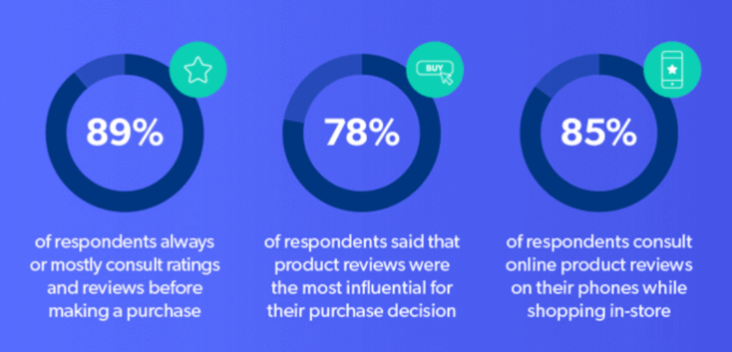
- According to Online Review Statistics, while shopping in-store, around 85% of B2C consumers follow up on online reviews and ratings about the products.
- Moreover, 89% of B2C respondents mostly go through online reviews before making any purchase.
- 78% of offline buyers have claimed that online product reviews are one of the most influential factors in their purchasing decisions.
Online Reviews Statistics in E-commerce
- According to Wisernotify, 94% of online shoppers read Amazon reviews before buying a product.
- Around 91% check reviews on retailer websites.
- Besides, 70% use search engines to research brands.
In B2B Software Review Platforms
- G2 hosts 3+ million software reviews, making it one of the world’s largest B2B software review platforms.
- Capterra features 2.5+ million verified reviews, while Gartner Peer Insights includes 820,000+ verified ratings and reviews.
- TrustRadius contains 500,000+ reviews and ratings.
Online Review Reading Habits by Age Group
- 97% of consumers aged 18-34 read online reviews before making a purchase, making them the most active review readers.
- Among consumers aged 35-54, 93% regularly check reviews before choosing a product or service.
- Even among adults aged 55+, 82% read online reviews.
Online Review Writing Habits of Consumers
(Source: wisernotify.com)
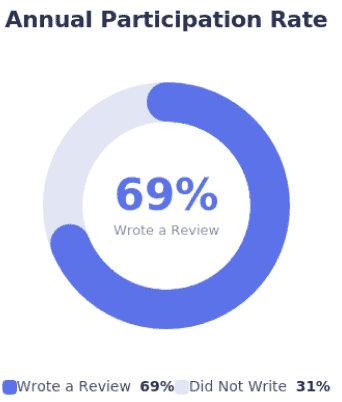
- Almost 69% of consumers wrote at least one online review during the past 12 months, showing that review sharing has become a common habit.
- The average consumer writes 4-6 reviews each year.
- Around 47% write 6 or fewer reviews annually.
- About 20% post more than 10 reviews each year.
- Meanwhile, only 7% contribute over 50 reviews annually, making them highly active reviewers.
Online Review Recency Expectations for Consumers
(Reference: powerreviews.com)
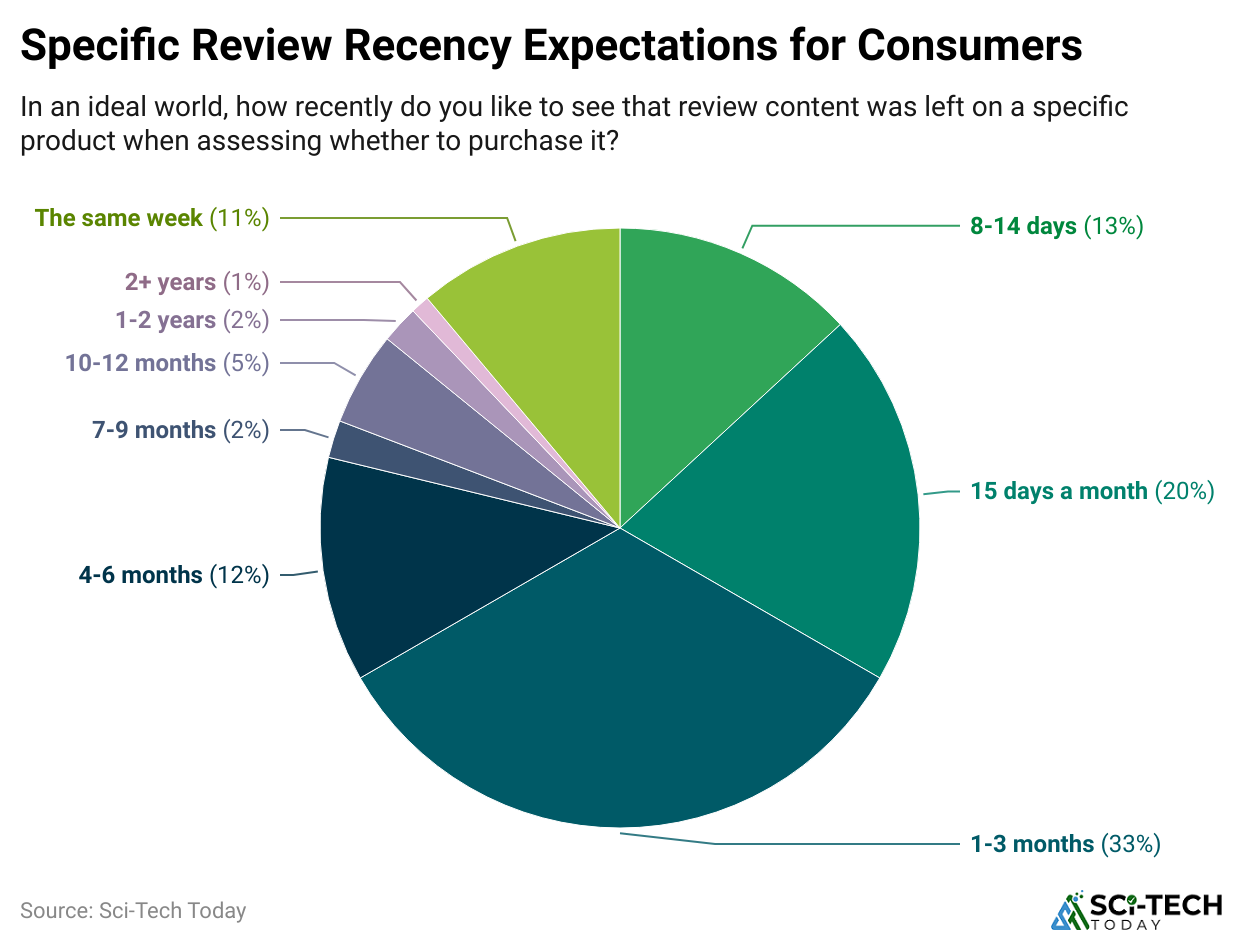
- Online Review Statistics 2024 elaborates that 33% of online consumers always read reviews that are 1 to 3 months old, and 20% of people like to read reviews from the last 15 days.
- Moreover, consumers’ review recency expectations are 8 to 14 days (13%), 4 to 6 months (13%), the same week (11%), 10 to 12 months (5%), 7 to 9 months (2%), 1 to 2 years (2%), and 2 years and above (1%).
Online Review Statistics By Industry
(Reference: fera.ai)
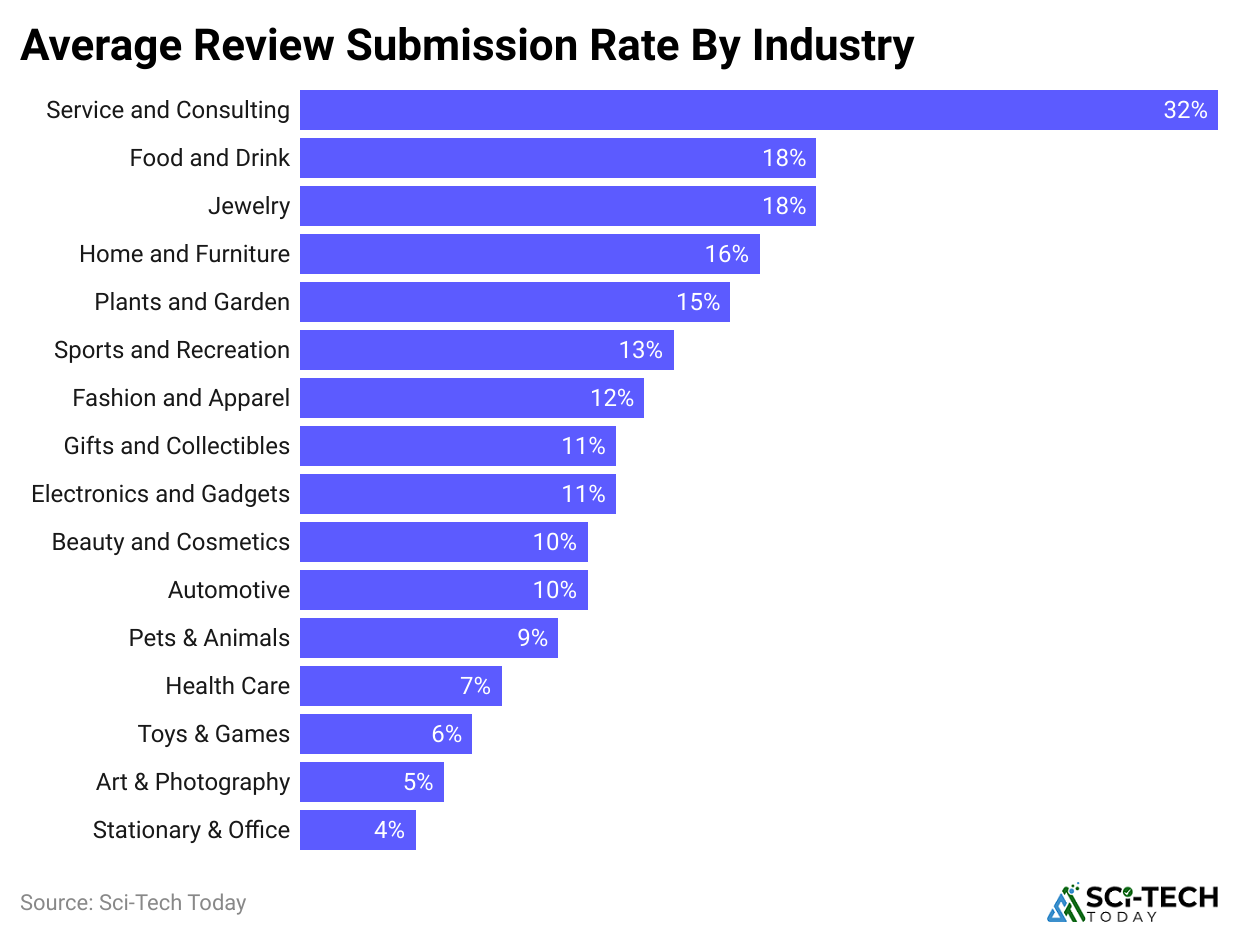
- Based on the e-commerce industry, in 2024, on average,10% of American online consumers share online reviews.
- Furthermore, the top five industries of the United States by online review submission rates are services and consulting (32%), food and drink (18%), jewelry (18%), home and furniture (16%), and plants and garden (15%).
- On the other hand, online reviews submitted by industries are sports and recreation (13%), fashion and apparel (12%), electronics and gadgets (11%), gifts and collectibles (11%), automotive (10%), beauty and cosmetics (10%), pets and animals (9%), health care (7%), toys and games (6%), art and photography (5%), and stationary and office (4%).
Online Review Management by Top Priority
- Not only online reviews, but 97% of people mostly focus on those businesses that respond to feedback.
- According to Online Business Statistics, 88% of buyers choose businesses that respond to all their reviews.
- In contrast, email, in-person, and social media captured the most popular ways to request reviews at 32%, 28%, and 27%, respectively.
- Over an AI-written review and a human review, 58% of online buyers preferred an AI-written response.
- Automated review responses covered up a share of 42%.
- After leaving a review on a website, 34% of people expected to receive a response within 2-3 days.
Online Review Statistics Across Different Industries
Software and Healthcare
- Displaying reviews on product pages increases conversions by about 5×, while 98% of B2B software buyers consider online reviews before purchasing.
- Product reviews are trusted 12× more than manufacturers’ descriptions.
- In healthcare, 49% of patients read Google reviews, 32% check WebMD, and 59% use reviews when choosing a healthcare provider.
Consumer Services
- According to LocaliQ, 36% of consumers read reviews before choosing a salon, and 91% of event planners evaluate event success using attendee reviews.
- In the automotive industry, 80% of retailer reviews appear on Google, and 46% of car buyers research reviews on multiple devices.
- 70% of restaurant customers will write a review if asked, while 59% read reviews before dining.
Professional Services, Travel, and Recruitment
- Nearly 60% of consumers use reviews to choose a lawyer, and 90% would still hire one with mostly positive reviews despite a few negative comments.
- 78% of travelers focus on the newest reviews, while business travelers read about 5 reviews, and leisure travelers read 6-7.
- 96% of home service customers value reviews; 51% of renters expect management responses; employers with poor reviews spend 10% more per hire; and 57% of job seekers avoid companies with negative reviews.
Shoppers’ Online Review Reading Statistics
(Source: imagedelivery.net)
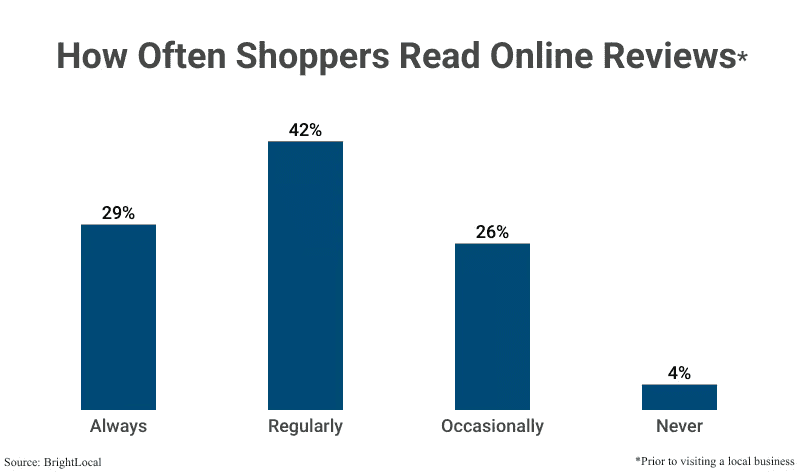
- 29% of shoppers always read online reviews before buying.
- 42% read reviews regularly, making reviews a routine part of their shopping journey.
- 26% check reviews occasionally, while only 4% never read online reviews at all.
Online Review Consumer Confidence Statistics
- The Capital One Shopping report also stated that 76% of consumers trust reviews more when they include a mix of positive and negative feedback rather than only 5-star ratings.
- At least 36% of consumers aged 25-34 rely on online reviews when making purchase decisions.
- 66% of shoppers say reviews frequently influence what they buy, while 85% hesitate to purchase products with no reviews.
- In the United States, 54% of consumers trust crowdsourced review websites, 21% do not, and 24% remain undecided.
- 49% of consumers consider online customer reviews very helpful before making a purchase.
Online Review Statistics by Review Ratings and Consumer Sentiment
- TripAdvisor reviews are mostly positive, with 65.8% rated 5 stars, only 7.2% rated 1 star, and an average rating of 4.30 out of 5.
- Around 60% of consumers are more likely to share positive experiences, while 29% are more likely to post negative feedback.
By Fake Review Moderation
- Google removed or blocked 240 million policy-violating reviews in one year, compared with 170 million the previous year.
- TripAdvisor identified 4.4% of submitted reviews as fake and stopped 72% before publication, while Trustpilot removed 7.4% of submitted reviews.
By Business Response Benchmarks
- The average business responds to about 56% of reviews, with an average response time of 4 days.
- 89% of consumers expect businesses to reply to reviews, and 51% expect a response within 1 day.
Wrap-up
Whether you’re a consumer looking for the best deal or a business owner trying to build trust, online reviews are a force to be reckoned with. By understanding the power of reviews and how they influence behavior, both consumers and businesses can navigate the online marketplace more effectively.
This will also help you to make informed decisions and stay ahead of the curve in today’s digital age.
FAQ
Aim for 20-50 genuine reviews, as most customers start trusting ratings in that range.
Yes, respond professionally to negative reviews to build trust and demonstrate excellent customer care.
No, buying reviews or incentivizing positive reviews violates most platform policies and trust

Sources