








Warm Up
E-Textbook Rental Statistics: E-textbook rental lets students use digital course materials for a set period of time. It usually costs less upfront than buying a print copy or a permanent digital copy. Many students could use this service. UNESCO reports that about 269 million students were enrolled in higher education worldwide in 2024, which is more than double the number from two decades earlier. This creates steady demand around the world for course materials that are easy on the budget.
High prices are one reason students like rentals. The United States Government Accountability Office (GAO) found that US college textbook prices rose at about twice the rate of inflation between 1986 and 2004, and they followed tuition increases closely. Rental access lasts only for one course or term, so it gives students a flexible and cheaper choice than owning a book. E-textbook rental platforms therefore help students save money, choose how long they need a book, and reach learning materials more easily.
Must See in the Editor’s Eye
- BibliU raised USD 55 million in June 2026, with revenue above USD 100 million.
- BNED reported First Day revenue rose 28.0% to USD 760.1 million.
- The e-textbook rental market is projected to reach USD 4,578.5 million by 2034 at 23.5% CAGR.
- Average annual course material spending reached USD 338 per student in 2025–26.
- Digital materials made up about 40% of 2025–26 purchases, up from 38%.
- OpenStax offers 62 free textbooks and reports USD 374.3 million in annual student savings.
- Pearson found courseware-embedded eTextbook AI users were 23 times likelier to read actively.
- In March 2026, 13 publishers sued Anna’s Archive, alleging over 63 million books were available.
Recent E-Textbook Rental Development
- In August 2026, BNC announced First Day Complete across 263 campuses in 40 states, representing over 1.43 million students, up approximately 26%.
- In July 2026, BNED reported First Day revenue rose 28.0%, or USD 166.3 million, from USD 593.8 million to USD 760.1 million.
- In June 2026, BibliU announced USD 55 million in funding, revenue exceeding USD 100 million, and compound annual growth above 100% over 2 years.
- In November 2025, BibliU secured KCTCS’s course-materials partnership, covering over 110,000 students across 16 colleges and 70 campuses, with integrated digital textbook access.
- In September 2025, VitalSource launched Bookshelf+, adding AI tutoring to digital textbooks; the company reported delivering over 28 million learning materials annually.
- In July 2025, BibliU ranked 1st in SUPC’s e-textbook Lot 7 and 2nd in perpetual-access Lot 4 and subscription-package Lot 6.
- In April 2025, VitalSource acquired RedShelf, which distributed course materials from 600+ publishers to over 1,400 institutions, expanding its digital textbook delivery network.
- In March 2025, Follett announced a fall 2025 migration to Kortext; Follett served 6+ million students across 1,000+ campuses, while Kortext offered 20,000+ open resources.
How E-Textbook Rental Works
- In 2026, e-textbook rental provides temporary digital access rather than permanent ownership; rental licenses remain nontransferable.
- Available rental periods typically include 60, 90, 120, or 180 days, depending on the textbook.
- Rental prices vary by title and duration; the applicable USD amount appears before payment.
- Access begins immediately after payment, with online reading and offline downloads available through the designated application.
- Device allowances support 2 computers and 2 mobile devices simultaneously; older devices require deactivation when limits are reached.
- Digital access expires automatically when the rental period ends, eliminating physical returns.
- Standard refunds require requests within 14 days, with no more than 20% viewed or printed; additional restrictions apply.
- Accounts recording 3 or more returns within 90 days become ineligible; eligible card refunds take 5–7 business days.
Key Players in the E-Textbook Rental Industry
- VitalSource offers over 1 million digital titles, advertising eTextbook savings up to 80%.
- Pearson+ offers 2,000+ eTextbooks; six-month access starts at USD 10.83 monthly or USD 64.98 upfront.
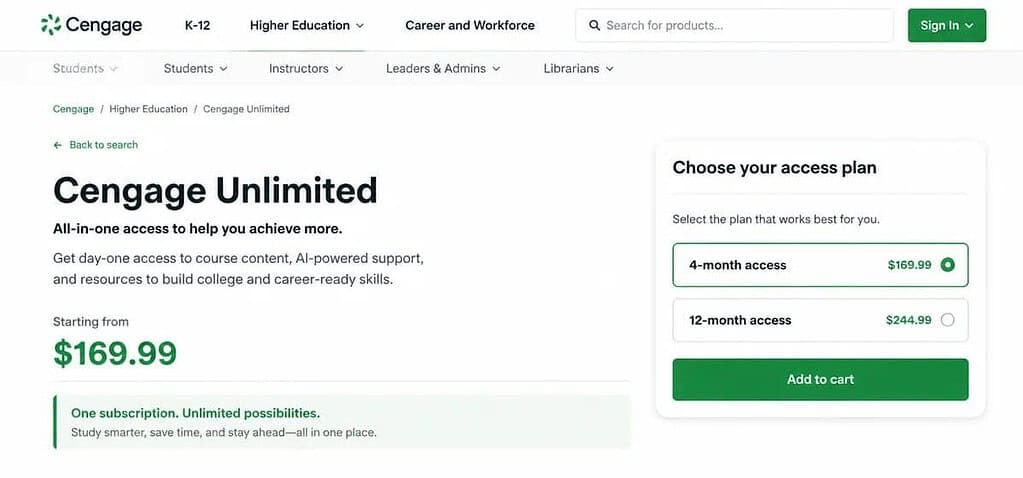
- Cengage provides Unlimited subscriptions covering its eBook library: USD 169.99 for four months; USD 244.99 for 12 months.
- McGraw Hill lists Financial Accounting Fundamentals eBook rentals at USD 70.99 for 180 days, excluding Connect access.
- RedShelf offers nearly 1 million digital titles, advertising prices up to 80% below print alternatives.
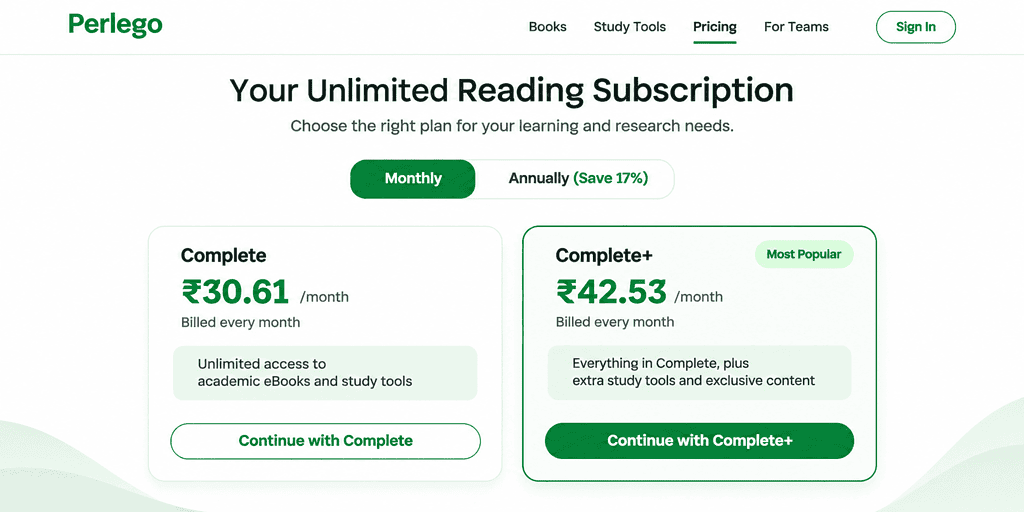
- Perlego provides subscription access to 800,000+ Essential titles or 1.5 million+ Complete titles, including academic textbooks.
- BooksRun lists over 500,000 eBooks, offering digital textbook rentals and purchases with immediate online and offline access.
- eCampus partners with VitalSource for variable-duration eTextbook rentals, providing downloadable materials and digital bookshelf access 24/7.
Role of AI in Study Tools
| Role of AI in study tools | Numeric data | Context and findings |
| Supporting widespread study use | 2026; 95%; 1,054; December 2025 | HEPI’s 2026 survey covered 1,054 UK undergraduates surveyed in December 2025; 95% reported using AI. |
| Assisting assessed coursework | 2026; 94% | In HEPI’s 2026 report, 94% of surveyed undergraduates reported using generative AI to support assessed work. |
| Improving the study experience | 2026; 49% | HEPI’s 2026 survey reported 49% experiencing improvements, including time savings and better understanding. |
| Personalising tutoring | 2026; 3.4% | Khan Academy reported 3.4% higher next-question correctness when its tutor incorporated students’ recent problem-solving histories. |
| Addressing learning gaps | 2026; 2.7% | Khan Academy reported 2.7% higher next-question correctness after reviewing prerequisite skills students had not mastered. |
| Strengthening engagement | 2026; 5.09% | Khan Academy reported 5.09% higher cognitive engagement using reformatted and expanded conversation histories. |
| Delivering faster assistance | 2026; 3 seconds; 352,000 threads | Khan Academy reported responses becoming 3 seconds faster across 352,000 tutoring threads while maintaining mathematical accuracy. |
| Encouraging independent problem-solving | 2026; 50% | Khan Academy reported 50% less answer-giving when verification focused on mathematical steps students had already completed. |
E-Textbook Rental vs E-Textbook Purchase Statistics
- VitalSource rentals typically offer 60, 90, 120, or 180 days; access expires automatically afterward.
- Purchased VitalSource lifetime licenses provide 5 years’ online access, plus permanent downloads to supported devices.
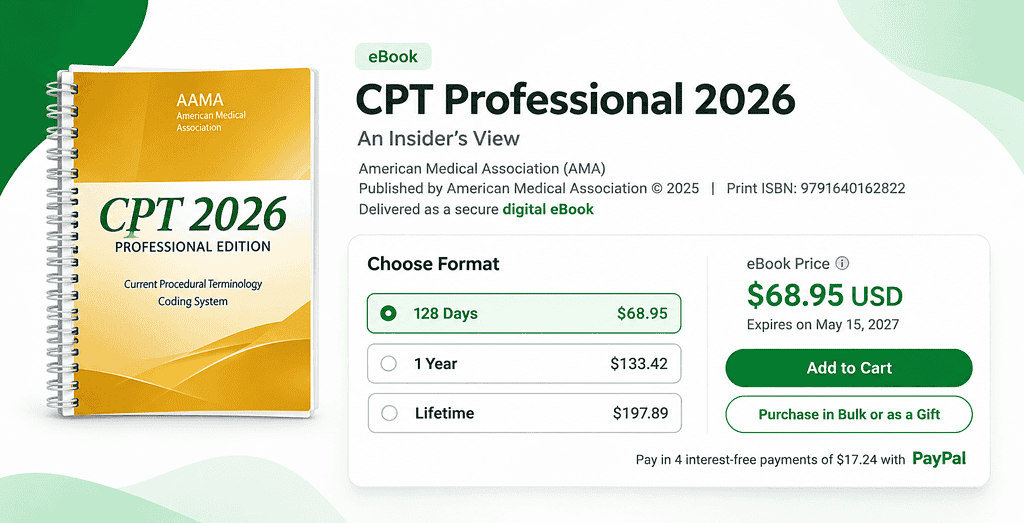
- CPT Professional 2026 lists 180-day e-textbook rental at USD 68.95.
- CPT Professional 2026 lists 1-year e-textbook access at USD 103.42; its additional USD 137.89 option lacks an extracted duration label.
- Mastering APA Style Student Workbook bundle lists 180-day access at USD 34.99, versus USD 39.99 for 1 year.
- The APA bundle’s additional USD 44.99 option lacks an extracted duration label; purchase status therefore remains unverified.
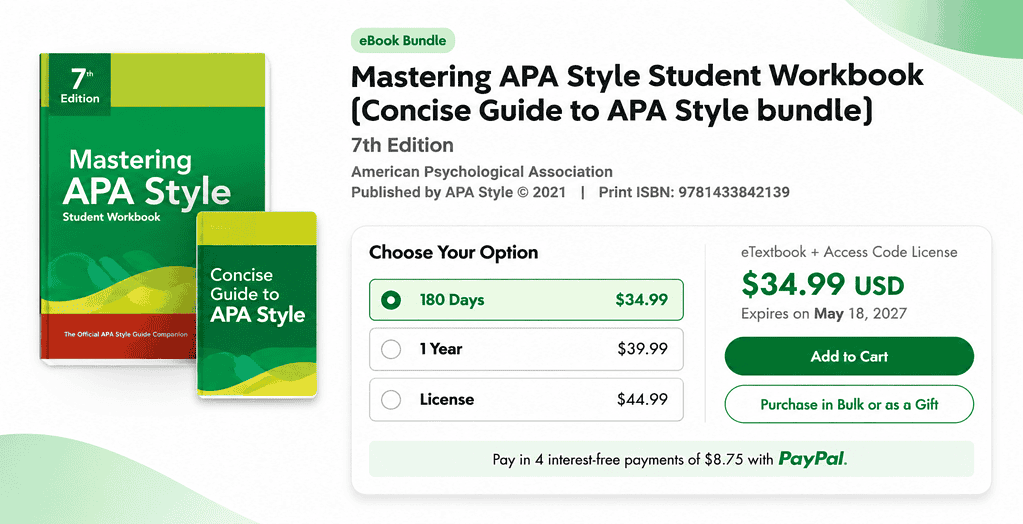
- APA’s 1-year option costs USD 5 more than 180-day access; CPT’s corresponding difference is USD 34.47.
Average Textbook Spending Per Student
- Average annual spending on required course materials, including textbooks, reached USD 338 per student in 2025–26.
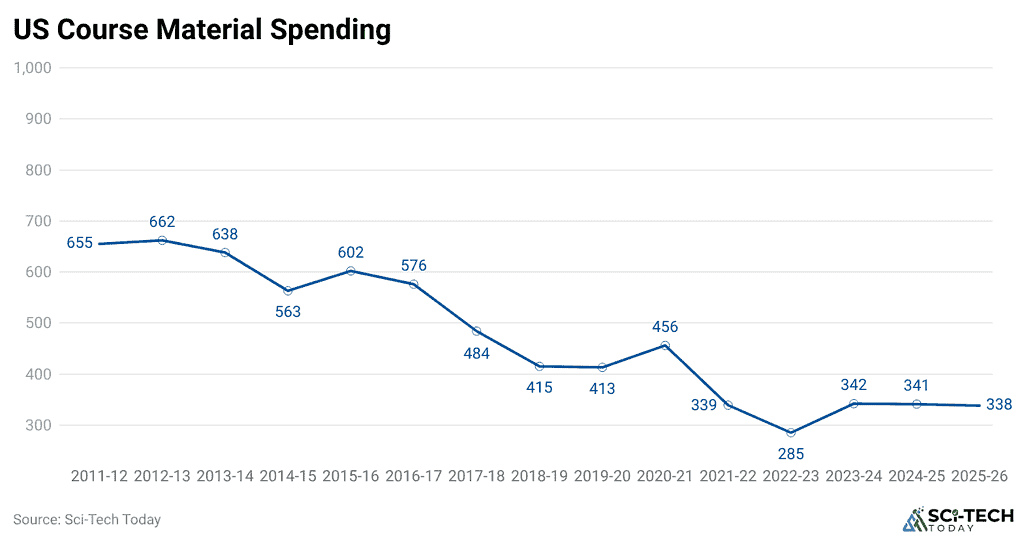
- Spending fell 44% over the preceding decade, according to Inside Higher Ed’s 2026 coverage.
- Approximately 25% skipped acquiring at least one required material; they spent only USD 20 less annually than students obtaining everything.
- In 2025–26, 72% of students received at least one assigned free or non-paid course material.
- Digital materials represented approximately 40% of purchases in 2025–26, compared with 38% the previous year.
- Among 2026 respondents, 37% preferred digital materials and 32% preferred print; digital led for the third consecutive year.
- Among students purchasing course materials, 62% bought at least some through campus stores, with online purchasing exceeding in-person purchasing.
- NACS’s 2026 survey covered approximately 11,177 students across 34 institutions in the United States, Canada, and Jamaica
E-Textbook Rental Market Size
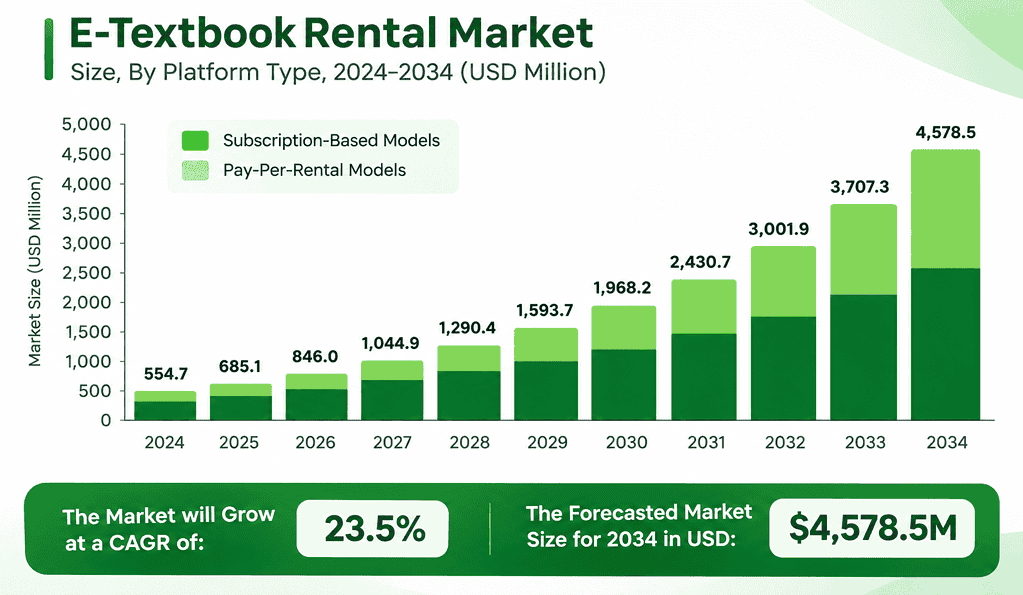
- The e-textbook rental market is projected to grow from USD 554.7 million in 2024 to USD 4,578.5 million in 2034, at a compound annual growth rate (CAGR) of 23.5% over the 2025–2034 forecast period.
- The market is forecast to reach USD 685.1 million in 2025 and USD 846.0 million in 2026.
- The market is expected to reach USD 3,707.3 million in 2033 before increasing to USD 4,578.5 million in 2034.
Impact of Open Educational Resources on E-Textbook Rental
- As of November 2026, OpenStax offers 62 free college textbooks, providing substitutes for paid e-textbook rentals.
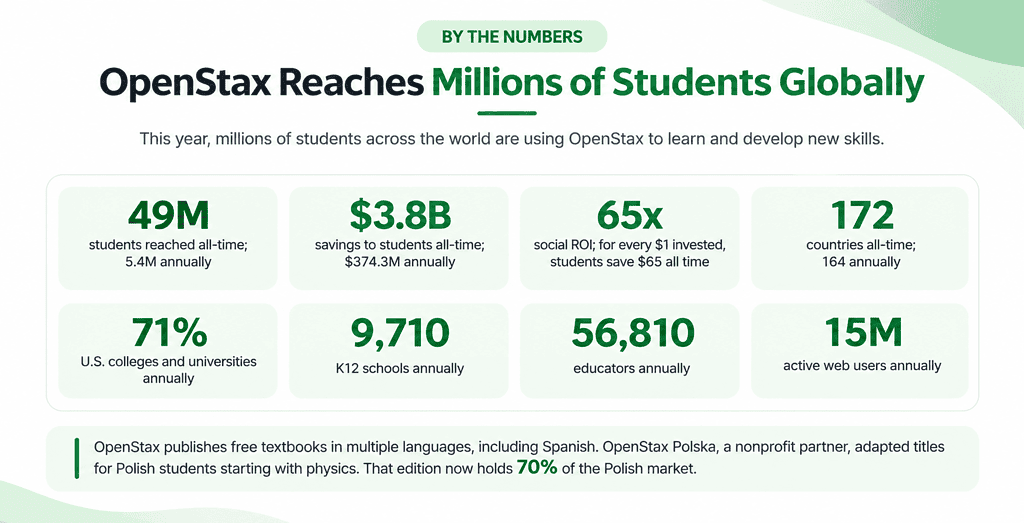
- OpenStax reports 5.4 million annual learners and USD 374.3 million in annual savings.
- Cumulative OpenStax reach totals 49 million learners across 172 countries, expanding competition with commercial e-textbook access.
- Adoption at 71% of U.S. colleges demonstrates institutional acceptance of free alternatives to paid textbook access.
- Free, non-expiring OpenStax downloads eliminate renewal needs; optional Assignable homework starts at USD 15 per student per semester.
- A March 2026 report found 36% of classes assigned exclusively free materials, indicating substitution opportunities beyond rentals.
- However, 75% faced mandatory access-code purchases, showing why free OER cannot automatically replace bundled paid courseware or rentals.
Content Theft in E-Textbook Rental
- March 2026 litigation provides broader textbook-piracy evidence, not rental-specific theft statistics; 13 publishers sued Anna’s Archive.
- Publishers’ 2026 complaint identified 130 copyrighted works as a representative infringement sample, including educational publishing content.
- The 2026 complaint alleged over 63 million books were available; this figure includes more than e-textbooks.
- Another 95 million papers allegedly accompanied those books in 2026, illustrating piracy’s reach beyond textbook rentals.
- The allegedly infringing collection approached 1 petabyte, equivalent to 1,000 terabytes.
- On March 3, 2026, displayed metrics indicated 763,000 daily downloads, averaged over 30 days.
- The 2026 complaint described monthly payments of USD 2–100 for faster downloads, monetizing allegedly unauthorized content.
- Premium bulk access reportedly cost USD 200,000; the 2026 complaint connects this offer to wider unauthorized distribution.
Key AI Study Tools in E-Textbooks
| AI study tool / research | Features and findings | Numeric data |
| Pearson AI study tools | AI summaries, step-by-step explanations, and personalized practice within selected eTextbooks and courseware. | 2026 offerings |
| Pearson eTextbook interaction research | Analyzed interactions across standalone and courseware-embedded eTextbooks. | February 2026; over 79 million interactions; 45,517 standalone users; 347,097 courseware-embedded users |
| Pearson standalone eTextbook AI | AI use was associated with greater active-reading likelihood, increasing further among repeat users. | 2026 report; 3× likelihood among AI users; 3.5× among repeat users |
| Pearson courseware-embedded eTextbook AI | AI users demonstrated greater active-reading likelihood, with higher figures among repeat users. | 2026 report; 23× likelihood among AI users; 24× among repeat users |
| Pearson AI-powered adaptive practice | Users were more likely to reach initial proficiency, according to Pearson’s research summary. | July 2026; 90% greater likelihood; over 62,000 students analyzed |
| Pearson Business Analytics eTextbook | Listed AI summaries, explanations, and translations alongside its subscription pricing. | Published 2026; USD 10.83 monthly; USD 64.98 total |
| VitalSource Bookshelf+ | Textbook-grounded AI study support; recognized for Best Overall Use of AI in Education. | 2026 EdTech Breakthrough Awards |
| VitalSource embedded AI practice | Reported increased textbook usage and student-perceived learning benefits. | October 2026; 3× textbook usage; 93% reported learning benefits |
Final Thoughts
Renting e-textbooks is a cheaper and more flexible choice for students than buying books. More students want digital books every year, and the market is expected to grow fast. Students now spend less on course materials.
AI study tools help students read and learn better, and free OpenStax books give them another low-cost option. Piracy is still a problem for publishers. Platforms that keep prices low, make access easy, and protect content will do best.
FAQ
In most cases, yes. Renting usually costs noticeably less than purchasing a new print copy or a permanent digital edition, especially for books needed for only one course. Buying can still be the better value if you plan to keep the book for reference or resell a print copy.
Rental periods vary by platform and publisher, but common terms range from about 30 days to a full semester or longer. Some services let you extend a rental for an additional fee, so it is worth checking the exact term before you check out.
Popular options include Amazon Kindle, VitalSource, Chegg, Pearson+, Cengage Unlimited, and campus bookstores that offer digital rentals. Availability depends on the title and publisher, so it helps to compare prices and terms across several platforms.
Most rentals allow highlighting, note-taking, and searching within the platform’s reading app. Printing and downloading are often restricted, with limits on the number of pages you can print or the devices you can use. Features differ by provider, so review the license terms before renting.
Access to the book is removed once the rental period ends, and any notes or highlights may become unavailable unless the platform lets you export them first. Some services offer a renewal or purchase option, so it is wise to save your notes and decide what you need before the deadline.
Refund policies vary widely. Some platforms offer a short grace window after purchase, while others treat digital rentals as final once opened. If you might drop a course, check the refund terms in advance, and consider whether your institution offers an inclusive-access or course-material program.