








Introduction
Beer Nutrition Facts: The World’s third most-consumed drink is beer. This alcoholic beverage is extremely famous all over the globe. Some people drink it every day out of habit, while others drink it occasionally. Over the years, due to innovations, more than 9000 varieties of beers have been introduced in the market.
Between 2022 to 2030, the global beer market is expected to grow at a 6.8% CAGR. Despite all things, a handful of consumers still consume the alcoholic beverage by looking at the calories in the beer. This article How many calories in beer will help you choose the brand you think will fit your needs. As a bonus, at the bottom, you can also learn how to make beer at home.
Types of Beer
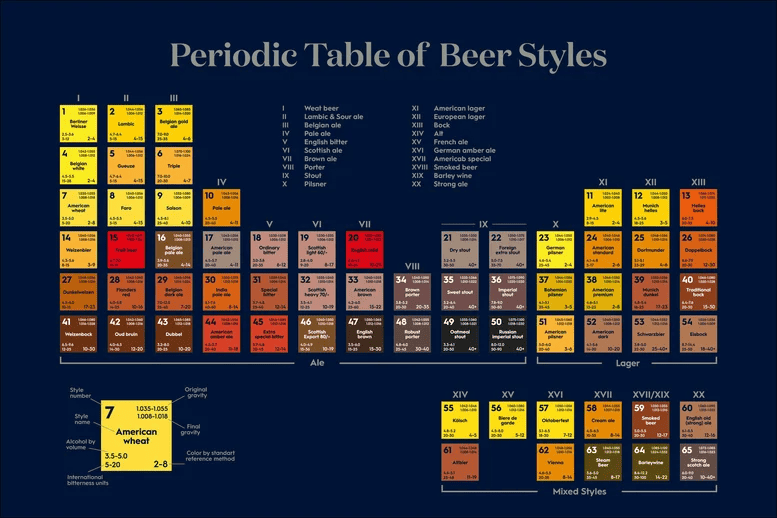 (Source: hospitalityinsights.ehl)
As of today, there are more than 9,000 craft breweries in the United States of America. The following are some of the commonly consumed types of beers. The characteristics of beer depend on IBU and ABV, which stand for International Bitterness Unit (IBU) and Alcohol by Volume (ABV)
#1. Porter
Porter beers are famous for their dark black colour. This beer has a roasted aroma. Although the taste could be fruity, it depends on the variety of ingredients used during the process. American imperial porter, robust porter, and English brown porter are the subcategories of this type.
#2. India Pale Ale
Irrespective of the name, this type of beer was invented in Britain. It was brewed with British pale ale, along with some extra hops. Moreover, these beers are high in alcoholic content. English IPA, American IPA, and Imperial or double IPA are examples of this beer.
#3. Wheat Beer
These beers are famous for their smooth and soft flavour. Wheat beer tastes like citrus or spices. These beers are light in colour as well as have low alcoholic content. Some examples include Belgian Witbier, American Pale Wheat, Dunkelweizen, Berliner Weisse, and Hefeweizen.
#4. Wild and Sour Ale
These beers are brewed from wild yeasts. These are low in alcohol content. For example, Belgian fruit lambic, American sour, Belgian gueuze, and Flanders red ale.
#5. Specialty Beer
These types of beers are made from fruits, spices, and flavourings. For example, barrel-aged beer, American black ale, fruit and vegetable beer, coffee beer, chocolate beer, herb and spice beer, smoke beer, session beer, rye beer, pumpkin beer, honey beer, and gluten-free beer.
#6. Brown Ale
These beers have caramel and somewhat toasty flavours, and have a high shade of bitterness as well as mid-range alcohol content, for example, English brown ale and American brown ale.
#7. Pale Lager and Pilsner
These beers have a golden colour and are low in alcoholic content, as well as having with light flavour. For example, German helles, American lager, Czech or Bohemian pilsner.
#8. Stout
These beers are like porters and have a dark black colour. Moreover, they come with high alcohol content and strong roasted flavours. For example, American imperial Stout, American stout, Milk stout, Irish dry stout, and Oatmeal stout.
#9. Dark Lager
Unlike the name, these come with an orange colour and have mid-range alcoholic content as well as lower bitterness. They taste like toasted caramel and are smooth. For example, Oktoberfest, Amber American lager, Vienna lager, and German Schwarzbier.
#10. Belgian-Style Ale
These beers are famous for their high alcoholic content and spiced, fruity taste. For example, Belgian dubbel, Belgian pale ale, Belgian Saison, Belgian Quadrupel, Belgian Strong Dark ale, and Belgian tripel.
#11. Pale Ale
The pale ales have low alcoholic content as compared to Indian Pale Ales.For example, American pale ale, English pale ale, English bitter, and blonde ale.
Health Benefits of Drinking Beer
The health benefits of drinking beer are considered at moderate or occasional levels of drinking
- It can improve your digestion and reduce constipation
- Improves the functioning of the brain
- It is good for the health of hair, skin, and teeth as well.
- Beer can treat anaemia
- It can reduce cholesterol levels
- Prevents future kidney stone diagnosis
- Make bones stronger.
Disadvantages of Drinking Beer
Excessive consumption or a daily drinking habit can lead to the following problems
- Leads to long-lasting hangovers and headaches
- Increases anxiety and feelings of nausea
- It imbalances the blood sugar levels as well as blood pressure levels.
- It could increase the heartburn
- As a result, it could cause a heart attack or may increase cardiovascular issues
- Increases bloating
How Many Calories are in Beer by Brand
Ale – 1 can or bottle (354 ml) – 124 calories
Altbier – 1 can or bottle (354 ml) – 152 calories
Bass – 1 can or bottle (354 ml) – 159 calories
Beck’s – 1 can or bottle (354 ml) – 138 calories
Beer – 1 can or bottle (354 ml) – 152 calories
Blue Moon – 1 can or bottle (354 ml) – 170 calories
Bock Beer– 1 can or bottle (354 ml) – 177 calories
Buckler -1 can or bottle (354 ml) – 74 calories
Bud Ice – 1 can or bottle (354 ml) – 74 calories
Bud Light – 1 can or bottle (354 ml) – 103 calories
Bud Light Chelada – 1 can or bottle (354 ml) – 152 calories
Bud Light Lime – 1 can or bottle (354 ml) – 120 calories
Bud Select – 1 can or bottle (354 ml) – 99 calories
Bud Select 55 – 1 can or bottle (354 ml) – 53 calories
Budweiser – 1 can or bottle (354 ml) – 145 calories
Budweiser Chelada – 1 can or bottle (354 ml) – 184 calories
Busch – 1 can or bottle (354 ml) – 131 calories
Busch Light – 1 can or bottle (354 ml) – 96 calories
Busch – 1 can or bottle (354 ml) – 60 calories
Carlsberg – 1 can or bottle (354 ml) – 113 calories
Clausthaler – 1 can or bottle (354 ml) – 92 calories
Colt 45 – 1 can or bottle (354 ml) – 156 calories
Coors – 1 can or bottle (354 ml) – 64 calories
Corona – 1 can or bottle (354 ml) – 149 calories
Dark Beer – 1 can or bottle (354 ml) – 163 calories
Genesee Cream Ale – 1 can or bottle (354 ml) – 163 calories
Ginger Beer – 1 can or bottle (354 ml) – 149 calories
Guinness 1 pint (568ml) – 199 calories
Heineken – 1 can or bottle (354 ml) – 124 calories
Honey brown – 1 can or bottle (354 ml) – 149 calories
Hurricane High Gravity – 1 can or bottle (354 ml) – 138 calories
IPA – 1 can or bottle (354 ml) – 181 calories
Keystone Ice – 1 can or bottle (354 ml) – 142 calories
Keystone Light – 1 can or bottle (354 ml) – 103 calories
Koelsch – 1 can or bottle (354 ml) – 152 calories
Labatt – 1 can or bottle (354 ml) – 152 calories
Lager Beer – 1 can or bottle (354 ml) – 152 calories
Land Shark – 1 can or bottle (354 ml) – 149 calories
Light Beer – 1 can or bottle (354 ml) – 103 calories
Lowenbrau – 1 can or bottle (354 ml) – 159 calories
Malt Beer – 1 can or bottle (354 ml) – 131 calories
Michelob Amber Bock – 1 can or bottle (354 ml) – 166 calories
Michelob Lager – 1 can or bottle (354 ml) – 156 calories
Michelob Light – 1 can or bottle (354 ml) – 113 calories
Michelob Ultra– 1 can or bottle (354 ml) – 96 calories
Michelob Ultra Amber – 1 can or bottle (354 ml) – 92 calories
Michelob Ultra Lime Cactus – 1 can or bottle (354 ml) – 96 calories
Miller Chill – 1 can or bottle (354 ml) – 110 calories
Miller Genuine Draft – 1 can or bottle (354 ml) – 142 calories
Miller High Life – 1 can or bottle (354 ml) – 142 calories
Miller High Life Light – 1 can or bottle (354 ml) – 110 calories
Miller Lite – 1 can or bottle (354 ml) – 96 calories
Milwaukee’s Best – 1 can or bottle (354 ml) – 127 calories
Milwaukee’s Best Light– 1 can or bottle (354 ml) – 99 calories
Molson – 1 can or bottle (354 ml) – 149 calories
Natural Ice – 1 can or bottle (354 ml) – 156 calories
Natural Light – 1 can or bottle (354 ml) – 96 calories
Newcastle – 1 can or bottle (354 ml) – 138 calories
Non- Alcoholic Beer – 1 can or bottle (354 ml) – 131 calories
Old Milwaukee – 1 can or bottle (354 ml) – 145 calories
Old Milwaukee N.A. – 1 can or bottle (354 ml) – 57 calories
Olde English – 1 can or bottle (354 ml) – 159 calories
O’Doul’s – 1 can or bottle (354 ml) – 67 calories
Pabst Blue Ribbon – 1 can or bottle (354 ml) – 145 calories
Pale Ale – 1 can or bottle (354 ml) – 149 calories
Pilsner – 1 can or bottle (354 ml) – 152 calories
Porter – 1 can or bottle (354 ml) – 191 calories
Redbridge (Gluten-free) – 159 calories
Rolling Rock – 1 can or bottle (354 ml) – 131 calories
Rolling Rock Light – 1 can or bottle (354 ml) – 106 calories
Root Beer – 1 can or bottle (354 ml) – 145 calories
Samuel Adams – 1 can or bottle (354 ml) – 145 calories
Shock Top – 1 can or bottle (354 ml) – 166 calories
Shock Top Raspberry Wheat – 1 can or bottle (354 ml) – 124 calories
177 Calories
Sierra Nevada Strong – 1 can or bottle (354 ml) – 219 calories
Sparks – 1 can or bottle (354 ml) – 262 calories
St. Pauli Girl – 1 can or bottle (354 ml) – 149 calories
Steel Reserve – 1 can or bottle (354 ml) – 223 calories
Stout – 1 can or bottle (354 ml) – 181 calories
Stout Beer – 1 can or bottle (354 ml) – 181 calories
Strong beer – 1 can or bottle (354 ml) – 195 calories
Tilt – 1 can or bottle (354 ml) – 227 calories
Wheat Beer – 1 can or bottle (354 ml) – 159 calories
Nutritional Facts about Beer
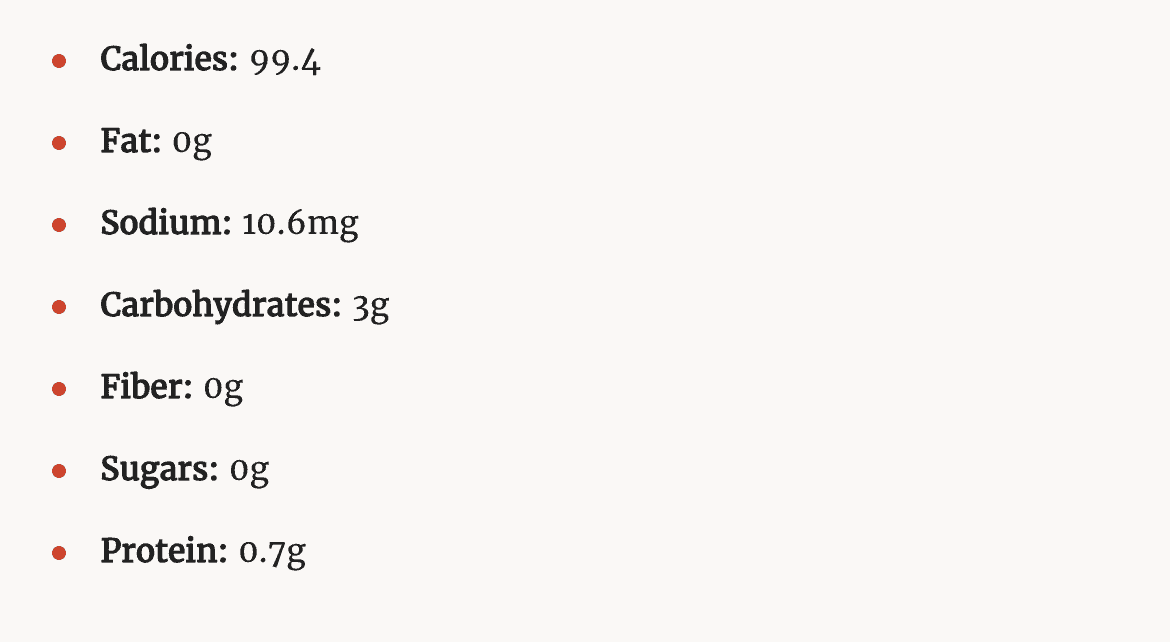
1 can of beer (depending on brand) has around 99.4 calories and 0g fat. These Calories in beer cause weight gain and high blood sugar levels. Moreover, other factors that make a full beer are sodium (10.6mg), Carbohydrates (3g), Fiber (0g), Sugars (0g), and protein (0.7 g).
Vitamins and minerals
Beer has some amount of magnesium, niacin, potassium, and folate. This is provided by hops, malts, brewer’s yeast, and barley.
Some Statistics on Beer Consumers
By age
 (Reference: statista.com)
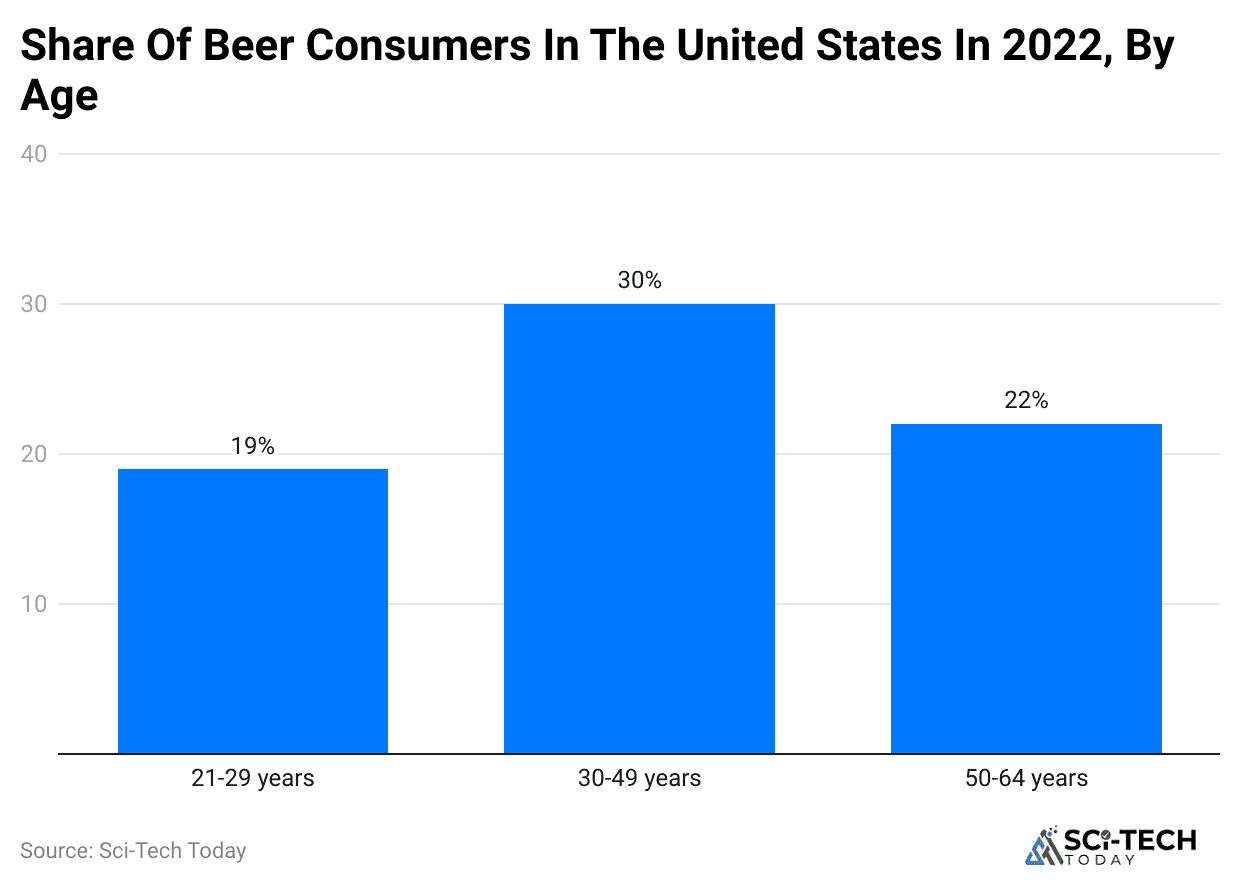
As of 2022, in the United States of America, the highest number of beer consumers, excluding non- alcoholic beverages, was found between the ages of 30 to 49 years, resulting in 30%. Further followed by 22% of the people between 50 to 64 years of age. The lowest number of beer drinkers belonged to 21 to 29 years of aged consumers, resulting in 19%.
How to make Beer at Home?
Equipment needed: Food-grade syphon tube (1.5 m) with steel mesh filter and automated pump, 5 litres of steel pot, blow-off tube or airlock, 3 liter pickle jar, a grommet gasket, hydrometer (if needed), swing top glass bottle (6 x 500ml)
Ingredients:
5 ml brewing Sanitise, (Starsan, hydrogen peroxide, iodine solution etc), 2gm Yeast nutrient ½ tbsp per 3 litres, 3gm beer brewing yeast, 1 packet hops, 100 to 125 gm dry malt extract per 100 to 125 gm per litre, 3 ltrs purified water, 1kg ice, 8gm priming sugar 1 to 1.5 tbsp per litre, 5ml brewing sanitizer and 2gm yeast nutrient.
Instructions :
Wort preparation
- Boil 2 ltr of water, add malt extract and avoid it sticking to the bottom, add hops and Irish moss. Boil continuously for 5 to 10 minutes, after which put the vessel in an ice bath. For pasteurisation, add ice cubes (if needed). Make it chill until it reaches a room temperature of less than 30 °C.
Sanitization
- Soak all equipment and surfaces for at least 5 minutes in the mason jar. Everything that comes in contact with the wort should be sanitised. Completely dry out the residuals of the disinfectant. Make a hole in a mason jar to put a grommet gasket and airlock. And use sealant to seal the lid and airlock.
Fermentation
- Pour wort into a mason jar and take the reading using a hydrometer. Based on the requirement of alcohol content, you can add or reduce the malt. Normally, the reading should be 1.055 S.G.
- In batches of less than 10 litres, pour the wort from a sufficient height to take out the oxygen.
- Then hydrate the yeast in 10 batches of water, i.e., 10 ml per litre, and add nutrients to the yeast. Mix everything and keep it aside for 15 minutes. Yeast should be alive enough to form the bubbles; dead yeast can ruin the process.
- Seal the lid and insert an airlock. The bubbling process should start in 4 to 12 hours. Take extra care to avoid leakage in the seal.
- For the next 7 days, store it in a cool and dark place. Avoid direct or indirect sunlight.
- After 48 to 72 hours, you can see the thick yellow yeast cake at the bottom along with a clear beer. It can be achieved by dissolving the ¼ tbsp of gelatin in a ½ cup of warm water (to avoid boiling) to settle the yeast.
Bottling
- Sanitise the bottles and dry out the disinfectant with water. Pour beer into a bottle using a syphon tube and add 1 to 2 tbsp of sugar to achieve natural carbonation. For 3 more days, seal the cap and store the bottle in a dark and cool place for the formation of C02. You can enjoy it afterwards, served in a chilled glass.
Conclusion
Concluding how many calories are in the beer, we come to know how significant this alcoholic beverage is around the world. Over the centuries, humans have made transformations in the taste and flavours. Although beer is not considered a healthy drink, it is still consumed on an everyday basis. Some research states that beer is widely consumed among men as compared to women, resulting in 63% to 57%.
Over the years, this culture transferred to other countries and made it a habit to drink at least one glass of beer each day. Keep in mind that drinking beer every day is not good for health, as the calories in beer and carbohydrates can increase weight as well as blood sugar levels. Therefore, it is recommended to follow a moderate drinking habit.

Sources


