








Opening
Mental Health Statistics: Mental health is just as important as physical health. It affects how we think, feel, act, and deal with everyday life. Good mental health helps us manage stress, build strong relationships, make better decisions, and enjoy life. However, problems like anxiety, depression, and stress are becoming more common due to busy lifestyles, work pressure, financial worries, and social media.
The good news is that people are now talking more openly about mental health, helping reduce stigma and encouraging those in need to seek support. By understanding mental health and taking simple steps to care for it, we can live happier, healthier, and more balanced lives while supporting the well-being of others.
Latest Highlights
- Around 60% of social media users say these platforms negatively affect their self-esteem.
- 41% of heavy teen social media users rate their mental health as poor or very poor.
- Cyberbullying is linked to a 70% higher risk of depression, along with increased anxiety, suicidal thoughts, and sleep problems.
- About 34% of U.S. teens use social media to find mental health information.
- More than 50% of popular short-form mental health videos contain misleading or inaccurate information.
- Around 63% of teens consider social media an important source of mental health information.
- About 15–20% of U.S. teens have experienced cyberbullying, while 34% of children and adolescents report being cyberbullied at least once.
- Around 29% of social media users have self-diagnosed a mental health condition, but fewer than 47% discuss their symptoms with a healthcare professional.
- Among teenagers, 20% of girls say social media lowers their confidence, compared with 10% of boys.
- A 1-week break from social media showed little improvement in self-esteem or body image.
Global Mental Health Statistics
- Around 970 million people all across the globe grapple with just one of the other types of mental illness.
- Almost 2 out of 5 people will experience a mental illness at some point in their lives.
- Nearly 14.3% of the deaths globally, or almost 8 million deaths every year, are attributable to mental disorders.
- According to Mental Health Statistics, the prevalence of mental health issues has grown by 50% globally from 416 million to almost 615 million in the past decades.
- Depression affects almost 300 million people globally, regardless of age, gender, culture, color, race, or even economic status.
- Mostly, 75% of the population in middle- and low-income countries don’t get medicines for depression, and it is not even acknowledged.
- Even though high-income nations give “minimally needed” treatment for depression in almost 23% of cases, this decreases to almost 3% in the underdeveloped countries.
- The rate of suicide is the fourth leading cause of death among people between 15 and 29 years.
- Virtually 284 million people suffer from depression and anxiety globally.
- Anxiety issues unequally affect women, and 2.8% of men experience an anxiety disorder, while almost 4.7% of females experience depression.
Primary Causes of Mental Illness
- Mental illness develops due to a combination of biological, psychological, and social factors, known as the biopsychosocial model.
- Mental health professionals in the United States use the DSM-5-TR to diagnose mental disorders, while the biopsychosocial model helps identify their underlying causes.
- Biological factors include genetics, family history, and exposure to alcohol or drugs before birth.
- Psychological factors include stress, trauma, and other difficult life experiences that affect emotional well-being.
- Social factors include family environment, relationships, community support, employment, and living conditions.
How Mental Illness Affects Individuals
- According to usa.edu, Children aged 6-17 with mental, emotional, developmental, or behavioral conditions are about 3 times more likely to repeat a school grade.
- Around 9% of U.S. adults with mental illness are unemployed, compared with 4.3% of adults without mental illness.
- About 5% of adults with mental illness also have a substance use disorder.
- People with severe mental illness have a life expectancy 10-25 years shorter than the general population.
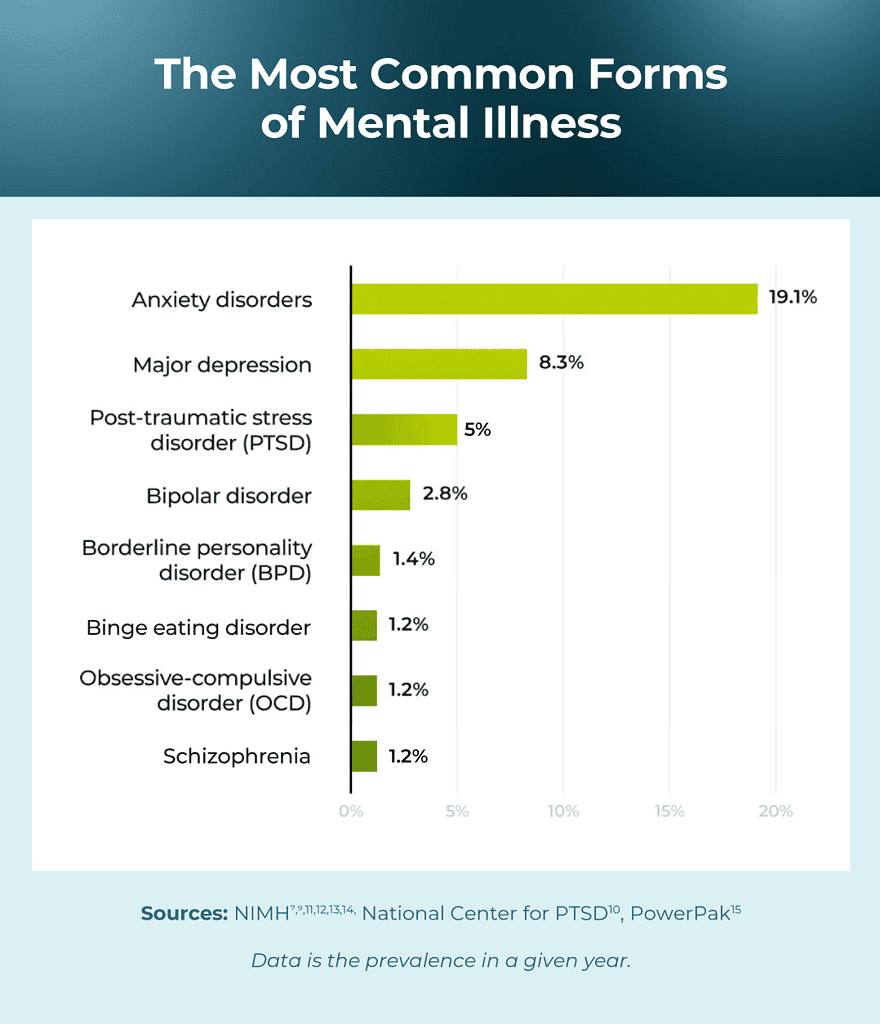
Most Common Mental Illnesses Among U.S. Adults
(Source: usa.edu)
- Around 23% of U.S. adults experienced any mental illness in 2025, a rate that remained largely stable between 2021 and 2025.
- Anxiety disorders were the most common mental illness, affecting 19.1% of adults, followed by major depression (8.3%) and post-traumatic stress disorder (PTSD) (5%).
- Other conditions included bipolar disorder (2.8%), borderline personality disorder (BPD) (1.4%), binge eating disorder (1.2%), obsessive-compulsive disorder (OCD) (1.2%), and schizophrenia (1.2%).
Mental Health Statistics by Age
- Mental illness can affect people of all ages. About 50% of individuals develop symptoms by age 14, while 75% experience symptoms by age 24.
- Among U.S. adults, mental illness is most common in ages 18-25 (36.2%), followed by ages 26-49 (29.4%) and 50+ (13.9%).
- Among U.S. adolescents aged 13-18, the lifetime prevalence of any mental disorder is 49.5%.
- Of adolescents with a mental disorder, 22.2% experience severe impairment or distress based on DSM-IV diagnostic criteria.
By Race
- SAMHSA data show that mental illness rates differ across racial and ethnic groups in the United States.
- The highest reported prevalence is among mixed or multiracial individuals (35.5%), followed by American Indian or Alaska Native (25.9%) and White (25.1%) populations.
- Mental illness affects 20.9% of Black or African American individuals, 20.7% of Hispanic or Latino individuals, 17% of Asian individuals, and 12.2% of Native Hawaiian or Other Pacific Islander individuals.
Key Workplace Mental Health Statistics
- A report published by Speakwise shows that 76% of U.S. workers reported at least 1 mental health symptom during the previous 12 months.
- Depression and anxiety cost the global economy about USD 1 trillion every year.
- Around 12 billion working days are lost annually because of depression and anxiety.
- 84% of employees said workplace conditions harm their mental health.
- Depression costs U.S. employers about USD 44 billion each year in lost productivity.
- Every USD 1 invested in mental health treatment generates about USD 4 in returns.
- About 1 in 5 U.S. adults (59 million) live with mental illness, including 1 in 25 (14.2 million) with serious conditions.
- Only 57% of workers with moderate depression receive treatment.
- Burnout affects 77% of professionals, while 91% report stress lowers work quality.
- 67% of workers said workplace stress increased over the past 5 years.
- Anxiety disorders affect 40 million U.S. adults (19.1%) annually.
- Untreated depression reduces productivity by 35%.
- 60% of employees have never discussed mental health at work.
- Companies with mental health programs report 30% fewer disability claims.
- 92% of workers value employers that prioritize mental health.
How Work Affects Mental Health
- A report by Grow Therapy shows work has a negative or very negative impact on the mental health of 25% of employees.
- Nearly 63% of U.S. workers say work has a positive effect on their mental health.
- The leading sources of stress are U.S. politics (43%), global events (42%), and personal finances (37%).
- Only 49% of employees feel comfortable disconnecting after work or during vacations.
Burnout and Employee Well-Being
- The WHO defines burnout as a result of long-term workplace stress that reduces energy, engagement, and productivity.
- Around 66% of U.S. employees report experiencing some level of burnout.
- About 19% of employees take on extra work because of labor shortages.
- Around 13% say concerns about AI affecting their jobs contribute to burnout.
(Source: growtherapy.com)
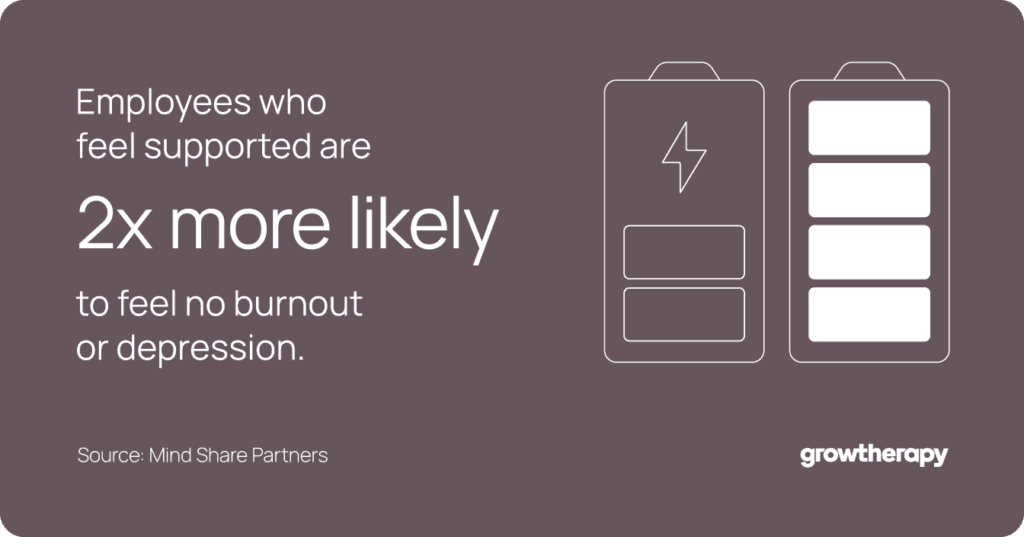
- Employees with strong mental health support are 2 times more likely to avoid burnout or depression.
- About 1 in 4 employees work beyond scheduled hours most of the time or every day, while 63% do so sometimes.
- Around 27% of employees affected by major government policy changes report emotional exhaustion.
Good Mental Health Improves Productivity and Performance
- Happy employees are 13% more productive, showing that better mental well-being improves work outcomes.
- Companies that promote mental health awareness experience a 20% increase in employee retention, helping keep employees engaged and loyal.
- Around 52% of employees say they are more productive and engaged when their employer provides counseling or wellness programs.
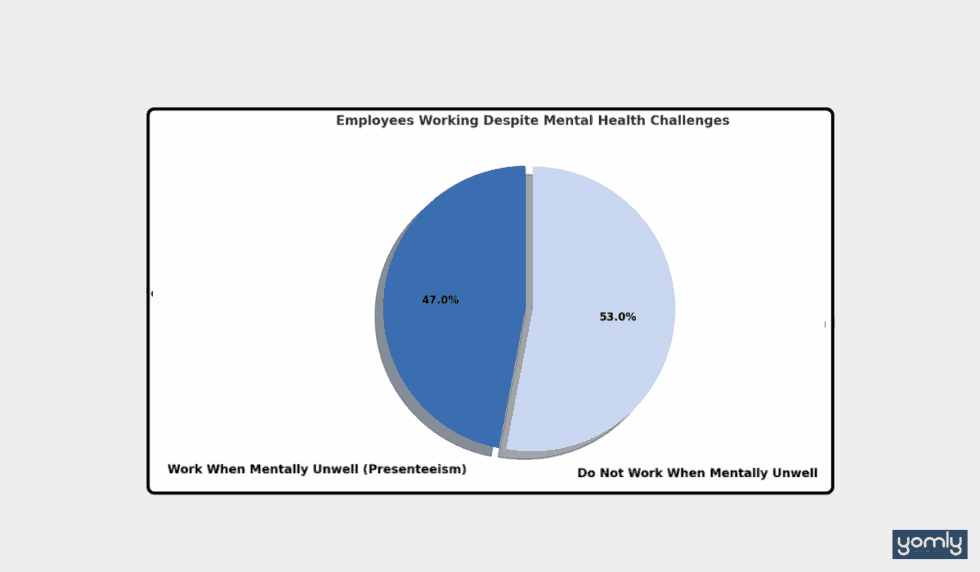
- 47% of employees continue working when mentally unwell (presenteeism), while 53% refrain from working during periods of poor mental health.
(Source: yomly.com)
Social Media and Mental Health Statistics
(Source: sqmagazine.co.uk)
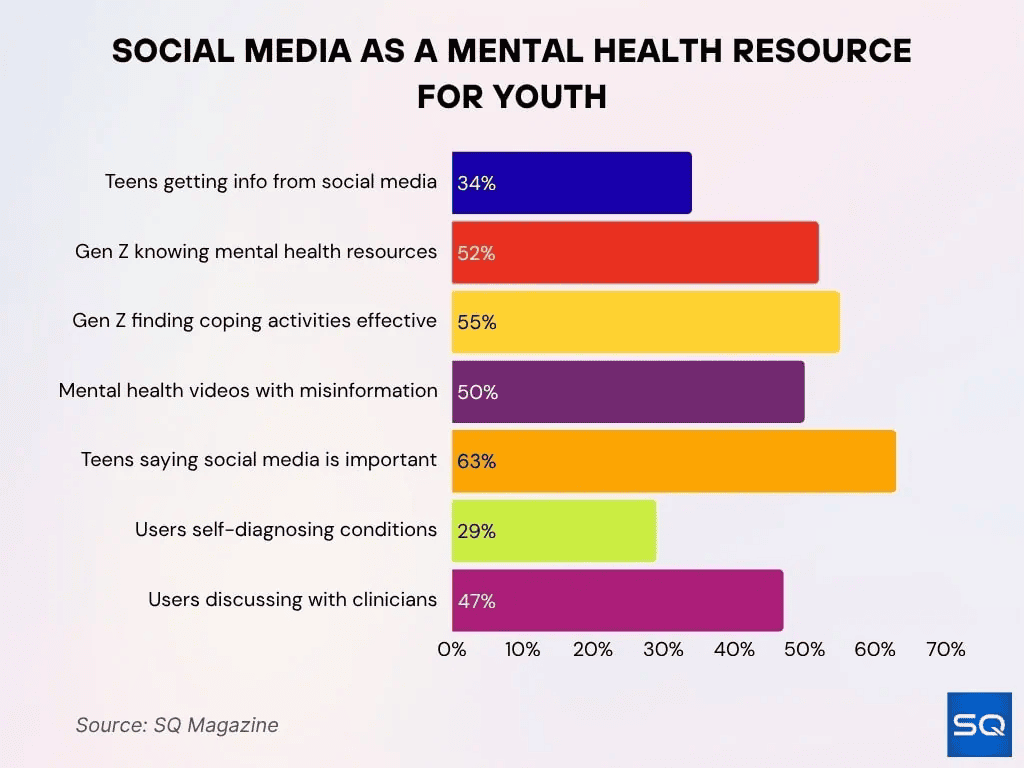
- Around 34% of U.S. teens say they sometimes use social media to find mental health information.
- Among Gen Z, 52% know where to find mental health resources, and 55% believe coping activities help improve their mental well-being.
- More than 50% of popular short-form mental health videos contain inaccurate or misleading information.
- 63% of teens who seek mental health information on social media consider these platforms an important resource.
- Nearly 29% of social media users have self-diagnosed a mental health condition, but fewer than 47% discuss their symptoms with a healthcare professional.
Self-Esteem and Body Image
- Social media, especially fitness and appearance-focused content, can negatively influence body image among young people.
- Frequent exposure to edited or idealized images is linked to lower self-esteem, body dissatisfaction, and a higher risk of eating disorders.
- Around 60% of social media users say these platforms negatively affect their self-esteem.
- Among teenagers, 20% of girls report that social media reduces their confidence, compared with 10% of boys.
- A 1-week break from social media showed little improvement in self-esteem or body image, suggesting deeper underlying causes.
- Visual platforms such as Instagram and TikTok encourage social comparison, reducing body satisfaction.
Cyberbullying and Online Harassment
- SQ Magazine stated that 41% of heavy teen social media users rate their mental health as poor or very poor.
- About 15%-20% of U.S. teens have experienced cyberbullying, while 34% of children and adolescents report being cyberbullied at least once.
- Cyberbullying is associated with a 70% increase in depression risk and higher levels of anxiety, suicidal thoughts, and sleep problems.
Mental Health Statistics by Demographics
- According to Innerwell, adults aged 18-25 have the highest mental illness rates, with 33.2% experiencing any mental illness and 9.4% living with serious mental illness.
- Globally, nearly 1.2 billion people, or about 13% of the population, live with a mental disorder, with the highest burden among people aged 15-19 and women.
- In many OECD countries, women report poorer mental health than men, except among children under 10 and adults aged 60-74.
- According to addictionhelp.com, in the United States, mental illness affects 16.4% of Asian, 21.4% of Black, 20.7% of Hispanic, 23.9% of White, 26.6% of American Indian or Alaska Native, and 34.9% of non-Hispanic multiracial adults.
- About 50.2% of LGBTQIA+ adults experience mental illness. Transgender people are nearly 4 times more likely to face mental health conditions, while transgender youth aged 13-24 are nearly 2 times more likely to report mental health challenges than their non-transgender peers.
Global and Regional Mental Health Statistics
- The Lancet report further stated that new global estimates for 2026 indicate about 1.17 billion people living with mental disorders worldwide, equivalent to roughly 14,210.7 cases per 100,000 people.
- WHO and related analyses report that mental health and substance use disorders now impact around 13%-15% of the world’s population, confirming a steady rise since 1990.
- According to Al Jazeera, Regional prevalence data show higher mental health disorder rates in the Americas at 15.6%, followed by the Eastern Mediterranean at 14.7%, Europe at 14.2%, Southeast Asia at 13.2%, the Western Pacific at 11.7%, and Africa at 10.9%.
- Country-level data highlight particularly high age‑standardized prevalence rates in the Netherlands, Portugal, and Australia, with elevated levels also reported in the United Kingdom, Iran, Malta, Brazil, and Ireland.
- In contrast, some of the lowest prevalence rates are observed in parts of Asia, including Viet Nam, Thailand, and Lao People’s Democratic Republic.
- In India, recent estimates suggest tens of millions are living with depression, anxiety, and alcohol use disorders, contributing to a substantial burden measured in disability‑adjusted life years and economic loss projected at around USD 1.03 trillion between 2012 and 2030.
Mental Health Messages Reaching U.S. Girls
(Reference: statista.com)
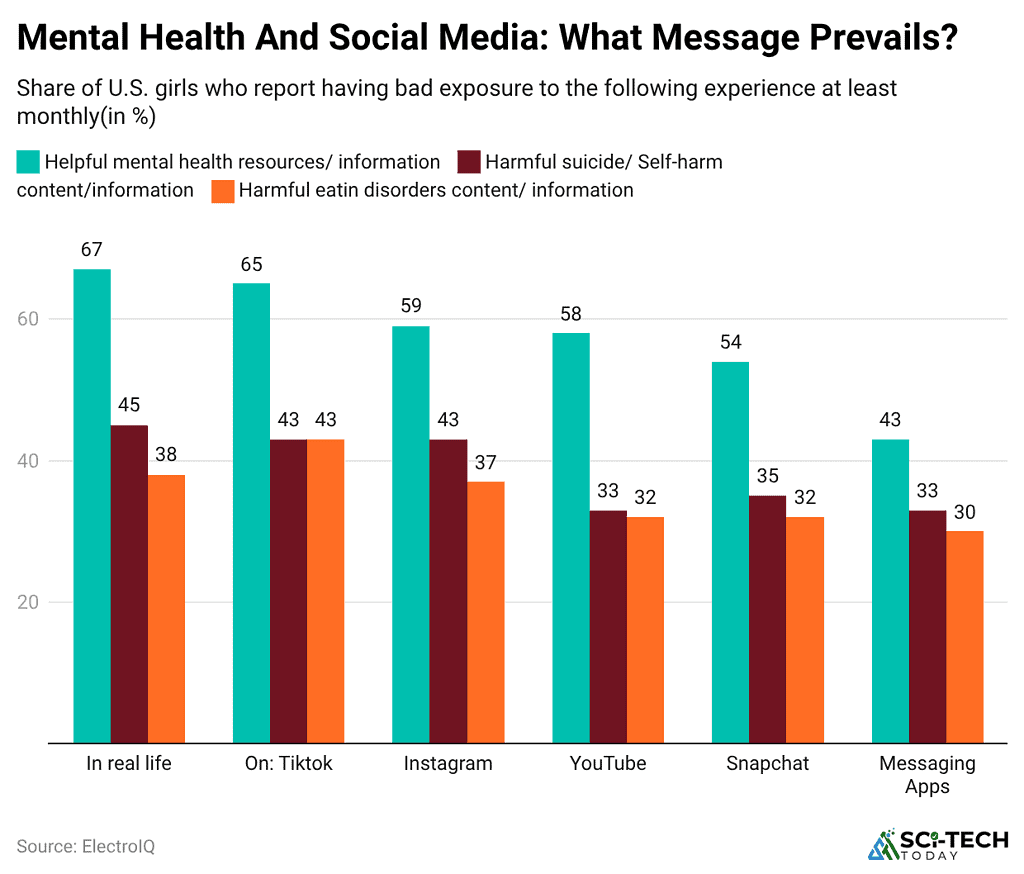
- In real life, 67% of U.S. girls see helpful mental health information, 45% see suicide or self-harm content, and 38% see eating disorder content.
- On TikTok, 65% report helpful resources, while 43% see suicide or self-harm content and 43% see eating disorder content.
- On Instagram, 59% encounter helpful resources, 43% see suicide or self-harm content, and 37% see eating disorder content.
- On YouTube, 58% access helpful information, with 33% exposed to suicide or self-harm content and 32% to eating disorder content.
- On Snapchat, 54% report helpful content, 35% see suicide or self-harm content, and 32% see eating disorder content.
- On messaging apps, 43% receive helpful resources, while 33% see suicide or self-harm content and 30% encounter eating disorder content.
AI In The Mental Health Industry Statistics
(Source: market.us)
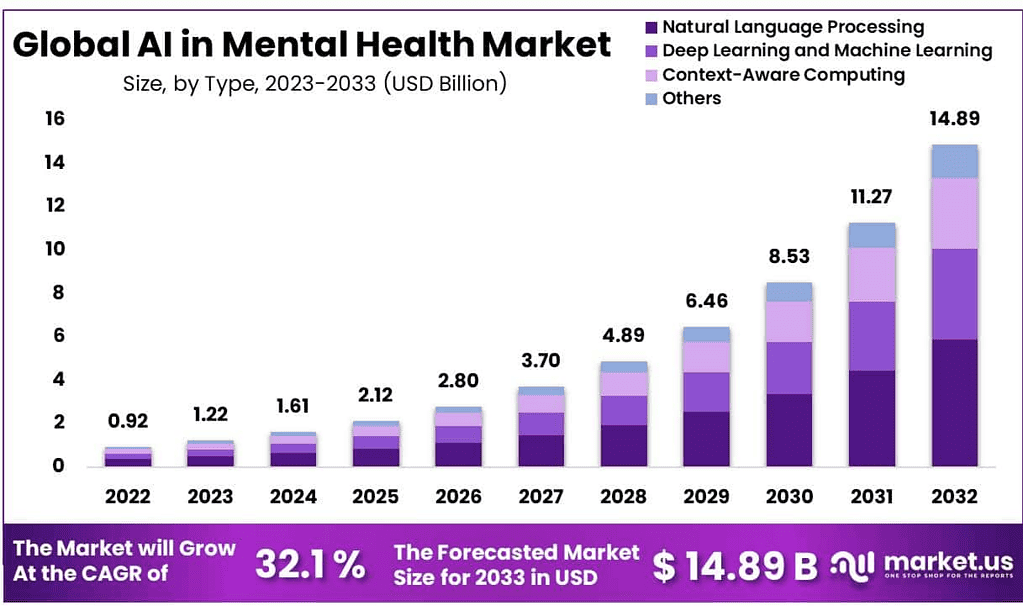
- In 2025, the global AI in mental health market is valued at about USD 2.12 billion.
- By 2026, the market is projected to reach around USD 2.80 billion.
- By 2032, the market size is expected to increase sharply to nearly USD 14.89 billion, supported by a CAGR of 32.1%.
- Around 20% of children and adolescents worldwide live with a mental health condition.
- Suicide is the leading cause of death among people aged 15–29 years.
- About 1 in 5 people in post-conflict settings experience mental health conditions.
- Governments allocate a global median of less than 2% of healthcare spending to mental health.
- Depression and anxiety remain the 2 most common mental health conditions worldwide.
- Mental health conditions cost the global economy about USD 1 trillion every year.
Final Thoughts
Mental health is just as important as physical health. Taking care of your mind helps you live a happier and healthier life. Small habits like getting enough sleep, staying active, talking to someone you trust, and asking for help when needed can make a big difference.
By being kind, reducing stigma, and supporting each other, we can build a world where everyone feels safe, valued, and mentally strong.
FAQ
Common signs include ongoing sadness, anxiety, mood swings, sleep problems, low energy, poor focus, and social withdrawal.
Mental health problems can result from stress, trauma, genetics, illness, or major life changes.
Improve mental health by exercising, sleeping well, eating healthy, managing stress, and seeking support.

Sources