








Beginning
Work From Hotel Statistics: Working from home is changing the way people think about remote work. Instead of working from home, employees, freelancers, and digital nomads are choosing hotels as temporary workspaces. A quiet room, fast Wi-Fi, comfortable seating, room service, and useful hotel facilities can make the workday more flexible and enjoyable. For many people, it also offers a simple way to escape the same home-office routine without taking a break from work.
As remote and hybrid work continue to grow, Work From Hotel is gaining attention as a convenient mix of work, comfort, and travel. This trend shows how hotels are becoming more than places to stay; they are also becoming places to work.
Featured Selection
- 51% of remote-capable U.S. employees work hybrid schedules, averaging 2.3 office days weekly; another 28% work fully remotely.
- Nearly 36 million Americans worked remotely in some capacity in 2025, enlarging the pool for hotel day-work products.
- Hotel lobbies already have traction: 24.3% of remote workers report using them as workspaces.
- The U.S. digital-nomad population reached 18.5 million in 2025, equal to about 12% of the workforce.
- Digital nomads are mostly younger travelers, with Gen Z and Millennials making up around 75% of the segment.
- Bleisure is a major conversion opportunity: 37% of Indian business travelers extend work trips; 81% add 1-2 leisure days.
- Among SME employees, 76% regularly extend overseas work trips; 57% add 1-2 days and 32% add 3-4 days.
- Cafés are the principal substitute: about 60% of workers use them during the week, but hotels can differentiate on privacy, Wi‑Fi, power, and call-ready rooms.
- Day-use pricing ranges from roughly USD 70 to 207 for private rooms, supporting segmented offerings from value workdays to premium wellness packages.
- Winning hotel packages should prioritize stable Wi‑Fi, quiet rooms, desks and power, simple F&B, and wellness access features that address productivity and personal comfort.
Work-from-Hotel Customer Segments and Market Demand
- According to Mbopartners, hotels can serve hybrid workers who need a quiet and professional place between home and the office. 51% of remote-capable U.S. employees follow a hybrid model and spend an average of 2.3 days in the office each week. Nearly 36 million Americans worked remotely in some capacity in 2025.
- Remote workers can use hotels for better Wi-Fi, privacy, access to power, and a change of scenery. 28% of remote-capable U.S. employees work fully remotely. Also, 24.3% of surveyed remote workers have worked from a hotel lobby.
- Hotels can attract digital nomads by combining accommodation with reliable work facilities. The U.S. had 18.5 million digital nomads in 2025, representing 12% of the workforce.
- Younger digital nomads form a major customer base for flexible hotel workspaces. Gen Z accounts for 35% and Millennials for 40%, giving them a combined share of 75%.
- These workers need professional spaces for client meetings and content creation. 49% of U.S. digital nomads earn income through the creator economy, while 85% depend on digital connectivity and technology.
- Hotels can capture travelers who combine business trips with leisure activities. The global market is expected to grow from USD 816.24 billion in 2025 to USD 3,573.74 billion by 2034, at a 17.38% CAGR, according to a report published by Booking.com. In India, 37% of business travelers extend work trips, with 81% adding 1-2 days.
- Smaller-business employees increasingly add leisure time to overseas work trips. 76% regularly extend these trips, with 57% adding 1-2 days and 32% adding 3-4 days.
- Business travelers increasingly value hotels that support both productivity and personal well-being. 52% report positive mental-health effects from business trips, 46% report physical benefits, and 56% actively seek wellness experiences.
Global and Regional Currents Driving Work-From-Hotel Demand
- By mid-2025, around 60 to 70 countries offered remote-work visas. For example, Thailand offers a 5-year visa with stays of up to 180 days per entry, creating more opportunities for people to work from hotels abroad.
- More than 2,000 hotels are listed on ResortPass, indicating that consumers are increasingly willing to pay for partial-day access to hotel facilities.
- With employees working from home around 27% of the time, hotels can benefit as flexible alternatives for people seeking productive workspaces outside the home.
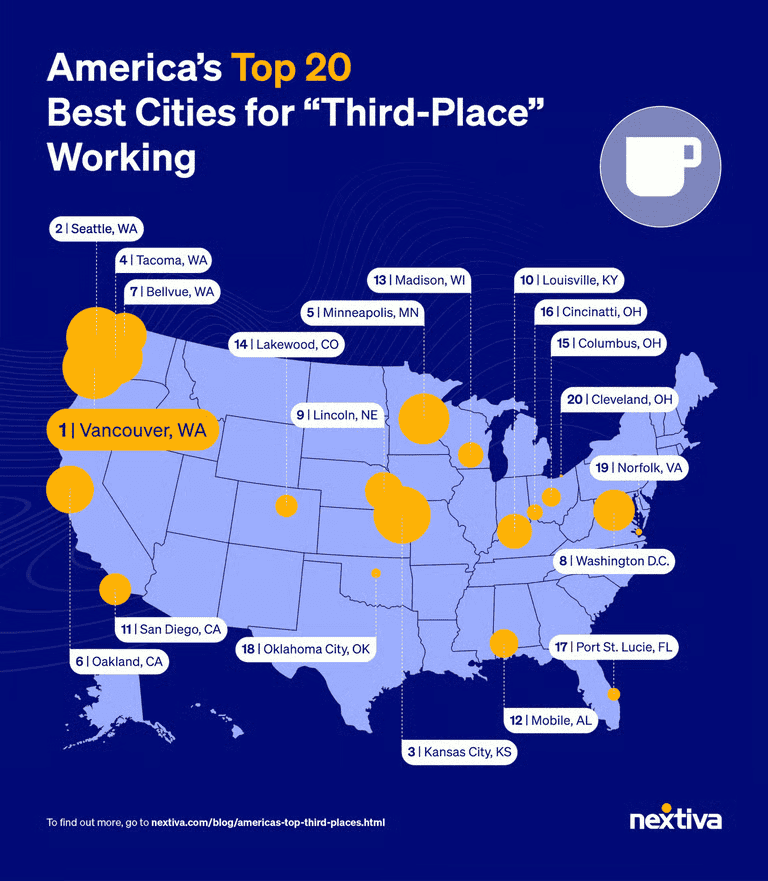
Top 10 U.S. “Third Place” Cities for Remote Workers: Leading Cities in 2026
(Source: nextiva.com)
- Vancouver, WA, ranks #1, with about 35 coffee shops per 10,000 residents. Its cafés charge an average of USD 5.35 for a latte and USD 4.75 for a pastry, while 23 of the top 25 shops have ratings of at least 4 stars.
- Seattle, WA, ranks #2, with around 760 coffee shops, or about 10 per 10,000 residents. Average prices are USD 6.33 for a latte and USD 5.46 for a pastry. All 25 top-rated shops have at least 4 stars.
- Kansas City, KS, ranks #3, with about 8 coffee shops per 10,000 residents. Its average latte costs USD 5.50, while a pastry costs USD 4.75. All 25 leading shops have ratings of 4 stars or higher.
- Tacoma, WA, ranks #4, with nearly 5 coffee shops per 10,000 residents. Its average latte costs USD 4.95, and a pastry costs USD 4.50. All 25 top shops have at least 4 stars.
- Minneapolis, MN, ranks #5, with around 4 coffee shops per 10,000 residents. Average prices are USD 5.10 for a latte and USD 4.43 for a pastry.
Other Top-Ranked Cities
- Oakland, CA, ranks #6, with around 5 coffee shops per 10,000 residents. Average prices are USD 5.20 for a latte and USD 4.50 for a pastry. 24 of the top 25 shops have ratings of 4 stars or higher.
- Bellevue, WA, ranks #7, with almost 8 coffee shops per 10,000 residents. A latte costs USD 5.23 and a pastry USD 4.85, while 24 of the top 25 shops have at least 4 stars.
- Washington, D.C., ranks #8, with an average latte price of USD 5.20 and a pastry price of USD 4.38. 24 of the top 25 shops have ratings of 4 stars or higher.
- Lincoln, NE, ranks #9, with average prices of USD 5.38 for a latte and USD 4.75 for a pastry.
- Louisville, KY, ranks #10, with all 25 top coffee shops rated 4 stars or higher. Average prices are USD 5.05 for a latte and USD 4.33 for a pastry.
Frequency of Booking Hotel Rooms as Workspaces
(Source: passport-photo.online)
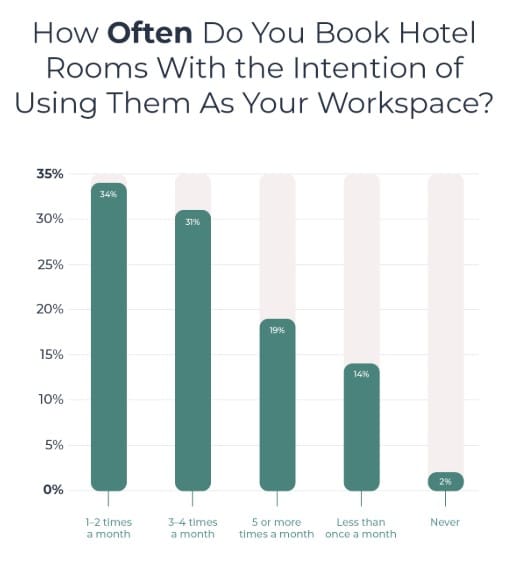
- Most respondents use hotel rooms as workspaces regularly: 34% book them 1-2 times per month.
- Another 31% book rooms 3-4 times monthly, while 19% do so 5 or more times.
- Only 14% book less than once a month, and just 2% never use hotel rooms for work.
Selected Work-From-Hotel Day-Pass Programs, 2026
| Program/provider | Numeric data |
| Hyatt Work from Hyatt | 7:00 a.m.-7:00 p.m.; up to 12 hours |
| Marriott Day Use Rate | No fixed numeric data; availability and access hours vary by property |
| Hilton day-use rate | 7:00 a.m.-3:00 p.m.; 9:00 a.m.-5:00 p.m.; 10:00 a.m.-4:00 p.m.; typically 6-8 hours |
| Accor Room for a Day | 9:00 a.m.-6:00 p.m.; 10:00 a.m.-5:00 p.m.; 11:00 a.m.-7:00 p.m.; typically 7-9 hours |
| Kimpton Pittman Hotel, Dallas | 11:00 a.m.-5:00 p.m.; 6 hours; up to 2 guests |
| Alexis Park Resort Hotel, Las Vegas | 10:00 a.m.-6:00 p.m.; 8 hours; up to 4 guests; 3 outdoor pools |
| Newark Liberty International Airport Marriott | 9:00 a.m.-5:00 p.m.; 8 hours; up to 4 guests |
| Hyatt Place Los Angeles/LAX/El Segundo | Day pass from USD 28; day room from USD 178; 6:00 a.m.-11:00 p.m.; up to 17 hours; up to 4 guests |
| Courtyard by Marriott Redwood City | Day pass from USD 25; day room from USD 122; up to 4 guests |
| Hampton Inn & Suites by Hilton Los Cabos | Day pass from USD 55; daybed from USD 65 for 2 guests; day room from USD 75 for up to 4 guests |
Hotel Day-Use Workspaces and Pricing
- ResortPass reported that Wolfe’s Hotel, Moab, Utah, offers a day room starting at USD 70, with a private room for up to 4 guests.
- AC Hotel Seattle Downtown: Offers a private day room starting at USD 99, with a work desk and seating for up to 4 guests.
- Cambria Hotel Madison East, Wisconsin: Starts at USD 100 and includes a private room with a sleeper sofa, microwave, and work desk for up to 4 guests.
- DoubleTree by Hilton Hotel Austin, Texas: Offers work-friendly day rooms from USD 100 for up to 2 guests.
- Hotel Rumbao, San Juan: Offers private day rooms starting at USD 105 for working or recharging, accommodating up to 4 guests.
- Country Inn & Suites, Warner Robins, Georgia: Startaccess to the s at USD 115 and includes indoor and fitness center access for up to 4 guests.
- Hilton Garden Inn New York/Midtown Park Ave: Offers private day rooms from USD 129 for up to 2 guests.
- DoubleTree by Hilton Los Angeles-Rosemead: Charges USD 133, including fees, for rooms accommodating up to 4 guests.
- Hilton Garden Inn Camden Waterfront Philadelphia: Lists work-friendly rooms from USD 152 for 7 am-6 pm, excluding taxes and fees.
- Beverly Hills hotel marketplace: ResortPass lists day rooms at USD 207, including fees.
What Guests Expect from Hotels On a Workday
(Source: deloitte.com)
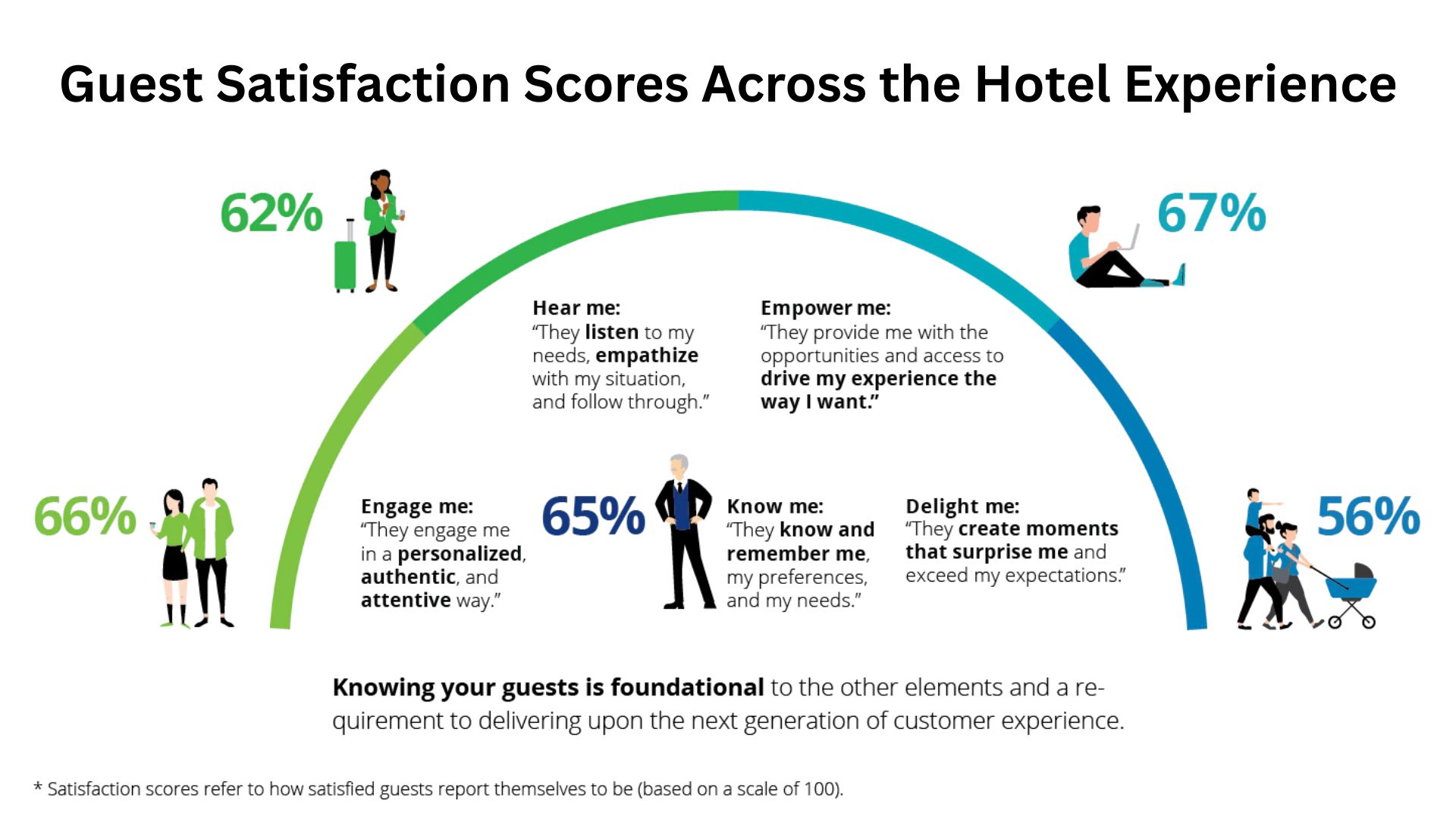
- 62% of guests want hotels to listen to their needs, understand their situation, and respond appropriately.
- 66% prefer service that feels personal, genuine, and attentive.
- 65% expect hotels to remember their preferences and individual requirements.
- 67% want the flexibility and control to shape their stay to suit their needs.
- 56% are delighted when hotels deliver unexpected moments that exceed expectations.
| Must-have | Notes |
| Fast, stable Wi-Fi | First filter for booking and reviews |
| Quiet room or pod | Call privacy, better than cafes |
| Desk + power | Ergonomics, near outlets, chair that doesn’t wobble |
| Simple F&B | Coffee, water, lunch downstairs |
| Gym or quick reset | 20-minute treadmill between calls helps focus |
Operational Impact for Hotels
(Source: researchgate.net)
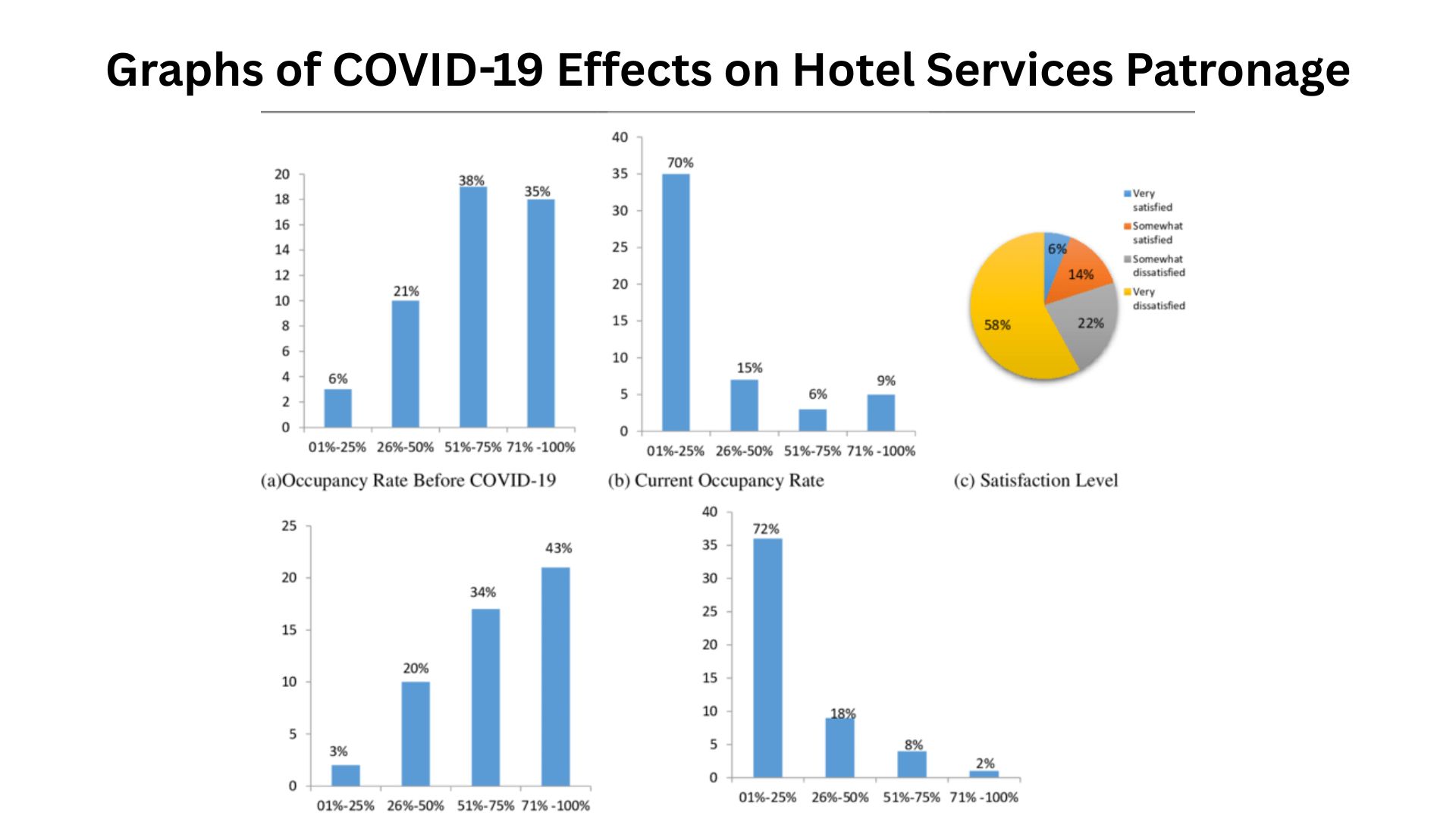
- Daytime inventory lets hotels sell the same room twice in 24 hours if housekeeping turns are tight. Vendors cite profit up to 8% and occupancy math above 100% with day stacking. That is not magic, its scheduling.
- This also levels weekday demand. Office attendance is still uneven by city, and meetings often cluster Tue to Thu, so Monday and Friday day-use can smooth labor and housekeeping. Data point, US occupancy stabilized but remains below 2019, making smoothing valuable.
- Labor is still tough. 65% of US hotels reported staffing challenges in late 2024, so day-use needs clean processes, or it becomes noise at the desk.
| Lever | Metric | Why it matters |
| Day stacking | 100% occupancy possible on paper | Sell day + night blocks |
| Profitability | Up to +8% vendor-reported | High flow-through on fixed asset |
| Labor fit | 65% still short-staffed | Keep SKUs simple, or it backfires |
Channels That Convert
(Source: aworldworthexperiencing.com)
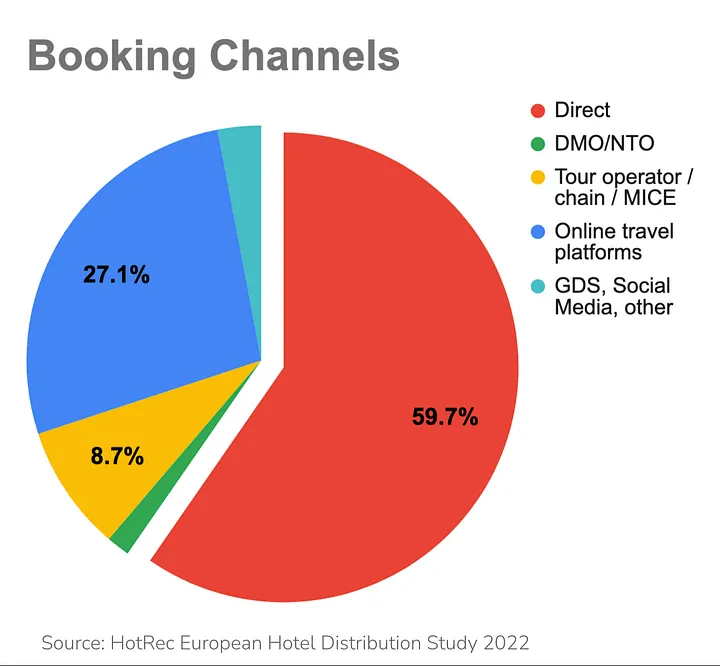
- The big chains drive most corporate day-use with their sites and apps. Marriott Work Anywhere and Hyatt Office for the Day were the templates.
- Specialist marketplaces expand reach. ResortPass now lists 2,000+ hotels for day access. Dayuse and HotelsByDay target business, transit, and locals. The marketplaces matter in shoulder seasons and for non-loyalty customers.
| Channel | What sells | Why use it |
| Brand.com, app | Corporate day rooms, loyalty | Owned audience, points |
| Marketplaces | Pool, spa, flexible day rooms | Wider demand capture |
| Direct call/email | Meeting rooms, pods, custom blocks | Negotiated perks, small teams |
Meeting Rooms, Pods, and Coworking in Hotels
(Source: hospitalityinsights.ehl.edu)
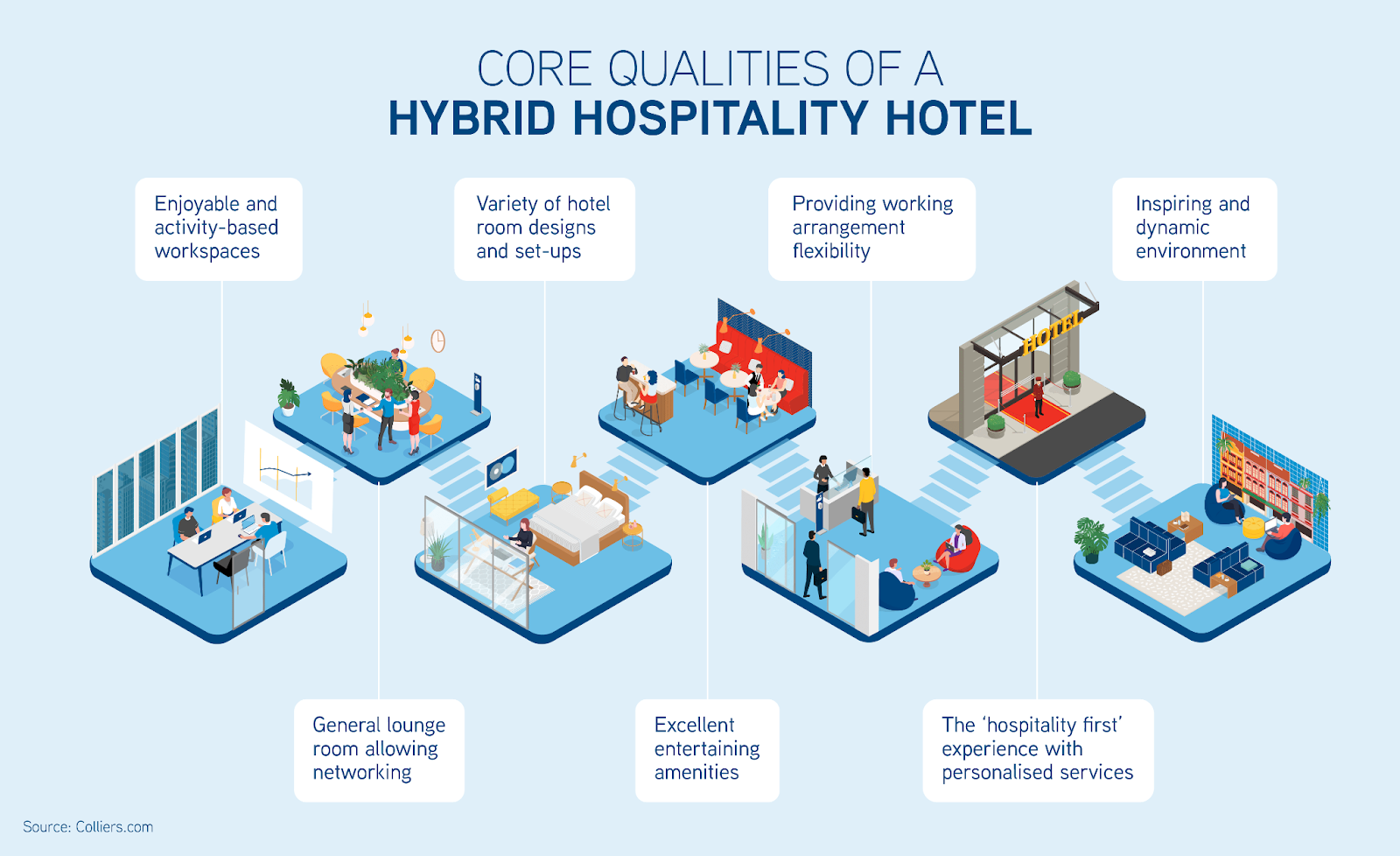
- Hotels are quietly becoming micro-coworking hubs. Accor’s Wojo pushed coworking inside hotels pre-2020 and kept expanding through the pandemic. Properties from citizenM to select-service brands sell meeting rooms by the hour.
- The meeting ecosystem is huge. Cvent ranks top meeting hotels and destinations each year, with venues like Grand Hyatt Nashville showing 84,000 sq ft of meeting space. That infrastructure is easily repackaged for day work and small team off-sites.
| Space type | Typical use | Booking behavior |
| Day room | Solo, 6 to 10 hours | Same week, mobile |
| Small meeting room | 2 to 8 ppl, 2 to 4 hours | 1 to 3 weeks out |
| Cowork lounge | Drop-in, half day | Day-of, recurring passes |
Remote Workers’ Preferences for Coffee Shops and Cafes
- According to Nextiva, around 60% of American workers work remotely from coffee shops or cafes during the workweek.
- 31% visit a café at least once or twice a week, while 29% of Gen Z.
- Older workers are less likely to use cafes as workplaces, with 63.2% of Gen X and Baby Boomers saying they never work from a cafe.
- 51.41% of remote workers prefer working from a cafe in the morning. In comparison, 18.9% prefer afternoons and 8.0% prefer evenings, while 21.7% have no consistent schedule.
What Makes a Cafe Work-Friendly?
- 21.5% of workers consider the quality of coffee and food the most important factor when choosing a cafe.
- 18.8% prioritize having enough seating, highlighting the importance of comfortable workspaces.
- 18.47% consider access to power outlets a major factor when selecting a cafe.
- Overall, these findings show that remote workers value cafes that combine basic work amenities with a comfortable environment.
Spending and Purchase Pressure
- 37.96% of remote workers sometimes feel pressure to buy something when working at a cafe.
- Another 15.09% always feel pressure to purchase to continue working there.
- Most workers spend between USD 5 and USD 15 per visit. Specifically, 44.65% spend USD 5-USD 10, while 30.33% spend USD 10-USD 15.
- 14.4% spend less than USD 5 per visit, while only 2.07% spend more than USD 20 per visit.
- Spending patterns remain broadly similar across age, gender, and income groups.
Work Duration and Productivity
- 45.76% of workers typically spend 1-2 hours working from a cafe.
- Only 22.9% spend more than two hours working from a cafe during the week.
- Social connection is another important reason for choosing cafes. 40.72% of respondents have deliberately worked from a cafe to avoid loneliness.
- 60.55% of remote workers say they usually feel more productive working from a café than at home.
- 18.38% always feel more productive in cafes, suggesting that a change of environment can improve focus and motivation for many remote workers.
Availability of Work-Friendly Cafes
- 45% of respondents believe their city has more than enough work-friendly coffee shops and cafes.
- The remaining 55% say their city has only some suitable cafes or none at all, showing that access varies considerably by location.
Other Places Used for Remote Work
- Coffee shops remain a popular alternative workspace, with nearly 1 in 4 workers reporting that they have worked from one.
- 24.3% have worked from hotel lobbies, while 17.3% have used co-working spaces.
- 16.4% have worked from libraries, and nearly 15% have worked outdoors.
- Almost 1 in 8 workers have worked from restaurants or a friend’s or colleague’s home.
- 11.3% have used local employer offices.
Closing Remarks
Working from a hotel offers a simple way to mix work and travel. It gives remote workers a change of place while providing a comfortable space to stay productive. However, good internet, privacy, cost, and a clear work routine are important for a smooth experience.
As flexible work becomes more common, hotels can serve as useful workspaces for professionals who want to work from different locations without sacrificing comfort or productivity.o if you have any questions related to this, kindly let me know in the comment section.
FAQ
People choose hotels for a change of environment, privacy, comfort, and reliable work facilities.
Look for reliable Wi-Fi, a comfortable workspace, power outlets, quiet surroundings, and good lighting.
Working from a hotel can be costly, distracting, uncomfortable, and affected by unreliable Wi-Fi, noise, limited workspace, and privacy concerns.