








Preface
Wellness App Statistics: Taking care of your health can be challenging when life gets busy. Long work hours, stress, poor sleep, and unhealthy habits often leave little time for self-care. This is where wellness apps can help. They offer simple ways to look after your body and mind without making big changes to your daily routine. From fitness and diet tracking to meditation and sleep monitoring, these apps help users stay aware of their health and make better choices.
Many also allow users to set personal goals and track their progress. Whether you want to stay fit, feel less stressed, or build a healthier routine, a wellness app can make the journey easier and more manageable.
Best Overall
- The global wellness app market is valued at USD 12.87 billion in 2025 and is projected to reach USD 14.81 billion in 2026.
- In 2026, the North American region led the market with a 37% share.
- Based on platform, iOS is projected to hold the largest market share at 45.8%.
- The fitness apps market is expected to generate USD 9.12 billion in 2026, increasing to USD 15.45 billion by 2031.
- The United States market is expected to reach USD 2.91 billion in 2026.
- Wellness app development costs range from USD 50,000 to USD 150,000+, depending on complexity.
- Basic wellness tracking apps cost around USD 50,000-80,000 to build.
- In January 2026, 63.3% of U.S. online health-information seekers had used a health, fitness, or wellness app.
- AI influenced diet and nutrition decisions for 44%, compared with 35% for doctors.
- MyFitnessPal serves 280 million members across 120+ countries and is supported by a food database containing 20 million items.
- India recorded the highest usage, with 46% of respondents using health and fitness services.
- AI chatbots for general advice were the most widely used tool, adopted by 33% of respondents.
- In Q4 2025, Gyms and fitness apps recorded approximately 270 million worldwide downloads across iOS and Google Play.
Global Wellness App Market Size
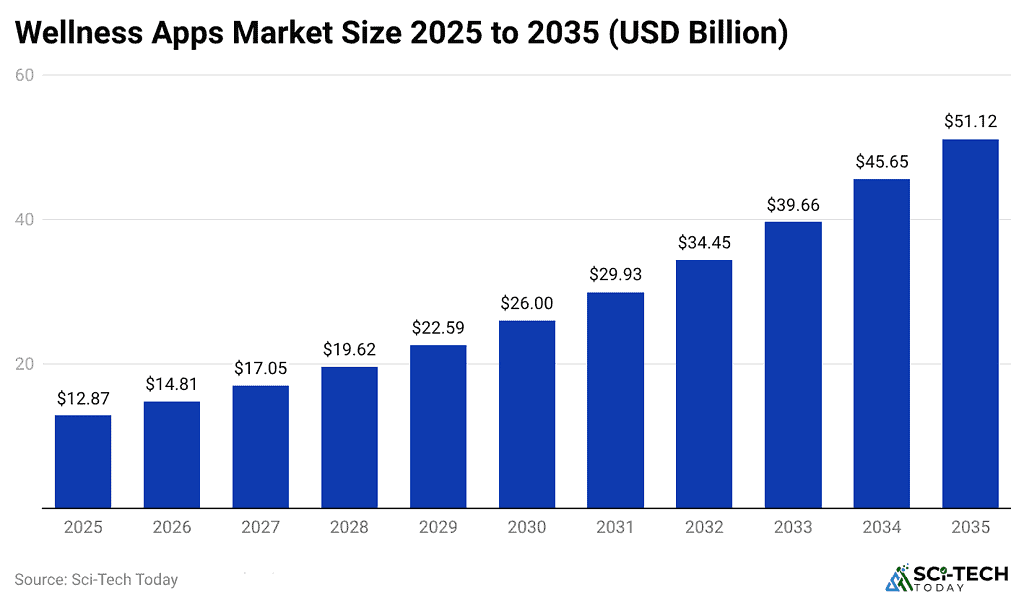
- The global wellness app market is valued at USD 12.87 billion in 2025 and is projected to reach USD 14.81 billion in 2026.
- The market is forecast to grow tup to USD 51.12 billion by 2035, at a CAGR of 14.79% from 2026 to 2035.
Key Market Insights
- In 2026, the North American region led the market with a 37% share, according to Precedence Research.
- The U.S. wellness apps market is valued at USD 4.82 billion.
- Exercise and weight-loss apps accounted for 59% of the market.
- Meanwhile, smartphones captured 67% of the market.
- Paid apps and in-app purchases accounted for the largest share, at 68%, in 2026.
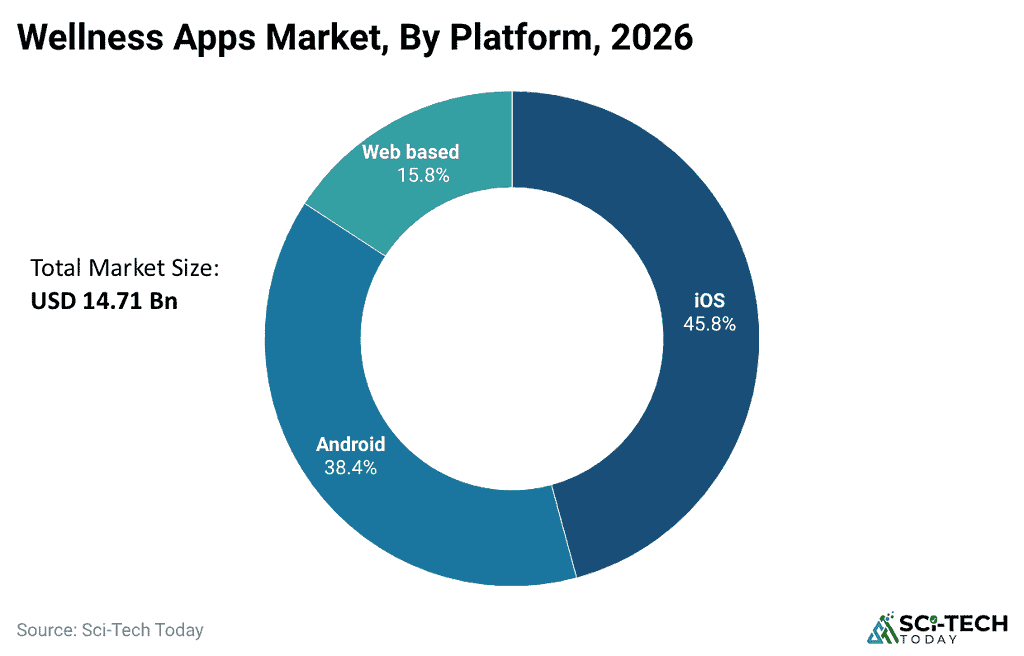
- Based on platform, iOS is projected to hold the largest market share at 45.8%.
- Android accounts for 38.4%, while web-based apps hold 15.8%.
Fitness Apps Market Statistics
- Statista noted that the fitness apps market is expected to generate USD 9.12 billion in 2026, increasing to USD 15.45 billion by 2031.
- Revenue is forecast to grow at an 11.12% CAGR between 2026 and 2031.
- Market penetration is projected to reach 26% in 2026 and rise to 43.06% by 2031.
- The average revenue per user is expected to reach USD 4.45.
United States Market Outlook
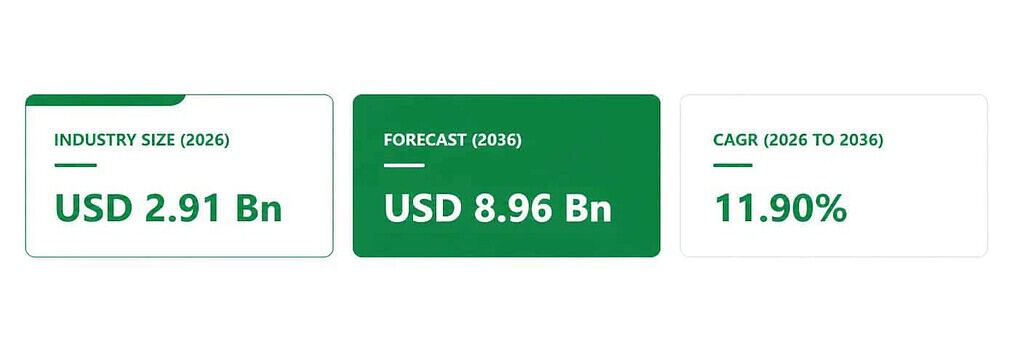
- The U.S. fitness apps market was valued at USD 2.60 billion in 2025 and is expected to reach USD 2.91 billion in 2026.
- By 2036, it could grow to USD 8.96 billion at an 11.90% CAGR.
- The projected increase represents approximately USD 6.05 billion in additional market value.
- The West is forecast to grow at 13.7% CAGR, followed by the South at 12.2%, the Northeast at 10.9%, and the Midwest at 9.5%.
- iOS platform is expected to hold a 48.8% share in 2026, supported by Apple Watch integration and higher spending.
- The exercise and weight loss segment is projected to account for 44.8% of the market in 2026.
Wellness App Development Market Statistics
- Wellness apps help users manage physical activity, sleep, nutrition, stress, and daily habits.
- Development costs typically range from USD 50,000 to USD 150,000+.
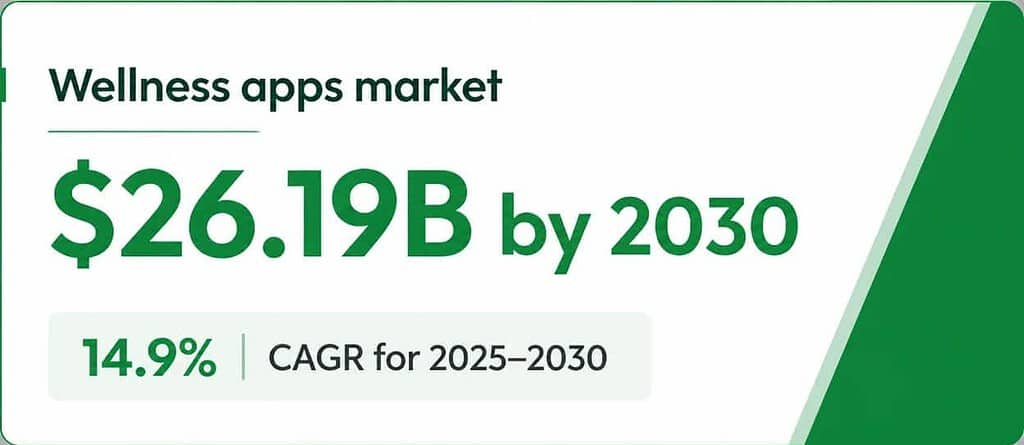
- The Wellness App Development market is projected to reach USD 26.19 billion by 2030, growing at an annual rate of 14.9%.
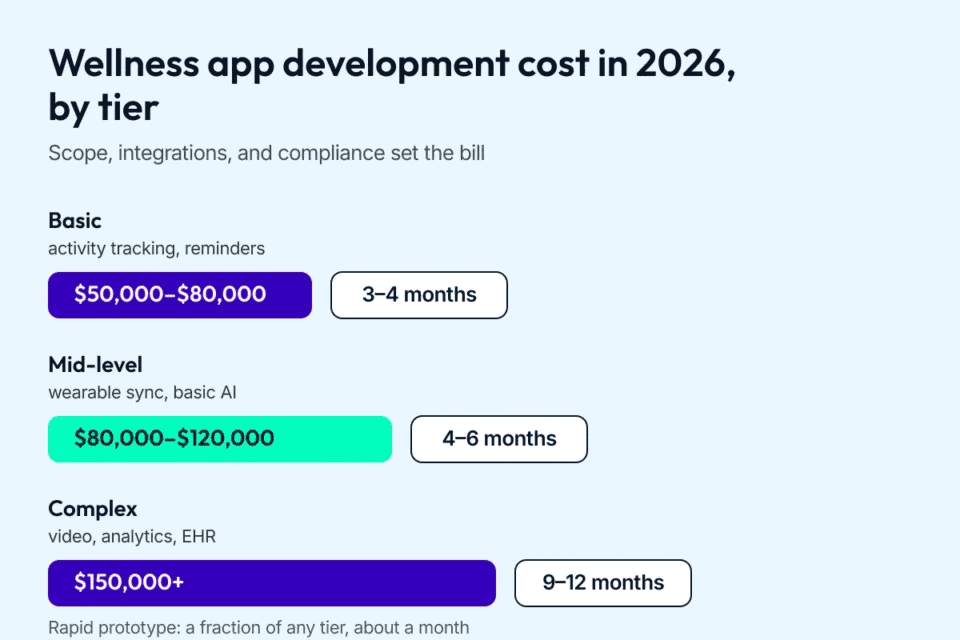
- Basic tracking apps cost around USD 50,000-80,000 to build.
- Apps with wearable integrations and basic AI features may cost USD 80,000-120,000.
- Advanced apps with video, analytics, or EHR integration can cost more than USD 150,000.
- Development may take 1 month for a prototype, 3-6 months for an MVP, or 9-12 months for a full product.
Consumer Use of Health and Wellness Apps
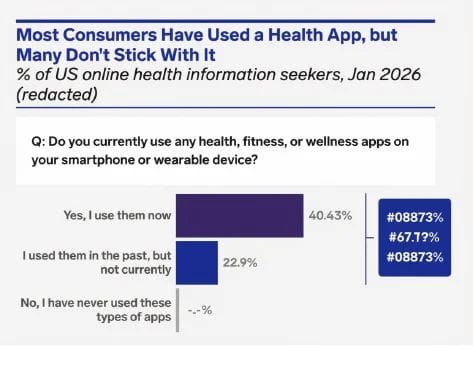
- In January 2026, 63.3% of U.S. online health-information seekers had used a health, fitness, or wellness app.
- Only 40.4% were current users, while 22.9% had stopped using these apps.
Sources Influencing Health and Wellness Decisions
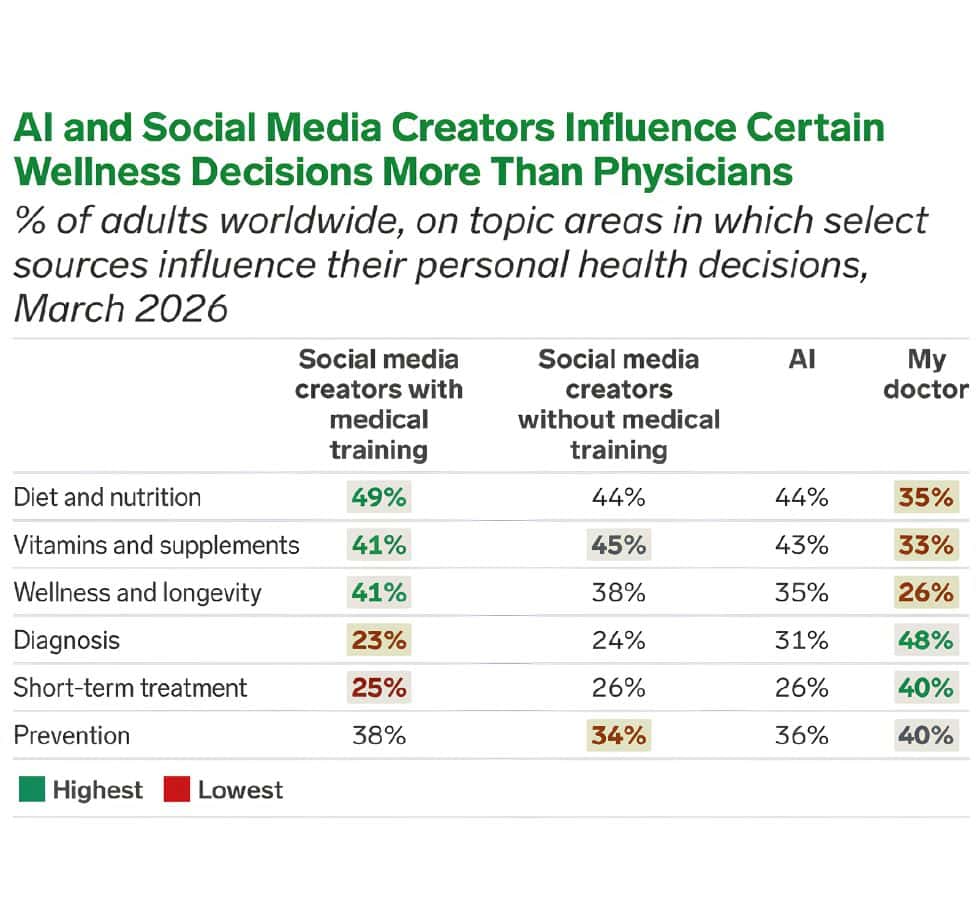
- Social-media creators with medical training most influenced diet and nutrition choices, cited by 49% of respondents.
- Creators without medical training also influenced diet decisions for 44% of adults.
- AI influenced diet and nutrition decisions for 44%, compared with 35% for doctors.
- Vitamin and supplement choices were influenced by medically trained creators in 44% of cases.
- Non-medical creators influenced vitamin decisions for 45%, the highest result in this category.
- AI influenced wellness and longevity decisions for 35%, versus 26% for doctors.
- Doctors had the strongest influence on diagnosis decisions at 48%.
- Doctors influenced short-term treatment decisions for 40% of respondents.
- Doctors also led prevention decisions at 40%, compared with 36% for AI.
Leading Wellness Apps, 2026
| Company / App | Key Numeric Data |
| MyFitnessPal | MyFitnessPal serves 280 million members across 120+ countries and is supported by a food database containing 20 million items, as per Reuters.The company generates nearly USD 150 million in annual EBITDA, with a potential valuation exceeding USD 1 billion. |
| Headspace | Headspace has recorded 105 million downloads, reached 100 million lives, and expanded across 200 countries/regions.It generated an estimated USD 12 million in in-app revenue during January-April 2026 and serves 4,000+ organizations.Its network includes 65,000+ clinicians and has delivered 3 million care sessions. |
| Calm | Calm has 180 million downloads across 190+ countries, with content available in 7 languages. The app has earned 3 million five-star reviews. Calm Health covers 39 million lives across 100,000 organizations; annual access costs USD 69.99 after a 7-day trial. |
| Fitbit / Google Health | Fitbit had an estimated 33 million monthly active users and 137 million registered users.Estimated 2025 figures included 4.3 million devices sold and USD 770 million in revenue.Rebranded May 19, 2026, Google Health added 55+ features and fixes by October 2026. |
| Noom | Noom generates an estimated USD 500K in monthly iOS revenue from 30K downloads, with 12-month plans priced at USD 17.42/month.GLP-1 plans start at USD 79, while pharmacy expansion extends coverage to 46 U.S. states.In 2026, nearly 2 million Highmark members became eligible for Noom services. |
| Strava | Strava serves 200 million users across 185+ countries and supports 50+ sports.Revenue reached an estimated USD 415 million in 2025, with a reported valuation of USD 2. billion.Strava added 100+ features last year and reportedly filed confidentially for an IPO in 2026. |
| Nike Training Club | Nike Training Club offers 200+ free workouts, with sessions lasting approximately 5-50 minutes.The app has 10 million Android downloads and offers its core content at no subscription cost. |
| Apple Health | Apple’s ecosystem now exceeds 2.5 billion active devices. Quest Diagnostics offers 50+ biomarkers for USD 119 at around 2,000 U.S. locations. Longevity tracks 7 wellness areas, with readiness scores from 0 to 10. |
| Google Fit | Google Fit has recorded 100 million downloads and approximately 685K Google Play reviews.Its API support is scheduled to continue through the end of 2026. |
| Peloton | Peloton generated USD 2.446 billion in 2026 revenue, including USD 608 million in Q4 revenue and USD 436.6 million in Q4 subscription revenue. Membership reached 5.5 million, comprising 2.553 million paid Connected Fitness and 503K paid app subscriptions. Connected Fitness subscriptions fell 8.8% year-over-year, while churn stood at 2.2%. |
Health and Fitness Service Usage by Country
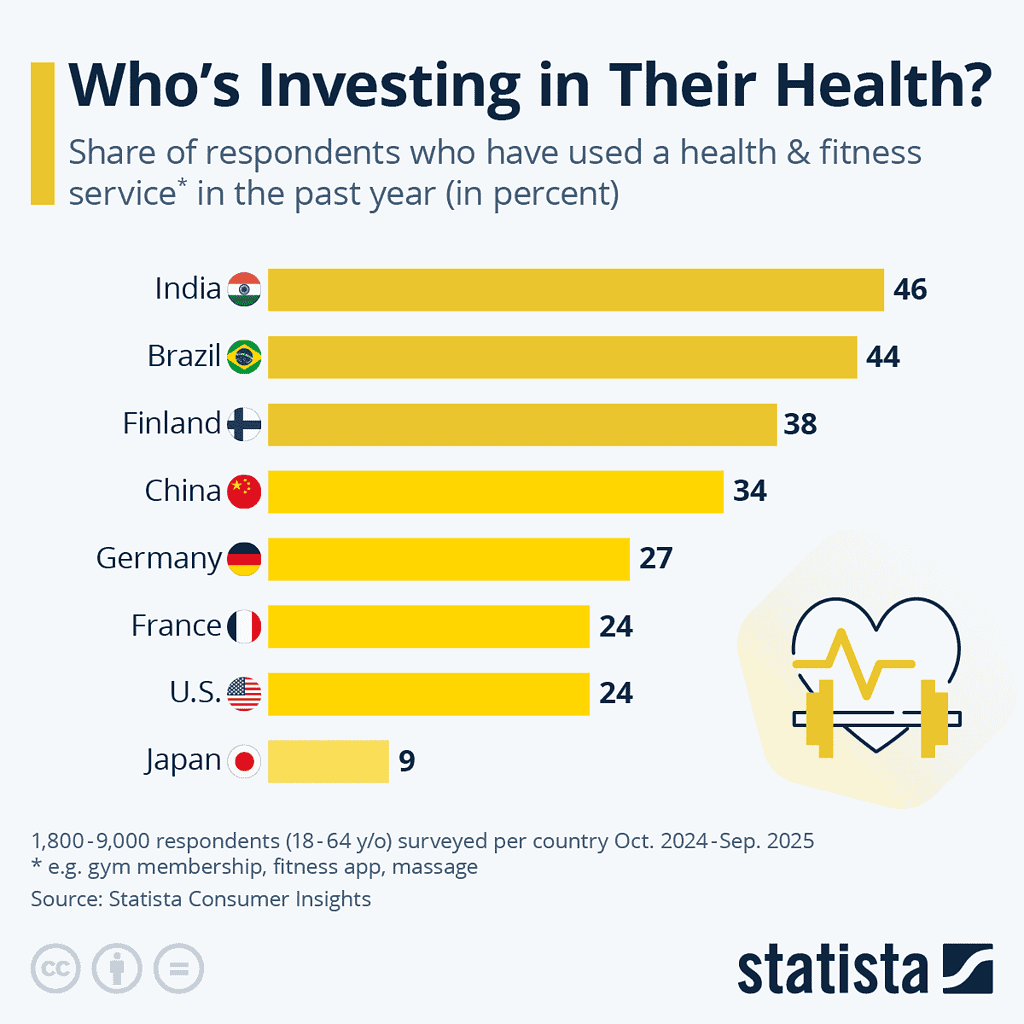
- India recorded the highest usage, with 46% of respondents using health and fitness services, followed by Brazil at 44% and Finland at 38%.
- China reached 34%, while Germany accounted for 27%.
- Usage was lower in the U.S. and France at 24% each, and in Japan at 9%.
AI-Enabled Wellness App Usage Among Consumers
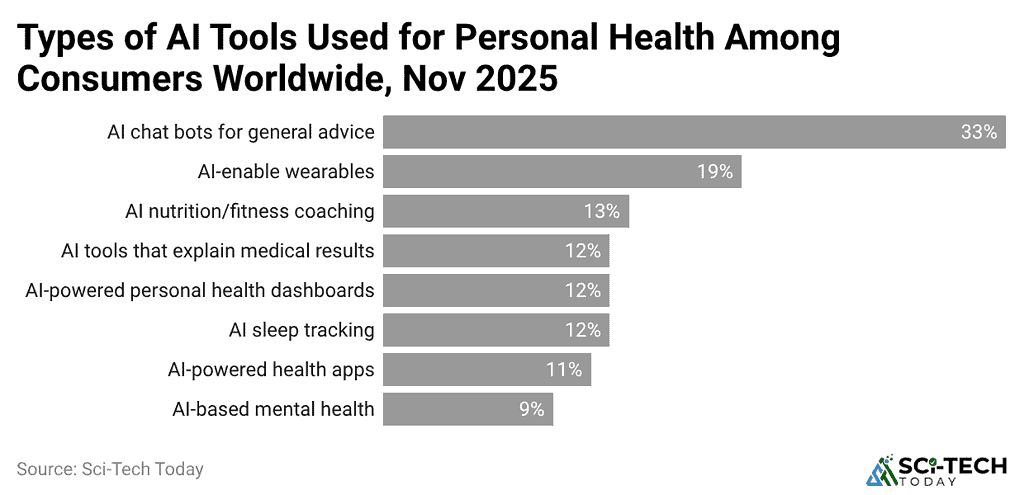
- AI chatbots for general advice were the most widely used tool, adopted by 33% of respondents.
- AI-enabled wearables ranked second, with 19% of consumers using them.
- AI nutrition and fitness coaching reached 13% usage.
- Tools explaining medical results, personal health dashboards, and sleep tracking were each used by 12%.
- AI-powered health apps reached 11% usage, while AI-based mental health tools had 9% usage.
Leading Wellness Apps: Key Features and Pricing
| App | Best For | Typical Price |
| Headspace | Overall wellness | USD 12.99/month or USD 69.99/year. |
| Calm | Sleep and relaxation | USD 14.99/month or USD 69.99/year. |
| Insight Timer | Free meditation | Free; Plus approximately USD 59.99/year. |
| FitOn | Free fitness | Free; Pro approximately USD 29.99/year |
| MyFitnessPal | Nutrition tracking | Free; Premium USD 19.99/month or USD 79.99/year. |
| Noom | Behavior change and weight management | Approximately USD 70/month or USD 209/year. |
| Sleep Cycle | Wearable-free sleep tracking | Free; Premium approximately USD 29.99/year. |
| Fabulous | Habit and routine building | Approximately USD 12.99/month; often below USD 50/year. |
| Talkspace | Professional mental-health support | From approximately USD 69/week. |
| Oura | Biometric health insights | Ring costs approximately USD 349-499, plus a USD 69.99/year membership. |
Health and Fitness App Downloads Report
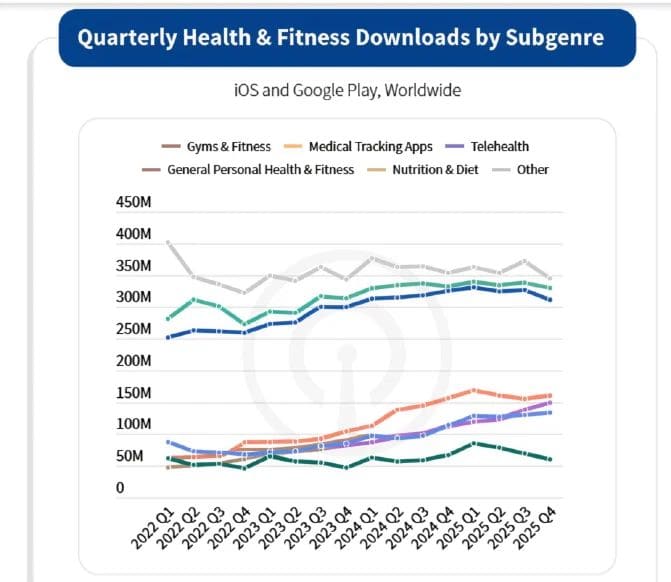
- In Q4 2025, Gyms and fitness apps recorded approximately 270 million worldwide downloads across iOS and Google Play.
- Medical tracking apps reached 90 million downloads, followed by telehealth at 60 million and personal health and fitness at 50 million.
- Nutrition and diet apps recorded 40 million downloads, while the Other category led with 330 million.
Testing and Ranking the Best Wellness Apps
- A report published by InnerBuddies tested 32 wellness apps between October 2025 and January 2026. Each app was used daily for at least 3 weeks.
- We tested the apps on an iPhone 15 with iOS 18 and a Google Pixel 8 with Android 15.
- A fitness coach checked workout plans, a dietitian reviewed nutrition tools, and a licensed therapist helped assess mental health content.
- Personalization accounted for 25% of the score, based on how well apps matched users’ goals.
- Ease of use and pricing each contributed 20% to the final score.
- Privacy and research-based results each carried a weight of 15%.
- Device compatibility and integrations made up the remaining 5% of the score.
Final Analysis
Wellness apps have made it easier for people to care for their health every day. Users can check their fitness, track sleep, reduce stress, and follow healthy routines with just a few taps. As these apps improve, they may offer better tools to meet individual needs. However, choosing an app that keeps personal data safe is important.
Overall, wellness apps provide a simple way to support healthier habits and improve daily life.
FAQ
A wellness app helps people improve their physical health, mental well-being, and daily lifestyle habits.
Wellness apps support mental health through meditation, stress management, mood tracking, and guided exercises that improve emotional well-being.
Yes, wellness apps can improve sleep by tracking habits, reducing stress, and encouraging healthier bedtime routines.

Sources