








First Glance
Asset Tracking Statistics: Most businesses today have no idea where their stuff is. I’m talking about expensive tools, machines, inventory, IT equipment, you name it. That’s where asset tracking becomes super important. And if you’ve ever wondered how big this thing is, or what kind of impact it’s making across industries, you’re in the right place.
I’d like to explain everything in this article, all about asset tracking statistics. I’m going deep into how it started back in the day with handwritten logs to how IoT, GPS, and RFID are tracking assets in real time now.
And trust me, the data is mind-blowing. The asset tracking industry has become one of the most critical parts of logistics, manufacturing, healthcare, and even schools. I’ll cover the full picture of how fast it’s growing, which industries are using it the most, what kinds of assets are being tracked, the technology behind it, and even what’s coming next. Let’s get started.
Best in the Article
- The asset tracking method started with pen-and-paper logs back in the 60s. It moved to barcodes and RFID in the 80s and now operates with IoT, cloud systems, and smart devices.
- The global asset tracking market was valued at over USD 23 billion in 2024, and it’s expected to cross USD 35 billion by 2030, growing at a CAGR of 13%.
- North America leads the adoption rate, followed by Europe. Asia-Pacific is growing fast due to the manufacturing and logistics sectors scaling tech use.
- Industries mostly track tools, vehicles, inventory, IT assets, and machines. Logistics and healthcare lead in time tracking use cases.
- It improves asset utilization, reduces theft, enhances productivity, and helps avoid downtime. Companies save money and operate more efficiently.
- High hardware/software costs, poor network coverage, lack of trained staff, and data overload remain big blockers for many businesses.
- Tracking now uses RFID, GPS, BLE, QR codes, sensors, and is managed via cloud dashboards and mobile apps.
- It’s heavily used in manufacturing, retail, healthcare, logistics, aviation, oil & gas, and education to manage assets and save costs.
- Asset tracking increases operational visibility, gives up to 25 to 30% reduction in asset losses, and boosts asset availability by nearly 40%.
- Expect AI, blockchain, drones, 5G, digital twins, and sustainability tracking to dominate asset tracking’s future.
| Topic | Key Insight |
| 1. History and Evolution |
From paper logs in the 60s to RFID & IoT-led smart tracking today |
|
2. Market Size & Growth Trends | Global market crossed USD 23B in 2024; CAGR of 13% till 2030 |
| 3. Global Adoption & Regions | North America leads; Asia is catching up fast; usage high in logistics & healthcare |
|
4. Tracked Assets & Use Cases | Tools, vehicles, equipment, and inventory top the tracking list |
| 5. Benefits for Businesses |
Reduces loss, boosts productivity, improves asset availability |
|
6. Challenges & Limitations | Costs, connectivity, and lack of skilled staff remain hurdles |
| 7. Technologies Used |
Tech includes GPS, RFID, QR codes, BLE, and cloud dashboards |
|
8. Industry-Wise Applications | Used in manufacturing, retail, healthcare, aviation, and construction |
| 9. ROI & Business Impact |
Reduces asset loss by 25 to 30%, boosts availability by 40% |
|
10. Future & development Trends |
AI, blockchain, digital twins, drones, and 5G are shaping the future |
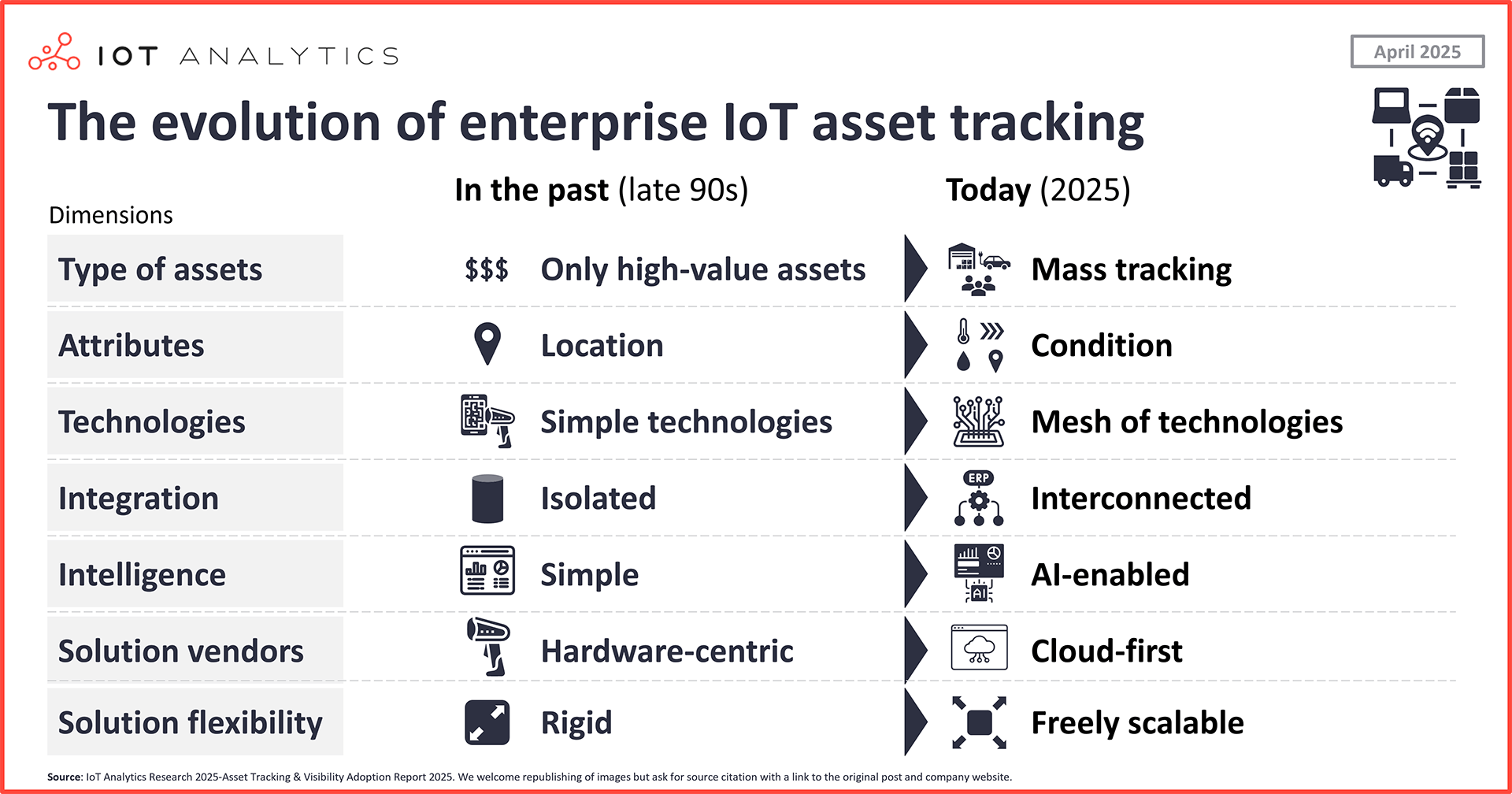
Origins and Evolution of Asset Tracking
(Source: iot-analytics.com)
- Manual asset tracking began when people recorded assets on paper. It took much effort, but it was still efficient at lower volumes.
- Barcodes became common in the 1970s and made scanning faster. It increased the speed in retailing and inventory tracking greatly.
- The RFID technology emerged in the 1990s and enabled contactless tracking. It wasn’t necessary to point a scanner anymore.
- The emergence of GPS tracking was beneficial in transport and logistics. The drivers didn’t have to update the status regularly.
- The IoT has changed asset tracking because sensors provided time data. The businesses understood where and how their assets worked.
- The remote access became possible due to cloud and mobile applications. The tracking information could be accessed from smartphones.
- Then the AI and blockchain enhanced the security and predictions. The issues were revealed in advance, and the data was more credible.
- The integration of GPS with indoor technologies like RFID and BLE ensured precise location anywhere.
- The sensors were becoming more affordable and compact. Thus, the number of assets with sensors increased greatly.
- Today, almost all companies apply digital asset tracking solutions. The guesswork is avoided, and no one needs manual recording anymore.
| Stage / Era | Description |
| Manual Tracking | Used pen and paper; slow and prone to errors |
| Barcode Era (1970s) | Barcodes were introduced; scanning became faster and more organized |
| RFID Adoption (1990s) | Contactless tracking; boosted warehouse efficiency |
| GPS Introduction | Helped track fleets and shipments on time |
| IoT Integration | Sensors started giving live location and condition updates |
| Mobile & Cloud Tracking | Enabled remote access through apps and dashboards |
| Rise of Smart Tech | AI, blockchain, and edge tech added smart predictions and tamper-proof logs |
| Hybrid Indoor-Outdoor | GPS + BLE/RFID combo improved tracking everywhere |
| Lower Device Cost | Smaller, affordable trackers made it scalable |
| Time Digital Tracking | Today, most tracking is instant and completely digital |
Market Size and Growth Trends
(Source: grandviewresearch.com)
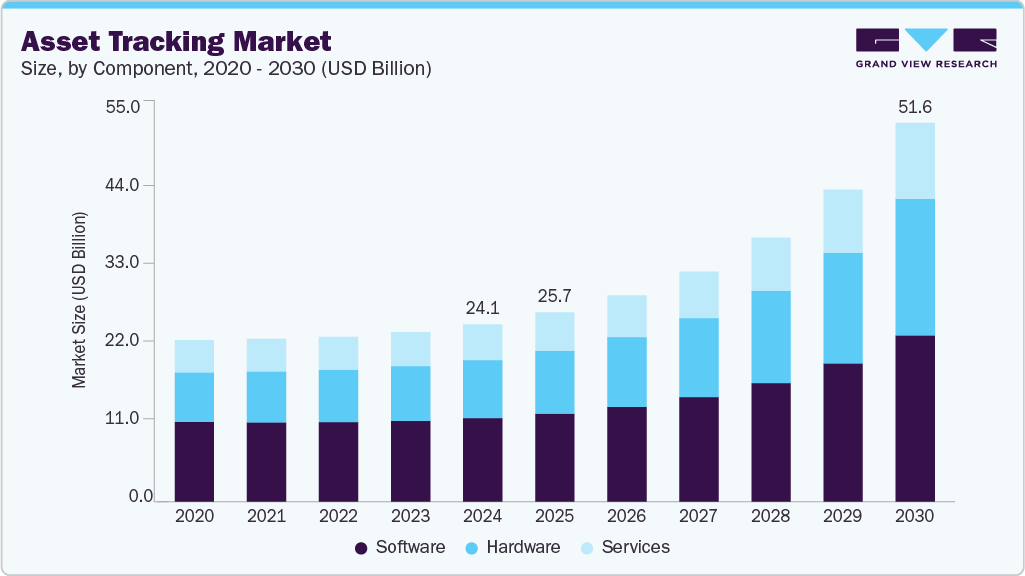
- Asset tracking is no longer a niche tool for big companies. It’s growing into a global necessity. As industries demand more control over their resources, the market for asset tracking has started expanding fast.
- In 2020, the global market was around USD 17.1 billion, and it’s already projected to hit USD 35.3 billion by 2025. That’s almost doubled in just five years.
- The main driver is the logistics sector, especially post-pandemic, where supply chain issues exposed the need for tighter asset control.
- The global CAGR (compound annual growth rate) for this industry is currently around 13.5%, showing strong and steady upward momentum.
- North America holds the biggest chunk of the market, sitting at around 40% share, thanks to its early adoption and strong infrastructure.
- But Asia-Pacific is the fastest-growing region, with demand rising due to e-commerce growth and massive industrial expansions in countries like India and China.
- Manufacturing leads the charge, with over 30% of all asset tracking solutions deployed in that sector alone.
- The sector’s need to avoid delays and control every piece of machinery has driven this trend heavily.
- In 2023 alone, USD 2.8 billion was poured into startups working on asset tracking. These investments show strong faith in future demand.
- Meanwhile, governments around the world spent more than USD 6 billion implementing asset tracking across public transport, defense, and infrastructure projects.
- When it comes to business size, adoption trends are also shifting. 65% of small and mid-sized businesses (SMEs) adopted digital tracking in the last 3 years. And among large companies, over 90% already use it, making it the norm rather than an exception.
| Aspect | Details |
| Global Market Value (2025 forecast) | USD 35.3 billion expected globally by 2025 |
| Historical Market Value (2020) | USD 17.1 billion value recorded in 2020 |
| Growth Rate (CAGR) | 13.5% CAGR from 2021 to 2025 |
| Biggest Market Region | North America holds the largest market share (40%) |
| Fastest Growing Region | Asia-Pacific is growing fastest due to the logistics boom |
| Leading Industry Using Asset Tracking | Manufacturing leads with over 30% usage |
| Startup Investments in 2023 | USD 2.8 billion invested in asset tracking startups in 2023 |
| Government Spending | Over USD 6 billion has been spent globally on asset tracking tech by the public sector |
| SME Adoption Rate | 65% of SMEs began digital tracking in the past 3 years |
| Enterprise Adoption Rate | Over 90% of large enterprises now use asset tracking systems |
Technologies Making Asset Tracking
(Source: fortunebusinessinsights.com)
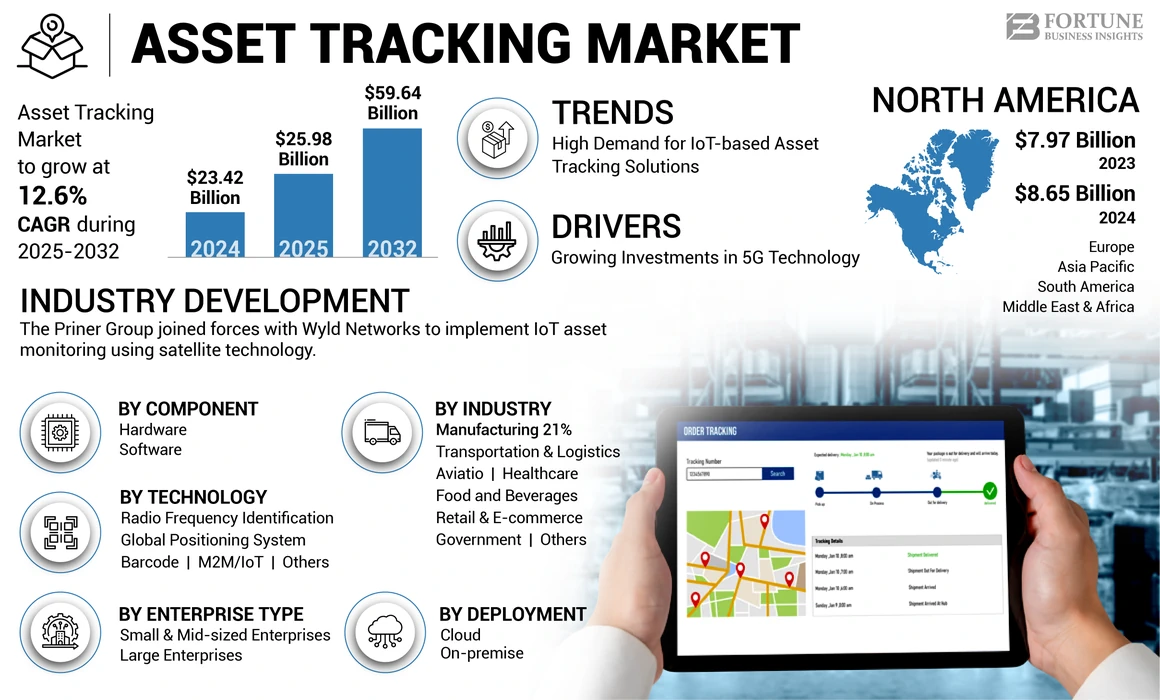
- At the core of asset tracking statistics, the tech behind the scenes plays the biggest role. Without these technologies, tracking wouldn’t be possible or practical.
- Barcodes were the first real tech used for asset tracking. They’re still common today for simple inventory and retail items. But they need manual scanning, which slows things down when you’re dealing with a lot of assets.
- Then came the RFID technology, which is both faster and more intelligent. As these are not visible tags, they are used for automatic warehouses and mass tracking.
- The GPS technology was a revolutionary shift in terms of outdoor tracking. The fleet management system and other applications use this technology for live tracking and route tracking.
- There are some BLE (Bluetooth Low Energy) tags, which are used for indoor tracking. The GPS cannot be used in these conditions.
- NFC (Near Field Communication) works like RFID, but with a super short range. It’s used for asset check-in/check-out systems or secure equipment handling.
- IoT sensors brought a wave of new tracking possibilities. They don’t just track location, but also environmental conditions like temperature, vibration, or pressure.
- QR codes came in as a cost-effective alternative to barcodes. They can store more info and can be scanned with a phone useful for businesses on a budget.
- Cloud computing made all this data available from anywhere. You can track, update, and manage assets in real time through web dashboards or mobile apps.
- AI and machine learning help detect usage patterns, predict failures, or alert if something behaves oddly. This brings in more intelligence, not just tracking.
- Edge computing allows data to be processed locally on devices instead of the cloud. It’s used in remote sites where connectivity is weak or expensive.
| Technology | How It’s Used |
| Barcodes | Used for simple inventory and retail tracking with manual scanning |
| RFID | Scans assets without line of sight, ideal for warehouses and logistics |
| GPS | Tracks mobile assets like vehicles and containers in real time |
| BLE | Useful for indoor tracking in areas where GPS fails |
| NFC | Short-range tech for secure asset check-in and access |
| IoT Sensors | Monitors location, temperature, pressure, and more in time |
| QR Codes | Cheaper alternative to barcodes with better info storage |
| Cloud Computing | Provides time access and syncing from any location |
| AI & Machine Learning | Analyzes asset behavior and predicts risks or failures |
| Edge Computing | Processes data at the device level, useful for offline or remote tracking |
Time Tracking and Live Monitoring
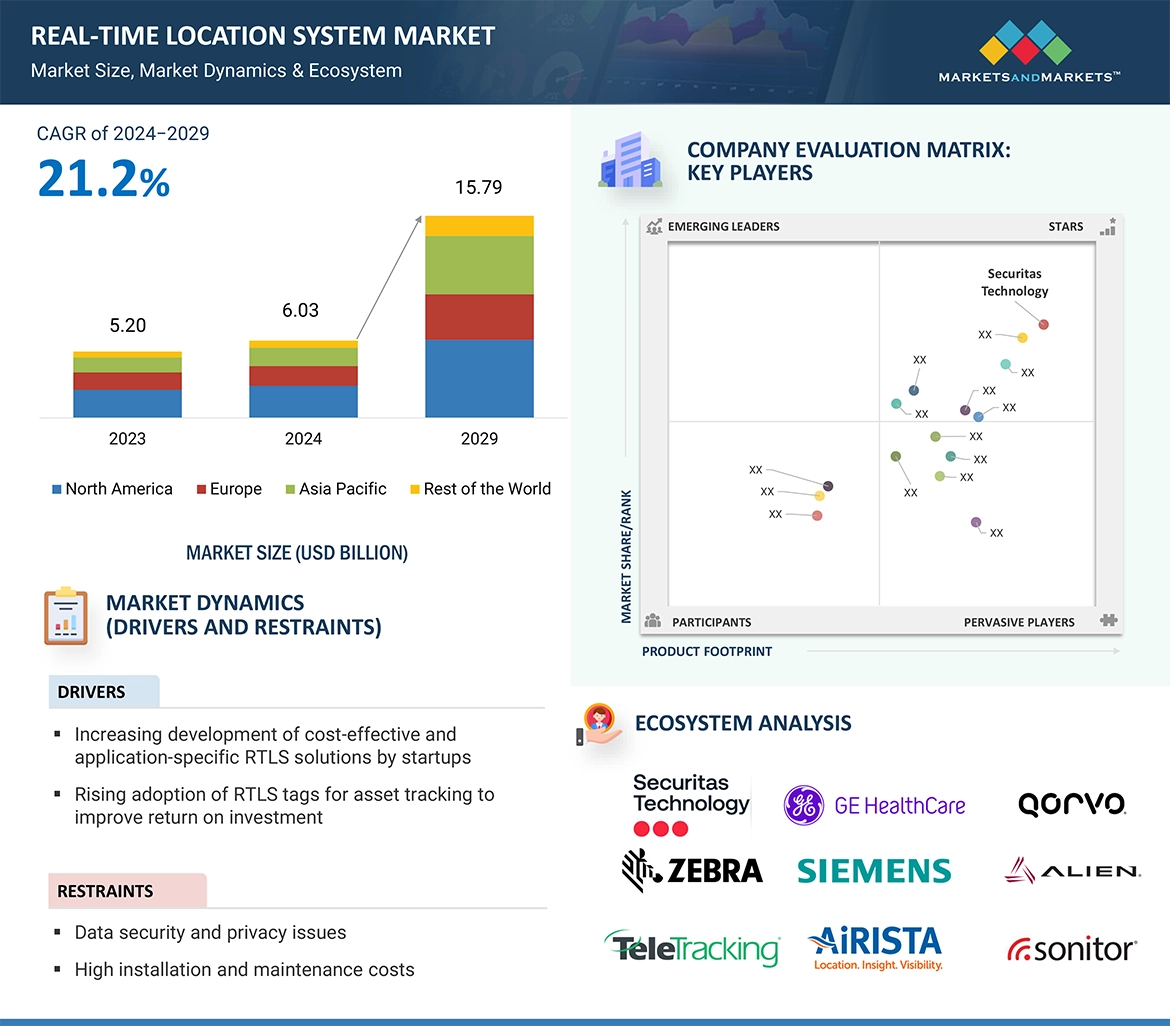
(Source: marketsandmarkets.com)
- Time visibility becomes the key goal of asset tracking statistics in most organizations. Knowing the location of an item is not enough; the main thing is understanding its current status.
- Using time tracking gives companies the ability to monitor the process of moving assets in real time. It provides fewer problems and faster reaction in case of any trouble.
- The use of time tracking allows delivery companies to provide customers with the information on their orders in real time. More than 92% of clients want it.
- Real-time monitoring enhances security because in case of going off-route or moving to the unauthorized place, alerts are generated to prevent the possibility of theft.
- The usage of time tracking makes it possible to decrease operational delays by 40% as it allows reacting quickly to such problems as traffic, downtime, or loss.
- Fleet management is one of the biggest users of live tracking. GPS trackers show not only where vehicles are, but also speed, fuel usage, and idle time.
- Healthcare uses time tracking inside hospitals to monitor equipment, beds, and even patients. This helps reduce equipment loss by up to 25%.
- IoT sensors help track temperature for sensitive items like food or vaccines. This avoids spoilage and meets compliance requirements.
- Warehouse operations improve as well. With time tracking, managers know exactly what’s available, where it is, and how fast it’s moving.
- Even small businesses are adopting this. Thanks to cloud software and mobile apps, they can now see all their assets on a dashboard, anytime.
- Live monitoring isn’t just about location anymore it includes conditions like humidity, tampering, or shock. This gives full visibility over the asset’s journey.
| Aspect | How It Helps or Works |
| time Visibility | Tracks movement as it happens, reducing uncertainty and loss |
| Customer Expectations | 92% of customers expect time tracking with online orders |
| Theft Prevention | Sends instant alerts if assets go off-route or leave safe zones |
| Delay Reduction | Businesses report 40% fewer delays with time tracking in place |
| Fleet Management | Tracks vehicle speed, route, fuel, and usage live |
| Healthcare Use | Tracks beds, devices, and patients, cuts equipment loss by 25% |
| Temperature Monitoring | IoT sensors keep time temperature checks for food and pharma assets |
| Warehouse Control | Helps track stock movement, availability, and reduces search time |
| Dashboard Access | Cloud platforms offer live asset views via web or phone |
| Condition Monitoring | Tracks shock, tampering, or environmental changes during transit |
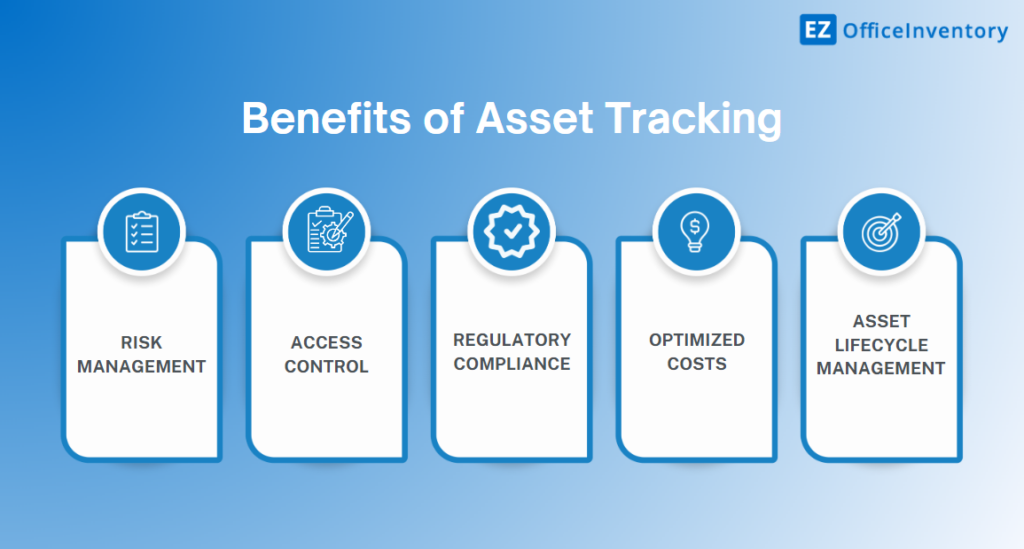
Benefits of Asset Tracking in Different Industries
(Source: ezo.io)
- When we break down asset tracking statistics, we see the impact isn’t limited to one field. From logistics to healthcare, every industry gains something solid from tracking.
- It is also useful in logistics as it helps decrease asset loss and increase delivery time. Asset tracking helps achieve up to 30% reduction in loss of misplaced shipments.
- In construction, asset tracking helps reduce idle time. It is claimed that asset downtime decreased by 25% after asset tracking implementation.
- It is helpful for retailers in order to control stock in their stores and warehouses. This way overstock and out-of-stock problems are eliminated increasing sales by 15%.
- Hospitals track wheelchairs, beds, and critical equipment. This improves resource use and helps reduce equipment theft, which costs millions every year.
- In manufacturing, asset tracking reduces waste and improves machine uptime. Businesses say they save an average of USD 180,000 per year through better tracking.
- IT companies track hardware like laptops and servers. This ensures data security, improves audits, and reduces equipment loss.
- Agriculture uses GPS-enabled trackers for tractors and tools. It saves fuel, cuts misuse, and improves seasonal planning.
- Aviation companies track cargo and maintenance tools. This prevents delays and ensures safety compliance, which is crucial in this sector.
- Educational institutions use tracking for projectors, lab equipment, and laptops. It cuts down unnecessary purchases and keeps the asset list clean.
- Even government agencies rely on tracking for everything from vehicles to field equipment. It improves budgeting and boosts accountability.
| Industry | What They Gain from Asset Tracking |
| Logistics | 30% fewer misplaced shipments and better delivery tracking |
| Construction | Cuts equipment idle time by 25% through better visibility |
| Retail | Boosts sales by 15% by avoiding overstock/out-of-stock problems |
| Healthcare | Tracks expensive gear, reduces loss and theft, and improves hospital efficiency |
| Manufacturing | Saves USD 180,000 yearly by minimizing downtime and waste |
| IT | Secures company devices, helps with audits, and reduces hardware loss |
| Agriculture | Uses GPS for tractors, improves fuel usage, and seasonal planning |
| Aviation | Ensures tool availability, meets safety compliance, and prevents delays |
| Education | Tracks lab assets, avoids double spending, and keeps inventory up to date |
| Government | Increases transparency and better usage of field and vehicle assets |
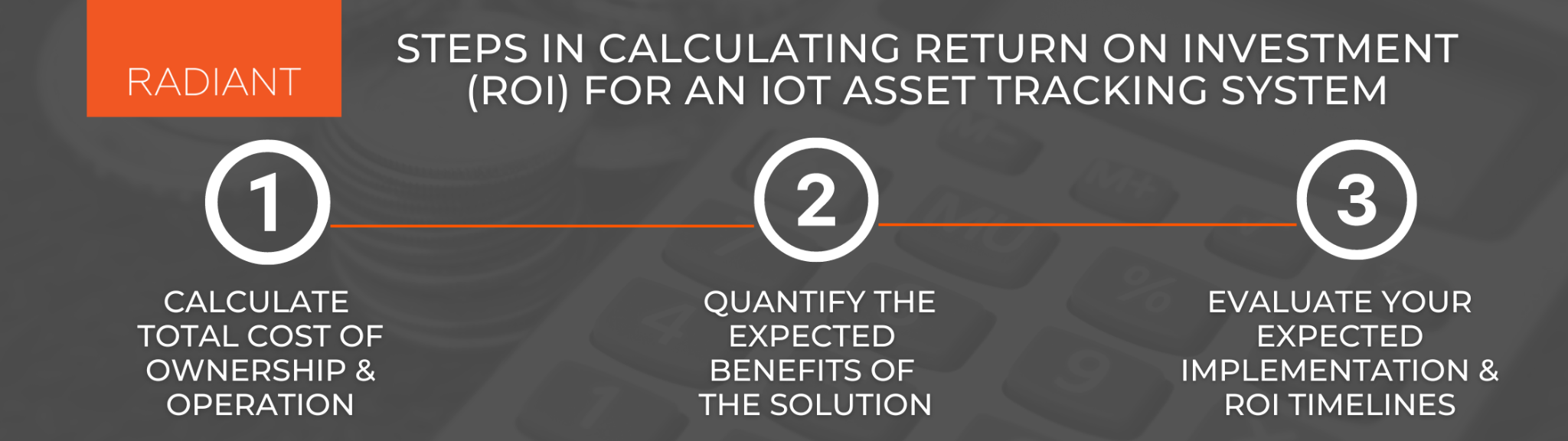
ROI and Cost Efficiency of Asset Tracking Systems
(Source: radiantrfid.com)
- The biggest reason why companies go for tracking is the return on investment. The asset tracking statistics here speak loudly that the cost pays for itself quickly.
- Firms that utilize asset tracking have been seen to make ROI within 12 to 18 months, which varies according to the industry and application.
- Firms report saving up to 40% on operating costs due to non-delays, minimizing theft and optimizing logistics.
- Companies save 25% on fuel and overtime costs through fleet tracking and monitoring drivers’ behavior.
- Prevention of asset loss is yet another advantage. It is estimated that firms lose USD 50 billion annually, worldwide, and asset tracking cuts down on this figure greatly.
- Inventory tracking reduces manual errors. Companies say labor costs drop by 20% after automating inventory check-ins and checkouts.
- Smart maintenance schedules based on time asset data help avoid breakdowns. That brings 10-15% savings on repair costs annually.
- Insurance premiums even drop. By demonstrating loss prevention practices, asset tracking companies will save up to 10% on their premiums.
- Faster warehouse work. Because of less search time, the productivity is raised to 35% at least.
- Small businesses also benefit. Entry-level tracking software often starts under USD 20/month, giving high value for a low upfront investment.
- In the long run, the savings and optimization create a compound benefit. Over 5 years, tracked companies report up to 200% ROI on asset tracking.
| Factor | What the Numbers Show |
| ROI Timeline | Most companies see returns within 12 to 18 months |
| Operational Savings | Saves up to 40% on operational costs through optimization |
| Fuel & Labor | Cuts fleet costs by 25% with time, route, and driver tracking |
| Global Loss Reduction | Helps reduce part of the USD 50B lost globally in unmanaged assets |
| Labor Cost Reduction | 20% labor savings by automating inventory processes |
| Maintenance Cost Saving | 10 to 15% savings yearly through predictive maintenance |
| Insurance Benefits | 5 to 10% lower insurance rates due to proven asset protection |
| Warehouse Productivity | 35% boost in efficiency by knowing asset location instantly |
| Cost to Start | Entry systems begin under USD 20/month, great for SMBs |
| Long-Term ROI | Companies report 200% ROI over 5 years of continuous tracking use |
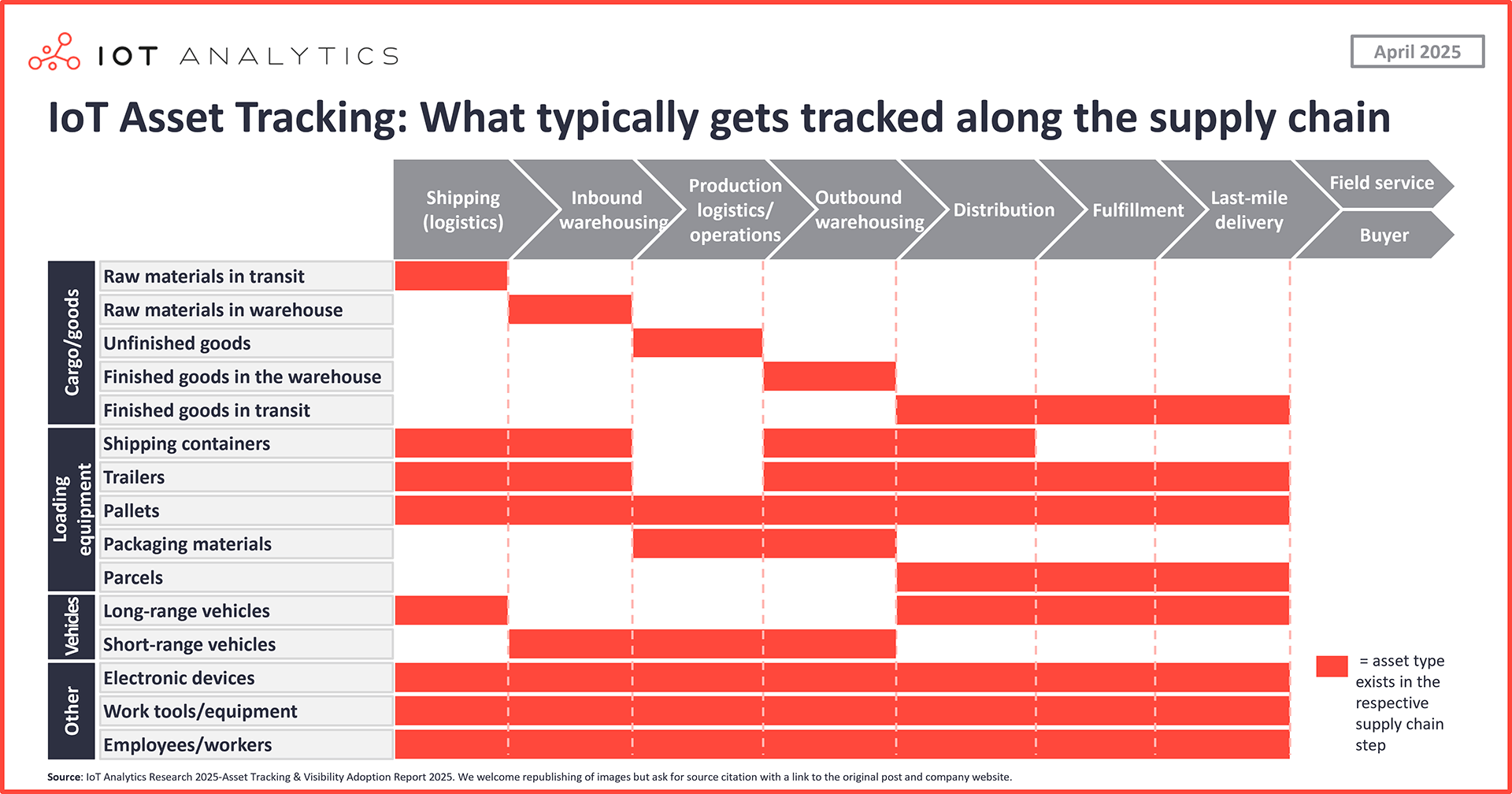
Asset Tracking Technologies- GPS, RFID, IoT, and More
(Source: iot-analytics.com)
- There’s no one-size-fits-all tech when it comes to tracking. Different tools suit different use cases, so knowing each one matters.
- GPS is the most common one, used for time location tracking of moving assets like trucks, containers, and fleets.
- RFID uses radio signals to scan tags on items. It’s great for warehouses and retail, where fast scanning saves time.
- IoT sensors track not just location but also things like temperature, humidity, and movement in sensitive goods.
- Barcodes are still widely used in simple inventory management systems. Cheap, easy, and fast to implement.
- BLE (Bluetooth Low Energy) is perfect for tracking assets indoors, especially where GPS doesn’t work well.
- NFC is used in short-range communication; it’s great for secure check-ins, tools, and access points.
- UWB (Ultra-Wideband) gives highly precise indoor tracking, down to a few centimeters. Useful in manufacturing.
- QR codes are everywhere. They help companies do quick check-ins and audits using just a smartphone.
- Cellular tracking helps when assets move across regions or countries. It uses mobile towers instead of satellites.
- Satellite tracking is best for assets in remote locations, like mining or shipping, where there’s no cell coverage.
| Technology | How It’s Used |
| GPS Tracking | time location of vehicles, containers, or field equipment |
| RFID | Fast item scanning in logistics, retail, and inventory management |
| IoT Sensors | Tracks location plus environmental data like temp, tilt, humidity |
| Barcodes | Traditional method for fixed asset and product tracking |
| BLE (Bluetooth Low Energy) | Indoor location tracking in offices, hospitals, and warehouses |
| NFC | For secure access, short-range scanning, and tool verification |
| UWB | High-precision indoor tracking in smart factories and industrial floors |
| QR Codes | Easy mobile tracking with smartphones for check-ins and audits |
| Cellular Tracking | Tracks assets across regions using telecom networks |
| Satellite Tracking | Used in remote zones where GPS/IoT can’t reach mining, sea transport, etc. |
World Applications of Asset Tracking Across Industries
(Source: precedenceresearch.com)
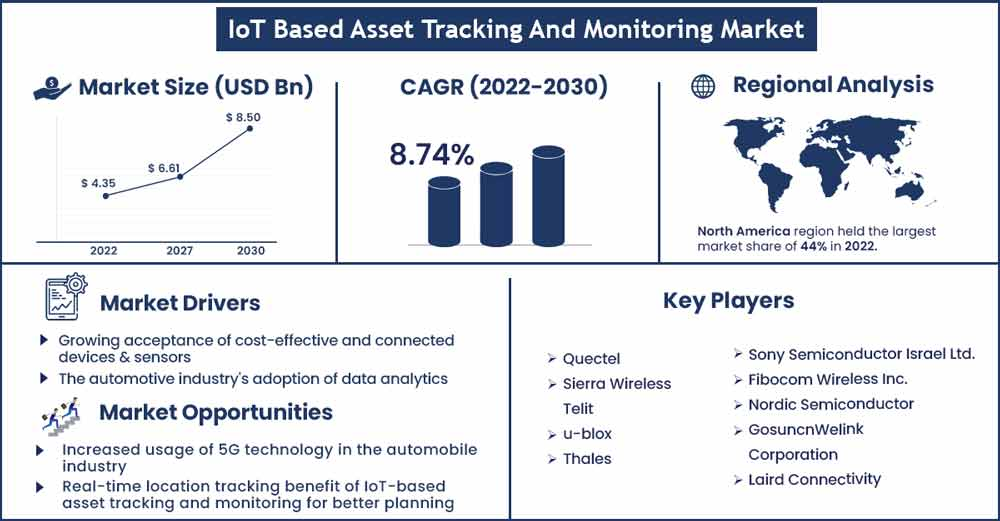
- Manufacturing companies use tracking to monitor machines, tools, and raw materials. This helps reduce delays and theft.
- Healthcare facilities track medical equipment, beds, and medicine stock to improve service and avoid misplacement.
- Retail stores use tracking to know what’s in stock and what’s missing. It helps avoid overstocking or going out of stock.
- Construction sites monitor expensive tools and materials to ensure that they are not lost or stolen on their large grounds.
- Logistics companies depend on asset tracking systems to keep an eye on their fleet activities and warehouse logistics operations region-wise.
- The agricultural industry uses GPS and IoT technology to track tractors, harvesters, and drones within vast farmlands.
- Aviation industries depend on asset tracking to track down equipment and spare parts so that there is no delay in any of their flights because of loss of equipment.
- The oil and gas industry depends on rugged asset tracking for rigs and machinery in the remote locations of oil fields.
- Government departments use asset tracking to monitor IT equipment, official vehicles, and other public assets.
| Industry | How It’s Used |
| Manufacturing | Tracks production tools and parts, avoids delays, and reduces losses |
| Healthcare | Monitors patient beds, medical devices, and pharmacy stocks |
| Retail | Manages inventory, reduces shrinkage, and improves restocking |
| Construction | Keeps track of expensive tools and vehicles on job sites |
| Logistics | Follows fleets and packages in time across cities and countries |
| Agriculture | Tracks farm equipment and uses IoT for crop and soil monitoring |
| Aviation | Manages tools, luggage equipment, and safety kits around airports |
| Oil & Gas | Tracks rigs, pipes, and tools in remote or offshore operations |
| Government | Keeps records of public assets like computers, vehicles, and infrastructure tools |
| Education | Tracks electronics, lab tools, and other learning materials in colleges and schools |
ROI and Business Impact of Asset Tracking Systems
(Source: iot-analytics.com)
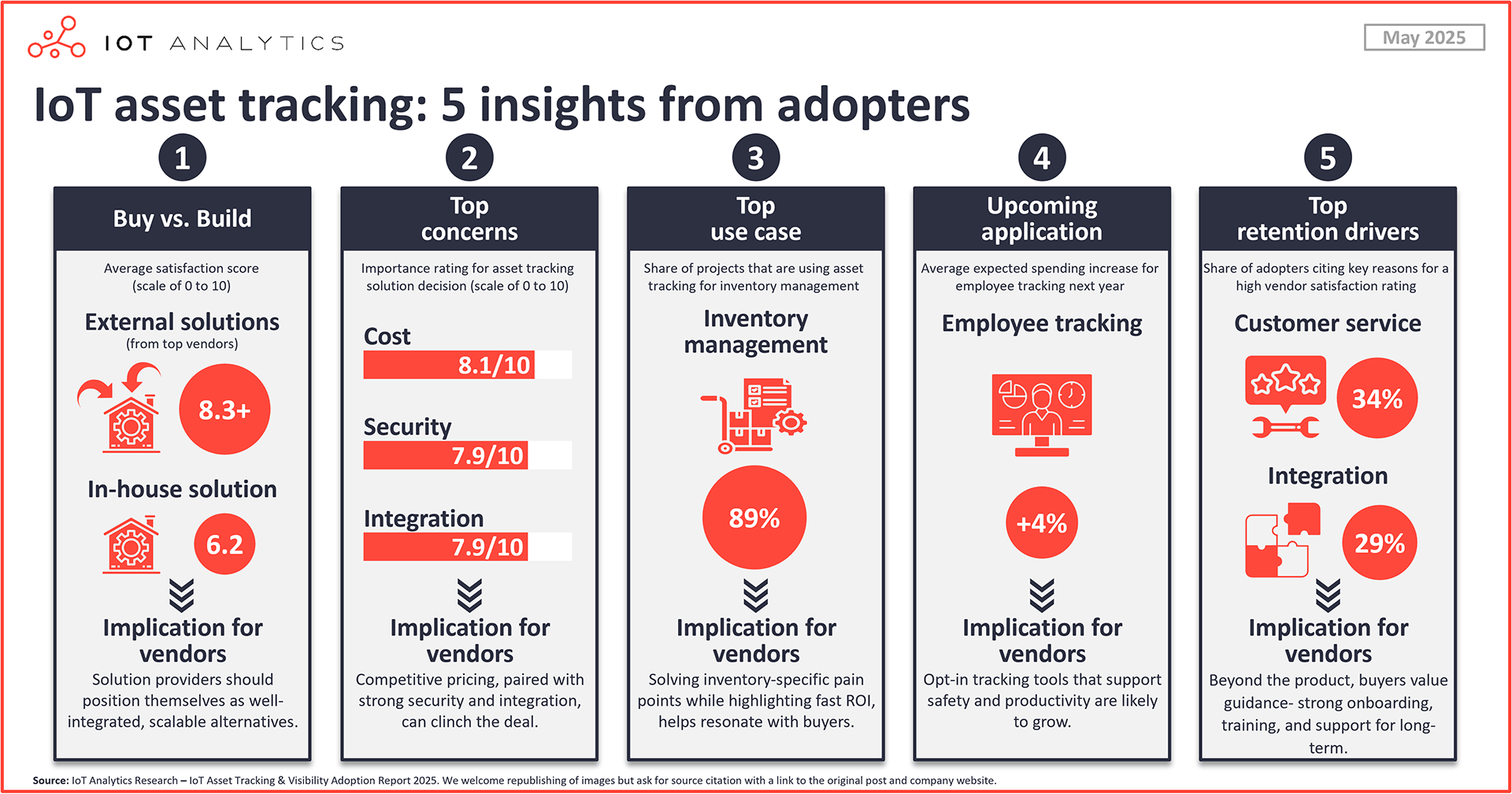
- Businesses save money by reducing asset loss and theft. Just knowing where things are can avoid huge replacement costs.
- Downtime is reduced because tools and machines are always available. No delays caused by missing equipment.
- Inventory accuracy improves, meaning fewer mistakes, better forecasting, and smarter purchasing decisions.
- Employee productivity goes up since workers spend less time searching for tools or equipment.
- Data-driven decisions become easier because everything is tracked and logged. You get a full view of your asset usage.
- Compliance becomes simpler for industries like pharma, aviation, and healthcare that need accurate logs.
- Customer satisfaction improves as orders are fulfilled faster and service calls are resolved without delay.
- Maintenance costs are lower because tracking helps schedule timely servicing, avoiding breakdowns.
- Scalability is easier since you can track more assets with the same system as your business grows.
- Insurance premiums may drop when businesses can prove asset visibility, reducing risk for insurers.
| Business Impact | Explanation |
| Cost Saving | Fewer replacements due to theft or loss |
| Less Downtime | Equipment is always findable and ready |
| Better Inventory Accuracy | Mistakes drop, orders improve, stockouts reduce |
| Higher Productivity | Staff waste less time locating tools |
| Smarter Decisions | Data shows what’s used, what’s not, and what’s needed |
| Easy Compliance | Auto-logs help meet industry and audit standards |
| Improved Customer Experience | Deliveries, repairs, and services are done faster |
| Reduced Maintenance Costs | Preventive checks are better scheduled |
| Supports Growth | Track more assets without extra effort |
| Lower Insurance Costs | Proof of visibility often means reduced premiums |
Future of Asset Tracking and Emerging Trends
(Source: imarcgroup.com)
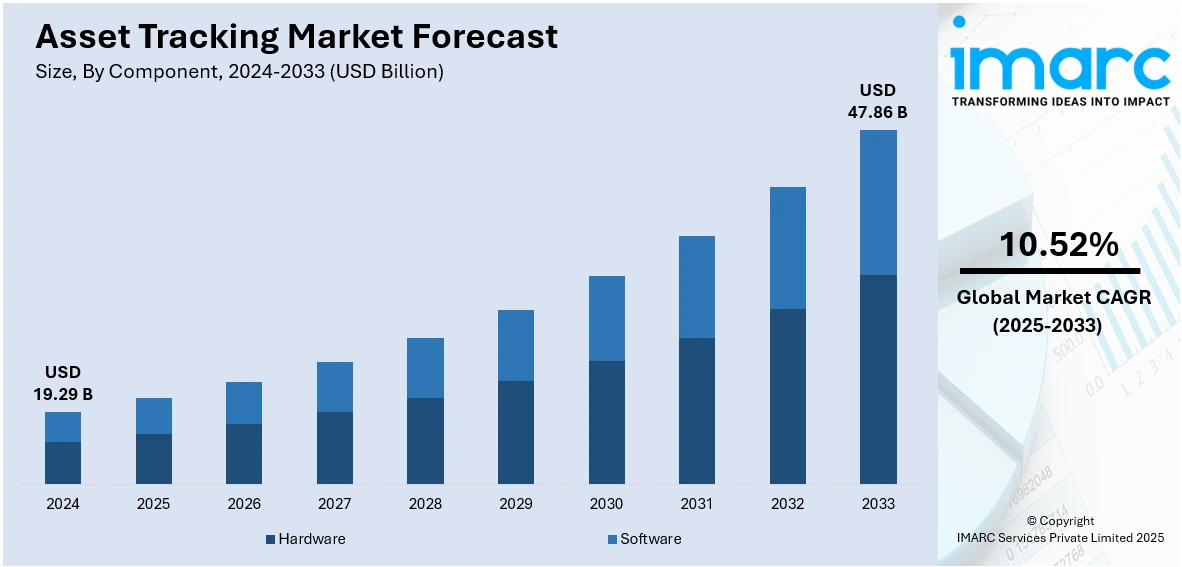
- AI-based tracking systems are being used more to predict issues before they happen. It’s not just tracking, it’s smart tracking now.
- 5G connectivity is speeding things up, allowing time tracking without lag even across crowded networks.
- Blockchain is entering the scene, bringing secure, tamper-proof logs for asset transactions and movements.
- There are drones involved in asset tracking, particularly in sectors such as agriculture, construction, and mining.
- The digital twins of physical assets are being developed to monitor them in real-time.
- Sustainability tracking is becoming common, with companies tracking the carbon footprint and energy consumption of assets.
- Voice-enabled solutions are being developed; people only need to speak out the name of the asset to locate it.
- Multisensor tags are employed in asset tracking, which monitor not only the location but also temperature, humidity, shock, and light conditions.
- Universal asset tracking platforms are being developed that can manage any type of assets including physical, digital, and remote assets in a single dashboard.
- Small companies are employing this technology more due to reduction in hardware cost and software availability.
| Future Trend | What It Means |
| AI-Powered Tracking | Predictive analytics and smarter decision-making |
| 5G Connectivity | time tracking with minimal delay |
| Blockchain Integration | Secure, verifiable asset records |
| Drone Integration | Remote tracking for large or dangerous sites |
| Digital Twins | Virtual replicas that sync with world assets |
| Sustainability Insights | Tracking energy use, emissions, and eco-footprint |
| Voice-Enabled Tracking | Locate items by just speaking to a system |
| Multi-Sensor Tagging | Tracks not just location but environmental factors |
| Unified Tracking Platforms | One tool to manage all types of assets |
| Wider SMB Adoption | Smaller companies entering the asset tracking space |
Final Thoughts
Alright, so that’s the full picture. If you’ve been following along, you already know that asset tracking isn’t just some fancy system companies use for fun; it’s now a full-blown necessity. From reducing losses to boosting productivity, the numbers speak for themselves. The asset tracking statistics we’ve gone through show how fast the industry’s growing, how much money it’s helping businesses save, and how it’s changing how we manage physical assets across every sector you can think of.
And honestly, it’s only going to get crazier from here. With AI, 5G, drones, and even blockchain coming into play, the future of asset tracking is going to be smarter, faster, and a lot more precise.
If you’re a business that still hasn’t taken it seriously, you’re already behind. These stats prove it’s not just about keeping track it’s about staying ahead. So… yeah, whether you’re new to this space or you’ve been around, these asset tracking statistics should give you a solid idea of what’s happening right now, and what to expect next. Thanks for staying up till the end. I hope you like this article. If you have any questions, kindly let me know in the comments.
FAQ
Asset tracking is the process of monitoring the location, status, and use of physical items like tools, computers, and vehicles throughout their life.
A computerized Fixed Asset Management (FAM) or Asset Tracking Software system is most commonly used to monitor organizational assets. These platforms pair central database software with physical identification tags like barcodes, QR codes, or RFID chips to track item location, user assignment, and lifecycle status.
An asset tracking number (or asset tag number) is a unique code assigned by an organization to a physical item such as a laptop, tool, or piece of machinery to monitor its location, status, and history throughout its lifecycle.

Sources