









Starter
B2B Lead Generation Statistics: So, when we talk about B2B lead generation statistics, I know it sounds all number-heavy at first, but honestly, it’s something we all need to look at if we’re trying to grow anything in the B2B space. I mean, whether you’re running ads, doing email campaigns, or just posting stuff on LinkedIn, if you don’t know what’s working out there, you’re kinda just guessing, right?
That’s why I put together this article. A complete walk-through on B2B lead generation data from what’s happening right now. You’ll get to see which platforms convert better, where most marketers are putting their money, how much a lead costs these days, and even what kind of results people are getting with AI in the mix. And yeah, some of these numbers might surprise you, especially if you’ve been doing the same strategy for a while. Let’s get into it.
The Editor’s Top Selections
- B2B lead tracking began with direct mail and database marketing in the 1980s. Since then, we moved toward CRM dashboards, digital tracking, and now AI-driven real-time metrics.
- The global B2B lead generation services market grew from around USD 7 billion in 2023 to about USD 2 billion in 2025 (11.3 % CAGR), projecting to USD 15 billion by 2031.
- Email conversion averages about 5 % with a cost per lead (CPL) of around USD 30 to USD 45. LinkedIn ads convert around 3.2 %, but CPL climbs to USD 120 to USD 200, yet the leads are high quality.
- Google PPC yields 5 % conversion, CPL USD 90 to 150. SEO content CR 1.8 %, but cheap CPL (USD 30 to 60) and builds up over time.
- Webinars convert at 2 %, CPL USD 60 to 80. Industry-specific CPL: SaaS USD 237, education USD 982, etc. 89% of B2B marketers use LinkedIn; 62% say it’s their top source of leads. LinkedIn Lead Gen Forms convert at around 13%, beating landing pages by more than 5x.
- CPL on LinkedIn is about 28 % lower than Google Ads. Around 61% of B2B firms use AI to identify high-converting leads; AI boosts lead-gen efficiency by 45 %, MQLs by 25%, open rates 48 %, conversions 36 %.
- Many (90%) use generative AI daily; 50 % report 50 % more leads/appointments, 40% better conversions, and 87% call AI a top priority.
- Inbound marketing gets positive ROI in a year for 92 % of firms, costs 62 % less per lead, and yields 54% more leads. Inbound-first companies are 13× more likely to see ROI.
- SEO-driven inbound returns about 7× higher ROI than paid ads; inbound generates 126 % more leads, and video speeds revenue growth by 49%.
- About 51 % say getting new MQLs is urgent, 30 % say it’s mission-critical; yet only 12% feel they have enough leads.
- 69 % plan to increase lead gen investment; 74 % see content as the most effective strategy; 40 % cite lead quality as the top challenge.
- Multi-channel campaigns reduce CPL by roughly 31 % and improve outcomes. One user noted LinkedIn middle-funnel lead CPL is USD 50 to 110, but lower-funnel hits USD 120 to USD 700; if 90% convert, the higher cost is worth it.
- Another shared LinkedIn leads can cost USD 250 to USD 300 with low conversion (2.6 %), Google leads convert slightly better (4.8 %), but still have low opportunity conversion.
| Category | Key Highlights |
| Market Size & Growth | USD 11.2B in 2025, up from USD 7B in 2023 |
|
Channels & CPL | Email 6.5% (CPL USD 30 to 45); LinkedIn 3.2% (CPL USD 120 to 200); Webinars 11.2% (CPL USD 60 to 80) |
| Industry CPL | SaaS USD 237; Education USD 982 |
|
LinkedIn Effectiveness | 89% usage; Lead Gen Forms 13% conversion; CPL 28% lower vs Google |
| AI Impact |
Efficiency +45%; MQLs +25%; Open Rates +48%; Conversions +36% |
|
Inbound ROI | Positive ROI in 1 year for 92%; 62% lower CPL; 54% more leads |
| Challenges |
Only 12% have enough MQLs; 40% cite quality issues |
|
Reddit Reality Check |
Higher CPL justified if conversion downstream is good |
Origin and Evolution of B2B Lead Generation Statistics
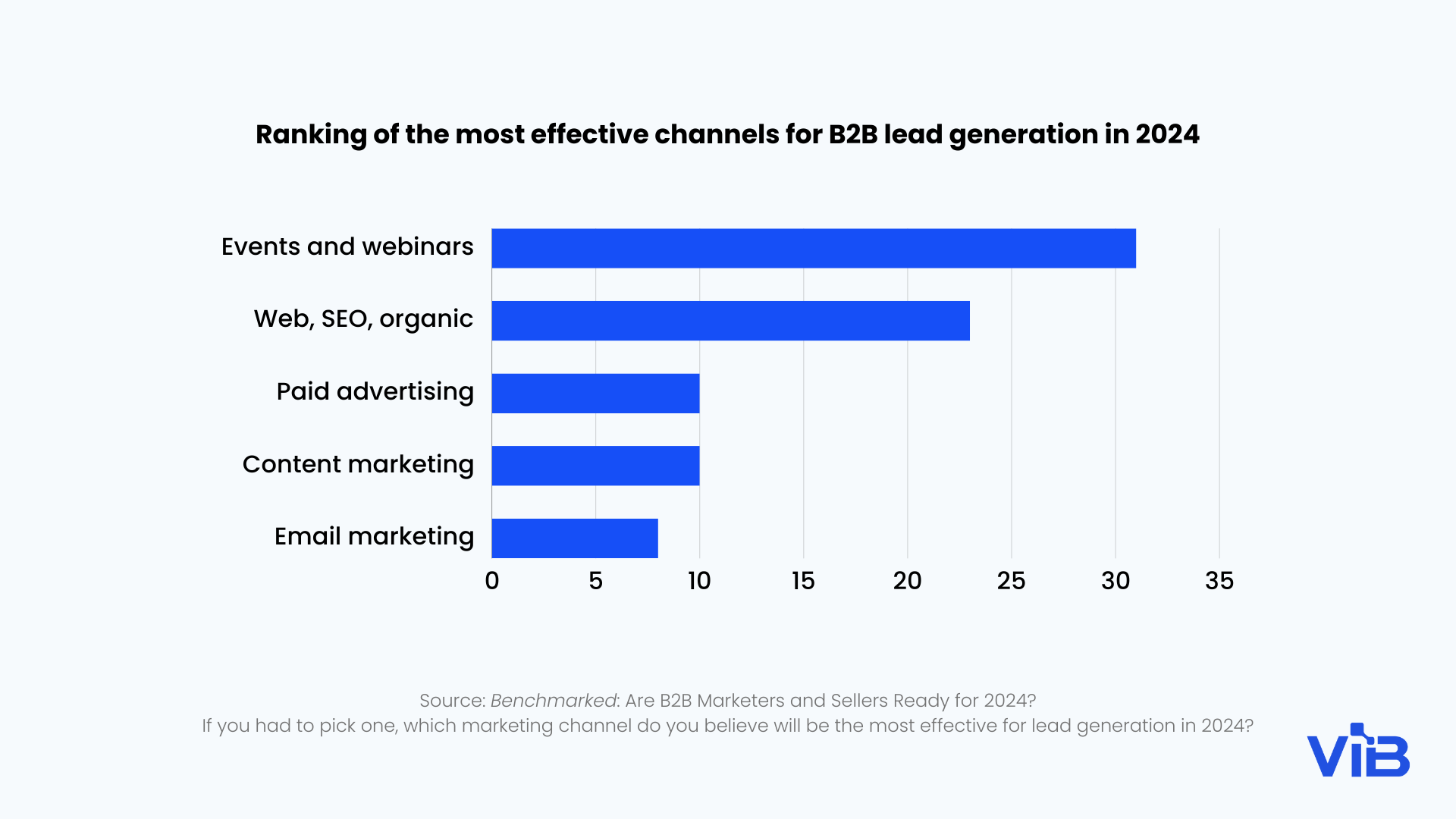
(Source: vib.tech)
- Back in the day, businesses mailed catalogues and tracked replies; that was raw lead tracking, nothing fancy, just numbers. It was patchy but real.
- In the eighties, database marketing arrived, and people started counting leads in tables and charts. It made lead stats sharper.
- In 2001, SiriusDecisions introduced the Demand Waterfall with MQLs and SQLs, and lead definitions became clear and widely adopted.
- By the 2010s, digital methods and email sign-ups were commonplace, and statistics were everywhere, on dashboards and in reports.
- Businesses became focused on cost per lead and conversion rate, leading to measurement-driven lead generation.
- The age of inbound arrived, and SEO & content marketing provided fresh leads; time to convert and page statistics became part of the game.
- The CRM became a key element for companies like HubSpot, Salesforce, and Zoho; they captured all activities with real data.
- The agencies compared the metrics for different channels (paid vs organic), calculated CPL and ROI for each channel.
- Nowadays, in 2025, AI analyzes live data feeds. We monitor CPL, conversion rate, and MQL-to-SQL ratio on the fly.
- The tools generate reports automatically, not the most accurate, but quick. Welcome to B2B Lead Generation Statistics, alive and data-driven.
| Era | Milestone |
| Pre 1980s | Mail catalog lead tracking |
| 1980s to 2000s | Database marketing and demand waterfall |
| 2010s | Digital forms, SEO, and CRM tracking |
| 2025 | AI, real-time tracking, dashboards |
Channel Metrics and Benchmarks (2025)
(Reference: hubspot.com)
- Email marketing still punches: average conversion sits around 6.5%. Not a magic number, but solid.
- Cost per lead via email hovers around 30 to 45 dollars, depending on industry and message.
- LinkedIn advertising conversion sits near 3.2%. It’s a pricey lead gen, but business-targeted.
- CPL on LinkedIn is steep, 120 to 200 dollars. You pay for access to decision-makers, mostly.
- Google Search Ads convert about 4.5%, with CPL around 90 to 150 dollars for search intent buys.
- SEO content marketing CR is lower, often 1.8%, but CPL is decent, 30 to 60 dollars.
- Webinars deliver high CR, usually around 11.2%, CPL about 60 to 80 dollars, and save time and money.
- Organic social media CR is modest, around 1.2%, but the cost is zero beyond effort.
- Industry breakdown: SaaS sees 5.1% CR, healthcare 3.8, finance 4.5, manufacturing 2.7, services 6.0, showing variation.
- A visitor-to-lead conversion of 5% is great; 2 to 5% is average, and under 2% needs work.
| Channel | CR (%) | CPL ($) |
| 6.5 | 30 to 45 | |
| LinkedIn Ads | 3.2 | 120 to 200 |
| Google PPC | 4.5 | 90 to 150 |
| SEO Content | 1.8 | 30 to 60 |
| Webinars | 11.2 | 60 to 80 |
| Organic Social | 1.2 | negligible |
Popular Channels and Usage Insight
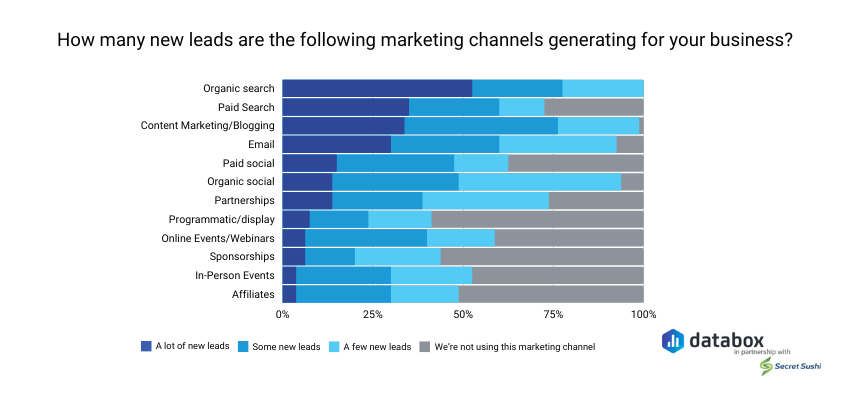
(Source: databox.com)
- About 87% of B2B businesses use email for lead generation. It just works, even if it feels old.
- LinkedIn is used by 89% for leads; it’s where business people hang out.
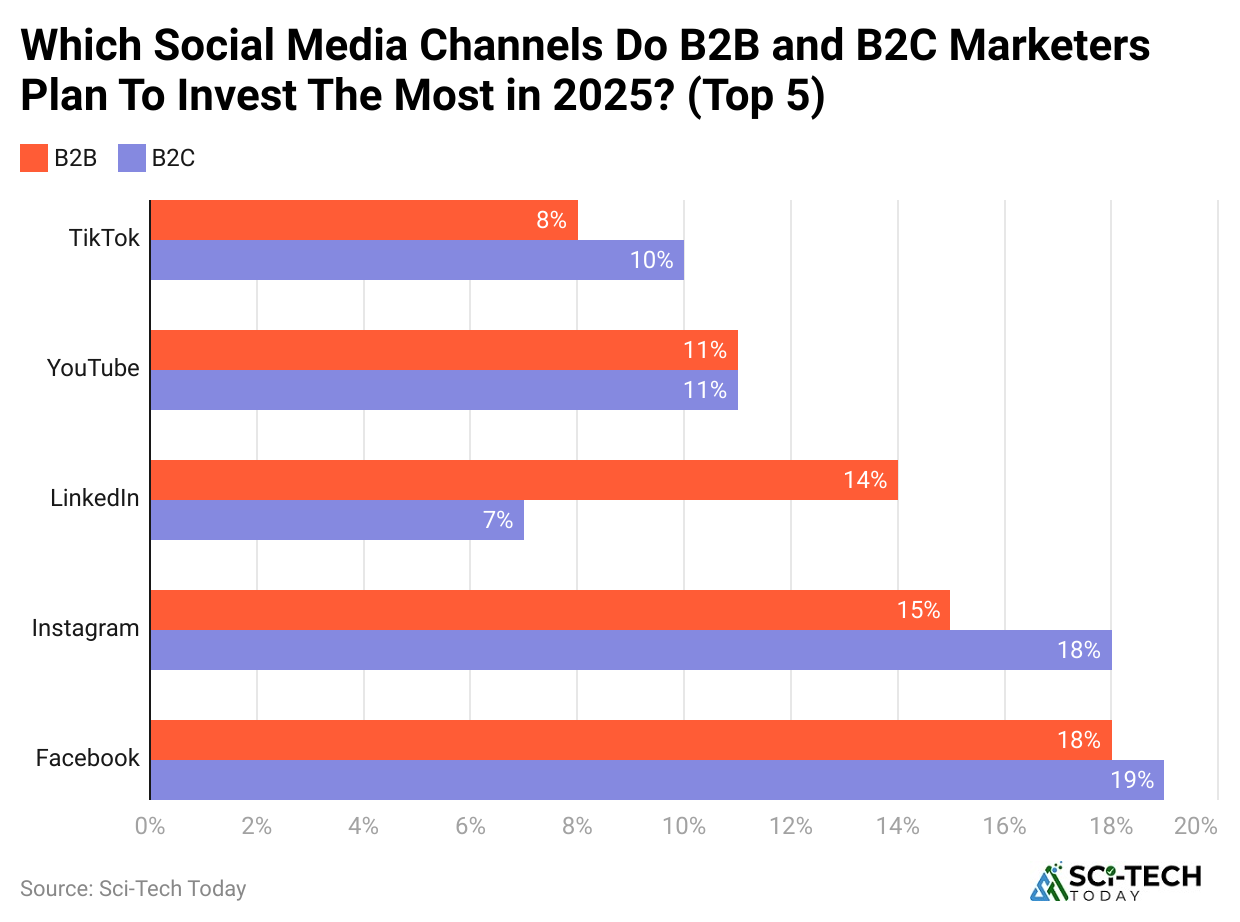
- Around 65% use paid social ads, mostly LinkedIn or Facebook, pulling in new contacts.
- Cold calling still gets used by 37%. Some say it’s old school, but it still lands leads.
- In-person events are rated as most effective by 65% of businesses that believe face-to-face things still matter.
- Website marketing contributes to 55% effectiveness. An effective website continues attracting leads.
- Email was considered an effective channel by 51%. This shouldn’t be surprising because of its reach and data.
- 76% conduct webinars where their objectives include lead generation and promotion of sales, multitasking.
- Best-performers produce twice as many high-quality leads as average companies.
- Lead quality is a key concern because 40% of quantity may not be valuable if it’s low quality.
| Channel / Tactic | Usage or Impact |
| 87% use | |
| 89% use | |
| Paid Social | 65% use |
| Cold call | 37% still rely |
| Events | 65% say most effective |
| Webinars | 76% run them |
Content and SEO Influence
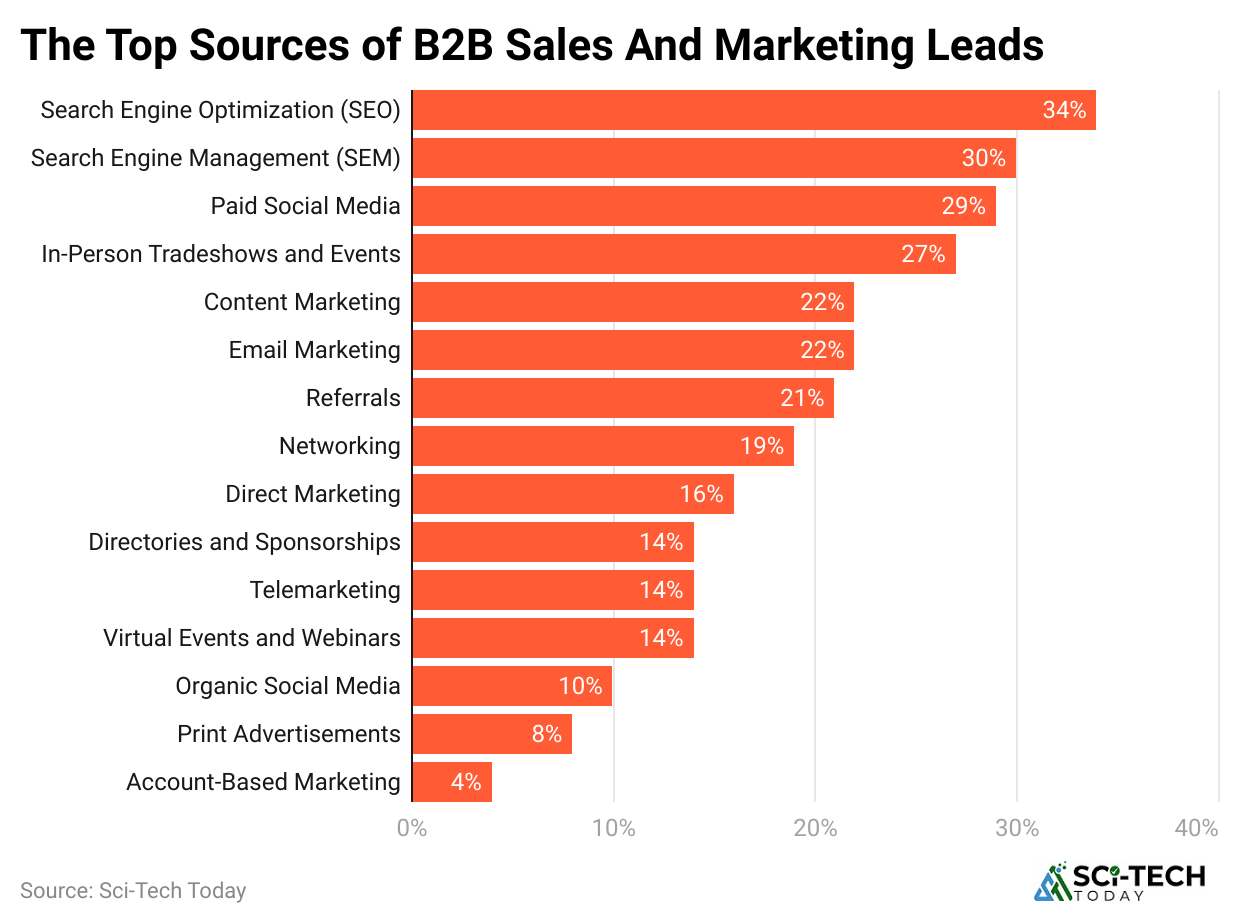
(Reference: konstructdigital.com)
- Content marketing makes up around 51 to 80% of lead acquisition for many. It’s bread and butter.
- Blogging gives firms about 67% more leads each month. Words still convert.
- The most common source of good-quality leads is SEO, which provides 35% of such leads.
- Then comes referrals; 30% of best-scoring leads come through referrals. Word-of-mouth marketing still works.
- 80% of marketers use content marketing for lead generation purposes, since it helps to build trust and brand awareness.
- 49% outsource their lead generation activity because they do not want to do it themselves.
- Nurtured leads (e.g., from email marketing drip campaigns) are bought 47% more frequently than cold leads.
- Companies with mature lead gen processes get 133% more revenue, and the process pays off.
- 76% of marketers rely mostly on content marketing for leads that make sense.
- SEO plus content drives rich pipelines, especially long-term, compared to short ad bursts.
| Tactic | Usage / Impact |
| Content | 51 to 80% rely on it |
| Blogging | +67% leads |
| SEO | 35% high-quality leads |
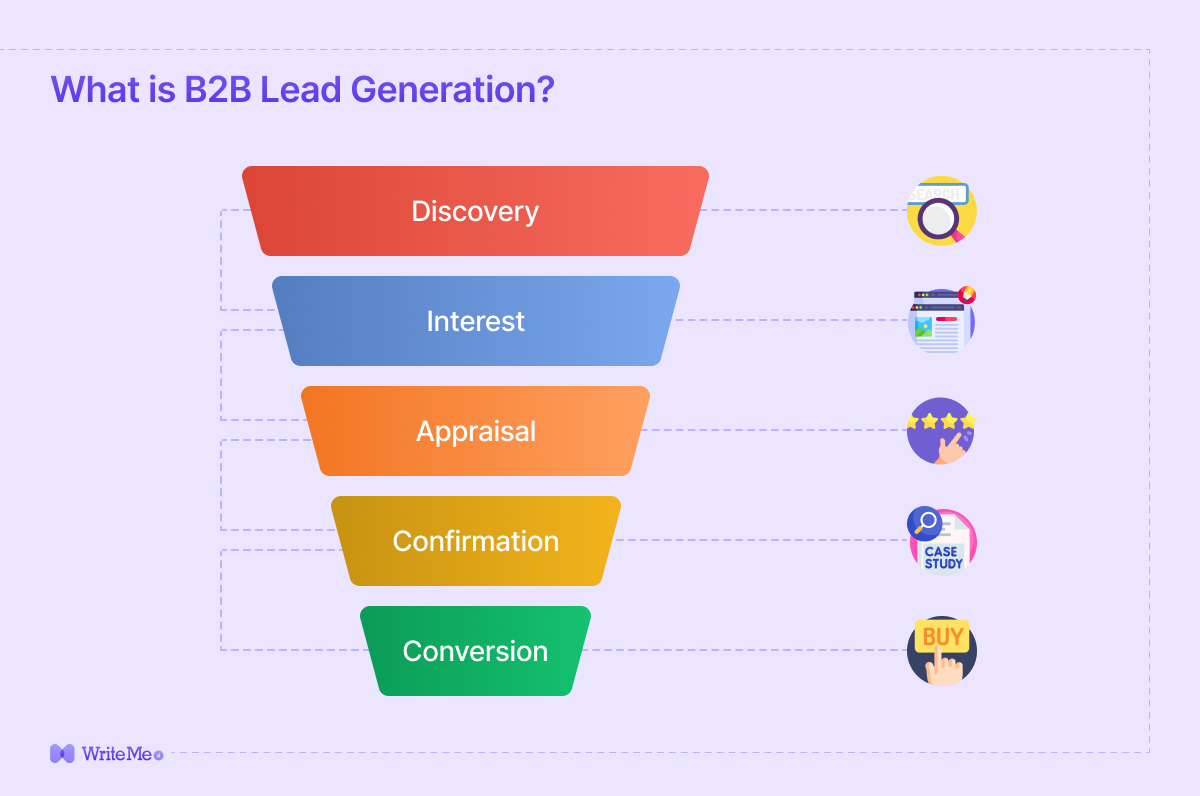
(Source: writeme.ai)
- AI tools bump conversion rates by around 35 to 40%, and automation shows results.
- 53% use AI chatbots to qualify leads. Bots handle the basics; humans handle the rest.
- 40% say AI scoring lifted lead quality noticeably, yet it’s about smart filters.
- 92% of AI users find that AI improves content creation, while 67% find that it saves time, numbers, and words.
- 56% of executives believe that AI will significantly impact lead generation. AI is transforming how we identify leads.
- 87% say AI is now a top priority in their strategies. It’s not just cool; it’s core.
- Generative AI chat-like tools are used 90% daily in some firms for writing, strategy, and leads.
- 71% of organizations already use generative AI for lead gen or content.
- AI budgets are rising, with 88% planning to spend more money on AI.
- Personalized AI-powered emails get 4 to 10 times higher response rates. That kind of lift matters.
| AI Use Area | Impact / Adoption |
| Conversion lift | +35 40% |
| Lead quality | +40% |
| Content & speed | 92% say better, 67% say faster |
| Personalized emails | 4 10× more responses |
Challenges, Lead Quality, and Frictions
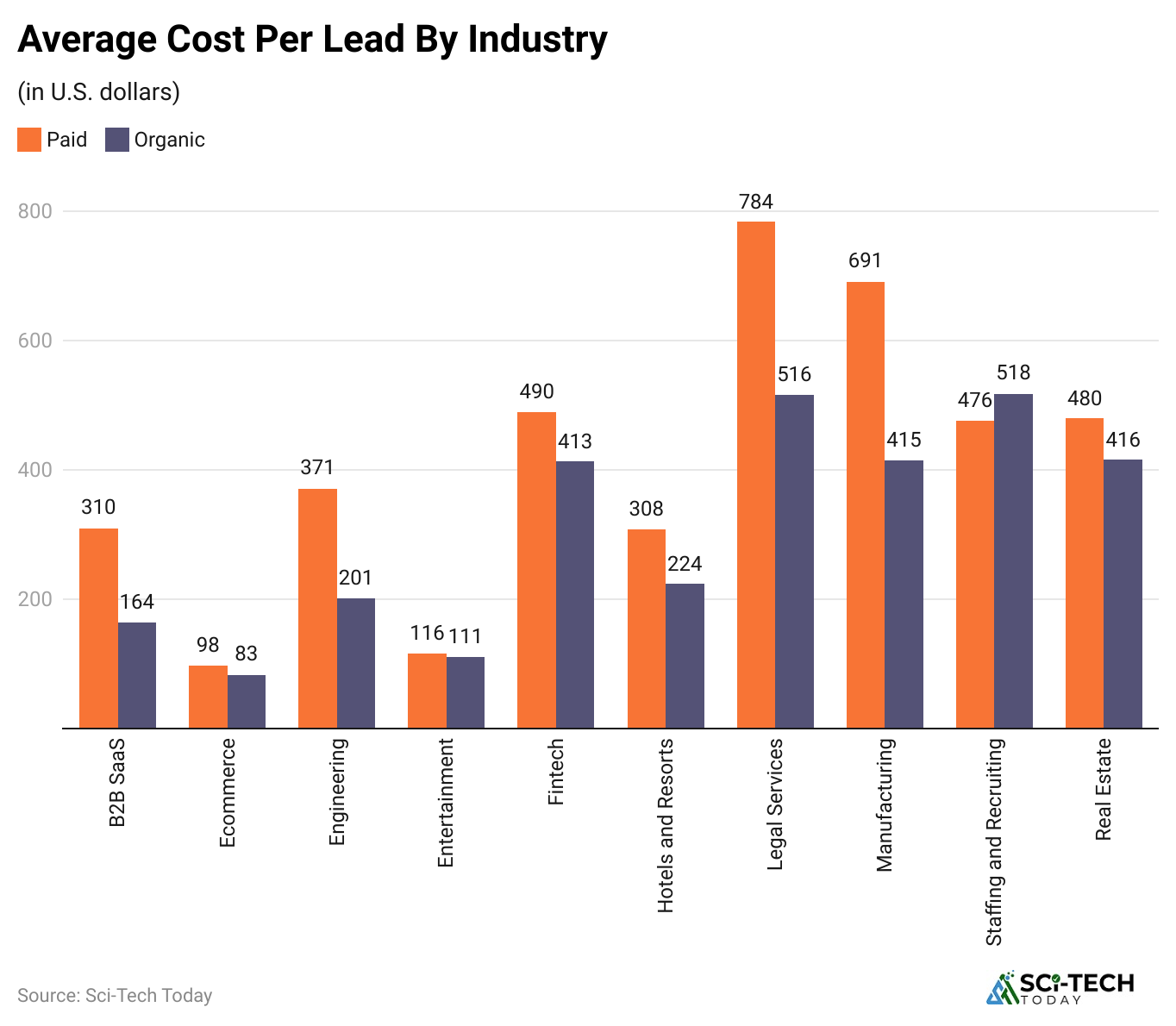
(Reference: sender.net)
- Solid 58% say finding good quality leads is the hardest part, even when volumes are there.
- Nurtured leads are 50% more likely to be sales-ready and cost 33% less.
- 91% of marketers say lead generation is still a top business priority.
- 42% complain about low-quality or irrelevant leads, which is wasted time.
- 45% say they simply don’t get enough leads to hit pipeline goals.
- Decision-making in B2B is complex; one in five has a “decision unit” of six or more people.
- Buyers still prefer email outreach: 73% say it’s still their go-to.
- Multi-channel campaigns drop cost per lead by about 31% and spread out risk.
- 70% of businesses say lead quality matters more than quantity makes sense.
- 52% of B2B buyers are swayed by personal motives, not just business needs.
| Issue or Insight | Stat or Impact |
| Quality leads | 58% say it’s toughest |
| Nurturing benefit | +50% sales-ready leads, −33% cost |
| Lead gen priority | 91% say it’s vital |
Outreach in Real Life (from forums)
(Source: smallbizknowhow.com)
- A Redditor said, “In-person cold calling booking rates reach 15 to 20%, while cold email barely 2 to 5%,” showing that personal touch still wins.
- Some folks swear by niche SEO sites, converting steadily; 2 to 3% is enough to keep the pipeline alive.
- AI-personalized intros turned response rates from around 3% up to 12%. Numbers don’t lie.
- The multi-channel approach that includes emails and live events is still the way to go.
- People say that being consistent and dependable will yield better results than flashier methods.
| Tactic | Impact or Insight |
| In-person calling | 15 to 20% booking vs 2 to 5% email |
| Niche SEO | 2 to 3% steady conversions |
| AI personalization | Responses climbed to 12% |
Buyer Behaviour and Strategy Trends
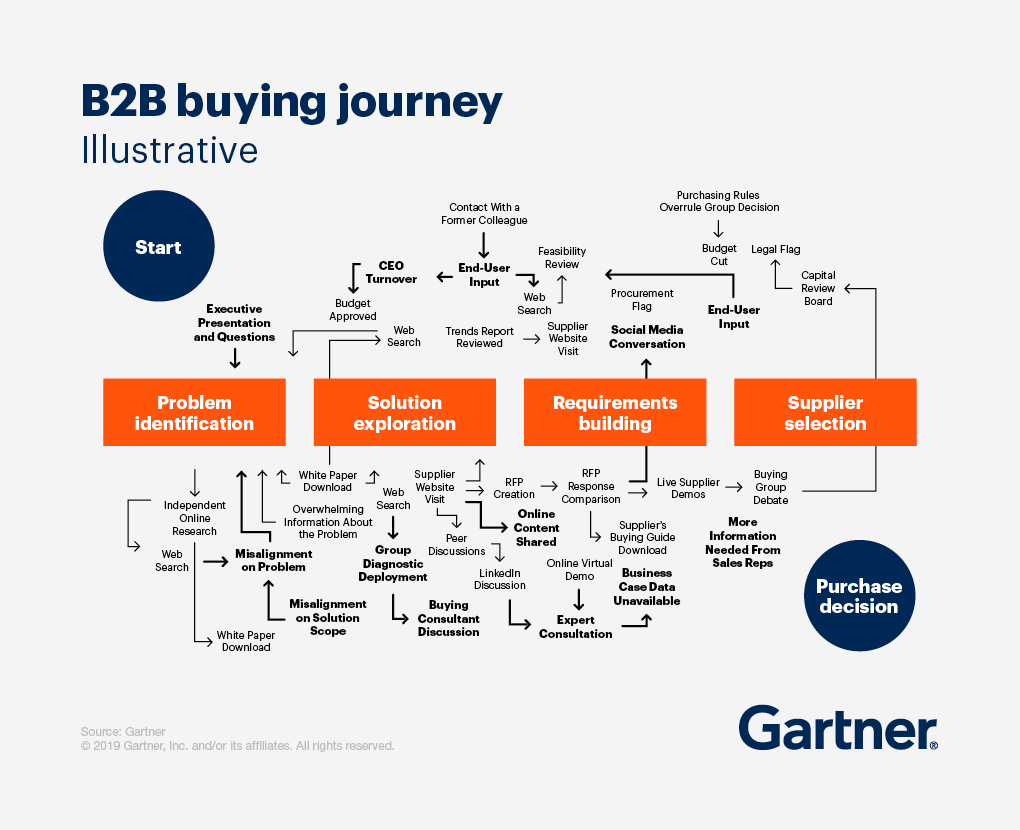
(Source: smartinsights.com)
- Around 80% of B2B engagements now happen digitally; buyers expect online everywhere.
- Using multi-channel tactics lowers CPL by about 31%. Email, LinkedIn, and PPC together pay off.
- 76% of marketers say good content is key to reaching prospects. Stories still matter.
- 52% of buyers have personal motivation behind decisions, not just professional needs.
- 64% of companies outsource lead generation. They want experts to do the heavy lifting.
- LinkedIn drives 89% of B2B leads, and the business platform stays dominant.
- Regular blogs boost lead counts by 67%. Content pipelines matter.
- 73% of buyers still say email is their preferred way to hear from sellers.
- Competition is growing. 45% say it’s harder to stand out these days.
- An adaptive, personalized strategy is the way forward, not one size fits.
| Trend or Behavior | Stat or Insight |
| Digital interaction | 80% of B2B |
| Multi-channel CPL lift | −31% |
| Outsourcing lead gen | 64% of companies |
ROI, Costs, and Inbound Power
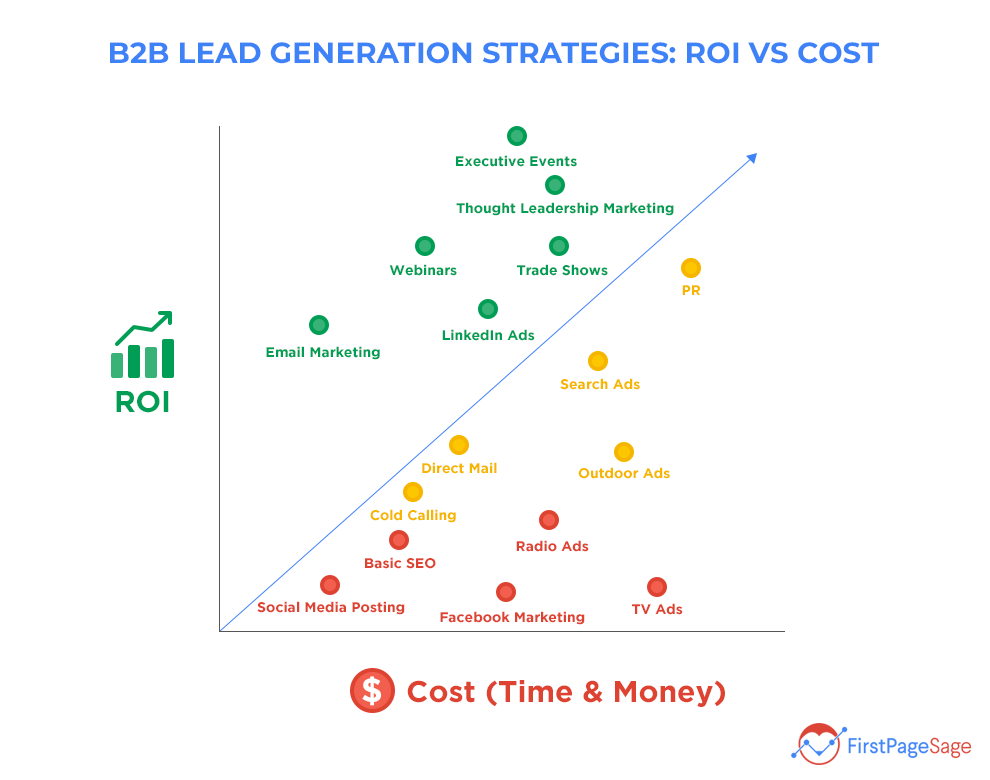
(Reference: firstpagesage.com)
- Inbound costs 62% less per lead compared to outbound, being economical and efficient.
- Inbound marketing produces 54% more leads than any conventional method it is applied to.
- The likelihood of achieving ROI proof for an inbound-first business is 13 times greater.
- The conversion rate of content-driven inbound is almost 3× higher than any traditional one.
- The CPL of companies using inbound marketing is 47% lower, and this difference increases.
- Organic inbound has an ROI that is 5.7× higher than any paid ads campaign.
- 86% believe that inbound gives better lead quality and improves the funnel.
- Inbound yields 126% more leads than outbound volume and value together.
- Adding video content speeds revenue growth by about 49%.
| Metric or Benefit | Inbound Advantage |
| ROI within a year | 92% achieve it |
| Cost savings per lead | −62% |
| Lead volume | +54% inbound vs outbound |
| Video-driven revenue growth | +49% |
What’s Ahead and Where This Goes
- AI is now the top thing nearly every business prioritizes for lead gen; 87% say so.
- 71% of companies already use generative AI to help with content and leads.
- 90% of users engage with generative AI every day; it’s part of the daily workflow.
- 88% expect their AI budgets to expand; it’s not a flash in the pan.
- 66% say AI agents made them work more efficiently, smarter, not harder.
- Companies using AI tools saw sales revenue rise by about 15%, proof of impact.
- Personalized outreach powered by AI gets 4 to 10 times better responses and tailored work.
- Younger buyers expect AI-driven personalization; it’s become the norm.
- 33 percent already use generative AI specifically for personalizing messages.
- Those who embrace AI fast will be the lead gen leaders over the next few years.
| Trend or Forecast | Stat / Insight |
| AI priority | 87% of businesses |
| Gen AI adoption | 71% currently using |
| Revenue impact | +15% with AI tools |
Summary
Alright, so that’s pretty much the full picture when it comes to B2B lead generation statistics right now. I know it’s a lot of data, but that’s kind of the point. You can’t just go with gut feelings anymore; the market’s too competitive for that. You need to know what works, where others are getting their results from, and what’s worth putting your time and money into.
What we’ve seen is that lead gen isn’t one-size-fits-all. Some companies are getting insane results from email, while others are doubling down on LinkedIn or SEO. And yeah, AI is changing the game, but not in some magic push-a-button way. It still takes planning and actual work.
Anyway, if you’re serious about building a proper funnel, scaling B2B sales, or just trying to stay ahead, these B2B lead generation statistics are what you should keep checking back on. Because this stuff changes fast.
What worked last year might flop this year. So don’t just collect leads. Track the data, test what fits your brand, and yeah, keep your strategy sharp. That’s it. Hope you got something useful out of all this. If you have any questions, kindly let me know in the comments section.
FAQ
Generate B2B leads by first defining a precise Ideal Customer Profile (ICP). Combine targeted cold outreach (using platforms like Apollo or Instantly) with inbound organic content (such as posting case studies on LinkedIn) to build trust and capture high-intent buyers.
The median B2B cost per lead (CPL) is USD 213, with a typical cross-industry range landing between USD 40 and USD 400+ per lead. However, there is no single universal cost; your final numbers depend entirely on your industry, your marketing channels, and how strictly you define a “qualified lead”.
B2B lead generation salaries vary widely by location, experience, and commission structures. In the U.S., specialists average USD 41,900 to USD 53,000 base SalesRoads, with senior roles up to USD 94,000 Landingi. In India, entry-level salaries average ₹3.5L/yr, reaching ₹5L/yr with experience AmbitionBox.