








Overview
Data Breach Statistics: In the year 2026, data breaches pose a great risk all over the world, and criminals tend to use more advanced methods, making the attacks more frequent and widespread. All types of organizations, regardless of their size and in all industries, have been victims of data breaches, often leading to loss of money and facing legal actions as well as damage to their names.
This paper looks at the current data breach statistics, looking into some important figures, costs, and trends to expect in the year 2026.
Top Selections of This Page
- Data breach statistics reveal that in the first quarter of 2025, global data breaches resulted in the exposure of over 400 million records.
- In 2025, a single data record posted an average loss that’s not separately broken out in the newest reports, whereas the total average cost of a data breach worldwide was USD 4.44 million, a slight 9% decrease compared to 2024.
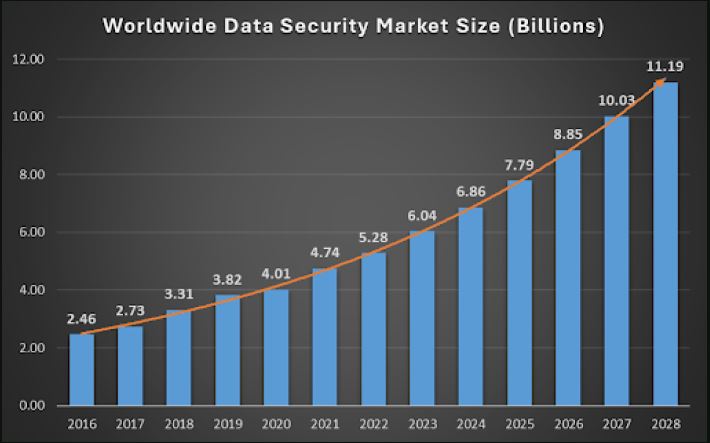
- The data security market is vast and growing quickly. It is expected to be worth USD 14.70 billion in 2025 and an even larger USD 11.19 billion in the year 2028.
- Organizations with security automation continue to incur meaningfully lower mitigation costs, though the newest reports emphasize healthcare as the costliest sector at USD 7.42 million average.
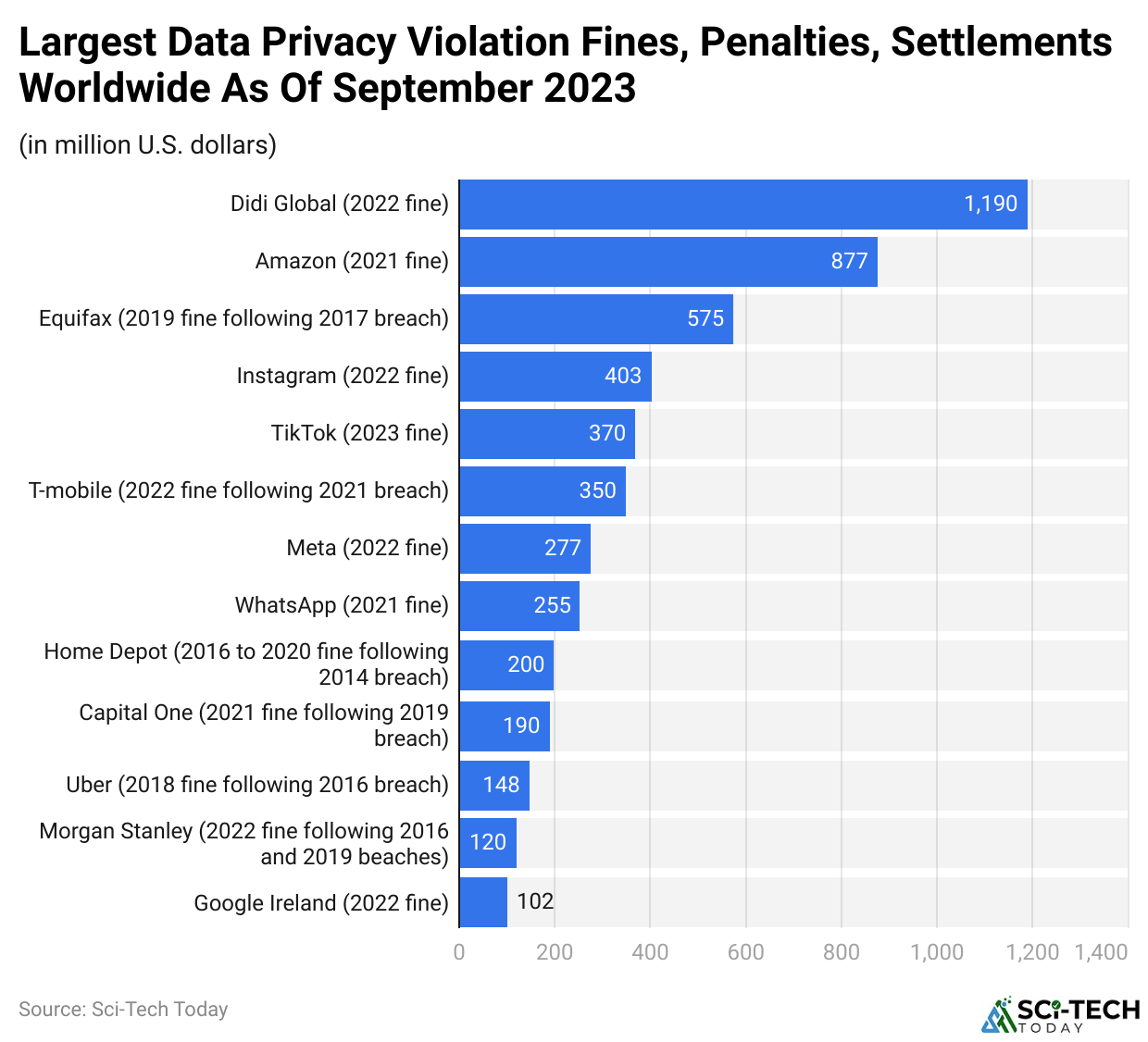
- The highest fine ever imposed for a data breach occurred in 2023, which was USD 1.19 billion, and was levied against Didi Global Company.
- Data breach statistics show that the number of large healthcare data breaches held steady at around 710 in 2025.
- Knowledge of data privacy regulation is not consistent across countries, with India scoring 67%.
- Data breaches happen mostly in North America, causing swift financial loss and huge damage to the company’s reputation.
- Data breach statistics show that the information usually in high demand during breaches is generally the customer’s personal identifiable information (PII), which constituted 53% of breaches in global entities in 2025.
- Employee PII figures aren’t separately broken out in the newest 2025 reports, while credential abuse causes 32% of breaches linked to human actions, and 60% of human-related breach factors were tied to social engineering overall.
- Financial and insurance industries continued to face the most threats, with 387 reported compromises in the financial sector alone by mid-2025.
- Every single second, almost 507 records are being compromised somewhere around the world. And about 71% of the data breaches that happen around the world are for financial gain.
- By 2025, 46% of small companies experienced a cyberattack, with incidents occurring roughly every 11 seconds.
Data Breach Key Facts
- On average, it takes about 295 days for any organization to discover the existence of a data breach, and the time to recover fully can be up to 197 days.
- Data breach statistics indicate that in the first quarter of the year 2025, over 1 million phishing attacks were observed globally.
- In 2025, approximately 90%+ of businesses surveyed globally reported having experienced phishing attacks, with the mean cost of a data breach being USD 4.44 million. The average cost per record breached is USD 160.
- Roughly 75% of the total entities admitted that they experienced data breaches that greatly affected their business operations, while approximately 21% of all the folders available in a typical organization can be accessed by every employee.
- In 2025, spending on global information security was recorded at around USD 213 billion, though broader cybersecurity market estimates range up to USD 454 billion depending on scope. About 3.4 billion phishing emails are sent and received on a global scale every day.
- According to data breach statistics, health data breaches are causing financial losses and abuse, especially in the legal arena.
- Most of the time, when a data breach is detected, the company is accused of data protection failure, and appropriate authorities investigate that.
- It is necessary to install several protective measures to mitigate the risks of data breaches.
- Such measures may include employee education, interaction with new threats in time, data protection, and the use of more than one authentication mechanism. Regular updates of security tools, systems, and procedures, in turn, lead to the development of risk assessment and management.
Global Data Security Market
(Source: edgedelta.com)
- The proliferation of information-based applications that create, keep, and process huge amounts of data has made data security a crucial aspect, as the volumes of data needing to be secured have increased considerably.
- As a result, there is a high need for efficient, cost-effective data security measures. Data breach statistics estimated that the data security market reached USD 7.79 billion by the end of 2025.
- If current trends continue, by 2028, it will grow to USD 11.19 billion, representing a 13.01% compound annual growth rate (CAGR) for that period.
- This once again reinforces how there is a growing threat to a great and increasing volume of data from unpermitted intrusion, breach, or access.
Average Data Breach Cost
(Reference: statista.com)
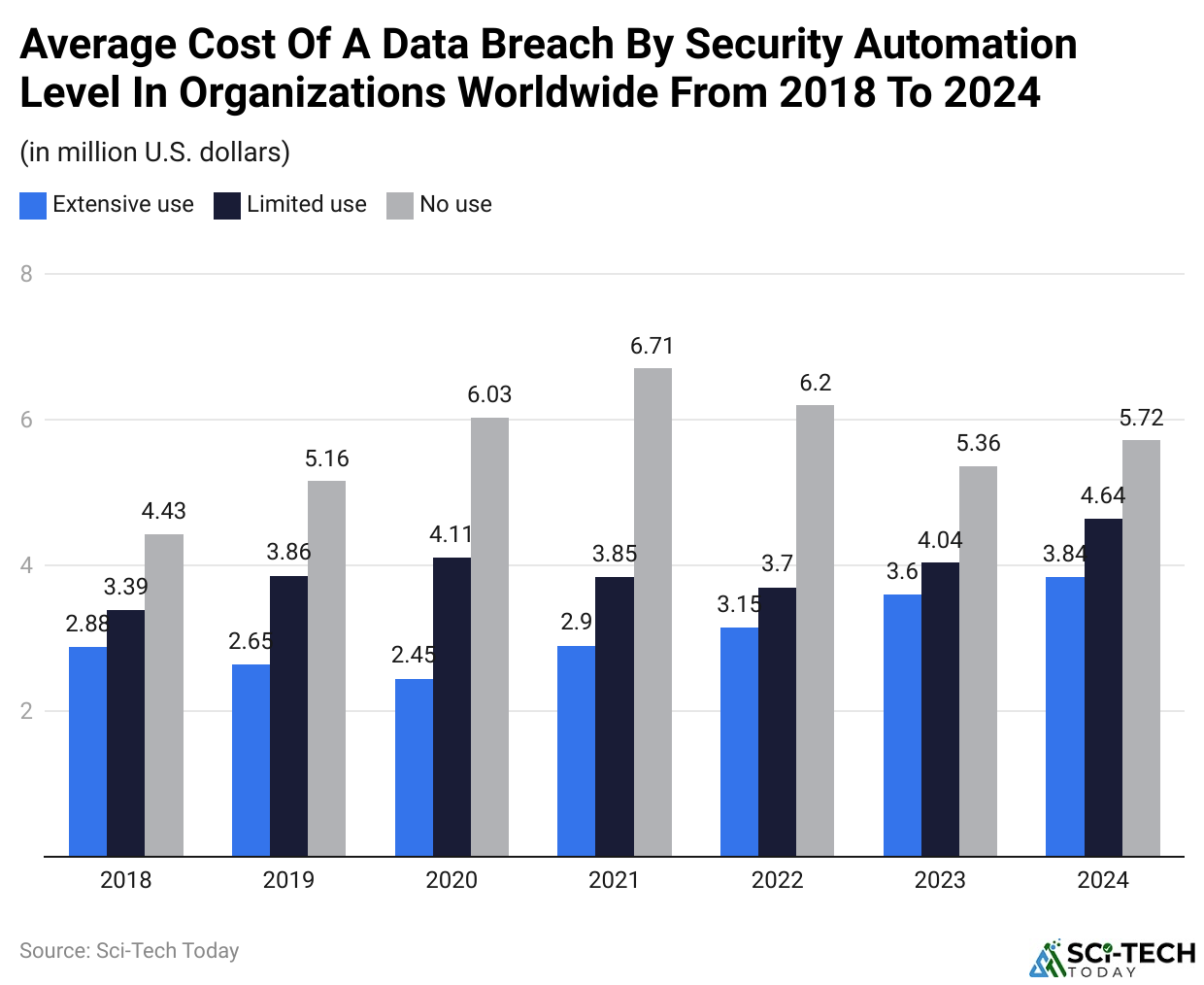
- Firms that have embraced security automation have immensely reduced the costs and expenses incurred in data breaches.
- In 2025, organizations that fully adopted security automation (AI and automation) reported an average cost of a data breach of USD 3.62 million. On the other hand, firms without any form of security automation incurred even higher costs, averaging USD 5.52 million per breach.
- These data breach statistics illustrate the advantage of security automation in financial terms because such systems can, at a minimum, identify, contain, and cure a breach in no time.
- In turn, this reduces the amount of time spent identifying and containing the breach, thus reducing the resulting financial impact.
- Given the fact that manual operation is limited and response time is significantly improved, it is easy to see how security automation is beneficial to organizations that would like to limit the costs and interruptions incurred during a data breach.
Data Breach Attack Vector Statistics
- The current figures reveal that credential usage is the number one entry vector (approximately 22%) of all attacks followed by phishing (which was responsible for approximately 16%), and supply chain/ third party compromise (approximately 13%) in some of the investigations carried out.
- Software and hardware vulnerabilities are being used to cause about 20% of all the breaches which represents an increase of about a third when compared to the previous year as the hacker community is now focusing on the edge devices and the VPN appliances.
- Supply chain/third party compromise is the next level of the most common entry vectors with about 15% of organizations stating that they were breached because of attacks against their partners.
- Though social engineering has been a key concern for years, this is still the case in the present day, as seen from breach statistics which indicate that 28% of all breaches have been due to social engineering, and 57% of all social engineering breaches were phishing-related, more than double the percentage that used pretexting.
- 44% of all breaches involved ransomware, with a majority of them initiating through a compromised edge point like a VPN.
Largest Data Breach Violation Fines, Penalties, Settlements
(Reference: statista.com)
- Data breach statistics reveal that as of 2025, the largest penalty from any jurisdiction for a breach of data privacy laws remains the one levied on Meta Platforms Ireland, with no new record set in 2025.
- In May 2023, the competent authority on data privacy matters in Ireland announced a fine in the amount of EUD 1.2 billion, which is equivalent to around 1.26 billion U.S. dollars.
- The next largest financial penalty in 2025 was delivered to TikTok by the Irish Data Protection Commission, which was EUD 530 million, approximately USD 560 million.
- The Equifax 2019 fine of USD 575 million remains a historical reference point and is unchanged, as no comparable US-based breach settlement has surpassed it through 2025.
HealthCare Data Breach
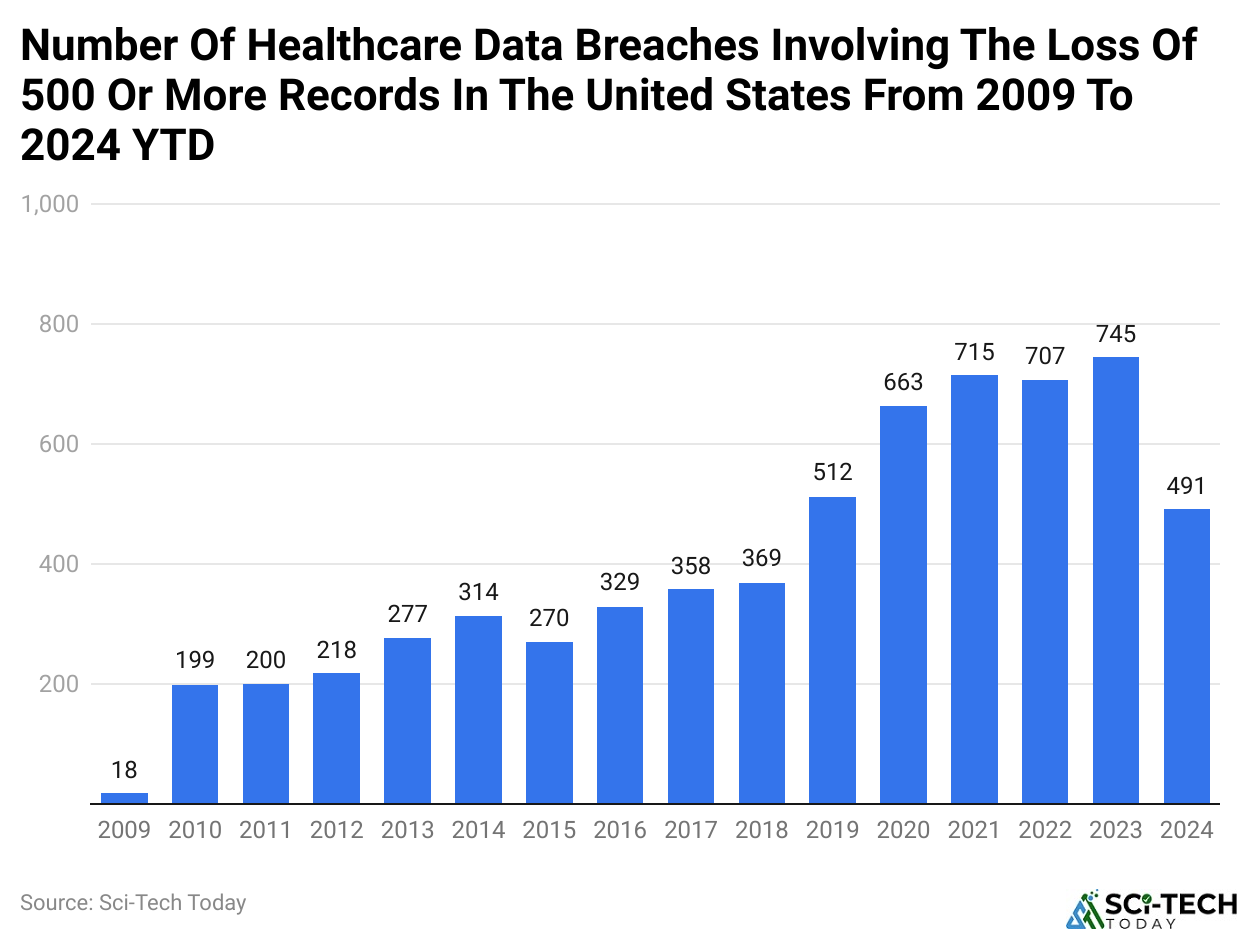
(Reference: statista.com)
- Between January and September of 2025, a total of 710 incidents of large-scale data breaches by U.S. healthcare organizations were reported, each impacting more than 500 records.
- This represents a radical change in the trends compared to figures ten years past, which provides an even more disturbing picture of the security of healthcare information.
- These data breach statistics show that the number of healthcare data breaches is on the rise, with 2025 recording the highest number of large data breaches at 772.
- The data illustrates the increasing threats and difficulties that the healthcare sector is confronting regarding the protection of patient data.
- The continuous increase in these occurrences points out the necessity for more robust data security policies in the healthcare sector to protect confidential data from being accessed illegally.
Stolen Data Type Statistics
- Personal information of customers appears in roughly 53% of the total number of instances when there is a breach. The personal information consists of tax identification number, e-mail address, telephone number, or home address of the customer.
- About one-third of breached information involves company’s intellectual property which is usually the costliest to recover and replace. In the recent study, on average, each IP record costs USD 178.00 to recover or replace.
- Data breaches involving insiders involve the disclosure of very sensitive personal information. Around 89% of the compromised information arising from insiders’ errors is classified as personal information and not metadata.
Data Breach by Data Points Leaked Types
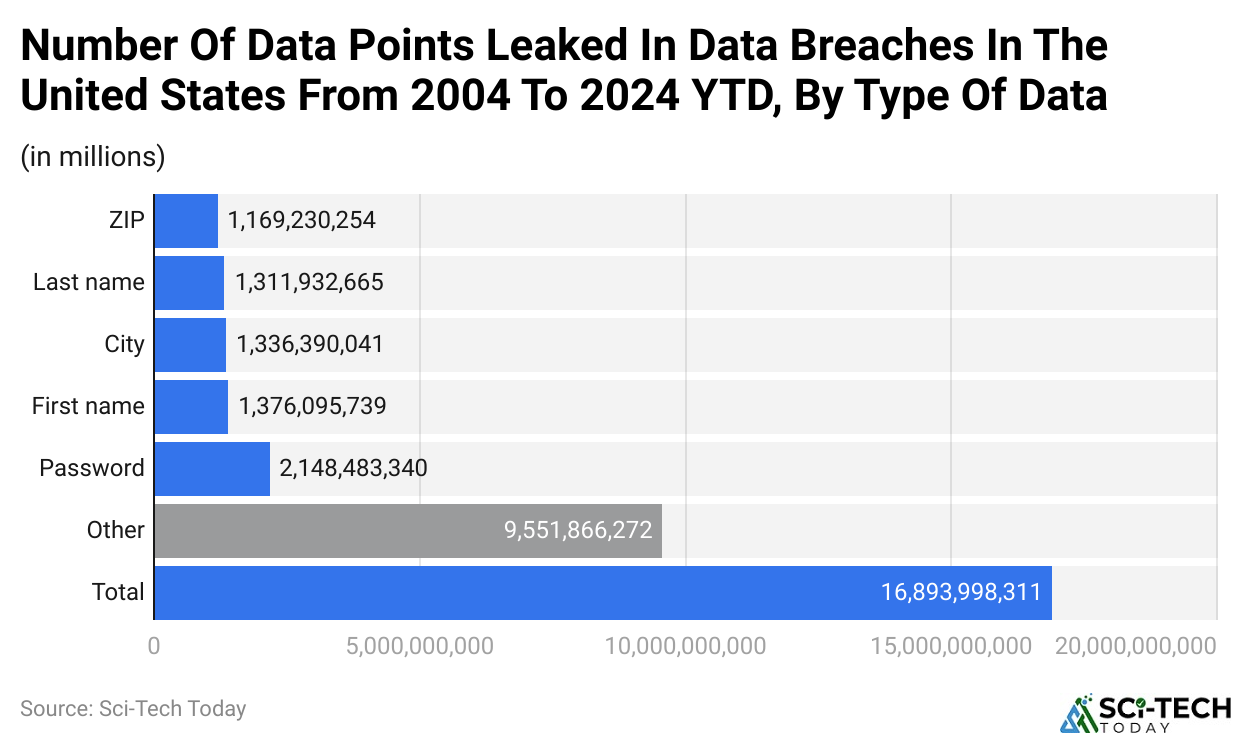
(Reference: statista.com)
- For over one and a half decades, between 2004 and July 2025, several instances of significant data compromise that the majority of American internet users had to deal with occurred, with users’ passwords being the most commonly accessed information.
- In those 21 years, around 2.5 billion user account passwords have been stolen, emphasizing the severe threat that users’ online security is under next in line after passwords were first names, which also featured prominently among the data typically accessed in these breaches, with cities coming in close.
- This hierarchy is indicative of the type of information leaking in such an intrusion, thus explaining why there have been calls for better password practices and enhanced safeguards to keep such information from prying eyes.
Data Breach by Age
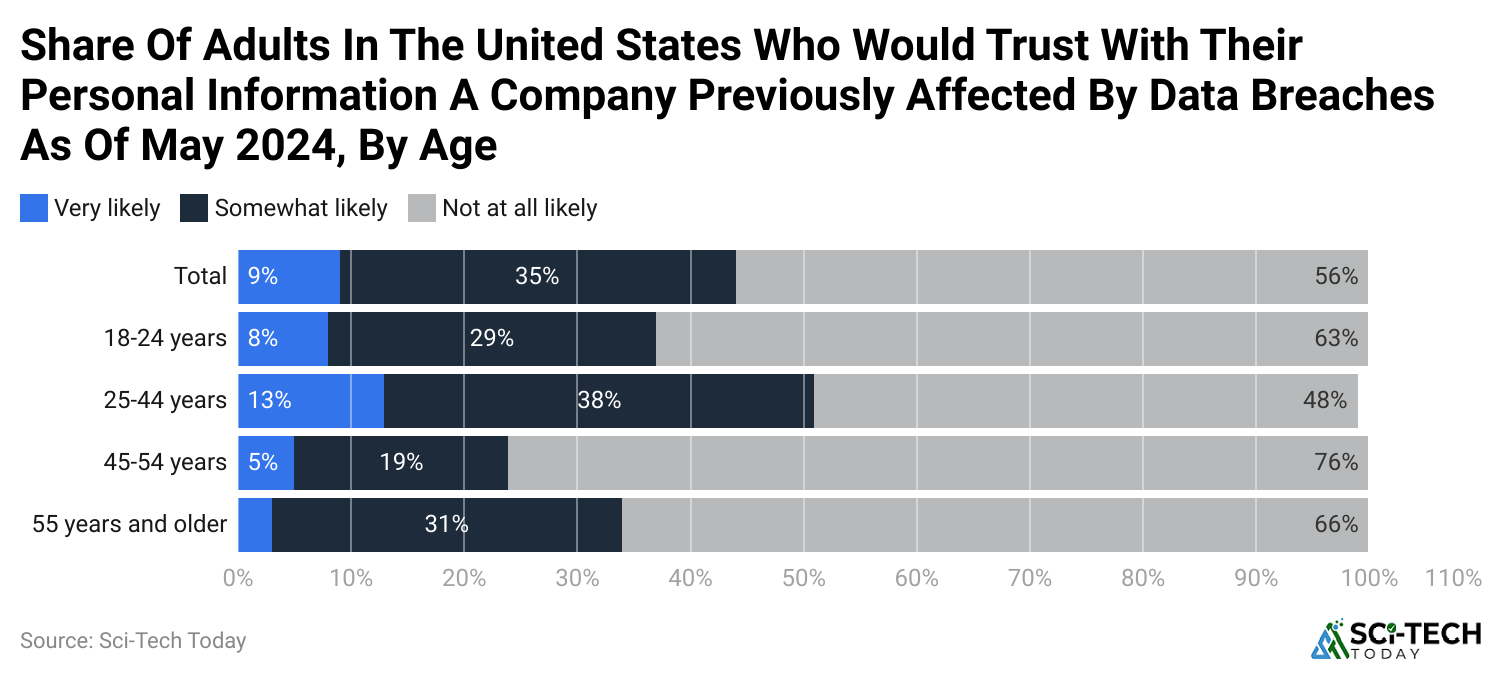
(Reference: statista.com)
- According to data breach statistics from 2025, over 80% of Americans report being likely to stop doing business with a company after it suffers a cyberattack.
- This tendency was similar even among other age groups, with the majority of respondents stating they wouldn’t trust organizations after a breach.
- For instance, 76% of adults aged 45-54 affirmed they would not share their personal information with a data breach-affected company.
- Separately, identity-specific trust metrics from 2025 show only 17% of consumers trust organizations to manage their identity data.
Data Law Awareness Rights by Country
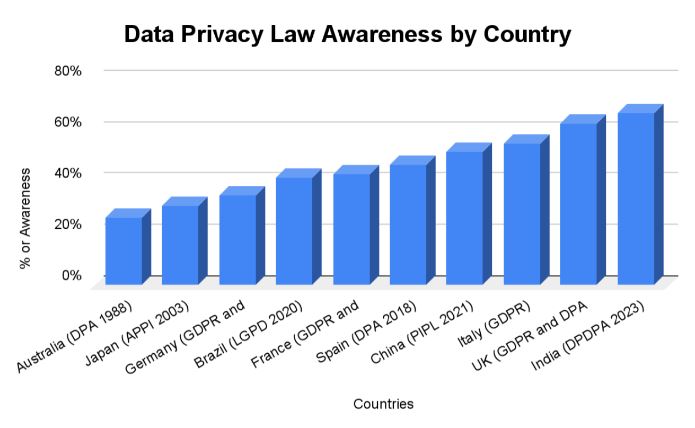
(Source: edgedelta.com)
- The latest comparable figure is that 53% of global internet users were aware of their country’s data privacy laws in 2025, up from 46% in 2023.
- India’s Digital Personal Data Protection Act, 2023 remains the country’s core digital-data privacy law. In November 2025, India notified the Digital Personal Data Protection Rules, 2025.
- Australia’s principal federal law remains the Privacy Act 1988. In 2025, reforms introduced a statutory tort for serious invasions of privacy, effective 10 June 2025.
Insider Breach And Human Error
- It is estimated that human errors account for approximately 60% of all security threats caused by data misuse, poor password choice, misconfiguration, and susceptibility to social engineering.
- Misdelivery takes up an important part, as 45% of such cases involve data delivery to the wrong recipient and many workers claim to be distracted at the moment when clicking phishing links.
- 75% of insider threats are not malicious, and approximately 55% are caused by careless or mistakenly acting employees who use company resources, while about 20% of worker users were attacked because of outside attacker exploitation.
- 48% of companies report an increased number of insider threats in 2026. The yearly cost of insider threats exceeds USD 17 billion for most companies. 95% of all data breaches within cybersecurity area are caused by human errors, which include social engineering and other human mistakes.
- Malicious insider data breach costs on average USD 4.9 billion per incident. 93% of security specialists claim that insider threats are harder to detect than external threats.
Number of Data Breaches by Industry
(Reference: secureframe.com)
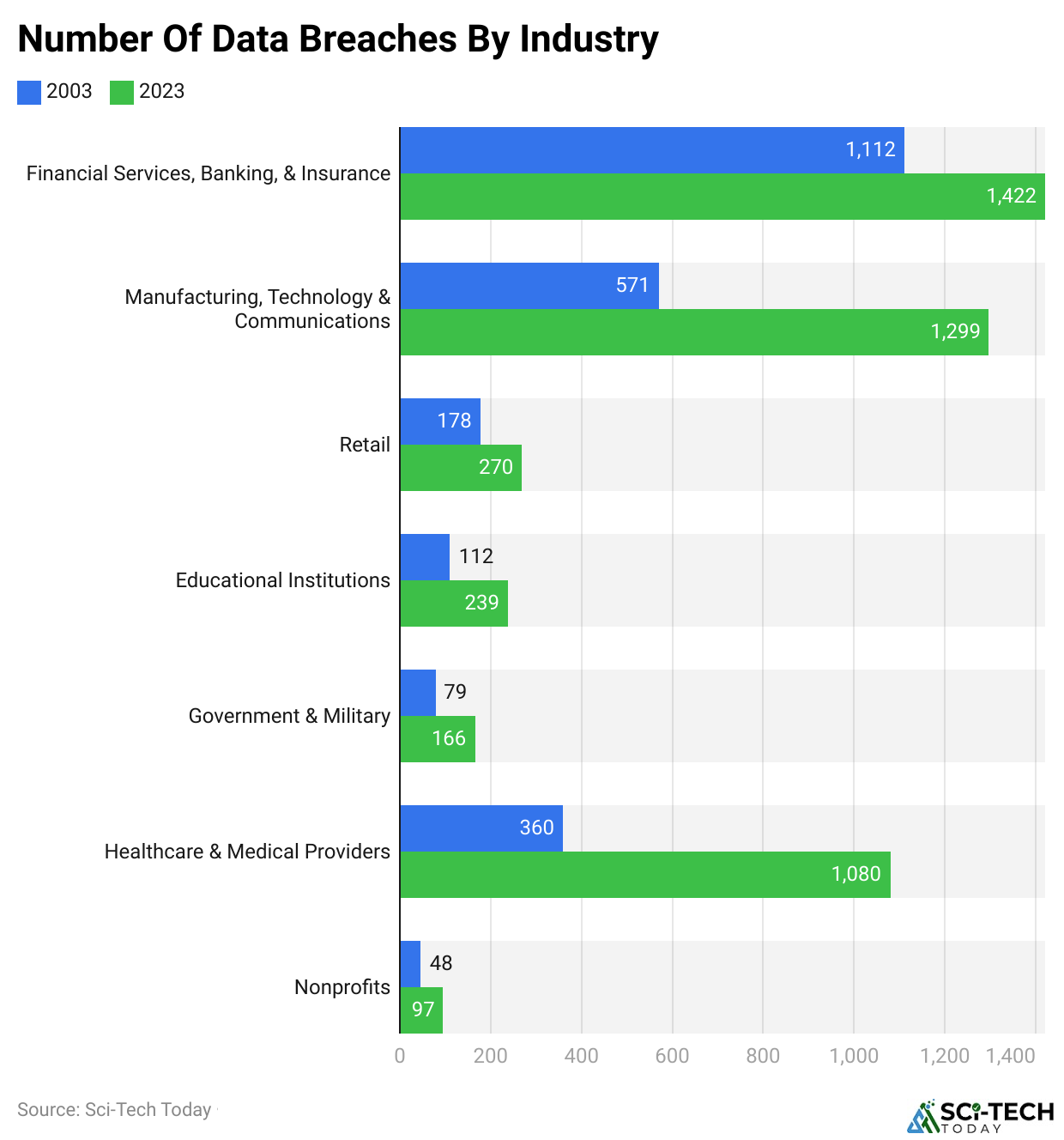
- Healthcare: Over the past few decades, the healthcare industry has been a major target for hackers, with approximately 080 incidents occurring. This, however, is not surprising given the black market for medical records, as they are very lucrative. The consequences of such breaches include sensitive patient information, which raises a lot of privacy issues and regulatory compliance measures.
- Financial Services, Banking & Insurance. Cyclically, about 1442 E-Crime incidents occur every day worldwide. It is also worth observing that every financial institution has attracted a very high degree of attention because high-value activities are undertaken in these institutions. If any breaches of security are made in this area, very humiliating costs and loss of reputation for the clients will be experienced.
- Manufacturing, Technology & Communication: Approximately 1299 instances. There has been an increase in breaches in the manufacturing sector, driven to some extent by the use of Internet of Things (IoT) devices, which can be an avenue for attackers without enhanced security measures.
- Education Institutions: Approximately 239 incidents. Management of students’ and staff’s personal information is a common practice in educational institutions, making them vulnerable to attacks aimed at bringing down processes and accessing sensitive information.
- Retail: 270 trends in global order and transaction’s reliability, existence of data breaches. Retailers have been victims of data breaches that have compromised customers’ payment information. One extreme case is the breach of Ticketmaster, which affected approximately 500 million individuals.
Data Breaches By Country
(Source: secureframe.com)
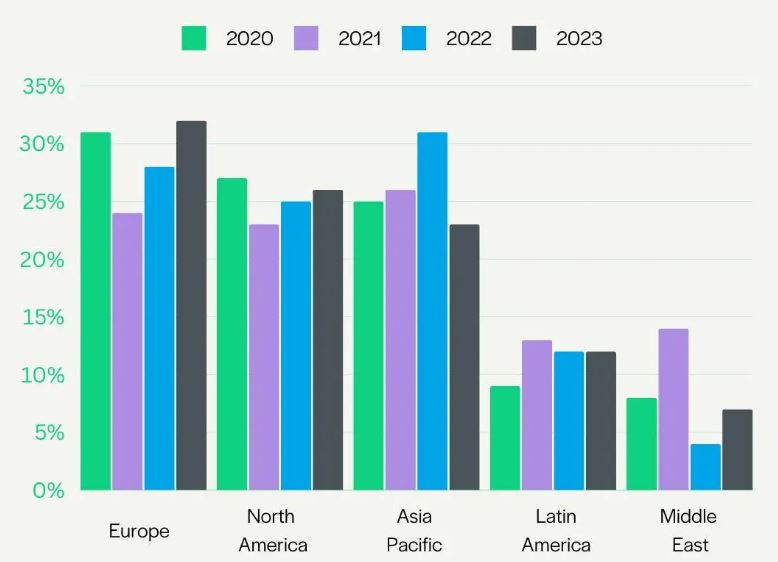
- Data breach statistics show that in 2025, breach impacts remained regionally uneven. However, directly comparable global regional breach-share and year-over-year growth figures for every region were not published, so the 25%, 33%, 22%, 12%, and 7% figures cannot be reliably refreshed.
- North America remained a primary target region. The United States had the world’s highest average data-breach cost, at USD 10.22 million per incident in 2025, versus a USD 4.44 million global average.
- The growth rate of data breaches in Europe increased by 33% due to the implementation of GDPR, which affects the way companies respond to breaches. When looked at regionally, the average cost of a data breach in Europe is USD 3.8 million.
- Across Asia-Pacific, Latin America, and the Middle East, reports point to growing exposure driven by digitization, ransomware, cloud adoption, and uneven disclosure requirements. The Middle East’s average breach cost was about USD 7.29 million in 2025, second only to the United States among reported regions.
- For context, total global cybercrime costs were projected at approximately USD 10.5 trillion in 2025, rather than a region-specific USD 1 trillion estimate for the United States.
- The incidents of Data Breaches in the Middle East region increased by 7%.
Financial and Reputational Impact of Data Breach on Business
- Data loss should not be viewed as an issue of simple accessibility – it is much more debilitating for businesses than that.
- It leads to financial loss, time wastage in excessive and tedious processes, and causes an interruption in processes, all of which include destroying relations, compromising sensitive information, freezing systems wrongfully sometimes, and many more that interfere with business.
- In 2025, the average total global cost of a data breach was USD 4.44 million, a 9% decline from 2024. This is not an average cyber-insurance premium; it incorporates costs such as detection, investigation, notification, legal response, remediation, downtime, and lost business.
- The lawyers also assist in dealing with any adverse consequences of the breach and any lawsuits that may arise.
- Detection and escalation including forensic investigation cost an average of USD 1.47 million per breach in 2025. A comparable standalone global forensic-services fee was not reported.
- Downtime remains a major contributor to losses. In critical infrastructure, outages can cost up to USD 125,000 per hour; applicable fines and private litigation can increase the impact substantially.
- The USD 5 billion FTC settlement with Facebook/Meta related to the Cambridge Analytica matter remains unchanged; it was agreed in 2019 and was still one of the largest U.S. privacy enforcement penalties as of 2025.
- Lost business covering lost revenue from system downtime, customer churn, and reputational damage declined 6% in 2025, but it remained a leading component of breach costs. The 2025 IBM report did not publish a directly comparable standalone USD 1.3 million figure.
- Because this type of damage may take a long time to heal, including long-term implications of data breaches, is quite expensive.
Final Thoughts
The facts about the data breach statistics in 2026 are indicative of the dire need for changes in the systems of security used by different sectors and geographical locations. The cost associated with these events is in the trillions, and hence the need for data protection has become imperative. In an era where, even the underground sector possesses highly developed technology for reaching their objectives, there is a need for the organization to adopt some security measures that would prevent the loss of confidential information or expensive losses.
FAQ
A data breach is a security incident where private, sensitive, or confidential information is accessed, stolen, or exposed without permission. It happens when digital or physical security fails, allowing unauthorized people to view or take data like passwords, money details, or personal records.
If your data has been breached, immediately change your passwords, turn on two-factor authentication, and monitor your financial accounts. Most users on Reddit agree that acting fast to secure your digital footprint and watch for suspicious activity is essential.
The largest single-company data breach in history is the Yahoo hack of 2013–2014, which compromised all 3 billion user accounts in existence. In terms of raw aggregated data compiled from various leaks rather than a single corporate hack, the “Mother of All Breaches” (MOAB) discovered in 2024 combined 26 billion records from past separate incidents.