









Introductory Section
Online Church Statistics: Online church is changing how people worship, connect, and practice their faith. Instead of visiting a physical church, people can now join services, prayers, Bible studies, and faith-based events online. This makes worship easier for people who live far away, have busy schedules, or cannot attend church in person. With livestreams, video calls, and online communities, believers can stay connected from almost anywhere.
At the same time, online church is not just about watching a service on a screen. It also creates new ways to meet others, share faith, and build a supportive community. As technology becomes an increasingly important part of daily life, online church continues to grow and reach more people.
Best Choice
- 300 million people are projected to watch church streams in 2026, up from 250 million in 2025.
- 75% of churches are expected to offer streaming services in 2026.
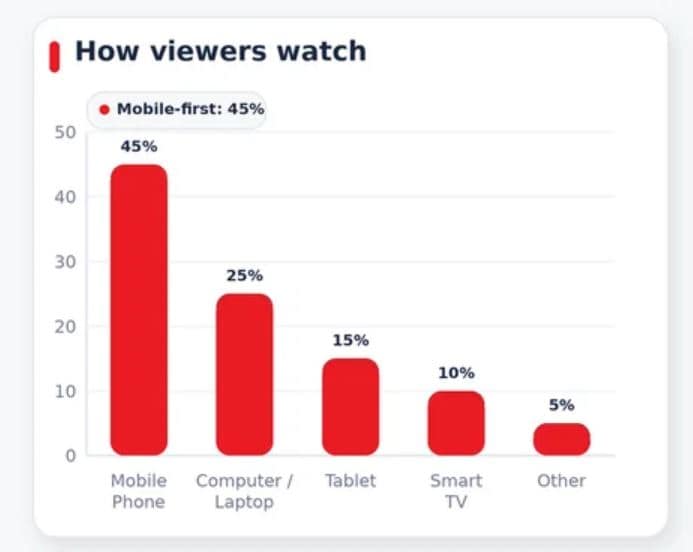
- 45% of church streaming happens on mobile phones, making smartphones the leading viewing device.
- 23% of U.S. adults watch religious services online or on TV at least once a month.
- 26% of U.S. churchgoers mainly worship virtually or alternate between online and in-person services.
- In 2025, 19% of total worship attendance came from online viewers.
- 64% of churches now offer online giving, up from 56%.
- 22.46% of donors are recurring donors, yet they generate 40.94% of total giving.
- Two-thirds of Bible users access Scripture digitally, with 62% preferring Bible apps.
- 89% of churches have a digital presence, highlighting the growing role of technology in modern worship.
Live Church Streaming Growth
(Source: vodlix.b-cdn.net)
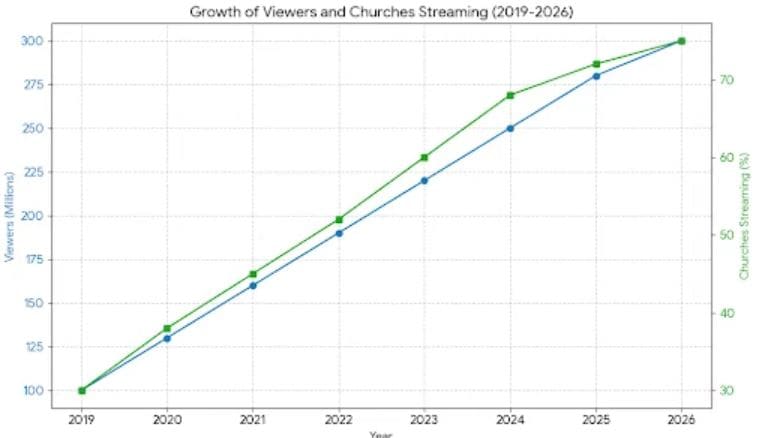
- An estimated 250 million people watched church streams in 2025, with 68% of churches offering streaming services.
- By 2026, viewers are projected to reach 300 million, while the share of streaming churches is expected to rise to 75%.
Viewer Trends and Growth Impact
(Source: vodlix.b-cdn.net)
- Mobile phones account for the largest share of viewing at 45%.
- Computers account for 25% of viewing, followed by tablets (15%), smart TVs (10%), and other devices (5%).
Church Digital Engagement Statistics
- Smartphone ownership is widespread, with 91% of Americans owning one and users checking their phones 144 times daily.
- Americans spend 57% of their smartphone time on apps, while Gen Z averages 9 hours a day on their phones.
- Half of highly religious Americans under 50 are heavy users of religious technology, showing strong digital engagement.
- Around 41% of church website visitors use mobile devices, while 30% of U.S. adults search online for religious information.
- Before visiting, 80% of people check a church website, and 48% of visitors become more likely to attend afterward.
- About 89% of churches have a digital presence, while 25 million Americans attend church services online.
Church Digital Platform Adoption
(Source: website-files.com)
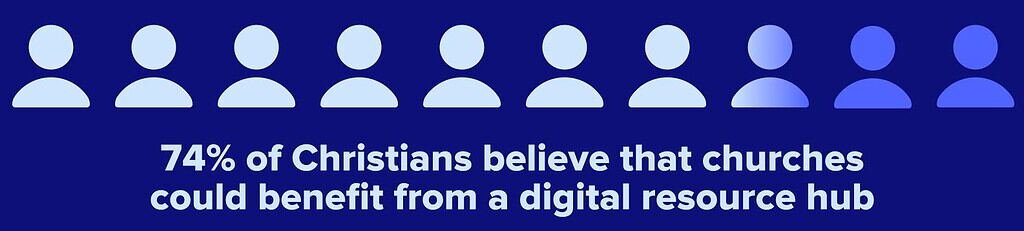
- About 74% of Christians believe churches could benefit from a centralized digital resource hub.
- However, 32% of churches report lacking effective digital tools to engage members and track participation.
- Unified for engaging brings together trend tracking, groups, events, and ministry content into a single system, improving coordination and decision-making.
- Churches using unified platforms report a 50% increase in media and sermon plays and a 15% increase in giving.
Online Church Statistics by Virtual Worship Trends
- According to the Pew Research Center, 23% of U.S. adults watched religious services online or on TV at least once a month.
- 16% watched weekly, while 7% watched once or twice a month.
- Another 11% participated online a few times a year, while 65% seldom or never watched religious services online or on TV.
- Overall, 40% attended religious services monthly in person, online, or both.
- This included 16% using both formats, 17% attending only in person, and 8% participating only online or on TV.
Hybrid Worship
- The EPIC study surveyed more than 24,000 U.S. churchgoers and found that 26% mainly worshiped virtually or alternated between online and in-person services.
- The research found that 7% routinely worshiped online, while 19% combined online and in-person participation.
- Only 48% of congregations tracked online attendance, and those that did reported a median of 25 online attendees.
Online Attendance
- According to Christian Standard, around 75% of surveyed churches reported online attendance figures in 2025.
- Among these churches, online viewers represented 19% of total worship attendance, down 5% from 2024.
- Online viewers accounted for 27% of worship attendance at megachurches, compared with 16% at small and very small churches.
- Across 380 churches, average weekend attendance reached 418,776 people through in-person and online participation.
Online Church Giving and Donation Trends
- A 2026 report by Givelify shows that 64% of churches offer giving through their websites, up from 56%.
- Meanwhile, 76% provide faith-based giving apps or websites, compared with 77% in 2023.
- Only 19% of donors rely entirely on traditional giving methods.
- Traditional channels accounted for 56% of church contributions in 2025.
- Dedicated giving apps and websites generated 21% of annual contributions.
- Digital giving increased by 57% among Protestant churches and accounted for 41% of donations where available.
- Church leaders expect overall giving to increase by 77% and consistent giving by 71% in 2026.
- Donors expect to give the same amount at 56% or more, and at 39%.
- According to Nucleus. church, from USD 832,168,240 in online donations, the average gift was USD 215; credit cards averaged USD 152, while ACH averaged USD 261.
- Recurring donors made up 22.46% of donors but generated 40.94% of giving, with monthly donors contributing 51.77% of recurring giving value.
Online Church Statistics By Virtual Giving
(Reference: enterpriseappstoday.com)
- Online church statistics show that Virtual church services are seen as the most popular across age groups between 18 and 34, where young African American adults dominate the population by almost 22%.
- On online church donations, 51% of working Catholics donate between two and eleven times annually, while 80% donate weekly to religious organizations.
- Most online giving is done via debit cards: 49% used them; cash – 40%; checks- 7%; and the rest is made up by other means.
- In the United States, 61% of younger generations say they do not give much to churches. Meanwhile, 80% of Americans donate only 2% of their income through online donations.
Church Giving Timing and Frequency Trends
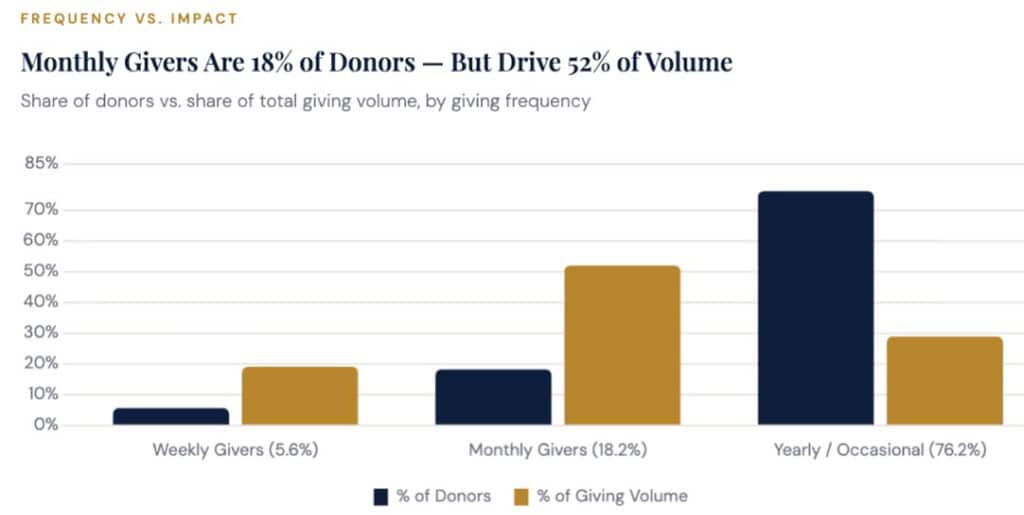
(Source: fellowshipdevelopment.com)
- 5.60% of givers donate weekly, but they contribute 19.07% of total giving volume, showing that frequent donors have a strong financial impact.
- 18.20% of givers donate monthly and account for 52.02% of total giving volume, making monthly donors the largest contributor.
- Although 76.21% of givers donate yearly or intermittently, they account for only 28.91% of total giving.
- Sunday remains the most popular giving day, representing 26.27% of weekly giving volume. However, more than 70% of giving happens outside Sunday.
- Saturday is the least popular giving day, accounting for just 9.49% of weekly giving.
- December generates the highest share of annual giving at 13.79%, while January records the lowest at 6.98%.
- Among 37,000+ churches, 38.74% of gifts arrive on Sunday, with nearly one-third of the total giving value also received that day.
- Weekly giving declined from 49% in 2015 to 39% in 2025.
Bible Engagement and Digital Use
- More than 80% of people attending church both online and in person regularly read the Bible, compared with 66% of those attending mainly in person.
- Bible engagement reaches 41% among Millennials and 36% among Gen Z, while Millennials recorded a 9% increase from 2024 to 2025.
- About 51% of Bible users want to read Scripture more often, while 25% of religiously unaffiliated adults (“Nones”) are curious about the Bible or Jesus.
- Overall Bible use has risen, with 10 million more U.S. adults reading Scripture outside church.
- Two-thirds of Bible users access Scripture digitally, and 62% prefer Bible apps. Among Gen Z digital users, 59% use Bible apps.
- Overall, 56% of Americans are curious about Jesus or the Bible, while 21% use religious apps or websites, 15% listen to religion-focused podcasts, and 14% use digital tools for prayer.
- The Bible remains personally relevant to 51% of Americans, compared with 37% in other “Secular West” countries.
Online Church Statistics By Reasons
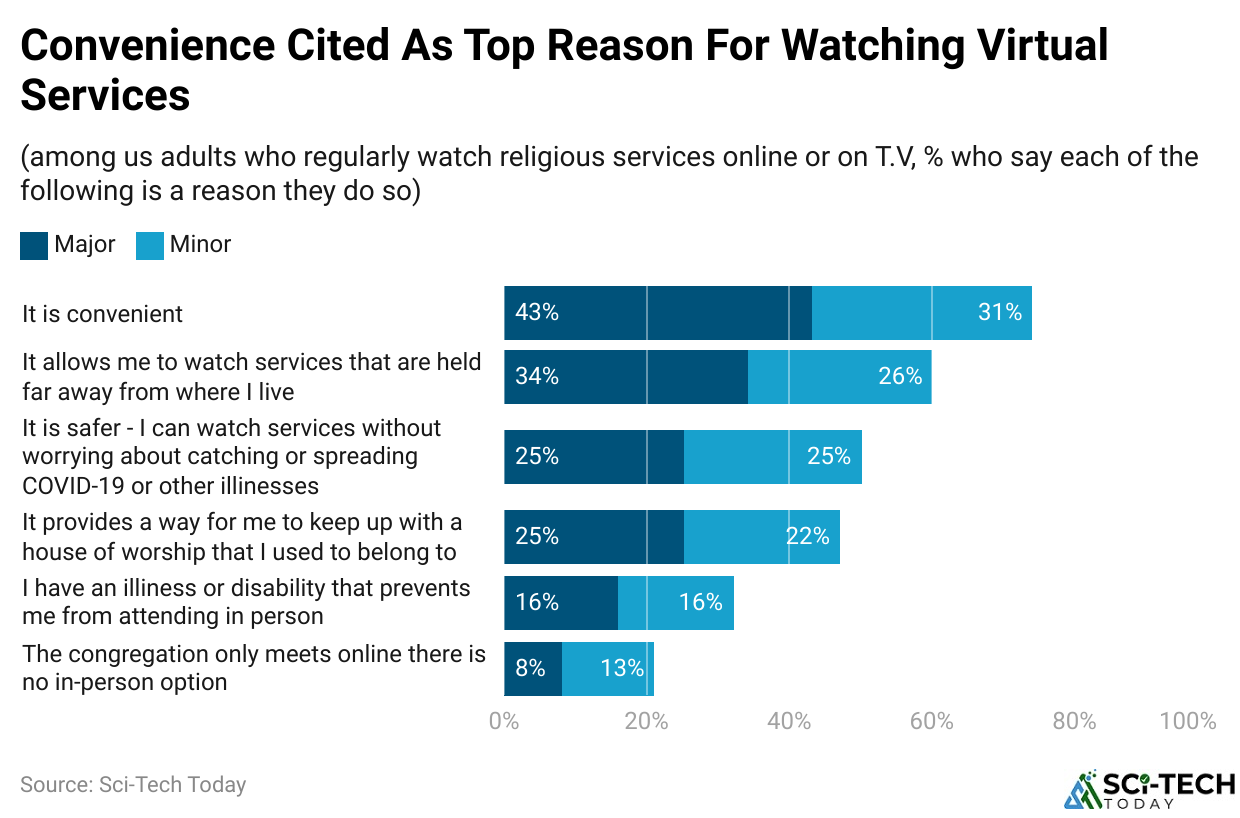
(Reference: pewresearch.org)
- Watching services held far from home influences 34% of major viewers and 26% of minor viewers.
- Safety concerns motivate 25% of viewers in both groups.
- Staying connected with a former place of worship matters to 25% of major viewers and 22% of minor viewers.
- Disability affects 16% of both groups.
- Limited in-person options influence 8% of major viewers and 13% of minor viewers.
- Overall, 74% of viewers say the number is a combination of strong and slight convenience, while 60% cite the ability to watch services from farther venues as a reason.
- Nearly half (49%) of the virtual viewers would even consider personal safety to be a reason for wanting to use online services, and 48% would say they do so just to still be connected to the congregations they once attended.
- For example, when it is asked about some Americans going to physical services less than before the pandemic, the main reasons that people can give are two.
- One in five U.S. adults says they go to religious services less often, with 21% looking for other ways to engage spiritually and an identical figure saying they still keep away because of concern about COVID.
Online Church Streaming Market Statistics
- 75% of churches are expected to stream services in 2026, according to an Apollos projection.
- The same forecast estimates 300 million global viewers, up from 250 million in 2025, representing projected 20% YoY growth.
- In the U.S., 27% of adults regularly watched religious services online or on TV, based on Pew Research Center data collected in November 2022.
- Of this audience, 10% worshiped exclusively through virtual or TV services, while 17% combined online and in-person worship.
- About two-thirds of regular online/TV worship viewers said they were extremely or very satisfied. The Pew survey included 11,000+ U.S. adults.
- 62% of U.S. adults identified as Christian in Pew’s 2023-24 Religious Landscape Study.
- 33% of U.S. adults attended religious services at least monthly, providing a useful benchmark for the potential hybrid-worship audience.
Closing Remarks
Online churches have made worship easier and more accessible for people around the world. They allow people to join services, listen to sermons, pray, and stay connected with their faith from home. Although online worship cannot fully replace the personal connection of attending church in person, it offers a useful option for those who cannot attend in person. As technology grows, online churches will continue to support faith communities and help more people stay connected.
FAQ
An online church streams worship services, sermons, prayer, and Bible studies, allowing people to participate and connect online.
Yes, many online churches offer free services, sermons, Bible studies, and worship sessions for everyone.
Yes, many online churches accept digital offerings, with 70%+ providing secure online donation options.


