








Introduction
Antivirus Statistics: In the year 2025, the situation with antivirus software is quite different from what it used to be in the past: it has turned into one of the main tools in an area of protection that is getting wider and wider, where not only the AI but also the cloud workloads, remote endpoints and industrial control systems are fighting for being protected. The raw numbers indicate a huge increase in the creation of malware, huge dollar investments in endpoint and detection platforms throughout the market, and large financial losses due to cybercrime that are still much greater than those of any single industry.
Here, we will present the main antivirus statistics for 2026, discuss their implications for organizations and consumers, and reference research-supported trends that are currently influencing how antivirus software operates.
Editor’s Choice
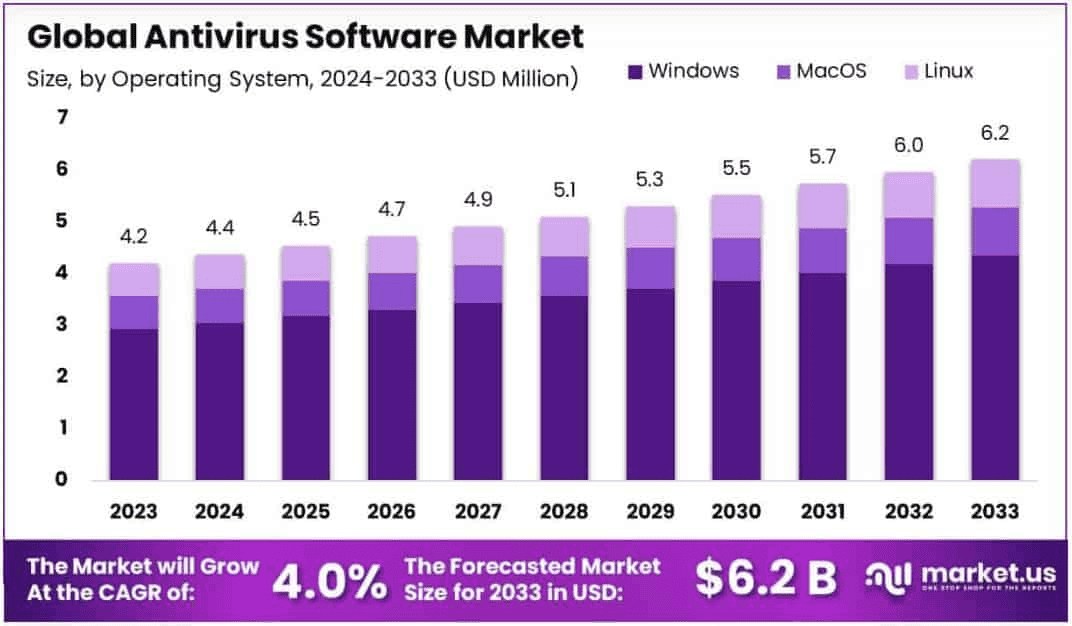
- The global market for antivirus software is estimated to grow from US$4.2M in 2023 to US$6.2M in 2033 at the rate of 4% per year.
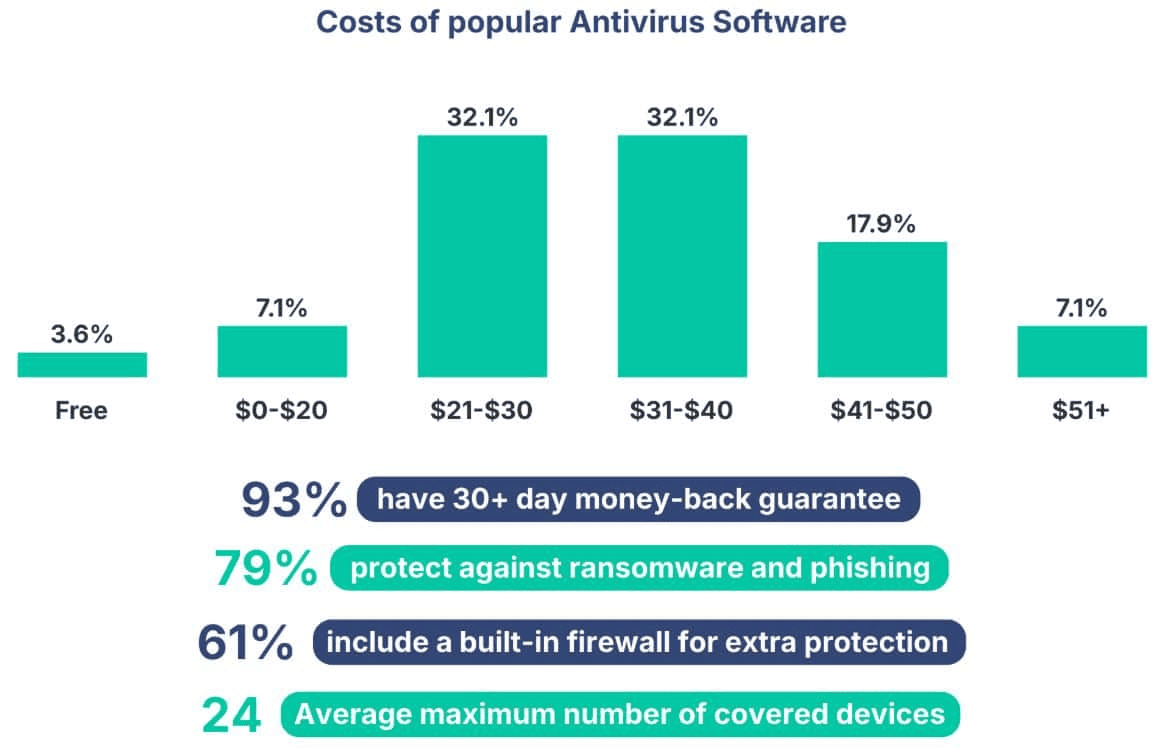
- Approximately 64% of all paid antivirus products are priced between US$21 and US$40 per year, while only 3.6% of them are free of cost.
- 93% of the selected antivirus products provide a money-back guarantee of 30 days duration.
- 79% of the most prominent antivirus applications protect against ransomware/phishing, whereas 61% include firewalls.
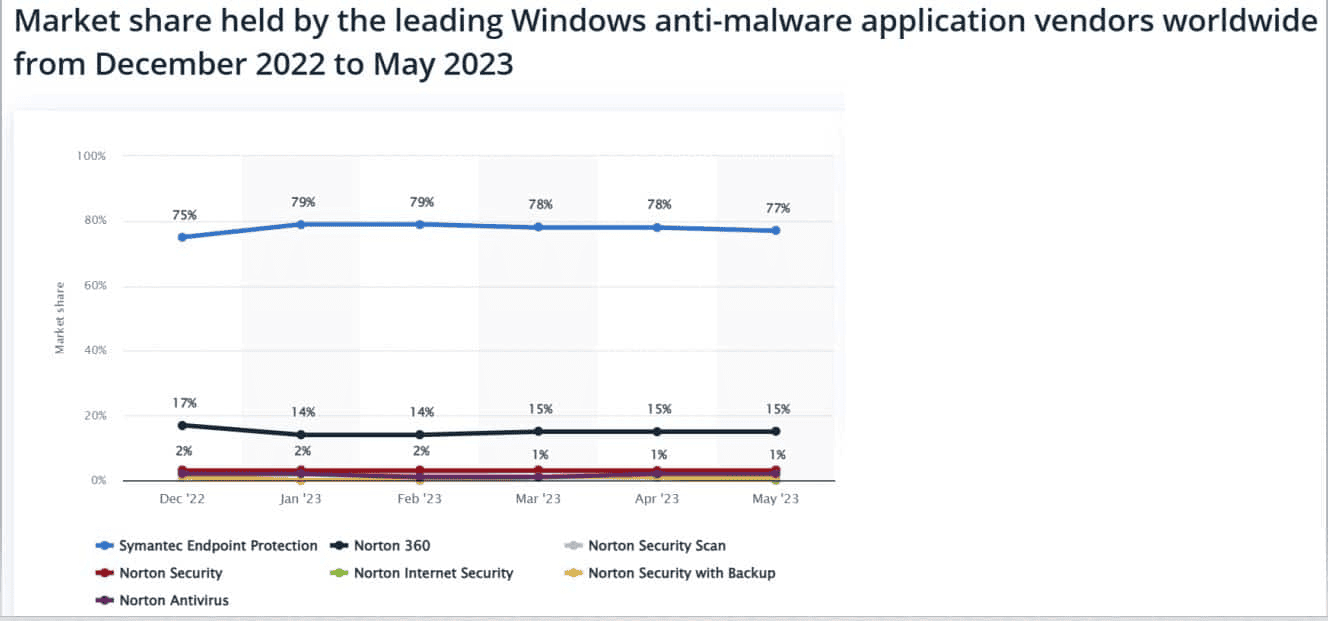
- Symantec is the leading company, having 77% of the Windows anti-malware market share, while Norton 360 comes next with a share of 15% (data from 2023).
- Total malware has been reduced from 10.5B in 2018 to 5.5B in 2022; however, the level of malware is still very high.
- Windows is the target of 83.45% of new malware that is being created (first quarter of 2020).
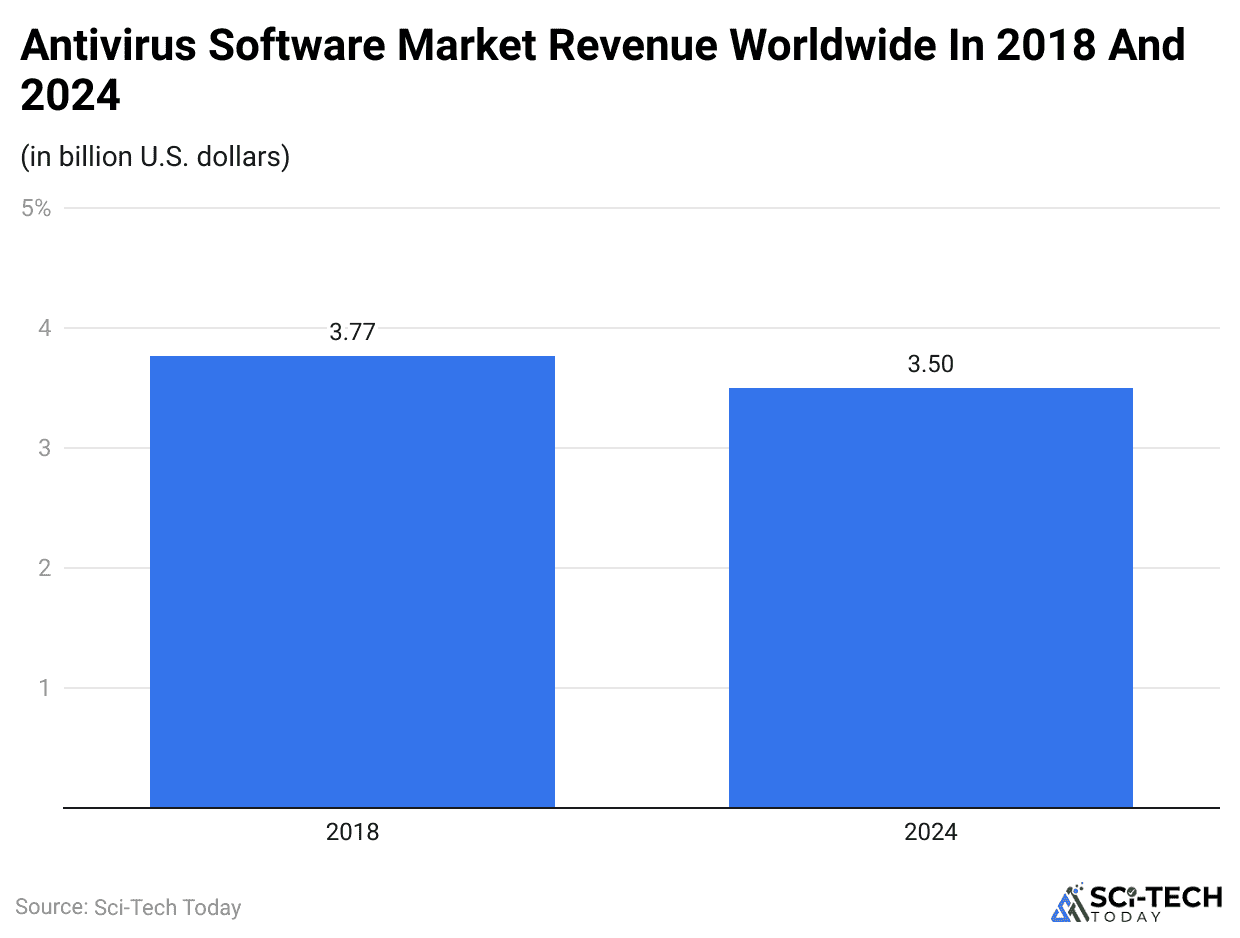
- The revenues from the standalone antivirus market have gone down to US$3.5B in 2024, which is a decrease of US$270M since 2018.
- 42% of PC users are in favour of using third-party antivirus while the percentage is only 32% for Mac users.
- The top antivirus programs are able to deliver 99–100% detection rates along with very few false positives in the tests conducted in 2025.
- Every day, around half a million new malware strains are created, and the total number of malware samples existing worldwide is over a billion.
- 93% of the ransomware attacks that target enterprises are on Windows systems.
- The users’ preferences: 27% prefer free antivirus; the majority of 73% are opting for the paid version.
- The paid antivirus software costs US$30–US$60 per year, and along with it, the user is entitled to advanced features; on the other hand, free antivirus software sometimes makes money through selling the data of users.
- In the enterprise antivirus market, the valuation was US$5 billion in 2024, and the hike is projected to be up to US$9 billion by 2033.
- The zero-trust security market is anticipated to be worth US$38.37 billion in 2025.
- China accounts for 47% of infected PCs, and Iran has a 30.3% mobile infection rate.
- Microsoft is planning to overhaul Windows and remove AV/EDR from the kernel after the CrowdStrike incident that impacted 8.5 million devices (2024).
- Gen Digital (Avast) foresees its revenue to be in the range of US$4.70–US$4.80 billion by 2026.
- The use of AI in malware creation can result in an increase of 15.9% in the avoidance of detection.
- More than 523 malicious SVG files were detected in phishing campaigns; 44 of them were unseen by any antivirus program.
Global Antivirus Software Market
(Source: market.us)
- The above information hints that the global antivirus market is expected to experience a gradual yet steady growth trend during the next decade.
- For instance, in 2023, the market was already valued at USD 4.2 million, and it is anticipated to rise to USD 6.2 million by 2033.
- The rate of this growth is termed the compound annual growth rate (CAGR) of 4.0%.
- A 4% CAGR merely indicates that the rise in demand for antivirus solutions is not fast but stable.
- The increased demand is attributed to the building up of awareness about cybersecurity, the increase in digital activities, and the necessity of having a protective cover around personal, business, and cloud areas.
- The market will not be the next big thing, but it will, in a sure way, be the one to count on each year, adding the very projected amount of USD 6.2 million as the total by 2033.
Cost of Popular Antivirus Software
(Source: allaboutcookies.org)
- The best antivirus software prices are pretty similar. About 64% of the most prominent antivirus software programs are in the annual price range of US$21-US$40, while 25% are more expensive than that.
- Just a tiny fraction, around 11%, of antivirus software is available for under US$20 per year, and even fewer (3.6%) are completely offered for free.
- However, even if some tools are quite costly, real protection is given as the main reason for their necessity.
- For the most part, companies are giving great guarantees for their products—93% of the top antivirus programs have at least a 30-day money-back guarantee, which is great, as users can try the service without any financial risk if they want.
- Besides this, all the anti-virus products reviewed, which are given in the list of best ones, allow covering many devices with one subscription.
- On average, one plan secures approximately 24 devices, which can be the case for a family, small business, or simply for a user who has many gadgets.
- Many programs besides basic virus protection also have security features, such as: 79% of leading antivirus tools offer protection from ransomware and phishing attacks, while 61% have a built-in firewall.
- In total, this indicates that the majority of first-class antivirus software does have broad device coverage, strong feature sets, and consumer-friendly guarantees as a combination.
Market Share Held By The Leading Windows Anti-Malware Application Vendors
(Source: statista.com)
- The dominance of Symantec in the Windows anti-malware market in May 2023 is shown by the figure of 77% of all installations, which is a lot higher than the second-best provider.
- Norton 360 was the second best with 15% market share, and the two brands have always been connected as Symantec sold its Enterprise Security division to Broadcom in 2019 and rebranded the remaining part of the company dealing with consumers as NortonLifeLock.
- After that, malware threats are described. Malware is defined as any malicious software that is designed to interfere with the proper functioning of a device, take, and/or corrupt data, display pop-ups, or even give the attacker access to the device.
- The number of malware attacks has gone down significantly, from 10.5 billion in 2018 to 5.5 billion in 2022, but even the latter number is incredibly high.
- A Trojan horse is one of the most widely used tactics for infection, where the user is tricked into installing malware that masquerades as safe or useful software.
- The Windows ecosystem remains a primary target for malware authors as it accounts for the majority of the global PC market.
- In the first quarter of 2020, a staggering 83.45% of all newly discovered malware was developed to compromise Windows machines.
- This does not imply that Mac users are invulnerable; macOS has its share of threats, and there are malware families such as Flashback, Macontrol, and Shlayer that are explicitly created to target Apple devices.
Antivirus Software Market Revenue
(Reference: coolest-gadgets.com)
- The global market for antivirus software has contracted instead of expanding.
- According to Statista, the total value of the market is expected to be around USD 3.5 billion in 2024, which is a significant drop compared to 2018.
- The reduction of USD 270 million clearly indicates how much revenue has decreased over the years.
- This downward trend is probably because people and businesses have changed their buying habits regarding security tools.
- Many users nowadays have shifted from relying solely on the traditional standalone antivirus products to using a combination of security platforms, built-in operating-system protections, and advanced endpoint security systems.
- This all leads to declining revenues, being the case as traditional antivirus software continues to lose market share.
Antivirus By Device
(Reference: sqmagazine.co.uk)
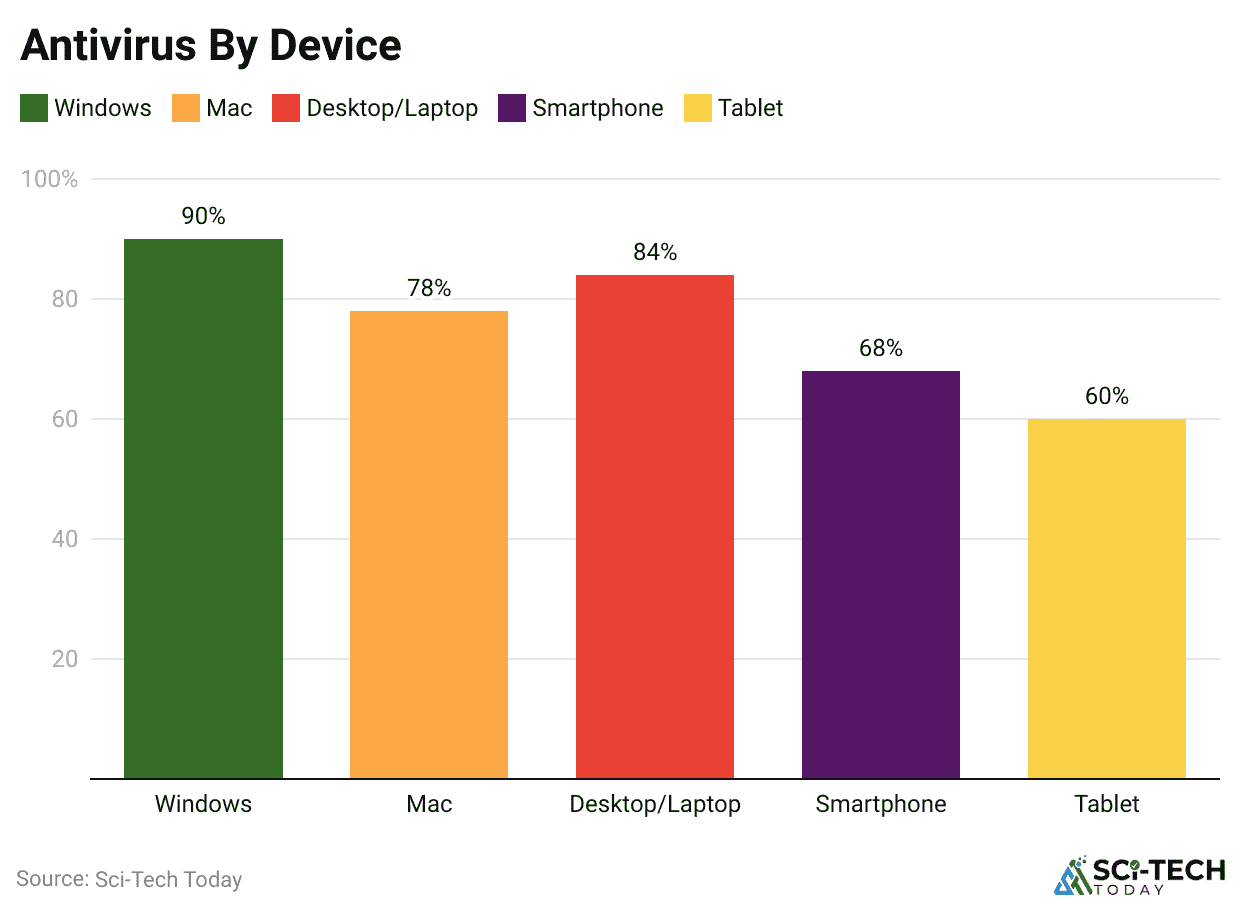
- The statistics provide evidence of the extensive standalone antivirus software protection in various devices.
- The fact that around 90% of Windows users have an antivirus installed indicates not only the demand for Windows but also the surrounding risk.
- The antivirus presence on macOS is less—approximately 78% of users are infected—partially because Apple’s built-in security features attract users.
- The survey shows that 84% of desktop and laptop owners have installed some sort of antivirus software; the numbers for smartphones and tablets are, respectively, 68% and 60%.
- Such a trend suggests that while mobile devices are becoming more and more targeted by malware, they are still the least protected among computers and notebooks.
- Out of the desktop users who have antivirus software, 42% deliberately opt for third-party software instead of using the built-in protection of the operating system.
- For Mac users, only 32% pick an independent antivirus solution; the majority of users remain under the protection of Apple’s built-in security features.
- In mid-2025, testing revealed that 14 Android security apps were put through an evaluation process in terms of performance, malware detection, and the switch to ARM-based Windows devices is becoming more of a trend, thus prompting the antivirus vendors to make their products work on low-power, efficient hardware.
Detection And Effectiveness Rates
- The latest performance data from antivirus evaluation confirms that the top products are still performing at the highest levels of detection.
- In July 2025, Android tests showed that some antivirus apps were very successful in detecting threats and had very few innocent files wrongly classified as threats, which means they correctly identified the dangers without incorrectly marking the safe ones.
- In AV-Comparatives’ real-world tests from Feb–Mar 2025, a total of 212 live threat cases were used to evaluate the products, and this provided a very realistic measure of effectiveness.
- Some of the major antivirus solutions, like Microsoft Defender and Norton, even got perfect 100% scores across all the categories—protection, performance, and usability.
- In many malware detection tests, leading antivirus products have a consistent performance of scoring above 99%, with some reaching over 99.95% detection while creating almost no false alarms (less than 0.01% of harmless files flagged).
- However, on mobile devices and IoT systems, the detection rates might be slightly lower as the attackers are using new techniques and obfuscation methods that are harder to detect.
- Moreover, the advanced adversarial malware can also increase its ability to stealthily bypass detection by approximately 15.9%, which is the case even for the top-performing engines.
- Nonetheless, the cross-platform antivirus suites generally yield extremely strong results, as the combined detection rates of Windows, macOS, and mobile have been almost 99.5% in most laboratory evaluations.
Antivirus Market Share By Windows
(Reference: sqmagazine.co.uk)
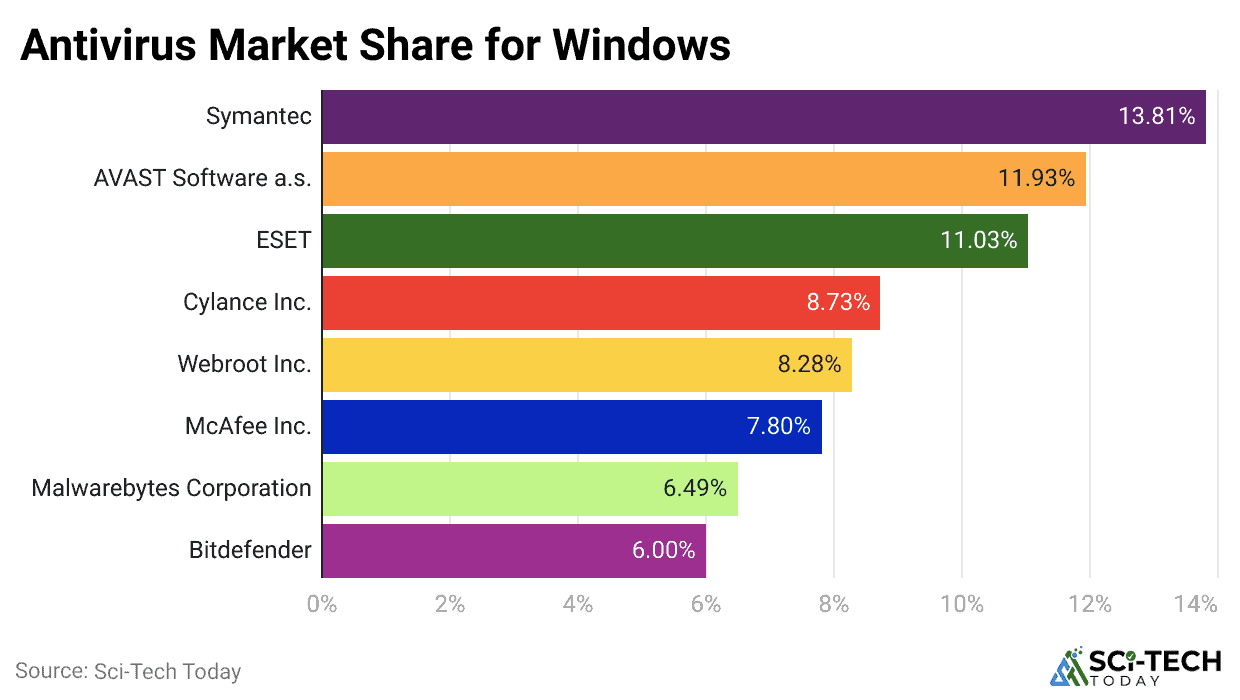
- The data provides insight into the distribution of the Windows antivirus market among the leading vendors.
- Symantec, with 13.81%, is the largest player in the Windows antivirus market and is the only one that surpasses the others.
- The second position belongs to AVAST with a share of 11.93%, which is interpreted as the strong user acceptance of the brand.
- Category three is ESET with its 11.03% market share, which indicates the brand continues to be one of the most reliable security providers.
- Cylance has bagged an impressive 8.73% market share—considering it is an AI-driven malware prevention-focused company—suggesting its gradual uptake has been steady.
- Next in line is Webroot with 8.28%, and McAfee, which was a synonym of antivirus a few years back, now owns a 7.8% share, showing a drop in market share compared to previous periods.
- Malwarebytes, with 6.49%, is taking advantage of its excellent reputation for malware removal and mild protection.
- Bitdefender is the last player on the list with 6%, still a strong position given its popularity, the high detection rates, and low system impact.
- The market is diverse, with no single vendor prevailing, while a host of brands keep substantial shares in the Windows antivirus sector.
Malware And Ransomware Trends
- Such figures depict the rapid transition of the cyber-threat landscape. More than 1 billion malware samples are held in the global database, which are infected daily with more than 560,000 new malware variants.
- Ransomware still targets Windows, as approximately 93% of enterprise ransomware attacks are directed at Windows systems.
- Supply chain attacks are the most common type of attack, where the vendors or software providers are being hacked, and the number of companies that will fall victim to this attack type is expected to rise to 45% by 2025, a considerable increase of 300% since 2021.
- The majority of the newly developed strains tend to utilise fileless techniques, work solely in memory, or apply steganography for the purpose of hiding malicious code, which in turn results in making the traditional antivirus tools incapable of being effective.
- Ransom demands differ a lot, but oftentimes they are in the range of US$50,000 and US$200,000 for the whole incident in the period of 2024-2025.
- Not only this, but the malware designed for mobile phones is also on the increase, particularly in areas where people mainly use smartphones to access the internet.
- There is a trend of developing multi-stage malware as well, where a dropper first deposits the primary harmful payload.
- Antivirus vendors have to do this because they rely on cloud-sharing networks that distribute new threat signatures within minutes of discovering a sample.
Mobile Antivirus Statistics
- The use of mobile antivirus software has not changed that much and still remains on the low side.
- In 2024, just 17% of U.S. adults stated they had mobile antivirus software on their smartphones, despite the increasing number of mobile threats.
- Based on the platform usage, approximately 27% of users make use of free antivirus options, while 73% prefer buying the premium ones.
- The AV-Comparatives Mobile Security Review 2025 reviewed both native and third-party security apps for their ability to detect accurately, battery impact, and usability.
- The most notable aspects of mobile security applications include anti-phishing protection, web filtering, SMS scanning, and app privacy controls, to mention a few.
- In July 2025, fourteen Android security apps were examined under the default settings, which resulted in a very diverse range of detection powers.
- A few of the apps could determine more than 99% of known malware, while others encountered more difficulties with zero-day threats.
- The occurrence of false positives is lower on mobile devices compared to desktops, but still, there are some safe applications that get wrongly marked as dangerous.
- To cut down on battery consumption or performance issues, users turn off mobile antivirus programs; thus, providers are compelled to combine standard features with those of protecting from viruses by introducing VPNs, safe browsing tools, and identity protection, to enable the users of mobile security suites to realize their full value.
Free Vs Paid Antivirus Programs
- It has been estimated that about 27% of users relying on third-party antivirus tools go for free solutions, whereas the majority 73% prefer the paid version.
- Generally speaking, free antivirus programs come with the most basic protections, which consist of basic malware scanning and simple firewall features, and usually do not include advanced capabilities like behavioural analysis, sandboxing, and zero-day defense layers, etc.
- Paid users get to enjoy more features such as priority support, more frequent updates, and better cloud-based detection technologies.
- In regions with high cost sensitivity or among users who require minimal protection, free antivirus tools tend to be the most common.
- On the contrary, paid suites have strong renewal rates—typically over 60%—since they package extra services such as VPNs, password managers, and backup utilities along with their annual subscriptions.
- A lot of vendors today have adopted the freemium strategy, where they give free basic protection while charging for premium upgrades.
- Generally, the evaluations of the enterprise start with the free versions but ultimately become the paid ones when the extended features are required.
- In some cases, free tools may not perform as well as their paid counterparts in terms of finding new threats as a result of slower update cycles or limited access to the cloud.
- The cost of home antivirus software every year is usually about US$30–US$60, depending on how many devices are to be covered.
- Since some of the free antivirus products make money by selling users’ data, individuals must weigh the pros and cons of possible privacy issues against cost savings.
Trends of Enterprise Antivirus Adoption
- The market of enterprise antivirus and endpoint security is keeping up with its strong long-term growth.
- The industry is estimating the revenue from enterprise antivirus to be around US$5.0 billion in 2024, while the projections are for reaching US$9.0 billion by 2033.
- Numerous enterprises have been shifting to security models based on zero-trust, in which protection tools for endpoints are at the center; the zero-trust market alone is predicted to be around US$38.37 billion in 2025.
- Nearly 45% of the organizations foresee encountering a software supply chain attack by 2025, which will lead to increased investment in enterprise-grade antivirus and endpoint protection.
- The companies are increasingly migrating to the solution that combines EDR, XDR, or SIEM rather than relying solely on traditional standalone antivirus tools.
- Cloud-native endpoint protection is coming up as the most preferred solution as it offers centralized management and fast updates across various locations.
- Some of the suppliers are now offering antivirus licenses on the basis of endpoint instances (like agents or microservices) rather than merely considering the number of physical devices.
- Typically, large corporations enter into multi-year contracts to guarantee stable prices and constant assistance.
- In industries under strict regulation—like healthcare, finance, and critical infrastructure—antivirus is almost universally deployed because of compliance standards such as HIPAA and PCI DSS.
- Even though some big firms are working on in-house detection and threat-hunting tools, they still heavily rely on commercial antivirus as the core of their security strategy.
Regional Antivirus Statistics
- China has a very high computer infection rate of about 47%, which incidentally points to the regional security problem. Iran’s mobile malware infections are the worst in the world, as nearly 30.3% of all smartphones there already have it.
- During the first quarter of 2025, Kaspersky solutions blocked more than 629 million online attacks and detected over 88 million unique malicious URLs via its Web Anti-Virus product.
- North America will probably account for around 48.3% of the total antivirus market worldwide, which means it is the biggest regional contributor.
- Europe has a continuous growth trend backed by the enforcement of strict regulatory frameworks like GDPR and NIS2, which in turn facilitate the adoption of stronger cybersecurity practices.
- The Asia-Pacific region is experiencing a rapid expansion driven by the factors of digital transformation, IoT acceptance, and increased cyber awareness.
- On the other hand, antivirus use in Latin America, the Middle East, and Africa is slowly but surely increasing due to awareness campaigns and the introduction of cost-effective per-device pricing.
Distribution of Mobile Malware Statistics By Types
(Reference: coolest-gadgets.com)
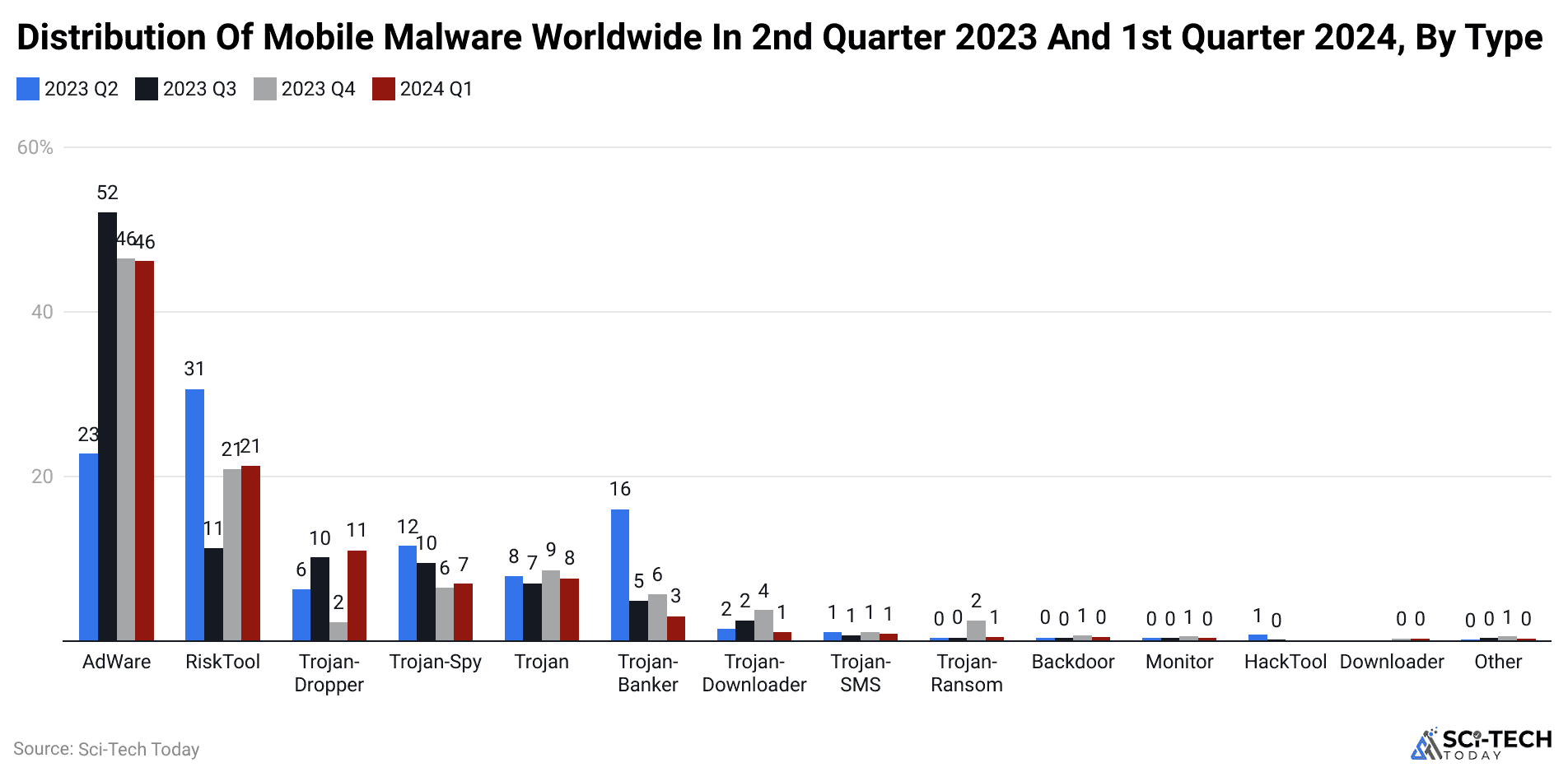
- At the beginning of 2024, AdWare was still the most widely spread mobile malware type, and it was responsible for a little bit more than 46% of all global detections, although this was a small drop from the previous number.
- During the period in question, other mobile threats accounted for a significant portion of the total cases as well.
- RiskTool apps represented a bit more than 21%, while Trojan-Dropper malware accounted for approximately 11%.
- Classic Trojans represented nearly 7.6%, and Trojan-Spy variants accounted for roughly 7%. Banking Trojans were detected in about 3% of the cases.
- Trojan-Downloader was the smallest category with slightly over 1%, followed by Trojan-SMS with less than 1% and ransomware-based Trojans with around 0.5%.
- Backdoor infections were slightly lower at around 0.48%. Among the very rare categories that together comprised less than 1% of global mobile malware detections in the first quarter of 2024 were monitor tools and hack tools.
Reasons For Using Antivirus
- Antivirus software is, according to recent antivirus statistics, the main source of protection for online activities and devices for most users.
- It is stated that nearly 84% of the world’s population applies third-party antivirus tools as their major defense against malware, viruses, and other cyber threats.
- Additionally, another 56% of users, mainly using antivirus solutions for general privacy protection, indicate there is a growing concern about data tracking, online monitoring, and identity theft.
- Next year, users will have a number of new reasons to switch to third-party antivirus software.
- Approximately 48% of people would like to have it for safety reasons when doing online shopping, where the risk of financial information being exposed is greater.
- On the other hand, 19% are convinced to use third-party tools even if their devices already have built-in security, revealing a wish for more sophisticated protection.
- Furthermore, 18% of users rely on antivirus software to surf the net while using public Wi-Fi, and 12% regard it as indispensable for their profession, especially if they work in security-sensitive areas.
- More and more users trust antivirus software to secure cryptocurrency exchanges (8%) and VOIP phone calls (3%), which is a reflection of changing digital risks.
Reasons For Not Using Antivirus
- Conversely, a great number of users refrain from using antivirus software for quite a few reasons.
- The latest antivirus statistics state that 45% of individuals not using antivirus software think that the software is too pricey.
- 40% of them go as far as to say that they do not need a third-party solution at all, probably because they have faith in the built-in protection of their devices.
- 28% of them claim that they do not care about viruses, which suggests that they may not be fully aware of the current cyber threats.
- The expiration of user subscriptions and no renewals, often due to cost or inconvenience, caused 17% of the users to stop using antivirus programs.
- On the other hand, a smaller but noteworthy section, 11%, are not trusting the antivirus programs and are concerned about them; hence, they think that such apps may collect their data or slow down their devices.
- The last 6% say that the reasons are the preference for manual monitoring or the use of other security methods, like relying on them.
Recent Developments
- Microsoft is planning an overhaul of Windows; thus, the antivirus and EDR tools have to operate outside the kernel, which protects the system from large-scale failures and vulnerabilities.
- The change was given more priority following the incident where a faulty CrowdStrike update in 2024 led to a shutdown of 8.5 million Windows systems.
- Also, that year, the U.S. government imposed a ban on the sale of Kaspersky antivirus products due to national security issues.
- Meanwhile, the parent company of Avast, Gen Digital, is optimistic about its revenue, which is expected to rise to the range of US$4.70-US$4.80 billion by 2026 as demand for cybersecurity grows.
- At the same time, is that the attackers are adopting AI in their malware more and more, which is why the antivirus companies have to change their methods and go for machine learning-based detections.
- Studies have revealed that if an adversarial malware generator is used, the antivirus can be fooled with a success rate of up to 16%, even the top ones.
- In addition, there is another type of threat that is on the rise, and it is phishing with the use of SVG files; out of the 523+ harmful SVGs detected, 44 were not recognized by any antivirus software at the time.
Conclusion
Antivirus Statistics: The antivirus landscape of 2025 indicates that conventional security apparatus has started to ride the wave of cyber threats, which are multiplying rapidly. The upward trend of malware, AI-based attacks, and ransomware prevalence has all been the triggers for the call for stronger, multi-layered defenses around the globe for all types of devices. While the standalone antivirus business is diminishing, integrated endpoint, cloud, and zero-trust solutions are becoming the new norm.
Consumers are still split between free and paid tools, but businesses keep pouring money into advanced detection technologies. The differences in infection rates between regions underline the importance of consciousness and availability. To sum up, antivirus is still a necessity—just one thing among others in a larger, always-morphing cybersecurity ecosystem.