









Where It All Begins
Bootcamp Statistics: When people talk about bootcamp statistics, it’s not just about random numbers floating around the internet. It’s about understanding the story those numbers tell. Over the last decade, coding bootcamps and other tech-focused training programs have transformed from niche experiments into a massive, global education model.
If you’ve ever asked yourself how many people enroll in bootcamps annually, how much they pay for their education, what are their placements rates and what skills are the most popular, you already have all this information here in this article. Such numbers will tell you everything you need to know regarding bootcamp statistics. Here you will be able to learn from what point the bootcamp industry started, how quickly it develops and what influence it has on salary and career opportunities. Consider this your comprehensive guide on everything you should know about bootcamps starting from its inception until modern trends, leaving out all unnecessary details. Let’s start.
Editor’s Recommended Picks
- Bootcamps took off around 2012 (Dev Bootcamp started the trend), then grew fast, hit quality and regulatory growing pains, and now only the outcome-driven ones with audited data are thriving.
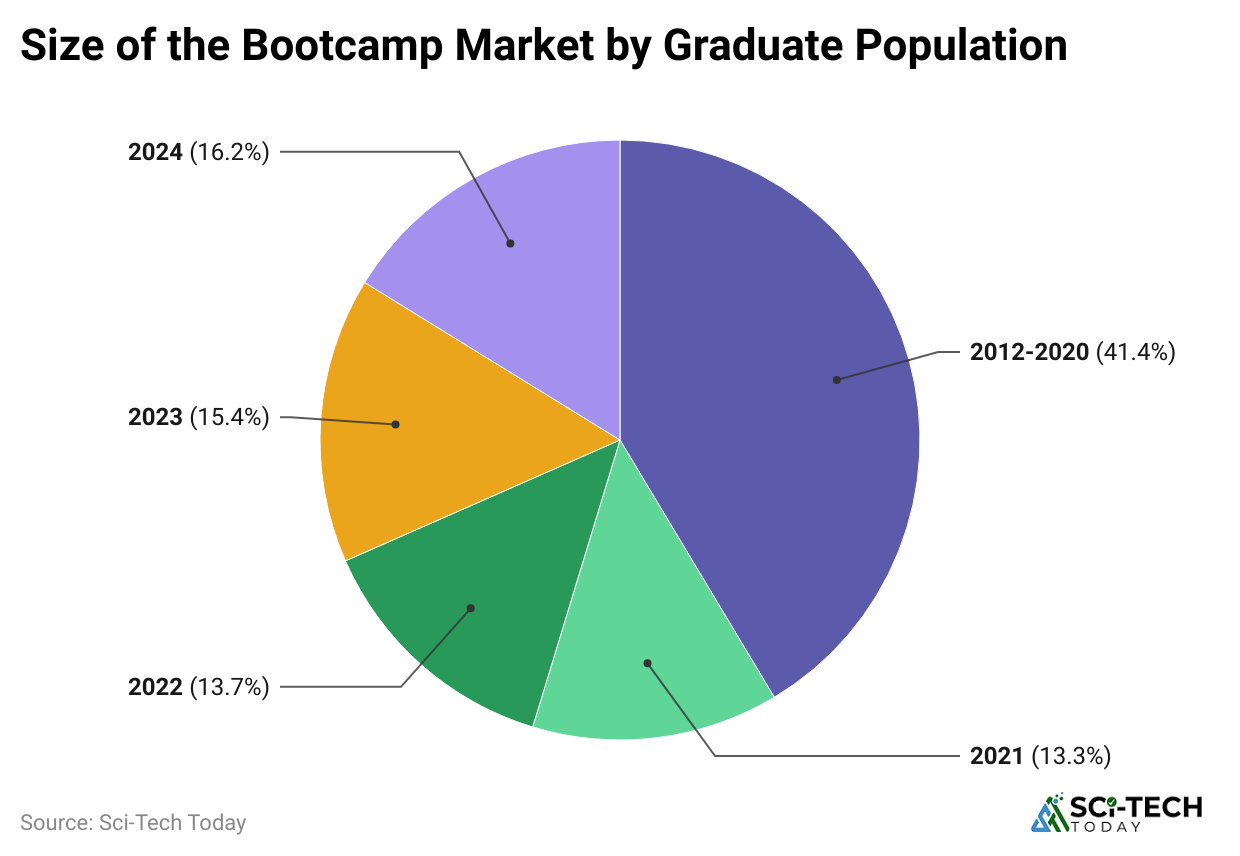
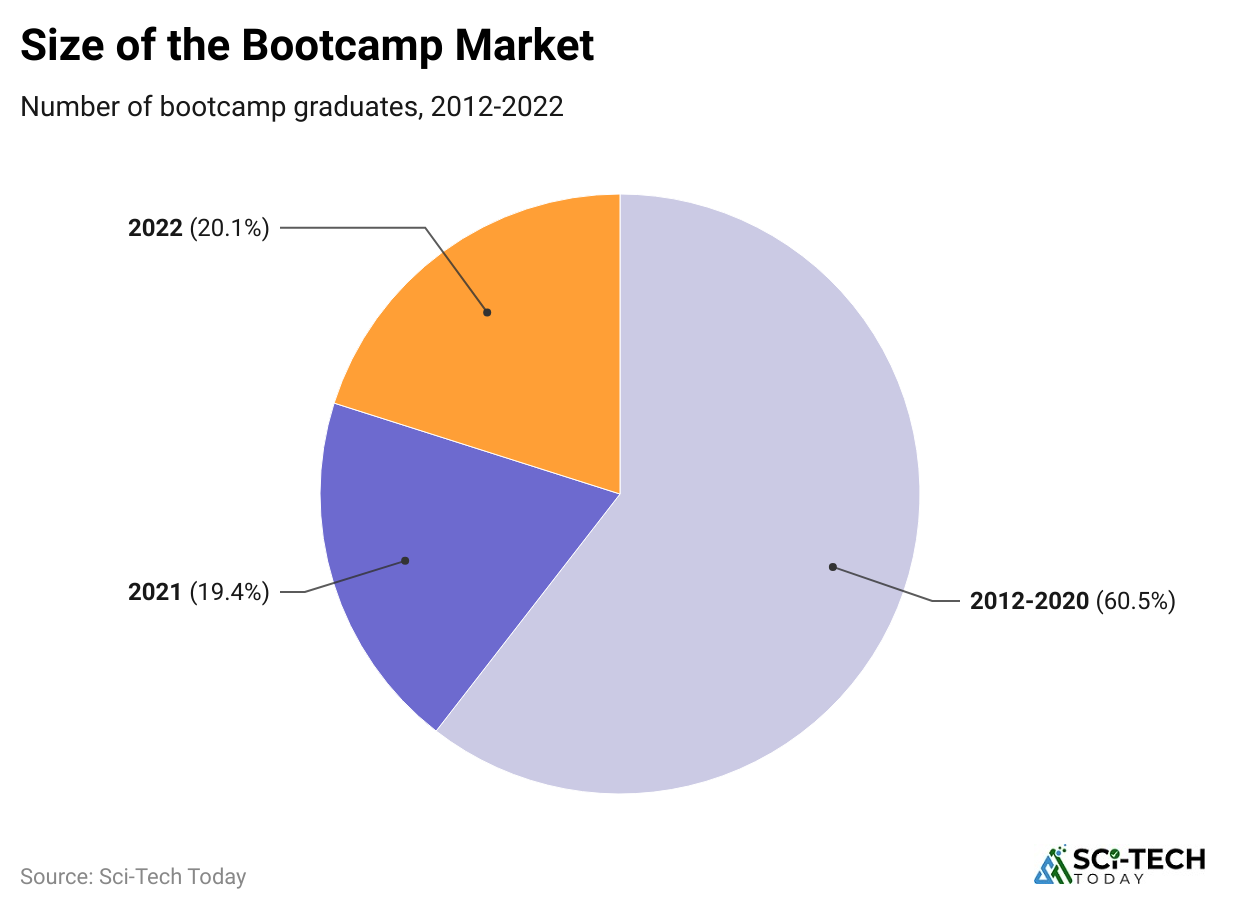
- Global market size is projected to be around USD 3.8 billion in 2025; U.S. tuition revenue alone was roughly USD 800 million in 2023, and around 69,000 students are expected to graduate in 2024.
- Most students are in their late twenties (median age 30), often changing careers: about 50 to 60% have a bachelor’s degree, 32 to 36% are women, and many come with 4 to 7 years of non-tech experience.
- Heaviest programs (full-time immersive) cost around USD 14.6k; part-time programs roughly USD 12k, self-paced around USD 8.6k.
- The majority pay upfront (82%) or via installments (58%), with loans (53%) and scholarships (36%) common; only 5% offer ISAs now (down from hype days), especially after CFPB action against misleading agreements.
- Curriculum centers on full-stack web dev (JS, React, Node, SQL), with growing emphasis on AI basics, cloud, data science, UX, and cybersecurity.
- Within 180 days, 60 to 80% get jobs in the field, many within 3 to 6 months. Average starting salary is around USD 65 to 70k, with a lift of USD 22 to 25k from prior earnings, implying a tuition payback under a year (on paper).
- Employers are warming to bootcamp grads, especially in skills-focused settings; 50 to 70% express confidence in hiring them. What matters: real projects, portfolios, teamwork, and adaptability.
- Risks include variability in quality, misleading ISAs/financing, hiring slowdowns (especially with AI and layoffs), and boots that inflate outcomes. Always check for audited data (CIRR), clear financing terms, and realistic salary medians.
- Expect more demand for AI-aware, cybersecurity, and cloud skills; consolidation of trusted providers; more employer partnerships and apprenticeships; and tighter regulation on claims and financing.
| Topic | Key Numbers / Insights |
| Origins | Started in 2012, rapid expansion, now only the outcome-driven survive |
| Market Size | Global USD 3.8B (2025); U.S. tuition USD 800M (2023); 69k graduates (2024) |
| Student Profile | Age 30; 50 to 60% have degrees; 32 to 36% women; many career-changers |
| Tuition | Full-time USD 14.6k; part-time USD 12k; self-paced USD 8.6k |
| Financing | Upfront (82%), installments (58%), loans (53%), scholarships (36%), ISAs (5%) |
| Curriculum | Full-stack web Dev (JS, React); growing AI/data/security content |
| Outcomes | 60 to 80% job placement in 180 days; Starting salary USD 65 to 70k; lift USD 22 to 25k |
| Employers | 50 to 70% confident in hiring bootcamp grads; value project skills over degrees |
| Risks | Quality varies; ISAs are risky; hiring volatility from macro shifts |
| Outlook | Focus on AI/cloud skills, audited outcomes, employer links, and tighter regulation. |
Origins and Early Growth (How it all began)
(Source: educate-me.co)
- The first modern coding bootcamp which started the trend came out in 2012 (Dev Bootcamp).
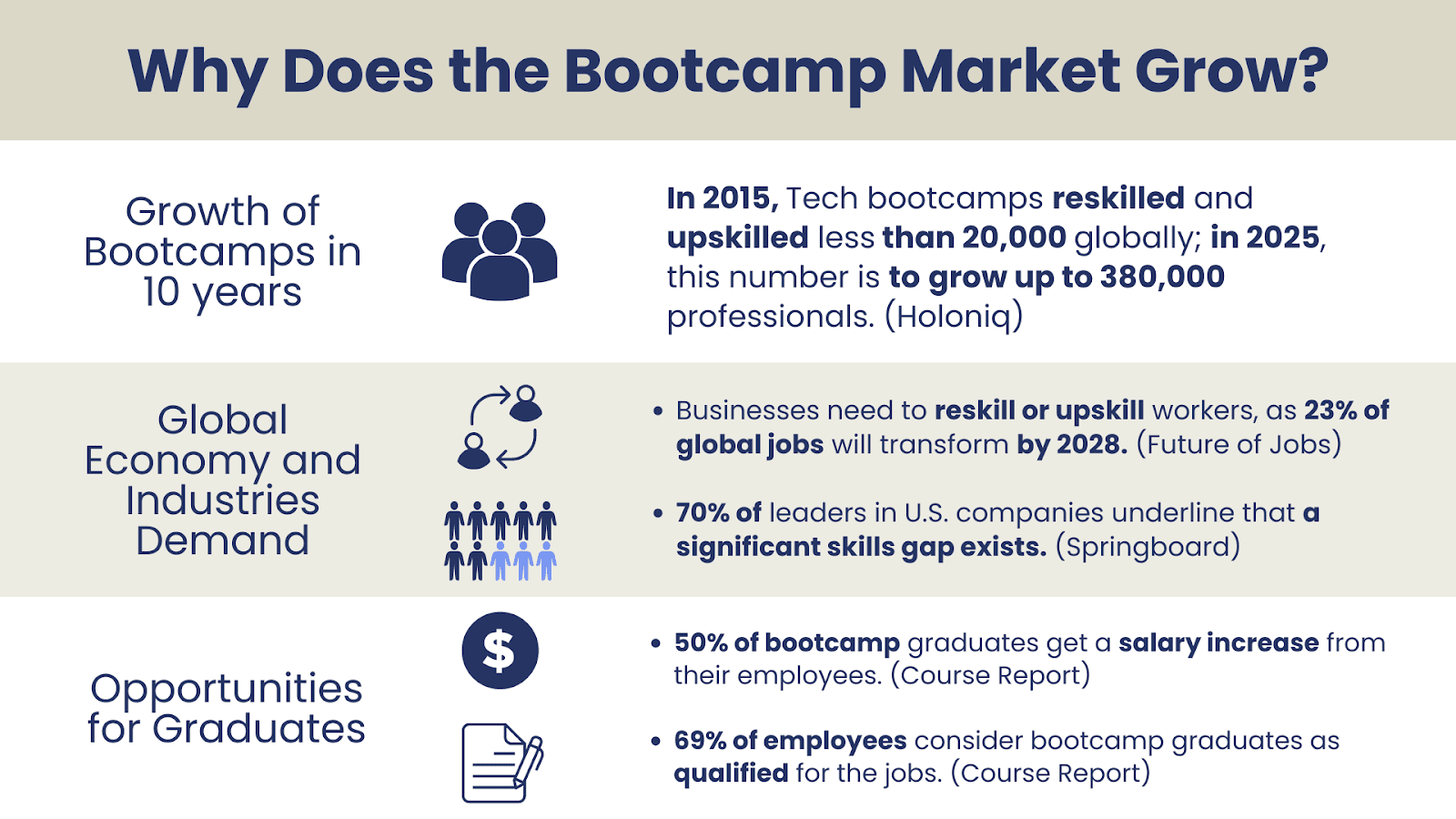
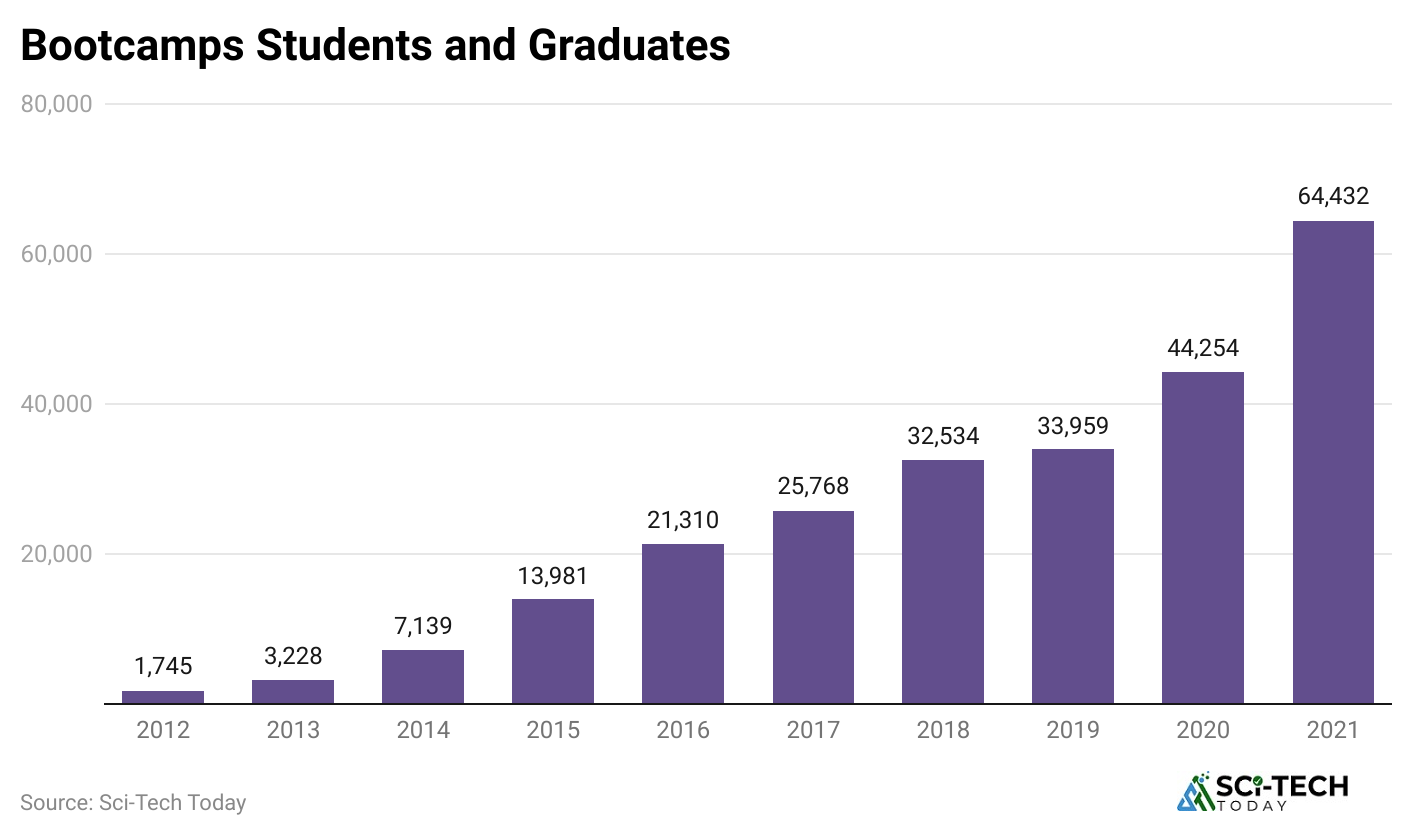
- Tens of additional providers have emerged between 2012 and 2015 (Flatiron, General Assembly, App Academy, Hack Reactor, and so on), and quick replication resulted in quick graduate growth.
- The initial marketing strategy was about being ready for work in months not years of studying at university. This is the primary reason why many people have enrolled.
- There were investment and acquisition: many coding bootcamps were bought out by bigger education companies between 2014 and 2017.
- From 2016 to 2018, the market matured: the focus moved from growth to verifiable results and transparency (CIRR and outcome reporting came into being).
- Multiple well-publicized regulatory and legal concerns have been reported since the middle to late 2010s, up until 2024, leading to increased attention on bootcamps.
- Dev Bootcamp, which was one of the early players in this market, shut down in 2017.
- After 2015, bootcamps have spread internationally, with several hundred bootcamps operating as of 2024.
- The pandemic pushed almost every provider online, which changed, mostly stuck (remote/hybrid model now dominant.
- The last few years saw a split: top outcome-focused schools (CIRR-audited) thrived; lower-quality operators either folded or were acquired.
| Metric | Key fact |
| First major modern boot camp | Dev Bootcamp (2012). |
| Early growth | Many new schools, from 2012 to 2016, followed acquisitions. |
| Regulation/oversight arrival | CIRR & outcome auditing (mid-2010s). |
Market Size and Growth (How big is the industry)
(Source: coherentmarketinsights.com)
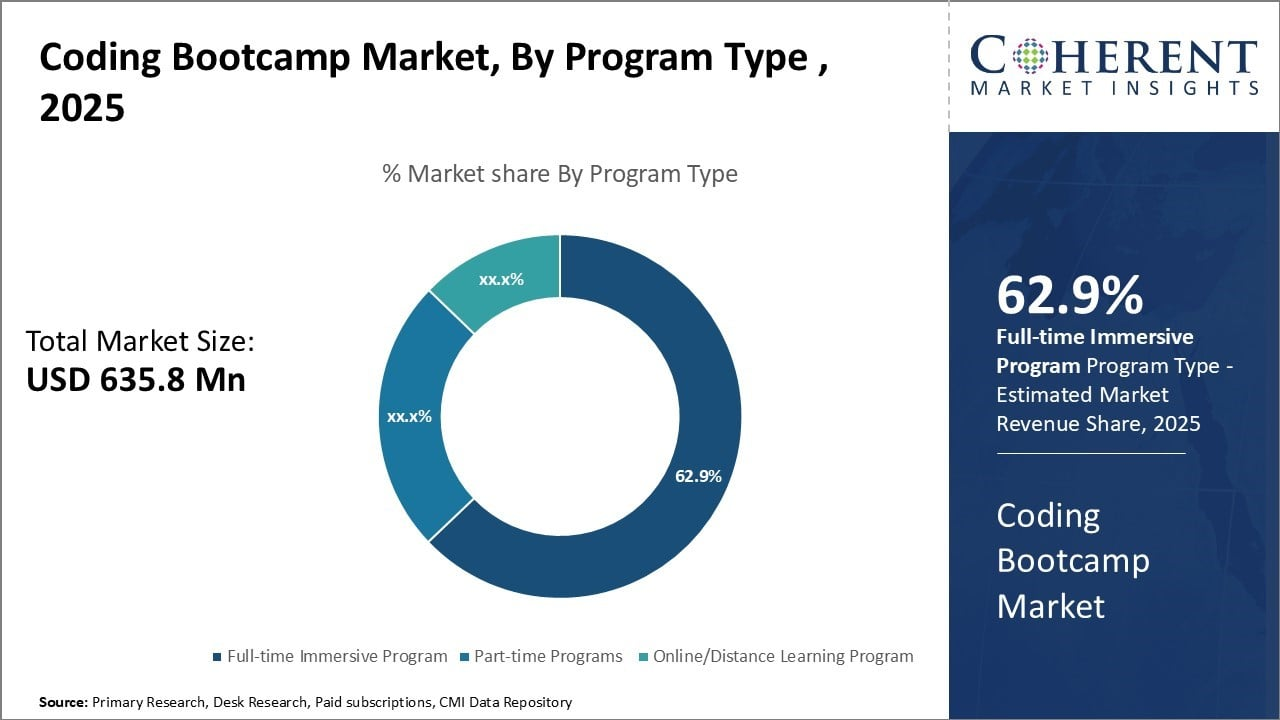
- Estimated global market value (multiple industry reports): USD 3.8 billion in 2025 (Mordor Intelligence projection for coding bootcamp market).
- Other market forecasters widely conservative tuition-revenue estimates for the U.S./major providers put 2023 tuition revenue near USD 801M, and projected USD 826M for 2024.
- Career Karma projected 69,000 graduates in 2024 (a mid-range industry estimate based on LinkedIn and provider data).
- Market CAGR estimates vary by vendor: some market firms show 9 to 30% CAGR depending on scope and definitions. That wide range reflects how “boot camp” is defined.
- The US remains the largest single market, but the model is expanding in the EU, LATAM, Africa, and APAC.
- Revenue sources: tuition (70 to 90% of reported revenue), corporate training, apprenticeships, government grants/initiatives.
- Average tuition reported in multiple studies USD 13k to USD 14k (global/US averages vary by format).
- Self-paced and part-time programs are cheaper on average; full-time immersive programs cost more. (Full-time average cited USD 14.6k in Career Karma dataset.)
- Market consolidation continues: smaller/low-outcome schools shrink or exit while stronger outcome-driven schools scale.
- Macro shocks (tech layoffs, AI shifts) produce short-term enrollment/recruiting changes and create volatility in projections. Recent reporting ties AI changes to lower demand for entry roles.
| Stat | Number / Range | Source |
| Global market (2025 est.) | USD 3.77B | Mordor. |
| U.S. tuition revenue (2023) | USD 801M (est) | Career Karma. |
| Graduates (2024 proj.) | 69,000 | Career Karma. |
| Avg tuition (overall) | USD 13k to USD 14k | Course Report & Career Karma. |
Who Attends Bootcamps (Demographics and Student Profile)
(Reference: top10codingbootcamps.com)
- Median/average age for bootcamp attendees ranges between 29-31 years, and a significant number of them are career changers.
- Work experience: majority of the candidates have work experience (median of 4-7 years before attending boot camps).
- Education: traditionally, 50 to 60% of them hold a bachelor’s degree, although this figure has changed over time.
- Gender diversity: women traditionally made up 32 to 36% of graduates (increasing compared to the early 2010s).
- Racial/ethnic diversity: Bootcamps can be more diverse than traditional CS pipelines in some regions, but results vary widely by program and city.
- International students: Some programs recruit globally; online options increased international participation post-pandemic.
- Prior tech experience: Many grads did not work as programmers before boot camp. The bootcamp model is built for newcomers.
- Motivations: career change, salary increase, faster entry to tech, and employer upskilling. Surveys repeatedly list these as top drivers.
- Typical cohort size varies from small niche cohorts (10 to 20) to large online cohorts (100s).
- Veterans, underrepresented groups, and older mid-career learners are a means
| Metric | Typical figure |
| Median age | 29 to 31 years. |
| % with bachelor’s | 50 to 60% (varies). |
| % women (approx) | 32 to 36% (rising). |
| Typical prior experience | 4 to 7 years of non-dev work is common. |
Cost and Financing (How Students Pay)
(Source: careerkarma.com)
- Average tuition across many bootcamps sits in the USD 13k to USD 14k band (varies by format and region).
- Full-time immersive tuition averages higher (example: Career Karma reports USD 14,604 for full-time).
- Part-time and self-paced options are cheaper on average: Career Karma lists part-time at USD 12,116 and self-paced at USD 8,662.
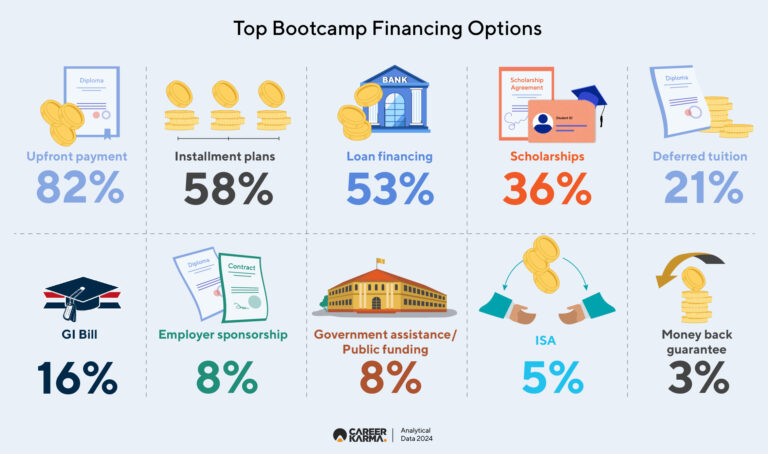
- Financing mix in 2024 (Career Karma dataset): Upfront payment 82%, installments 58%, loans 53%, scholarships 36%, deferred tuition 21%, GI Bill 16%, ISAs 5%. That 5% ISA figure is a big drop from earlier years.
- Income Share Agreements (ISAs) were hyped but shrank in prevalence after regulatory scrutiny and abuses (CFPB enforcement action against BloomTech in 2024 is a major example).
- APRs for private loan lenders (Ascent, Climb, etc.) are all over the map, but some have 0% offers in certain circumstances.
- Scholarships and diversity funds are becoming more popular as a way to bring in diverse candidates.
- Many bootcamps now include job guarantees and deferred payment programs; be sure you understand the fine print.
- The standard calculation that is used for repayment usually includes increased pay, but that is contingent on many factors.
- Regulatory risks exist with improper funding representations resulting in regulatory enforcement proceedings.
| Item | Typical / 2024 figure |
| Avg tuition (overall) | USD 13k to USD 14k. |
| Full-time average tuition | USD 14,604 (Career Karma) |
| % of schools offering ISAs | 5% (2024 drop). |
| Common financing | loans, installments, and scholarships. |
Curriculum and Popular Tracks (What Students Learn)
(Reference: careerkarma.com)
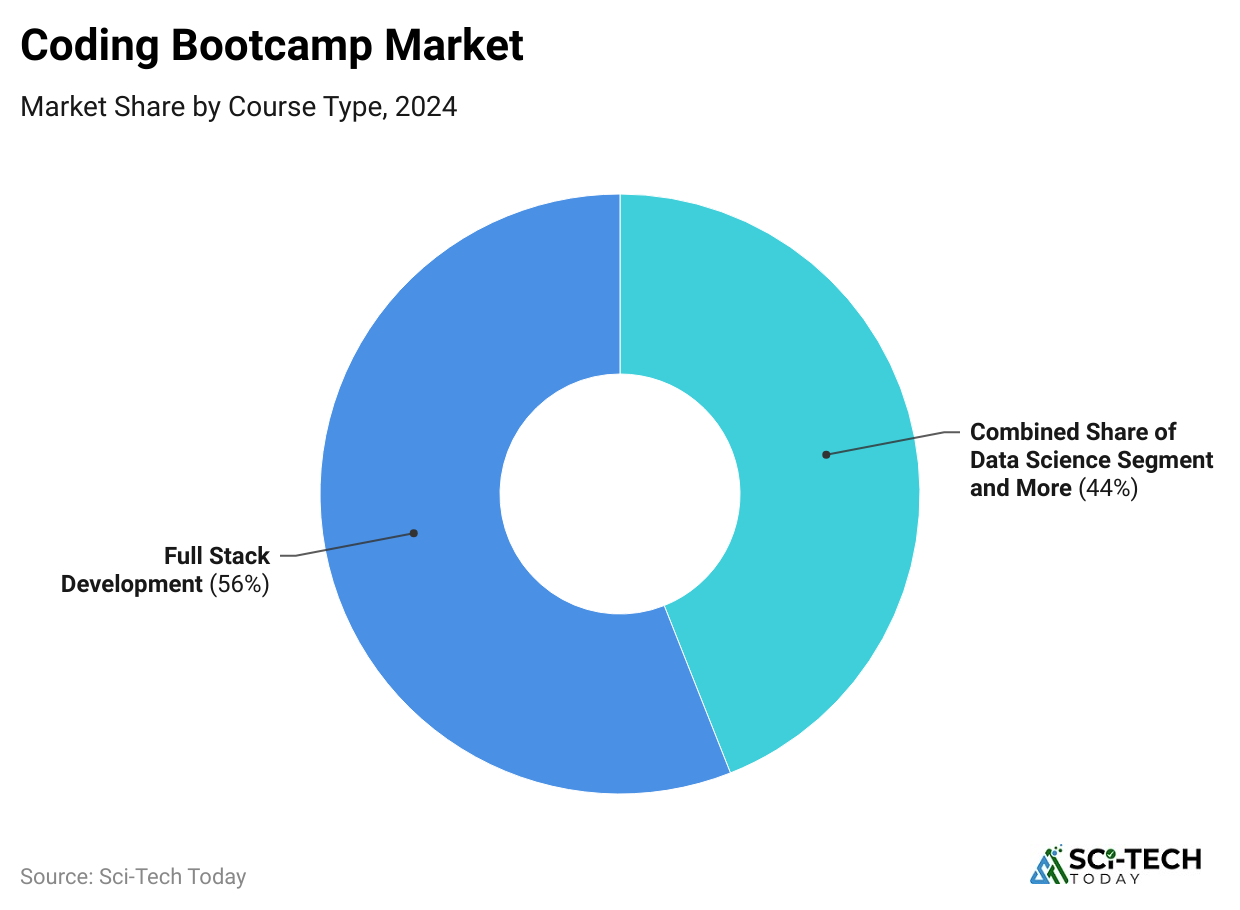
- Most common tracks: Full-Stack Web Development, Data Science / Data Analytics, UX/UI Design, Cybersecurity, Machine Learning / AI, Digital Marketing. Full stack is top.
- Average program length: various full-time immersives run 12 to 14 weeks; part-time programs run several months; some “bootcamps” run 6 weeks or up to 28+ weeks. The course report cites a 14-week average.
- Weekly intensity: full-time often 30 to 50+ hours per week, part-time 10 to 20+ hours depending on program.
- Hands-on project work is the core: students typically graduate with 2 to 6 portfolio projects.
- Tool/language mix: JavaScript + React + Node + SQL + Git remain dominant for web; Python + SQL + ML libs dominate data programs. Career Karma and Course Report list React, Git, and Node as commonly taught.
- Newer additions: AI literacy, prompt engineering, cloud basics, and cybersecurity fundamentals have been appearing in many curricula since 2023.
- Career services are standard: resume coaching, mock interviews, hiring days, and employer pipelines. The quality/quantity of placement support varies widely.
- Some top bootcamps publish audited outcomes (CIRR) while many do not; that’s a quality filter.
- University-linked bootcamps and microcredentials are growing; universities partner with providers to offer longer credentials.
- Specialized short bootcamps (cyber, product management, cloud) are rising as employers seek targeted skills.
| Track | Typical languages/tools taught |
| Full-Stack Web | JavaScript, React, Node, SQL, Git. |
| Data Science | Python, SQL, pandas, scikit-learn, ML basics. |
| Cybersecurity | Networking, Linux, detection tools, and basic forensics. |
| Avg length (full-time) | 12 to 14 weeks. |
Outcomes, Graduation, Completion, and Job Placement
(Source: careerkarma.com)
- CIRR member programs publish verified outcomes; aggregated CIRR data is the best hard source for comparable placement figures.
- Course Report surveys show the majority of graduates do find relevant work: Course Report median/average first-job salary numbers and the headline employment shares are often cited (average starting salary USD 69k).
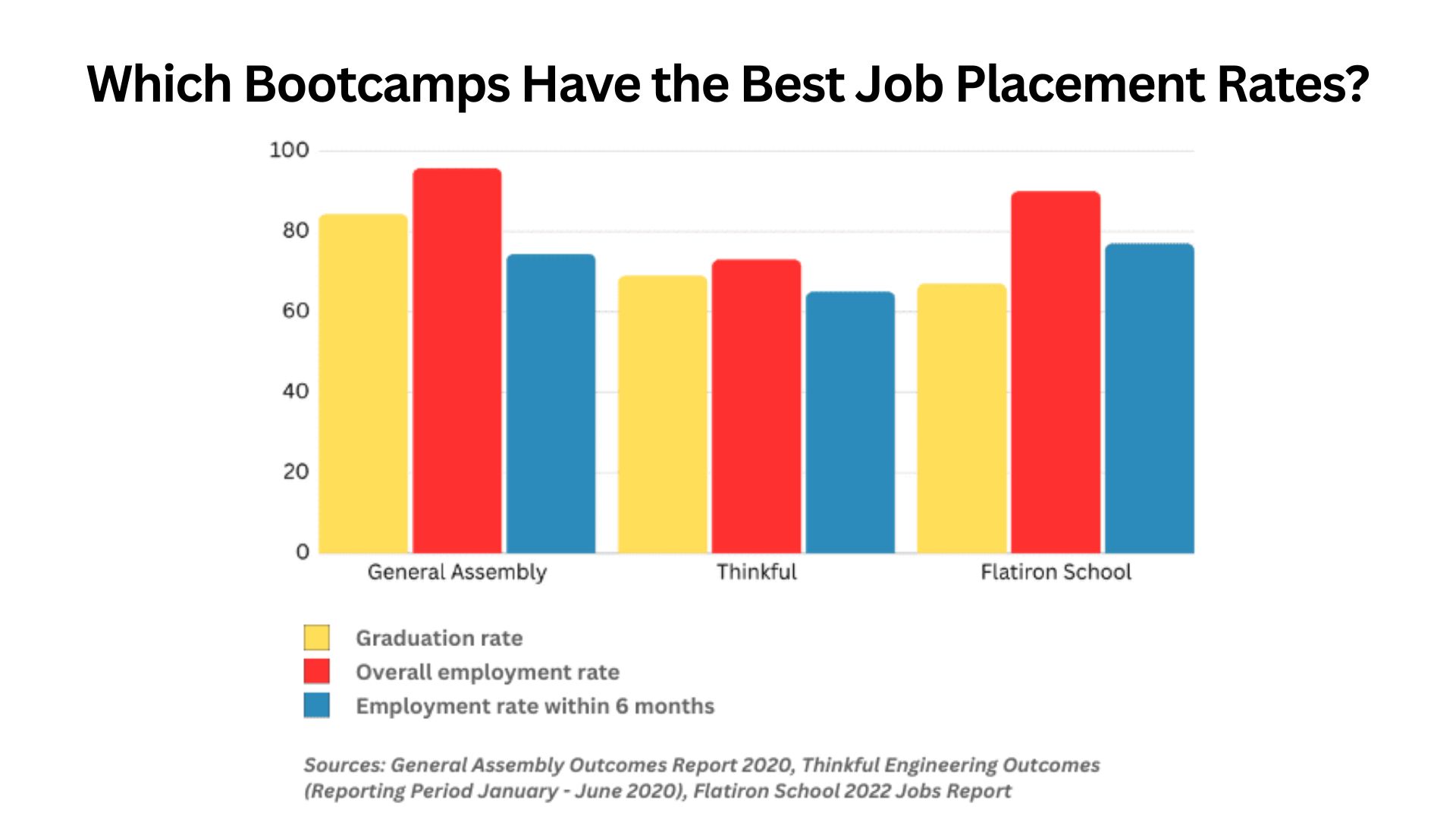
- Employment within 180 days: broadly reported ranges 60 to 80% depending on program, with many top names above 80% and some lower-quality programs well below that. CIRR member averages have been reported near the low-70s in some recent summaries.
- Graduation/completion rates vary; some CIRR-reporting schools show high graduation rates (80 to 95%) while others have lower completion rates; industry averages are not uniform.
- Median time-to-hire: Many programs mention that most of their graduates have secured jobs within 3 to 6 months, while the best have managed to place many of them within 90 days.
- Different results depend on the track: data science or cybersecurity positions might be better-paying, but they will require more previous skills.
- Outcomes are highly dependent on the geographical location – students in SF/NY/Seattle tend to earn more money than those from other markets.
- Many programs advertise “in-field” placements; the definition of “in-field” varies across schools, and students need to know what methodology is used. CIRR offers a standardized definition.
- There are exceptions. Many schools have guarantees, but only if certain conditions apply. You need to read the fine print.
- Recent trends: tech hiring slowdown and the spread of artificial intelligence in 2024-2025 have affected the situation and created more difficult conditions for junior placements.
| Metric | Typical range/notes |
| Employment in the field (within 180 days) | 60 to 80% (varies by school). |
| Median time to a job | 3 to 6 months (many placed earlier). |
| Verified reporting | CIRR = best standard for audited outcomes. |
Salaries and ROI (Money Math)
(Source: arc.dev)
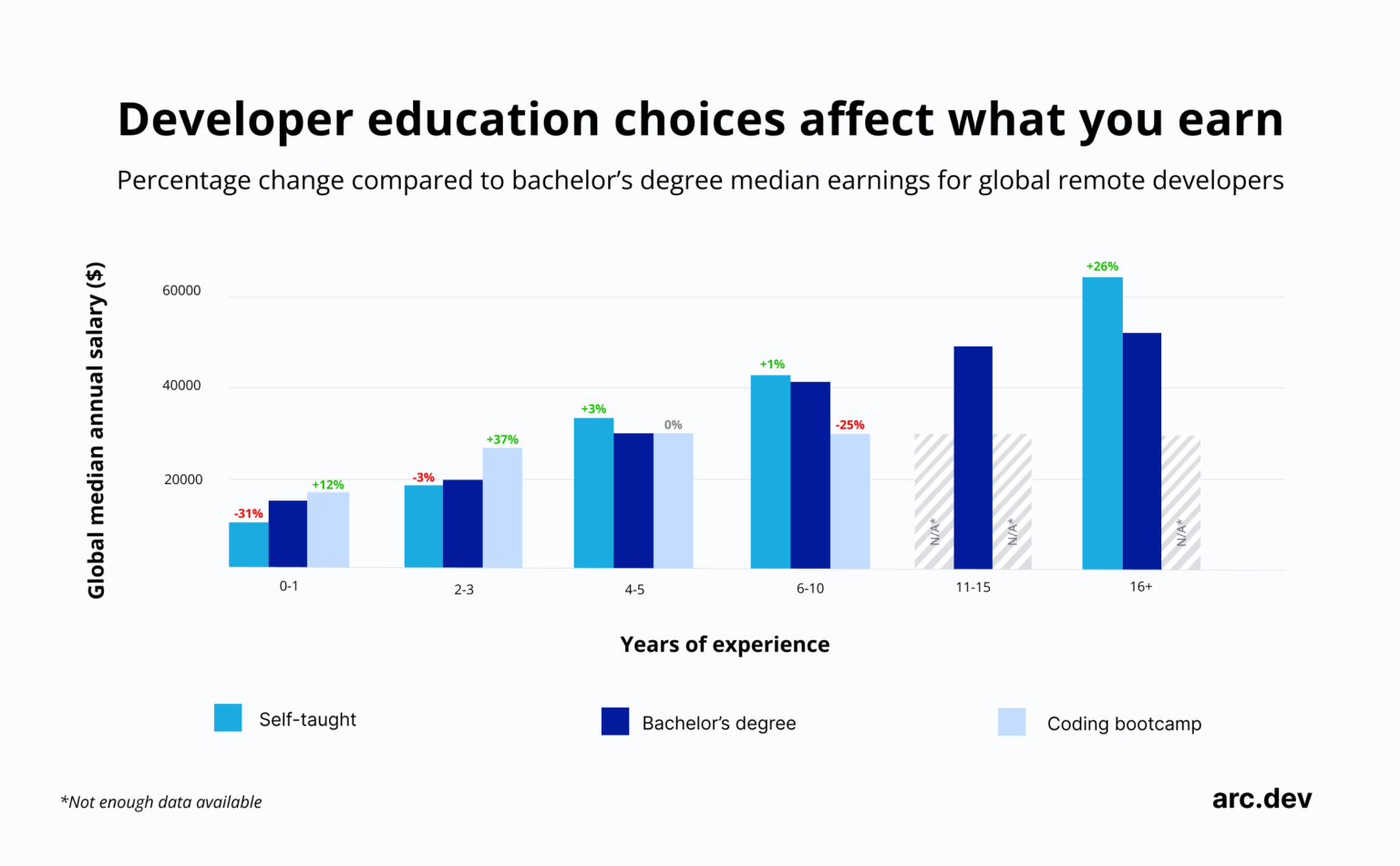
- Course Report and related surveys list average starting salaries for bootcamp grads around USD 65k to USD 70k (Course Report example: average USD 69,079; median USD 65,000 in reported samples).
- Course Report reports median salary increase after bootcamp USD 22k to USD 25k (salary uplift 50% in some datasets). That uplift is a common headline.
- If average tuition is USD 13k to USD 14k and median first-job lift is USD 22k, the simple payback period on tuition (salary lift/tuition) is often under 1 year on paper. Real payback depends on living costs, lost wages during study, taxes, and job stability.
- Role-by-role ranges vary broadly: entry web dev often USD 55k to USD 95k depending on city/firm; data roles and specialized security roles can start higher.
- Experience before boot camp matters: students with prior professional experience or degrees often command higher starting salaries.
- Reported averages are skewed by high-paying hubs and by selective reporting; median figures are usually more conservative.
- ROI for employers: Many report bootcamp grads ramp faster in applied tasks vs fresh college grads, depending on the company. Employer surveys show increasing acceptance.
- Salary growth post-hire: Many bootcamp grads see raises and promotions over 2 to 3 years, similar to other entry hires, but long-term career path depends on continued learning.
- Beware of top-end marketing claims (six figures right out of boot camp); these are possible in rare cases and usually in high-cost-of-living markets with strong prior experience.
- For students, evaluating local market salaries and the school’s verified outcomes is crucial for realistic ROI math. CIRR and Course Report make comparisons easier.
| Item | Typical number |
| Avg reported starting salary | USD 65k to USD 70k. |
| Median salary uplift | USD 22k to USD 25k after graduation. |
| Implied tuition payback | Often 1 year on salary lift alone (ignores living costs). |
Employers and Hiring (Do They Hire Grads?)
(Reference: careerkarma.com)
- The trend among employers is leaning towards hiring based on skillset as opposed to degrees. There are numerous programs in the government and corporate sector that value skills more than degrees.
- Course report/employer surveys indicate that many employers are now comfortable hiring bootcamp graduates in entry level positions with 50%-70% confidence levels being indicated in different surveys. (It depends on industry and survey).
- Industry trends: steady sectors (healthcare, finance, government) may hire more reliably than tech in tough economic times.
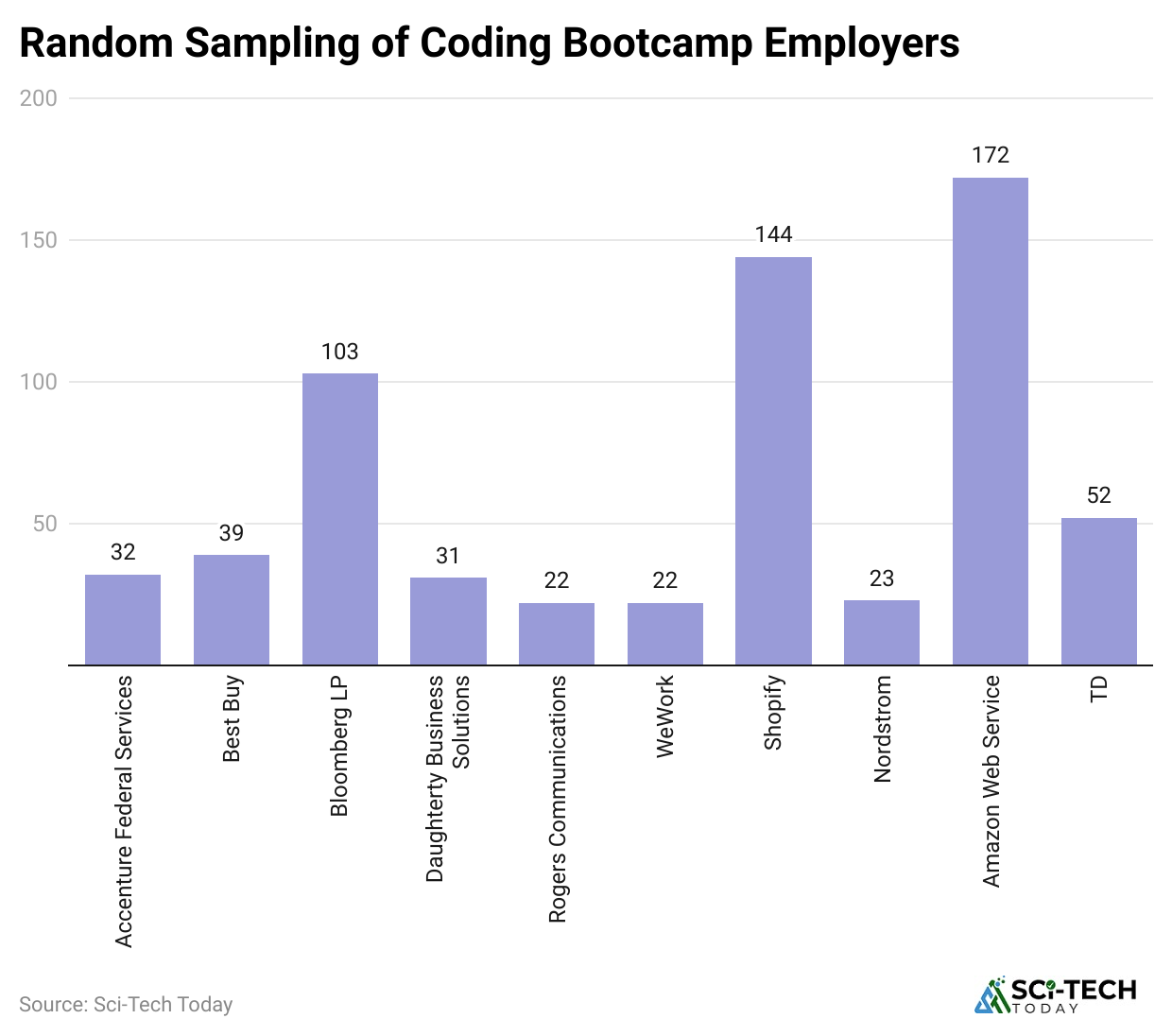
- Some employers may be comfortable with graduates from certain, named bootcamps or from bootcamps with good industry ties.
- Employers want demonstrable projects, GitHub accounts, test results, and take-home projects.
- Internship, apprenticeship, and earn-while-you-learn models are growing as employer/bootcamp partnerships.
- Hiring managers report variable quality; top bootcamps produce consistent hires, lesser-known ones show mixed results. Vet outcomes.
- The “degree vs bootcamp” debate: many employers are comfortable hiring bootcamp grads for junior roles when the candidate shows skills and relevant projects. NACE and LinkedIn data show increasing skills-first hiring.
- Soft skills, communication, and teamwork still heavily influence hiring decisions; technical skills alone aren’t enough for many roles.
- Short-term headwinds (AI, layoffs) can reduce openings for junior roles; skills like AI tool integration and security are rising in demand.
| Item | Signal |
| Employer confidence (varied) | Many firms report willingness to hire bootcamp grads; figures vary by survey (50 to 70%+ for some groups). |
| Hiring focus | Skills, projects, adaptability > credentials in many current postings. |
Risks, Criticisms, and Real-World Headwinds
(Reference: mordorintelligence.com)
- Outcome variability: not all bootcamps deliver the same results, and placement and salary data vary greatly by school. CIRR exists because this variability matters.
- Marketing scams & abuses in financing: the case of BloomTech/ISAs has resulted in CFPB’s intervention in 2024, which is undoubtedly an alarming factor for prospective students and requires reading of the terms and conditions.
- Over-saturation in certain locations, along with the decline in IT employment, makes placement less likely than before. It has been recently reported that adoption of artificial intelligence decreases entry-level job opportunities in some locations.
- Deferred payment models may conceal actual risks associated with bootcamping, and thus require additional analysis.
- Historically, some bootcamps had inflated results; third-party certification (CIRR) helps recognize reliable institutions.
- Completion does not always mean finding a job using skills acquired during bootcamping.
- The “six-figure right away” marketing is often unrealistic unless you combine location, prior experience, and luck.
- Quality control and instructor depth vary; cheaper bootcamps often trade instructor quality for scale. Vet instructors and outcomes.
- Employers sometimes still default to university hires for certain roles or senior tracks; bootcamp grads may need extra networking to break in.
- Macro policy and funding shifts (e.g., vet program funding, apprenticeship incentives) can change who pays and who benefits from bootcamps.
| Risk | Why it matters |
| Outcome variability | Impacts ROI; verify with CIRR or audited reports. |
| Financing traps | ISAs/deferred tuition can be risky; CFPB enforcement shows problems. |
| Market shifts | Hiring slowdowns and AI adoption affect entry roles. |
Future Outlook and Recommendations (What Students and Providers Should Do)
(Reference: careerkarma.com)
- Short term (next 12 months), expect volatility, localized demand, AI changes, and hiring freezes will affect placements unevenly. Be conservative in expectations.
- Mid-term (2 to 5 years): demand for AI-aware engineering, cybersecurity, data, and cloud skills will grow, and bootcamps that adapt will capture more employer attention.
- Providers that publish audited outcomes (CIRR) and transparent financing will win trust and likely scale better.
- Students should check verified outcomes, median salaries (not cherry-picked top salaries), and read financing & job guarantee terms carefully.
- Focus on demonstrable projects, GitHub, internships, and networking events that still lead to interviews.
- Employers will continue to experiment with apprenticeships, apprenticeships tied to skills checks, and hybrid hiring pathways. Bootcamps that build employer pipelines win.
- Expect continued consolidation: well-run schools, university partnerships, and corporate training will dominate larger shares.
- Watch regulation: more oversight of financing and outcome claims is likely in the future enforcement is probable if poor practices continue.
- For ROI: do local market research. In some towns, bootcamp ROI is excellent; in others, you need extra experience or relocation to hit high salaries.
- Final practical rule: verify outcomes + compare medians + check job-support before you sign. If a school won’t share audited numbers, be suspicious.
| For whom | Action to take |
| Students | Check CIRR / audited outcomes, median salaries, and financing terms. |
| Providers | Publish transparent outcomes, partner with employers, and add AI/cyber content. |
| Employers | Use skills assessments, apprenticeships, and partner with trusted bootcamps. |
Summary
To wrap up this boot camp, statistics show us a lot about how this education model has grown and changed over the years. From beginnings in 2012 to a global market worth billions today, bootcamps have proven they can offer fast, skills-focused training that leads many graduates to new tech careers.
The numbers tell us that while costs can be high, the potential salary gains and job placement rates often make it worth the investment. Outcomes vary widely between programs, so checking verified data and understanding financing options is key.
Employers are increasingly open to hiring bootcamp grads, especially those with strong portfolios and skills. Looking ahead, the industry will keep evolving, with more focus on AI, cybersecurity, and transparent results. If you’re thinking about joining a bootcamp, use these statistics as your guide, dig into the details, ask the right questions, and pick a program that matches your goals and local job market. I hope you like this statistics article. If you have any questions, kindly let me know in the comments section.
FAQ
A bootcamp is a short, intense training program. It teaches practical skills in a very fast way. The word comes from military basic training, but today people use it for learning tech skills, doing fitness work, or changing careers.
Coding and tech bootcamps generally cost between USD 7,000 and USD 21,000, with an average price of about USD 14,000 for an intensive, multi-week program.
A boot camp provides fast results. For fitness, it builds strength, burns fat, and improves heart health in group settings.

Sources