








Brief Introduction
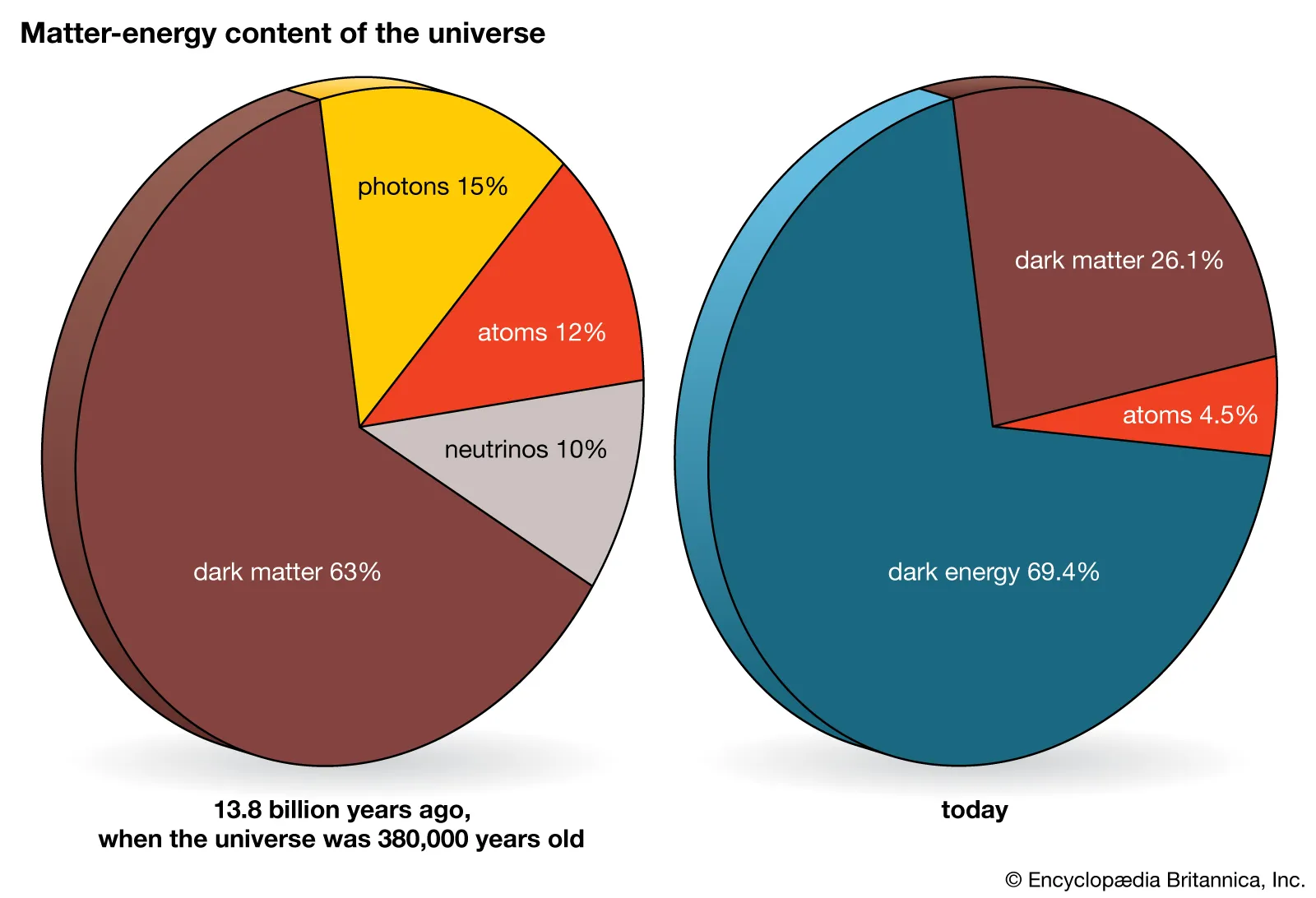
Dark Energy Statistics: I would like to tell you a surprising truth: everything we can see, from planets to galaxies, makes up only a tiny part of the universe. Scientists discovered that nearly 68% of the universe is filled with something called dark energy.
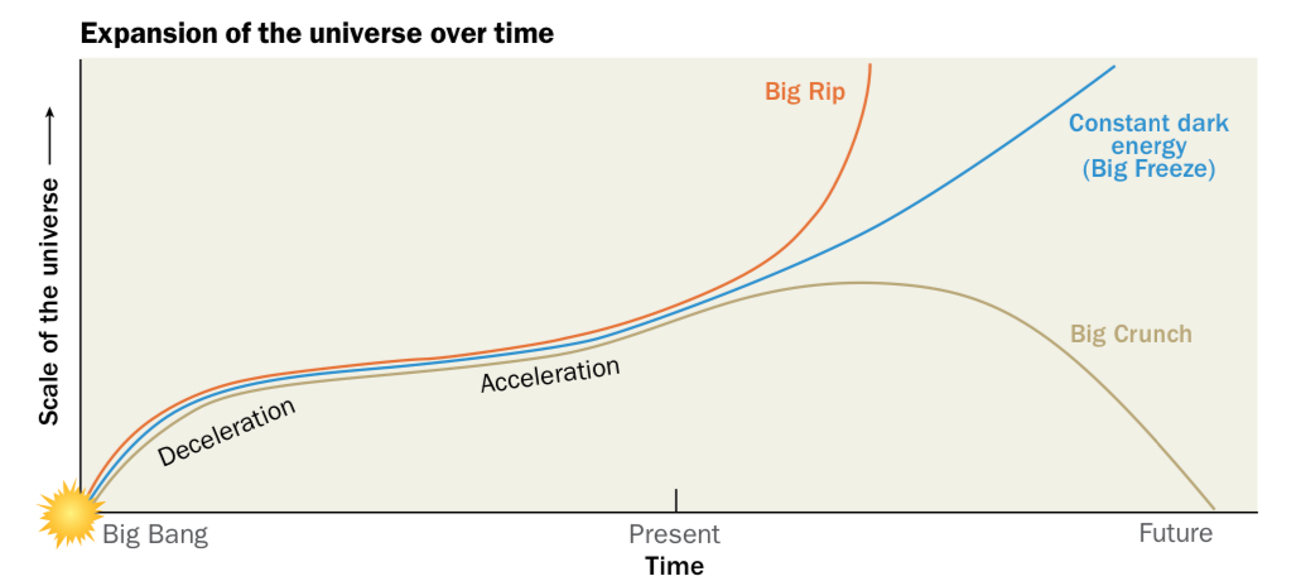
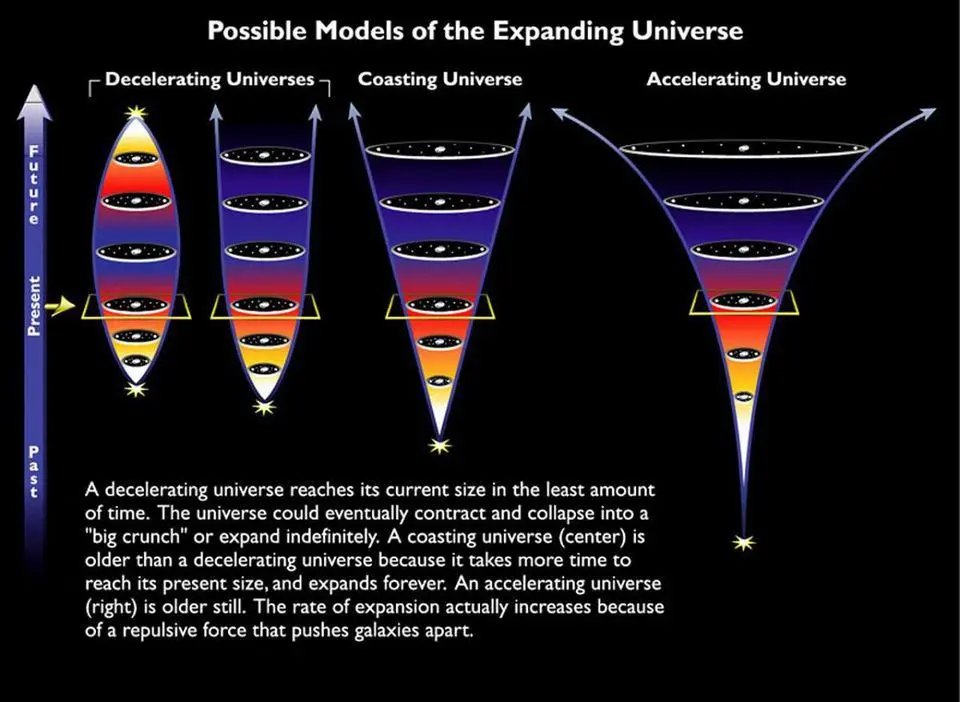
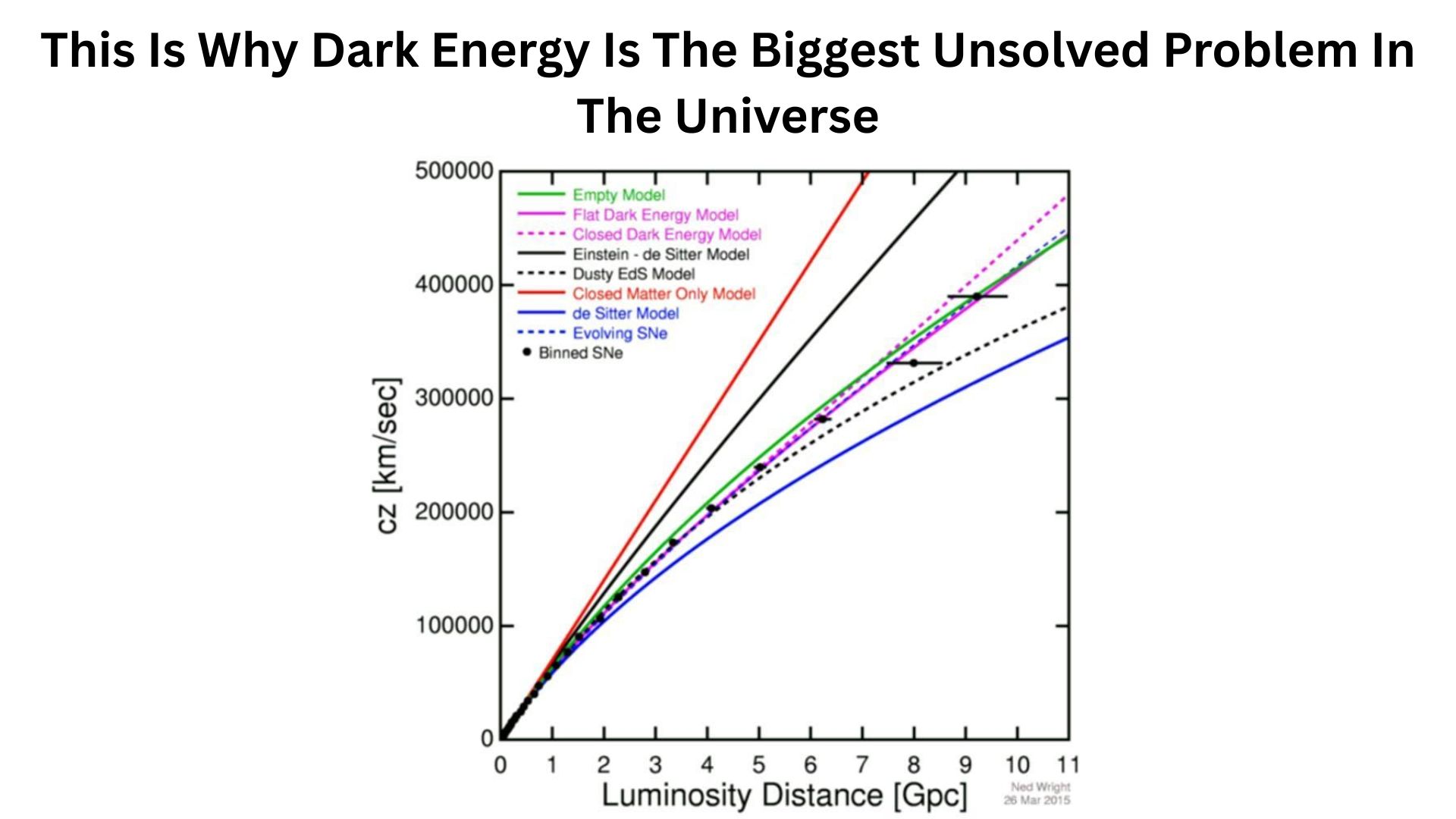
We cannot see it, we cannot touch it, but we know it’s there because it controls the way the universe is expanding. Back in the late 1990s, astronomers expected the universe’s expansion to slow down because of gravity. Instead, they found the opposite.
The universe is not just expanding; it’s expanding faster and faster. To explain this strange push, researchers gave it a name: dark energy. It acts like an invisible force that stretches space itself, making galaxies move away from each other at an increasing speed.
What makes dark energy so fascinating is that it doesn’t behave like normal matter or energy. Ordinary matter has mass and gravity, and it clumps together. Dark energy, on the other hand, is so smooth, spreads evenly everywhere, and seems to have negative pressure that drives cosmic acceleration. In simple terms, if gravity is the pull that holds things together, dark energy is the push that tears the universe apart.
In this article, we’ll go deep into everything about dark energy statistics and the research behind it. From how it was discovered to how much of it exists and what still surrounds it, we’ll break down everything in a way that is easy to follow for you. By the end, you’ll understand why scientists call it one of the greatest puzzles in physics today. Let’s get into it.
The Editor’s Top Selections
- Around 68% of the universe is made of Dark Energy.
- 27% of the universe is dark matter, and only 5% is normal matter (the stuff we can see).
- The universe is 8 billion years old, and dark energy started dominating its expansion about 5 billion years ago.
- Current measurements put the universe’s expansion rate (Hubble constant) between 67 and 74 km/s per megaparsec, with dark energy being the reason for its acceleration.
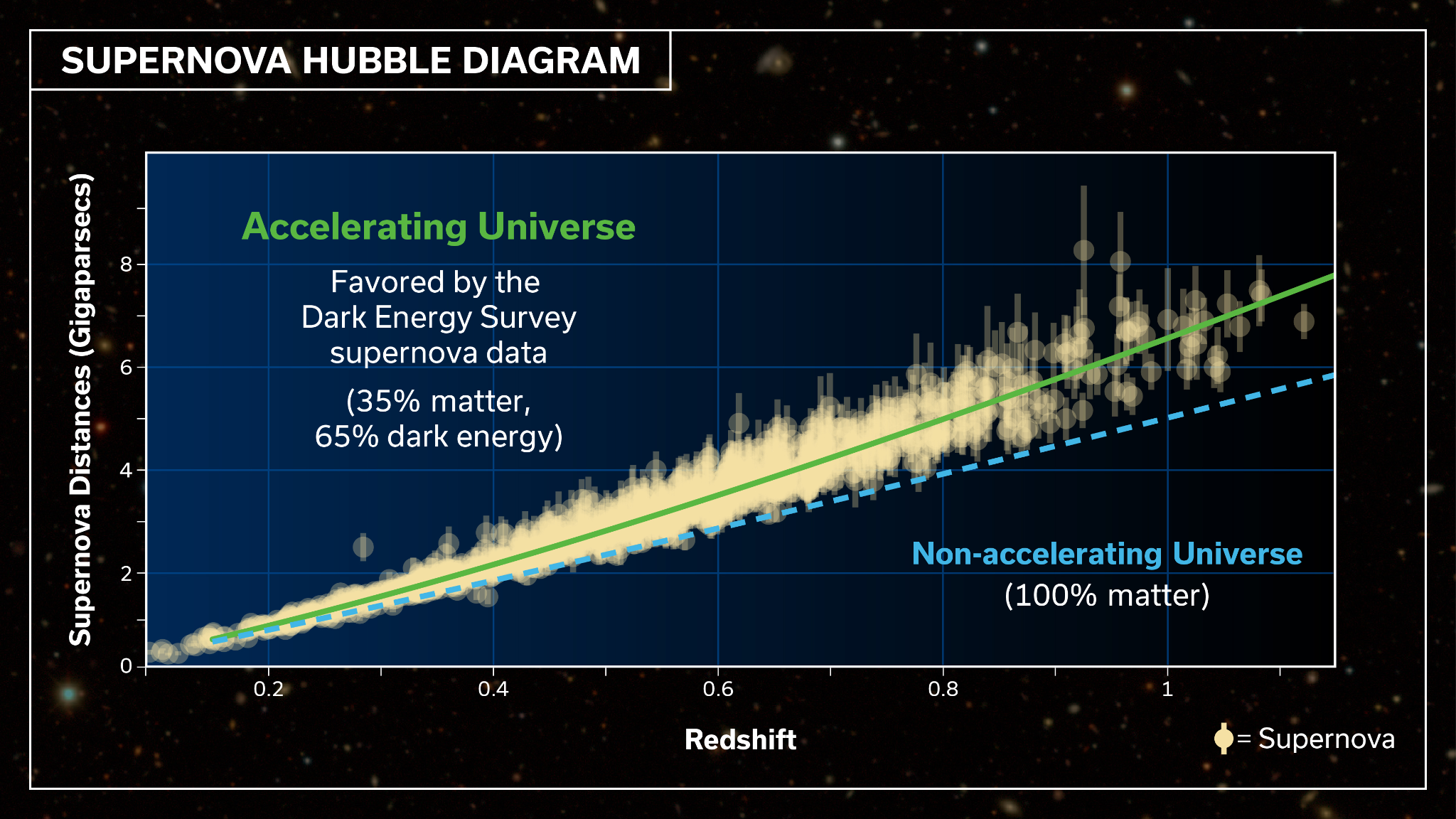
- Type Ia supernovae observations in the 1990s first confirmed that dark energy exists.
- By 2025, more than 2,000 supernovae will have been studied to refine dark energy’s role in cosmic acceleration.
- Observations of the cosmic microwave background (CMB) show that dark energy fits into the CDM model (Lambda Cold Dark Matter), the standard model of cosmology.
- Large-scale galaxy surveys like DES (Dark Energy Survey) have mapped over 300 million galaxies to measure dark energy’s effect on structure formation.
- If current trends continue, in about 100 billion years, galaxies outside our local group will move so far away that we’ll no longer see them, due to dark energy.
- The two main explanations are the Cosmological Constant and Quintessence (a dynamic form of Dark Energy), but neither is proven yet.
| Category | Data |
| Share of Universe |
68% |
|
Dark Matter | 27% |
| Ordinary Matter |
5% |
|
Universe Age | 13.8 billion years |
| Expansion Rate (Hubble Constant) |
67 to 74 km/s/Mpc |
|
Discovery | 1998 |
| Supernovae Studied |
2000+ by 2025 |
|
Galaxy Surveys | 300 million+ galaxies |
| Future Universe |
100 billion years |
|
Theories |
Cosmological Constant, Quintessence |
Origin And Discovery Of Dark Energy
(Source: britannica.com)
- 1998 – Two groups of researchers analyzing type la supernovae reported results which indicated that the supernovae were fainter in a universe without the cosmological constant, thus implying accelerated expansion and a cosmological component known today as dark energy.
- These two classic articles are Riess et al. 1998 and Perlmutter et al. Although there were only a small number of such supernovae back then, their effect on cosmology was statistically significant enough.
- After the supernova hint, the cosmic microwave background (CMB) anisotropies mapping and baryon acoustic oscillation (BAO) measurements provided independent, high-precision support: the CMB pinpoints the total curvature and matter content, BAO sets an absolute ruler for distance, and both agree that the best fit requires a dark energy-like term.
- Over the last 20+ years, supernova compilations grew from a few dozen to the Pantheon+, which has 1701 light curves of 1550 supernovae and is a modern backbone for SNe cosmology.
| Evidence type | Typical sample | What it measures | Role of dark energy |
| Type la supernovae (SNe, Pantheon+) | 1550 SNe (1701 light curves) | Distance vs redshift | Direct detection of late-time acceleration. |
| CMB (Planck) | Full-sky maps (millions of modes) | Early-universe parameters, geometry | Indirect: fixes total density and supports CDM fits. |
| BAO (BOSS/DESI, etc.) | Millions of galaxies planned (DESI target 35M) | Standard ruler distances | Tight cross-check and break degeneracies. |
| Weak lensing/clustering (DES, Rubin, Euclid) | Millions to billions of galaxies | Growth of the structure geometry | Tests how structure grows under dark energy to dominate expansion. |
Quantitative State of Play
(Source: researchgate.net)
#1. Cosmic Budget- Mass Energy Fractions
- The standard CDM fit says roughly 68% dark energy, 27% dark matter, 5% ordinary matter today.
- That’s the ubiquitous pie chart you’ve seen. This split is model-dependent but robust across CMB+BAO+SNe fits.
#2. Critical Density and the Energy Density of Dark Energy
- Using modern H₀ and Omega values, the observed vacuum energy (the effective Dark Energy density) is about ρ_Λ 9 × 10⁻²⁷ kg/m³, or 5 × 10⁻¹⁰ J/m³, equivalently a few GeV per cubic meter in particle units.
- It is absurdly tiny compared with everyday densities, but integrates to dominate the cosmos because it is uniform in space.
#3. Hubble Constant Data (early vs late Universe)
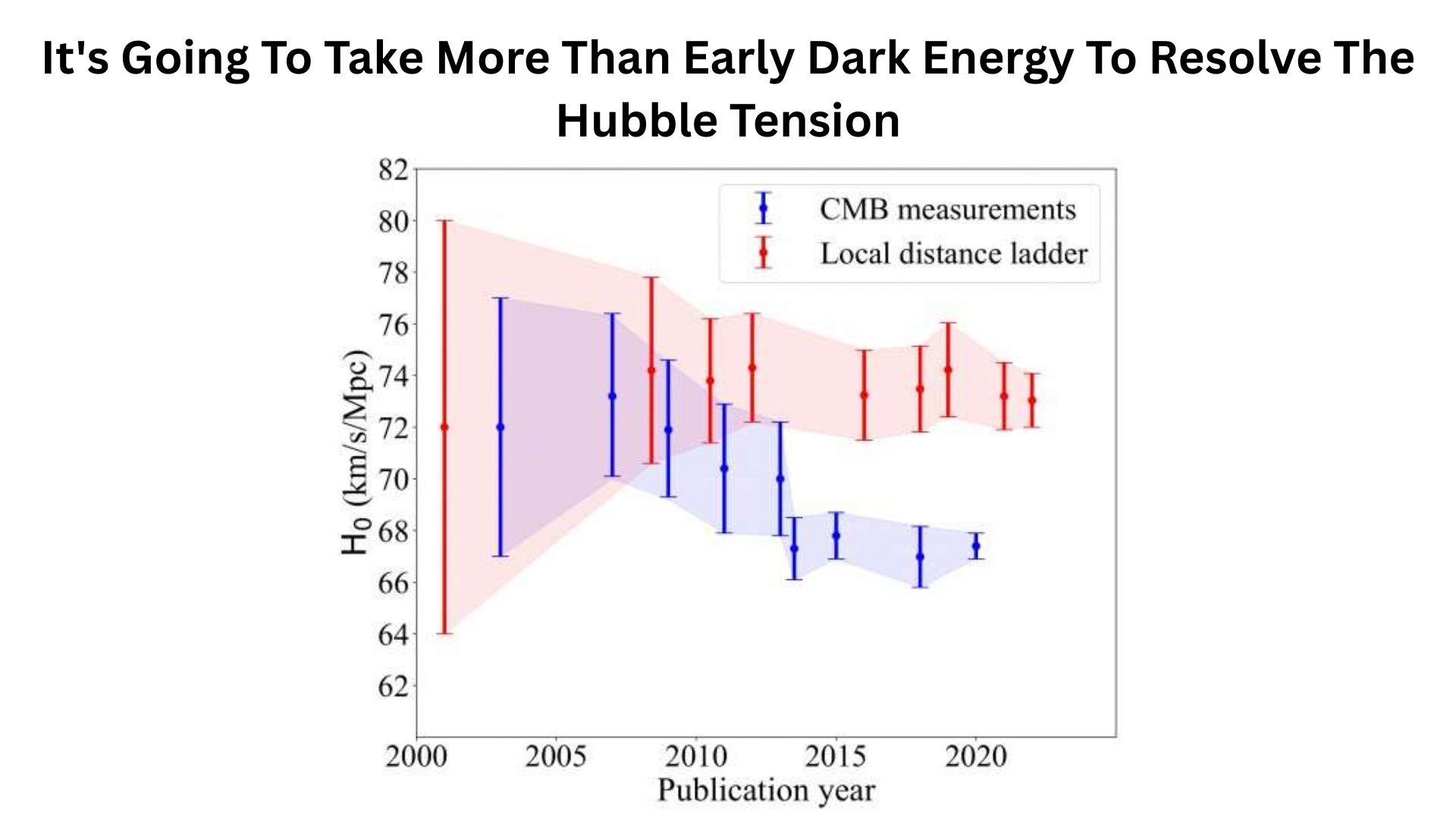
- The Planck CMB fit within ΛCDM gives H₀ = 67.4 ± 0.5 km/s/Mpc. Local distance-ladder measurements from the SH0ES team find H₀ 0 ± 1.0 km/s/Mpc.
- The difference is statistically significant and is a leading hint that something in the cosmological model or measurements may be incomplete.
#4. Equation-of-State with Constraints
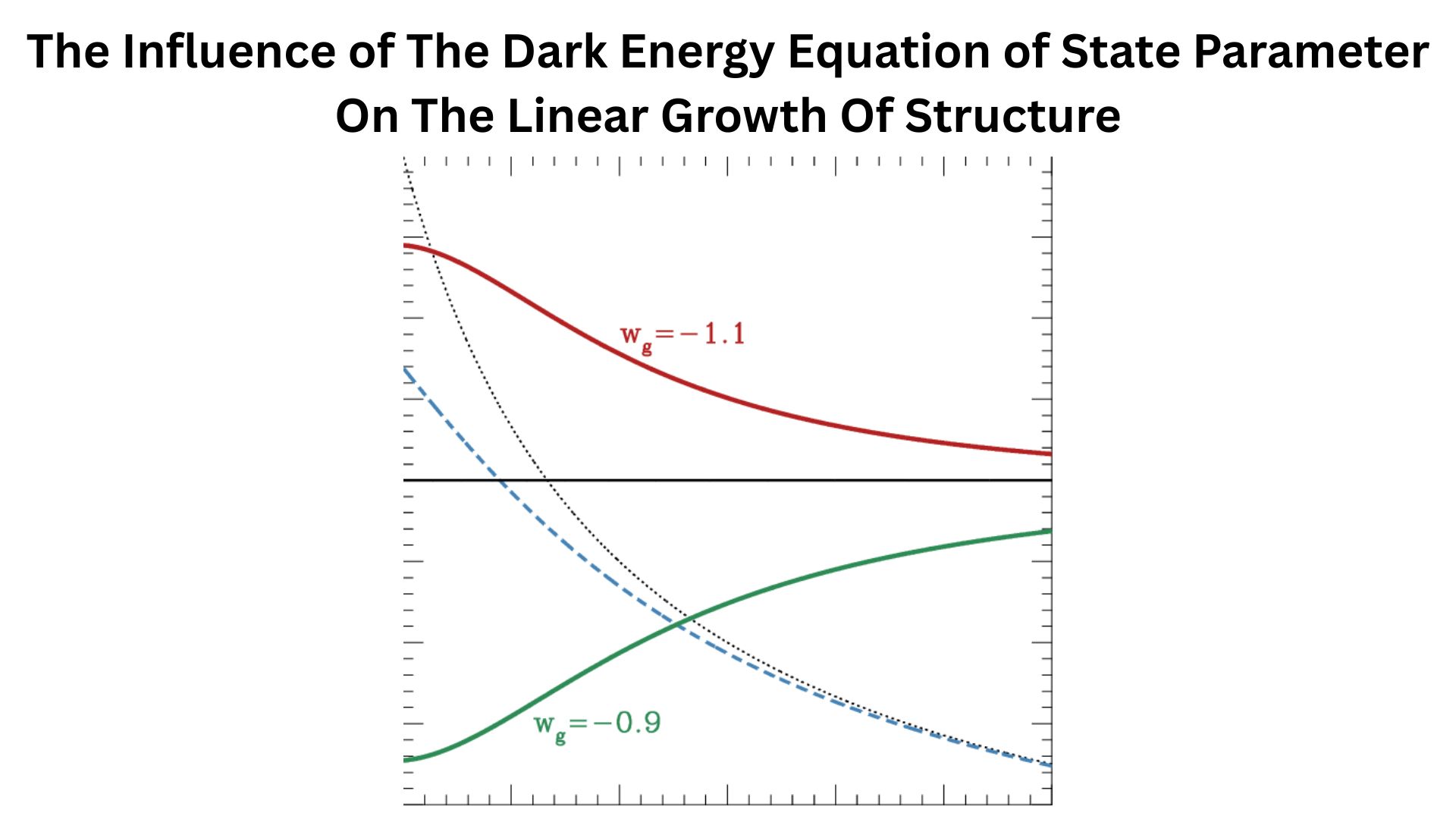
- Observations that combine Planck, BAO, and SNe find the dark-energy equation-of-state parameter close to w = −1.03 ± 0.03, consistent with a cosmological constant (w = −1) to current precision.
- That leaves open small deviations but does not require a dynamical field yet.
#5. Structure Growth- σ₈ and S₈ Numbers
- Planck infers σ₈ 811 ± 0.006 for the amplitude of matter fluctuations. Weak lensing surveys (DES Y3) report a slightly lower clustering amplitude in the combined parameter S₈ ≡ σ₈ √(Ωₘ/0.3), e.g., S₈ 0.776 ± 0.017 from DES Y3.
- A mild tension with Planck that may hint at either systematics or new physics tied to structure growth under Dark Energy-dominated expansion.
| Quantity | Typical modern value | Source |
| Dark Energy fraction (Ω_Λ) | 0.68 (68%) | Planck ΛCDM fits. |
| Matter fraction (Ω_m) | 0.315 (31.5%) | Planck. |
| H₀ (Planck, early) | 67.4 ± 0.5 km/s/Mpc | Planck CMB inference. |
| H₀ (local, SH0ES) | 73.0 ± 1.0 km/s/Mpc | Cepheid + SNe ladder. |
| w (equation of state) | −1.03 ± 0.03 | Planck + BAO + SNe. |
| ρ_Λ (mass density) | 5.9 × 10⁻²⁷ kg/m³ | Calculation / Planck-based estimates. |
| ρ_Λ (energy density) | 5.3 × 10⁻¹⁰ J/m³ | Same as above. |
| S₈ (DES Y3) | 0.776 ± 0.017 | DES Year-3 weak lensing + clustering. |
Models and Predictions
(Source: researchgate.net)
#1. Cosmological Constant Model (Λ)
- In the Λ model, Dark Energy is a constant energy density with pressure p = −ρc², giving w = −1 exactly.
- The virtue of this model is simplicity: it fits current data extremely well and needs only one new constant, Λ. Observationally, w is consistent with −1 at the few percent level, favoring Λ so far.
#2. Dynamical Fields (quintessence, phantom)
- Alternative ideas treat Dark Energy as a time-varying scalar field with w that can differ from −1 and possibly evolve with time (w₀, w_a parameterization).
- These models can produce small shifts in observables like distances and growth rates; current constraints allow only modest deviations from w = −1. Future data aims to constrain time variation to the percent level.
#3. Modified Gravity
- Some models involve replacing Λ by modifying gravity on large scales. Such models make definite predictions about the behaviour of structure formation (for example, evolution of the strength of gravity with scale) and correlation between lensing and clustering.
- Observations now rule out large modifications, but minor modifications are possible.
#4. Early Dark Energy and Exotic Fixes for Tensions
- Adding a small Dark Energy component early in cosmic history close to recombination time may alter the estimate of H₀ from the CMB fitting process and alleviate the Hubble tension.
- Such models need to strike a delicate balance by modifying the estimate of H₀ from the CMB data while not ruining the good fit of the peaks in the CMB spectrum.
| Model | Key parameter signature | Status vs data |
| Λ (cosmological constant) | w = −1, constant density | Fits data very well; simplest. |
| Quintessence | w −1, may vary with time | Allowed small deviations; needs more precision to detect. |
| Phantom energy | w −1 | Strong observational constraints would lead to future singularities if true. |
| Modified gravity | changes to growth, lensing | Constrained; no decisive detection yet. |
| Early dark energy | small component at z 1000 | Can affect H₀ inference; tightly constrained by CMB. |
Tensions and Anomalies
(Source: phys.org)
#1. The Hubble Tension
- This difference of 5 km/s/Mpc between H₀ at early times (Planck) and late times (SH0ES et al.) now stands at the several-sigma level and is hard to reconcile with just measurement uncertainty.
- If this remains true with smaller uncertainties, it implies either new physics or some sort of systematic in either the early or late universe.
#2. The Growth/Tension (S₈) Puzzle
- Weak lensing surveys like DES Y3 report slightly lower structure amplitudes (S₈) than naive extrapolation from Planck’s ΛCDM best fit.
- The discrepancy is less dramatic than the H₀ tension but is still carefully watched because it could point to either measurement systematics or to physics that modifies growth under Dark Energy.
#3. CMB Lensing Amplitude and Curious Fits
- The Planck primary CMB spectrum appeared to prefer a slightly higher lensing amplitude than the lensing reconstruction itself.
- That creates small pulls in some parameters, but combined datasets (Planck + BAO + SNe) remain consistent with ΛCDM overall. These subtleties are technical, yet they matter when pushing percent-level constraints on Dark Energy.
| Tension | Observational numbers | Significance and context |
| H₀ tension | Planck 67.4 ± 0.5 vs SH0ES 73.0 ± 1.0 | Several sigma motivates new-physics hypotheses. |
| S₈ tension | Planck-inferred S₈ vs DES Y3: 0.812 vs 0.776 ±0.017 | Mild (1 to 3 sigma) but consistent across lensing surveys. |
| CMB lensing | Slight internal Planck pull | Technical: currently not a smoking gun. |
The Vacuum Catastrophe
(Source: cantorsparadise.org)
Observed vs Predicted Vacuum Energy
- Observationally, the effective vacuum energy density today is on the order of 10⁻²⁷ kg/m³ (or 10⁻⁹ to 10⁻¹⁰ J/m³).
- The quantum field theory calculation of zero-point energies yields values that, when naively truncated at the Planck scale or any high scale, are significantly higher up to 10 1 2 0 times higher than the correct values.
- This huge discrepancy is the famous cosmological constant problem, which makes Dark Energy very mysterious.
Why Does it Matter?
- Not only is it that the numbers are different; it is that the theoretical prediction leads to such severe curvature of spacetime that the formation of stars and galaxies would be impossible.
- Consequently, the small value observed requires either a deep cancellation or a new symmetry or something else equally radical. It is one of the most perplexing issues facing physics today.
| Item | Value (approx) |
| Observed ρ_vac (mass) | 5.9 × 10⁻²⁷ kg/m³. |
| Observed ρ_vac (energy) | 5.3 × 10⁻¹⁰ J/m³. |
| Naive QFT estimate | Up to 10¹¹⁸ − 10¹²⁰ times larger (Planck cutoff) |
Surveys and How They Will Change the Picture
(Source: penntoday.upenn.edu)
#1. Euclid (ESA)
- Euclid, which was launched on July 1, 2023, is making maps of shapes and redshifts of galaxies, in order to construct a three-dimensional map of approximately one-third of the Universe.
- The first goal of the mission is to measure the shapes of billions of galaxies and constrain geometry and growth at the percent level.
#2. Nancy Grace Roman Space Telescope (Roman, NASA)
- Scheduled for launch around 2026 to 2027, Roman will have a wide-field infrared camera that images Hubble-sized areas in detail, but 100 times larger in area per exposure.
- Roman will provide precise weak lensing and supernova samples to probe Dark Energy over a large redshift range.
#3. Rubin Observatory / LSST
- In 2025, Rubin started taking first-light data, planning to take 10 years of observations to yield tens of billions of objects.
- Time domain observations of Rubin also discover supernovae in massive numbers.
#4. DESI (Dark Energy Spectroscopic Instrument)
- DESI targets spectroscopic redshifts for tens of millions of galaxies and quasars by 2026, enabling BAO and redshift-space distortion measurements of unprecedented precision.
- Its final dataset is planned to include 35 million galaxies and 2.4 million quasars.
| Facility | Launch/ops start | Typical sample scale | Key contribution to Dark Energy |
| Euclid | Launched 1 July 2023 | 1.5 billion galaxies targeted | Deep imaging + redshifts geometry & lensing. |
| Roman | Launch 2026 to 2027 | Wide-field infrared surveys, many SNe | High-precision SNe + lensing at IR wavelengths. |
| Rubin (LSST) | Science ops 2025 | 20 billion galaxies (images) | Huge weak-lensing, transient discovery power. |
| DESI | Ongoing through mid-2020s | 35 million spectra targeted | BAO & growth via redshift-space distortions. |
How to Interpret Dark Energy?
(Source: bigthink.com)
1. Watch Model Dependence
- Numbers like “68% Dark Energy” assume ΛCDM. If you change the model (e.g., allow spatial curvature or early dark energy), the fitted fractions and derived H₀ can shift.
- Always check what model and priors produced a quoted number.
2. Distinguish systematics from signals
- Some tensions might be due to calibration, sample selection, or astrophysical effects.
- For example, lensing systematics, photometric redshift biases, or supernova calibration can shift parameters if not correctly handled.
3. Look for multiple, independent probes
- A robust detection or tension tends to survive when different observational techniques (CMB, BAO, SNe, lensing, clustering, time delays) agree.
- That cross-check is the backbone of modern cosmology.
4. Precision is not the Same as Accuracy
- Even very small error bars could be incorrect due to an unperceived bias. On controversial questions such as H₀, the scientific community focuses on using different methods to determine the correct information.
| Question to ask | Why it matters |
| What model/prior was assumed? | Data are conditioned by model choices. |
| What datasets were combined? | Combined fits can hide tensions. |
| Are systematics accounted for? | Calibration or selection biases matter at the percent level. |
| Is it independent confirmation? | Multiple probes reduce the chance of a fluke. |
Open Problems and Where Real Progress Will Come From
(Source: medium.com)
1. Hubble Tension Resolution
- If the H₀ discrepancy persists after independent checks (e.g., gravitational-wave standard sirens, time-delay lenses, megamasers), then theoretical work must explain how early-Universe physics or late-Universe physics shifts inferred H₀.
- This could touch Dark Energy directly (e.g., early dark energy models) or point to other new physics.
2. Pinning Down w(t)
- The present value of w is approximately −1. To measure time variation or any deviation, we require accuracy at the percent level on many different measurements, which is precisely the task that Euclid, Roman, Rubin, and DESI will provide in the coming decade.
3. Understanding the Vacuum
- Unless theory gives a convincing mechanism for the tiny observed vacuum energy, the cosmological constant problem remains the deepest conceptual puzzle tied to Dark Energy.
- Progress could involve new symmetries, anthropic arguments, or a revolution in quantum gravity thinking.
Wrapping Up
So, now we know that dark energy is not just a modern term scientists use, but the biggest piece of the universe’s puzzle. It makes up nearly 70% of everything out there, and yet we still don’t know exactly what it is. What we do know is that it’s pushing the universe apart faster and faster, changing the future of galaxies, stars, and even our place in the cosmos.
The more we study supernovae, galaxies, and cosmic background radiation, the more evidence points to dark energy being real. But at the same time, every discovery reminds us how little we actually understand it. That’s why researchers across the world keep building better telescopes, running bigger surveys, and testing new theories to get closer to the truth.
If you’ve made it this far, I hope you can see why dark energy is one of the most fascinating secrets of science today. Keep following this field, because the answers we find in the coming years could completely change how we see the universe. If you have any questions, please let me know in the comments section. Thanks.
FAQ
Dark energy is a mysterious, repulsive force that permeates all of space, acting as a sort of “anti-gravity” that pushes the cosmos apart.
While theoretically possible, harnessing dark energy is entirely speculative. Its density is exceptionally low equivalent to a few protons per cubic meter and it lacks the energy gradients needed to generate electricity.
In cosmology and physics, having “dark energy” means the universe is filled with a mysterious, repulsive force that works against gravity. Instead of pulling cosmic structures together, dark energy pushes them apart, causing the expansion of the universe to accelerate.