









Introduction
E-Commerce statistics: If you’ve bought anything online in the last week, from groceries to gadgets, you are a direct participant in the e-commerce phenomenon. What started as a niche way to order books has boomed into the dominant engine of global retail, touching nearly every aspect of our economic lives.
In this article, I’ll peel back the curtain on the data, providing a clear, concise look at the most impactful e-commerce statistics. As the world’s largest, fastest-growing marketplace, explained through the data that matters most. Let’s get into the content.
Editor’s Choice
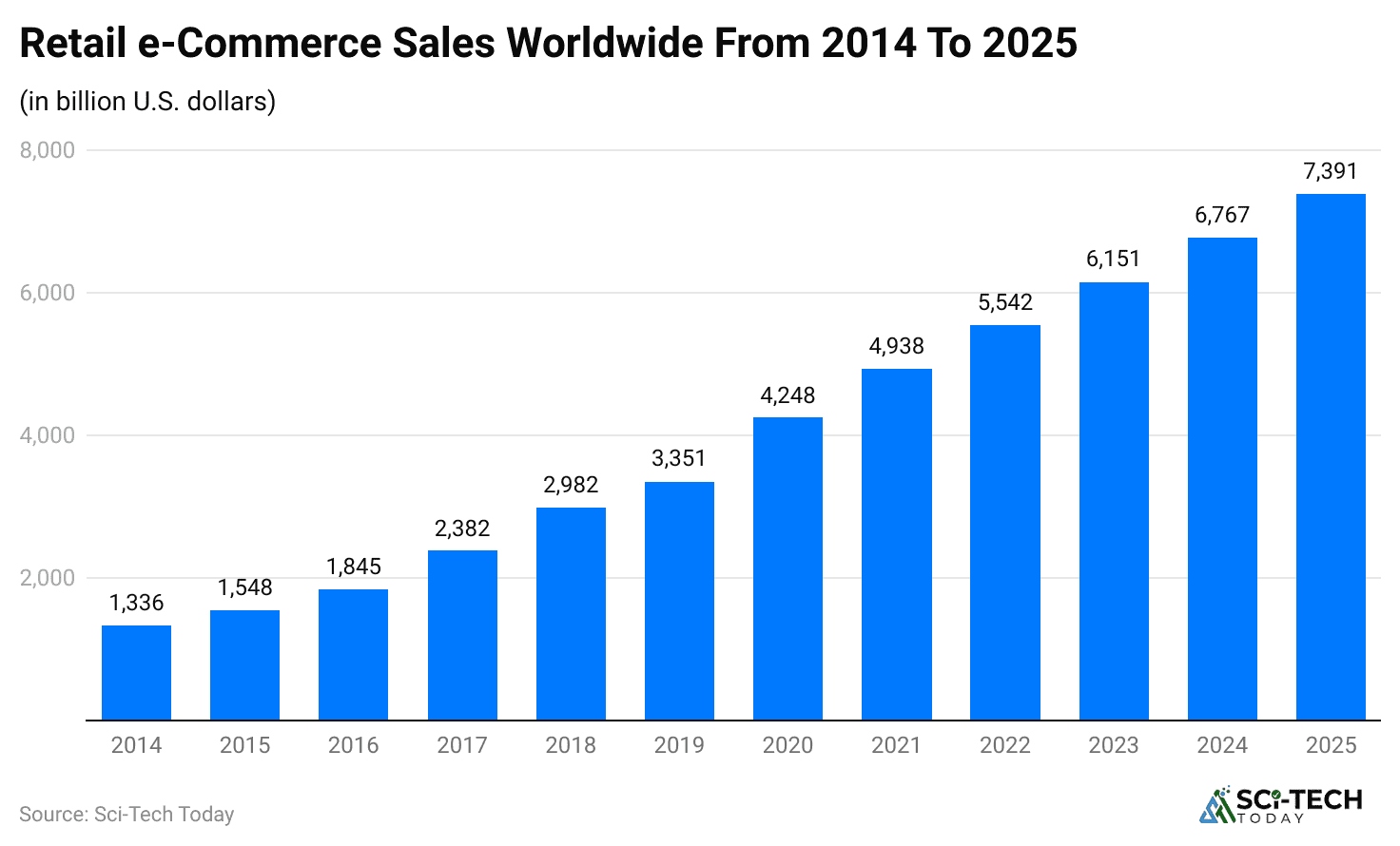
- Global retail e-commerce sales are firmly projected to reach approximately $6.86 trillion in 2025, confirming the continued, robust expansion of the digital economy worldwide.
- Online channels are taking a larger piece of the pie; in 2025, approximately 21% of all global retail purchases are expected to be conducted via e-commerce.
- While consumer sales are massive, the B2B (Business-to-Business) e-commerce market is significantly larger, with its global gross merchandise value (GMV) anticipated to eclipse $36 trillion as early as 2026.
- The number of global digital buyers is set to exceed 02 billion individuals in 2025, meaning roughly 38% of the world’s population now engages in online purchasing activity.
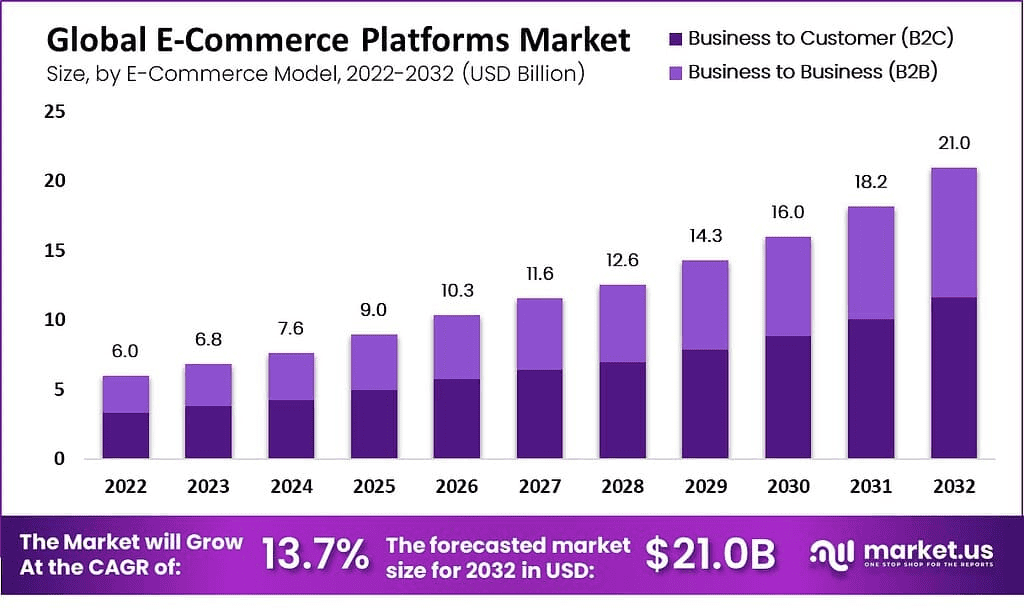
- The underlying e-commerce platforms market is poised to grow from $6.8 billion in 2023 to a projected $21.0 billion by 2032 (13.7% CAGR).
- Cloud-based platform solutions are the preferred technology, capturing a massive 58% market share in 2023 due to superior flexibility and scalability.
- Shopify leads the U.S. platform landscape, holding a 41% market share and powering over 2.8 million American-based websites.
- By merchant count, WooCommerce is the most widely used e-commerce software globally, capturing an impressive 39% market share as a flexible WordPress plugin.
- China is the undisputed largest e-commerce market, projected to account for a massive 50% to 52% of the world’s online retail revenue in 2025 (over $3.45 trillion).
- The United States is firmly in the second spot, projected to contribute approximately $1.38 trillion to the global total in 2025.
- The top three regions globally, China, the United States, and Western Europe, collectively account for 80% of all global e-commerce sales.
- The e-commerce market in India is projected to grow rapidly from $145 billion in 2025 to $345 billion by 2030.
- Millennials (58%) and Gen Z adults (56%) are the most reliant demographics, with more than half of each group making half or more of their total purchases online.
- Millennials (65%) and Gen Z adults (59%) show a high belief that the integration of Artificial Intelligence will significantly improve their online shopping experience.
- Nearly 285 million people in the U.S. are projected to shop online in 2025, equating to approximately 80% of the entire U.S. population.
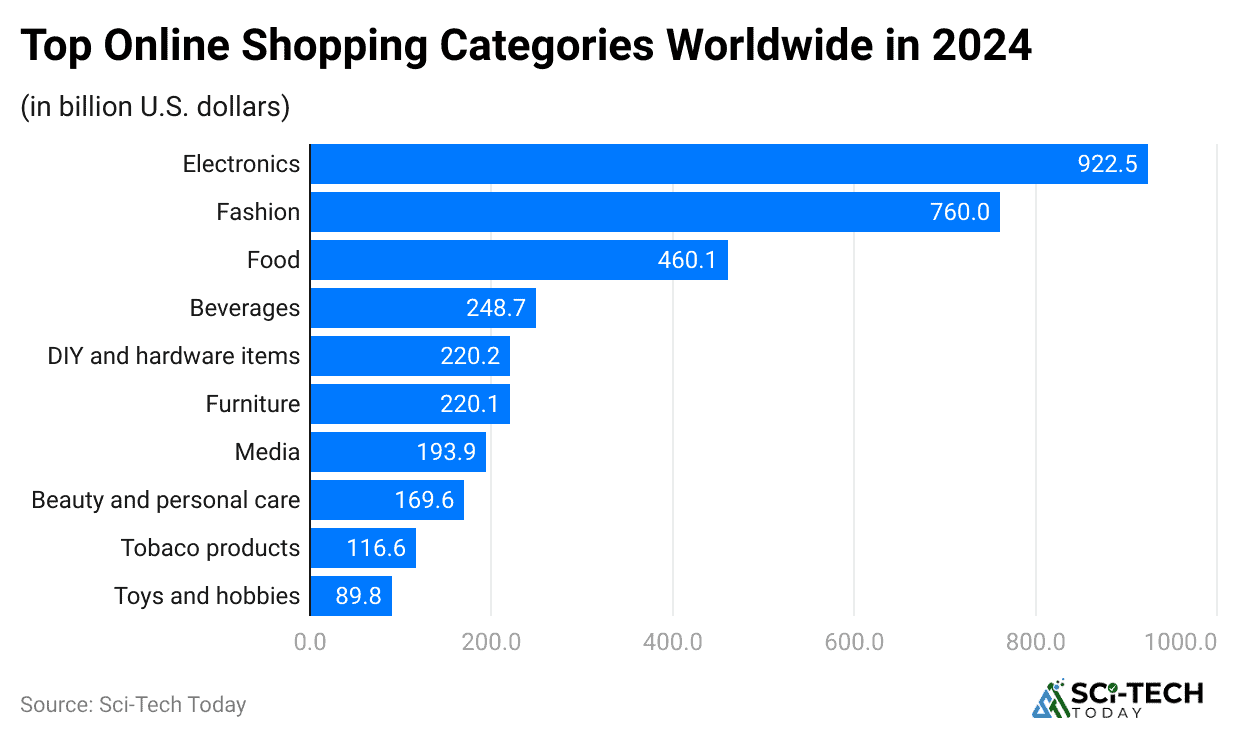
- Consumer Electronics is projected to be the single largest category by 2025, with an estimated market size of $922.5 billion
- The Fashion & Apparel sector ($760.0 billion) and Food & Beverages ($708.8 billion) closely follow in terms of estimated global spend for 2025.
- Electronics is also Amazon’s largest e-commerce sales category in the U.S., accounting for about 3% of its sales.
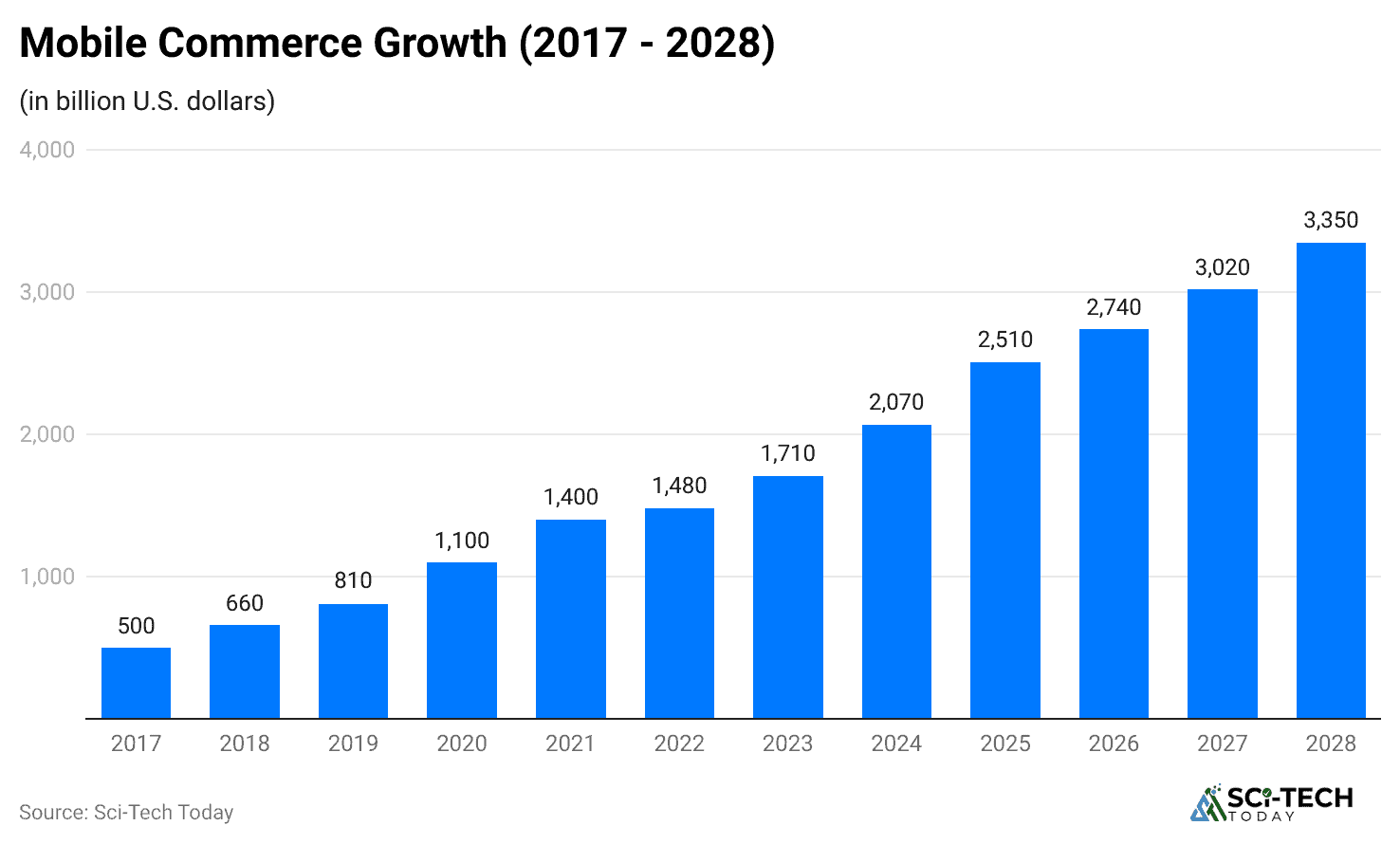
- Mobile e-commerce sales are expected to surpass $2.51 trillion in 2025, demonstrating the massive shift to mobile devices as primary transaction engines.
- Mobile phones are projected to account for a massive 71% of all retail website traffic globally in 2025.
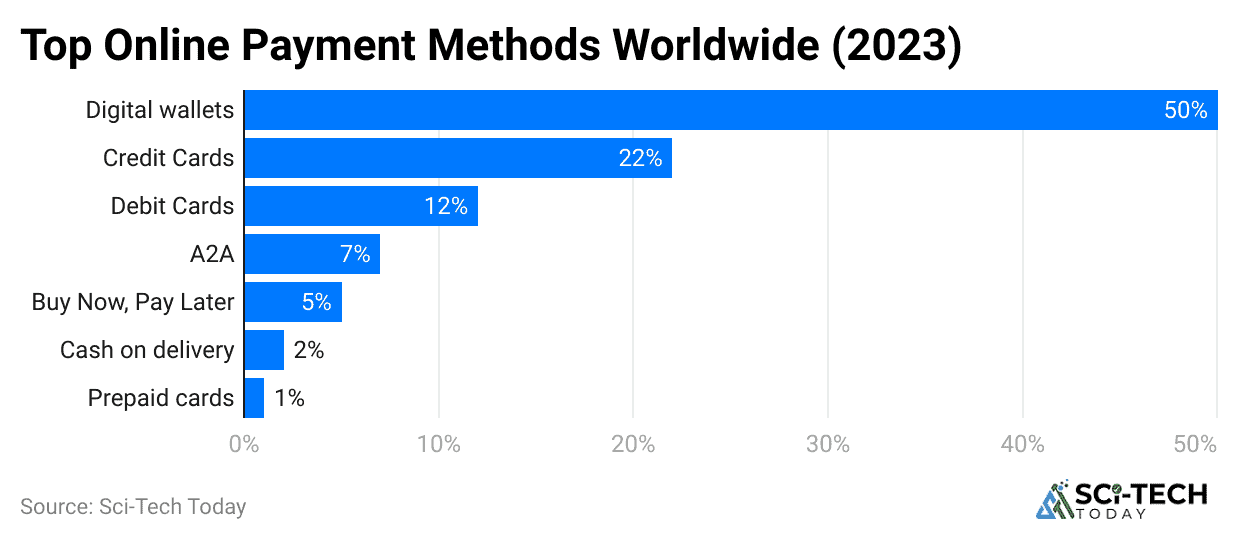
- Digital Wallets have solidified their lead as the preferred global payment method, accounting for approximately 49% of all e-commerce payments in 2023.
- The Buy Now, Pay Later (BNPL) method is growing incredibly fast, with transactions surging by 33% in 2025, primarily adopted by consumers aged 18 to 24 (63% of users).
- The Alibaba Group (Taobao + Tmall) commands the largest global e-commerce revenue, exceeding $1.4 trillion annually.
- Amazon is the undisputed leader in North America, holding a substantial 6% of the total U.S. e-commerce marketplace share.
- The global market for e-commerce fulfillment services is projected to reach approximately $140.1 billion in 2025, expected to more than double to over $272 billion by 2030.
- A significant proportion of online retailers (60%) choose to at least partially outsource their fulfillment and logistics operations.
E-commerce Platform Market
 (Source: market.us)
According to Market.us, here is the compelling and informative rewrite of the e-commerce platforms market data, formatted strictly into two-line bullet points:
- The e-commerce platforms market is poised for massive expansion, projected to grow from $6.8 billion in 2023 to $21.0 billion by 2032.
- This spectacular rise represents a decade-long Compound Annual Growth Rate (CAGR) of 13.7%.
- The core engine of this growth is the increasing globalization of e-commerce, pushing businesses to expand beyond local boundaries into international trade.
- The Business-to-Consumer (B2C) segment dominated the market in 2022, fueled by the mass adoption of online shopping.
- Cloud-based platform solutions claimed a massive 58% market share in 2023, establishing themselves as the industry standard.
- The Electrical & Electronics segment was the leading product category on e-commerce platforms in 2022.
- North America currently holds the largest share of the platform market at 32.8%, generating an estimated USD 1.9 billion in 2023.
- The U.S. is confirmed as the second-largest global e-commerce market, maintaining its status as a critical engine of online retail. Its total e-commerce revenue is expected to surpass $875 billion by 2025.
- Shopify is the clear leader among U.S. e-commerce platforms, securing a commanding 28.41% market share.
| Market Growth | Value Projected to Triple: From $6.8 Billion in 2023 to $21.0 Billion by 2032. |
| Growth Driver |
Globalization of E-commerce: The primary engine pushing this market expansion. |
|
Dominant Sector |
B2C Segment Leadership: Commanded the highest market share in 2022. |
| Tech Preference |
Cloud-Based Solutions: Captured a massive 58% market share in 2023. |
|
Top Product |
Electrical & Electronics: This segment was the leading product category on e-commerce platforms in 2022. |
| Regional Leader |
North America: Held the largest share at 32.8% of the market in 2023, generating USD 1.9 billion. |
|
Key Country Scale |
United States: Confirmed as the second-largest global e-commerce market. |
| Platform King |
Shopify’s U.S. Dominance: Leads the U.S. market with a 28.41% share. |
Geographical Dominance – Where E-Commerce Sales Concentrate?
 (Reference: mobiloud.com)
- China continues its reigning position, accounting for a massive 50% to 52% of the world’s online retail revenue in 2025, with an estimated market value of over $3.45 trillion, cementing its status as the world’s most critical digital market.
- The United States is firmly in the second spot, projected to contribute approximately $1.38 trillion to the global total in 2025, translating to about 16% of the total global e-commerce sales volume.
- The US market continues its robust expansion, with its share of total retail sales expected to climb to 17.2% in 2025.
- The top three regions globally, China, the United States, and Western Europe, collectively account for 80% of all global e-commerce sales, illustrating the high level of geographical concentration in digital commerce. This leaves a diverse, but smaller, 20% slice for the rest of the world.
- The third largest market is often disputed due to data methodologies, but key players include South Korea, with online shopping revenue projected at $207.71 billion in 2025, and the United Kingdom, expected to generate around $195.7 billion in the same year.
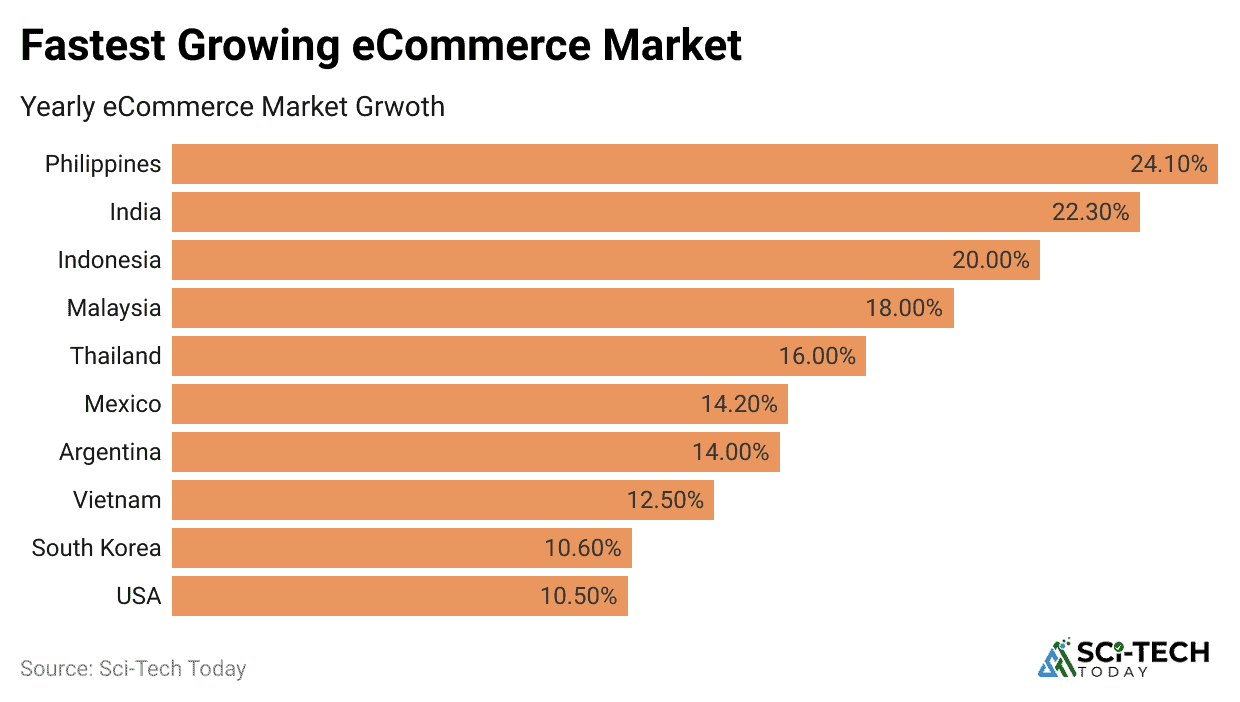
- Emerging markets are showing the fastest growth rates; for instance, the e-commerce market in India is projected to grow from $145 billion in 2025 to a massive $345 billion by 2030.
| China | $3,450 |
| United States | $1,380 |
| South Korea | $207.7 |
| United Kingdom | $195.7 |
| Japan | $190.5 |
The Digital Buyer- E-Commerce Consumer Demographics
 (Reference: researchgate.net)
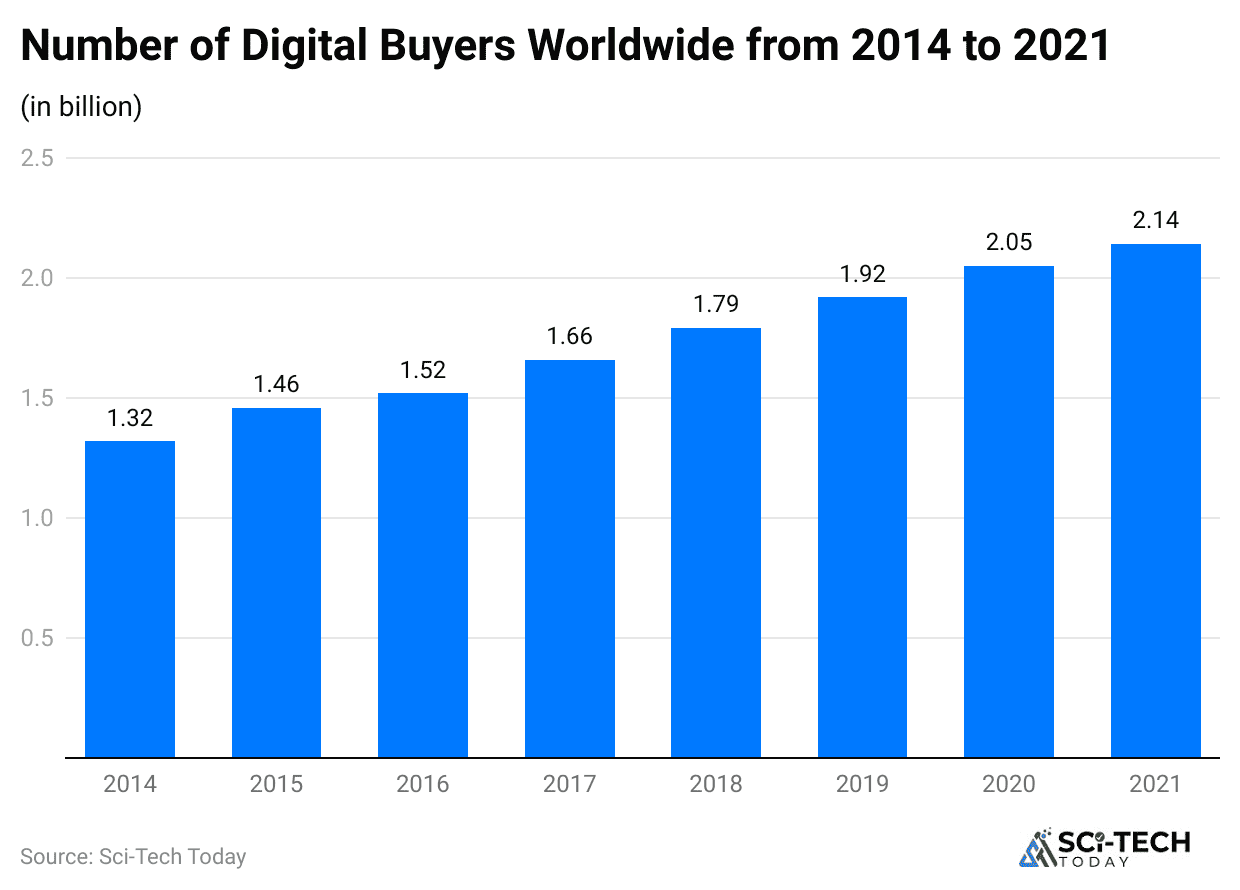
- The number of global digital buyers is set to exceed 3.02 billion individuals in 2025, representing a significant portion, almost 38%, of the world’s entire population now engaging in online purchasing activity.
- In the United States, the digital buyer penetration is exceptionally high, with nearly 285 million people projected to shop online in 2025, equating to approximately 80% of the entire US population making an e-commerce purchase.
- The younger generations are key drivers of current consumer trends: 56% of Gen Z adults and 58% of Millennials now report making half or more of their total purchases online.
- Millennials and Gen Z adults are highly receptive to new technologies, with approximately 65% of Millennials and 59% of Gen Z adults believing that the integration of Artificial Intelligence will significantly improve their online shopping experience.
- Millennials and Gen Z show a strong preference for mobile-first support: a significant 47% of consumers globally are open to using a chatbot to facilitate an online purchase.
| Millennials | 58% |
| Gen Z Adults | 56% |
| Generation | % Who Believe AI Improves Online Shopping |
| Millennials | 65% |
| Gen Z Adults | 59% |
Category Deep Dive- Bestselling E-Commerce Segments
 (Reference: shopify.com)
- Consumer Electronics is projected to be the single largest category by 2025, with an estimated market size of $922.5 billion globally, driven by continuous development in smart devices, 5G adoption, and the growing Internet of Things (IoT) ecosystem.
- The Fashion & Apparel sector closely follows, with an estimated spend of around $760 billion worldwide in 2025.
- The Food & Beverages e-commerce segment is rapidly catching up, with its global spend projected to reach approximately $708.8 billion in 2025, a boom largely accelerated by the increased adoption of online grocery delivery services in urban areas since 2020.
- The US market shows a distinct preference for tech and media: Amazon’s largest e-commerce sales category is Electronics, accounting for about 38.3% of its sales.
- The fast-growing beauty segment in emerging markets like India is seeing massive tailwinds, with reports indicating it is the fastest-growing online category, propelled by influencer marketing and a rise in discretionary spending from an increased female workforce participation rate, which hit 42% in 2024.
| Consumer Electronics | $922.5 |
| Fashion & Apparel | $760.0 |
| Food & Beverages | $708.8 |
Mobile E-Commerce (M-Commerce) and Device Trends
 (Reference: oberlo.com)
- The total value of worldwide mobile e-commerce sales is expected to surpass $2.51 trillion in 2025, demonstrating the immense shift of consumer purchasing power from desktops to smartphones and tablets.
- An overwhelming majority of online traffic comes from handheld devices: in 2025, mobile phones are projected to account for a massive 71% of all retail website traffic globally, with smartphones driving over 60% of all online orders.
- The average cart abandonment rate for mobile e-commerce is significantly higher than desktop, sitting at a concerning average of around 85.65% in 2025.
- In specific high-growth regions, mobile is completely dominant: in South Korea, mobile devices are responsible for more than 75% of all online sales, and in China, roughly 64% of e-commerce transactions are completed on a mobile device.
- The US mobile commerce market alone is massive, generating over $700 billion in 2025, which is roughly 45% of all e-commerce sales in the country and represents a fourfold increase in volume since 2019.
| Projected Global Mobile E-Commerce Sales (2025) | $2.51 Trillion |
| Mobile’s Share of Retail Website Traffic (2025) | 71% |
| Average Mobile Cart Abandonment Rate (2025) | 85.65% |
| Mobile’s Share of US E-Commerce Sales (2025) | 45% |
Payment Development in E-Commerce
 (Reference: oberlo.com)
- The number of digital wallet users globally has exceeded 5.6 billion people in 2025, with the Asia-Pacific and Latin America regions showing the most substantial growth.
- Digital wallets have solidified their lead as the preferred payment method, accounting for approximately 49% of all global e-commerce payments in 2023, a figure which is expected to cross the 52% mark by 2026.
- The Buy Now, Pay Later (BNPL) method is growing at an incredible pace, with BNPL transactions surging by 33% in 2025, driven by retailer integration and strong consumer preference for split-payment options, particularly among younger demographics.
- Younger consumers aged 18 to 24 are the primary adopters of BNPL, making up a dominant 63% of all BNPL users, favoring platforms like Afterpay and Klarna for managing their online purchases.
- In the United States, traditional methods still hold a significant share: credit cards remain the top choice for online transactions, used in 31% of payments, followed closely by debit cards at 29%, but digital wallets are quickly gaining ground, powering 26% of US online transactions.
| Digital Wallets | 49% |
| Metric | Key 2025 Data Point |
| BNPL Transaction Growth (YoY 2025) | +33% |
| Percentage of BNPL Users Aged 18 to 24 | 63% |
| Top Payment Method in the U.S. | Credit Cards (31%) |
The Platforms Leading E-Commerce Technologies
 (Reference: trustradius.com)
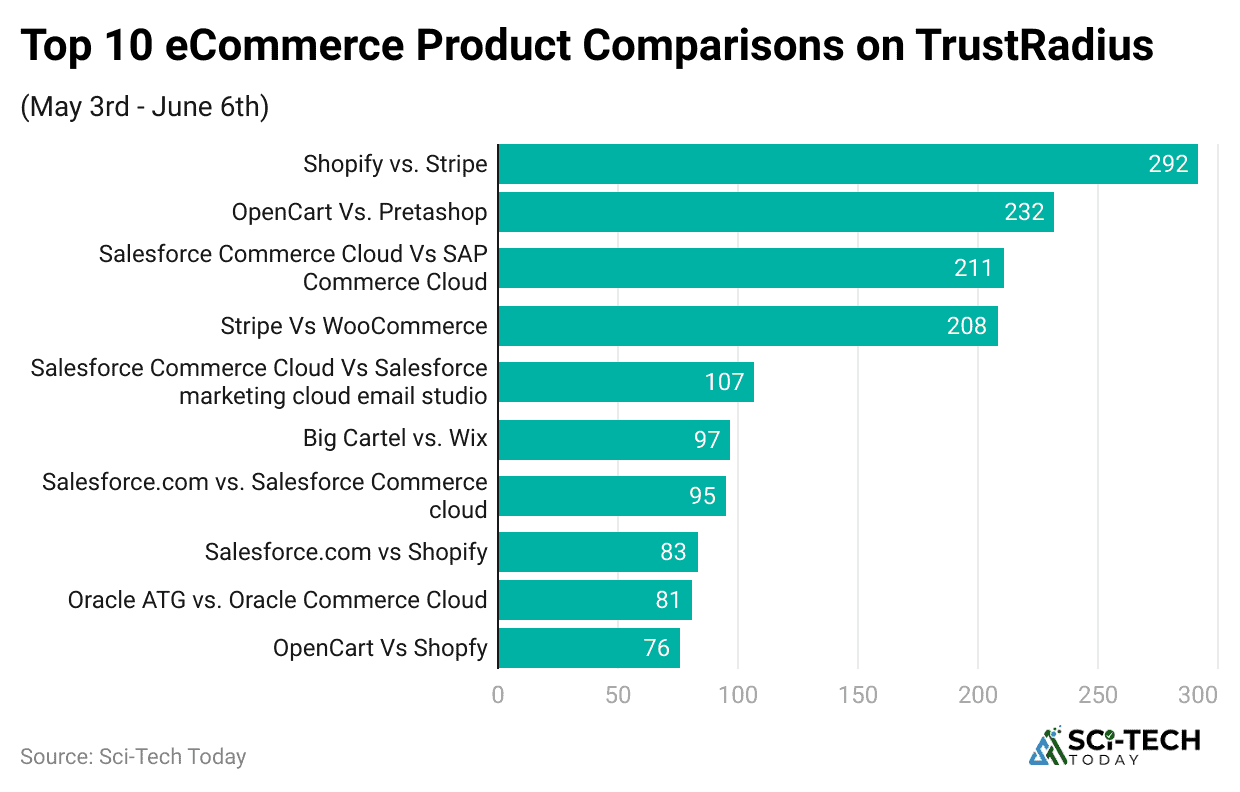
- WooCommerce has emerged as the most widely used e-commerce software globally by merchant count, capturing an impressive market share of around 39% of all e-commerce websites.
- Shopify is the second-largest platform by merchant count, having over 2.7 million active stores globally, and is notably the preferred choice for larger.
- In the United States, the platform landscape is slightly different, with Shopify holding a leading market share of 28% of the active e-commerce sites in the country.
- Squarespace Online Stores and WooThemes are strong contenders, securing the third and fourth positions, respectively, with market shares hovering near 15% each.
- While most online stores are small to mid-sized sellers, with 70% generating less than $1 million annually, the smaller percentage of enterprise-level sellers (5% of businesses) is responsible for a disproportionately massive share of the total sales volume.
| Platform | Estimated Global Market Share (%) |
| WooCommerce | 39% |
| Shopify | 10% to 28% (Varies by measure) |
| Squarespace Online Stores | 14.95% |
Key Retailers and Marketplace Statistics
 (Reference: ecommerceguide.com)
- The Alibaba Group (Taobao + Tmall) commands the largest global e-commerce revenue, exceeding $1.4 trillion annually.
- Amazon is the world’s second-largest e-commerce entity with an estimated revenue of over $1.2 trillion, and it remains the undisputed leader in North America, holding a substantial 37.6% of the total US e-commerce marketplace share.
- com is a critical global player, recognized for its exceptional logistics: it’s one of the few giants that owns and operates its entire supply chain, offering same-day delivery in many Chinese cities and generating estimated revenues exceeding $100 billion.
- The U.S. e-commerce marketplace segment collectively generated an estimated $428.3 billion in 2024 and is projected to reach approximately $477.7 billion in 2025.
- Beyond the giants, specialized marketplaces like eBay and Etsy remain highly relevant: eBay reported over 134 million active buyers and 2.4 billion live listings in 2025, while Etsy’s consolidated revenue was a respectable $2.81 billion in 2024, highlighting the strength of niche, C2C models.
| Retailer | Estimated E-Commerce Revenue (in Trillions USD) |
| Alibaba Group | $1.4 + |
| Amazon | $1.2 + |
| JD.com | $0.1 + |
E-Commerce Fulfillment and Logistics
 (Reference: precedenceresearch.com)
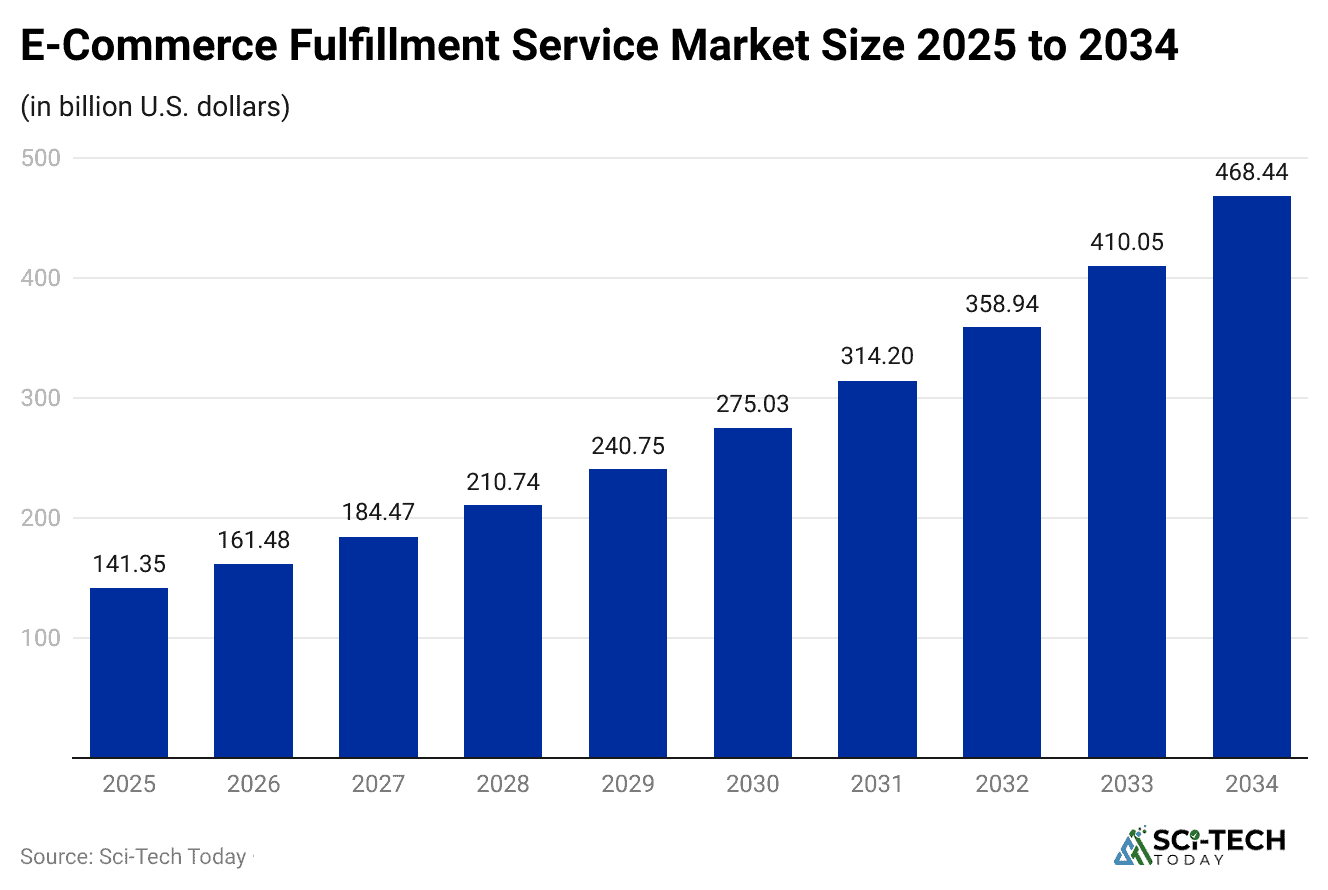
- The global market for e-commerce fulfillment services is projected to reach a total value of approximately $140.1 billion in 2025, demonstrating an impressive growth rate of 13.2% YoY as retailers increasingly rely on third-party experts.
- Projections indicate that the total revenue for this fulfillment service market will more than double, expected to soar past $272 billion by 2030.
- The Asia-Pacific region is the clear leader in this sector, making up the largest segment of the fulfillment market with a 27.0% share.
- A significant proportion of online retailers, about 60%, choose to at least partially outsource their fulfillment and logistics operations, with a sizable 20% completely delegating the entire fulfillment process to specialized providers.
- Amazon, the largest national online retailer, illustrates the massive operational expenditure involved: the company spent $98.5 billion on order fulfillment in 2024 alone.
| Projected Global Fulfillment Market Value (2025) | $140.1 Billion |
| Projected Fulfillment Revenue (2030) | $272 Billion + |
| Largest/Fastest Growing Region Share | Asia-Pacific (27.0%) |
| % of Retailers Who Partially Outsource Fulfillment | 60% |
Conclusion
Overall, e-commerce has fundamentally changed from a niche channel to the primary mode of commerce across the globe. We’re analyzing a complete structural and generational change in how the world buys and sells.
The velocity of growth, trillions of dollars in revenue, billions of global buyers, is a powerful testament to the consumer’s relentless pursuit of convenience, speed, and value, all of which digital platforms deliver with data-driven efficiency.
The future will be defined by the integration of AI, the rise of mobile, and the ongoing, complex logistics battle to get products to a consumer’s door faster and cheaper than ever before. The story of e-commerce is essentially the story of the modern global economy, and the numbers show that its biggest chapters are progressing. I hope you like this article. If you have any questions, kindly let us know. Thanks for staying till the end. I appreciate your effort.