








Introduction
AI in HR Statistics: Consider the scenario of a hiring manager who always has no more resumes to read. Imagine a learning program that not only adapts to the employee’s needs but also aligns with the company’s goals. Plus, real-time analytics foresee who is going to quit six months before the resignation is announced. In 2025, this futuristic vision becomes the standard. AI ceases to be a rare HR trial. Instead, it turns out to be the suite of tools that reshapes the whole cycle of recruitment, talent management, learning & development, and planning for the workforce.
This article will present the AI in HR statistics that reveal the areas where AI is creating value. It will also highlight where companies are still grappling with tough questions.
Editor’s Choice
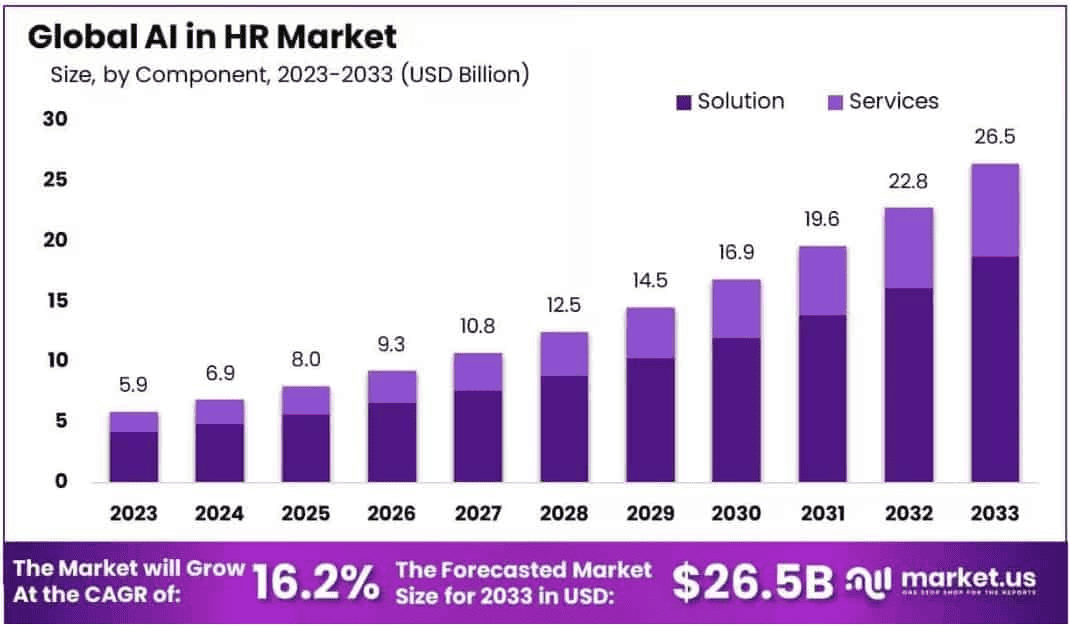
- The global AI in HR market is expected to reach USD 5.9 billion in 2023 and then grow to USD 26.5 billion in 2033, with a CAGR of 16.2% over this period.
- AI usage for the purpose of cutting back on HR costs is reported by about 37% of the companies, while 28% of them implement it as a support for learning and development programs.
- Employee recognition through real-time AI tools boosts the level of employee satisfaction by about one-third.
- Implementing AI in payroll processing can reduce the time required for payroll processing by as much as 70%; in addition, pay equity can be improved by about 30%.
- AI-based health programs contribute to the reduction of employee stress by 25% and fatigue by almost 30%.
- A significant number of employees, around 70%, reported that AI made their work-life balance better, and nearly 80% are expected to be offered AI-assisted career development plans by the year 2025.
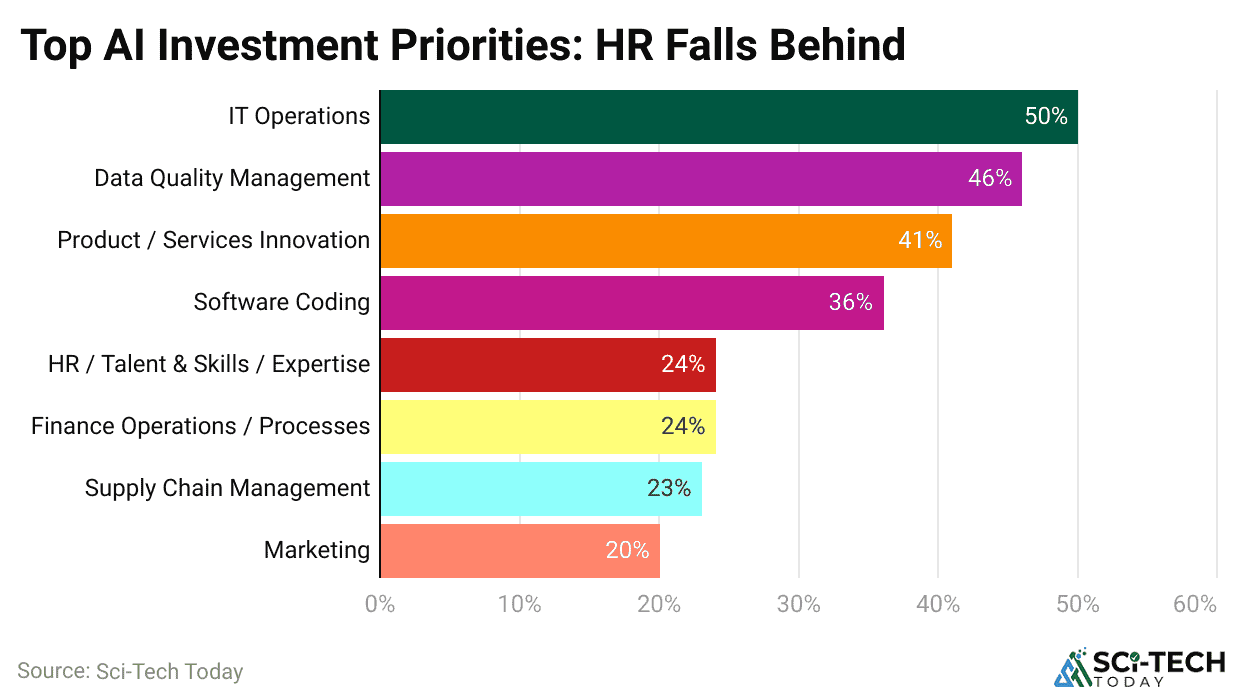
- HR receives merely 24% of total AI investment, while 63% goes to IT operations.
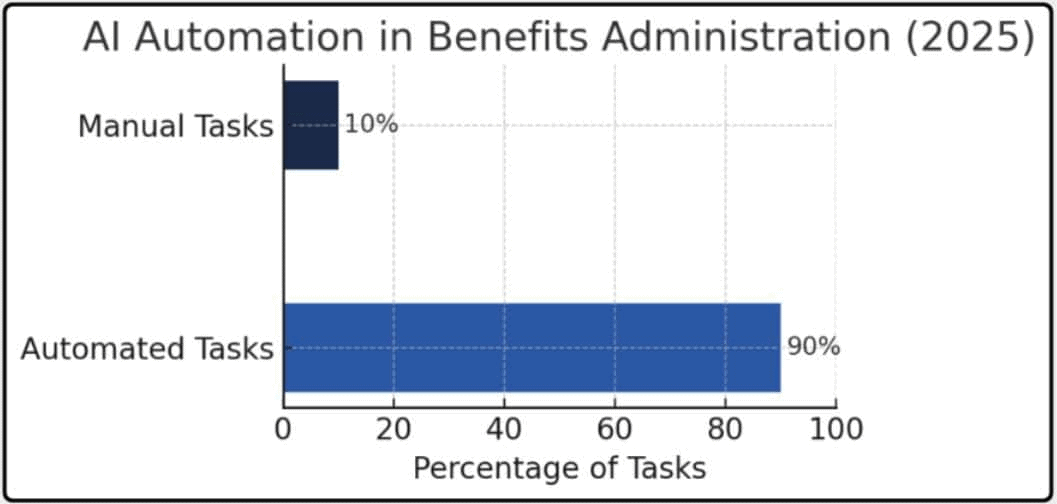
- Customized AI benefits lead to a 40% increase in employee satisfaction, while almost 90% of benefits administration tasks are handled by AI.
- AI coaching increases productivity by 35%, whereas skill assessment tools help to improve training efficiency by 45%.
- Generative AI is applied to write job descriptions by 40% of the companies, and 52% use chat-based AI tools for HR queries, answering employees.
- AI career pathing that is tailored to an individual’s needs can result in a 20% increase in employee retention, while the use of internal mobility platforms can lead to a 35% decrease in employee turnover.
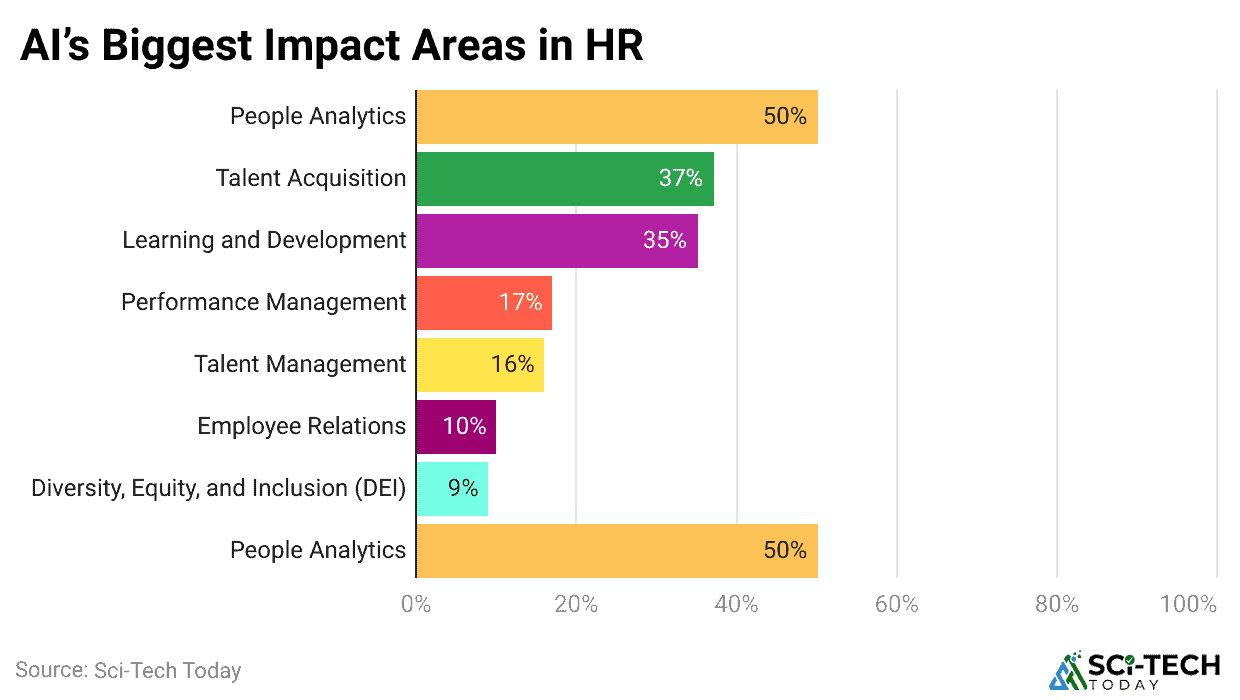
- The majority of people analytics (50%) consider it to be the most significant AI impact area in HR, and the others follow, by talent acquisition (37%) and learning and development (35%).
- In the case of 36% of AI algorithms, bias has been detected, whereas the use of bias detection tools may result in a reduction of unfair practices by 40%.
- It is estimated that the AI-enabled engagement surveys lead to a rise in the response rates by approximately 45%, and at the same time, the predictive analytics are capable of spotting employees who are not engaged 30% more quickly than the conventional methods.
- A little less than 47% of companies are having a hard time integrating AI into their current HR systems, while 40% are facing constraints related to budgets.
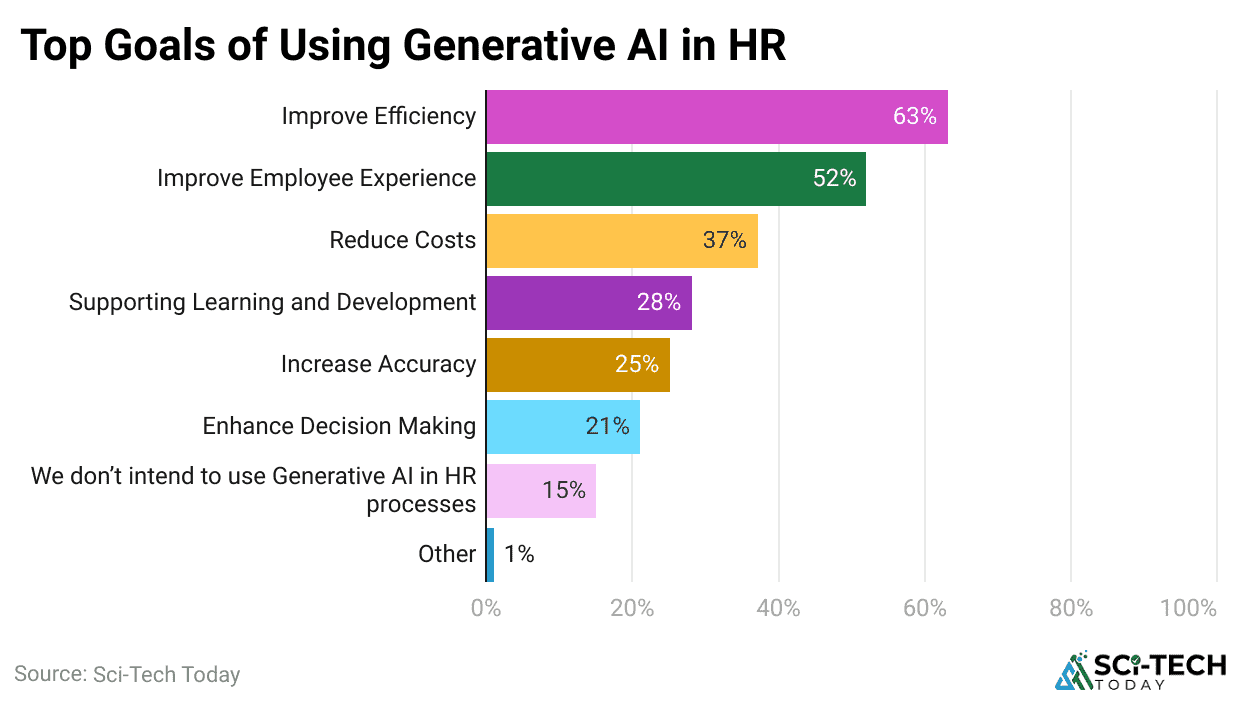
- Close to 63% of HR leaders consider the improvement of efficiency to be the main objective of the implementation of generative AI, whereas more than 50% intend to improve employee experience.
- AI-driven HR automation has led to a significant increase in operational efficiency of 33% in the case of manufacturing firms, while continuous learning tracking through AI is practiced by 72% of tech companies.
AI In HR Global Market
(Source: market.us)
- The global market of artificial intelligence for human resources is forecasted to grow by leaps and bounds over the next ten years.
- The market, which in 2023 will be approximately USD 5.9 billion, will more than quadruple and reach around USD 26.5 billion by the end of 2033.
- This predicted increase is due to the rising uptake of AI-enabled tools in various HR operations, which include recruitment, talent management, workforce analytics, employee engagement, and performance evaluation, and so on.
- With a 16.2% CAGR from 2024 to 2033, the investment flows will be sustained and accelerated as businesses will be the main players in the hunt for higher efficiency, data-based decision making, cost-cutting, and better employee experience.
Top Goals of Using Generative AI In HR
(Reference: sqmagazine.co.uk)
- According to the data, the majority of HR executives view generative AI mainly as a tool for making their job more efficient, and about two-thirds of HR leaders choose faster and more streamlined HR processes as their top priority.
- They also believe that AI can greatly boost the employee experience, for example, through the provision of better communication, personalized support, and smooth HR interactions.
- Reduction of costs is another consideration, and, therefore, more than one-third of HR departments predict that AI will cut their operational costs.
- Improving employee training, upskilling, and career progression are among the main areas where AI is reportedly being applied by some companies to facilitate and enhance learning and development.
- Others see AI as a tool to help with decision-making by providing data-backed insights or to increase the accuracy and decrease the human error in HR tasks.
- Meanwhile, there is a small group of HR leaders who are sceptical about the whole thing, with some stating that they do not intend to incorporate generative AI into their operations at all, while an even smaller segment has alternative objectives that are different from these primary ones.
AI In Employee Engagement And Experience
- AI is playing a crucial role in changing the way organizations assess and improve employee engagement.
- The technology provides support to HR departments by identifying employee mood, acknowledging the input of the individuals, and predicting the likelihood of staff turnover.
- In addition to facilitating the provision of feedback that is tailored to the individual, recommendations for personal development, and career paths, AI also plays a role in making the work experience more significant and hence happier, leading to retention over a long period.
- Over 45% increase in the engagement surveys driven by AI has led to the HR teams getting very accurate and timely employee feedback.
- The use of predictive analytics tools leads to spotting the disengaged employees 30% earlier than using traditional methods, which in turn leads to proactive interventions.
- Continuous recognition of employee contributions through real-time platforms powered by AI has resulted in a 33% increase in employee satisfaction, as the give and take of recognition is happening consistently.
- AI-assisted health and wellness programs have a positive impact on both employee stress and burnout, where the former is lowered by approximately 25%, and the latter is reduced by nearly 30%.
- The certainty of the professional development programs is further illustrated by the 20% retention that is perfectly attributed to the customized growth avenues.
- Such internal hiring and transfer processes that are based on AI computations can lower turnover by a stunning 35% since they would be able to match the ideal role and project for every employee.
- Quite a number of employees have started to trust AI, as about 50% of them think that it can provide unbiased and fair feedback.
- Moreover, 70% of the workforce indicates that AI helps the work-life balance to become better by taking over the monotonous tasks and streamlining HR operations.
- As we move toward the future, it is projected that by the year 2025, almost 80% of the workforce will be expecting to see AI-influenced professional development plans, which hints that the trend of personalization will be the center of the modern human resource strategies.
AI In Learning And Development of Employees
(Source: yomly.com)
- AI is revolutionizing the entire process of employee learning and professional growth in organizations.
- The latest intelligent learning systems offer individual training paths according to the learner’s skill level, performance analytics, and career aspirations.
- This customization renders the learning process more engaging, efficient, and impactful for the employees and the employer.
- Presently, 50% of the companies are depending on AI for the support of their training and development programs, which reflects the large-scale adoption in various industries.
- The learning programs that are powered by AI have been credited with increasing employee participation to the tune of about 72%, thereby preventing dropouts and having a larger pool of engaged employees.
- Moreover, the learning systems are said to enhance the retention of knowledge by nearly 60% as they cater to the diverse learning styles of the learners.
- AI-enabled coaching technologies have played a significant role in reaping the benefits of the employees’ acquisition of new skills as they get more and more productive in their work.
- The productivity of the employee cohort, for instance, has been said to grow by approximately 35% with the proper implementation of the employee’s new skills.
- Along these same lines, AI-powered skill assessment tools deliver roughly 45% effectiveness in training by identifying the areas where the employee lacks and providing them with relevant learning materials.
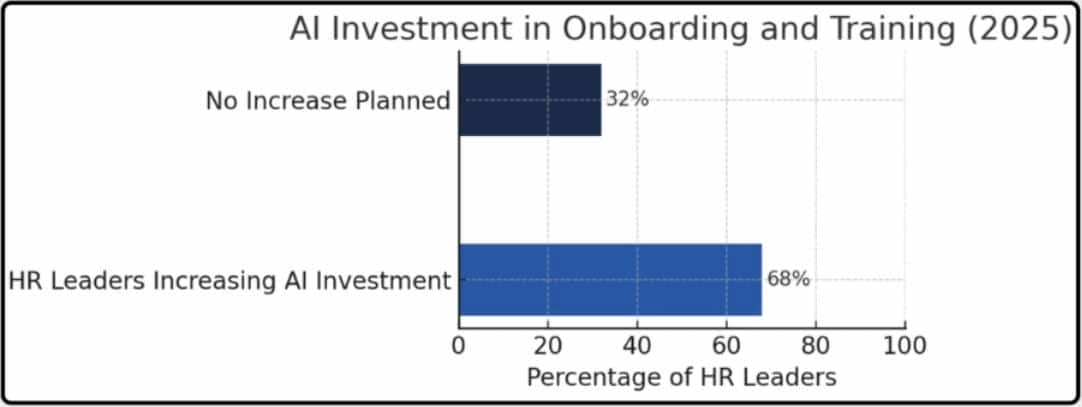
- Moreover, 68% of HR professionals are already planning to invest more in AI for onboarding and training in 2023 as they envision a roll-out of rapid, seamless, and flexible learning experiences that will not only be compatible with the staff’s needs but also with the company’s aims.
AI’s Biggest Impact Areas In HR
(Reference: sqmagazine.co.uk)
- AI is expected to have the most significant impact on people analytics, with 50% of the respondents choosing that area as the one where AI has the highest impact.
- Talent acquisition is the second area, with 37% of HR experts saying that AI will be a great factor in changing the hiring and recruitment processes.
- Learning and development is the next main concern, where 35% of HR professionals see the influence of AI through personalized training and skills development.
- Performance management is mentioned by 17% of the respondents, who think that AI will positively contribute to the adoption of goals, reviews, and evaluations.
- Talent management comes next with a percentage of 16%, which corresponds to the rising interest in AI-led workforce insights.
- Employee relations is viewed as having a lesser but still noticeable impact of 10%, while the area of diversity, equity, and inclusion is notched at 9%, which is a sign of the early but gradual acceptance of AI in this space.
HR Professionals’ Perceptions And Readiness For AI Integration
- In 2025, 58% of HR employees expressed their confidence in being competent enough to use AI tools in their work.
- Almost half (49%) have gone through formal AI training courses that were made available by their employers.
- On the other hand, just 17% claim they are perfectly prepared to face the ethical questions surrounding AI-based decisions.
- Out of the total, 63% of those surveyed assume that AI reinforces strategic decision-making, while 34% note the substantial decrease in their administrative workload.
- At the same time, 28% feel like they are losing the fight to cope with the pace of AI changes.
- Firms that adopted AI three years ago have a 31% higher overall readiness score.
- Danceparity between in-house AI literacy programs is now offered by 42% of US HR departments.
- 55% of CHROs listing AI as their number one HR digital priority is indeed striking. Moreover, 22% prefer hybrid human–AI decision models to full automation.
Industry-Specific Trends In AI-Enabled HR Practices
- The adoption of AI differs greatly among industries. 72% of tech companies employ AI in the area of continuous learning and development monitoring.
- Only 44% of the healthcare sector resorts to it in credential management and shift scheduling.
- Predictive demand tools are currently in use by 51% of retail companies for workforce scheduling, relying heavily on AI technology.
- In manufacturing, the HR department reports having increased the operational efficiency by 33% as a result of adopting AI-based automation.
- The finance sector sees AI as a helping hand, with 38% of firms depending on it for compliance and audit preparation.
- The educational sector uses AI in 29% of cases for workforce analytics and succession planning. Along with that, hotels and resorts are incorporating AI for multilingual onboarding in 40% of their global chains.
- Moreover, the power industry is using AI to predict labor shortages, as noted by 25% of the leaders in the sector.
- On the other hand, logistics is using 31% of AI to create a dashboard that tracks the performance across shifts, while legal firms, in 22% of the cases, are using AI for risk assessment and analysis of employee retention.
AI In Payroll, Compensation, And Benefits
(Source: yomly.com)
- AI is transforming the way HR departments handle payroll, salaries, and benefits by making the process faster, more accurate, and more consistent.
- Automated systems not only eliminate labor-intensive manual work but also contribute to lowering the error rates and thus allow even the smallest companies to carry out pay practices that are fair and open.
- AI-powered payroll platforms may reduce the time spent on processing by as much as 70%, which in turn allows quicker and more reliable payments.
- The use of AI in compensation models has been reported to improve pay equity by around 30%, thus assisting organizations in keeping their salary structures consistent.
- Besides that, personalized benefits may lead to a 40% increase in employee satisfaction, while nearly 90% of benefits administration tasks are currently being taken care of through automation.
- AI-driven salary benchmarking boosts competitiveness by 25%, predictive analytics raise benefits utilization by 22%, and AI-based expense systems reduce fraud risk by 50%.
AI In Ethics, Privacy, And Bias
(Source: yomly.com)
- The incorporation of AI in HR functions has raised the issues of ethical use, privacy, and bias to the top of the agenda.
- Companies are now more concerned with creating AI systems that are easy to understand, safe, and just.
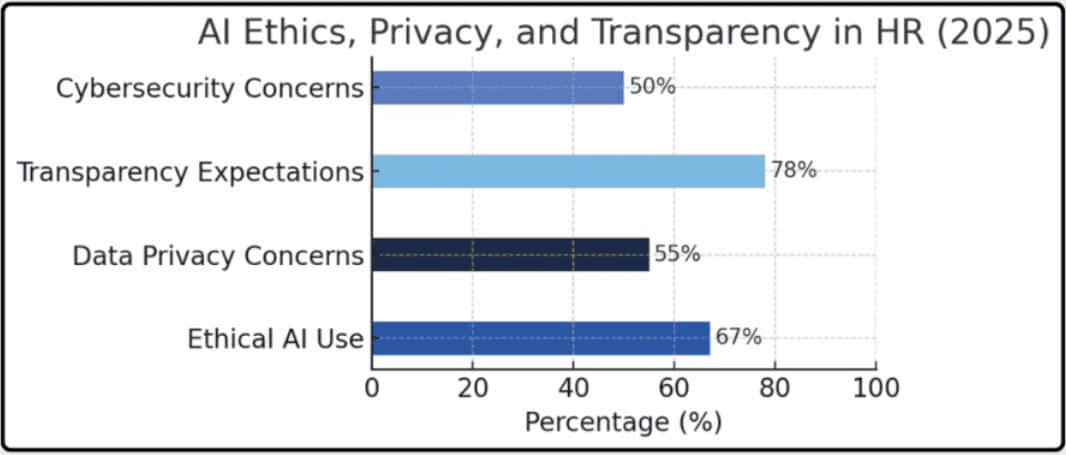
- Almost 67% of the heads of HR departments are now considering ethical AI practices as a priority, while 55% still express concerns about the issue of employee data protection.
- Employees value transparency; 78% expect to be informed as to how AI impacts HR decisions.
- 50% of the employees view cybersecurity as a key factor in the case of AI handling sensitive data, while one-third of the HR algorithms are thought to be biased according to the findings, hence the need for monitoring tools is emphasized.
- By investing in privacy technologies, a company could decrease the number of data breaches by 50%, while the introduction of bias-detection tools might result in a 40% reduction in unfair practices.
The Role of Generative AI In Transforming HR Workflows
- By the year 2025, generative AI is going to be a very useful tool for HR departments in the modern world. It will bring about a big change in the area of HR operations and the streamlining of daily workflows.
- Generative AI is already used by approximately 40% of companies for the creation of job postings and interview questions, which thus facilitates the faster and more consistent recruiting process.
- About one-third of HR departments are employing this technology to create individualized educational paths that are in line with candidates’ skills and career aspirations.
- In the case of one-fourth of the companies, HR considers these AI tools for creating internal communications such as policies, guidelines, and reviews, thus lessening the workload.
- Generative AI in HR communications and content production is said to have tripled efficiency in almost half of the companies.
- Chatbots for Human Resources are the most adopted application, as 52% of medium and large organizations have employed them to answer the employees’ HR questions and offer support in a real-time manner.
- The adoption of AI-assisted content creation has increased by 39% in 2025, which illustrates a trend towards the acceptance of automatic generation of content for learning and development.
- The use of harnessed AI in the leadership development process is also noticed by a percentage of HR personnel, where 26% are already using it for simulating coaching and feedback dialogues in manager training.
- Gone are the days of passive onboarding, since now 22% of companies are involved in AI-facilitated storytelling with avatars taking care of new hires.
- The supply of AI-generated FAQs and help resources has also cut down response times by 31%, thus enhancing the employee experience.
- Furthermore, 18% of organizations are making use of AI to guide them in designing the education and training programs related to diversity and inclusion, which demonstrates the growing presence of AI in various HR functions.
Top AI Investment Priorities – HR Falls Behind
(Reference: sqmagazine.com)
- The technical and operational spending areas are currently the main focus for AI spending, as 63% of the decision makers consider IT operations their first priority in terms of investments.
- Data quality management is also the second major factor at 46%, which emphasizes the fact that having accurate and properly organized data is crucial for obtaining successful AI results.
- Another 41% of companies are investing their AI funds into the creation of new products and services, thereby using automation and smartness to be ahead of their competitors.
- Software development is also a major area of attention, as 36% enterprises are looking to implement AI-driven tools in their coding and development processes.
- In comparison, AI investment focused on Human Resources remains quite limited.
- A mere 24% of enterprises are allocating their AI budget towards HR, talent management, and skills development, which is indicative of the slower pace of adoption when compared to other departments.
- Similarly, finance operations are receiving around the same amount of attention, with a 24% share of the anticipated AI investment.
- Supply chain management is almost at par with a 23% share, which signifies interest in predictive and optimization scenarios.
AI Challenges And Risks In HR
- There are initial drawbacks along with the benefits of the AI implementation in HR.
- Approximately 47% of organizations encounter difficulties combining AI with their present systems of HR systems.
- One-third of the companies have no internal AI experts, which makes the whole process even more complicated.
- Issues related to compliance and regulators are faced by 50% of organizations, and 45% are expecting skill gaps in the workforce.
- 40% of the businesses around the world are not able to use AI to its full potential due to financial restrictions.
Conclusion
AI in HR Statistics: By 2025, AI will be regarded as a principal instrumental force. It transforms all HR aspects, such as new hiring, learning, employee engagement, and preparing workforce numbers. The global market of AI in HR is on the rise quickly. This rise is driven by the demand for efficiency, improved employee experiences, and data-driven decisions. AI is playing a role in organizations to increase engagement. Additionally, it helps foresee attrition, customize learning, streamline payroll, and ensure compliance.
While productivity, retention, and satisfaction are some of the advantages, there are still issues concerning ethics, bias, integration, and skills gaps. The level of adoption differs from industry to industry. However, HR investments continue to be lower than IT. All in all, AI is the new driving force transforming how organizations handle their talent and people strategies.

Sources