









Beginning
Biopharmaceuticals Statistics: Biopharmaceuticals are changing the way diseases are treated. Made from living cells instead of chemical ingredients, these medicines offer more targeted and effective treatment for many serious health conditions. They are widely used to treat cancer, diabetes, autoimmune disorders, rare genetic diseases, and infectious illnesses. As demand for better healthcare grows, the biopharmaceutical industry is expanding quickly with breakthroughs in biotechnology, gene therapy, and personalized medicine. Strong investments in research and the rising use of biologic drugs and biosimilars are also driving this growth.
This article covers the latest biopharmaceutical statistics, market trends, key innovations, and industry insights that are shaping the future of healthcare worldwide.
Must-Read
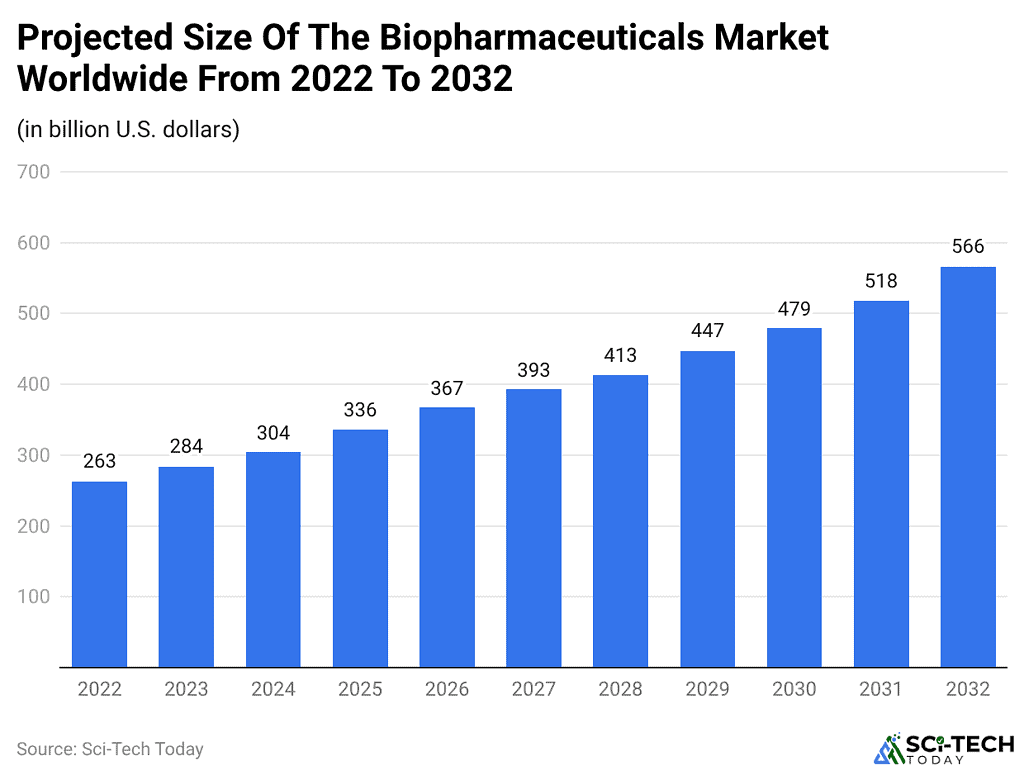
- The global biopharmaceuticals market is projected to grow from USD 336 billion in 2025 to USD 367 billion in 2026, reaching nearly USD 566 billion by 2032.
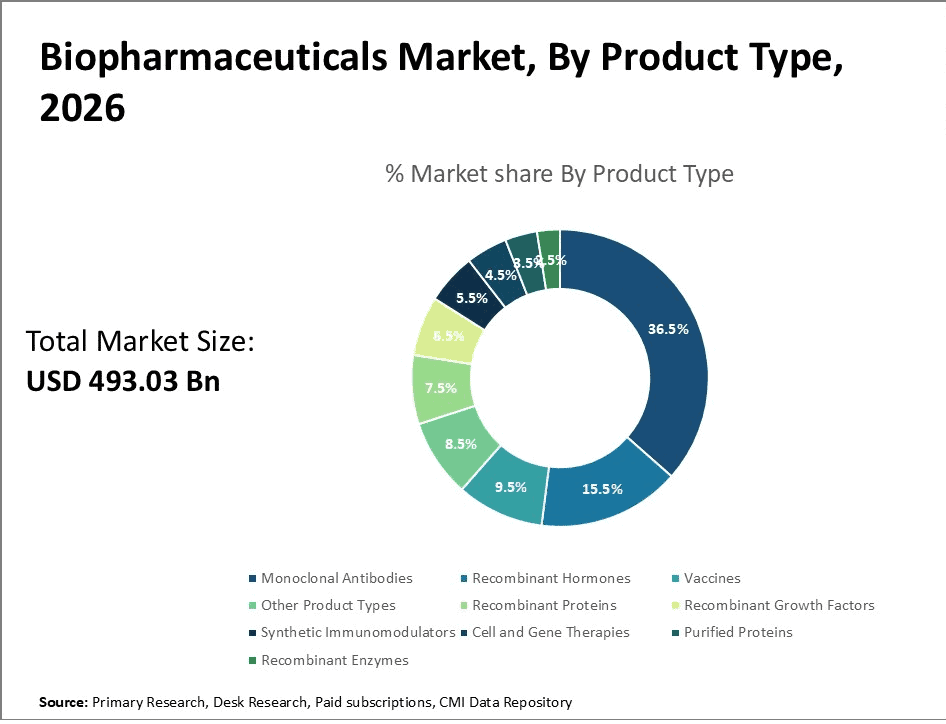
- Monoclonal antibodies remain the largest product category, accounting for 36.5% of the global biopharmaceutical market in 2026, followed by vaccines at 15.5%.
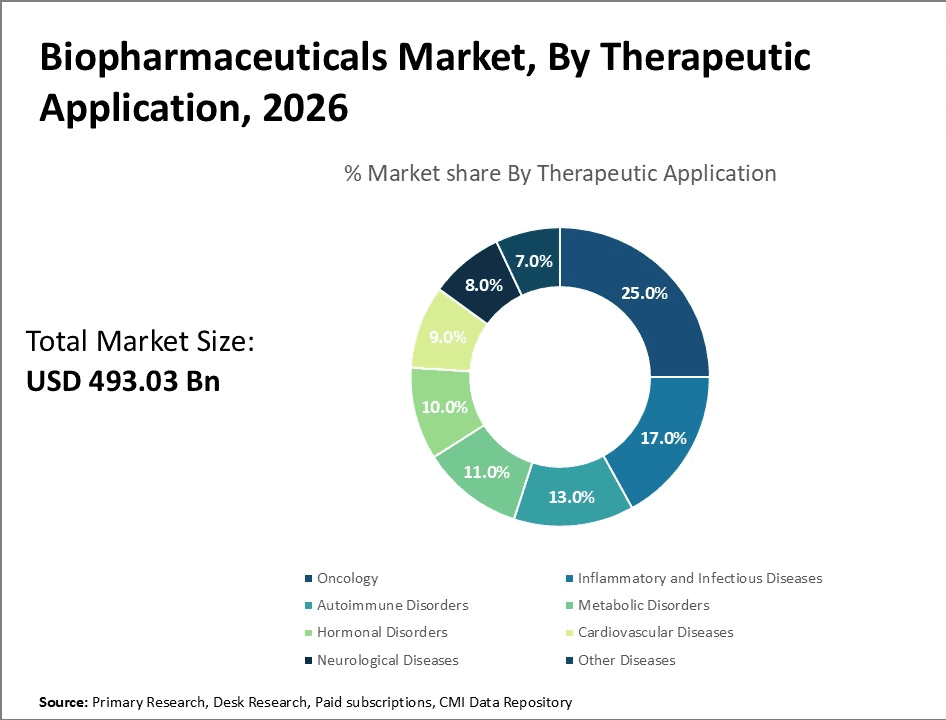
- Oncology is the leading therapeutic application, representing 25% of the global biopharmaceutical market, ahead of inflammatory and infectious diseases (17%).
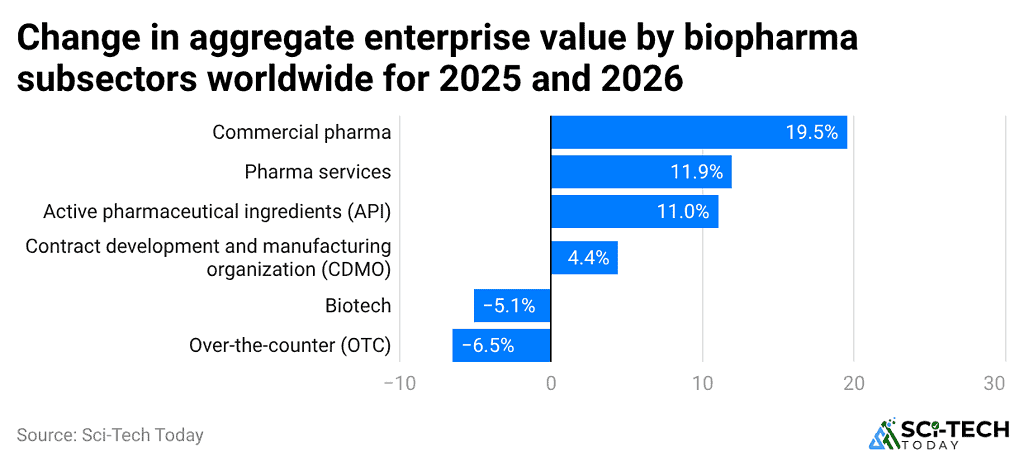
- Commercial pharma enterprise value increased 19.5% between 2025 and 2026.
- North America continues to dominate the industry, holding 40.7% of the global biopharmaceutical market in 2021 and remaining the largest regional market through 2030.
- The United States accounts for 40% of global sales of newly launched medicines, with sales valued at approximately USD 120 billion.
- Eli Lilly generated USD 65.17 billion in revenue in 2025, becoming one of the world’s highest-performing biopharmaceutical companies.
- AI in the biopharmaceutical market is expected to expand from USD 2.63 billion in 2026 to nearly USD 29.78 billion by 2035.
- Biopharma licensing activity reached USD 166.7 billion in announced R&D deal value during H1 2026, while biopharma M&A totaled USD 96 billion across 80 deals.
- Biopharma IPO activity rebounded sharply in H1 2026, with 13 IPOs raising USD 5.0 billion.
Global Biopharmaceuticals Market Outlook
(Reference: statista.com)
- In 2025, the worldwide biopharmaceuticals market is expected to reach about USD 336 billion.
- By 2026, the market is projected to grow further to nearly USD 367 billion.
- Looking ahead, the market size is forecast to climb steadily and could approach USD 566 billion by 2032.
Biopharmaceuticals Market by Product Type
(Source: coherentmarketinsights.com)
- In 2026, the global biopharmaceuticals market is led by monoclonal antibodies with a 36.5% share.
- Vaccines represent 15.5%, while recombinant proteins account for 9.5% and recombinant hormones hold 8.9%.
- Cell and gene therapies, recombinant growth factors, and purified proteins contribute 7.9%, 6.3%, and 5.5%, respectively.
- Synthetic immunomodulators, recombinant enzymes, and other product types together comprise the remaining 4.5%.
By Therapeutic Application
(Source: coherentmarketinsights.com)
- Oncology holds the largest share at 25%, confirming cancer as the primary focus area for biopharmaceutical development.
- Inflammatory and infectious diseases follow at 17%, while autoimmune disorders represent 13%.
- Hormonal disorders and metabolic disorders account for 11% and 10%, respectively.
- Cardiovascular diseases account for 9%, neurological diseases for 8%, and other diseases for the remaining 7%.
Change in Biopharma Enterprise Value, 2025-2026
(Reference: statista.com)
- Commercial pharma leads the sector with a 19.5% rise in enterprise value, while pharma services increase 11.9% as outsourcing and specialized support continue to grow.
- API companies record an 11% gain, reflecting stable upstream demand, while CDMOs post a 4.4% increase through steady project growth.
- Biotech declines 5.1% as investors remain cautious about early-stage assets, while OTC medicines fall 6.5% because of margin pressure and strong retail competition.
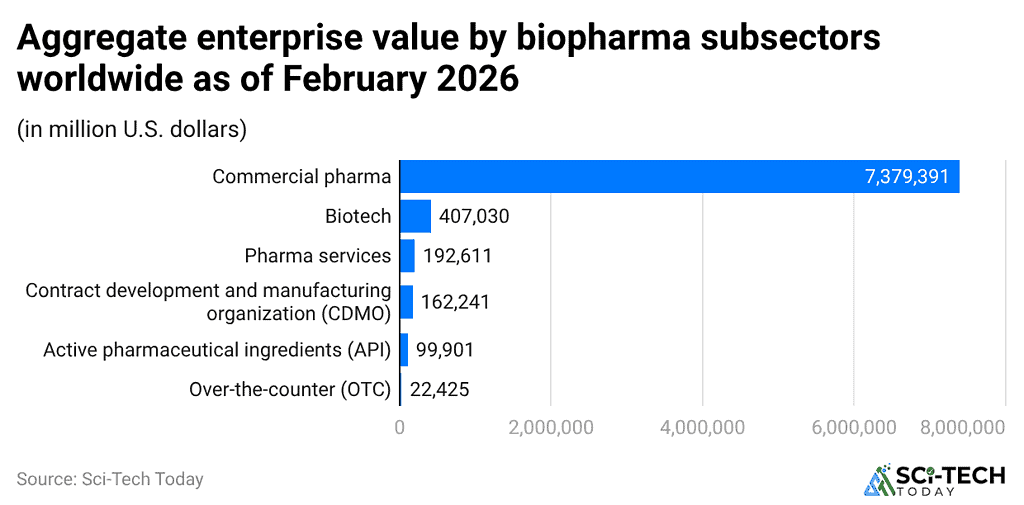
Biopharma Enterprise Value by Subsector
(Reference: statista.com)
- In February 2026, commercial pharma dominated biopharma, with enterprise value around USD 7,379,391 million.
- Biotech and pharma services were mid‑sized contributors, at USD 407,030 million and USD 192,611 million, respectively.
- Meanwhile, contract development and manufacturing organizations captured around USD 162,241 million, and active pharmaceutical ingredients made up USD 99,901 million.
- Over‑the‑counter medicines remained a smaller segment, with an enterprise value of USD 22,425 million.
Expected Deal Activity in Biopharma Services, 2026
| Biopharma Services Area | Expected Deal Activity Rate |
| CRO (Contract Research Organizations) | 53% |
| CDMO (Contract Development & Manufacturing Organizations) | 49% |
| Clinical trial services | 46% |
| Laboratory services | 39% |
| Commercial & consulting services | 28% |
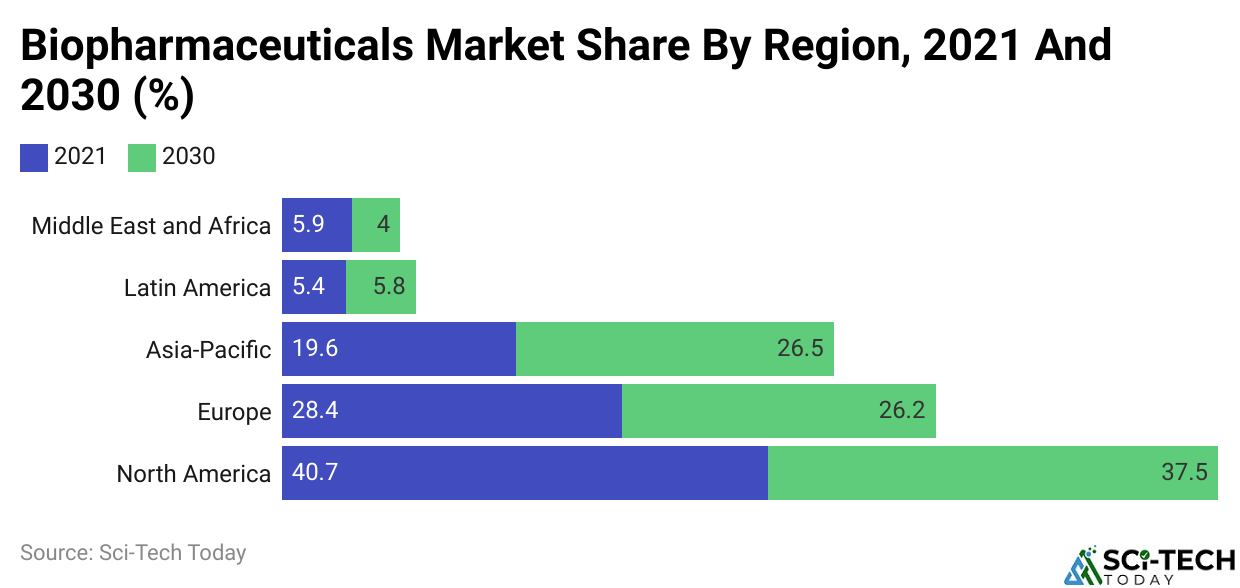
Biopharmaceutical Market Share By Region
(Reference: towardshealthcare.com)
- In 2021, North America led the market with a share of 40.7%, resulting in USD 115.6 billion. By 2030, the market will still dominate, with a share of around 37.5% (USD 200 billion).
Other regional analyses of the biopharmaceutical market are elaborated on below.
| Region | 2021 | 2030 |
| Europe | 28.4% (USD 80.6 billion) | 26.2% (USD 140 billion) |
| Asia-Pacific | 19.6% (USD 55.7 billion) | 26.5% (USD 141 billion) |
| Latin America | 5.4% (USD 15.3 billion) | 5.8% (USD 30 billion) |
| Middle East and Africa | 5.9% (USD 16.7 billion) | 4% (USD 21 billion) |
Top 10 Countries Breakdown of Sales Of New Medicines Launched
- The U.S. leads by a significant margin, driven by its large healthcare market, which has a sales valuation of USD 120 billion and contributes around 40% of the global sales of new medicines.
- Similarly, China is the second-largest market, accounting for 15% of new medicine sales, with a value of USD 45 billion.
Furthermore, the sales analyses by other countries in the same period are represented below:
| Country | Sales Value (USD) | Sales Share |
| Germany | 25 billion | 8.3% |
| Japan | 24 billion | 8% |
| France | 18 billion | 6% |
| United Kingdom | 15 billion | 5% |
| Italy | 12 billion | 4% |
| Canada | 10 billion | 3.3% |
| South Korea | 9 billion | 3% |
| Spain | 8 billion | 2.6% |
Leading Global Biopharmaceutical Companies Statistics
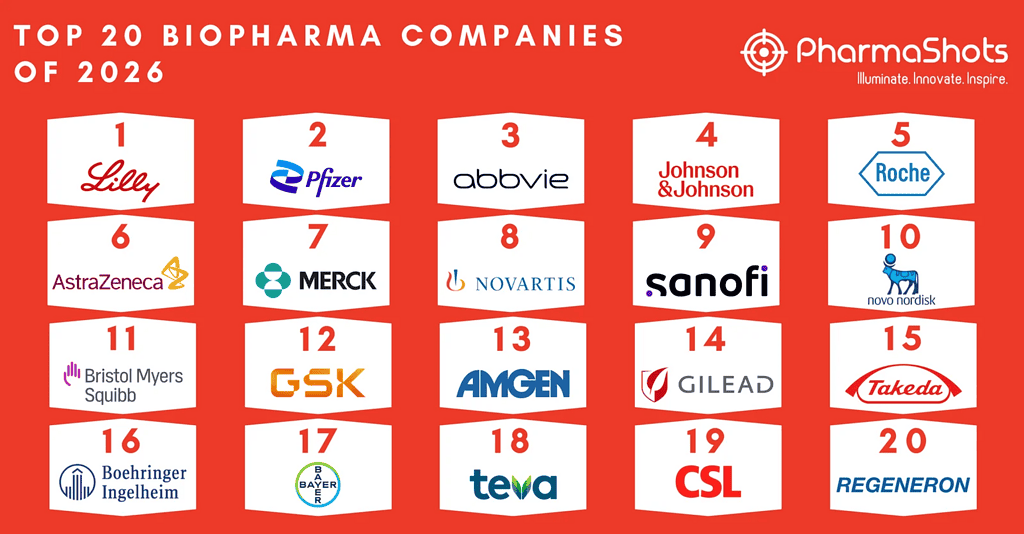
(Source: pharmashots.com)
Eli Lilly and Company (Lilly)
- Total revenue reached USD 65.17B in 2025. The company was founded in 1876, employs 50,000 people, is headquartered in Indiana, United States, has a USD 902.48B market cap, and is listed on the NYSE.
- Lilly focuses on diabetes, obesity, oncology, immunology, and neuroscience. Revenue increased 44.7% YoY, led by Mounjaro (USD 22.96B), Zepbound (USD 13.54B), and Verzenio (USD 5.72B).
- In Apr. 2026, the US FDA approved Foundayo (Orforglipron) for weight loss.
Pfizer
- Pfizer generated USD 61.19B in revenue in 2025. Founded in 1849, it has 75,000 employees, is based in New York, United States, has a USD 154.84B market cap, and trades on the NYSE.
- The company develops vaccines, oncology, cardiology, and rare disease treatments. Revenue declined 1.92% YoY, while Eliquis (USD 7.9B), Prevnar (USD 6.4B), and Vyndaqel (USD 6.38B) remained key products.
- In Feb. 2026, the US FDA fully approved the Braftovi regimen for metastatic colorectal cancer.
AbbVie
- AbbVie reported USD 61.16B in revenue. Founded in 2013, it employs 57,000 people, is headquartered in Illinois, United States, has a USD 375.69B market cap, and is listed on the NYSE.
- Revenue grew 8.56% YoY, supported by Skyrizi (USD 17.56B), Rinvoq (USD 8.3B), and Humira (USD 4.54B).
- In Jan. 2026, AbbVie signed an approximately USD 5.6B deal with Remegen for RC148.
Johnson & Johnson (J&J)
- J&J recorded USD 60.4B in revenue. Founded in 1886, it has 138,200 employees, is headquartered in New Jersey, United States, has a USD 581.22B market cap, and trades on the NYSE.
- Revenue increased 6.03% YoY, driven by Darzalex (USD 14.35B), Stelara (USD 6.07B), and Tremfya (USD 5.15B).
- In Jan. 2026, the US FDA approved the Darzalex FASPRO regimen for newly diagnosed multiple myeloma.
Roche
- Roche generated USD 60.34B in revenue. Founded in 1896, it employs 112,800 people, is headquartered in Basel, Switzerland, has a USD 328.89B market cap, and is listed on the SWX.
- The company combines pharmaceuticals and diagnostics, with revenue rising 18.05% YoY. Its top products include Ocrevus (USD 8.87B), Hemlibra (USD 6.01B), and Vabysmo (USD 5.19B).
- In Feb. 2026, the US FDA accepted Roche’s Giredestrant NDA for ESR1-mutated, ER-positive advanced breast cancer.
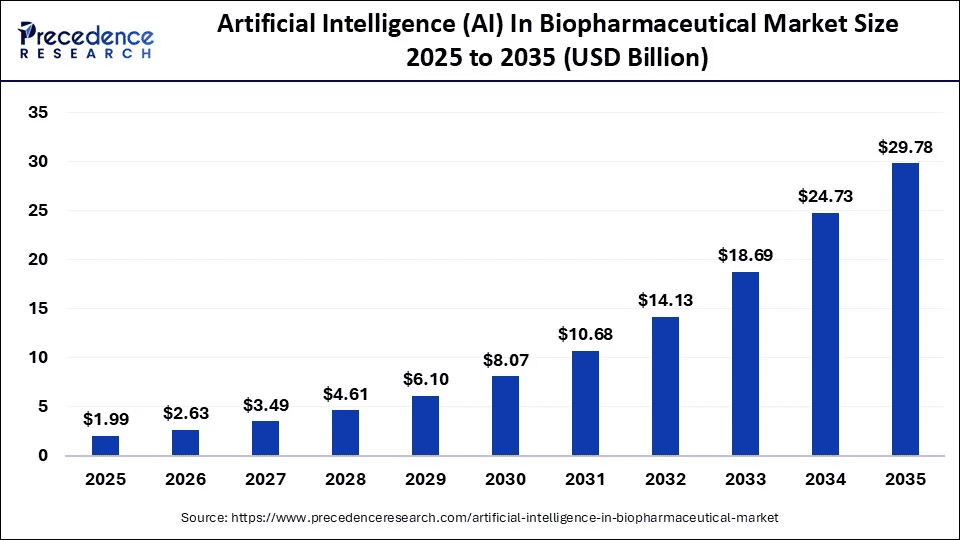
Artificial Intelligence In the Biopharmaceutical Market Size
(Source: precedenceresearch.com)
- In 2025, the AI in biopharmaceutical market is valued at about USD 1.99 billion, rising to USD 2.63 billion in 2026.
- By 2030, the market is projected to reach around USD 8.07 billion, reflecting strong adoption of AI-driven drug discovery and development tools.
- Looking ahead to 2035, the market is expected to scale sharply to nearly USD 29.78 billion.
- North America accounted for more than 46% of the global artificial intelligence in the biopharmaceutical market revenue in 2025.
- By application, drug discovery held the largest share at 35% in 2025, while the research segment is projected to grow at a 32.8% CAGR from 2026 to 2035.
- By technology, natural language processing generated over 32% of revenue in 2025.
- By offering, hardware led with 44% of the market.
- By deployment, the cloud segment captured 52% of the market share in 2025.
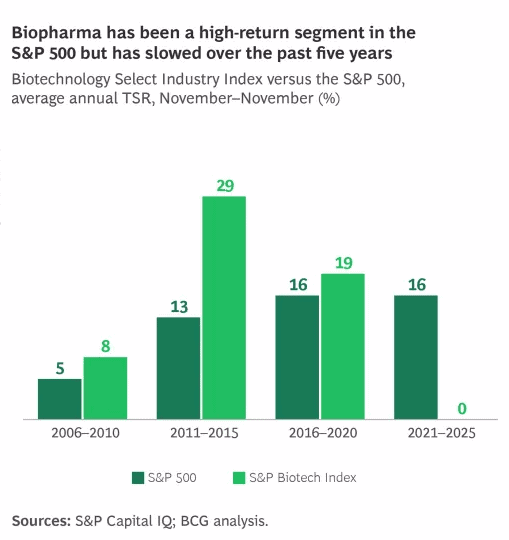
Biopharma shareholder returns overview by Long‑term Index Performance.
(Source: web-assets.bcg.com)
- Biopharma has historically delivered higher returns than the broader S&P 500, particularly during 2011-2015 when the S&P Biotech Index reached about 29%.
- From 2006-2010, biopharma outperformed with nearly 8% versus roughly 5% for the S&P 500.
- The return gap narrowed in 2016-2020, with biopharma at around 19% and the S&P 500 near 16%.
- In 2021-2025, biopharma performance slowed further, converging toward 0-16%.
Leading Biopharma Company Returns in 2025
- According to BCG, twelve of the top 20 global pharma companies delivered a one‑year total shareholder return above the S&P 500 benchmark of approximately 15%.
- Top performers achieved TSRs in the range of roughly 24%-58%, reflecting successful pipelines, disciplined capital allocation, and investor confidence.
- The weakest players recorded TSRs as low as about -57%.
Biopharma and Medtech Capital Markets Overview
- Biopharma and medtech capital markets started 2026 on a stable note, with investors focusing on later-stage assets and well-established programs.
- In biopharma, licensing activity remained strong, with total announced R&D deal value reaching USD 166.7 billion in H1 2026, while upfront payments accounted for 6% of total deal value, according to a report shared by JP Morgan.
- Biopharma M&A reached USD 96 billion across 80 deals, including USD 55.1 billion from 48 deals in Q2 2026.
- Venture funding totaled USD 16.3 billion across 235 rounds, while 13 IPOs raised USD 5.0 billion, exceeding every full-year total recorded between 2022 and 2025.
- In medtech, M&A reached USD 48.9 billion across 92 deals, including USD 22.3 billion from 47 deals in Q2 2026.
- Medtech venture funding totaled USD 5.0 billion across 164 rounds, while 2 IPOs raised USD 710 million. Licensing generated USD 5.8 billion, with only 1% paid upfront.
Product Development Updates
- April 2025: NVIDIA expanded its BioNeMo generative AI platform with new foundation models for protein structure prediction, molecular generation, and AI-powered drug discovery, helping biopharmaceutical companies speed up research.
- 2025: Insilico Medicine advanced multiple AI-designed drug candidates into clinical development, strengthening the use of AI in biopharmaceutical R&D.
- November 2025: AI-supported therapies, including DARZALEX FASPRO, KEYTRUDA QLEX, and EYLEA HD, reached commercialization, reflecting wider AI adoption in product development.
- April 2026: The U.S. FDA approved Foundayo (orforglipron) in just 50 days, 294 days ahead of its PDUFA date, making it the first NME approved under the National Priority Voucher Program and the fastest approval since 2002.
- May 2026: Takeda reported 3 positive Phase 3 readouts, 2 regulatory submissions, and plans for 3 major product launches within the next 12 months.
- May 2026: Novo Nordisk said AI could shorten the path from late-stage trials to regulatory filing by up to two-thirds, improving development speed.
Closing
Biopharmaceuticals are changing the way many diseases are treated by offering safer and more targeted medicines. They are helping improve care for cancer, rare diseases, and many long-term health conditions. While high costs and strict regulations remain challenges, new research and better technology continue to drive growth.
As more innovative treatments become available, biopharmaceuticals will play a bigger role in improving healthcare, giving patients better treatment options, and supporting longer, healthier lives.
FAQ
Biopharmaceuticals are made from living cells using biotechnology, while traditional medicines are chemically manufactured using synthetic ingredients and processes.
Biopharmaceuticals treat cancer, diabetes, autoimmune disorders, infections, rare diseases, and genetic conditions.
Biopharmaceuticals are made by genetically engineered living cells, then purified, tested, and packaged for medical use.

Sources