






Preface
Gene Therapy Statistics: Leading the charge in modern medicine, gene therapy presents hopeful solutions to some previously incurable genetic disorders. By altering or transplanting defective genes, this revolution in healthcare could potentially change the face of such treatment. As we move into the 2025 arena, gene therapy is fast becoming the most talked-about thing in medicine, showing very high and significant developments with increasing market value, along with more activity in clinical trials.
The article will detail some of the industry-shaping gene therapy statistics and trends applicable to the current year.
Editor’s Pick
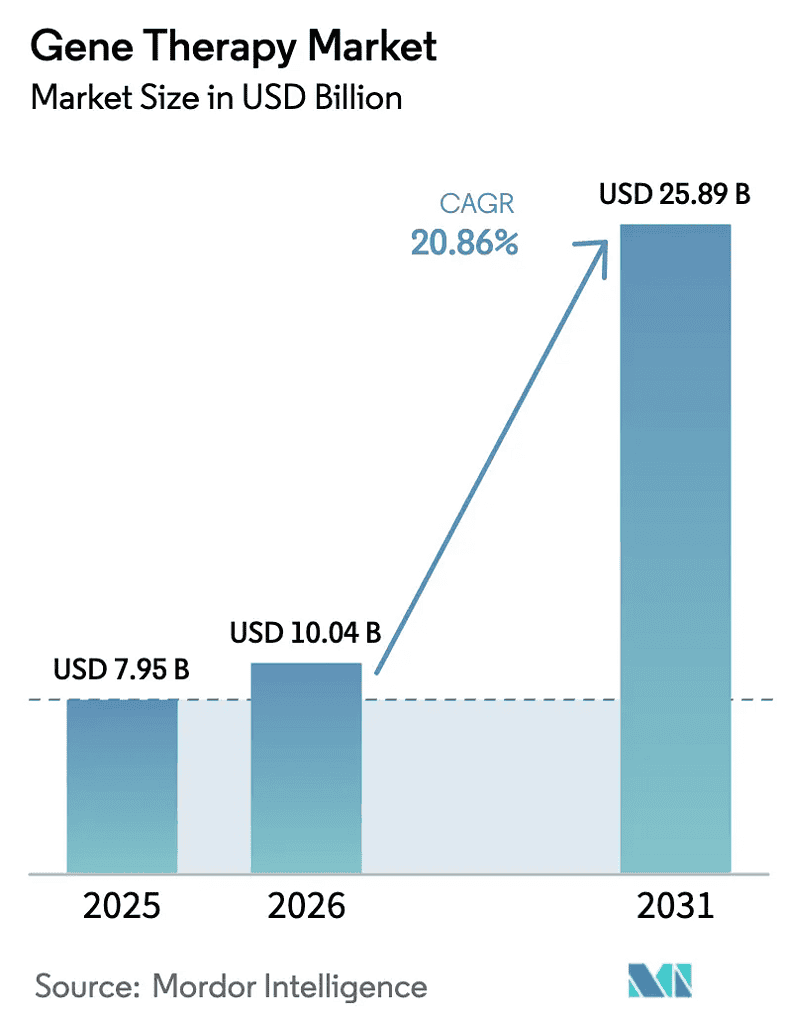
- The global gene therapy market was valued at USD 7.95 billion in 2025 and is expected to grow from USD 10.04 billion in 2026 to USD 25.89 billion by 2031, at a 20.86% CAGR.
- North America accounted for 41.36% of the market in 2025, while Asia-Pacific is expected to record the highest CAGR at 28.78% during 2026-2031.
- Phase I recorded the strongest and most consistent growth, increasing from 225 programs in Q1 2021 to 377 in Q3 2025, representing a 68% increase.
- By Q3 2025, oncology and rare diseases remained the leading therapeutic areas, while CAR-T therapies accounted for approximately 50% of genetically modified cell therapy programs.
- The global cancer gene therapy market was valued at USD 4.98 billion in 2026, up from USD 4.14 billion in 2025.
- The global AAV gene therapy market is valued at USD 4.35 billion in 2026 and is expected to reach USD 21.57 billion by 2033, growing at a 25.7% CAGR during 2026-2033.
- Krystal Biotech leads with a market capitalization of USD 8.3 billion in 2026.
- Oncology holds the largest share at 30%, covering both solid tumors and blood cancers.
- The most commonly used molecule is CD19, with 131 active gene therapy clinical trials associated with it.
- Adenoviral (Ad) vectors remain one of the largest platforms, with 83 active trials identified.
- Zolgensma for spinal muscular atrophy (SMA) is priced at USD 2.125 million.
- Annuity payment models spread treatment costs over 3-5 years instead of a single upfront payment.
Recent Developments in Gene Therapy
- In January 2026, Orchard Therapeutics and Alnylam expanded their portfolios targeting ultra-rare diseases.
- In February 2026, CRISPR-based in vivo gene editing showed rapid progress, enabling one-time treatments.
- In February 2026, Amgen and Ferring increased R&D investments and partnerships.
- In March 2026, Spark Therapeutics and Krystal Biotech advanced AAV-based therapies across eye, skin, and rare diseases.
- In March 2026, bluebird bio and CSL Behring strengthened efforts in beta-thalassemia, sickle cell disease, and hemophilia through ongoing trials.
- In April 2026, Novartis, Vertex Pharmaceuticals, and Sarepta Therapeutics expanded Phase 2/3 pipelines, focusing on rare genetic, neuromuscular, and blood-related diseases to speed up commercialization.
Gene Therapy Market Size
(Source: mordorintelligence.com)
- The global gene therapy market was valued at USD 7.95 billion in 2025 and is expected to grow from USD 10.04 billion in 2026 to USD 25.89 billion by 2031, at a 20.86% CAGR.
- In vivo gene therapy held the largest share at 67.31% in 2025, while ex vivo therapy is projected to grow at the fastest CAGR, at 21.97%, through 2031.
- Viral vectors accounted for 74.83% of the market in 2025, while non-viral vectors are expected to grow at 23.41% CAGR.
- Oncology generated 44.15% of revenue in 2025, while neurology is forecast to expand at 22.71% CAGR.
- Systemic delivery led with 46.36% market share, while localized delivery is expected to grow at 25.18% CAGR.
- Hospitals and specialty clinics accounted for 53.66% of revenue, while academic and research institutes are projected to grow at a 26.64% CAGR.
- North America accounted for 41.36% of the market in 2025, while Asia-Pacific is expected to record the highest CAGR at 28.78% during 2026-2031.
Cell and Gene Therapy Market Regional Outlook
- North America remained the largest market, growing from USD 5.04 billion in 2024 to USD 6.42 billion in 2025, according to Fortune Business Insights.
- Moreover, the U.S. market is estimated at USD 7.95 billion in 2026, representing 48.34% of the global market.
- Europe is expected to grow at a 28.43% CAGR, reaching USD 4.47 billion by 2026. The U.K. market is projected at USD 0.72 billion (4.40%), while Germany is expected to reach USD 1.09 billion (6.64%).
- Asia Pacific is forecast to reach USD 2.18 billion in 2026. China is estimated at USD 0.79 billion (4.78%), Japan at USD 0.44 billion (2.65%), and India at USD 0.18 billion (1.11%).
- Latin America is projected to reach USD 0.67 billion by 2026, while the GCC market is expected to reach USD 0.33 billion.
- South Africa is estimated at USD 0.01 billion, accounting for 1.54% of the global market.
Gene Therapy Pipeline Trends by Development Phase
(Source: statista.com)
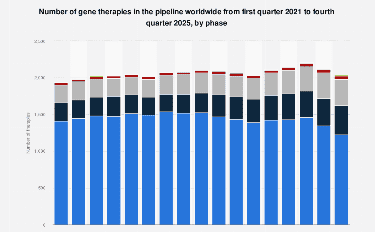
- Preclinical remained the largest stage of the gene therapy pipeline throughout the period. It reached a peak of 1,539 programs in Q2 2023.
- Phase I recorded the strongest and most consistent growth, increasing from 225 programs in Q1 2021 to 377 in Q3 2025, representing a 68% increase.
- The largest quarterly increase occurred in Q1 2024, when the number of programs rose from 270 to 301 (11%).
- Phase II expanded from 231 to 347 programs between Q1 2021 and Q3 2025, with faster growth beginning in Q4 2023 as more therapies advanced into clinical development.
- Phase III remained the smallest clinical stage, ranging from 27 to 47 programs.
- After remaining at 30 programs for three consecutive quarters in 2023, it increased to 47 by Q3 2025, with a notable rise from 35 to 41 in Q1 2025.
- Pre-registration programs fluctuated between 4 and 13, with 11-13 programs recorded during late 2024 and early 2025, reflecting increased regulatory submissions in the U.S., EU, China, and South Korea.
- Overall, the pipeline grew from 1,711 programs in Q1 2021 to 2,210 in Q2 2025, a cumulative increase of 29%.
- Growth reached approximately 16% between Q1 2021 and Q1 2022, followed by annual growth of 6%-7% during 2022-2023.
- By Q3 2025, oncology and rare diseases remained the leading therapeutic areas, while CAR-T therapies accounted for approximately 50% of genetically modified cell therapy programs.
Cancer Gene Therapy Market Highlights
(Source: precedenceresearch.com)
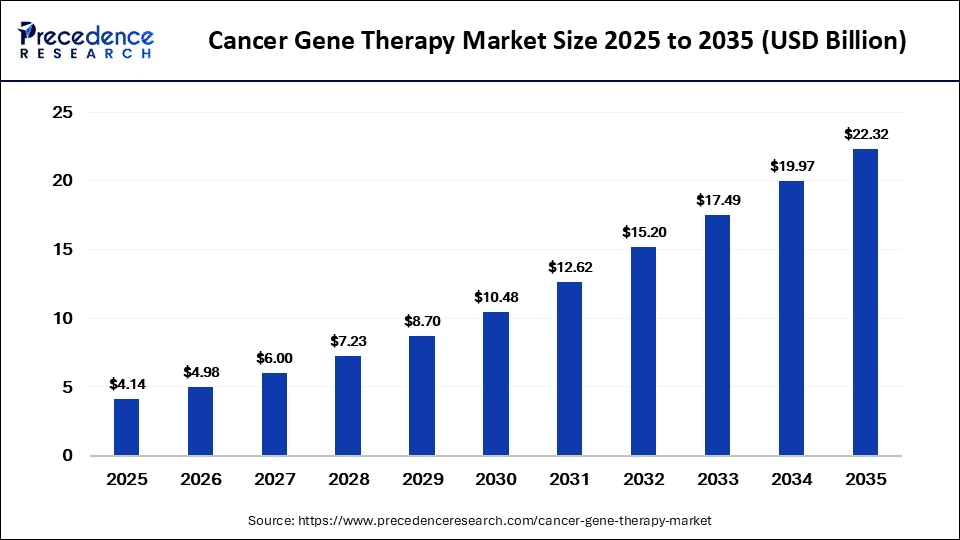
- The global cancer gene therapy market was valued at USD 4.98 billion in 2026, up from USD 4.14 billion in 2025.
- The market is expected to reach USD 22.32 billion by 2035, growing at a CAGR of 18.35% from 2026 to 2035.
- North America accounted for over 62% of the market revenue in 2025.
- The gene-induced immunotherapy segment held more than 41% of the revenue share.
- Biopharmaceutical companies captured the largest end-user revenue share of around 46%.
AAV Gene Therapy Market Insights
- According to Coherent Market Insights, the global AAV gene therapy market is valued at USD 4.35 billion in 2026 and is expected to reach USD 21.57 billion by 2033, growing at a 25.7% CAGR during 2026-2033.
- The AAV9 segment is expected to hold the largest share, accounting for 28.4% of the global market in 2026.
- Neurological disorders are projected to be the leading application, contributing 36.6% of the market.
- The central nervous system segment is expected to account for 33.1% of the market share.
- North America is expected to lead the global market with a 39.5% share in 2026, while Asia Pacific is projected to be the fastest-growing region, accounting for 23.5% of the market.
Gene and Cell Therapy Companies Market Capitalization, 2026
(Reference: statista.com)
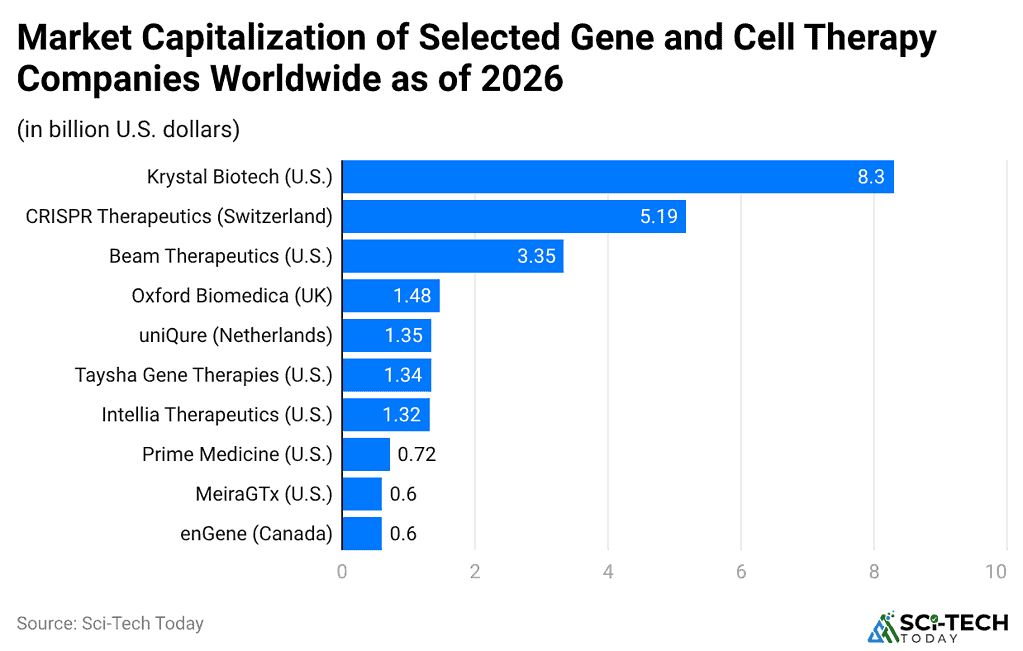
- Krystal Biotech leads with a market capitalization of USD 8.3 billion, indicating strong investor confidence.
- CRISPR Therapeutics follows at USD 5.19 billion, driven by gene-editing advancements.
- Beam Therapeutics reports USD 3.35 billion in revenue, reflecting growth in base-editing technology.
- Mid-sized firms include Oxford Biomedica at USD 1.48 billion and uniQure at USD 1.35 billion.
- Taysha Gene Therapies and Intellia Therapeutics stand at USD 1.34 billion and USD 1.32 billion, respectively.
- Smaller players include Prime Medicine (USD 0.72 billion), MeiraGTx (USD 0.6 billion), and enGene (USD 0.6 billion).
U.S. Gene Therapy Clinical Trials by Indication (2025-2026)
- A report published by Towards Healthcare, Oncology holds the largest share at 30%, covering both solid tumors and blood cancers.
- Cardiology accounts for 25% and is the fastest-growing segment, driven by new therapies for inherited and ischemic heart diseases.
- Central nervous system (CNS) disorders represent 10%, including neurodegenerative and neuromuscular diseases.
- Musculoskeletal disorders account for 5%, mainly involving rare genetic muscle diseases.
- Infectious diseases, dermatology, endocrine and metabolic disorders, immunology and inflammation, ophthalmology, hematology, gastroenterology, and other indications each contribute 5% of U.S. gene therapy clinical trials.
Number Of Oncology Gene Therapy Pipelines
(Reference: asgct.org)
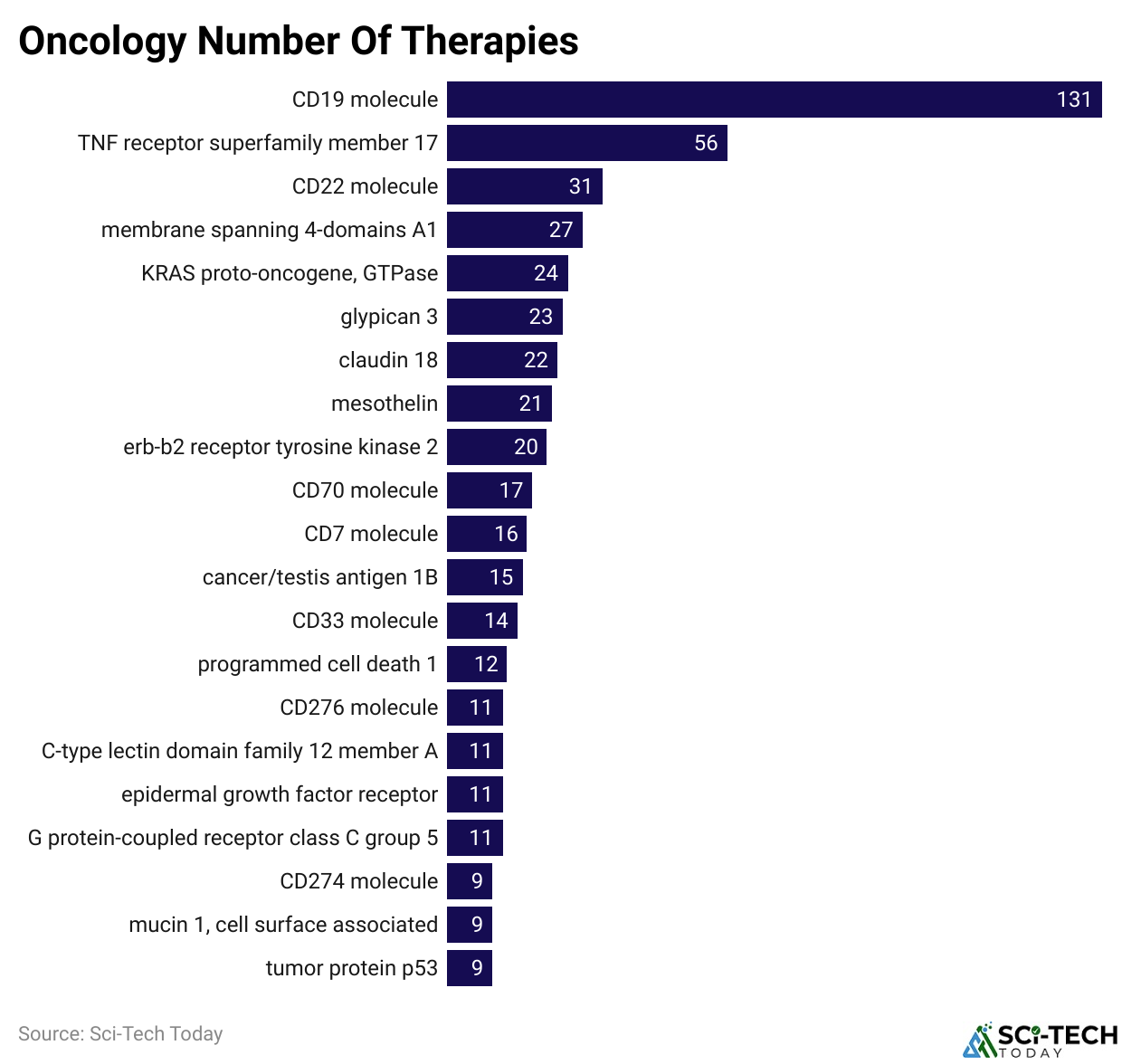
- Oncogenics refers to the pipeline from gene therapy for the cure of malignancies, and each target represents a different molecule or protein involved in the development process and cancer treatment.
- According to gene therapy statistics, the most commonly used molecule is CD19, and there are 131 active gene therapy clinical trials associated with it. Next, with 56 clinical trials, the TNF receptor superfamily member 17 is also the target.
- Other important targets include: CD22 molecule (31 trials), “membrane spanning 4 -domains” A1 (27 trials), KRAS proto-oncogene, GTPase (24 trials), glypican 3 (23 trials), claudin 18 (22 trials), mesothelin (21 trials), erb-b2 receptor tyrosine kinase 2 (20 trials), CD70 molecule (17 trials), and CD7 molecule (16 trials).
- Other targets include cancer/testis antigen 1B (15 trials), CD33 molecule (14 trials), and programmed cell death 1 (12 trials). The molecule was assigned to CD276: 11 trials, and C-type lectin domain family 12 member A also has 11 trials.
- Gene therapy statistics show the incredible breadth of targets available in genetic research aimed at the treatment of cancer, particularly what relates to molecules involved in the immune system and tumour-specific antigens.
Global Gene Therapy Clinical Trials by Vector Type, 2026
- Adenoviral (Ad) vectors remain one of the largest platforms, with 83 active trials identified. Although their share is declining, they are still widely used in oncology, vaccines, and infectious diseases.
- Adeno-associated virus (AAV) vectors account for a high share of ongoing in vivo trials, especially for rare genetic diseases, including ophthalmology, hemophilia, central nervous system (CNS), metabolic, and neuromuscular disorders.
- Lentiviral (LV) vectors hold a moderate-to-high share and support 700+ active cell therapy trials, primarily for hematologic cancers, immunology, and rare blood disorders.
- Retroviral (non-LV) vectors have a low share and are mainly used in older oncology and hematopoietic stem cell (HSC) programs.
- HSV and other oncolytic viruses have a low but important role in solid tumor immuno-oncology studies.
- Non-viral vectors, including DNA and lipid nanoparticles (LNPs), currently account for a small but growing share of early-stage trials in cancer, immunology, rare diseases, and RNA-based therapies.
2026 Price Overview of Selected Gene Therapies
- Zolgensma for spinal muscular atrophy (SMA) is priced at USD 2.125 million, according to a report shared by intuitionlabs.ai.
- Luxturna costs USD 850,000 for both eyes and has an estimated cost-effectiveness of USD 643,000 per QALY.
- Zynteglo for beta-thalassemia is priced at USD 2.8 million per infusion, with a 5-year payment plan of about USD 357,000 per year.
- Lyfgenia costs USD 3.1 million, around 40% higher than Casgevy.
- Roctavian is priced at USD 2.9 million in the U.S. and about USD 900,000 in Germany, but was withdrawn in Q4 2025.
- Hemgenix costs USD 3.5 million per infusion, replacing a treatment that costs about USD 300,000 per year.
- Libmeldy (Lenmeldy) costs USD 4.25-4.5 million, making it the highest-priced gene therapy.
- Vyjuvek costs USD 25,545 per dose, with an estimated lifetime cost of USD 15-22 million.
- Yescarta has a U.S. list price of about USD 399,000.
Gene Therapy Payment and Financing Models
- Annuity payment models spread treatment costs over 3-5 years instead of a single upfront payment. In one example, paying USD 4,967 per year for 3 years instead of USD 18,300 upfront increased patient access from 3,279 to 4,027, a 23% improvement.
- Outcomes-based agreements link payments to treatment success. For example, Zynteglo uses a 5-year payment plan of USD 357,000 per year, reaching USD 1.8 million only if the therapy continues to work.
- Reinsurance and payer pools help insurers share the financial risk of expensive gene therapies, while dedicated healthcare funds also support access.
- Other approaches include subscription-based payment models, health outcome bonds, and government-supported funding.
Approved gene therapies as of Q1 2026
| Product Name | Generic Name | Year First Approved | Approved Disease(s) | Locations Approved | Originator Company |
| Gendicine | Recombinant p53 gene | 2004 | Head and neck cancer | China | Shenzhen SiBiono GeneTech |
| Oncorine | E1B/E3-deficient adenovirus | 2005 | Head and neck cancer; nasopharyngeal cancer | China | Shanghai Sunway Biotech |
| Rexin-G | Mutant cyclin-G1 gene | 2006 | Solid tumors | Philippines | Epeius Biotechnologies |
| Neovasculgen | Vascular endothelial growth factor gene | 2011 | Peripheral vascular disease; limb ischemia | Russian Federation, Ukraine | Human Stem Cells Institute |
| Imlygic | Talimogene laherparepvec | 2015 | Melanoma | United States, European Union, United Kingdom, Australia, China | Amgen |
| Strimvelis | Autologous CD34+ enriched cells | 2016 | Adenosine deaminase deficiency | European Union, United Kingdom | Orchard Therapeutics |
| Kymriah | Tisagenlecleucel | 2017 | Acute lymphocytic leukemia; diffuse large B-cell lymphoma; follicular lymphoma | United States, European Union, United Kingdom, Japan, Australia, Canada, South Korea, Switzerland, Brazil | Novartis |
| Luxturna | Voretigene neparvovec | 2017 | Leber’s congenital amaurosis; retinitis pigmentosa | United States, European Union, United Kingdom, Australia, Brazil, Canada, South Korea, Japan, Russian Federation | Spark Therapeutics (Roche) |
| Yescarta | Axicabtagene ciloleucel | 2017 | Diffuse large B-cell lymphoma; non-Hodgkin’s lymphoma; follicular lymphoma | United States, European Union, United Kingdom, Japan, Canada, China, Australia, Brazil, Israel, Singapore, South Korea | Kite Pharma (Gilead) |
| Zolgensma | Onasemnogene abeparvovec | 2019 | Spinal muscular atrophy | United States, European Union, United Kingdom, Japan, Australia, Canada, Brazil, Israel, Taiwan, South Korea, China | Novartis |
| Zynteglo | Betibeglogene autotemcel | 2019 | Transfusion-dependent beta thalassemia | United States | Genetix Pharmaceuticals (formerly bluebird bio) |
| Tecartus | Brexucabtagene autoleucel | 2020 | Mantle cell lymphoma; acute lymphocytic leukemia | United States, European Union, United Kingdom, Australia, Canada, Brazil | Kite Pharma (Gilead) |
| Libmeldy | Atidarsagene autotemcel | 2020 | Metachromatic leukodystrophy | European Union, United Kingdom, Switzerland, United States | Orchard Therapeutics |
| Breyanzi | Lisocabtagene maraleucel | 2021 | Diffuse large B-cell lymphoma; follicular lymphoma; chronic lymphocytic leukemia; mantle cell lymphoma; marginal zone lymphoma | United States, Japan, European Union, Switzerland, United Kingdom, Canada | Celgene (Bristol Myers Squibb) |
| Abecma | Idecabtagene vicleucel | 2021 | Multiple myeloma | United States, Canada, European Union, United Kingdom, Japan, Israel, Switzerland | Genetix Biotherapeutics (formerly bluebird bio) |
| Delytact | Teserpaturev | 2021 | Malignant glioma | Japan | Daiichi Sankyo |
| Relma-cel | Relmacabtagene autoleucel | 2021 | Diffuse large B-cell lymphoma; follicular lymphoma; mantle cell lymphoma | China, Macao | JW Therapeutics |
| Skysona | Elivaldogene autotemcel | 2021 | Early cerebral adrenoleukodystrophy (CALD) | United States | Genetix Biotherapeutics (formerly bluebird bio) |
| Carvykti | Ciltacabtagene autoleucel | 2022 | Multiple myeloma | United States, European Union, United Kingdom, Japan, Brazil, Australia, Canada, China | Legend Biotech |
| Upstaza | Eladocagene exuparvovec | 2022 | Aromatic L-amino acid decarboxylase (AADC) deficiency | European Union, United Kingdom, Israel, United States, Brazil | PTC Therapeutics |
| Roctavian | Valoctocogene roxaparvovec | 2022 | Hemophilia A | European Union, United States, Brazil | BioMarin |
| Hemgenix | Etranacogene dezaparvovec | 2022 | Hemophilia B | United States, European Union, United Kingdom, Canada, Switzerland, Australia, Hong Kong, Saudi Arabia, South Korea, Taiwan | uniQure |
| Adstiladrin | Nadofaragene firadenovec | 2022 | Bladder cancer | United States | Merck & Co. |
| Elevidys | Delandistrogene moxeparvovec | 2023 | Duchenne muscular dystrophy | United States, Brazil, United Arab Emirates, Qatar, Kuwait, Bahrain, Oman, Israel, Japan | Sarepta Therapeutics |
| Vyjuvek | Beremagene geperpavec | 2023 | Dystrophic epidermolysis bullosa | United States, European Union, Japan | Krystal Biotech |
| Fucaso | Equecabtagene autoleucel | 2023 | Multiple myeloma | China, Hong Kong, Macao | Nanjing IASO Biotechnology |
| Casgevy | Exagamglogene autotemcel | 2023 | Sickle cell anemia; thalassemia | United States, United Kingdom, United Arab Emirates, Bahrain, Saudi Arabia, European Union, Canada, Switzerland, Qatar | CRISPR Therapeutics |
| Yorwidatm | Inaticabtagene autoleucel | 2023 | Acute lymphocytic leukemia; large B-cell lymphoma | China | Juventas Cell Therapy |
| Zevorcabtagene autoleucel | Zevorcabtagene autoleucel | 2024 | Relapsed or refractory multiple myeloma | China | CARsgen Therapeutics |
| Tecelra | Afamitresgene autoleucel | 2024 | Synovial sarcoma | United States | Adaptimmune |
| Aucatzyl | Obecabtagene autoleucel | 2024 | Acute lymphocytic leukemia | United States, United Kingdom, European Union | Autolus |
| Qartemi | Varnimcabtagene autoleucel | 2025 | B-cell non-Hodgkin’s lymphoma (B-NHL) | India, Spain | Immuneel Therapeutics |
| Encelto | Revakinagene taroretcel | 2025 | Macular telangiectasia type 2 (MacTel) | United States | Neurotech |
| BBM-H901 | Dalnacogene ponparvovec | 2025 | Hemophilia B | China | Belief BioMed |
| Zevaskyn | Prademagene zamikeracel | 2025 | Recessive dystrophic epidermolysis bullosa (RDEB) | United States | Abeona Therapeutics |
| Hicara | Renikeolunsai | 2025 | Relapsed or refractory large B-cell lymphoma | China | Hrain Biotechnology |
| Papzimeos | Zopapogene imadenovec | 2025 | Recurrent respiratory papillomatosis (RRP) | United States | Precigen |
| Pulidekai | Pulkilumab | 2025 | Acute lymphocytic leukemia | China | Chongqing Precision Biotech |
| Waskyra | Etuvetidigene autotemcel | 2025 | Wiskott-Aldrich syndrome | United States | GSK |
Summary
Gene therapy is changing the way many diseases are treated by fixing the genetic cause instead of only managing symptoms. As of Q1 2026, 39 gene therapies have been approved worldwide, showing strong progress in this field. These therapies offer new hope for patients with rare genetic disorders and cancers.
Although high costs and limited access remain challenges, continued research and innovation are expected to make gene therapy safer, more effective, and available to more patients in the future.
FAQ
Gene therapy attracts attention because it offers potential cures for genetic diseases through targeted, long-lasting treatment approaches.
Gene therapy can cure some diseases but not all, depending on condition and long-term effectiveness.
No, gene therapy changes only body cells, not reproductive cells.

Sources