









Opening
AI In CAD Statistics: Artificial intelligence is becoming a common part of how products, buildings, and machine parts are designed. Teams want to finish projects faster, and AI is helping them do that. In Digital Engineering’s 2026 survey, about one in three people already use AI or machine learning at work, and many more plan to start within two years. In CAD, AI is most useful as a design helper, a support tool for simulations, and a way to check models automatically. People in the survey expect AI assistants for CAD to help the most, followed by AI-supported simulation. Today, AI works best on simple, repeated tasks, but it can do much more when it connects many steps and tools together.
Not every industry uses AI at the same speed. In architecture, engineering, and construction, a little over one in four firms use AI to automate work or support decisions, according to Bluebeam’s 2026 report. Trust, accuracy checks, and a lack of AI skills are still big challenges. This report looks at these trends in detail.
Picked by Our Editorial Team
- The AI in CAD market is forecast to reach USD 12.6 billion by 2033, growing at 18.5% CAGR.
- About one in three people already use AI or machine learning at work, per Digital Engineering’s 2026 survey.
- A little over one in four AEC firms use AI to automate work, according to Bluebeam’s 2026 report.
- AIA’s August 2026 survey found 48% of architecture firm leaders engaging with AI, including 18% prioritizing it.
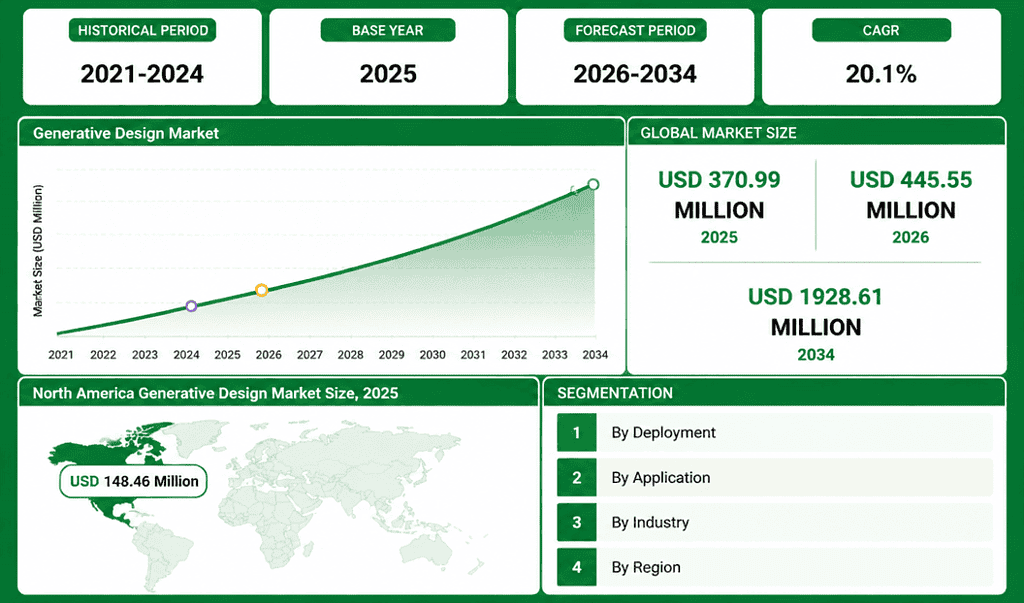
- The generative design market is projected to reach USD 1,928.61 million by 2034, growing 20.10% annually.
- Neural Concept reports JLR raised daily aerodynamic design evaluations from 50 to 1,500 using AI.
- Leonardo Helicopters achieved 540-fold faster noise predictions using geometric deep learning versus conventional CFD.
- GPT-5.2’s invalidity rises from 11.1% on basic geometry to 68% on advanced geometry using geometric prompts.
- Siemens reported over 500,000 monthly uses of its AI-powered Designcenter capabilities in June 2026.
Recent AI in CAD Stats
- In October 2026, Mach9 raised USD 34 million, reaching USD 49 million total funding; its AI CAD reportedly drafts up to 10x faster.
- In July 2026, Dassault Systèmes launched 3 AI companions with 19 competencies, extending automated support across product design, engineering, and simulation.
- In June 2026, Siemens released Designcenter with an integrated Copilot, reporting more than 500,000 monthly uses of its AI-powered capabilities.
- In June 2026, PTC launched AI-assisted Creo 13 and Creo+ 13.3, alongside up to 70% faster assembly loading and 60x faster composite-transition calculations.
- In May 2026, Siemens announced approximately USD 50 million for Xometry, integrating AI manufacturing intelligence into Designcenter using over 5,000 active suppliers.
- In December 2025, Neural Concept raised USD 100 million for CAD-native AI, reporting USD 50 million in annual customer savings and 30–50% fewer late-stage redesigns.
- In July 2025, Leo AI announced USD 5 million seed funding, reaching USD 9.7 million total funding and adoption by over 20,000 engineers.
- In March 2025, Autodesk launched AutoCAD 2026 with AI-enhanced Smart Blocks, reporting up to 11x-faster network-file opening and up to 4x-faster startup versus AutoCAD 2025.
AI in CAD Market Size
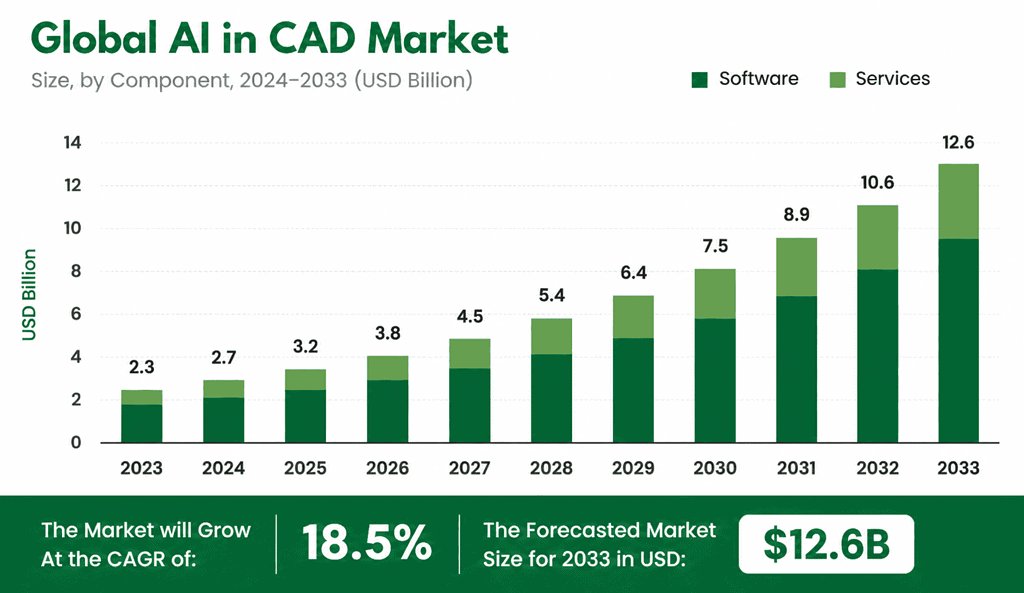
- The global artificial intelligence market in computer-aided design (CAD) is projected to grow at a compound annual rate of 18.5% during 2024–2033.
- The market was valued at USD 2.3 billion in 2023, with its size estimated at USD 2.7 billion in 2024.
- Market projections indicate USD 3.2 billion in 2025 and USD 3.8 billion in 2026, reflecting steady expansion.
- By 2033, the market is forecast to reach USD 12.6 billion, with software remaining the larger component compared with services.
How AI is Used in CAD in 2026
- Solid Edge 2026 generates 70–80% complete 2D drawings, including views, dimensions, and template selection.
- Solid Edge 2026 uses Magnetic Snap Assembly to position components and automatically apply assembly constraints.
- AutoCAD 2026 detects repeated geometry and suggests converting matching objects into reusable blocks.
- AutoCAD 2026 recognizes matching and variable text when converting repeated objects into consistent blocks.
- AutoCAD’s AI imports PDF markups, positions them correctly, and suggests text and callout placement.
- Macro Advisor analyzes drawing actions and recommends macros to automate repetitive CAD tasks.
Generative Design Statistics in CAD
- Fortune Business Insights estimates the 2026 global generative design market at USD 445.55 million.
- Fortune Business Insights projects 20.10% annual market growth during 2026–2034, reaching USD 1,928.61 million by 2034.
- Thermal management applications are forecast to represent 16% of generative design revenue in 2026.
- Coherent estimates cloud-based deployment represents 58.8% of generative design revenue in 2026.
- Automotive applications represent an estimated 47% of generative design revenue in 2026.
- North America accounts for an estimated 39.4% of global generative design revenue in 2026.
AI in CAD for Architecture, Engineering, and Construction
- AutoCAD 2026 Update 1.1 moves AI-powered architectural object detection beyond technology preview, simplifying repeated geometry conversion into blocks.
- Archicad Max offers 250 pooled AI credits per license monthly for model-aware assistance and visualization in 2026.
- Allplan’s October 2026 launch reports users completing selected tasks up to 36% faster; results are self-reported.
- Bluebeam’s October 2026 announcement cites over 2,000 early adopters reporting productivity gains in preconstruction, design coordination, and management.
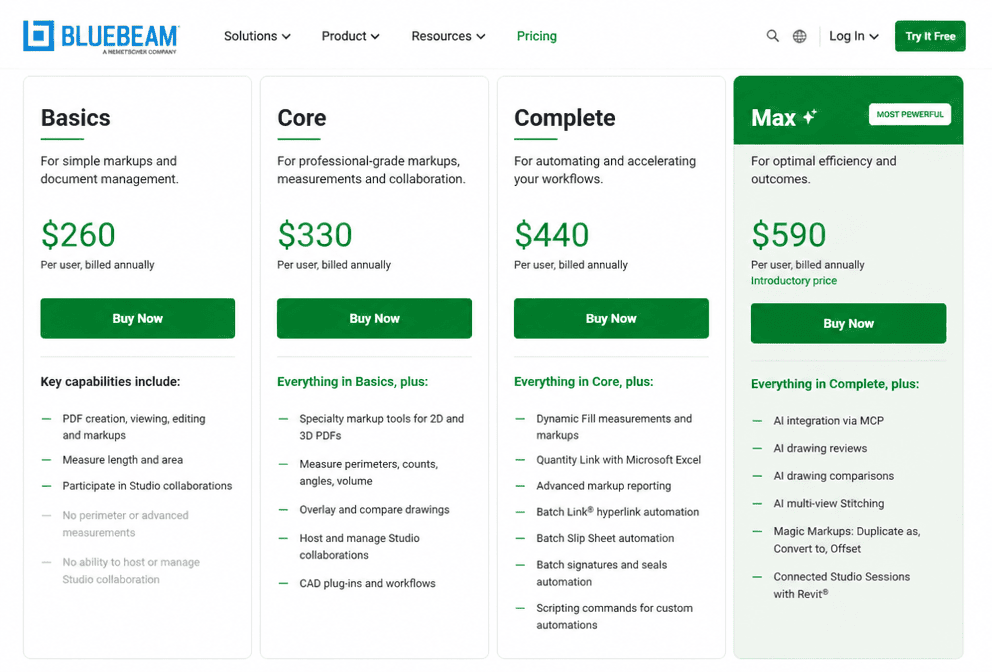
- Bluebeam Max’s 2026 introductory subscription costs USD 590 per user annually, including AI drawing reviews and comparisons.
- AIA’s August 2026 survey finds 48% of responding architecture firm leaders engaging with AI, including 18% prioritizing it.
- AIA’s 2026 survey finds 22% of AI-using architecture firms reporting substantial productivity increases; 76% report unchanged productivity.
AI in CAD for Automotive and Aerospace
- Solid Edge 2026 AI generates 2D drawings 70–80% complete, according to Siemens; engineers finalize dimensions, views, and documentation.
- Solid Edge 2026 AI-powered Magnetic Snap Assembly makes component assembly up to 9 times more efficient, Siemens reports.
- Neural Concept’s July 2026 interview reports JLR increasing aerodynamic design evaluations from 50 to 1,500 daily using AI.
- Neural Concept’s 2026 interview reports automotive suppliers reducing battery cooling-plate development cycles by 80% through AI-driven design exploration.
- AIAA’s August 2026 report describes Leonardo Helicopters achieving 540-fold faster noise predictions using geometric deep learning versus conventional CFD.
- AIAA’s 2026 report describes AI predicting aerospace casting porosity and solidification instantly, replacing 24-hour computational fluid dynamics runs.
Insights on LLMs for CAD Scripting
- Text2CAD-Bench’s 2026 pipeline executes generated scripts using Python 3.10 and CadQuery 2.4, exporting STEP files for geometric evaluation.
- GPT-5.2’s basic-task invalidity falls from 19.5% with procedural prompts to 11.1% with geometric descriptions.
- GPT-5.2’s invalidity rises from 11.1% on basic geometry to 68% on advanced geometry using geometric prompts.
- Text2CAD records only 2% invalidity but 0.04 volumetric overlap on advanced geometric prompts; execution alone misleads.
- ToolCAD, April 2026, reports 63.9% modeling success with Qwen2.5-7B, combining reinforcement learning and FreeCAD tool interaction.
- ToolCAD’s 2026 comparison raises GPT-4o modeling success from 48.4% to 62.7% through structured reasoning and CAD-engine feedback.
STEP, IGES, and Native CAD Formats in AI Workflows
- SOLIDWORKS 2026 supports STEP AP242 versions 1.0–3.0, enabling geometry and manufacturing-information exchange for downstream AI processing.
- Fusion’s October 2026 documentation warns that translated STEP/IGES imports retain geometry, not all original information; AI inputs require verification.
- Fusion’s July 2026 guidance requires converting triangle meshes into solid boundary representations before STEP/IGES export, including AI-generated meshes.
- Fusion’s September 2026 documentation identifies native F3D as its only timeline-preserving export; assemblies use F3Z, supporting editable AI workflows.
- EPICCAD’s September 2026 study introduces 160,501 models linking STEP geometry, native parametric files, and modeling histories for AI research.
- EPICCAD’s 2026 dataset combines 152,360 academic samples with 8,141 industrial Siemens NX parts, expanding native-CAD training beyond academic geometry.
- EPICCAD’s 2026 representation encodes 10 geometric constraint types, helping AI learn editing dependencies absent from final geometry alone.
Top AI Tools for CAD
- Zoo: Text-to-CAD solid modeling with STEP exports; reported plans cost USD 20–99/month, with a free option.
- Backflip: Editable parametric models for Fusion; 50 free credits, then USD 20/100 credits or USD 50/300 credits.
- TechDraw AI: Photo-to-drawing automation; CAD exports cost USD 89/month, or USD 49/month billed annually.
- Adam: AI assistance for CAD reviews, bills of materials, and hardware workflows; reported subscriptions cost USD 40–200/month.
- Scan2CAD: AI-assisted conversion of scanned drawings into DXF/DWG; reported pricing starts at USD 89/month; first file free.
- AutoCAD: AI-assisted drafting support rather than prompt-generated drawings; reported subscription pricing starts at USD 175/month.
- DraftAid: Automates 3D-to-2D manufacturing drawings; claims up to 90% less routine drafting labor; enterprise pricing requires consultation.
- Leo AI: Engineering copilot for calculations and assemblies; claims 1 million-plus engineering sources; vendor pricing unavailable in October 2026.
| Tool | You start from | You get out | Price read 17 Oct 2026 |
| TechDraw AI | Photo, sketch, scan, screenshot, text | 2D drawing: DXF, DWG, SVG, PDF (Studio); 3D mesh | 1 free PNG; $29/mo PNG only; $89/mo with CAD export |
| Zoo | Text prompt, sketch, code | 3D B-rep solid: STEP, plus STL, OBJ, glTF | Free; $20, $99/mo; Team $399/user |
| Backflip | Text, engineering drawing, 3D scan | Parametric 3D with feature tree | 50 free credits; $20/100 credits; $50/300 |
| Adam | Your Onshape, Fusion or SOLIDWORKS data | Agent work: reviews, BOMs, CAD tasks | Free; $40, $200/mo |
| Leo AI | Engineering questions, your PLM | Answers, calculations, assemblies | Not on its site |
| DraftAid | A finished 3D model | 2D production drawings | Demo only |
| Scan2CAD | Scanned drawing, image, PDF | DXF, DWG, G-code | From $89/mo; first file free |
| AutoCAD | Your own drawing | DWG, drawn by you | From $175/mo |
| OpenArt | Sketch, photo, prompt | PNG and JPG, no DXF | Subscription |
Summary
AI is steadily moving from experiment to everyday CAD tool, with major vendors adding copilots, generative design, and automated drafting, and the market forecast to grow strongly through 2033. Gains are clearest in repetitive drafting, simulation, and design exploration, while trust, accuracy checks, and skills gaps still slow adoption.
LLM-generated models also struggle with complex geometry. Teams that pair AI speed with human review, clean data, and open file formats will gain the most.
FAQ
AI is used in CAD to automate repetitive drafting tasks, suggest design options, generate 3D models from sketches or text prompts, and optimize designs for weight, strength, or cost. It helps designers work faster and explore more ideas than manual modeling allows.
Generative design is an AI-driven process where you enter goals and constraints, such as materials, load, size, and manufacturing method, and the software produces many design options that meet them. Designers then compare the results and pick the best fit, which often leads to lighter, stronger parts.
AI is more likely to change the role than replace it. It takes over routine tasks like drafting, error checking, and variation creation, while designers still provide judgment, creativity, and an understanding of real-world requirements. Professionals who learn to work with AI tools are likely to have an advantage.
Several major CAD platforms now include AI features, such as Autodesk Fusion and AutoCAD, Siemens NX, SolidWorks, PTC Creo, and Onshape. These tools offer capabilities like generative design, automated sketching, smart object recognition, and simulation-driven optimization, though exact features vary by version and plan.
AI shortens design time, reduces human error, and lowers material and production costs by optimizing designs early. It also makes it easier to explore alternatives, automate documentation, and catch problems before manufacturing, which improves quality and speeds up product development.
Yes. Newer AI tools can create 3D models from text descriptions, photos, or rough sketches. These models are useful for concept work and quick prototyping, but they usually need refinement before they meet the precision and tolerance standards required for engineering or manufacturing.