









Overview
Employee Feedback Statistics: Employee feedback is a simple but powerful way to understand how employees feel about their work and workplace. It helps companies know what is working well and what needs to be improved. When employees share their thoughts, it builds better communication and trust between staff and management. It also helps solve problems early and improves overall performance. Regular feedback makes employees feel valued and more connected to their job.
In today’s fast-changing business world, using employee feedback is important for creating a positive work environment, increasing productivity, and keeping skilled employees for long-term success.
Analyst’s Pick
- Employees receiving regular feedback are 3.6 times more likely to be engaged, and 74% of highly engaged workers say feedback improves job satisfaction.
- About 65% of employees say they would feel more engaged if they received feedback more often.
- Around 16% of employees feel their most recent feedback was meaningful.
- Employees who cultivate feedback from their employees regularly have an average of 21% more profits than those who do not or do it very little.
- 30.7% of employees do not submit any feedback because they believe they have nothing constructive to offer.
- Publicly motivating employees through recognition and praise accounts for 37% of the overall employee motivation.
- The annual employee feedback is most common, especially among Millennials 38%, Gen X 44%, and Boomers 58%.
- Only 1 in 5 employees receive weekly feedback, even though many managers believe they give feedback regularly.
- The engagement index is 7.4 in Q1 2026, which is 0.7 points higher than Q4 2025.
- 96% of employees believe regular feedback helps them improve.
- Feedback remains quite limited, with only 5% of employees receiving it every week.
- Employee feedback statistics state that firms that gave employees feedback reported about 14.9% lower rates of turnover than were exhibited by those that did not give feedback to their employees.
General Employee Feedback Insights
- About 65% of employees say they would feel more engaged if they received feedback more often, according to market.biz.
- Employees who get regular feedback are 3.6 times more likely to stay engaged at work.
- Around 83% prefer feedback at least once a month, while 30% want it weekly.
- Nearly 72% would stay longer at a company if their opinions are heard.
- A total of 92% believe manager feedback strongly affects their performance.
- Companies using regular feedback see a 14.9% rise in engagement and satisfaction.
- Employees with consistent feedback show 23% higher productivity.
- 74% want feedback on career growth to improve satisfaction.
- Around 60% say clear feedback helps them perform better.
- 47% of firms use digital tools for feedback collection.
- About 42% give more honest feedback when it is anonymous.
- 56% feel recognized with regular feedback.
- Companies using feedback are 3 times more innovative.
- 38% prefer immediate feedback after tasks.
- Only 19% find manager feedback truly useful.
Types Of Employee Feedback
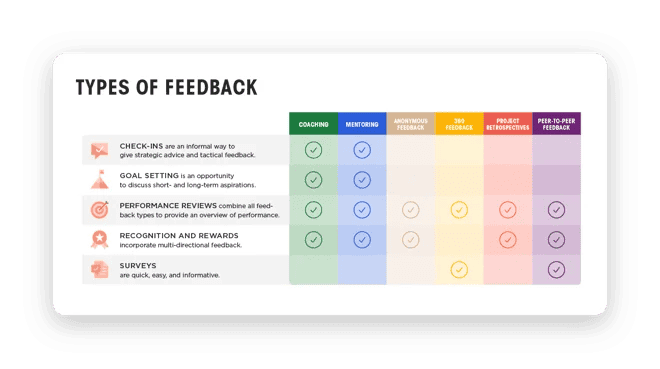
(Source: worktango.com)
| Type of feedback | Simple meaning | Coaching | Mentoring | Anonymous feedback | 360° feedback | Project retrospectives | Peer-to-peer feedback |
| Check-ins | Regular short talks to share updates and guidance | Yes | Yes | No | No | No | No |
| Goal setting | Setting short-term and long-term work targets | Yes | Yes | No | No | No | No |
| Performance reviews | Formal review of employee performance | Yes | Yes | Yes | Yes | Yes | Yes |
| Recognition & rewards | Giving appreciation for good work | Yes | Yes | No | Yes | Yes | Yes |
| Surveys | Simple questions to collect employee opinions | No | No | Yes | Yes | No | No |
Employee Feedback Impact on Engagement and Turnover
- Employees receiving regular feedback are 3.6 times more likely to be engaged, and 74% of highly engaged workers say feedback improves job satisfaction.
- About 23% higher productivity and engagement are seen when feedback is clear and actionable, while 4.5 times higher performance is reported when employees feel their feedback is valued.
- Managers who give regular feedback achieve 21% higher team engagement, and 63% of employees feel more motivated to go the extra mile.
- Around 56% say feedback helps them feel recognized, and 74% of engaged employees report professional growth from feedback, leading to 31% higher engagement when it is timely.
- On turnover, employees are 27% less likely to leave when they receive regular feedback, and 40% more likely to stay long-term if their feedback is valued.
- About 47% of employees leaving jobs cite lack of feedback, while companies with active feedback systems see 14% lower turnover.
- Nearly 66% stay longer due to clear career paths, 59% may leave if feedback is ignored, and 33% are less likely to seek other jobs when feedback supports growth.
- Firms with strong feedback culture record 22% lower turnover, and 50% higher retention when feedback leads to positive changes.
Key Feedback Gaps Between Managers and Employees
- Around 16% of employees feel their most recent feedback was meaningful.
- Just 12% of employees are asked how they prefer recognition, and only 13% clearly understand how others want to be recognized, leading to weak personalization in workplaces.
- Employees who understand recognition preferences are 2.6 times more likely to feel strong workplace connections and 2.9 times more likely to feel aligned with company culture.
- About 46% receive peer recognition monthly, while 38% receive manager recognition at that level, and recognized employees are 45% less likely to leave.
- Only 42% can formally give feedback to managers, and half say feedback is not adjusted to their career goals.
Benefits of Manager Feedback
(Source: jobera.com)
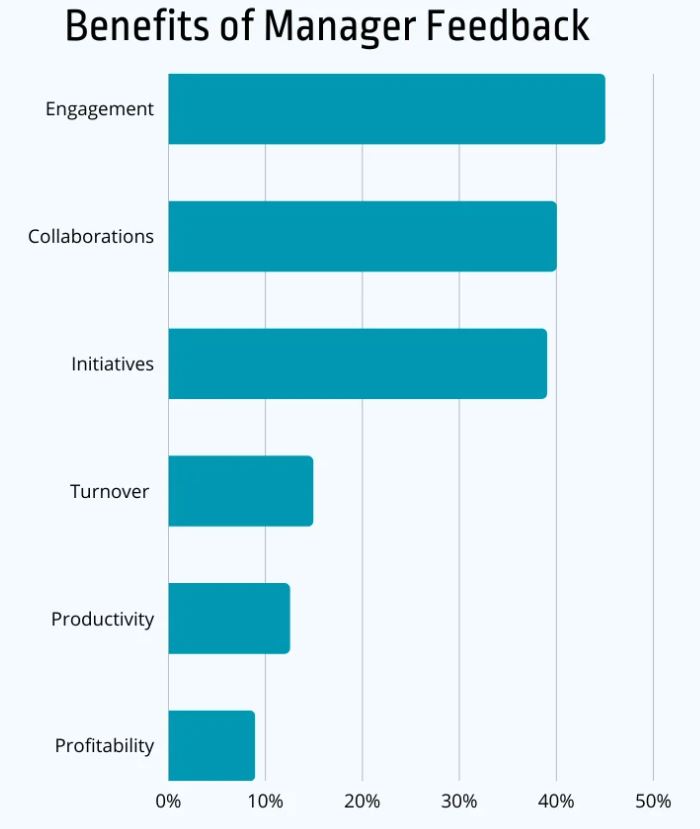
- Employee feedback statistics show that Employee feedback is a win-win for the employees and the company on a larger scale. Employees who cultivate feedback from their employees regularly have an average of 21% more profits than those who do not or do it very little.
- Strength-based feedback has reduced turnover by 14.9% for companies. Quick feedback has been shown to boost an employee’s performance by up to four times.
- Feedback also provides valuable information about general project ideas and strategies, what works and what doesn’t work for a team, and how much improvement is needed in other areas.
- So, this feedback is essential for the overall progress of the company.
- Managers who solicit feedback tend to report profit margins 8.9% higher than those who don’t solicit feedback, while they have a turnover of 14.9% lower.
- It is also worth noting that 75% of disengaged employees feel that poor relationships with management cause their disconnection.
- In addition, 73% say managers must clarify these for the team almost every week or every month. Beyond that, 47% of HR leaders consider employee turnover to be the top issue.
Preferred Employee Feedback By Managers
(Reference: jobera.com)
- Employee feedback statistics indicate that of the employees who were interviewed in 2021, 64% said that they believe their firm has an Employee Feedback Program.
- On the other hand, 25% of employees reported that their workplaces did not have a feedback program, and 12% were unsure.
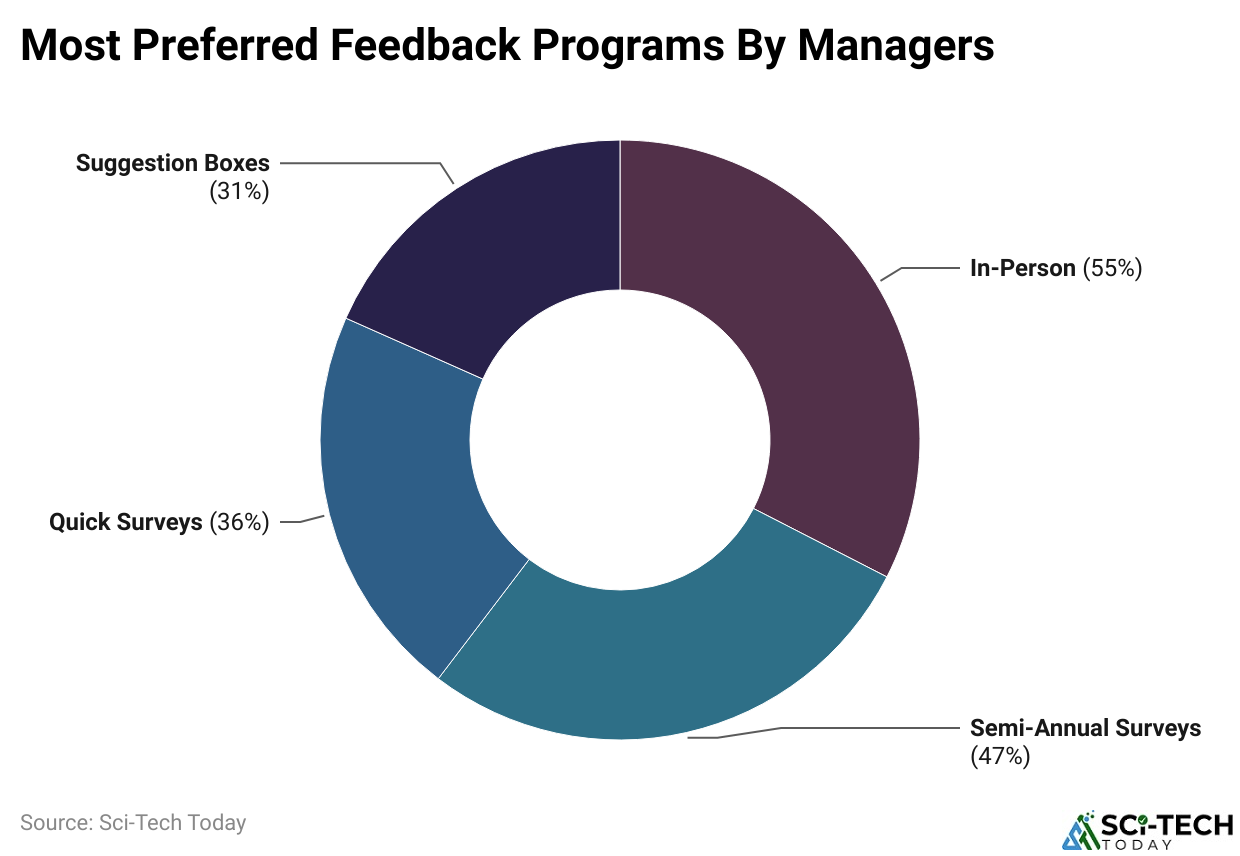
- The highest % age of employees, 55%, favoured in-person feedback gathering via team meetings, favouring it as the most popular choice for managers.
- The following results show how managers coordinated the gathering of feedback from employees: 47% indicated that they did semi-annual employee feedback surveys; 36% favoured periodic, brief surveys; 31% gathered them by suggestion boxes.
Reasons For Not Sharing Feedback
| Reasons | Employee’s Share |
| Have no such valuable feedback to share | 30.70% |
| Doesn’t feel that feedback is important enough to share | 21% |
| Trust issues in confidentiality | 17.10% |
| Believe their concerns won’t be addressed | 14.10% |
| Fear the negative consequences after sharing honest feedback | 12.20% |
(Source: coolest-gadgets.com)
- A considerable % age of employees, around 30.7 %, do not submit any feedback because they believe they have nothing constructive to offer.
- Furthermore, 21 % of employees think that their feedback is not worth sharing, while trust issues contribute, as 17.1 % of them are worried about the confidentiality of their feedback.
- An additional 14.1 % argue that management will not take their issues seriously or make them a priority.
- Finally, 12.2 % of employees are afraid of negative consequences or repercussions for providing honest feedback.
Employee Feedback Statistics By Delivery Of Feedback
- Publicly motivating employees through recognition and praise accounts for 37% of the overall employee motivation.
- Manager feedback pushes around 80% of employees to look for another job. When employees receive negative feedback, only 10.4% show involvement.
- Employees who found the feedback system useful increased from 49% to 75%.
- Among them, 69% say that they would like to put in extra effort if their accomplishments were acknowledged through feedback.
- These employee feedback statistics tell the story of feedback among employees: 60% want to get feedback once a week or a day from an employee’s perspective, with 43% of those who are really engaged echoing that.
- 80% of employees lean towards a feedback approach that lets them know how they are doing without waiting for the annual appraisal.
By Demographics
(Reference: market.biz)
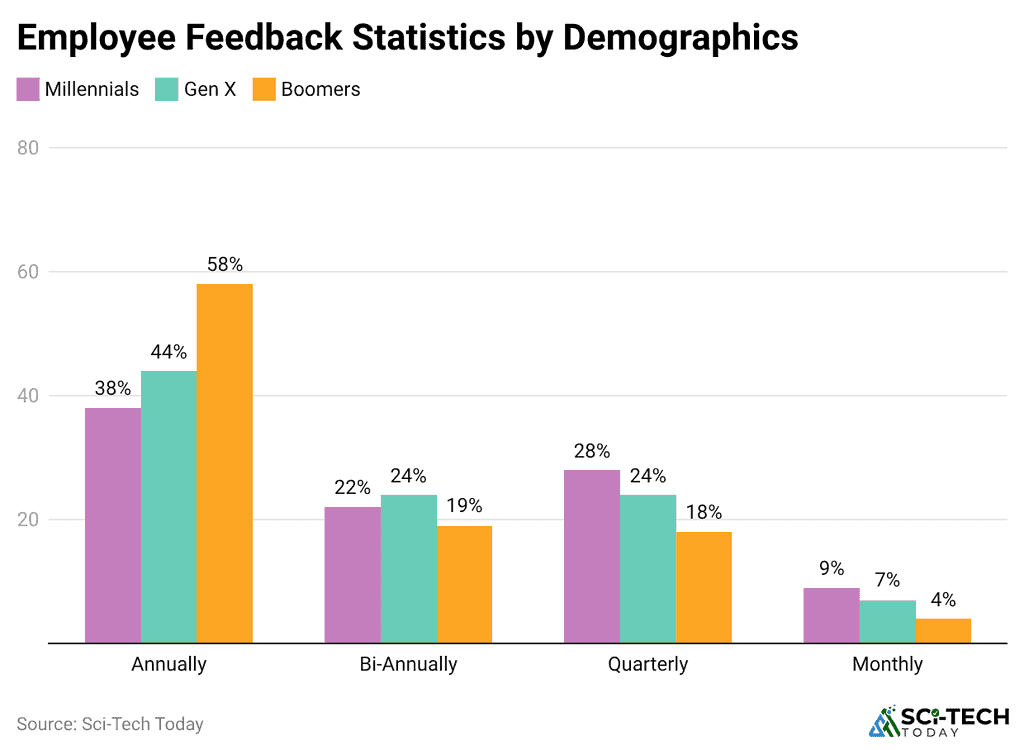
- The annual employee feedback is most common, especially among Millennials 38%, Gen X 44%, and Boomers 58%.
- Bi-annually, feedback is received by 22% of Millennials, 24% of Gen X, and 19% of Boomers.
- Every quarter, 28% of Millennials, 24% of Gen X, and 18% of Boomers are reviewed.
- Monthly feedback is less common, with only 9% of Millennials, 7% of Gen X, and 4% of Boomers receiving it.
- Weekly feedback remains very rare, with just 2% of Millennials, 1% of Gen X, and 2% of Boomers receiving it.
Employee Feedback Frequency and Employee Expectations
- Only 1 in 5 employees receive weekly feedback, even though many managers believe they give feedback regularly.
- Nearly 50% of employees get feedback only a few times a year or less.
- Employees who receive daily feedback are 3.6 times more likely to feel motivated.
- About 43% of highly engaged employees get feedback weekly, compared to 18% of low-engagement employees.
- Short feedback sessions of 15 to 30 minutes are more effective than long meetings when done regularly.
- Around 30% of U.S. employees say they received praise in the last 7 days.
Employee Engagement Index
(Source: cdn.shortpixel.ai)
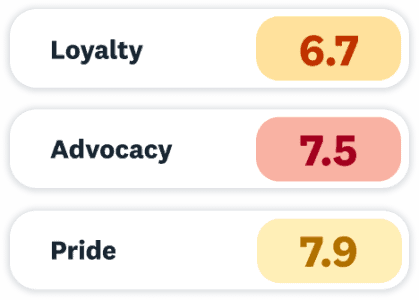
- The engagement index is 7.4 in Q1 2026, which is 0.7 points higher than Q4 2025, showing better employee morale and improved workplace engagement overall.
- Loyalty is at 6.7, advocacy is 7.5, and pride is highest at 7.9.
Impact of Feedback on Performance, Retention, and Engagement
- Hire Borderless further reported that 96% of employees believe regular feedback helps them improve.
- About 65% of employees want more feedback than they currently receive, and 46% say their managers do not give feedback often enough.
- Four in ten employees become disengaged when feedback is missing.
- Employees who receive valuable feedback from coworkers are 2.5 times more likely to be engaged.
- Also, 66% of employees may leave their job if they do not feel appreciated.
(Source: cdn.prod.website-files.com)
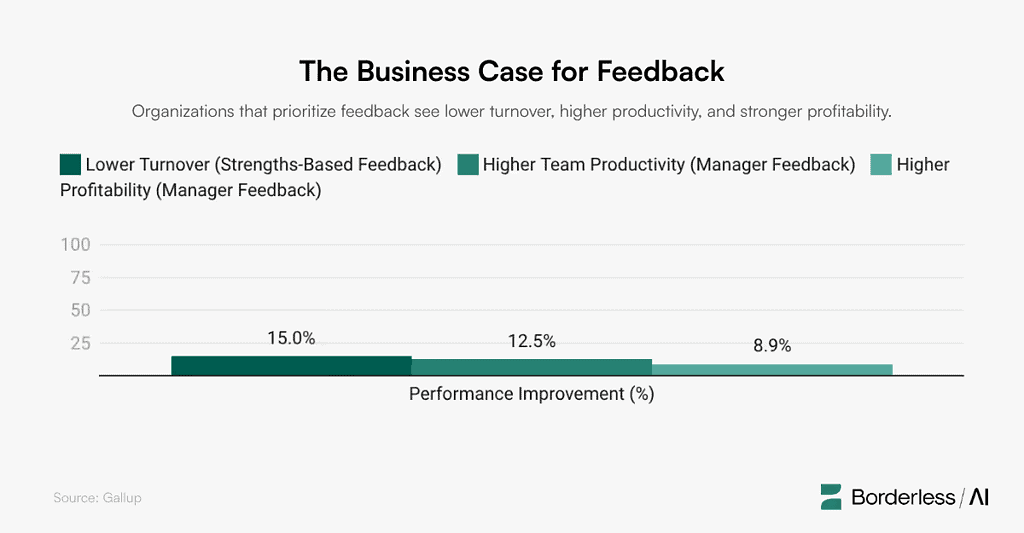
- Employees receiving strengths-based feedback have nearly 15% lower turnover.
- Teams led by managers who receive feedback show 12.5% higher productivity, while business units report 8.9% higher profitability.
- Around 80% of employees who received meaningful feedback in the past week are fully engaged, regardless of work setup.
- Employees who feel unrecognized are 3 times more likely to quit.
- Those who receive valuable peer feedback are 57% less likely to face burnout and 48% less likely to look for other jobs.
Rate of Feedback on Employee Performance
(Source: market.biz)
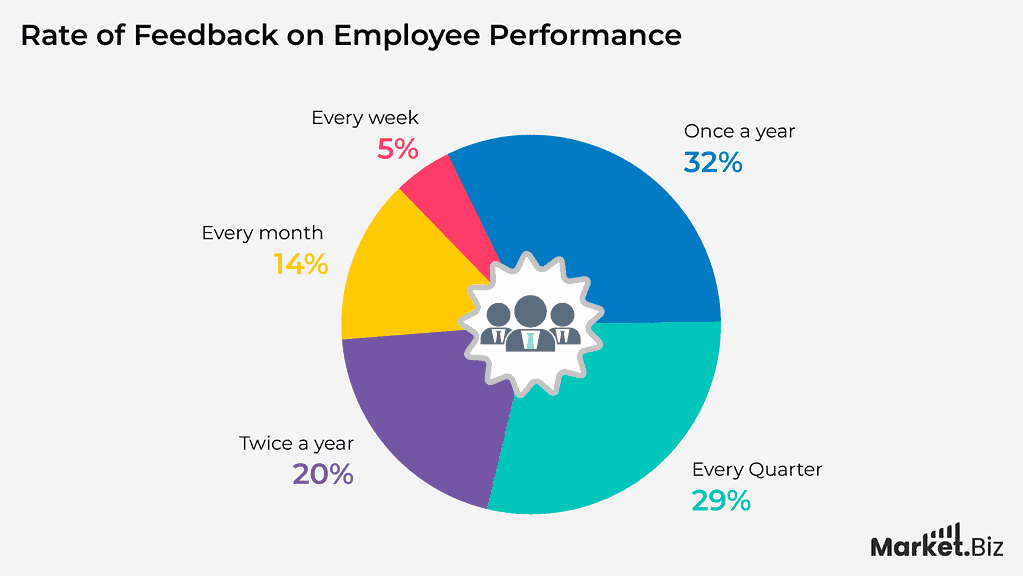
- Feedback remains quite limited, with only 5% of employees receiving it every week.
- Around 14% get feedback monthly, 29% quarterly, and 20% only twice a year.
- A significant 32% receive feedback just once a year.
Employee Feedback Benefits For Business
- Employee feedback statistics state that firms that gave employees feedback reported about 14.9% lower rates of turnover than were exhibited by those that did not give feedback to their employees.
- People received more feedback regarding their strengths: they showed about 2.5% productivity improvement in comparison with people who did not receive feedback.
- Feedback on strengths resulted in higher profitability by 8.9% for managers when compared to non-feedback managers.
- Such managers also exhibited 14.9% lower turnover rates than feedback-less managers.
- Teams, where managers received feedback on their strengths, increased productivity by 12.5% post-feedback intervention compared with teams managed by coaches who were not given any feedback at all.
- Teams with high levels of engagement were found to be 21% more profitable, and this high engagement is directly related to the type of constructive and consistent feedback employees receive.
Final Thoughts
Employee feedback is very important for improving engagement, performance, and retention at work. Regular feedback helps employees feel more motivated, perform better, and stay longer with the company. However, many employees still do not receive feedback often enough, which limits their growth. Clear and timely feedback can improve satisfaction and productivity.
Overall, companies should focus on building a strong feedback culture to support employees and achieve better long-term results.
FAQ
Improves performance, boosts engagement, increases retention, and supports continuous employee growth and development.
Formal, informal, positive, negative, constructive, 360-degree, and continuous feedback.
Clear, timely, specific, balanced, actionable, respectful, regular, and focused on employee growth and performance improvement

Sources


