








Introduction
Cell Phone Addiction Statistics: The rise of the smartphone marks one of humanity’s fastest and most pervasive tech adoptions. Yet, this companion has inadvertently led to a significant global public health concern. The issue is Smartphone Addiction. This growing dependency is framed by a loss of control, withdrawal symptoms, and functional impairment. It has become one of the most concerning issues of all time.
It’s impacting mental health, productivity, and social relationships across every demographic and continent. The younger generations, having grown up with these devices as extensions of themselves, are facing the steepest risks. They report high anxiety when separated from their screens.
As the global user base surges past 5.78 billion people in 2025, and daily usage times hit record highs, it’s crucial to analyze this data to assess the scale and impact of smartphone addiction.
So, I’d like to discuss cell phone addiction statistics in this article. I’d also like to provide you with up-to-date information on the current state of smartphone addiction worldwide. So, let’s get started.
Editor’s Choice
- 76% of the general adult population now exhibits a moderate to severe level of nomophobia, which is the intense fear of being without a mobile phone.
- The average American is now looking at their phone for 5 hours and 16 minutes per day in 2025, marking a significant 14% increase in just one year compared to the 2024 average.
- 82% of college students surveyed in early 2025 reported a self-perception that they are probably addicted to their smartphones.
- 71% of U.S. teenagers report feeling anxious or irritable if they are separated from their devices for a surprisingly short duration of more than 30 minutes.
- A major World Health Organization WHO study from March 2025 formally identified Smartphone Addiction as a critical public mental health concern in over 54 countries
- In one of the most revealing cultural shifts, 60% of Americans now admit to checking their phone within the first 10 minutes of waking up.
- Countries in Asia exhibit some of the highest problematic use scores, with China reporting the highest Smartphone Addiction score globally at a concerning 18 on the established scales.
- Smartphone-usage-related sleep disorders are estimated to have affected more than 620 million people worldwide during the first quarter of 2025 alone.
- Teens who spend five or more hours a day on electronic devices are statistically 71% more likely to exhibit established suicide risk factors compared to those who spend only an hour daily on their devices.
- Research indicates that even the mere physical presence of a smartphone is sufficient to reduce an individual’s available cognitive capacity, diverting attentional resources and impacting complex task performance.
Overall Smartphone Usage and Dependency
 (Source: statista.com)
- The total time spent on smartphone apps globally has seen a dramatic 30% increase since 2019.
- In one of the most extreme examples of growth, India specifically reported an astonishing 80% increase in smartphone app usage time since 2019.
- The average smartphone owner performs a mind-boggling 2,617 clicks, taps, or swipes per day.
- In a single day, the typical American smartphone user now reaches for their device approximately 352 times, which breaks down to an interaction roughly every 2 to 3 minutes during waking hours.
- Globally, the penetration of smartphone ownership now stands at over 70.1% of the world’s population.
- 71% of Americans maintain a physical connection with their device by sleeping with or keeping their smartphone right next to their bed on a typical night.
- The widespread behavior of using the same device for both personal and work life means that 80% of consumers are using a single, unified device.
- Across the 18 to 29 and 30 to 49 age groups in the U.S., smartphone ownership rates have hit a near-maximum 97%.
- A0% of respondents in a usage survey admitted they would rather go without shoes for an entire week than face the prospect of being separated from their smartphones for that same period.
- The average American is now spending over 2.1 hours per day on social media alone via their smartphone.
| Aspect | Numeric Data and Context |
| Global App Usage Increase from 2019 to 2025 |
Increased by 30% globally; India saw an 80% increase. |
|
Daily Taps, Clicks, Swipes |
2,617 actions taken by the average smartphone owner per day. |
| Daily Reaches/Interactions US |
The average American reaches for their device 352 times per day. |
|
Global Penetration Rate 2025 |
5.78 billion users, representing 70.1% of the world’s population. |
| Sleeping Proximity |
71% of Americans sleep with or next to their smartphones. |
|
Unified Device Use |
80% of consumers use a single phone for both personal and work life, blurring boundaries. |
| US Adult Ownership Rate 18–49 |
Reaches a saturation point of 97% for both the 18 to 29 and 30 to 49 age groups. |
|
Social Media Time for US Workers |
The average of 2.1 hours per day spent exclusively on social media. |
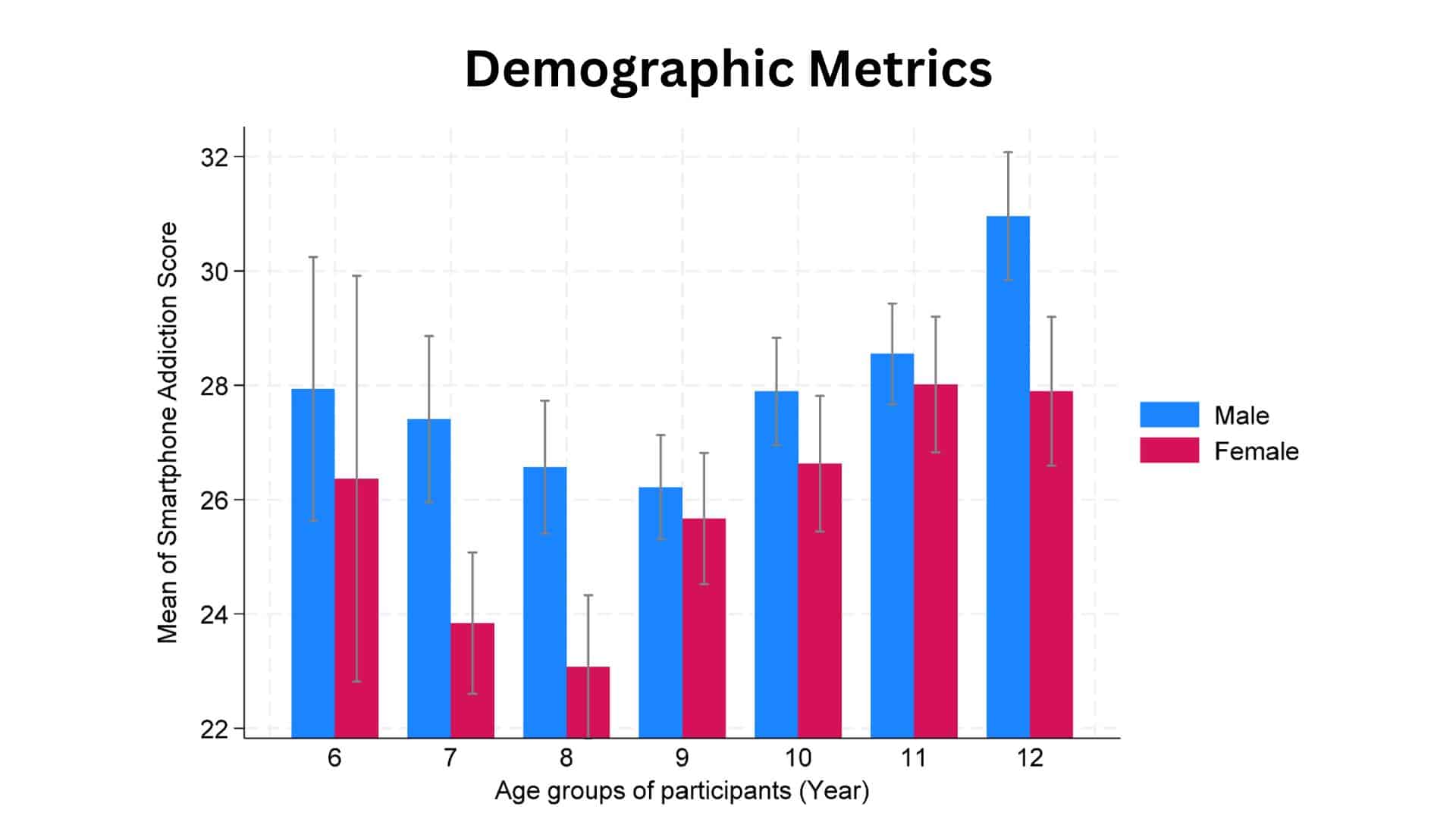
Demographic Metrics By Age, Gender, and Regional Addiction Levels
 (Reference: nature.com)
Youth and Student Vulnerability
- Gen Z displays the highest addiction rates, reporting an average daily phone usage of 6 hours and 37 minutes, significantly outpacing the 5 hours and 57 minutes reported by Millennials.
- The prevalence of severe nomophobia is highest among university students, affecting a shocking 25.46% of that population, almost double the rate found in high school students, 8.49%.
- 43% of parents surveyed recently confessed they have caught their children using their smartphones well past midnight on school nights.
- Children are gaining access to this technology earlier than ever, with 53% of children in the U.S. already owning a smartphone by the young age of 11 years old.
- In the U.S., female teenagers ages 13 to 17 spend an average of 6.1 hours per day on their smartphones, a full 33% more than the male teens in the same age bracket.
- 54% of teens freely acknowledge that they spend an excessive amount of time on their devices, yet 53% also report struggling unsuccessfully to reduce their daily screen time.
- A study on medical and health sciences students found a high Smartphone Addiction of 37.9%, with 1st year students being at the statistically highest risk compared to their older counterparts.
- 36% of Millennials reported they spend two or more hours of their designated workday using their phone for entirely non-work-related activities like social media or texting.
Global and Gender Differences
- The Philippines currently holds the global record for the longest average daily smartphone usage at 5 hours and 47 minutes, followed closely by Thailand at 5 hours and 28 minutes.
- Aside from China’s high score, other nations showing significantly problematic use include Saudi Arabia, 35.73, and Malaysia, 35.43.
- While overall Smartphone Addiction rates are slightly higher in females 26% than in males 21%, men tend to spend more time on mobile gaming and video content, clocking in at 4.3 hours per day versus 3.7 hours per day for women.
- Women aged 18 to 35 were found to be 43% more likely to engage in late-night smartphone use compared to their male peers.
- In the United States, the age group over 65 years still has a substantial smartphone ownership rate of 76%.
| Demographic Aspect | Numeric Data and Context |
| Gen Z Average Daily Use | 6 hours and 37 minutes. Highest of any generation. |
| Severe Nomophobia in Students | 25.46% of university students were affected. |
| Teen Smartphone Ownership Age | 53% of US children own a smartphone by age 11. |
| Female Teen Usage 13 to 17 | 6.1 hours/day, which is 33% more than male teens. |
| Country with the Highest Daily Usage | The Philippines is at 5 hours and 47 minutes. |
| Highest Problematic Use Score | China at 36.18, followed by Saudi Arabia at 35.73. |
| Gender Addiction Rate | Slightly higher for females, 26% vs. males 21%. |
| Older Adult Ownership US 65 | Substantial rate of 76% ownership. |
Smartphone Addiction’s Impact on Cognitive Function and Productivity
 (Reference: frontiersin.org)
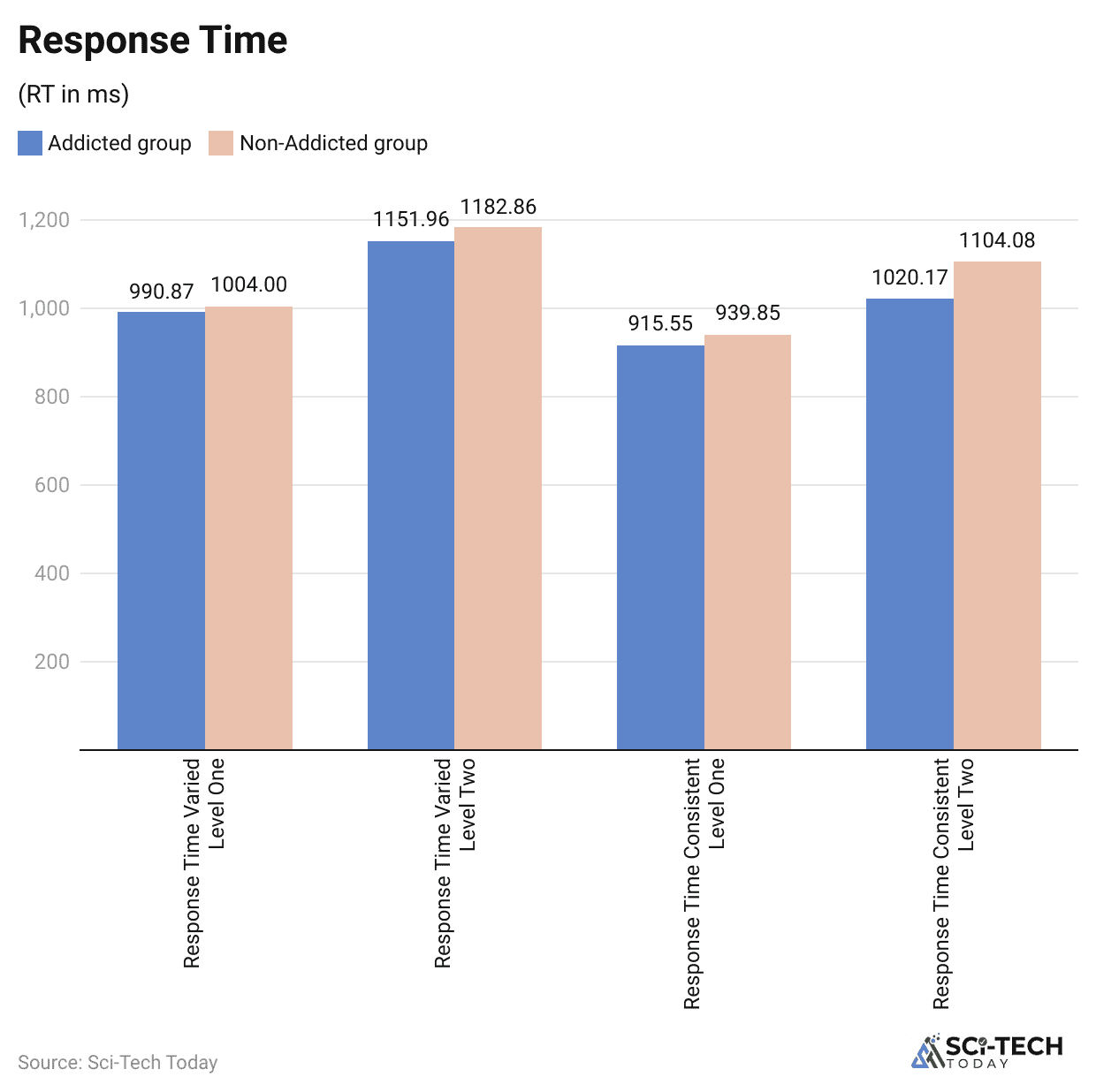
- Research utilizing the Attention Related Cognitive Errors scale found that higher problematic use scores are statistically linked to a higher number of cognitive errors.
- Studies have shown that even the briefest interruptions, such as a phone notification that flashes for only 2.8 seconds.
- It takes an individual, on average, a significant amount of time, specifically 23 minutes.
- In one survey, employees admitted to wasting more than 2 hours per workday using their phones for non-work-related activities.
- Problematic smartphone users showed a significantly lower score on executive functions, the high-level cognitive skills needed for planning and self-control.
- Employees lose, on average, 720 work hours every single year due to chronic distraction caused by their smartphones.
- In the healthcare sector, a study among hospital professionals in Beirut found that 71.4% of the respondents were considered addicted to their smartphones.
- 48% of Gen Z workers, the newest generation in the workforce, explicitly state that their smartphone use reduces their daily work productivity.
| Cognitive/Work Impact | Numeric Data & Context |
| Cognitive Errors Link | Higher Smartphone Addiction scores are statistically linked to a higher number of cognitive errors. |
| Interruption Recovery Time | Takes an average of 23 minutes to fully return to a task after a minor phone interruption. |
| Wasted Work Hours Daily | Employees waste over two hours per workday on non-work phone use. |
| Annual Lost Work Hours Employee | The average employee loses 720 hours annually due to smartphone distraction. |
| Executive Function Decline | Problematic users show significantly lower scores on executive function measures. |
| Healthcare Professional Addiction | 71.4% of hospital health professionals surveyed were found to be addicted. |
| Gen Z Productivity Acknowledgment | 48% of Gen Z workers report that their smartphone use reduces their work productivity. |
Smartphone Addiction on Wellbeing and Relationships
 (Source: surfpointrecovery.com)
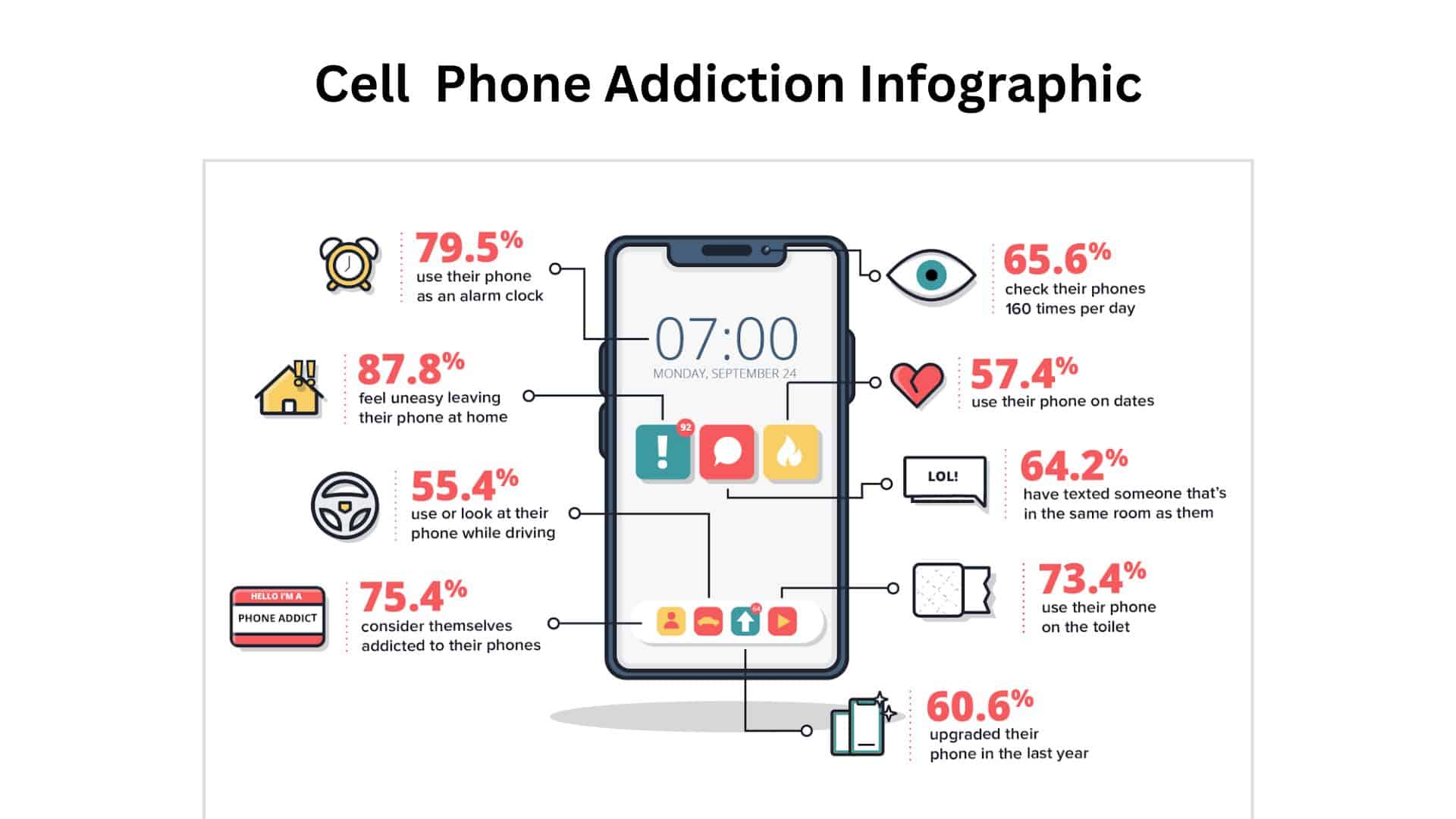
- Young adults ages 18 to 30 who use their phones for more than 5 hours per day showed a 21% higher rate of depressive symptoms compared to their peers who restricted their daily use to less than two hours.
- A meta-analysis confirmed that the prevalence of moderate to severe nomophobia is a widespread concern, affecting 70.76% of all studied participants from 10 different countries.
- 56% of teens report feeling immediate anxiety, loneliness, or upset when they don’t have their mobile phones with them.
- 52% of teenagers admit to sitting for long periods in silence, completely engrossed in their smartphones.
- In a significant measure of relationship conflict, 75% of women stated that their partner spends too much time on their phone during shared leisure moments.
- A 2025 study from Stanford and Harvard noted that the dopamine response triggered by receiving likes and shares on social media platforms begins to mirror the addictive behavioral patterns typically observed in studies of compulsive gambling.
- A concerning 33% of teens now spend more time socializing with their close friends online than they do through direct, face-to-face personal interaction.
| Mental/Social Impact | Context |
| Depressive Symptoms Heavy Users | 21% higher rate in young adults using phones 5 hours/day. |
| Moderate/Severe Nomophobia | Affects 70.76% of the studied general adult population. |
| Teen Separation Anxiety | 56% of teens feel anxious/upset when without their phone. |
| Relationship Strain in Women Reporting | 75% of women report their partner’s excessive phone use during leisure time. |
| Socializing Shift | 33% of teens socialize more with close friends online than in person. |
| Cognitive Brain Drain | The mere presence of a smartphone is enough to decrease available cognitive abilities. |
| Dopamine Response | Mirrors addictive patterns seen in compulsive gambling, according to a 2025 study. |
| Psychological Correlates | Linked to difficulties in emotional regulation, impulsivity, and low self-esteem. |
Physical Health and Safety By Risks of Smartphone Addiction
 (Reference: onlinelibrary.wiley.com)
- Smartphone use has been identified as a major contributing factor in over 20% of all car accidents globally.
- A substantial 75% of cell phone users admit that they have engaged in the dangerous practice of texting while driving at least once.
- Approximately 67% of teenagers reported losing a significant amount of sleep due to the habit of using their smartphones or the internet late at night.
- Teens who use their phones for 5 hours daily are found to be 51% more likely to experience demonstrably inadequate sleep compared to those with lower daily screen times.
- Excessive smartphone usage is statistically linked to a host of musculoskeletal issues, with 34% of people reporting they experience chronic neck or back pain directly attributable to their overuse of the device.
- The condition known as cell phone vision syndrome is increasingly prevalent, with research showing that a massive 76.75% of medical students confessed their digital display screen usage was negatively impacting their eye health and lifestyle.
- In one of the most bizarre demonstrations of dependency, 12% of American adults and 7% of British citizens have admitted to actively using their smartphones even while they are taking a shower.
- A study specifically found that individuals who are heavy smartphone users have a two times greater likelihood of reporting clinical symptoms of anxiety compared to those categorized as light users.
- Problematic mobile use is strongly associated with a more sedentary lifestyle, displacing physical activity and leading to measurable increases in eye strain, neck pain, back pain, and statistically significant weight gain.
| Physical/Safety Impact | Context |
| Car Accident Contribution | Responsible for over 20% of all car accidents globally. |
| Distracted Driving Admission | 75% of cell phone users admit to texting while driving at least once. |
| Teen Sleep Loss | 67% of teenagers report losing sleep due to late-night phone use. |
| Sleep Quality Risk | Teens using phones for 5 hours/day are 51% more likely to experience inadequate sleep. |
| Musculoskeletal Pain | 34% of people experience neck or back pain due to excessive device use. |
| Vision Syndrome Acknowledgment | 76.75% of medical students report negative effects on eye health from screen use. |
| Anxiety Risk | Heavy smartphone users are two times more likely to report clinical anxiety symptoms. |
| Extreme Dependency | 12% of US adults use their smartphones while in the shower. |
The Economic and Market Context By Smartphone Addiction Engine
 (Reference: market.biz)
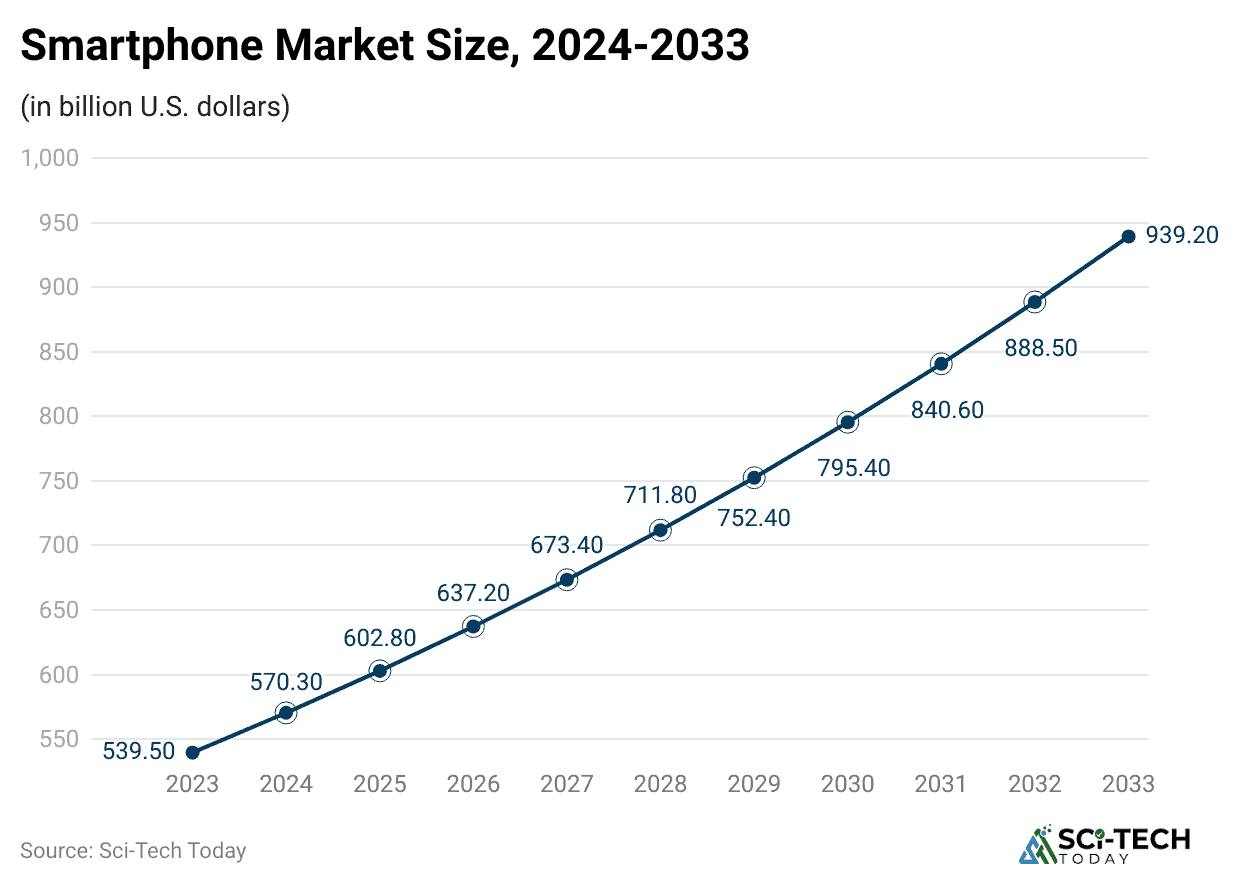
According to Market.us, the scale of Smartphone Addiction must also be understood within the context of the massive, growing global market. It is actively designed to maximize user engagement and time on the device.
- The global smartphone market is projected to skyrocket from $570.3 billion in 2024 to $939.2 billion by 2033, representing a massive Compound Annual Growth Rate CAGR of 5.7%.
- The widespread use of smartphones is driving the cell phone charger market, which is anticipated to grow from $18.8 billion in 2025 to $30.4 billion by 2034.
- The surge in high-bandwidth video and app consumption, thanks to the rollout of 5G networks, has caused the average monthly mobile data use to hit 23 GB per smartphone user, a significant rise from 15 GB in 2022.
- 72% of adults actively use social media, and an overwhelming 90% of these users access it via mobile devices, meaning social networking is the primary way.
- Data on e-commerce is highly revealing: 73% of total e-commerce sales are now conducted via mobile devices.
- The psychological draw is tied to instant gratification: checking a smartphone is scientifically proven to trigger a reliable dopamine release.
- A considerable 58% of adults confess to habitually using their smartphones as a primary coping mechanism to intentionally distract themselves when they are feeling anxious, stressed, or emotionally overwhelmed.
- The increasing sophistication of app notifications means that 80% of employees receive constant, automatic alerts on their phones.
- In terms of functional use, 74.7% of all smartphone users engage in chatting or messaging as their primary activity, followed by 70.95% using their devices for emailing, cementing the phone’s role as the central communications hub.
| Economic/Market Factor | Numeric Data & Context |
| Smartphone Market Value 2033 | Projected to reach $939.2 billion with a 5.7% CAGR. |
| Charger Market Value 2034 | Expected to hit $30.4 billion, driven by charging dependency. |
| Mobile Data Use Increases | Monthly data use reached 23 GB/user, up from 15 GB in 2022 due to 5 GB/video. |
| Social Media Access | 90% of social media users access platforms via mobile devices. |
| E-commerce Dominance | Mobile commerce accounts for 73% of all e-commerce sales. |
| Psychological Driver | Smartphone checking triggers a reliable dopamine release, reinforcing the addictive cycle. |
| Coping Mechanism Use | 58% of adults use phones to distract from anxiety or stress. |
| Workplace Interruption Rate | 80% of employees receive constant, automatic notifications. |
Conclusion
Overall, these statistics give us a clear picture: cell phone addiction is rapidly accelerating. This is a deep, behavioral dependency validated by rising anxiety, fractured attention spans, and objective declines in mental well-being across the globe.
From 70.76% of adults exhibiting nomophobia to the average American spending 5 hours and 16 minutes per day stuck to their screen, these data demand urgent attention. So these are information I collected for your clear understanding. I hope you like this piece of content. If you have any questions, kindly let me know in the comments section. Thanks for staying up till the end.