









Beginning
AI In Government Statistics: Artificial Intelligence is opening new doors for better governance. It is helping governments work faster, make better decisions, and deliver public services more effectively. Tasks that once took hours can now be completed in minutes with the help of AI.
From improving healthcare and education to detecting fraud and managing public resources, AI has many uses in government. However, its growing role also brings concerns about data privacy, security, and fairness. Technology alone cannot solve every problem; it must be used wisely and responsibly. The goal is to make government services simpler, faster, and more accessible to everyone.
This article examines how AI is transforming governance and shaping the future of public service.
Editor’s Highlight
- The global AI in government market reached USD 18.1 billion in 2025 and is projected to reach USD 21.8 billion by 2026.
- 70% of business leaders support AI-driven government initiatives.
- 60% of government investments in AI and data analytics target real-time operational decisions and outcomes.
- Only 8% of organizations have a complete AI governance framework, falling to 2% among small firms.
- Around 97% of state respondents believe AI is important, and 3% do not.
- By 2029, 70% of government agencies may require explainable AI and human oversight.
- Governments have deployed recommendation AI in 31% of cases, with 48% under development.
- According to Presenc.ai’s 2026 AI in Government Statistics report, adoption of document and form processing reached 45%.
- Canada’s surveyed public servants’ AI use rose from 48% to 66%, while 69% expected better public services.
- Among 87 government bodies (100%), 18 (21%) had an AI strategy, 53 (61%) planned to develop one, 13 (15%) had no plans, and 3 (3%) reported other arrangements.
- IBM launched its AI GovTech Innovation Center in Lucknow on February 22, 2026. Governments allocated nearly 8% of IT budgets to AI, with spending projected to exceed 13% by 2030.
AI Governance Trends in 2026
- According to Evolvance Market Research, only 8% of organizations have a complete AI governance framework, and this figure falls to 2% among small firms.
- Around 88% of organizations actively use AI across business functions.
- AI-related incidents rose from 233 in 2024 to 362 in 2025, marking a 55% increase.
- Approximately 74% of AI-generated economic value goes to just 20% of organizations.
- About 74% of organizations plan to adopt agentic AI within 2 years.
- Only 21% have a mature governance model for agentic AI.
- The EU AI Act allows penalties of up to EUR 35 million or 7% of global turnover for prohibited AI practices.
AI’s Importance in Government
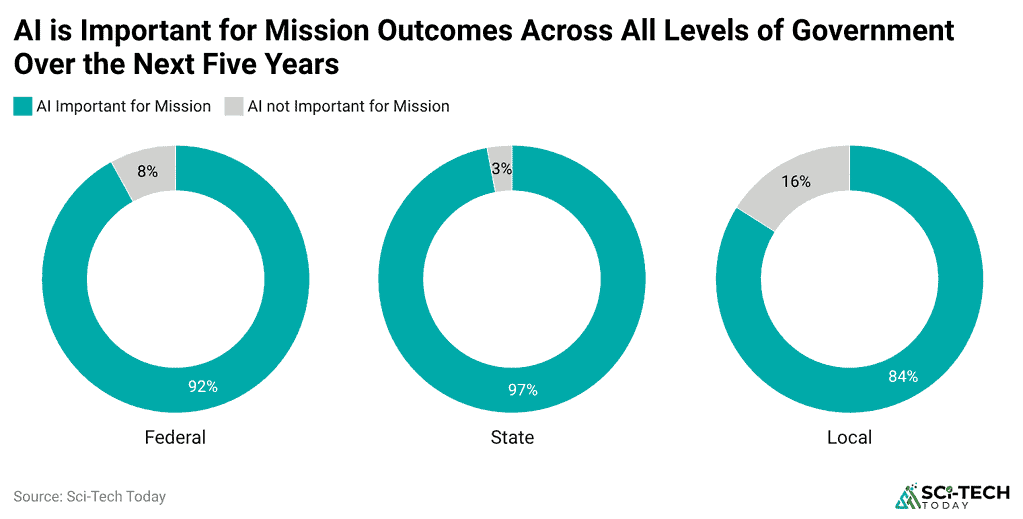
- Over the next 5 years, 92% of federal respondents consider AI important for achieving their goals, while 8% disagree.
- Around 97% of state respondents believe AI is important, and 3% do not.
- 84% of local respondents consider AI important, while 16% do not.
Global AI in Government Market Size
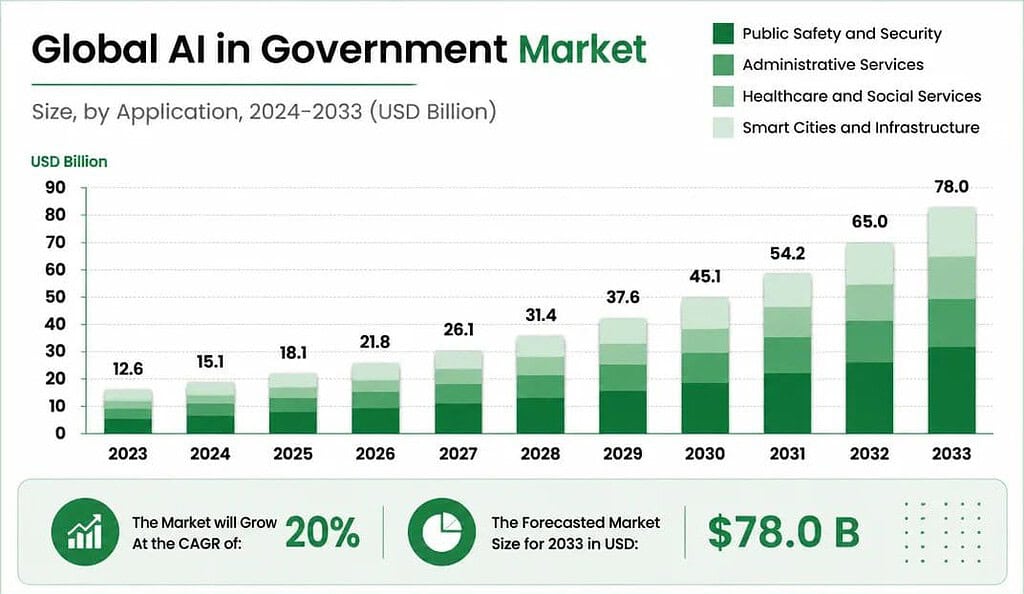
- The global AI in government market reached USD 18.1 billion in 2025 and is projected to reach USD 21.8 billion by 2026.
- The market is forecast to grow at a CAGR of 20%, reaching USD 78 billion by 2033.
Key Barriers and Benefits of AI in Government
- 54% of organizations report that a lack of skilled professionals makes it difficult to implement and manage AI solutions.
- 42% of government entities face challenges due to poor data quality and limited data availability.
- Despite these barriers, AI could help governments achieve up to USD 3.5 trillion in annual operational savings and revenue gains by 2030.
Global Government AI Adoption
- Appinventiv reported that 70% of business leaders support AI-driven government initiatives.
- 80% of government agencies remain in the early or developing stages of digital maturity.
- By the end of 2024, 75% of governments were expected to launch or begin at least three enterprise-wide hyper-automation projects.
- 60% of government investments in AI and data analytics target real-time operational decisions and outcomes.
- An AI strategy survey received responses from 87 of 89 government bodies with annual operating spending above USD 110 million, achieving a 98% response rate.
- According to Net0’s Government AI Transformation 2026 Playbook, global AI spending is expected to reach USD 2.52 trillion in 2026, up 44% year over year.
- The U.S. government recorded 3,611 AI use cases across 56 agencies in 2025, up 105% from 2024.
- Abu Dhabi deployed over 100 AI use cases across 40 entities, supported by a USD 3.5 billion digital strategy.
- 84% of organizations consider digital sovereignty in their AI strategies.
- 41% of government respondents cited siloed strategies, while 31% identified legacy systems as barriers.
- By 2029, 70% of government agencies may require explainable AI and human oversight. EU AI Act provisions apply from 2 August 2026.
Strategy and AI Success
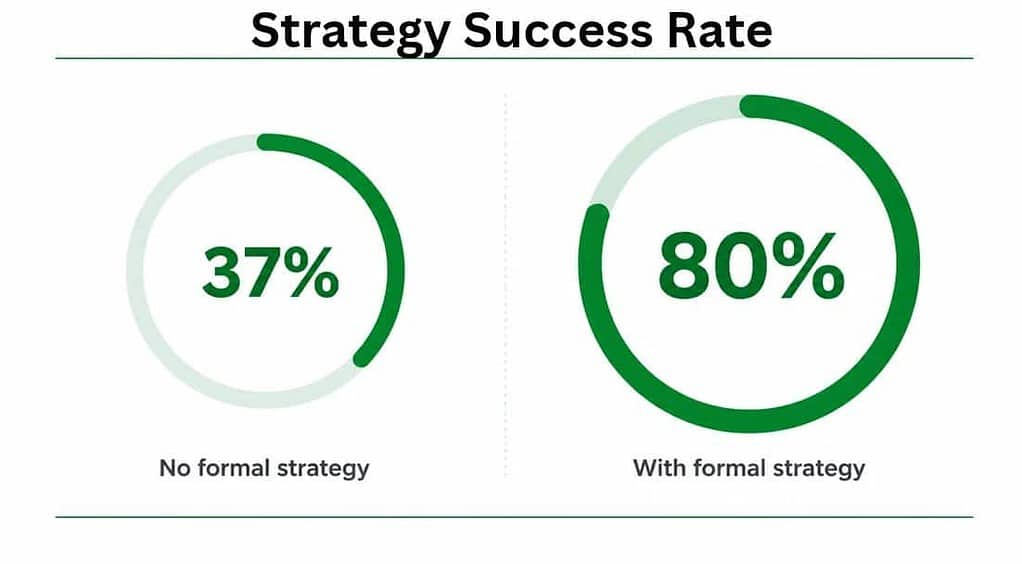
- Writer’s 2026 findings show 37% AI adoption success among organizations without formal strategies.
- Organizations with formal strategies achieved 80% success.
Agentic AI Adoption and Governance in 2026
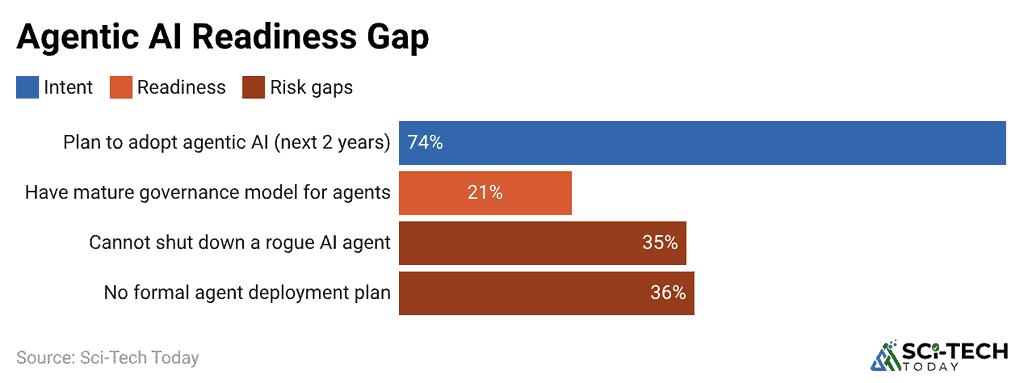
- 74% of organizations plan to adopt agentic AI within the next 2 years.
- Only 21% have mature governance models for AI agents.
- Around 35% cannot shut down a rogue AI agent.
- Meanwhile, 36% lack a formal plan for deploying AI agents.
Government AI Adoption by Application
| AI application | Deployed Share | Under Development Share |
| Recommendations | 31% | 48% |
| Predictive Maintenance | 31% | 47% |
| Computer Vision | 29% | 46% |
| NLP/NLG | 26% | 49% |
| Speech Recognition | 32% | 41% |
| Biometrics | 30% | 43% |
| Pattern/Anomaly Detection | 31% | 41% |
| Robotic Process Automation | 24% | 47% |
| Sentiment Detection | 23% | 45% |
| Intelligent Robotics | 25% | 40% |
By Use Cases
- According to Presenc.ai’s 2026 AI in Government Statistics report, adoption of document and forms processing reached 45%, with 41% year-over-year growth.
- Citizen-service chatbot adoption stood at 38%, up by 48% from last year.
- Adoption of fraud and improper-payment detection reached 33%, helping identify fraud and improper payments.
- Translation and accessibility adoption accounted for 29%.
- Adoption of predictive infrastructure maintenance reached 24%, supporting better maintenance planning.
Government AI Adoption Across Countries
| Country | Statistics |
| Canada | KPMG reported that AI use among surveyed public servants rose from 48% to 66%. Around 69% expected better public services. |
| Singapore | Pair Chat recorded 78,517 monthly active users, 832,280 hours saved monthly, and 70% public-service usage. |
| India | Press Information Bureau report stated that BHASHINI covered 2,353 government platforms, including 800+ websites. It supported 36 text and 23 voice languages; it exceeded 9 billion AI inferences. |
| United States | The U.S. Government Accountability Office reported that across 11 agencies, AI cases increased from 571 in 2023 to 1,110 in 2024; generative AI cases rose from 32 to 282. |
| United Kingdom | Cross-Government findings reported that a 3-month Copilot trial involving 20,000 employees yielded an average daily saving of 26 minutes. |
| Australia | Around 7,600 employees from 60+ agencies joined Australia’s generative AI trial, according to the Digital Transformation Agency. Overall, 77% were satisfied, while 86% wanted continued access to generative AI tools. |
| United Arab Emirates | The AE Government Portal stated that agentic AI will cross 50% of government sectors, services, and operations by 2028. |
AI Strategies Across Government Bodies
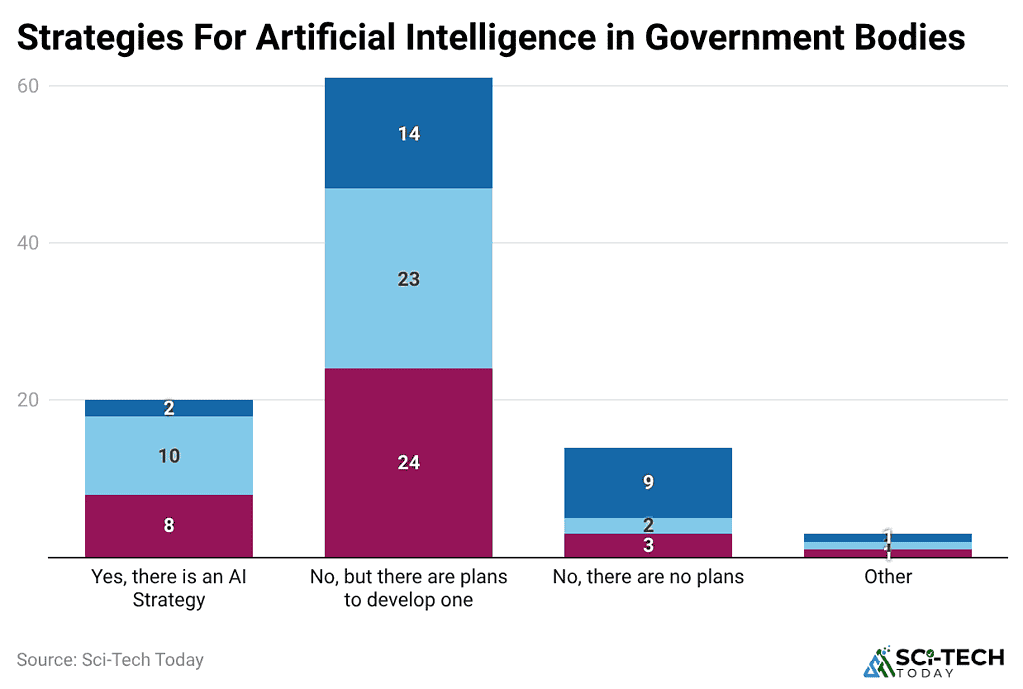
- Among 87 government bodies (100%), 18 (21%) had an AI strategy, 53 (61%) planned to develop one, 13 (15%) had no plans, and 3 (3%) reported other arrangements.
- Of those with a strategy, 7 (8%) had deployed AI, 9 (10%) were piloting or planning AI, and 2 (2%) had no AI.
- Among those developing strategies, the respective figures were 21 (24%), 20 (23%), and 12 (14%).
- Among those without plans, the figures were 3 (3%), 2 (2%), and 8 (9%).
- Other arrangements recorded 1 (1%) in each category.
- Overall, deployment, piloting or planning, and no AI represented 32 (37%), 32 (37%), and 23 (26%), respectively.
Key Companies Driving AI in Government in 2026
- IBM launched its AI GovTech Innovation Center in Lucknow on February 22, 2026. Governments allocated nearly 8% of IT budgets to AI, with spending projected to exceed 13% by 2030.
- Microsoft offered Copilot to government users for free for up to 12 months. The broader agreement projected USD 3 billion in savings.
- On October 21, 2026, Google allocated USD 45 million to accelerate public-sector AI adoption and deployment.
- Amazon Web Services introduced a USD 1 billion modernization framework to upgrade the intelligence community’s technology infrastructure.
- Defense organizations can receive up to USD 20 million in AWS credits over 3 years.
- Accenture secured a potential USD 821 million Pentagon contract for its War Data Platform.
- Deloitte surveyed over 3,200 leaders across 24 countries and found that approved AI access rose by 50% year-over-year in 2026.
- SAP plans to invest over EUR 20 billion in sovereign cloud services over the long term.
- Oracle reported infrastructure capabilities exceeding 17 zettaFLOPS in peak computing performance.
- NVIDIA and AWS plan to deploy 100,000 GPUs for U.S. federal and national-security operations.
- Intel’s Xeon 6+ packs 36,864 CPU cores into just 32U of rack space for AI workloads.
Government AI Readiness
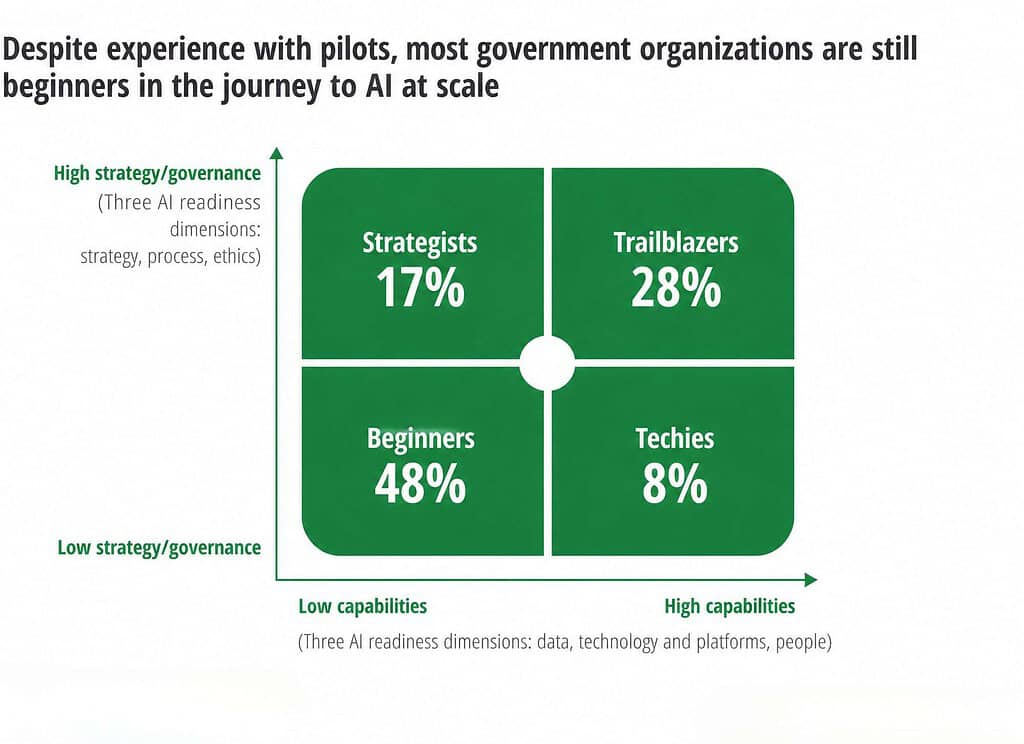
- Beginners represent 48% of government organizations, while trailblazers account for 28%.
- Strategists make up 17%, while techies account for 8%.
Government AI Readiness Gaps
- 91% of agencies expect AI to support mission outcomes over the next five years.
- Although 72% report readiness for ethical AI issues, 44% report AI-related reputational damage.
- Documented AI operations and governance rank among the top 3 success factors.
- Only 33% follow documented machine-learning operations procedures.
Government AI Capability Gaps
- According to Deloitte, 78% of agencies report having sufficient AI skills, while 50% of respondents identify skill shortages as a major barrier.
- 89% of public-sector organizations report access to all necessary AI data.
- Only 41% of agencies consider public cloud platforms for various applications.
- Inadequate supporting technology ranks as the No. 1 barrier to AI adoption.
- Only 28% of respondents fully scale AI applications.
Public Confidence in AI Governance
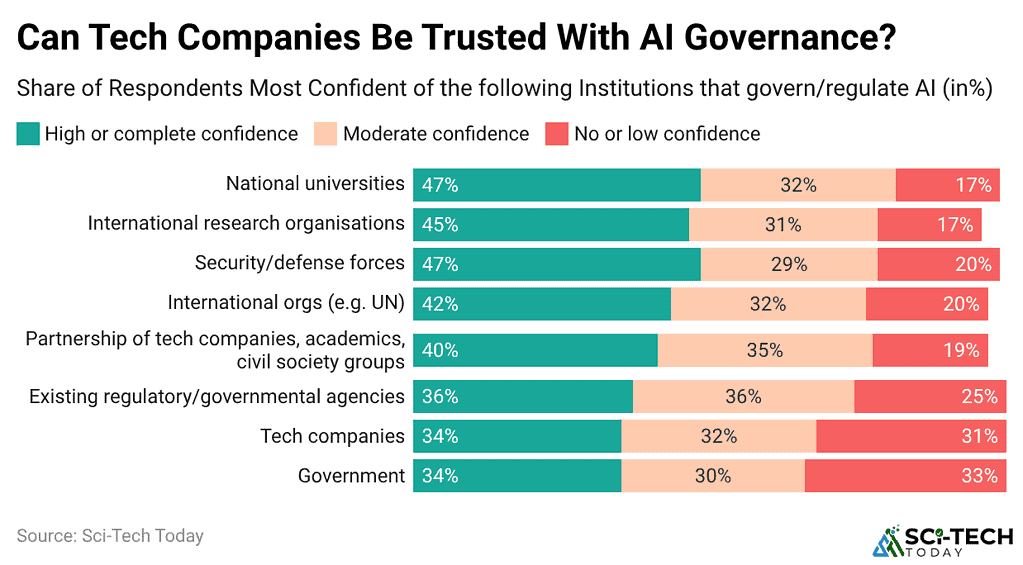
- National universities received 47% high or complete confidence, 32% moderate confidence, and 17% low or no confidence.
- International research organizations recorded 45% high or complete confidence, 31% moderate confidence, and 17% low or no confidence.
- Security and defense forces received 47%, 29%, and 20%, respectively.
- International organizations, such as the UN, recorded 42%, 32%, and 20%, respectively.
- Partnerships between tech companies, academics, and civil society groups received 40%, 35%, and 19%, respectively.
- Existing regulatory and governmental agencies recorded 36%, 36%, and 25%, respectively.
- Tech companies received 34%, 32%, and 31%, respectively.
- Governments recorded 34%, 30%, and 33%, respectively.
Business Benefits of AI Governance
- Evolvance Market Research reports that 20% of organizations capture 74% of the economic value generated by AI.
- AI leaders are 1.7 times more likely to have responsible AI frameworks, 1.5 times more likely to have governance boards, and 1.8 times more likely to use AI safeguards.
- These leaders are 2 times more likely to earn employee trust in AI systems.
- IBM reports that firms spending over 10% of their AI budgets on ethics achieve approximately 30% higher operating profit growth.
- These firms report 22% higher customer satisfaction, 19% higher internal AI adoption, and 59% of executives confirm measurable business results from AI ethics efforts.
Final Remarks
AI is making government work easier and more efficient. It helps save time, reduce paperwork, and provide better services to the public. At the same time, protecting personal data and making fair decisions are important.
AI should always be used with proper human supervision. If used wisely, it can help governments meet people’s needs and solve problems faster. In the end, AI should make governance simpler, services better, and people’s lives easier.
FAQ
Governments use AI to automate services, detect fraud, analyze data, and improve decision-making.
Governments can ensure responsible AI use through strong regulations, data privacy, bias audits, transparency, and human oversight.
AI detects suspicious transactions, identifies fraud patterns, and flags potentially fraudulent claims for investigation.