









Overview
Leadership Statistics: Leadership is not just about being the person in charge. It is about guiding people, making smart decisions, and helping a team move toward a common goal. A good leader listens, communicates clearly, earns trust, and knows how to handle challenges. Great leaders also support their teams, recognize their strengths, and encourage them to do their best. In today’s fast-changing world, strong leadership can make a big difference in how teams work, grow, and succeed.
Whether you are leading a business, managing a team, or taking charge of a project, understanding the key qualities of effective leadership can help you become a better and more confident leader.
Featured Pick
- 83% of organizations consider leadership development critical, yet fewer than 5% offer programs at every leadership level.
- Managers drive at least 70% of the variation in team engagement.
- Only 11% of HR leaders report a strong, ready-to-deploy leadership pipeline.
- Nearly 10,000 Baby Boomers retire daily, increasing succession and knowledge-transfer risks.
- 79% of employees have left or would consider leaving a job due to inadequate recognition.
- Manager engagement fell to 22% in 2025, while employee engagement reached just 20%.
- Nearly 60% of leaders end their workday exhausted.
- 44% of burned-out leaders intend to change employers.
- Women outperform men in 17 of 19 leadership capabilities but remain underrepresented in senior roles.
- Nearly 75% of CEOs now serve as their organization’s primary AI decision-maker.
Key Leadership Insights for 2026
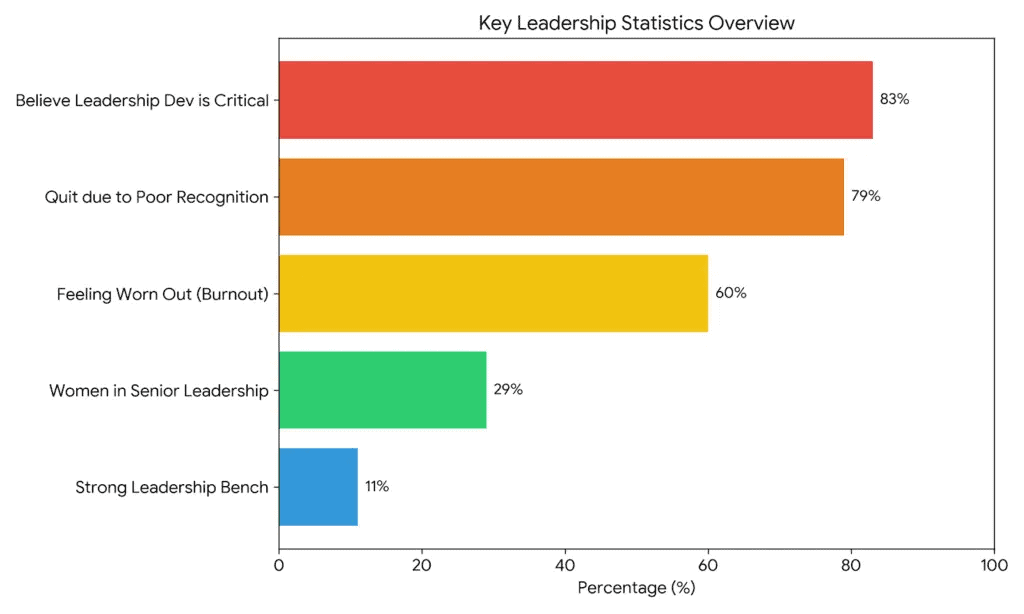
(Source: apollotechnical.com)
- 83% of businesses say leadership development is critical, but fewer than 5% have programs that cover every leadership level, revealing a major gap between priorities and action.
- 79% of employees have left or would consider leaving because their manager provides inadequate recognition, making leadership a major factor in employee retention.
- Only 11% of HR leaders report having a strong leadership pipeline ready to fill open positions.
- Around 10,000 Baby Boomers retire every day, increasing pressure on organizations to develop future leaders.
- Women outperform men in 17 of 19 key leadership skills, yet women hold only 29% of senior leadership roles worldwide.
- Nearly 60% of leaders feel exhausted at the end of each workday, while 44% of burned-out leaders plan to leave their current company.
Manager and Leadership Statistics
- According to Rewordin, global manager engagement fell to 22% in 2025, down from 31% in 2022, while employee engagement dropped to 20% from 22% in 2024.
- Low employee engagement costs the global economy about USD 10 trillion, equal to 9% of global GDP.
- Managers explain at least 70% of the variation in team engagement.
- Employees are 59% more likely to be engaged when their manager is highly engaged.
- Only about 1 in 10 people naturally have the talent to manage, while just 18% of current managers show high managerial talent.
- Managers choose the wrong candidate for the role 82% of the time, and 85% of new managers receive no formal training.
- 84% of workers say poorly trained managers create unnecessary work and stress.
- 71% of leaders report significantly higher stress after taking leadership roles, and 40% of stressed leaders have considered stepping away.
- Direct managers provide the most memorable recognition for 28% of employees, while about 1 in 3 U.S. workers strongly agree they received recognition in the past 7 days.
Recognition: A Key Manager Habit
- Recognition is one of the most effective and low-cost ways for managers to improve employee engagement.
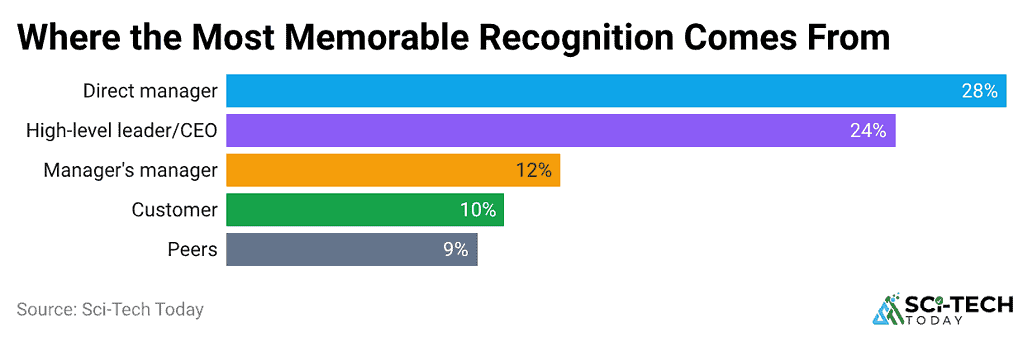
(Reference: rewordin.com)
- 28% of employees say their direct manager gave them the most memorable recognition they have received.
- High-level leaders or CEOs were the source for 24%, while managers’ managers accounted for 12%.
- Customers accounted for 10% of memorable recognition, and peers for 9%.
- Managers and skip-level managers together contributed 40% of memorable recognition.
- When senior leaders are included, the management chain accounts for nearly two-thirds of memorable recognition.
- However, only about 1 in 3 U.S. workers strongly agree that they received recognition or praise for good work in the past 7 days.
- Around 35% of workers receive recognition monthly or more often.
Strategic Thinking and AI Leadership
- Strategic thinking is now essential across leadership levels, with 90% of business leaders considering skills such as analysis and problem-solving important for hiring and growth, according to imd.org.
- Research involving more than 20,000 executives highlights six key leadership skills: anticipating, challenging, interpreting, deciding, aligning, and learning.
- CEO ownership of AI strategy has doubled, with nearly 75% of CEOs now acting as their organization’s main AI decision-maker.
- 50% of CEOs believe their jobs could be at risk if AI investments fail to deliver.
- Companies plan to increase AI spending from 0.8% to about 1.7% of revenue in 2026.
- Nearly 50% of employees want more formal AI training, while more than 20% receive little or no support.
- 73% believe AI knowledge can help advance their careers.
- AI adoption reaches 74% at high-performing organizations versus 56% at lower-performing companies.
Leadership Impact on Business
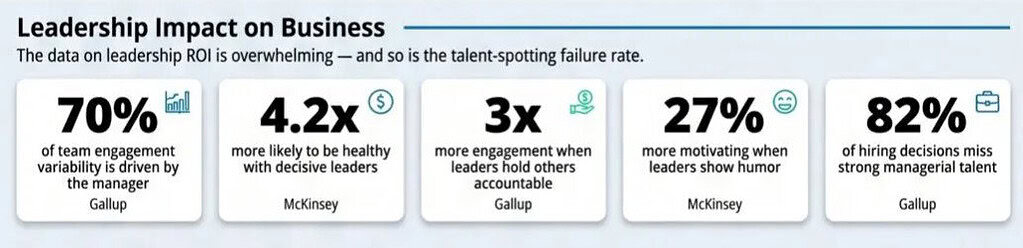
(Source: management.org)
- Managers account for 70% of the differences in team engagement, underscoring their central role in employee performance.
- Teams are 4.2x more likely to be healthy when they have decisive leaders.
- Employee engagement is 3x higher when leaders hold people accountable.
- Leaders who use humor can be 27% more motivating.
- However, 82% of hiring decisions fail to identify strong managerial talent.
Leadership Development Statistics
- More than 77% of organizations report a leadership shortage, while 10,000 Baby Boomers retire every day.
- Although 83% of businesses consider leadership development important, fewer than 5% have programs covering all leadership levels.
- 50% of respondents said their companies lacked enough leadership talent, and 47% expected future shortages in leadership or executive skills.
Leadership Improvement Priorities
- 71% of organizations provide leadership training, but quality differs widely.
- Only 15% of employees receive useful career-planning support from managers.
- Clear communication can reduce burnout by 73%.
- Women hold only 29% of C-suite roles, showing that leadership pipelines remain uneven.
Servant Leadership – Engagement, Retention, and Performance
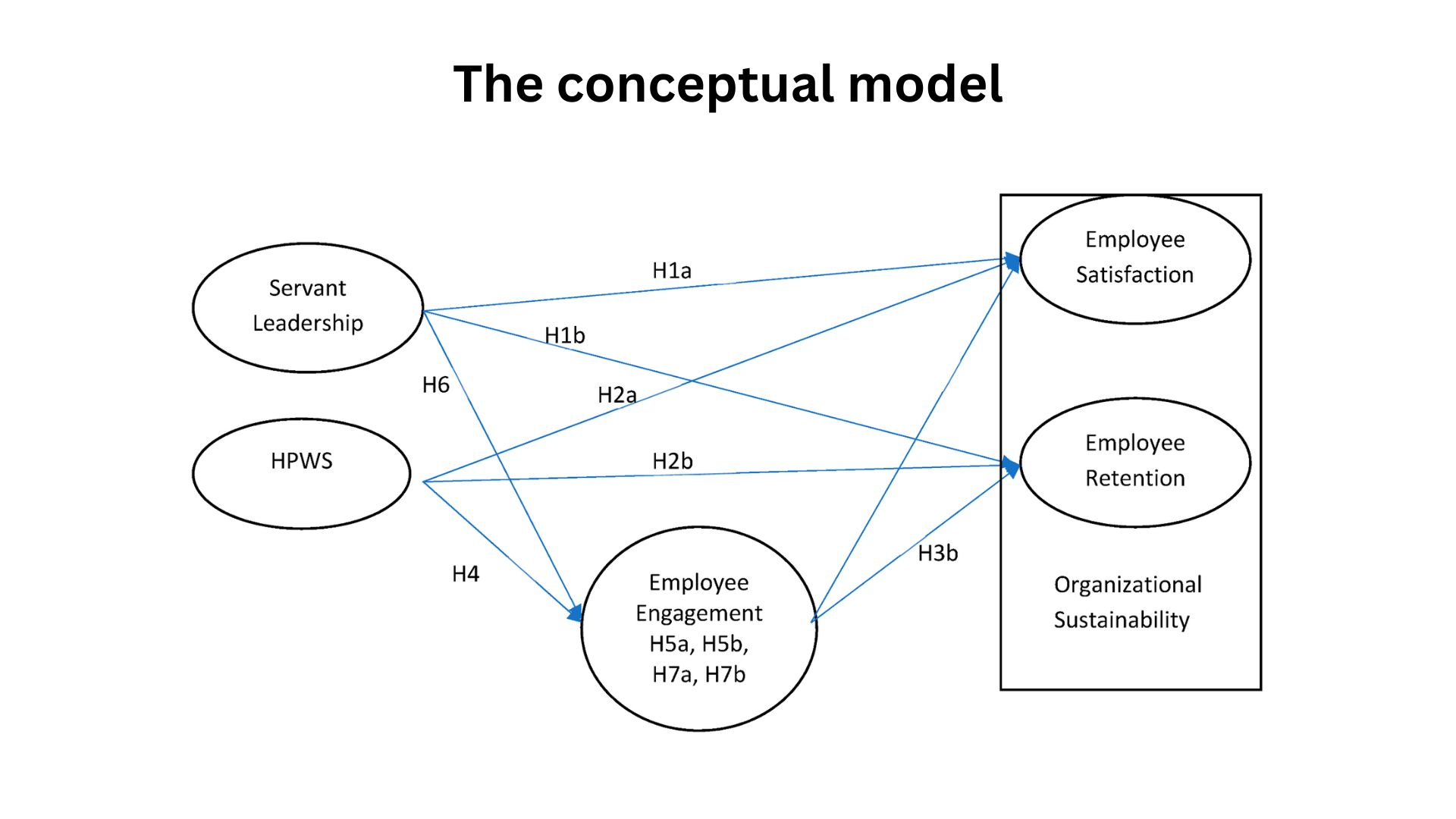
(Source: mdpi.com)
- Companies led by servant leaders see 27 % higher employee engagement, per Gallup studies.
- Servant leadership can boost engagement by 34 %, according to 2025 research across sectors.
- Organizations with servant leadership report 60 % higher engagement scores, stronger team cohesion, and reduced turnover.
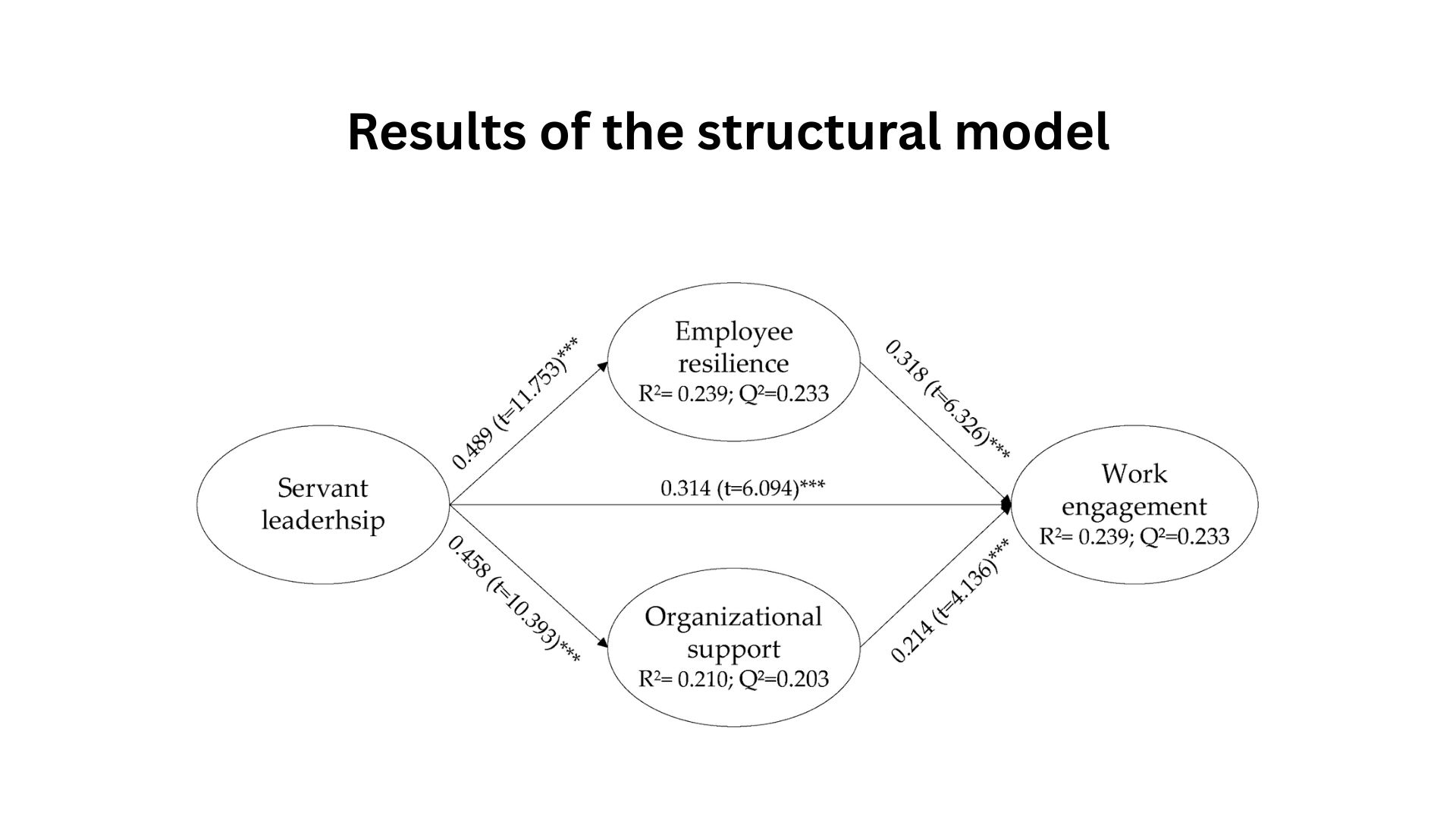
- A peer-reviewed study (Pakistan IT sector) showed servant leadership significantly improves task performance via employee promotive voice (β = 0.14, t = 3.43, p = 0.001).
- 71 % of small businesses with servant leaders achieve long-term success. Over 90 % of employees report feeling valued and heard under servant leadership styles.
- In safety-critical sectors (e.g., fire services), servant leadership leads to higher engagement, performance, and retention.
- Servant leadership enhances psychological safety, trust, and growth, driving discretionary effort and loyalty.
- Ethical leadership, empathy, and humility (principles of the Incarnation model) directly correlate with higher commitment and engagement.
- Servant leadership fosters innovation, ethics, and retention in 70 to 90 % of cases, depending on context.
Leadership Organizational Impact
(Source: mdpi.com)
- 85% of employees in organizations practicing servant leadership report higher engagement driven by feeling seen and valued.
- 80% of employees express stronger loyalty when served by servant leaders, correlating with lower turnover intent.
- 67% of organizations report significantly higher retention rates under servant leadership models.
- More than a 25% boost in innovation is reported across teams within servant-led cultures. 20% improvement in customer satisfaction is tied to servant leadership, as employees engage better and deliver higher service standards.
- 73% of leaders practicing this style see enhanced employee development outcomes and stronger succession pipelines.
- 78% of CEOs affirm servant leadership increases organizational effectiveness, signaling executive buy-in.
- 30% faster problem resolution occurs in teams led by servant leaders, highlighting responsiveness and agility.
- 69% of employees report heightened psychological safety and inclusion in these environments.
- Over half (57%) of organizations experience at least a 15% productivity growth from servant leadership practices.
Corporate Leadership and C-Suite Trends
- According to Grant Thornton, women hold 32.8% of global senior leadership roles, down from the 34.8% peak recorded in 2022.
- Global mid-market companies have women in 32.9% of senior management roles, a decrease of 1.1% year-over-year.
- India follows a similar trend, with women holding nearly 34% of senior management roles.
- At the current rate of progress, gender parity in mid-market senior leadership may not be reached until 2051.
- Forbes reported that in the U.S., women occupied 31% of senior leadership positions in 2026, compared with 34% in 2025 and 35% in 2024.
- LinkedIn stated that women represent 44% of the global workforce but only 31% of leadership roles.
- Women account for 23.8% of global mid-market CEO roles and 23.3% of global board seats, as per a report shared by DigitalDefynd
- Women make up 41.2% of the workforce but only 28.1% of leaders, and while they represent nearly one-third of STEM graduates, they make up just 14% of STEM leadership. Women’s share of board appointments also fell from 17.2% in 2020 to 14.2% in 2024, according to the World Economic Forum.
Women in Management: G20 Comparison (2025)
(Source: statista.com)
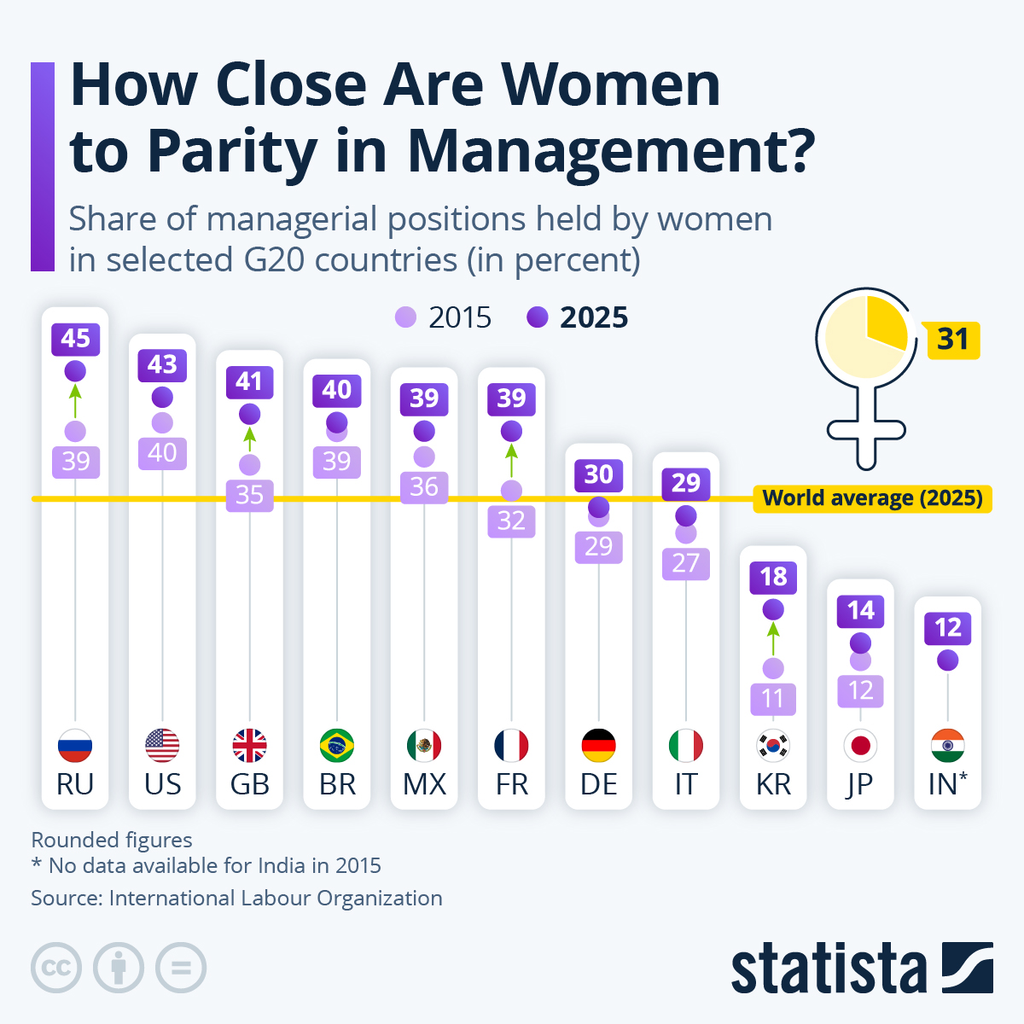
- In 2025, women held 31% of managerial positions globally.
- Russia had the highest share at 45%, up from 39% in 2015.
- The U.S. reached 43%, while the UK recorded 41%.
- Brazil stood at 40%, Mexico and France at 39%, Germany at 30%, and Italy at 29%.
- South Korea rose to 18% from 11%, while Japan rose to 14% from 12%.
- India had the lowest share at 12%, with no change from 2015.
Leadership Burnout Statistics
- According to the Apollo Technical report, 59% of employees and business leaders say their organizations take some steps to prevent burnout, but 29% want businesses to show more empathy.
- Nearly 60% of leaders feel worn out at the end of each workday, which may indicate growing burnout risks.
- Among leaders who feel exhausted, 44% plan to move to another company to advance their careers, while 26% expect to leave within one year.
- Leadership burnout is also rising among high-potential employees. A survey of more than 1,000 high-potential workers found that 86% felt exhausted at the end of the day.
- This represents a 27% increase from the previous year.
Leadership Stress Statistics
- Workplace stress costs U.S. businesses about USD 300 billion each year.
- A survey of 2,000 professionals found that 76% said work stress negatively affected their relationships, while 66% reported losing sleep because of stress.
- 16% of respondents said they had quit their job due to work-related stress.
- 35% identified their boss as a major source of workplace stress, while 80% said changes in direct management or leadership affected their stress levels.
Manager Burnout and Workload
- According to management.org, 75% of HR leaders say managers are overwhelmed.
- 63% of managers report burnout or disengagement.
- Manager engagement has declined by 9 points since 2022.
- 69% of leaders and managers are not equipped to manage change effectively.
- Manager engagement is 4x lower in best-practice organizations.
Trust and Communication Gap
- 86% of executives believe employee trust is high, but only 67% of employees highly trust their employer.
- Only 1 in 5 employees trust their organization’s leadership.
- Just 15% strongly agree that leadership inspires confidence about the future.
- Only 2 in 10 employees believe leaders understand their organization’s direction.
- 68% worry that business leaders intentionally mislead employees.
Effect of Poor Managers
- 56% of U.S. workers report having a mildly or highly toxic manager.
- 75% say dealing with their manager is the most stressful part of work.
- 44% have left a job because of a bad manager.
- 40% identify ineffective leadership as a major cause of workplace stress.
- Employee belief in the organizational mission is 43% under bad managers, versus 91% under good managers.
Digital and Future Leadership Competencies
(Source: inspireone.in)
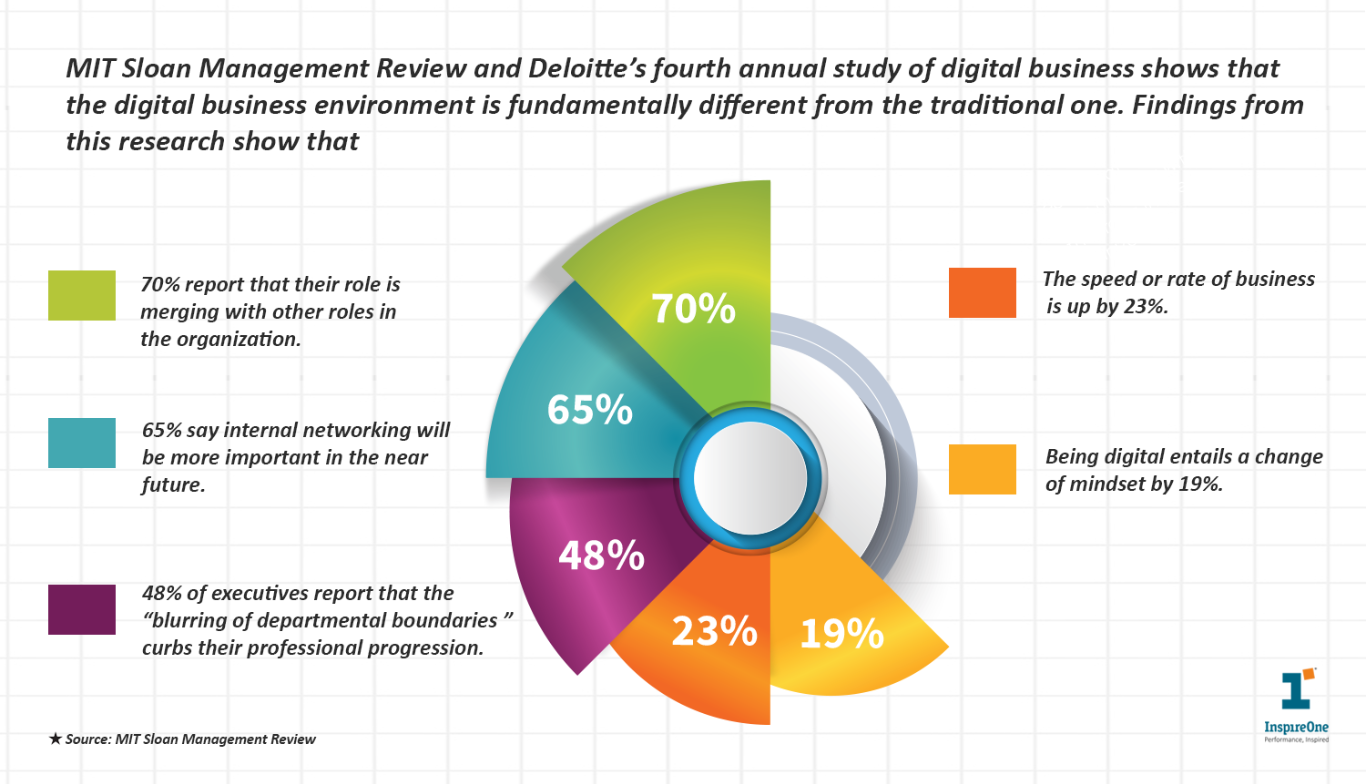
- 70% of skills required for leadership roles in digitalized workplaces are fundamentally different from traditional leadership capabilities, highlighting a shift toward AI literacy, remote coordination, cybersecurity awareness, agile mindset, and emotional intelligence.
- According to the World Economic Forum’s Future of Jobs 2025, leadership and social influence skills rose by 22% compared to 2023, followed by AI and big‑data skills (17 points), and resilience/agility (17 points).
- 89% of tech leaders cite an AI‑related skills shortage in their workforce as the most scarce tech skill globally, rising from 28% to 51% shortage reports in just 18 months.
- 53% of U.S. C-suite executives prioritize cybersecurity expertise in hiring, with 64% considering cyberattacks the top business risk over the next decade.
- LinkedIn and WEF report 85% of employers will focus on upskilling for AI readiness in the next five years; 91% of L&D professionals say it’s more important than ever.
- Leaders must develop ambidexterity, the ability to seamlessly switch between exploration (innovation) and exploitation (execution) modes, enabling adaptability amid disruption.
- Emotional intelligence (EQ) is one of the top leadership skills for 2025, enabling trust-building across virtual teams and maintaining team morale in hybrid settings.
- Communication or “communicative intelligence”, defined by transparency and clarity, can increase job satisfaction by up to 12×, especially in organizations with younger generations.
- Organizations expect leaders to seek continuous improvement through micro-learning and experimentation.
- 83% of leadership development pros say learning must be “fast, fluid, future‑focused,” combining human and machine intelligence to drive skill-building.
Leadership Development and Mentorship Programs
(Reference: mentorink.com)
- 83% of organizations view leadership development as essential to success, but only 5% fully integrate it into core strategy, like succession planning and performance systems.
- Leadership development boosts employee retention by 29% and improves organizational performance by 25% on average, according to Harvard, LinkedIn, and McKinsey data.
- Yet around 30% of employees feel unprepared for their leadership role, citing inadequate onboarding and guidance.
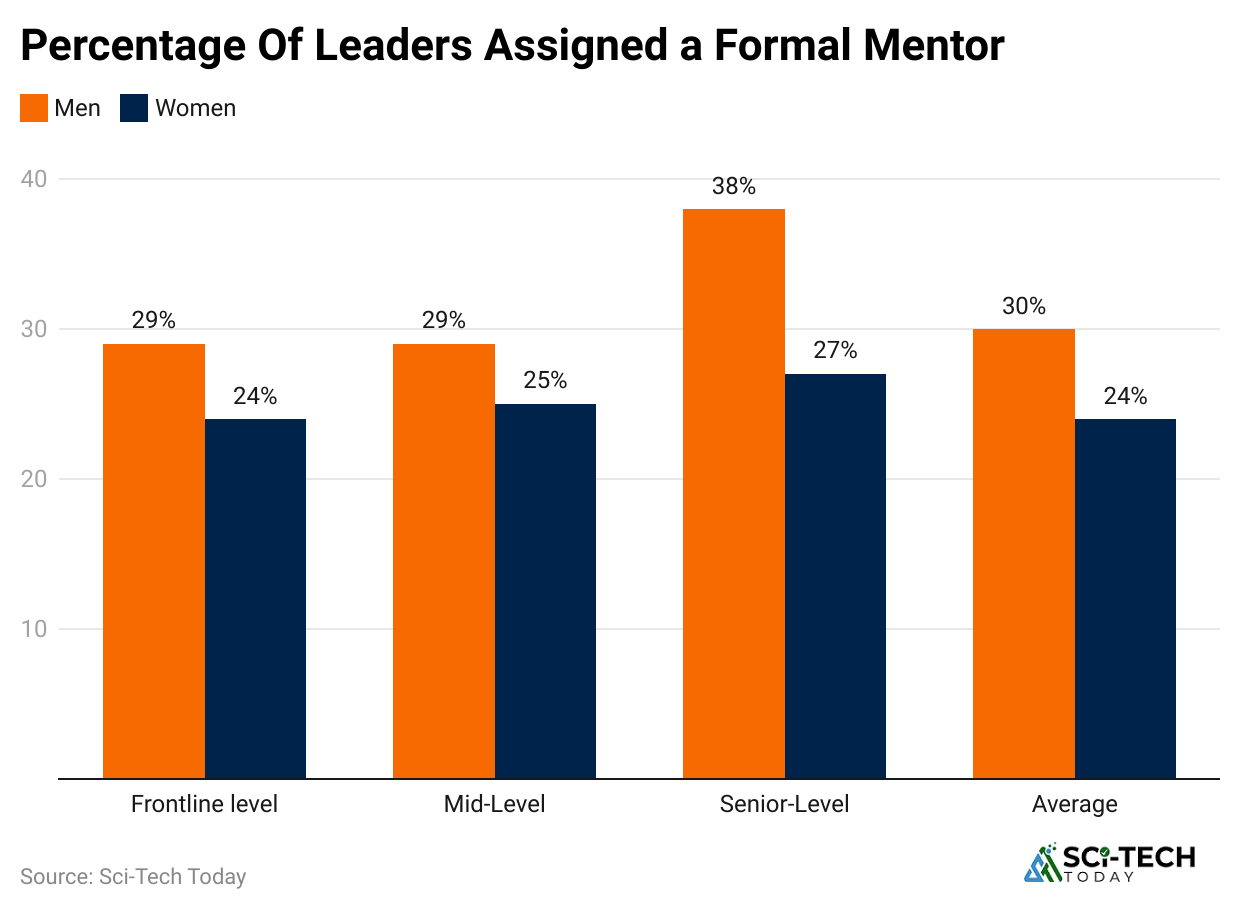
- 60% improvement in leadership skills can be achieved through structured mentoring programs, per DigitalDefynd’s 2025 insights.
- 70% of companies now deliver leadership training via digital platforms; blended learning methods have grown 25% annually.
- Microlearning (short, focused lessons) improves retention of leadership training by 30%, and coaching adoption is up 18%.
- Emotional intelligence training adoption for leaders has grown by 25%, underscoring EQ’s strategic importance.
- Over 60% of organizations emphasize collaboration and teamwork in leadership development curricula.
- Reverse mentoring programs, where junior staff mentor senior leaders, have risen by 15%, fostering diversity, innovation, and fresh perspectives.
- Despite benefits, 25% of organizations cite budget constraints and 50% lack program alignment with company goals as barriers to effective leadership development.
CEO Tenure, Turnover, and Succession Readiness
(Reference: columbia.edu)
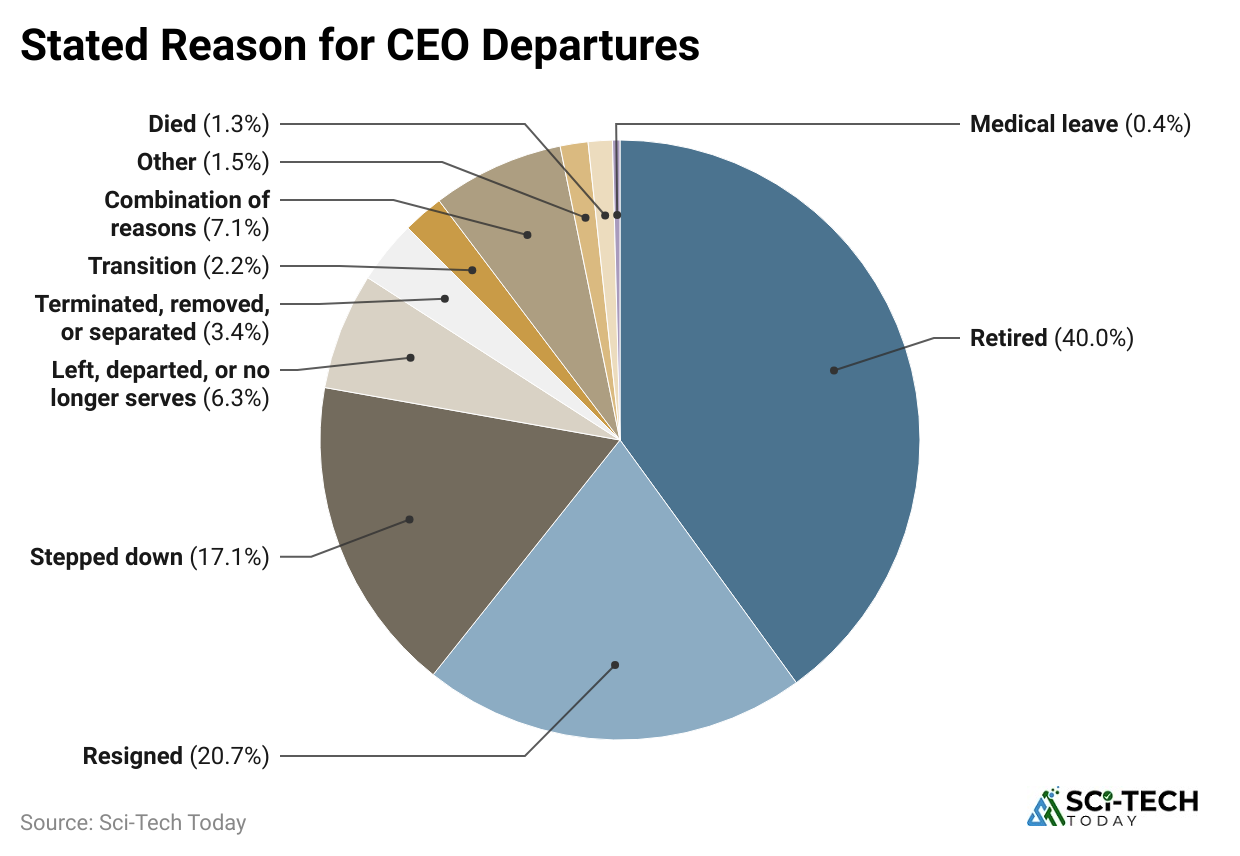
- In S&P 500 firms, 2025 CEO turnover is on track to hit a record 14.8%, compared to the historical average of 11.3% since 2001.
- A staggering 646 CEOs left their roles in Q1 2025, demonstrating leadership disruption on an unprecedented scale.
- 44% of new CEOs in 2024 were external hires, suggesting internal leadership pipelines are insufficiently deep or unsustainable.
- Average tenure of outgoing CEOs dropped to 6.8 years in Q1 2025, down from 8.1 years in Q1 2024; in the FTSE 100, it’s just 1.1 years in some cases.
- Women represented 13% of CEOs appointed in Q1 2025, up from 7% in Q1 2024, signifying improving gender equity at the top.
- Planned succession removes only around 28% of CEOs, still low, though improving (up 7 points from 2024).
- 82% of executives are judged by boards to lack essential leadership skills. Selection often favors likability over capability.
- Organizations with strong leadership experience 21% higher profitability, while leadership gaps correlate with turnover risk and strategy disconnects.
- 77% of companies report insufficient leadership depth, echoing the risk of future pipeline breakdowns.
- Boards are under pressure to rebuild internal pipelines; expert calls to reinvest in leadership development are intensifying as succession crises loom.
Continuous Learning and Leadership Development
- Continuous leadership development is becoming essential as skills evolve more rapidly and leaders face increasingly complex responsibilities.
- The World Economic Forum reports that nearly two-thirds of employers see widening skills gaps as the biggest barrier to business transformation.
- According to Flowprofiler, 77% of organizations lack enough leadership depth across executive, mid-level, and emerging roles, creating succession risks.
- Learning opportunities strongly influence retention, with 92% of employees in Brazil, 87% in India, 78% in the U.S,, and 74% in the UK saying development opportunities help them stay.
- 71% of Millennials may leave within 3 years if companies do not support their leadership development.
- Companies are increasingly using coaching, mentoring, stretch assignments, and online learning rather than relying solely on one-time training.
- Leadership programs now focus more on strategic thinking, adaptability, communication, and emotional intelligence.
- Companies that excel in leadership development report 25% higher business outcomes, making continuous upskilling a key competitive advantage.
Future Leadership Trends and Strategy
- A report shared by management.org shows business leaders are prioritizing agility, with 70% saying they plan to compete by adapting quickly to changing business, customer, and market needs over the next three years.
- Decision-making remains a challenge, as 85% of business leaders say they have regretted or questioned decisions they made previously.
- Leadership is not a top career goal for most Gen Z workers, with only 6% saying they primarily want to reach a leadership position.
- Leaders are giving greater attention to employee well-being, although 56% still focus mainly on business outcomes such as cost and speed, compared with 40% who consider both business and human outcomes.
- AI has yet to deliver major productivity gains, with 89% of leaders reporting no impact over the past three years, while they expect productivity to rise by 1.4% in the next three years.
Recap
Good leadership is not just about giving orders. It is about guiding people, building trust, making smart decisions, and helping the team grow. A good leader listens, communicates clearly, handles challenges, and supports others. Leadership also means learning from mistakes and adapting to change.
In the end, strong leaders create a positive work environment where people feel valued, motivated, and confident. Great leadership helps teams work better and achieve lasting success together.
FAQ
Important leadership qualities include communication, integrity, accountability, empathy, adaptability, confidence, and strong decision-making skills.
Different types of leadership are transformational, transactional, democratic, autocratic, servant, and laissez-faire.
Leaders often face challenges such as managing conflict, making difficult decisions, adapting to change, maintaining employee engagement, and balancing the expectations of different stakeholders.

Sources


