









Lead-in
E-Commerce Fraud Statistics: Online shopping has made life easier, but it has also opened new doors for fraud. Every day, fraudsters use stolen cards, fake accounts, phishing scams, and other tricks to target online shoppers and businesses. As e-commerce continues to grow, so does the risk of losing money and sensitive customer data. E-commerce fraud can hurt a company’s revenue, damage customer trust, and create costly security problems. At the same time, increasingly sophisticated fraud techniques are making it harder for businesses to detect suspicious activity.
Understanding the latest e-commerce fraud statistics helps show how big the problem has become, which fraud methods are most common, and why stronger protection is now essential for every online business.
Editor’s Pick
- Global e-commerce fraud is forecast to rise from USD 56.1 billion in 2025 to USD 131 billion by 2030, a 133% increase.
- Friendly fraud remains a major concern, with 64% of merchants reporting an increase in first-party misuse.
- 72% of merchants already use payment tokenization, while 63% are exploring or deploying agentic-AI payment solutions.
- False declines cost retailers an estimated USD 443 billion annually worldwide, far exceeding direct fraud losses.
- U.S. merchants alone were projected to lose USD 157 billion to false declines, underscoring the revenue-risk trade-off.
- Global e-commerce credit card fraud losses were estimated at USD 48 billion, compared with false-decline losses of more than USD 443 billion.
- Fraudulent digital-goods transactions are projected to reach USD 27 billion by 2030, rising 162% from USD 10.4 billion in 2025.
- Online payment fraud losses were projected to exceed USD 362 billion cumulatively during 2023-2028.
- Payment fraud prevention must optimize approvals, as legitimate customers may account for a large share of declined transactions.
- The strategic priority is to balance fraud control, customer experience, conversion, and operational costs rather than pursue “zero fraud.”
E-Commerce Fraud Market Growth
- Juniper Research reported that global eCommerce fraud was valued at USD 56.1 billion in 2025.
- The value is projected to reach USD 131 billion by 2030, representing 133% growth during the 2025-2030 forecast period.
Origin and Evolution- How Did e-Commerce Fraud Get This Big?
(Reference: wisernotify.com)
- The shift to online shopping started decades ago but accelerated deeply during the pandemic. More digital volume gave fraudsters more targets and more ways to hide in normal traffic. This created a structural opportunity for theft at scale.
- Criminals moved from simple card cloning to distributed digital attacks like credential stuffing, account takeovers, and synthetic identity schemes. The result is higher-value theft and longer attack chains.
- Organized fraud rings have industrialized the trade: they assemble stolen data, use automation and reshippers, and turn fraud into a cross-border business model. That changed fraud from opportunistic to professional.
| Year / Era | Key change |
| Pre-2015 | Card cloning and physical theft dominated |
| 2015 to 2019 | Rise of card-not-present attacks and credential misuse |
| 2020 to 2024 | Pandemic volume surge, organized fraud rings, and bot automation |
Key eCommerce Fraud and Loss Trends
(Source: statista.com)
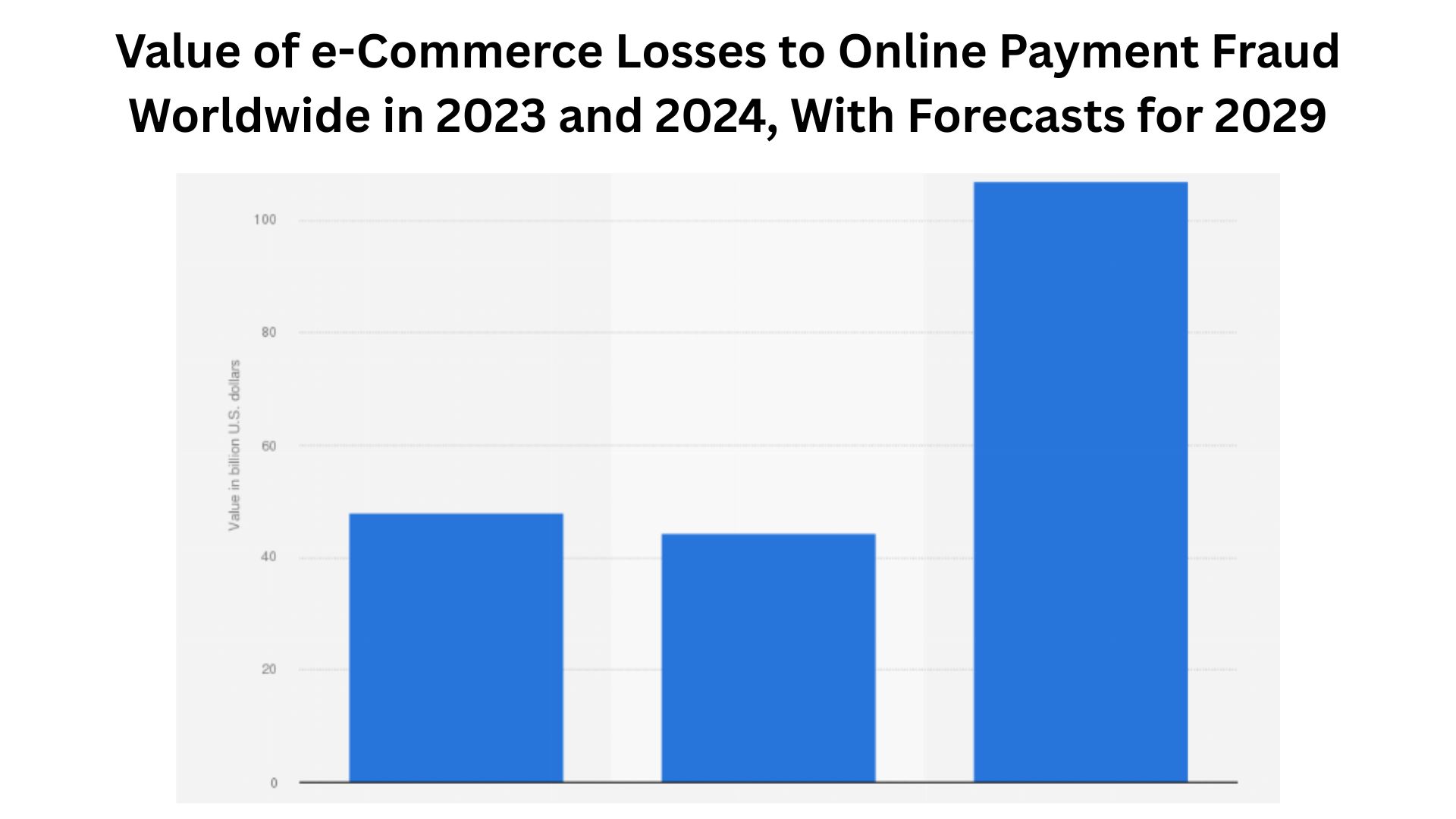
- Online retail fraud losses are significant, with Juniper Research estimating USD 48 billion in 2023 and projecting losses to reach USD 107 billion by 2029.
- Nilson reported USD 33.8 billion in card payment fraud losses across all channels in 2023, highlighting the scale of payment-related fraud.
- Return and refund abuse caused an estimated USD 101 billion in losses for U.S. retailers, though this reflects a broader e-commerce cost rather than payment fraud alone.
- Merchants may incur about USD 4 to USD 4.60 in total costs for every USD 1 lost to fraud, including chargebacks, investigations, fraud prevention, and customer-related impacts.
E-Commerce Fraud Detection Market Forecast
- Demandsage report further stated that the e-commerce fraud detection and prevention market was valued at USD 58.36 billion in 2024 and USD 70.36 billion in 2025.
- Analysts forecast growth to USD 84.83 billion by 2026 and USD 102.28 billion by 2027.
Key Merchant Fraud Trends
- According to Visa Acceptance Solution, 64% of merchants report an increase in first-party misuse, also known as friendly fraud.
- 72% of merchants use at least one form of payment tokenization.
- 63% are exploring or implementing solutions for agentic AI payments.
- More than 80% identify technological infrastructure as their biggest fraud challenge.
E-Commerce Fraud Statistics by Chargebacks and Disputes
- According to ringly.io, chargeback volume is projected to reach 337 million by 2026, up 41% from 238 million in 2023.
- In the U.S., chargebacks are expected to reach 146 million, worth USD 15.3 billion, by 2026.
- Merchants could face more than USD 100 billion in chargeback costs in 2025.
- Chargeback losses are forecast to reach USD 41.69 billion by 2028.
- Friendly fraud accounts for 61% of chargeback disputes.
Friendly Fraud and First-Party Misuse
- First-party fraud accounts for 36% of global fraud cases, up from 15% in 2023.
- 64% of merchants report rising first-party misuse, while more than one in four saw increases of 25% or more.
- About 1 in 5 consumers admit to friendly fraud.
- Friendly fraud cases are expected to rise by 40% by 2026.
- 57% of merchants reported more refund and policy abuse in 2024.
Card-Not-Present Fraud
- CNP fraud losses could reach USD 28.1 billion by 2026, a 40% increase from 2023.
- CNP fraud represented 81% of global fraud cases in 2025.
- Losses are projected to reach USD 49 billion by 2030.
- CNP transactions account for 65% of credit card fraud losses.
- 63% of Americans experienced credit card fraud at least once in 2025.
Fraud Types and Latest Market Evidence: Payment and Digital Fraud
- Card and payment fraud: In Australia, 10% of people aged 15 and over, about 2.3 million people, experienced card fraud in 2024-25. In the U.S., fraudulent card charges accounted for 33% of digital fraud losses.
- Phishing, smishing, and vishing: Australia recorded 65,361 phishing reports in 2025. Among U.S. digital-fraud loss victims, 17% reported phishing, 15% smishing, and 13% vishing, based on a report shared by TransUnion.
- Online shopping fraud: About 48% of fraud or scam victims in an Irish sample experienced online purchase scams, while 23.1 million U.S. adults experienced online shopping scams in 2024.
Identity and Social Engineering
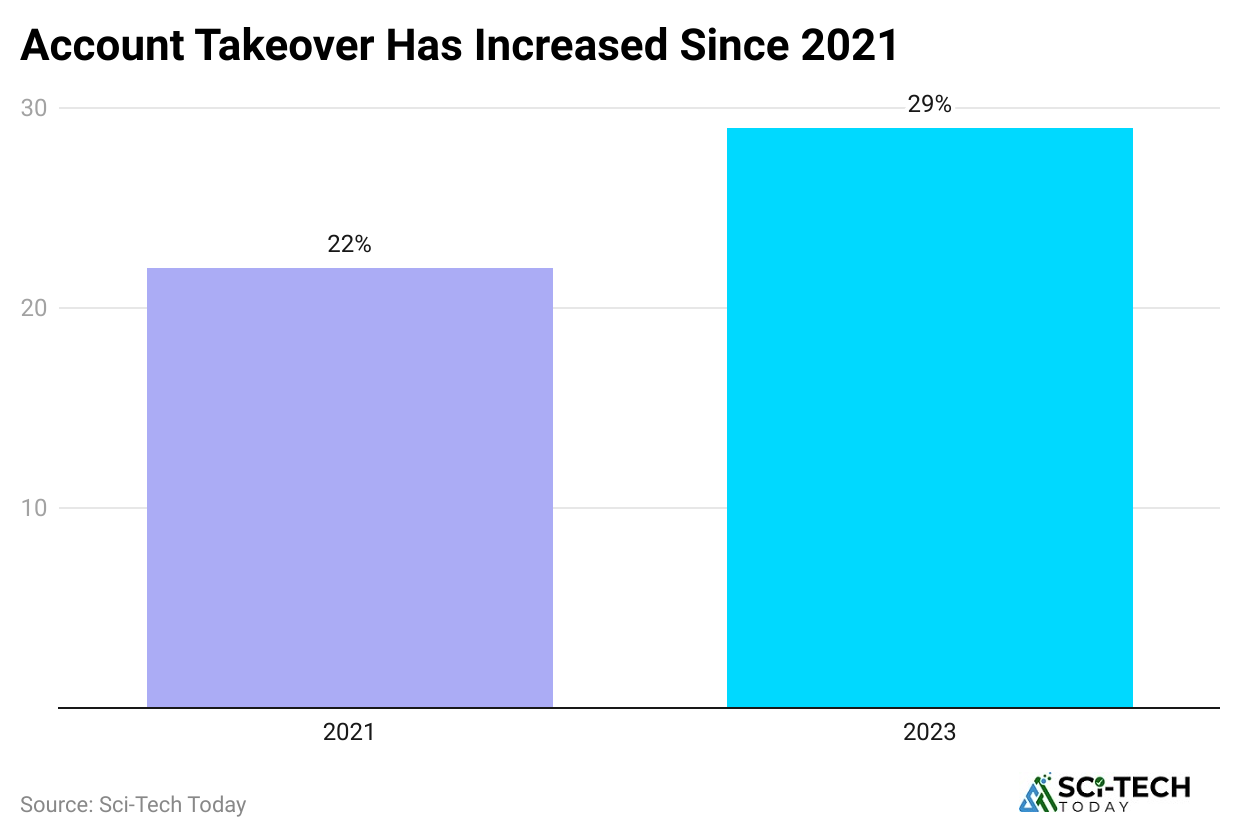
- Identity theft and account takeover: Australia recorded 1%, or about 220,400 people, experiencing identity theft in 2024-25. In the U.S., 29% of digital-fraud loss victims reported identity theft, and 27% reported account takeover,
- According to a BPI report, an estimated 14.6 million U.S. adults experienced impostor scams in 2024. CyberPeace analysis further stated that in India, digital-arrest scams accounted for about 8% of reported cyber-fraud losses, while investment scams accounted for roughly 77%.
- Social-media scams: Nearly 30% of people who reported a U.S. scam loss in 2025 said it started on social media, with losses totaling USD 2.1 billion.
Financial and Business Fraud
- Investment and crypto fraud: An ACCC source stated that Australian investment scams caused A$837.7 million in losses in 2025. Crypto-fraud schemes received about USD 35 billion, with investment schemes representing 62% of observed fraud inflows.
- Romance scams: Australia reported A$139.9 million in romance-scam losses in 2025. Nearly 60% of U.S. romance-scam loss reporters said the fraud began on social media.
- Business payment fraud: In England and Wales, 11% of businesses experienced fake-invoice fraud and 7% experienced mandate fraud. Australia recorded A$166.8 million in payment-redirection losses in 2025.
- Check, ACH, and wire fraud: In a 2026 U.S. study, 75% of financial institutions reported debit-card fraud attempts, and 63% reported check fraud attempts. Debit card fraud accounted for 40% of payment fraud losses.
- First-party and synthetic identity fraud: First-party fraud represented 36% of all fraud events in 2026, while synthetic identities accounted for 21% of detected first-party fraud in 2025.
Merchant Beliefs About Fraud
(Source: spd.tech)
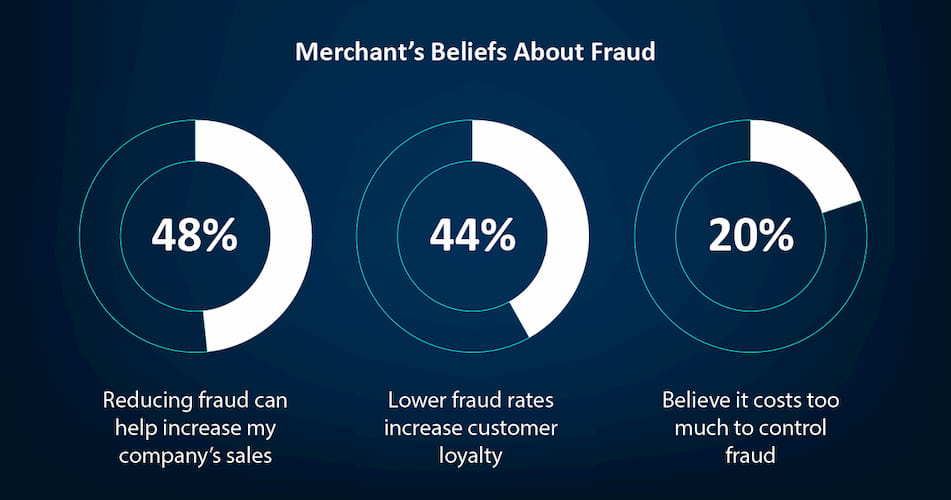
- 48% of merchants believe that reducing fraud can help increase their company’s sales.
- 44% believe that lower fraud rates can improve customer loyalty.
- 20% of merchants believe that controlling fraud costs too much.
| Tool | Purpose |
| Bots/scrapers | Scale credential tests, checkout attacks |
| Credential lists | Source for ATO and account abuse |
| E-skimmers | Steal card details from checkout pages |
| Reshipper networks | Mask origin and move stolen goods |
Ecommerce Fraud by Geography, 2026
| Region / Market | Ecommerce Fraud Metric |
| North America | 42% of global e-commerce fraud value. |
| North America | 2.4% fraud-to-revenue ratio. |
| Latin America | 4.6% of e-commerce revenue is lost to payment fraud. |
| Europe | 3.1% of e-commerce revenue is lost to fraud. |
| Asia-Pacific (APAC) | 2.9% of e-commerce revenue is lost to fraud. |
| United States | Mobile transactions account for 33% of fraud costs. |
| Canada | Mobile transactions account for 41% of fraud costs. |
| Global consumers | 43% have experienced payment fraud. |
Pricing Analysis of the Fraud Detection Market
- AWS Amazon Fraud Detector: According to abs.gov.au, the service costs USD 0.03 per prediction for the first 100,000 monthly predictions and USD 0.0075 thereafter. Data storage costs USD 0.10 per GB, model training costs USD 0.39 per compute hour, and model hosting costs USD 0.06 per hour, according to Coherent Market Insights.
- AWS Marketplace Financial Transaction Fraud Detection: Real-time ML inference costs USD 8.00 per hour, batch inference costs USD 16.00 per hour, and training costs USD 10.00 per hour using an ml.m5.large instance.
- Fraud Detection SDKs: Mobile and app-focused SDKs typically cost USD 600-2,500 per month, particularly for behavioral biometrics.
- Custom Fraud Software: Basic systems cost USD 30,000-50,000, while advanced AI/ML systems cost USD 80,000-150,000.
- Enterprise Fraud Systems: Development can cost USD 150,000- 500,000+, with ongoing maintenance of USD 5,000-20,000 per month.
- All-in-One Fraud Solutions: Appliance hardware costs USD 10,000–30,000; subscriptions start at USD 5,000/year; optional data enrichment costs USD 2,000/year; implementation costs USD 5,000; and support costs USD 1,000/month.
False Declines and Fraud Detection Trends
- False declines cost retailers USD 443 billion annually worldwide, primarily due to rejecting legitimate customers.
- Retailers lose 9 times as much revenue to false declines as to actual fraud, as per a report shared by ringly.io.
- US merchants lose about USD 118 billion annually, which is 13 times the cost of actual credit card fraud, due to wrongly declined transactions.
- 39% of shoppers who face a false decline never return to the retailer.
- AI-powered fraud detection achieves about 95% accuracy for credit card fraud.
- Fraud rates per order declined from 3.4% to 3.0% in 2025.
False Positives and False Declines – The Hidden Cost
(Reference: businessinsider.com)
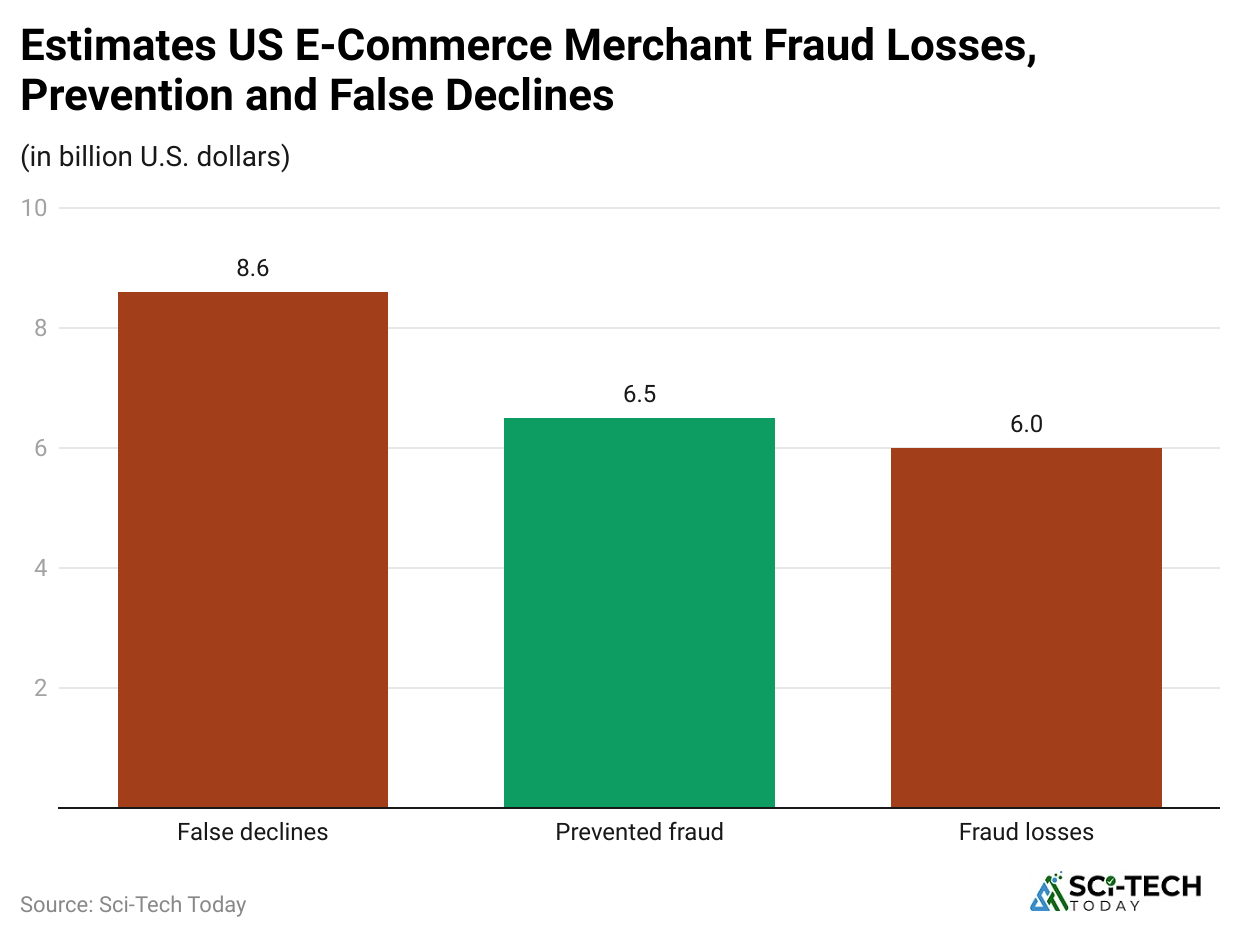
- U.S. e-commerce merchants are estimated to lose USD 8.6 billion due to legitimate transactions being incorrectly rejected.
- Fraud prevention efforts are estimated to stop USD 6.5 billion in fraudulent transactions.
- Despite prevention measures, merchants still face approximately USD 6.0 billion in fraud losses.
| Metric | Notes |
| Typical false positive rate | 2% to 10% of e-commerce orders for many merchants. |
| Potential global revenue loss | Estimates up to $308B (widely cited analysis). |
(Reference: sellerscommerce.com)
- Forecasts show e-commerce fraud growing rapidly; Juniper expects e-commerce fraud value to more than double from $44.3B (2024) to $107B (2029) if current trends continue.
- Fraud automation and bot sophistication will keep rising. Imperva and other bot reports show non-human traffic is a dominant force, and fraud tools are being commoditized. Expect more automated credential stuffing and API abuse.
- First-party abuse, synthetic identity misuse, and return fraud are areas where criminals are finding new revenue. Many reports mark first-party fraud as surging and likely to remain a major problem.
| Trend | Likely direction |
| Bot-driven scale attacks | Increasing. |
| First-party/return abuse | Increasing and mainstreaming. |
| Cross-border fraud rings | More organized, professional, and reshipper-savvy. |
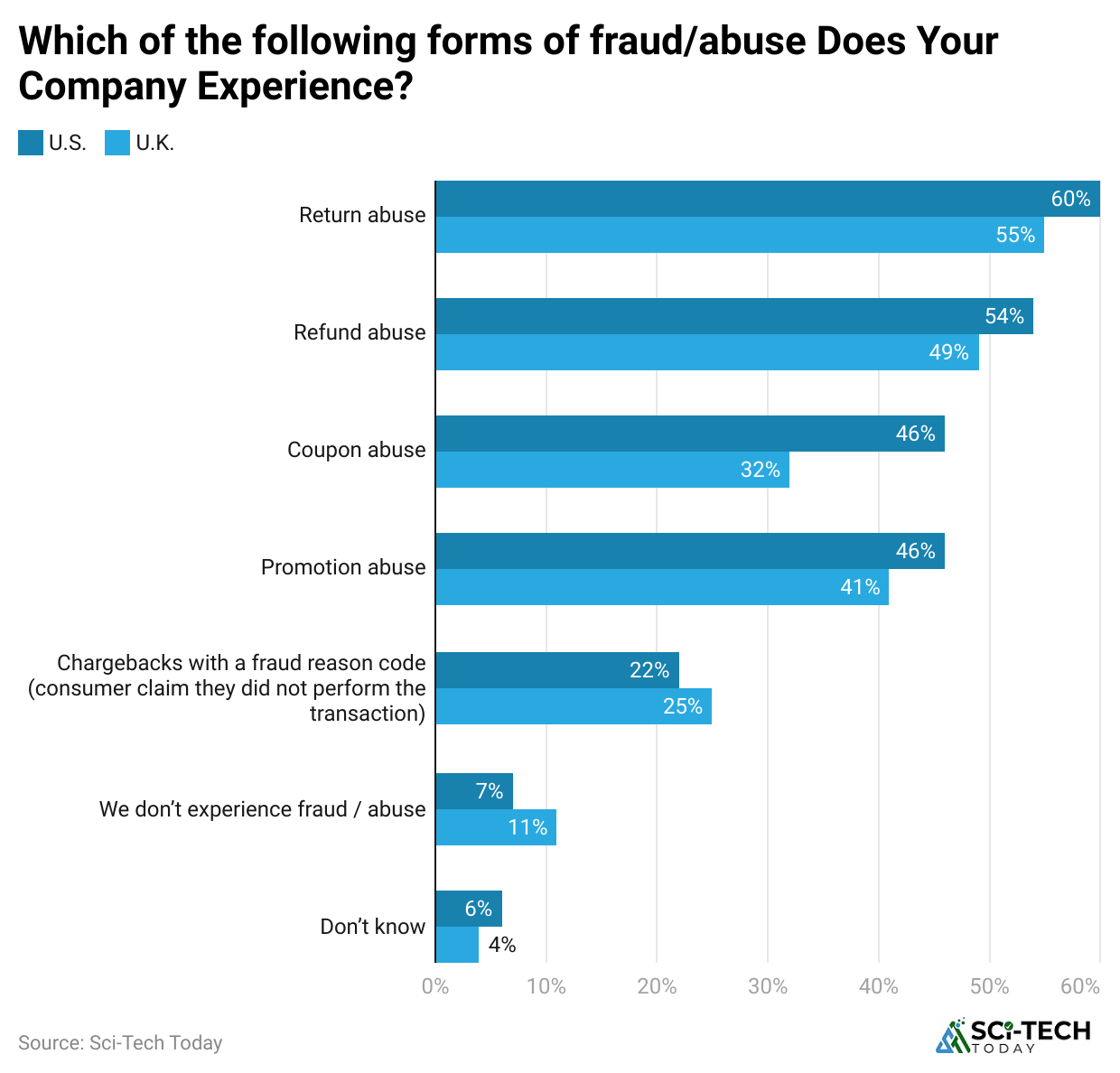
Fraud and Abuse Experienced by Companies
(Reference: datos-insights.com)
- Return abuse was the most common issue, reported by 60% of U.S. companies and 55% of U.K. companies.
- Refund abuse affected 54% of U.S. respondents and 49% of U.K. respondents.
- Coupon abuse was experienced by 46% of U.S. companies, compared with 32% in the U.K.
- Promotion abuse impacted 46% of U.S. firms and 41% of U.K. firms.
- Fraud-related chargebacks affected 22% of U.S. companies and 25% of U.K. companies.
- Only 7% of U.S. and 11% of U.K. companies reported no fraud or abuse.
Why eCommerce Fraud Management Is an Operations Problem: Balancing Fraud and Revenue
- Zero fraud is unrealistic because rejecting every suspicious order can also reduce legitimate sales.
- Businesses must balance fraud losses against approval rates, conversion rates, customer trust, and manual review capacity.
- At Riskified’s Ascend 2025 summit, 85% of businesses said reducing friction for genuine customers while controlling fraud was their biggest challenge.
- According to Shopify, 47% estimated that up to 5% of legitimate orders were falsely declined, potentially costing about USD 50 billion in legitimate revenue annually.
Reducing Manual Review
- False declines also waste customer acquisition spending and can reduce customer lifetime value.
- Shelfies faced losses when fraudulent custom orders entered production before employees could cancel them, including a USD 15 chargeback fee.
- Automation helped the company identify high-risk orders faster and reduce manual intervention.
- Shopify fraud analysis automatically evaluates card orders using AVS, CVV, IP location, freight-forwarder ZIP codes, and behavioral signals.
Enterprise Fraud Management
- Between 2023 and 2024, about 55% of eCommerce retailers incurred at least USD 10 million in annual fraud losses, while more than 10% reported losses exceeding USD 30 million.
- W. Titley & Co. increased revenue by 190%, return customers by 75%, and average order value by 13% through automation.
Summary
E-commerce fraud is a growing problem as more people shop online. Fraudsters use stolen cards, fake accounts, phishing, and other tricks to target businesses and customers. These scams can lead to financial losses, chargebacks, and lost trust.
However, businesses can reduce these risks by using secure payment systems, fraud detection tools, strong account protection, and regular monitoring. Staying alert and updating security measures can help online businesses protect their money, customers, and reputation.
FAQ
Common types include payment fraud, identity theft, account takeover, chargeback fraud, and refund scams.
Businesses can prevent e-commerce fraud by using secure payments, fraud detection tools, strong passwords, and customer verification.
Warning signs include unusual orders, repeated payment failures, mismatched addresses, suspicious accounts, and unexpected transaction activity.

Sources