









Brief Introduction
Space Observation Satellites Statistics: Can you imagine having a set of super-powered eyes floating high above the Earth, constantly watching the universe and our planet at the same time? That’s exactly what space observation satellites do.
These satellites are specially designed to orbit Earth or travel into space to observe everything from distant galaxies to our own planet’s weather patterns. They capture images, measure radiation, track movements of celestial objects, and even help predict natural disasters. These space observation satellites aren’t just about looking at stars or planets. They are essential tools for scientists, governments, and industries.
They help us understand space phenomena like black holes, supernovae, and asteroid movements, while also giving crucial data about Earth’s environment, climate change, and urban development. In simple words, they act as our eyes and sensors in space, constantly collecting information that humans cannot see with their naked eyes.
Over the past decades, these satellites have grown from simple machines like Sputnik 1 to highly sophisticated instruments like the James Webb Space Telescope. They now use optical cameras, infrared sensors, X-ray detectors, and radar to gather detailed data. This evolution has made them central to astronomy, environmental science, disaster management, and even commercial applications, such as agriculture, mapping, and communications.
In this article, I’d like to explore the statistics, history, and technology behind space observation satellites, including their numbers and statistics, their impact on the world, and the future that lies ahead. By the end, you will not only understand what these satellites do but also why they are essential for exploring the universe and protecting our planet. Let’s get into it.
Editor’s Key Takeaways
- As of 2025, there are approximately 12,149 satellites in orbit, a large portion dedicated to observation missions.
- About 322 satellites focus specifically on monitoring Earth’s environment, weather, and natural disasters.
- Over 90 space agencies and private organizations operate satellites worldwide, highlighting the global reliance on satellite data.
- Modern satellites use optical, infrared, radar, X-ray sensors, miniaturized CubeSats, and AI-driven data analysis.
- The Earth observation market reached around USD 1.7 billion in 2024, with commercial sectors like agriculture, forestry, and urban planning heavily relying on satellite data.
- 3,665 new space debris objects were added in 2024, increasing collision risks and prompting sustainability measures like satellite deorbiting.
- In 2024, 261 launch attempts occurred, with 254 successful, deploying 2,578 operational satellites.
- Expected to launch around 200 new satellites in the next decade, driven by government policies and emerging startups.
| Category | Statistic/Details |
| Total Active Satellites | 12,149 |
| Earth Observation Satellites | 322 |
| Operational Agencies | 90+ |
| Historical Milestones | Sputnik 1 (1957), Hubble (1990), JWST (2021) |
| Technology | Optical, Infrared, Radar, X-ray, and AI-driven data |
| Market Size (2024) | USD 1.7 billion |
| Space Debris (2024) | 3,665 new objects |
| Global Launches (2024) | 261 attempts, 254 successful, 2,578 satellites deployed |
| Future Trends | Mega constellations, autonomous satellites, global collaboration |
| India’s Space Plans | 200 satellites in the next decade |
Space Observation Satellites Context and Evolution
(Source: springeropen.com)
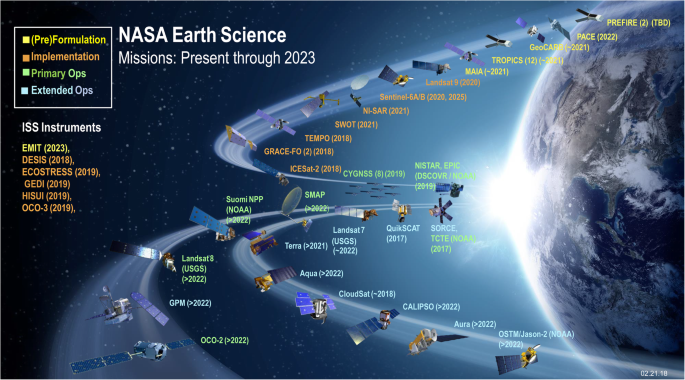
- Early Developments: The journey started with Sputnik 1 in 1957, the first satellite to orbit Earth. It paved the way for dedicated observation satellites.
- Technological Advancements: Instruments improved, with better sensors, imaging tech, and communication systems, making satellites more capable and versatile.
- International Collaboration: Agencies like NASA, ESA, ISRO, and JAXA began working together on large missions like Hubble and JWST, sharing data and technology.
| Year/Period | Milestone | Significance |
| 1957 | Launch of Sputnik 1 | First artificial satellite in orbit |
| 1990 | Hubble Space Telescope was launched | High-resolution optical and UV imaging |
| 2000s-2020s | Collaborative missions (JWST, Chandra, ESA missions) | International cooperation, multi-spectrum observation |
Current Statistical Data
(Source: researchgate.net)
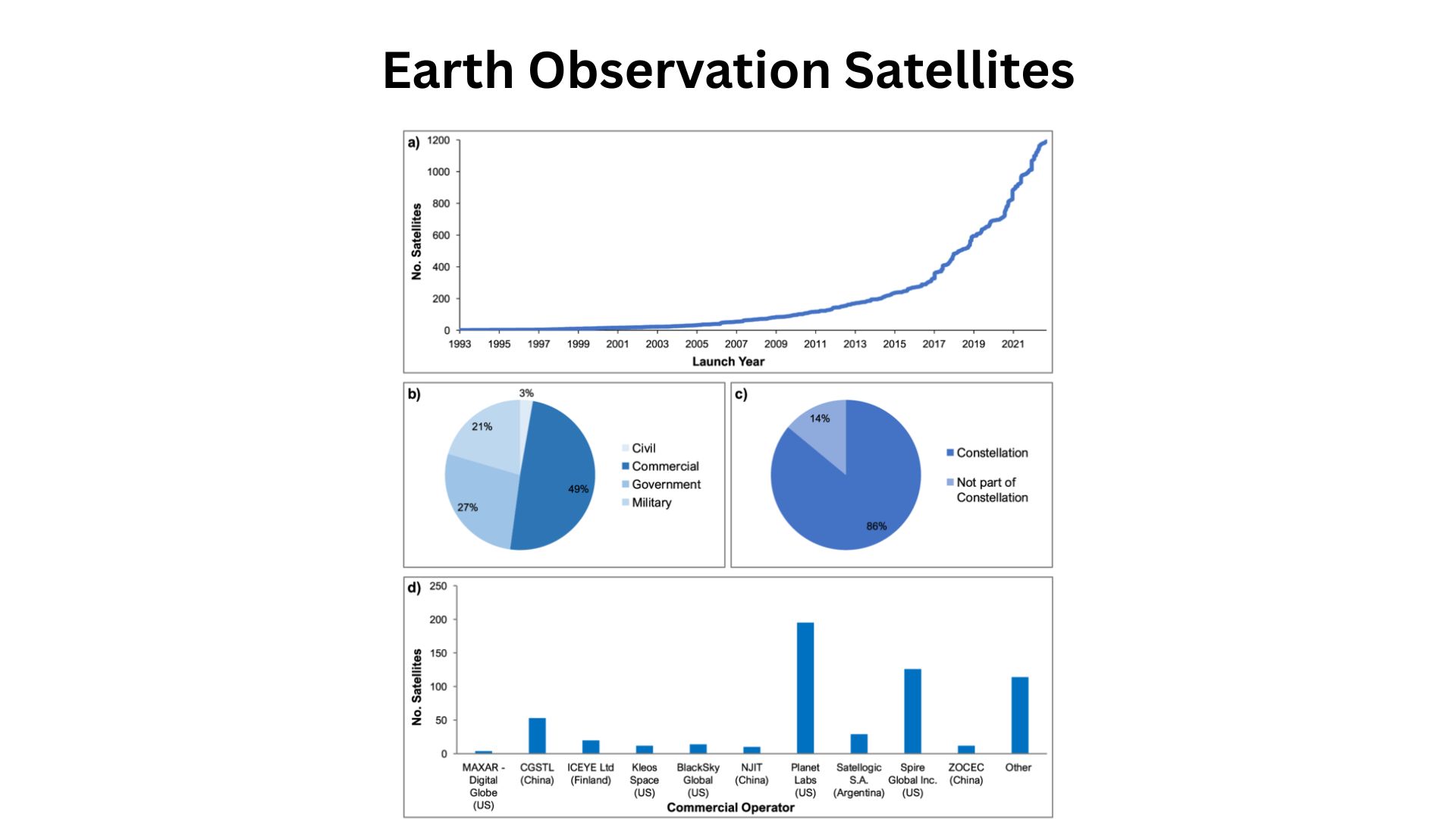
- Active Satellites: As of 2025, roughly 12,149 satellites are in orbit, with a notable portion used for space observation purposes.
- Earth Observation Satellites: Around 322 satellites are dedicated to Earth observation, assisting in weather prediction, environmental studies, and disaster management.
- Operational Agencies: More than 90 space agencies and private organizations operate these satellites globally.
| Statistic | Figure/Details |
| Total Active Satellites | 12,149 |
| Earth Observation Satellites | 322 |
| Number of Operational Agencies | 90+ |
| Primary Uses | Weather, environment, astronomy, disaster monitoring |
Technological Advancements of Space Satellites
(Source: analysysmason.com)
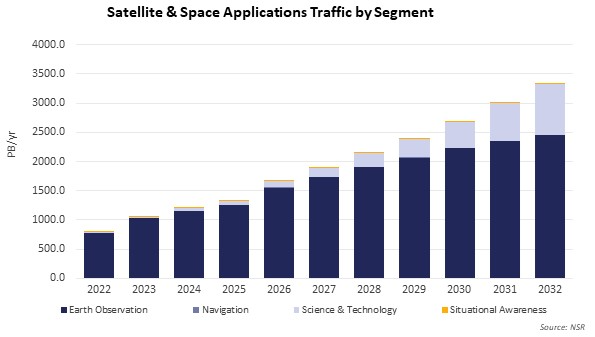
- Sensor Innovations: Modern satellites use optical, infrared, radar, and X-ray sensors for high-resolution imaging across different wavelengths.
- Miniaturization: Smaller satellites (CubeSats, nanosats) reduce costs and allow frequent launches.
- Data Processing: AI and machine learning are increasingly used to analyze massive datasets collected by satellites.
| Advancement | Benefit/Impact |
| Optical/Infrared/Radar Sensors | Observe multiple spectrums, detect fine details |
| Miniaturization | Reduced costs, more frequent launches |
| AI & Machine Learning | Faster, accurate data analysis from large datasets |
Economic Impact of Space Observation Satellites
(Source: sphericalinsights.com)
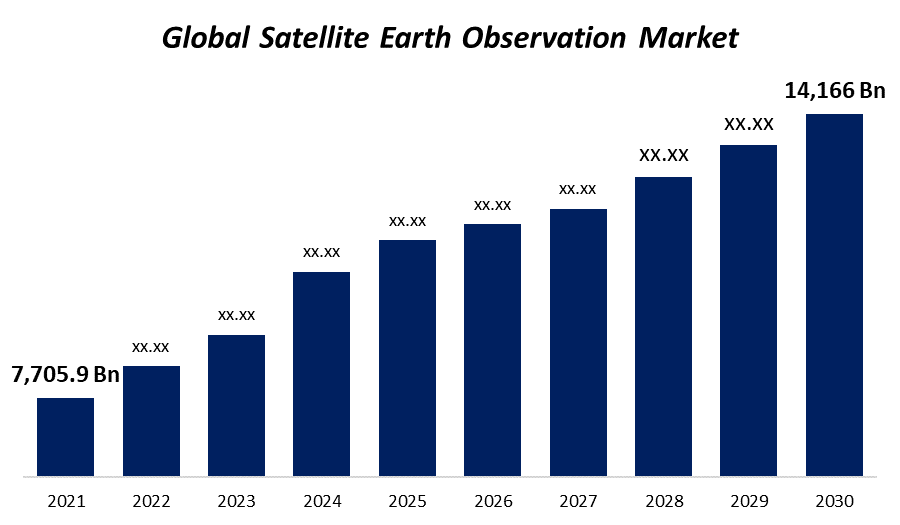
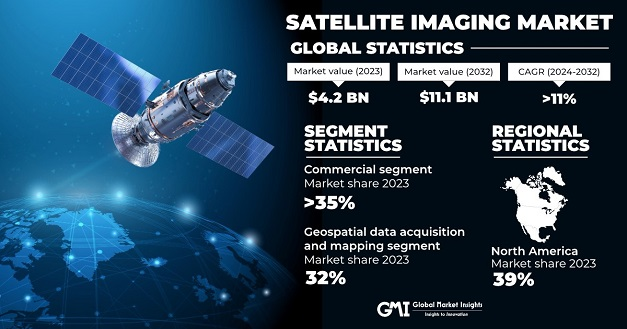
- Market Growth: The Earth observation market reached USD 1.7 billion in 2024, driven by technological adoption and commercial demand.
- Commercial Applications: Sectors like agriculture, urban planning, forestry, and mining use satellite data for improved decision-making.
- Job Creation: Expansion in satellite manufacturing, data analysis, and related tech has created thousands of jobs globally.
| Category | Statistic/Details |
| Market Size (2024) | USD 1.7 billion |
| Commercial Sectors Using Data | Agriculture, forestry, urban planning, mining |
| Employment | Thousands of jobs in the satellite industry |
Earth observation satellites cost Statistics
- UN and IAA studies cite typical mini-Earth-observation satellites costing around USD 5-20 million to develop and manufacture.
- Modern EO nanosatellites (CubeSat‑class) are dramatically cheaper to launch, averaging about USD 575,000 per satellite, while a “standard‑mass” satellite launch can exceed USD 575 million.
- For NASA’s Landsat 9 Earth observation mission, the launch services alone cost approximately USD 153.8 million
- NASA’s Earth Science Division (which funds many EO missions) increased from about USD 1.9 billion in 2016 to a projected USD 2.38 billion in 2025.
Environmental Considerations
(Source: sciencedirect.com)
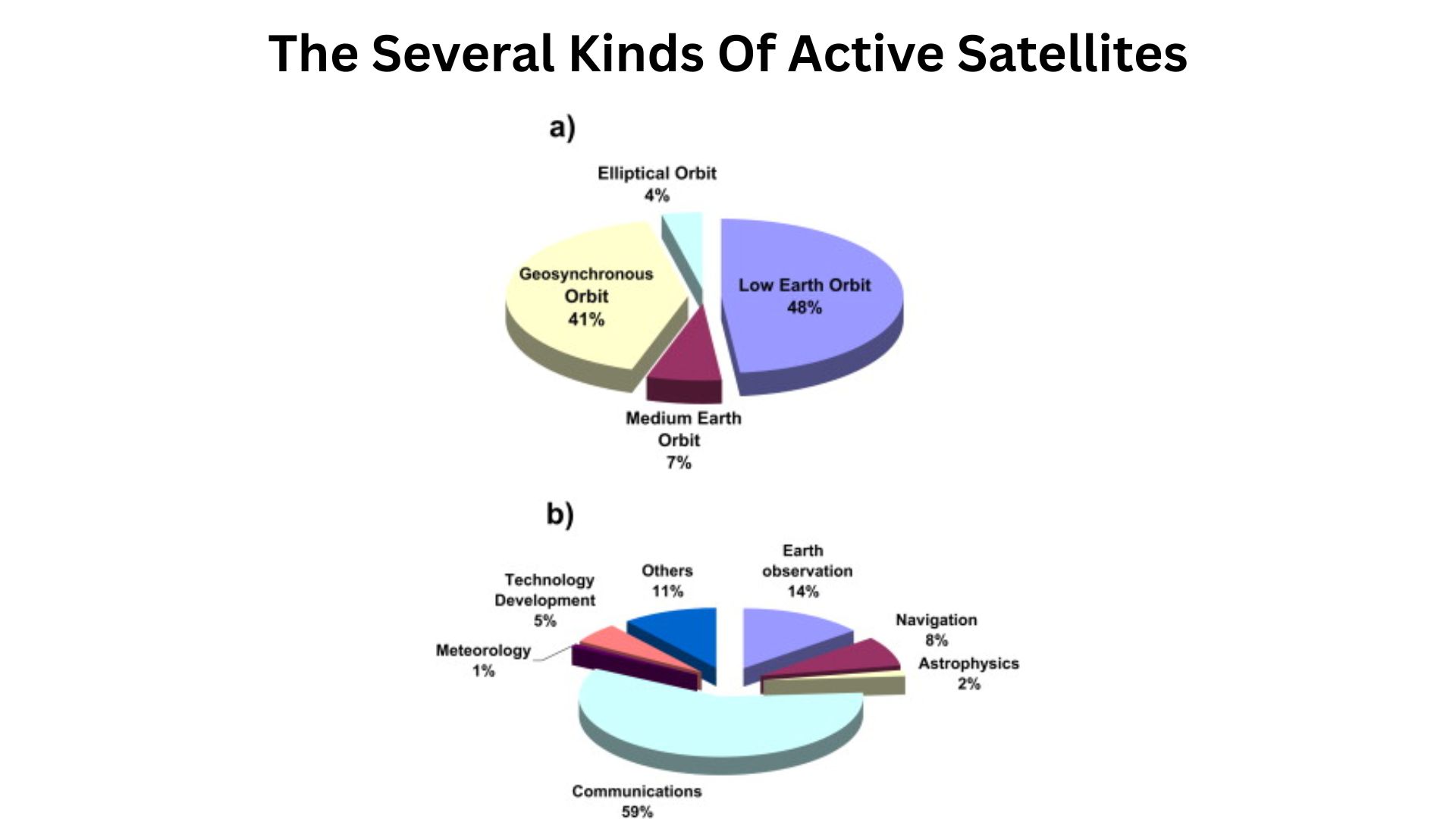
- Space Debris: Increasing satellite launches have caused over 3,665 new debris objects in 2024, raising collision risks.
- Sustainability Measures: Agencies enforce deorbiting, debris tracking, and mission planning to reduce risks.
| Factor | Detail |
| Space Debris (2024) | 3,665 new objects |
| Risks | Collisions with satellites |
| Mitigation | Deorbiting old satellites, debris tracking |
Future Projections
(Source: fortunebusinessinsights.com)
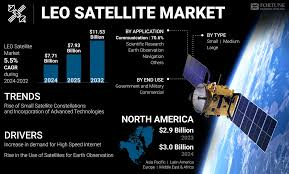
- Satellite Constellations: Large constellations like Starlink are expanding, providing global communication and observation capabilities.
- Technological Innovations: New satellites will have better propulsion, longer lifespans, and enhanced autonomy.
- Global Collaboration: Continued cooperation is expected to address space debris, scientific exploration, and commercial applications.
| Aspect | Projection/Impact |
| Satellite Constellations | More mega-constellations for communication and observation |
| Technology | Enhanced propulsion, autonomy, and lifespan |
| Collaboration | Global partnerships for sustainable space observation |
Recent Developments
(Source: gminsights.com)
- SpaceX continues to expand its Starlink constellation, surpassing 6,000 active satellites by 2025, transforming global internet coverage while also raising concerns about space congestion and astronomical observation interference.
- India’s Space Sector: India plans 200 new satellites in the next decade, supported by startups and government policies.
- Global Launches: In 2024, there were 261 launch attempts, with 254 successful, deploying 2,578 operational satellites.
- Space Debris Concerns: Space debris is increasingly monitored, with over 3,665 new debris objects added in 2024.
| Development | Statistic/Details |
| Indian Satellites Planned | 200 in the next decade |
| Global Launch Attempts (2024) | 261 total, 254 successful |
| Satellites Deployed (2024) | 2,578 operational |
| New Debris Objects (2024) | 3,665 |
Wrap Up
Overall, these space observation satellites have completely changed the way we see and understand both our planet and the universe. From tracking weather patterns and environmental changes to exploring distant galaxies and cosmic events, these satellites are our eyes in space. They provide data that governments, scientists, and industries rely on every day.
As this kind of technology continues to advance, and with more collaboration between nations and private companies, the capabilities of space observation satellites will only grow. More detailed observations, longer satellite lifespans, and bigger constellations are coming, giving us a clearer view of the cosmos and a better understanding of Earth.
If you’re curious about how these satellites impact our daily lives, stay updated, follow space news, and keep exploring. We hope you like this article. If you have any questions, kindly let us know in the comments section.
FAQ
Earth observation satellites are those satellites that observe all kinds of phenomena occurring on Earth. The sensors used for different purposes vary depending upon the purpose of the observation; for example, observing phenomena in nature, disaster monitoring, effects of human activity on Earth, etc.
It takes USD 1 million to construct each satellite.
The primary purpose of the Internal Revenue Service (IRS) is to administer and enforce the nation’s tax laws. It ensures that individuals and businesses pay the correct amount of taxes, which funds essential government operations, public services, and infrastructure.

Sources