









Overview
Conversion Rate Optimization Statistics: Getting people to visit your website is important, but getting them to take action is even more valuable. Whether you want visitors to buy a product, sign up for a newsletter, or fill out a contact form, every click matters. This is where Conversion Rate Optimization (CRO) comes in. CRO is the process of improving your website to increase the number of visitors who become customers or leads. Instead of spending more money to attract new traffic, it helps you get better results from the visitors you already have.
By making small changes based on user behavior and data, CRO improves the user experience, increases conversions, and helps your business grow faster while making the most of your marketing efforts.
Top Choice
- Businesses need a conversion rate of at least 11.4% to rank among the top 25% of performers.
- Email marketing delivers the highest average conversion rate at 19.3%, outperforming all major traffic channels.
- Around 68% of small businesses still lack a dedicated CRO strategy.
- Organizations spend only USD 1 on CRO for every USD 92 invested in traffic acquisition.
- Companies invest an average of USD 2,000 per month in CRO tools and software.
- About 77% of businesses use A/B testing to improve conversions.
- Adding videos to landing pages can increase conversions by up to 86%.
- A 1-second page load delay can reduce conversions by 7%.
- Personalized content can boost conversion rates by up to 202%.
- Placing a CTA above the fold can improve conversion rates by up to 317%.
Key CRO Benchmarks
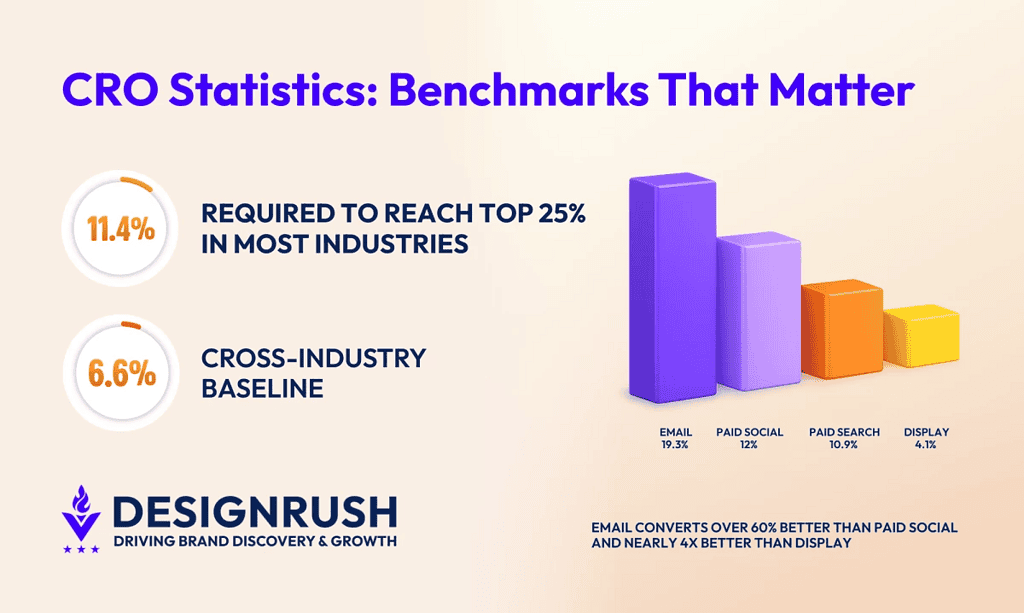
(Source: media.designrush.com)
- In 2026, businesses need a conversion rate of at least 11.4% to rank among the top 25% of performers.
- The average conversion rate across all industries is approximately 6.6%, providing a common performance benchmark.
- Email marketing delivers the highest conversion rate at 19.3%, making it one of the most effective channels for generating leads and revenue.
- Paid social advertising records an average conversion rate of 12%, while paid search follows closely at 10.9%.
- Display advertising has the lowest average conversion rate at 4.1%.
- Overall, email marketing converts more than 60% better than paid social and nearly 4 times as well as display advertising.
Conversion Rate Optimization, Adoption, and Spending Trends
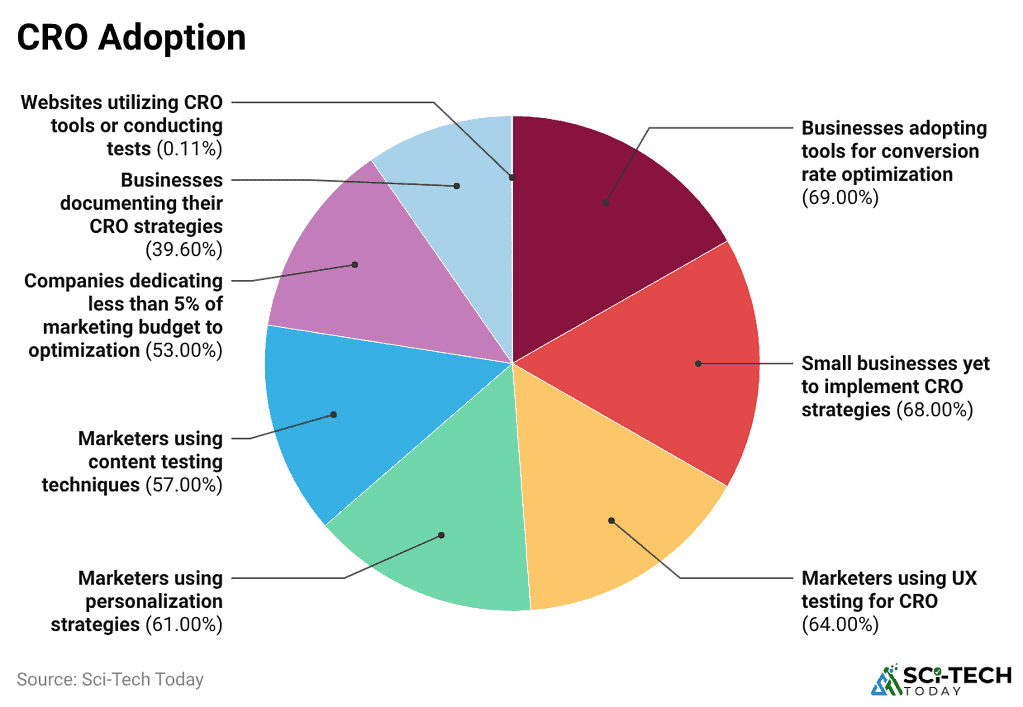
(Reference: market.biz)
- 68% of small businesses have not yet adopted a dedicated CRO strategy, highlighting a major growth opportunity.
- Businesses currently spend only USD 1 on CRO for every USD 92 spent on acquiring new website traffic, despite CRO’s strong return potential.
- More than 50% of companies allocate less than 5% of their total marketing budget to optimization efforts.
- Organizations are increasing investments in CRO tools, spending an average of USD 2,000 per month on software for A/B testing, analytics, and conversion improvements.
- The global CRO software market is expected to exceed USD 1.93 billion by 2026, reflecting rising demand.
- Around 77% of businesses use A/B testing as their main CRO method, while only 40% formally document their CRO strategies.
Average Conversion Rate Optimization Statistics Across Industries
- VWO report shows that the average conversion rate is 1.8% for B2B eCommerce and 2.1% for B2C eCommerce.
- Among service industries, professional services record an average conversion rate of 4.6%, followed by legal at 3.4%, finance at 3.1%, healthcare at 3%, higher education and colleges at 2.8%, and travel at 2.4%.
- In eCommerce categories, beauty and skincare lead with 2.7%, followed by food and beverage at 2.6%, general apparel at 2.2%, while toys and learning, electronics, and accessories each average 2.1%.
Conversion Rate Optimization Adoption Statistics in 2026
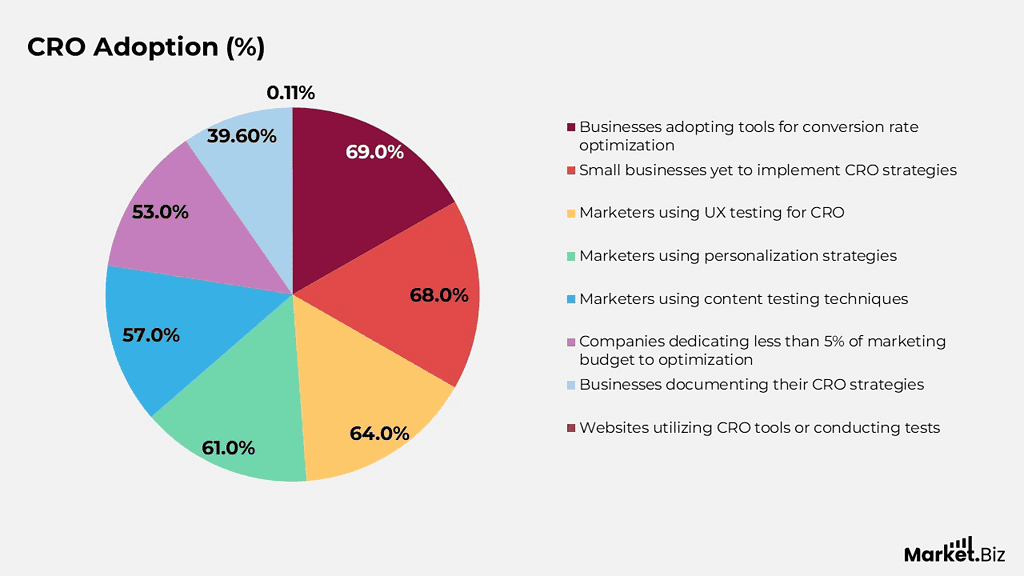
(Source: market.biz)
- 69% of businesses use tools and techniques to improve conversion rates and better understand user behavior.
- Around 68% of small businesses have not yet implemented a dedicated Conversion Rate Optimization strategy.
- Experience testing is the most widely used content optimization method among organizations.
- 64% of marketers use UX testing, 61% apply personalization strategies, and 57% conduct content testing as part of their CRO efforts.
- Approximately 53% of companies spend less than 5% of their marketing budget on optimization activities.
- Organizations invest an average of USD 2,000 per month in CRO tools and software.
- Only 39.6% of businesses formally document their CRO strategies, while less than 0.11% of websites worldwide actively use CRO tools or run optimization tests.
Conversion Rates by Marketing Channel
- Designrush research shows that email marketing delivers the highest average conversion rate at 19.3% in 2026.
- Paid social campaigns achieve an average conversion rate of 12%, followed by paid search at 10.9%.
- Display advertising records the lowest average conversion rate at 4.1%.
- Compared with other channels, email traffic converts at about 60% (paid social), 77% (paid search), and 370% (display advertising).
Online Shopping Conversion Rate by Category
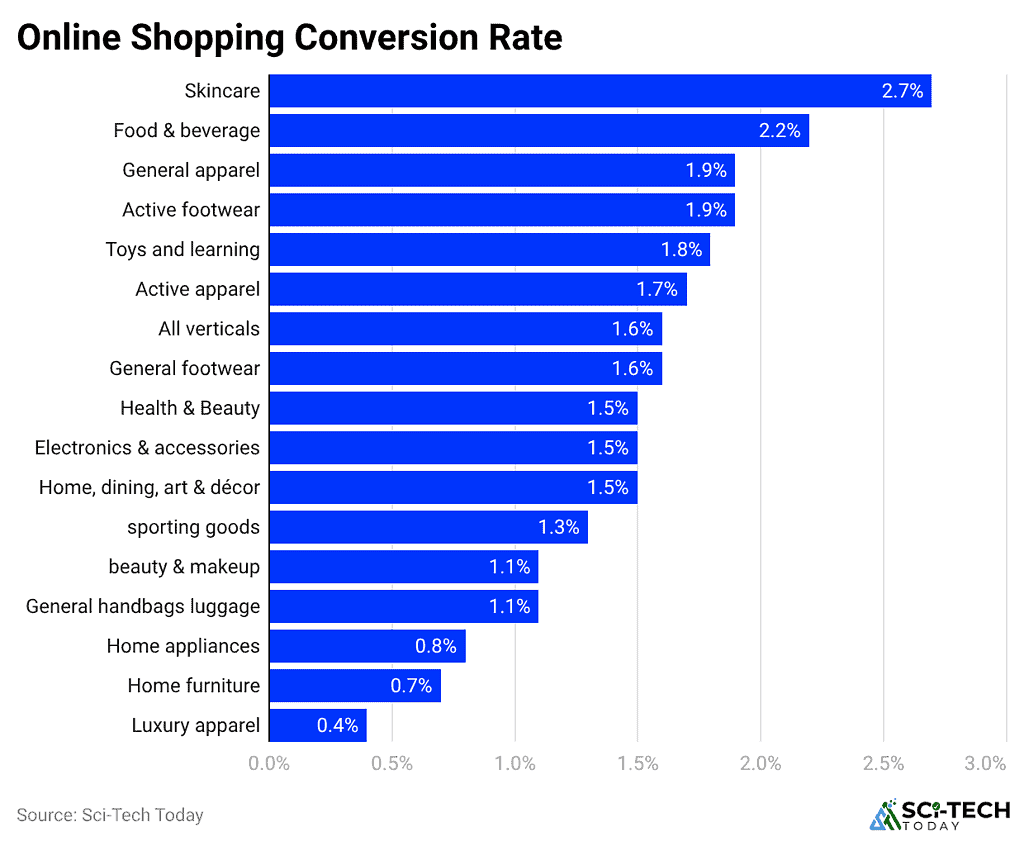
(Reference: infogram.com)
- Skincare has the highest conversion rate at 2.7%.
- Food and beverage follows at 2.2%, while general apparel and active footwear each convert at 1.9%.
- Toys and learning convert at 1.8%, and active apparel reaches 1.7%, close to the all‑verticals average of 1.6%.
- General footwear also stands at 1.6%, with health and beauty, electronics and accessories, and home, dining, art, and decor each at 1.5%.
- Sporting goods convert at 1.3%, beauty and makeup and general handbags and luggage at 1.1%, home appliances (0.8%), home furniture (0.7%), and luxury apparel (0.4%).
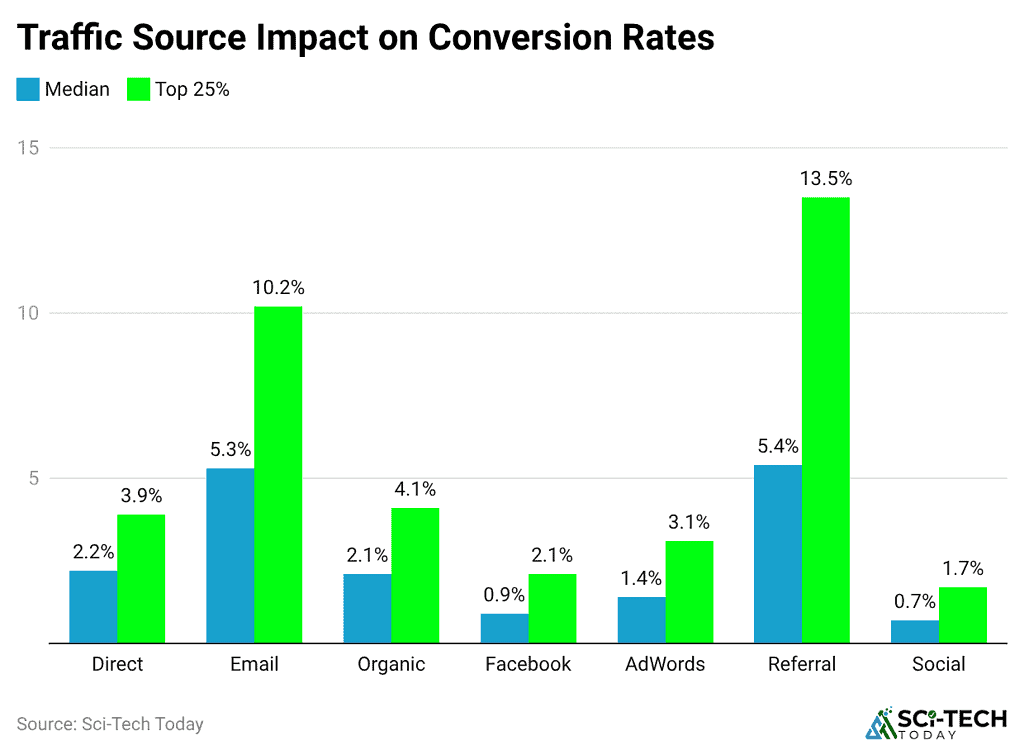
Traffic Source Impact on Conversion Rates
(Reference: getshogun.com)
- Direct traffic shows a median conversion rate of 2.2%, while the top 25% performers reach 3.9%.
- Email marketing delivers a strong median rate of 5.3%, with top performers achieving 10.2%.
- Organic search traffic converts at a median of 2.1%, rising to 4.1% for the top 25% sites.
- Facebook traffic has the lowest median rate at 0.9%, growing to 2.1% at the top level.
- AdWords campaigns show a median of 1.4%, with top performers hitting 3.1%.
- Referral traffic is the strongest overall, with a median of 5.4% and top performers reaching an impressive 13.5% conversion rate.
- Social media traffic lags behind other sources, with a median of just 0.7% and top performers at 1.7%.
Website Experience and User Journey
(Source: gustdebacker.com)
- A website loading in two seconds or less is essential, as this speed threshold can deliver a conversion rate that is 15% higher on mobile devices compared to slower sites.
- A page load time delay of even one second increases the probability of a visitor bouncing by 32%, and if the load time reaches six seconds.
- High-quality images and visual content are not a luxury; 50% of online shoppers cite images as the crucial factor when they are deciding what product to buy from a listing.
- Embedding relevant videos on landing pages has a dramatically positive effect on performance, with a documented potential to increase conversion rates by an average of 86%.
- Long-form landing pages, when structured correctly with clear intent and a CTA, have been shown to increase lead generation by a massive 220% compared to their shorter counterparts.
- The strategic removal of the standard navigation bar from a dedicated landing page can be a powerful tactic.
- Implementing live chat functionality on a website can significantly enhance customer engagement, with data indicating the potential to boost overall revenue by up to 40% while improving conversion rates by 48%.
- The effectiveness of Exit Pop-ups is consistently proven, as implementing them can typically lead to an additional 2% to 5% increase in conversion rates by offering one final incentive before the visitor leaves the site completely.
| 1-Second Load Delay | -7% Conversion Drop |
| Video on Landing Page | +86% Increase |
| Removing Nav Bar on LP | Doubles Conversion Rate |
| Long-Form Pages | +220% Lead Increase |
Form and Call-to-Action (CTA)
(Reference: enterpriseappstoday.com)
- The industry average for landing page conversion rate is a modest 2.35%, highlighting that a vast majority of users who are interested enough to click through still don’t complete the intended action.
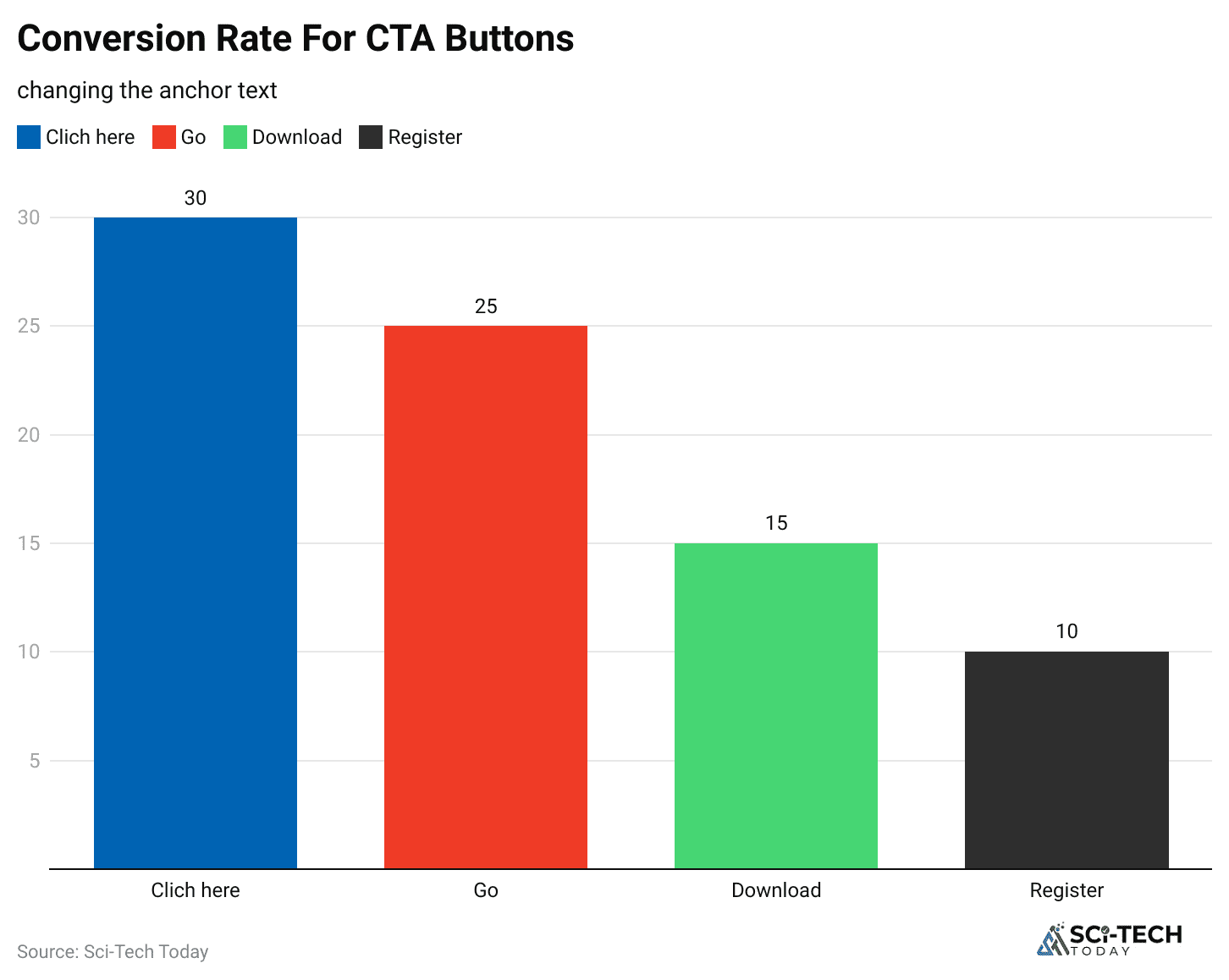
- Forms that are streamlined to include only three fields consistently achieve the highest conversion rates, reaching up to 25% success, compared to the 15% rate seen on forms with six or more fields.
- Despite this knowledge, the average number of fields found on web forms remains high at 11, proving a major area of opportunity; reducing this number to just four can often lead to a 120% increase in conversions.
- Adding a simple yet highly requested element like a telephone number field to a lead form can be detrimental to conversion rates, typically causing a measurable decrease of 5%.
- Personalized CTAs, buttons that change based on a user’s previous history or segmentation, are an incredibly powerful tool, delivering a 42% higher conversion rate than generic, static CTAs.
- Simple color psychology can have a numeric impact: one famous study showed that changing a CTA button to the color red can improve conversions by as much as 21% compared to other colors.
- Strategically placing the Click-Through Rate (CTR) element just above the fold on a page can significantly increase engagement, with studies showing a resulting conversion rate increase of 317%.
- Only about 45% of visitors who land on a page that is exclusively dedicated to housing a conversion form complete the action.
Key Conversion Rate Optimization and Search Engine Optimization Performance Benchmarks
- In 2026, businesses are combining SEO and CRO to attract qualified visitors and convert them into leads, sales, and subscriptions through data-based improvements.
- According to a report from Lucky Orange, average website conversion rates across industries range from 2% to 5%, while top-performing websites achieve around 11.4% or higher, with some exceeding 40.8%.
- SEO traffic delivers stronger results than many outbound channels, with average conversion rates of 2.1% for B2C and 2.6% for B2B. SEO leads also show close rates of 14.6%, compared with 1.7% for outbound leads.
- Email marketing remains highly effective, achieving an average conversion rate of 19.3% across industries.
- Mobile devices generate 82.9% of landing page visits, but desktop users convert 8% better, making responsive design essential.
Content Quality and CRO Strategy
- Designrush report further stated that simple content performs better: pages written at a 5th-7th-grade reading level convert at around 12.9%, compared with 2.1% for complex professional copy, creating a 514% gap.
- Successful CRO programs combine analytics, user feedback, A/B testing, and SEO improvements to increase both traffic quality and revenue.
- In 2026, leading brands aim to move beyond the average 2%-5% conversion range toward the double-digit conversion rates achieved by the top 10%-25% of websites, according to Stacc.
Website Performance and Mobile CRO Statistics in 2026
- Market.us Scoop shows that a 1-second increase in page load time can reduce conversions by 7%, while 53% of mobile users leave a website if it takes more than 3 seconds to load.
- Around 57% of users do not recommend businesses with poor mobile websites, and 88% of local mobile searchers contact or visit a business within 24 hours.
- Replacing text links with clear CTA buttons can increase conversions by 28%, while contrasting button colors can improve them by 38%.
- About 85% of adults expect mobile websites to perform as well as or better than desktop sites, and 62% of mobile-optimized companies report higher sales.
- Personalized content can increase conversion rates by up to 202%.
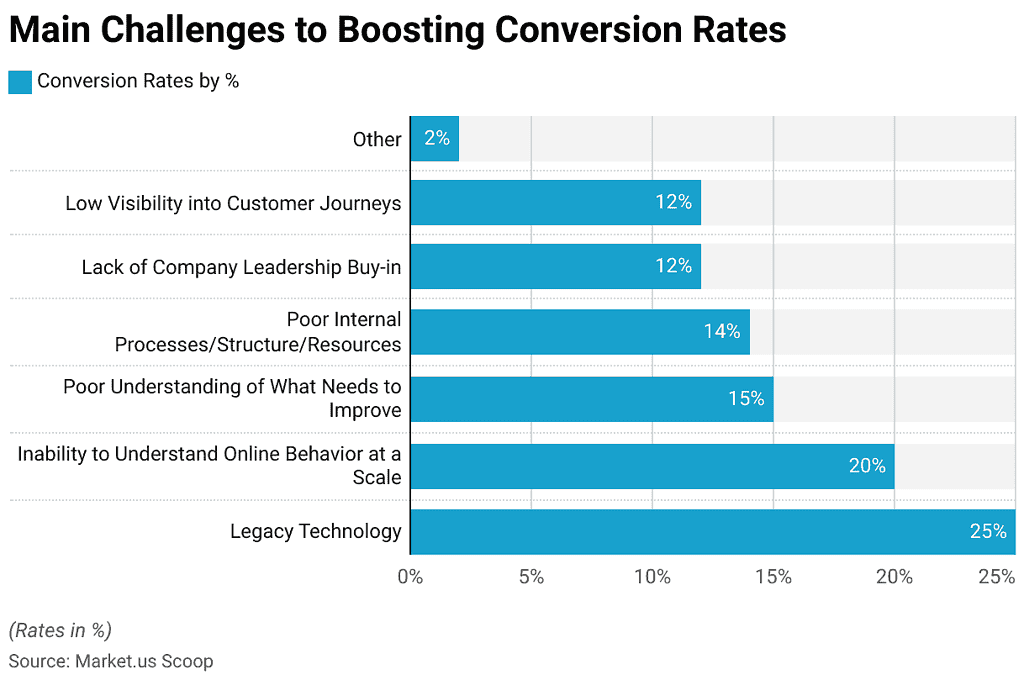
Main Barriers to Higher Conversion Rates
(Source: scoop.market.us)
- Legacy technology is the biggest challenge, reported by 25% of organizations.
- Inability to understand online behavior at scale affects 20% of companies and slows informed decision‑making.
- Poor understanding of what needs to improve is cited by 15%.
- Weak internal processes, structure, and resources impact 14% of firms and reduce CRO execution quality.
- Low visibility into customer journeys and a lack of leadership buy‑in each hinder 12% of organizations, while 2% mention other, smaller issues.
Summary
Overall, these latest Conversion Rate Optimization Statistics give us a clear picture: the vast majority of businesses are underperforming, and this digital ecosystem is a place of impatience.
The most successful companies, those achieving conversion rates exceeding 11%, are the ones that treat Conversion Rate Optimization as a continuous, well-funded, and deeply integrated thing, not just an occasional website audit. They understand that every one-second delay, every unnecessary form field, and every generic CTA represents a quantifiable loss of revenue.
What part of your conversion funnel do you think is currently causing the biggest drop-off based on these statistics? Let us know. Thanks for staying up till the end. I hope you guys like this piece of the article.
FAQ
Divide total conversions by total visitors, then multiply by 100 to get a percentage.
Improve page speed, simplify forms, test different designs, use clear CTAs, and optimize your website for mobile.
Popular CRO tools for tracking user behavior include Google Analytics, Hotjar, Microsoft Clarity, VWO, and Optimizely.