








Overview
Responsible AI Statistics: Vertical artificial intelligence (AI) means using AI for one specific industry or type of work. Unlike general AI tools, it is built around the words, information, and daily steps of that field. This helps it give answers and support that fit the job better.
These systems combine AI models with expert knowledge, company data, and the software people already use. They can help with writing medical notes, checking financial rules, monitoring machines, and reading legal papers. Because of this, companies can solve their exact needs instead of changing a broad tool to fit a complex job.
Vertical AI can make work faster, more consistent, and easier to decide. But it works well only if the data is good, the results are tested, and it is used responsibly. Accuracy, privacy, and human checking are still very important, especially when AI results affect big decisions.
Must Read by the Editor
- McKinsey’s survey puts average responsible AI maturity at 2.0 on a 0–4 scale, indicating an early stage.
- AI governance roles grew 17% in 2025; firms lacking policies fell from 24% to 11%.
- Turning principles into practical processes is the top responsible AI barrier, cited by 50% of respondents.
- IT and engineering teams lead responsible AI in 35% of organizations; legal and compliance lead in only 5%.
- Among companies with USD 30 billion+ revenue, 39% plan USD 10–50 million RAI investment next year.
- Responsible AI governance consulting is projected to reach USD 11,822.8 million by 2034, at 45.9% CAGR.
- Only 47% of security leaders confidently identify every AI agent operating in their organizations, Okta found.
- Gravitee found only 9.5% of organizations assign a named individual formal accountability for AI-agent behavior.
- ServiceNow’s India survey: 92% reported AI-agent security incidents; only 36% contained them within 24 hours.
Recent Responsible AI Developments
- On November 17, 2026, Microsoft launched its AI Transparency Initiative with over 40 organizations, outlining 3 components covering standards, industry collaboration, and product integration.
- On November 12, 2026, OpenAI pledged USD 2 million to independent research measuring AI’s risks and opportunities for children.
- In September 2026, Microsoft reported launching an External Red Team Alliance involving 18 universities across 6 continents to investigate priority AI risks.
- Stanford’s 2026 AI Index reported AI governance roles grew 17% in 2025, while businesses without responsible AI policies fell from 24% to 11%.
- On February 24, 2026, Anthropic released Responsible Scaling Policy 3.0, introducing public safety roadmaps and Risk Reports scheduled every 3–6 months.
- On February 17, 2026, NIST launched its AI Agent Standards Initiative with 3 pillars covering industry standards, open-source protocols, and security research.
- On July 10, 2025, the European Commission published its voluntary AI code, comprising 3 chapters developed by 13 experts with input from over 1,000 stakeholders.
- In May 2025, Singapore released AI assurance pilot findings involving 17 application deployers, 16 specialist testing firms, and 10 industries.
Responsible AI by Maturity Statistics
- The average responsible artificial intelligence (RAI) maturity score is 2.0 on a scale of 0–4, indicating that most organizations remain at an early stage of maturity.
- Technology, media, and telecommunications, along with financial and professional services, lead sector maturity with scores 8% above average. The US and India lead geographically, scoring 19% and 23% above average, respectively.
- Data and technology is the strongest RAI dimension, with 43% of organizations reaching maturity level 3 or higher and 79% reaching at least level 2. Strategy is the least mature dimension, with only 24% reaching level 3 or higher.
- Among large companies with annual revenue of USD 30 billion or more, 39% plan to invest USD 10 million–USD 50 million in RAI over the next year.
- AI inaccuracy is the leading identified risk, and 55% of respondents are actively working to reduce it.
- Respondents report positive business results from RAI, including improved efficiency and cost reductions at 42%, increased consumer trust at 34%, stronger brand reputation at 29%, and fewer AI incidents at 22%. Respondents could report more than one result.
Key Business Benefits of Responsible AI
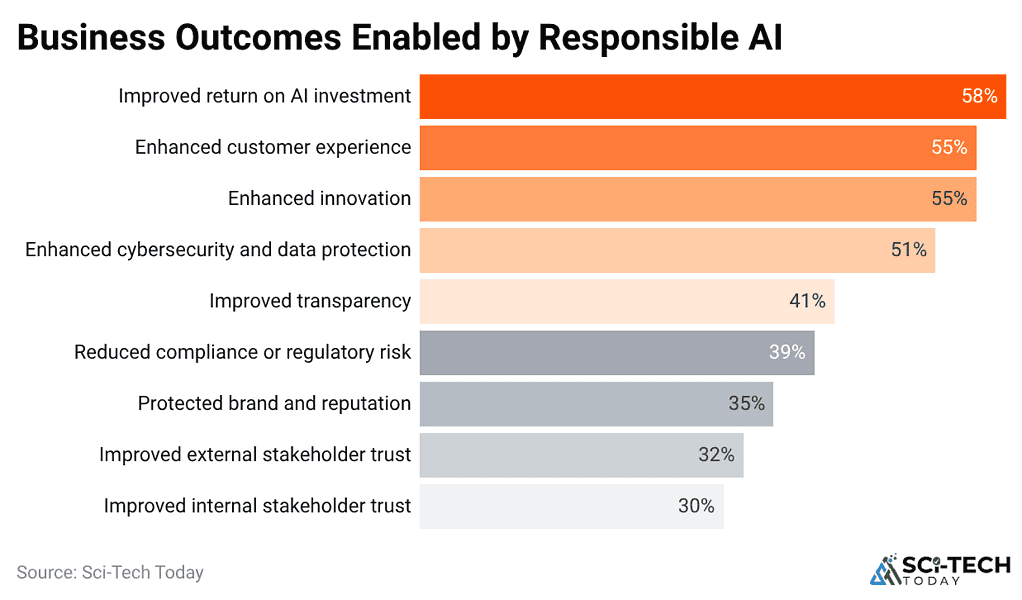
- Improved returns on AI investment are the most widely reported business outcome of responsible AI, at 58%.
- Better customer experience and stronger innovation follow, each reported at 55%.
- Improved cybersecurity and data protection are reported at 51%, highlighting responsible AI’s role in strengthening security.
- Greater transparency is reported at 41%, making it another important business benefit.
- Lower compliance or regulatory risk is reported at 39%, showing benefits beyond financial and operational performance.
- Protection of brand and reputation is reported at 35%.
- Improved trust among external stakeholders is reported at 32%, while improved trust among internal stakeholders is reported at 30%.
Responsible AI Leaders
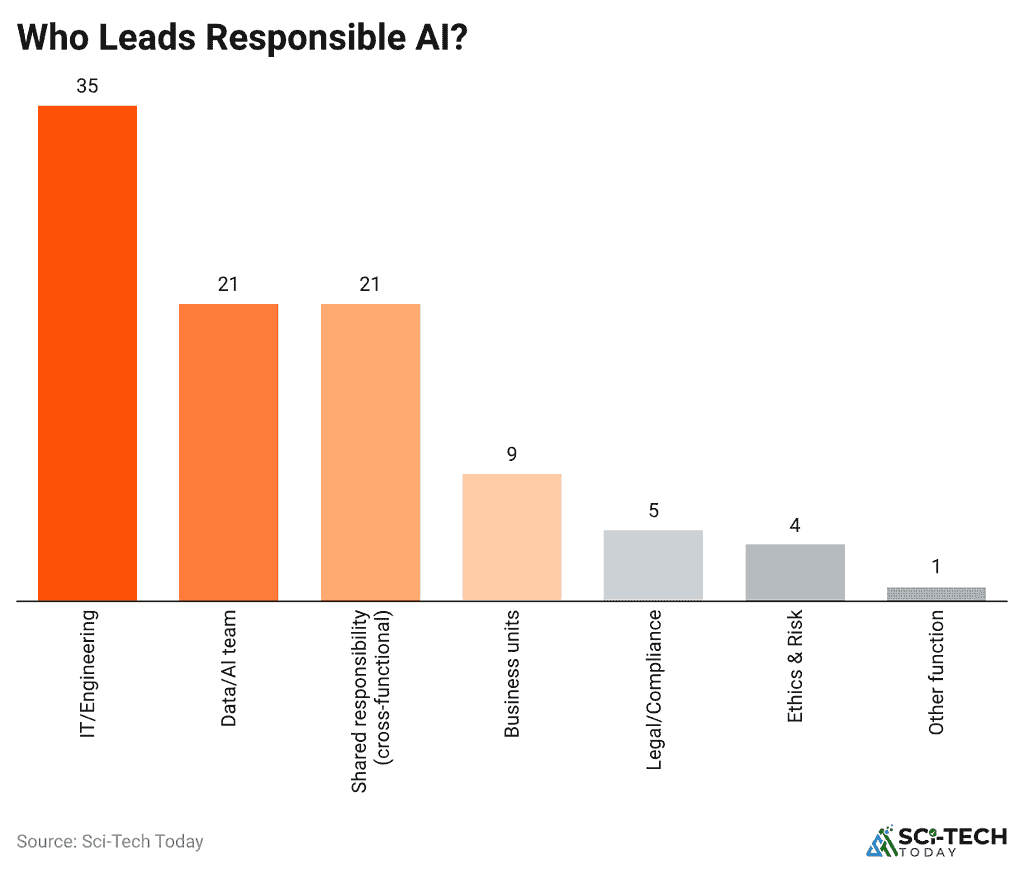
- IT and engineering teams lead responsible AI in 35% of organizations, making them the most common leaders.
- Data and AI teams lead responsible AI in 21% of organizations.
- Leadership is shared across teams or departments in 21% of organizations.
- Business units lead responsible AI in 9% of organizations.
- Legal and compliance teams lead responsible AI in 5% of organizations.
- Ethics and risk teams lead responsible AI in 4% of organizations.
- Other functions lead responsible AI in 1% of organizations.
Planned Investments by Companies in Responsible AI
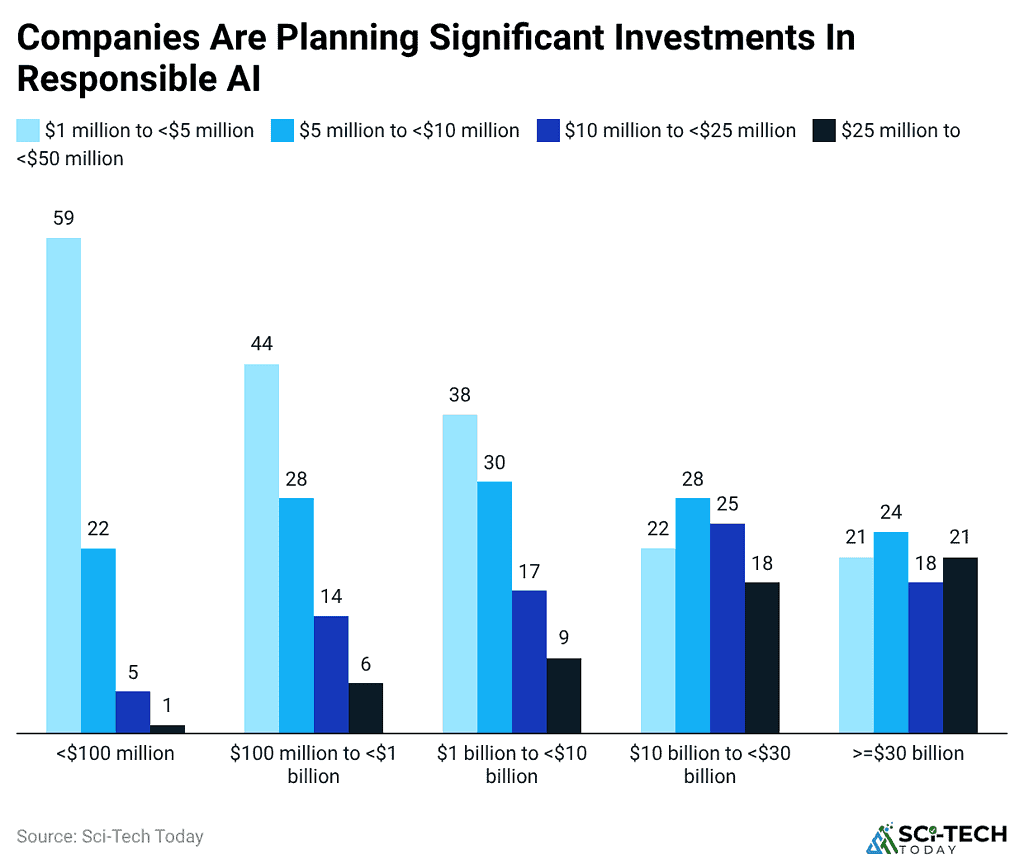
- The share of respondents planning responsible AI investments across four ranges: USD 1 million to below USD 5 million, USD 5 million to below USD 10 million, USD 10 million to below USD 25 million, and USD 25 million to below USD 50 million. The figures below follow this order.
- Companies with annual revenue below USD 100 million report planned investments of 59%, 22%, 5%, and 1%, respectively.
- Companies with annual revenue of USD 100 million to below USD 1 billion report planned investments of 44%, 28%, 14%, and 6%, respectively.
- Companies with annual revenue of USD 1 billion to below USD 10 billion report planned investments of 38%, 30%, 17%, and 9%, respectively.
- Companies with annual revenue of USD 10 billion to below USD 30 billion report planned investments of 22%, 28%, 25%, and 18%, respectively.
- Companies with annual revenue of USD 30 billion or more report planned investments of 21%, 24%, 18%, and 21%, respectively, indicating a greater share planning the highest spending range than among smaller companies.
Responsible AI Governance Consulting Market Growth
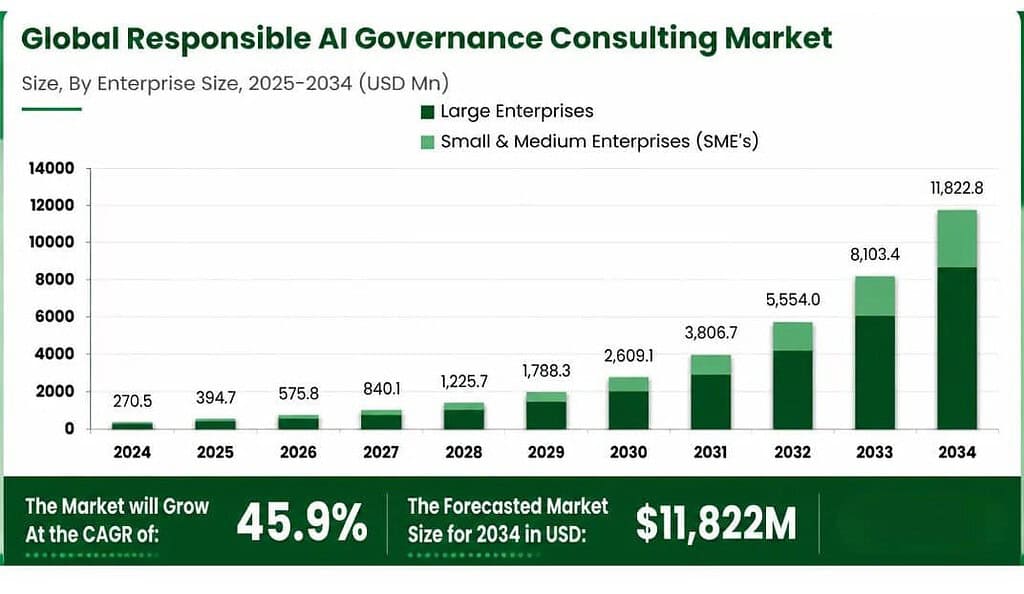
- The global responsible AI governance consulting market is projected to grow from USD 270.5 million in 2024 to USD 11,822.8 million in 2034, at a compound annual growth rate (CAGR) of 45.9% over the 2025–2034 forecast period.
- The market is expected to reach USD 394.7 million in 2025 and USD 575.8 million in 2026.
- The market is forecast to reach USD 8,103.4 million in 2033 before increasing to USD 11,822.8 million in 2034. The headline figure presents the 2034 value as USD 11,822 million.
Responsible AI Governance Roles, Teams, and Budget Insights
- In 2026, at least 46 states designated AI leaders; at least 25 had officials with “AI” in their titles.
- Among surveyed state AI officers in 2026, 94% operated within central IT or the state CIO’s organization.
- Only 42% of surveyed state AI officers identified AI as their primary responsibility in 2026, indicating substantial dual-role leadership.
- State AI governance structures in 2026 were 59% hybrid/federated, 31% centralized, and 9% decentralized among survey respondents.
- In 2026, 44% of surveyed state AI leaders independently established enterprise policies; another 16% shared that authority.
- Staffing constrained governance capacity: 75% of surveyed state AI officers identified insufficient staff among their biggest challenges in 2026.
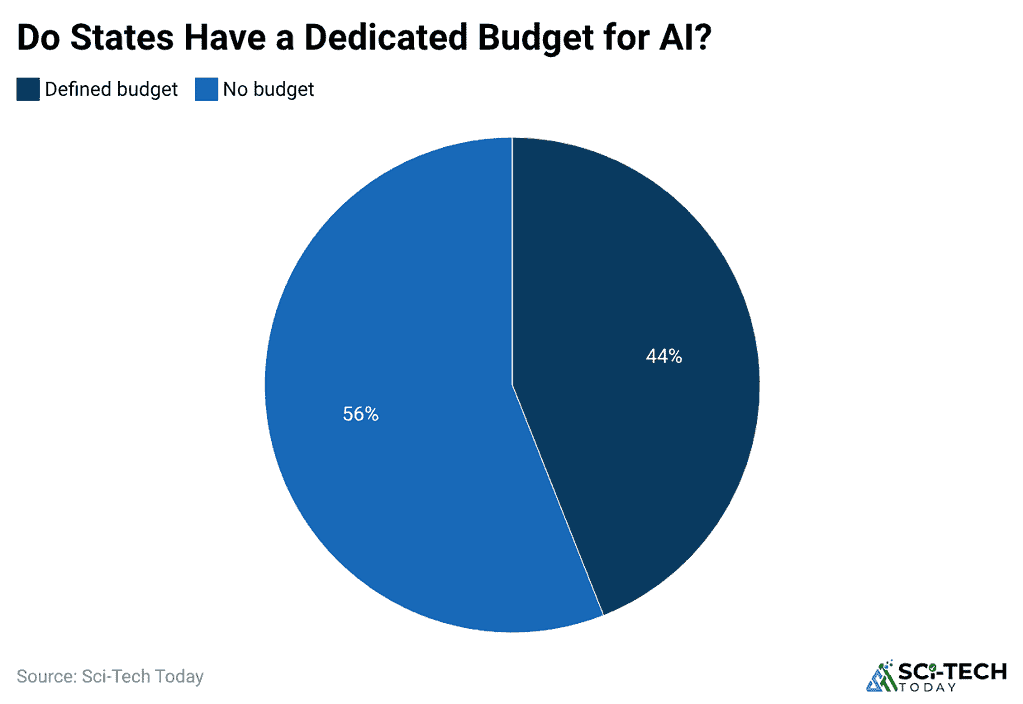
- Funding remained limited: 56% of surveyed state AI programs lacked defined or dedicated AI budgets in 2026.
Top Responsible AI Tools, Platforms, and Companies
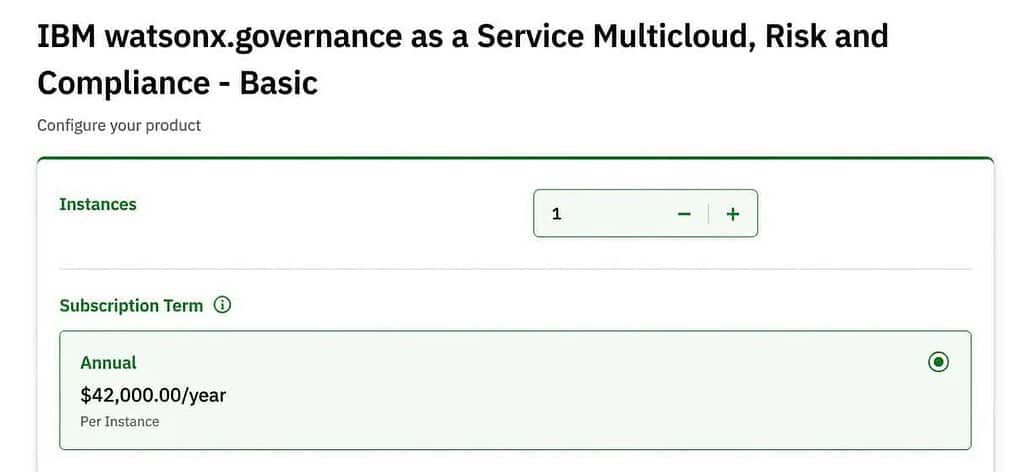
- IBM watsonx.Governance: 2026-listed Risk and Compliance Basic costs USD 42,000 annually per instance; supports enterprise AI governance.
- Amazon Bedrock Guardrails: 2026-listed standard/classic text content filtering costs USD 0.15 per 1,000 text units; filters incur separate charges.
- An application developer makes the following API calls to Amazon Bedrock: a request to AI21’s Jurassic-2 Mid model to summarize an input of 10K tokens of input text to an output of 2K tokens.
Total cost incurred = 10K tokens/1000 * $0.0125 + 2K tokens/1000 * $0.0125 = $0.15
- Microsoft Content Safety: checked November 2026, free monthly allowances include 5,000 text records and 5,000 images for safety screening.
| Instance | Features | Price |
| Free – Web | Text Prompt Shields Protected material detection, Groundedness detection | 5,000 text records per month1 |
| Image Multimodal | 5,000 images per month | |
| Standard – Web | Text Prompt Shields, Protected material detection, Groundedness detection | $0.38 per 1,000 text records1 |
| Image Multimodal | $0.75 per 1,000 images |
- Google Model Armor: checked November 2026, includes 2 million free tokens/month; additional screening costs USD 0.10 per million tokens.
| Model Armor pricing | Pay-as-you-go and subscription options. | |
| Package | Tier | Pricing |
| Model Armor – includes API and inline usage with Gemini platform, Google MCP servers, Service Extensions, Apigee, Firebase, LangChain, and other integrations. | Free tier | Free for up to 2 million tokens/month |
| Additional usage over 2 million tokens | $0.10 per additional 1 million tokens | |
| SCC Premium (Organization-level) – | Free tier | Free for up to 2 million tokens/month |
| Pay-as-you-go | Additional usage over 2 million tokens | $0.10 per additional 1 million tokens |
| SCC Premium (Project-level) – | Free tier | Free for up to 2 million tokens/month |
| Pay-as-you-go | Additional usage over 2 million tokens | $0.10 per additional 1 million tokens |
- NVIDIA NeMo Guardrails: 2026 documentation lists version 0.24.1; configurable safeguards address jailbreaks, sensitive information, hallucinations, and tool calling.
- Giskard: its October 2026 pricing page lists an open-source library covering 7 agent-security risk categories, alongside commercial auditing.
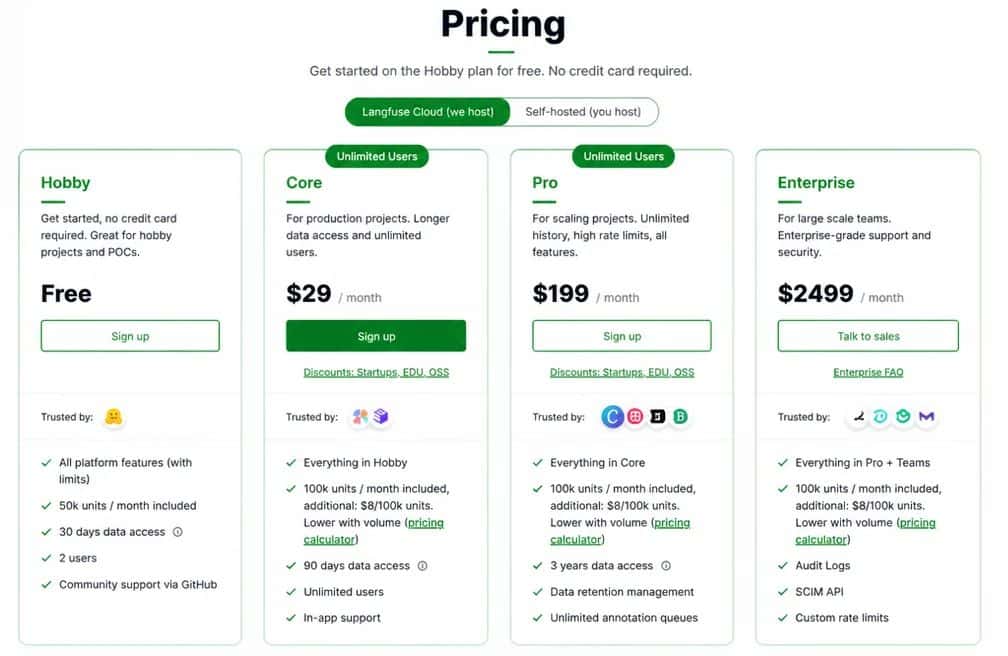
- Langfuse: checked November 2026, Core costs USD 29/month, including 100,000 billable units for tracing and evaluation; overages apply.
- LangChain LangSmith: checked November 2026, Plus costs USD 39/seat/month, including 10,000 shared base traces for observability and evaluation.
Responsible Agentic AI Statistics
- Okta’s 2026 survey found 81% of security leaders concerned about excessive AI access lacking proper review.
- In 2026, only 47% of Okta-surveyed security leaders confidently identified every AI agent operating within their organizations.
- Only 46% of Okta-surveyed security leaders confidently controlled AI agents’ access centrally in 2026.
- Gravitee’s October 2026 survey found only 9.5% of organizations assigned a named individual formal accountability for AI-agent behavior.
- In Gravitee’s 2026 survey, 97% ran agents working through other agents; only 27% defined accountability across that chain.
- ServiceNow’s 2026 India survey found 92% reported AI-agent security incidents within the preceding year; 36% contained incidents within 24 hours.
- Only 30% of Indian organizations surveyed by ServiceNow in 2026 automatically blocked AI-agent deployment until security checks passed.
- In ServiceNow’s 2026 India survey, 67% of organizations could not automatically intervene when AI agents behaved anomalously.
Key Challenges in Responsible AI
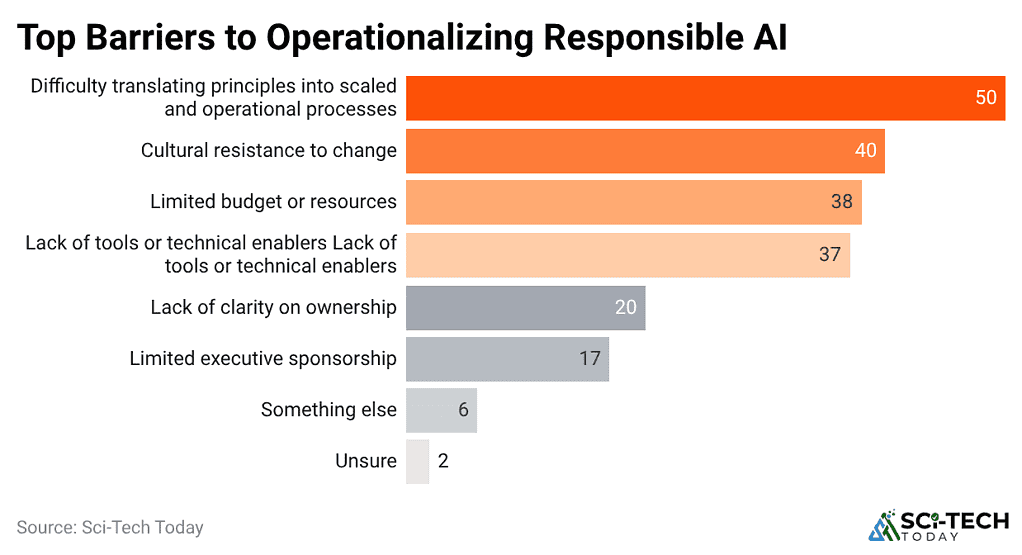
- Turning responsible AI principles into practical processes that work across the business is the leading barrier, cited by 50% of respondents.
- Resistance to cultural change is the second-largest challenge, reported by 40% of respondents.
- Limited budgets or resources make implementation difficult for 38% of respondents.
- A lack of suitable tools or supporting technology creates barriers for 37% of respondents.
- Unclear ownership of responsible AI responsibilities is a challenge for 20% of respondents.
- Limited support from senior executives is a barrier for 17% of respondents.
- Other barriers are reported by 6% of respondents, while 2% are unsure about the barriers they face.
The Bottom Line
Responsible AI is gaining momentum, with governance roles growing, fewer firms lacking policies, and major platforms launching transparency, red-teaming, and safety initiatives. Yet maturity remains early on average, ownership is often unclear, and turning principles into daily practice is the leading barrier.
Agentic AI adds urgency, as many organizations cannot fully track, control, or hold anyone accountable for autonomous agents. Organizations that fund dedicated governance, define accountability, and build practical controls will earn lasting trust.
FAQ
AI systems now influence decisions about hiring, lending, healthcare, and public services. If they are poorly designed or inadequately tested, they can reproduce bias, make errors that are hard to detect, or erode people’s trust. Responsible practices help prevent these outcomes and make AI more reliable over time.
Most frameworks emphasize fairness, transparency, privacy, safety, accountability, and human oversight. Many organizations, including governments and standards bodies, have published guidelines that translate these principles into specific practices for development and deployment.
Organizations can start by setting clear governance policies and assigning responsibility for AI decisions. In practice, this often includes testing models for bias, documenting training data and system limitations, monitoring performance after launch, and providing a way for people to question or appeal automated outcomes.
Some added steps, such as testing and documentation, can extend development timelines. However, many teams find that these practices reduce costly failures, legal risk, and reputational damage later on. Over the long run, building trust with users and regulators often supports more sustainable growth.
Regulation is evolving quickly. Some regions have enacted comprehensive AI laws, while others rely on existing rules covering data protection, consumer rights, and anti-discrimination. Organizations should track the requirements that apply in each market where they operate and seek legal guidance when needed.
Individuals can verify important information from AI outputs, avoid entering sensitive personal or confidential data into tools that do not guarantee privacy, and disclose when AI has helped create content. Staying aware of an AI system’s limitations and keeping human judgment at the center of important decisions are equally important.

Sources