








Preface
AI In Mental Health Statistics: Artificial intelligence is opening new ways to understand and manage mental health. Today, AI-powered chatbots and digital tools are helping people recognize signs of stress, anxiety, and depression while making mental health support easier to access. These technologies can also help track emotional patterns and support more personalized care. As demand for mental health services grows, AI is becoming an important part of the conversation. But can technology truly support human emotions?
This article explores the latest statistics on AI in mental health, market growth, applications, benefits, and challenges.
Spotlight Pick
- The global AI-in-mental-health market was valued at USD 1.71 billion in 2025 and is expected to reach USD 2.21 billion in 2026.
- In 2026, North America is expected to lead the AI in Mental Health market with a 40% share and an estimated valuation of USD 884.0 million.
- The United States held a 33.58% market share, with a total value of USD 742.06 million.
- 27% of AI users seek AI for mental health support, compared with an unweighted average of 30%.
- Around 16% of adults used AI tools to find mental health information or advice.
- AI companions are becoming common among teenagers, with 72% of U.S. teens aged 13-17 reporting that they had tried them at least once.
- In 2026, around 77% of psychologists said patients had discussed using AI with them.
- 35% of psychologists reported having patients who use AI as an additional mental health professional.
- The National Library of Medicine stated that 217 psychiatric consultations found an AI diagnostic accuracy of 60% for cognitive disorders.
- 43% of Americans were very concerned that AI could worsen mental health problems in 2026, up from 35% in June 2025.
- Regular AI use for emotional support grew across all age groups, with under-18s showing the largest increase, from 31% in 2025 to 36% in 2026.
Global AI in Mental Health Market Size
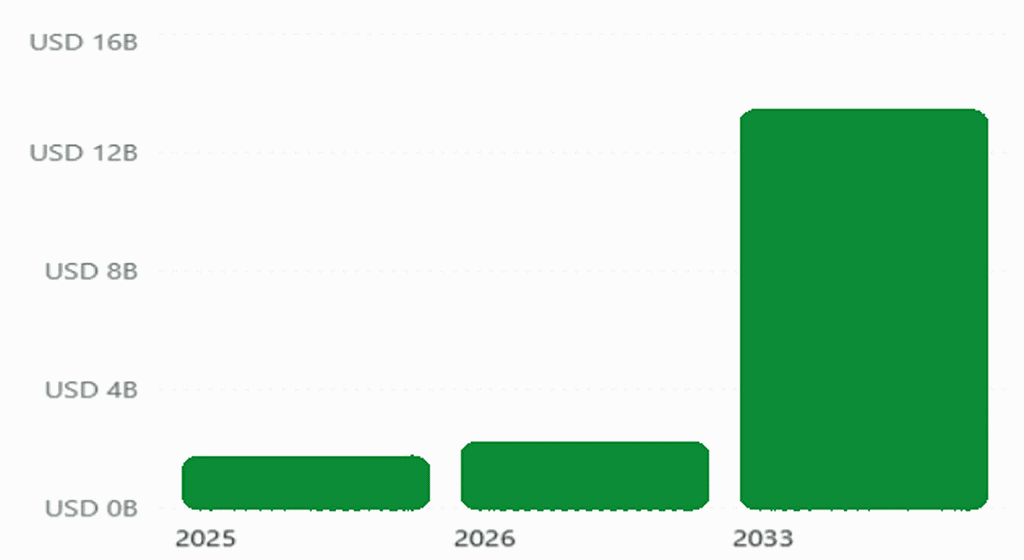
- According to Sci-Tech Today, the global AI-in-mental-health market reached USD 1.71 billion in 2025.
- The market is projected to grow to USD 2.21 billion in 2026 and reach USD 13.41 billion by 2033.
- These estimates reflect a compound annual growth rate of 29.38% from 2025 to 2033.
Segment-Wise Analysis
- Natural Language Processing accounted for 44.12% of the AI in Mental Health market in 2025. Meanwhile, Machine Learning is projected to grow at a 35.01% CAGR through 2031.
- Treatment Personalization held a 40.02% market share in 2025, while Diagnostics Assistance is expected to expand at a 35.31% CAGR.
- Cloud-based platforms generated 54.23% of AI in Mental Health market revenue in 2025 and are forecast to grow at a 35.5% CAGR through 2031.
- Hospitals and clinics accounted for 48.54% of the market in 2025. Research institutions, however, are projected to grow at a CAGR of 35.2% from 2026 to 2031.
AI in Mental Health Market Valuation by Region, 2026
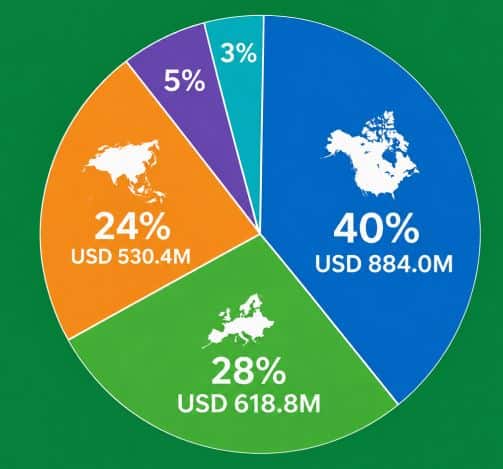
- North America is expected to lead the AI in Mental Health market with a 40% share and an estimated valuation of USD 884.0 million.
- Europe is projected to account for 28% of the global market, reaching USD 618.8 million.
- Asia-Pacific is estimated to capture 24% of the market, with a valuation of USD 530.4 million.
- Latin America is expected to contribute 5% of the market, equivalent to USD 110.5 million.
- Middle East & Africa is forecast to hold a 3% share, valued at USD 66.3 million.
By Country, 2026
| Country | Market Share | Market Value (USD million) |
| United States | 33.58% | 742.06 |
| China | 8.84% | 195.43 |
| Japan | 5.06% | 111.81 |
| Canada | 4.83% | 106.77 |
| Germany | 4.33% | 95.76 |
| Mexico | 3.76% | 83.12 |
| United Kingdom | 3.28% | 72.41 |
| India | 2.75% | 60.71 |
| South Africa | 2.55% | 56.32 |
| France | 2.39% | 52.76 |
| Brazil | 2.12% | 46.90 |
| South Korea | 2.06% | 45.51 |
| Australia | 1.87% | 41.41 |
| Saudi Arabia | 1.70% | 37.67 |
| Italy | 1.63% | 36.00 |
| Russia | 1.37% | 30.38 |
| Spain | 1.12% | 24.66 |
| Singapore | 0.93% | 20.66 |
| Sweden | 0.93% | 20.57 |
| United Arab Emirates | 0.88% | 19.34 |
| All other countries | 14.02% | 309.74 |
AI in Mental Health: Adoption and Usage Trends
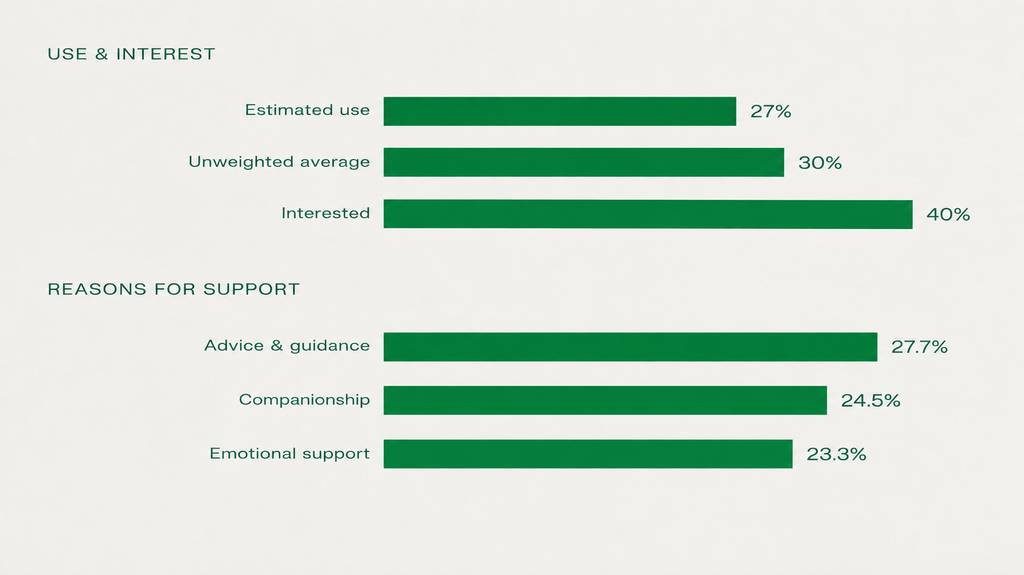
- According to a review published in Nature, an estimated 27% of AI users seek AI for mental health support, compared with an unweighted average of 30%.
- Meanwhile, 40% expressed interest in using AI for mental health purposes.
- Among users seeking AI for mental health support, 24.5% primarily wanted friendship or companionship, 27.7% sought advice and guidance, and 23.3% used AI for emotional support.
- Moreover, adoption reached 21% among young people, while approximately 36% of adult AI users reported using these tools for mental health support.
- Anthropic analyzed 4.5 million Claude conversations and identified 131,484 emotional conversations, accounting for 2.9% of the total.
AI Mental Health Support: Usage Trends and User Preferences
- Late-night activity accounts for a significant share of Abby’s usage, with 25% of messages sent between 10pm and 6am.
- Overall, 44% of users contacted the platform during this period, with 23% doing so between midnight and 4am.
- Usage outside regular weekday working hours reached 72%, suggesting that many people seek support when traditional services may be unavailable. Activity was highest at 9 pm, while Monday was the busiest night.
- Abby attracted users from 126 countries, with 40% based outside the U.S.
- Conversations typically lasted 21 messages, and 73% continued beyond 10 messages.
- In terms of support preferences, 61% favored a therapist-like approach, while 39% preferred a supportive friend.
- Around 1 in 3 selected multiple styles, and 55% wanted Abby to initiate check-ins.
Adults’ Use of Mental Health Information Sources
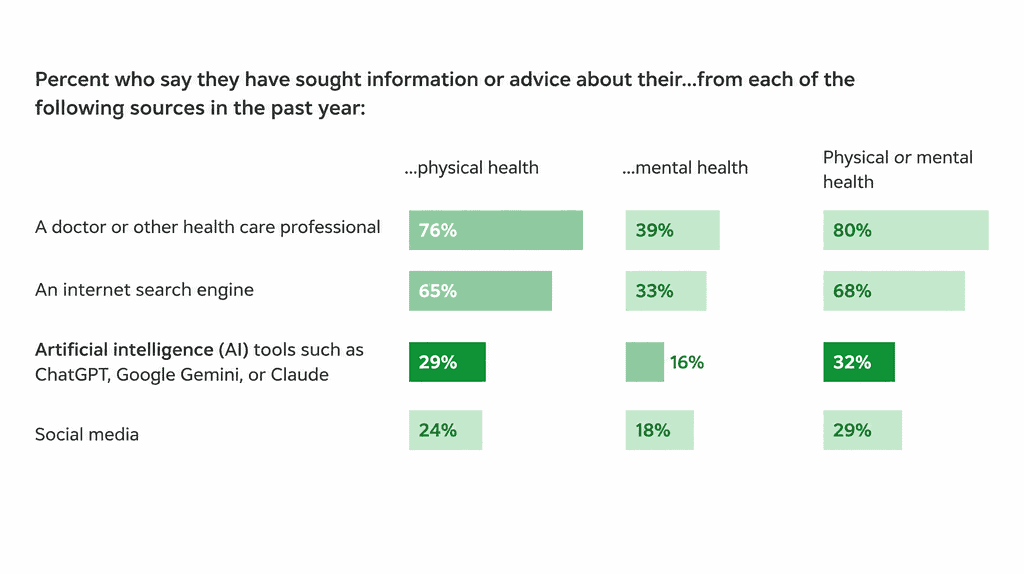
- In the past year, 39% of adults sought mental health information or advice from healthcare professionals.
- Search engines attracted 33%, while social media attracted 18%.
- AI tools, including ChatGPT, Google Gemini, and Claude, were used by 16%, placing them behind the other sources.
AI Use for Mental Health Advice Across Groups
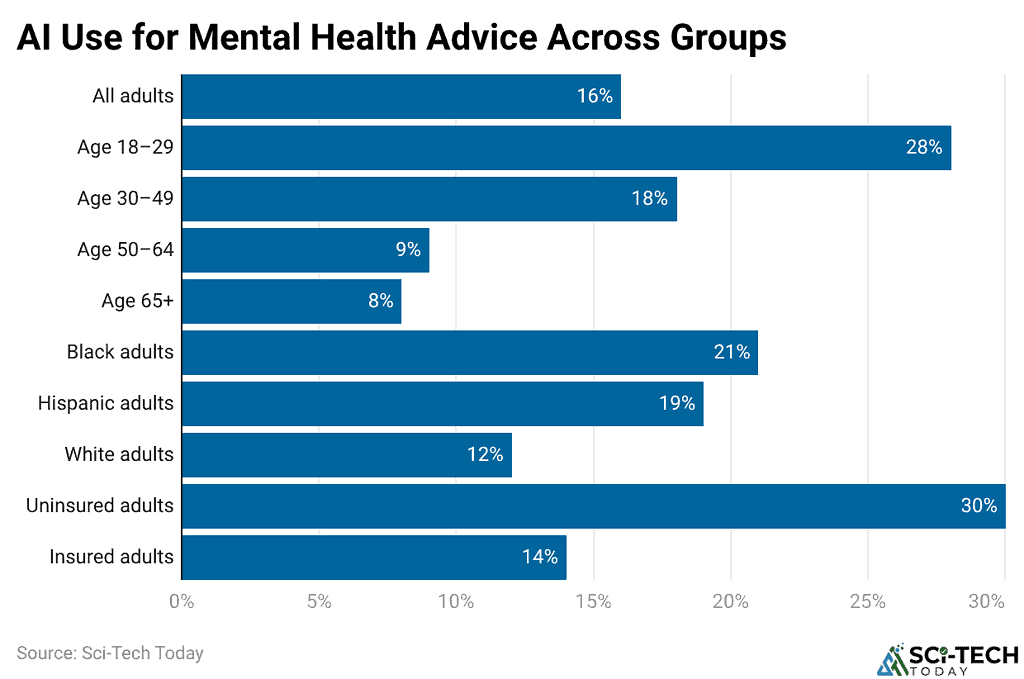
- Around 16% of adults used AI tools to find mental health information or advice.
- Younger adults showed higher adoption, with 28% of those aged 18-29 and 18% of those aged 30-49 using AI for this purpose.
- Usage was lower among older adults, reaching 9% for the 50-64 age group and 8% for those aged 65 and above.
- By race, adoption stood at 21% among black adults, 19% among Hispanic adults, and 12% among white adults.
- Insurance status also showed a clear difference, as 30% of uninsured adults sought mental health advice through AI, compared with 14% of insured adults.
Adults’ Reasons for Using AI for Mental Health
- According to the KFF Tracking Poll on Health Information and Trust, 16% of adults used AI for mental health or emotional well-being advice in the past year.
- Symptom searches or general information attracted 11%.
- Advice or coping skills also attracted 11%.
- Treatment comparisons were reported by 10%.
- Emotional support or discussions about personal concerns attracted 9%.
- Help deciding whether to seek professional care attracted 7%.
AI Companion and Mental Health Use Among Teens and Young Adults
- AI companions are becoming common among teenagers, with 72% of U.S. teens aged 13-17 reporting that they had tried them at least once, according to Common Sense Media.
- Personal conversations are also part of this trend, as around 1 in 3 teen users have discussed serious issues with AI rather than another person.
- A 2025 study published in JAMA Network Open found that 13.1% of U.S. youths aged 12-21, or 5.4 million people, had used generative AI for emotional advice. Among those aged 18-21, the figure reached 22.2%.
- Most users reported positive experiences, with 92.7% finding the advice helpful and 65.5% using AI for this purpose at least once a month.
Affective AI Use and Its Impact on Youth Mental Health
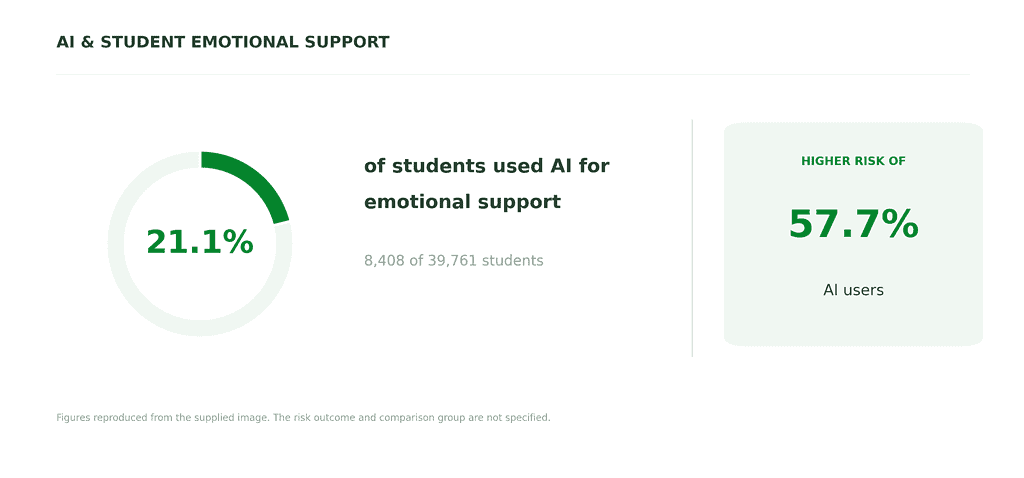
- Researchers studied 39,761 students across 4 school boards in Ontario, Canada, between May 2025 and March 2026. Participants had an average age of 12.8 years, and girls made up 48.5% (19,291) of the sample.
- The findings showed that 21.1% (8,408) of students had used AI for emotional support or personal advice.
- Students who used AI for emotional support had higher emotional problem scores (1.04 vs. 0.67).
- Clinical-level emotional problems affected 57.7% of users, compared with 29.2% of non-users.
Patients’ Use of AI for Mental Health
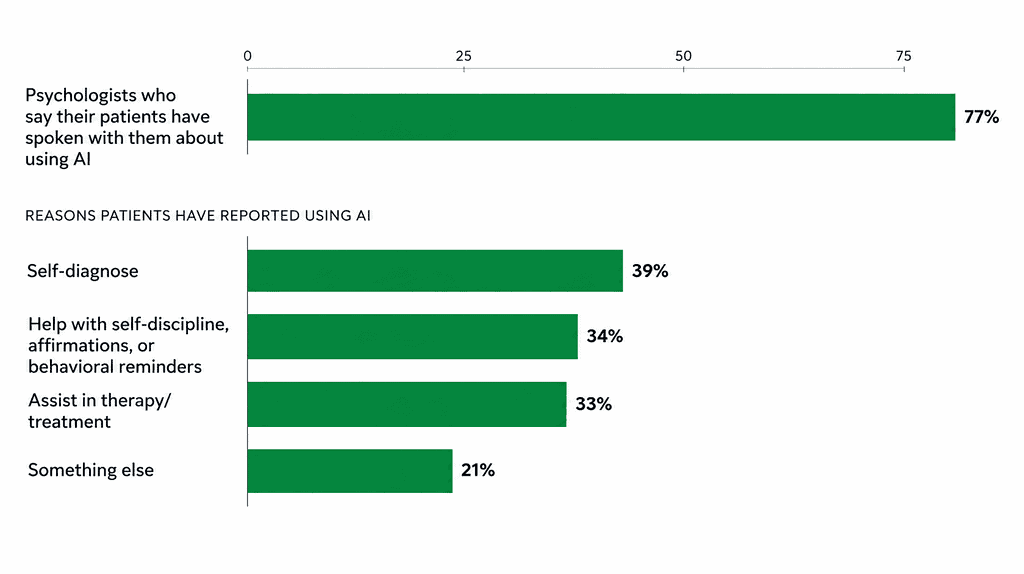
- The American Psychological Association’s 2026 survey found that 77% of psychologists said patients had discussed using AI with them.
- Psychologists reported that 39% of patients’ stated AI uses involved self-diagnosis.
- Self-discipline, positive affirmations, and behavioral reminders represented the largest share at 34%, closely followed by therapy and treatment support at 33%.
- Other reasons accounted for the remaining 21% of responses.
How Patients Use AI Chatbots
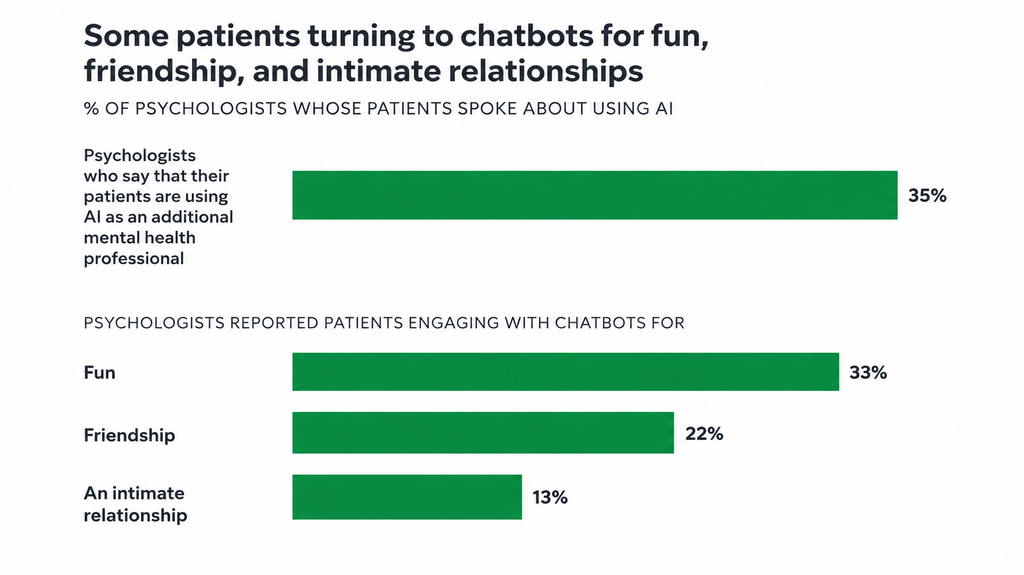
- 35% of psychologists reported having patients who use AI as an additional mental health professional.
- Patients also turned to chatbots for fun (33%), friendship (22%), and intimate relationships (13%),
How U.S. Adults Use AI Chatbots
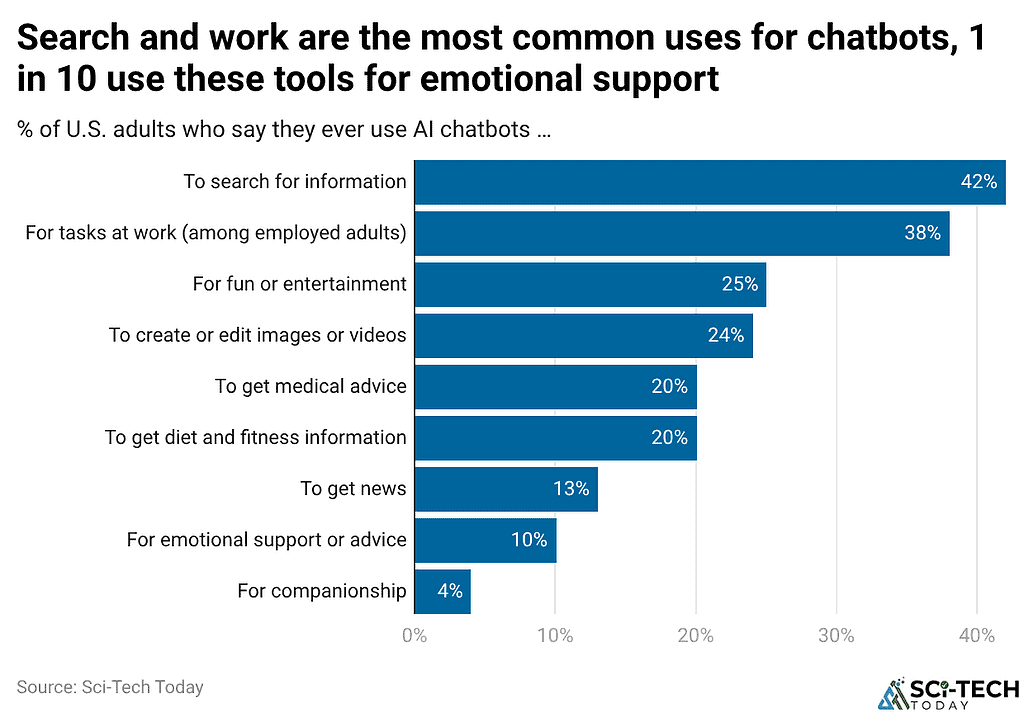
- On February 17, 2026, around 42% of people used chatbots to search for information.
- Among employed adults, 38% use chatbots for work-related tasks.
- Around 25% use chatbots for entertainment, while 24% create or edit images and videos.
- Medical advice and diet or fitness information each account for 20% of chatbot usage.
- News attracts 13% of users, while 10% seek emotional support or advice.
- Only 4% use chatbots for companionship.
AI Accuracy in Mental Health Diagnosis
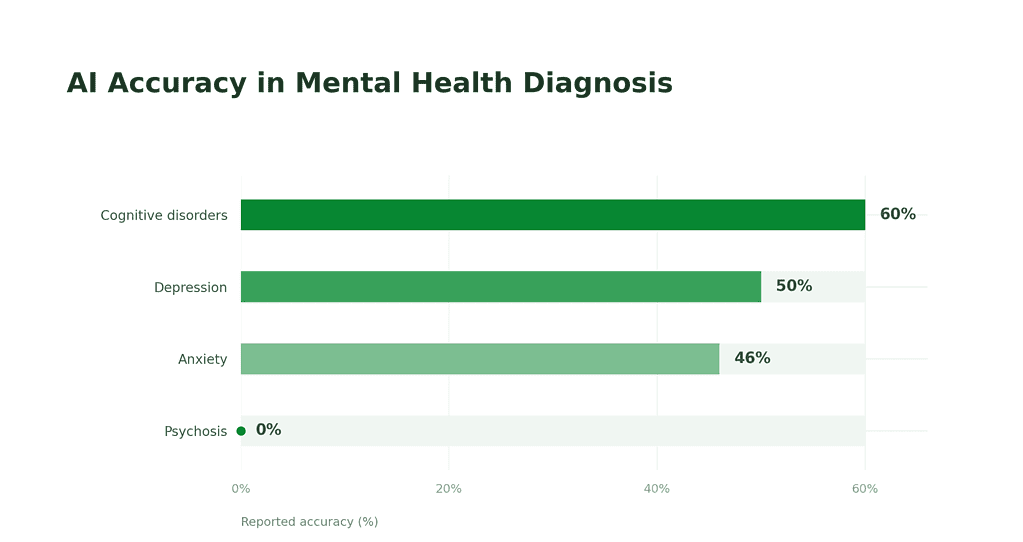
- According to a research article published in the National Library of Medicine, 217 psychiatric consultations found an AI diagnostic accuracy of 60% for cognitive disorders.
- Accuracy was 50% for depression, 46% for anxiety, and 0% for psychosis.
- In comparison, AI-based studies reported diagnostic accuracy ranging from 68% to 100%, although further clinical validation is needed.
United States Mental Health Challenges and AI Healthcare Developments
- SAMHSA reported that mental illness affected approximately 54.6 million U.S. adults in 2025, representing 20.6% of the adult population, according to data released in 2026.
- According to a report published by DigitalDx Ventures, mental health disorders affected 49.5% of adolescents aged 13-18, with 22.2% experiencing severe impairment. Among children aged 2-8, 17.4% had a diagnosed condition.
- Mental health issues cause USD 300 billion in annual productivity losses. Global costs could reach USD 16 trillion by 2030.
- Among 1,257 healthcare workers, 50.4% reported depression symptoms, 44.6% anxiety, 34% insomnia, and 71.5% psychological distress.
- Mental health software revenue may reach USD 4.58 billion in 2026. Vanderbilt’s AI model predicted suicide attempts with 84% accuracy within one week and 80% over two years.
Americans’ Concerns About AI and Mental Health
- A May 2026 YouGov survey found that 43% of Americans were very concerned that AI could worsen mental health problems, up from 35% in June 2025.
- Among adults under 30, concern increased from 29% to 45%, while it rose from 37% to 50% among those aged 45-64. Women (48%) were more concerned than men (38%).
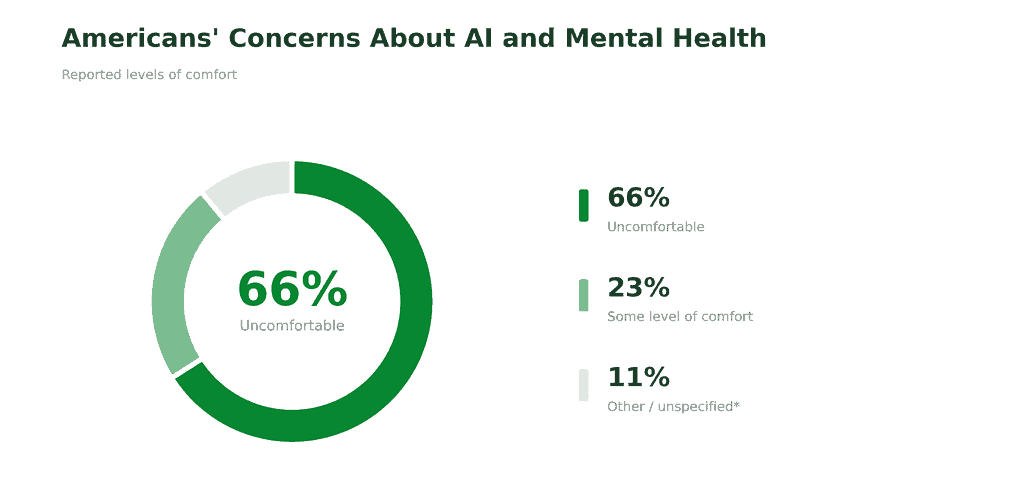
- 66% of Americans were uncomfortable with using an AI therapist, while only 23% expressed some level of comfort.
- Among adults under 30, comfort was higher at 37%, compared with 20% among older adults.
- Additionally, 55% believed AI was worse than professional human therapists, while 14% considered it equally capable.
- Only 6% had used AI for therapy, whereas 25% had used it for personal advice and 30% for health advice.
Generative AI Chatbots for Mental Health Support
- Large language models power AI chatbots such as ChatGPT, Gemini, Claude, Copilot, and Meta AI, allowing them to provide human-like conversations and personalized responses.
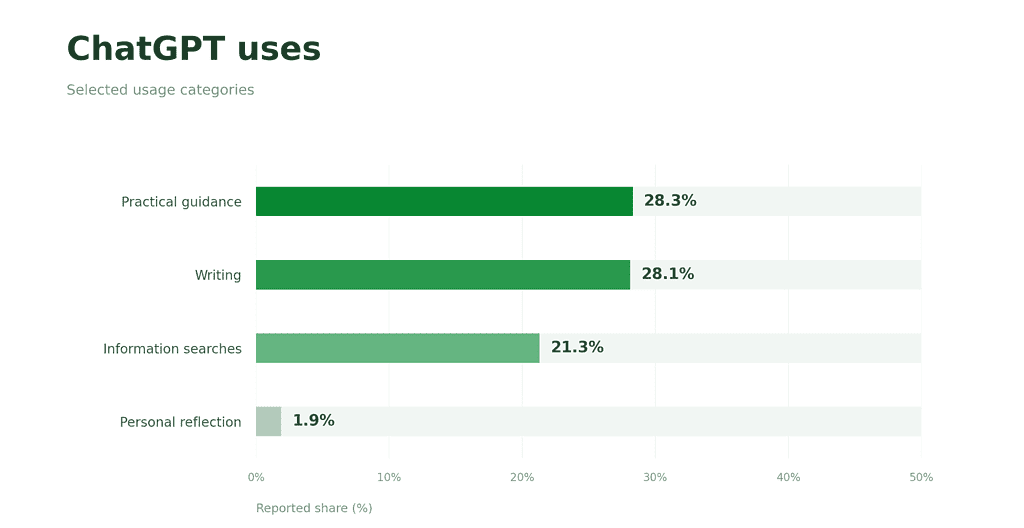
- According to the JMIR Mental Health journal, an analysis of approximately 1 million ChatGPT conversations from 130,000 users (May 2024-July 2025) found that practical guidance (28.3%), writing (28.1%), and information searches (21.3%) were the most common uses. Personal reflection accounted for 1.9%.
- An analysis of 1 million Claude conversations in March-April 2026 found that approximately 6% involved personal guidance. Health and wellness represented 27.2% of these discussions.
- Surveys in the United States found that 24% of participants used LLMs for mental health support, while 35% used AI tools weekly.
- Among people with ongoing psychological conditions, nearly 49% had used AI chatbots for support.
Mental Health Concerns Addressed Using LLMs
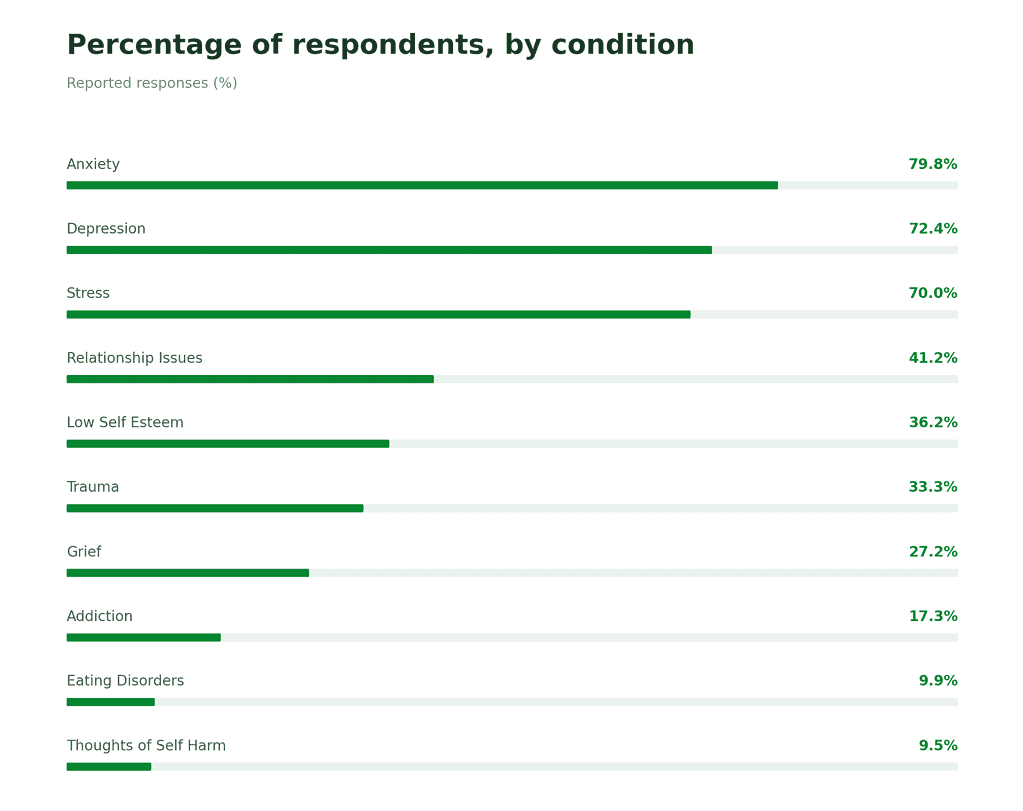
- Anxiety was the most common concern, reported by 79.8% of respondents, followed by depression at 72.4%.
- Stress accounted for 70%, while relationship issues were reported by 41.2%.
- Low self-esteem affected 36.2% of respondents using LLMs for support, while 33.3% reported trauma.
- Grief was reported by 27.2%, and addiction accounted for 17.3%.
- Eating disorders were reported by 9.9%, while 9.5% used LLMs for concerns involving thoughts of self-harm.
Younger People Are More Likely to Use AI for Emotional Support
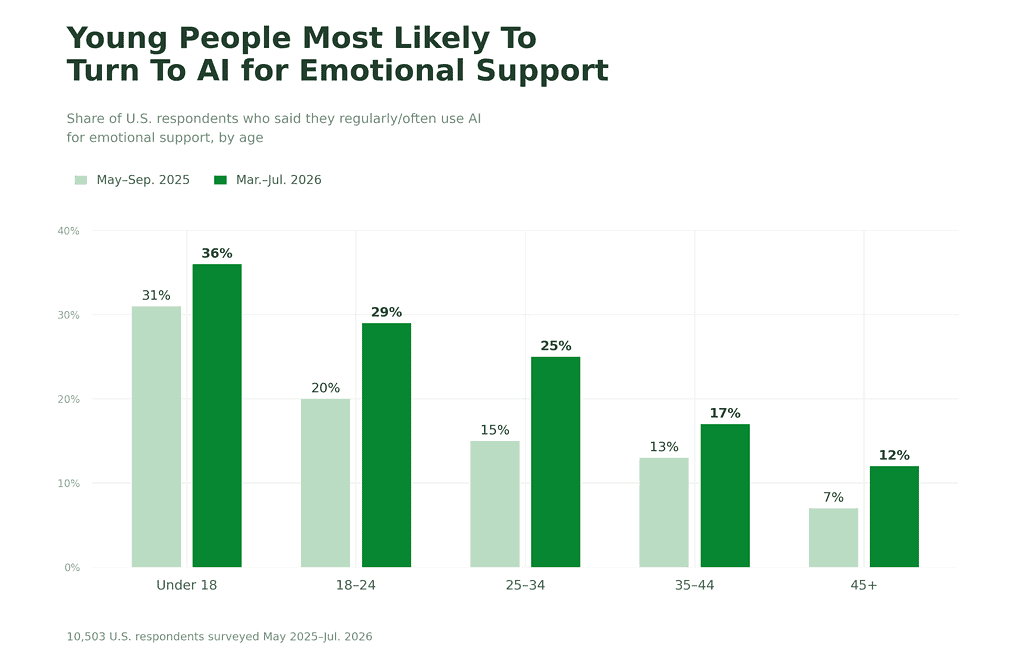
- Regular AI use for emotional support grew across all age groups, with under-18s showing the largest increase, from 31% in 2025 to 36% in 2026.
- For those aged 18-24, usage increased from 20% to 29%, while the 25-34 age group recorded growth from 15% to 25%.
- Usage also climbed from 13% to 17% among those aged 35-44 and from 7% to 12% among adults aged 45 years and above.
Public Priorities for Safer AI Mental Health Support
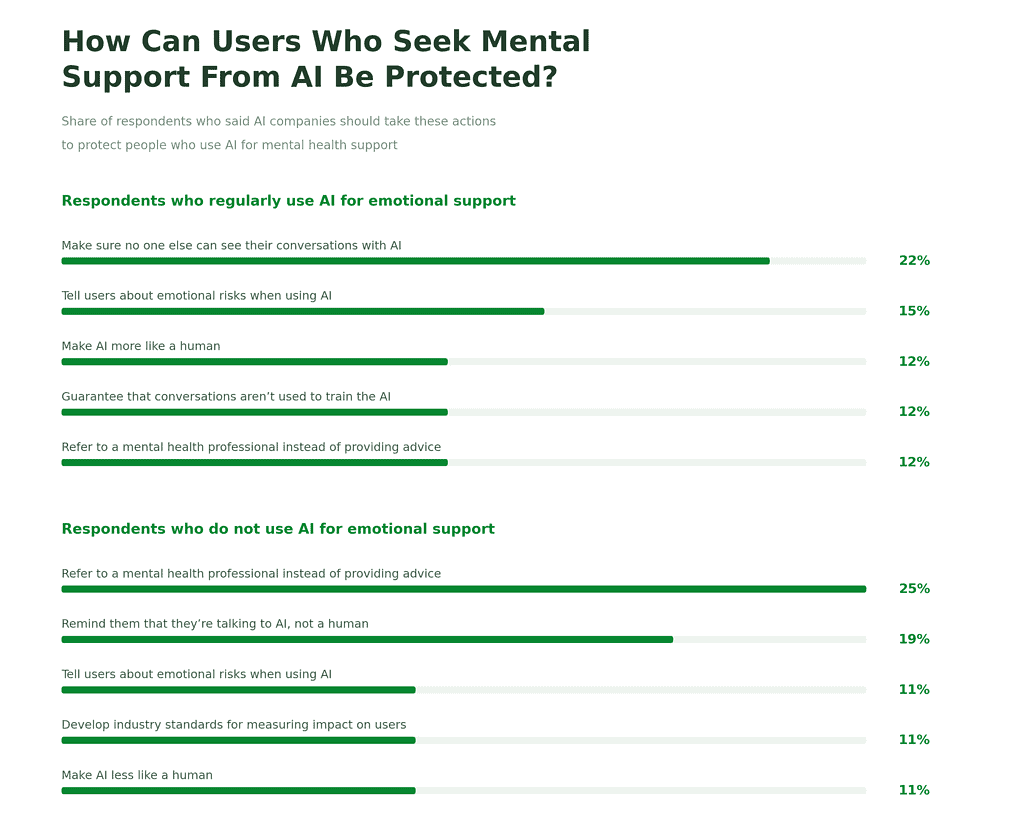
- Among regular AI emotional-support users, 22% wanted their conversations kept private, while 15% wanted warnings about emotional risks.
- Making AI more human-like attracted 12% support.
- Another 12% wanted guarantees that conversations would not be used to train AI, while 12% preferred referrals to mental health professionals over AI advice.
- Among people who do not use AI for emotional support, 25% preferred professional referrals.
- Reminders that users are speaking to AI rather than a human attracted 19% support.
- Emotional-risk warnings, industry standards for measuring user impact, and making AI less human-like each received 11% support.
Psychological Dependency and Emotional Attachment to AI Chatbots
- The Mental Health Journal reports that 17.14%-24.19% of adolescents may develop AI dependency, linked to loneliness, depression, and social anxiety.
- Moreover, 75% of users seek advice from AI, while 39% consider it a dependable source of support.
- AI-based mental health interventions have reported symptom reductions of 51% for depression, 31% for generalized anxiety, and 19% for eating disorders, indicating AI’s potential to support mental health treatment.
Psychologists Report Mixed Effects of AI Use
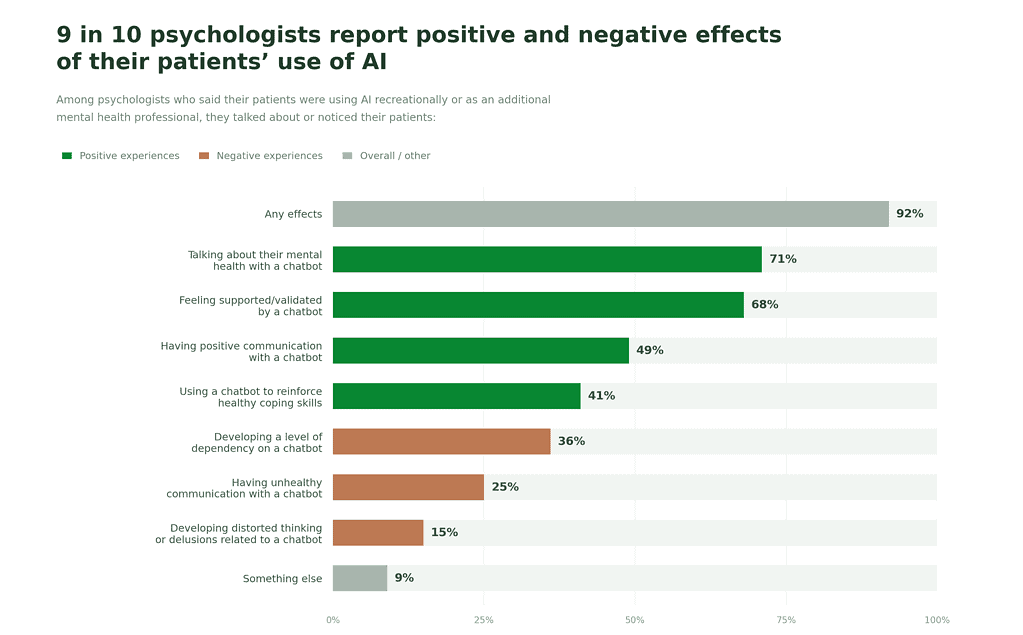
- About 92% of psychologists observed some effects of patients’ recreational or mental health-related AI use.
- Chatbot-based mental health discussions were reported by 71%, while 68% said patients felt supported or validated.
- Nearly 49% observed improved communication, and 41% reported stronger healthy coping skills.
- However, 36% reported chatbot dependence, while 25% noticed unhealthy communication patterns.
- More serious concerns included distorted thinking or chatbot-related delusions (15%), while 9% reported other effects.
Psychologists’ Concerns About Chatbot Harm
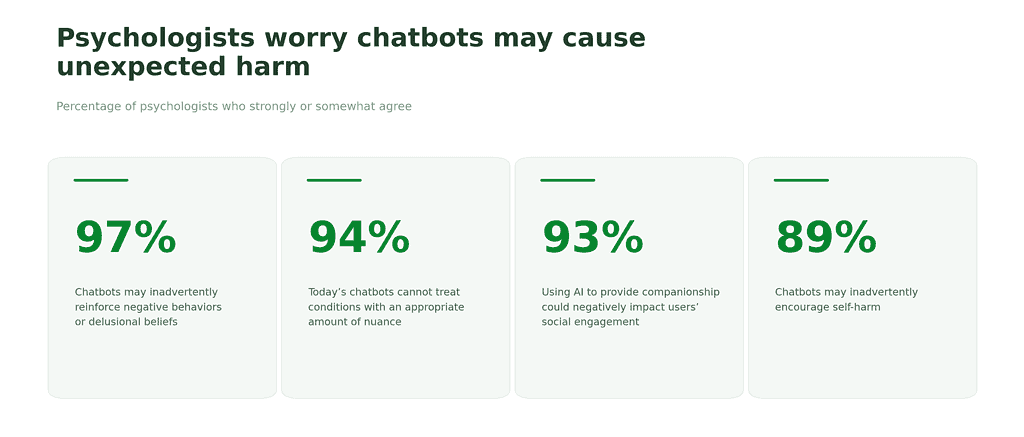
- Nearly 97% of psychologists worry that chatbots could unintentionally reinforce harmful behaviors or false beliefs.
- About 94% question whether current chatbots have sufficient understanding to support mental health treatment.
- 93% fear AI companionship may discourage real-world social interaction.
- Additionally, 89% warn that chatbots could unintentionally encourage self-harm.
The Bottom Line
AI is opening new ways to improve mental healthcare by making support more accessible and personal. However, privacy risks, inaccurate results, and limited human understanding remain key concerns.
Rather than replacing doctors and therapists, AI can help them provide better care. Moving forward, responsible use and human involvement will be essential to making AI a reliable part of mental healthcare.
FAQ
AI analyzes speech, text, behavior, and sleep patterns to identify potential mental health warning signs and risk indicators.
AI protects patient privacy through data encryption, anonymization, secure storage, and strict access controls.
Yes, AI chatbots offer emotional support but cannot replace professional mental health care.

Sources