









Introduction
Depression Statistics: Depression is a very common mental disorder. It involves a persistent feeling of sadness or reduced interest in activities over an extended period. Depression is different from normal mood fluctuations and everyday emotional responses. It impacts all aspects of life, including relationships with family, friends, and the community. Anyone, regardless of age, can experience depression. Individuals who have experienced trauma, significant losses, or other stressful events are more likely to develop depression.
Women are more likely to experience depression than men. Identifying depression in individuals can be challenging, as it is not always predictable. In this article, we will delve into Depression Statistics to provide more insight.
Editor’s Choice
- The major depressive disorder market is projected to increase from USD 6.26 billion in 2025 to USD 6.44 billion in 2026, reflecting a compound annual growth rate of 2.9%.
- SSRIs lead the market with a 42% share and are used in 68% of first-line treatments.
- Hospitals hold the largest market share at 56%, driven by structured psychiatric care.
- North America holds 38% of the market, with the United States contributing 82% of regional demand.
- According to the World Health Organization, about 4% of the global population experiences depression.
- An estimated 5.7% of adults are affected, including 4.6% of men and 6.9% of women.
- Around 5.9% of adults aged 70 years and older live with depression.
- Globally, approximately 332 million people have depression, and women are about 1.5 times more likely to be affected than men.
- More than 10% of pregnant women and new mothers experience depression worldwide.
- Depression can increase the risk of suicide, but effective treatments are available for mild, moderate, and severe cases.
- In 2026, Syria recorded the highest depression rate at 8.44 per 100k people.
- Topping the global list, the United Kingdom leads with a 7% rate of depression and anxiety.
- As of 2026, 18.3% of U.S. adults currently have depression or are actively being treated for it.
General Depression Statistics
(Source: southdenvertherapy.com)
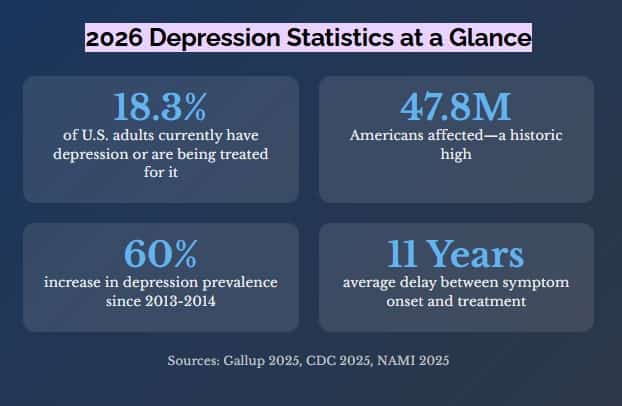
- As of 2026, 18.3% of U.S. adults currently have depression or are actively being treated for it.
- The total number of Americans affected has reached 47.8 million.
- Depression prevalence has surged by 60% since 2013-2014.
- On average, there is an 11-year delay between the first appearance of symptoms and when a person receives treatment.
Major Depressive Disorder Market Size
(Source: thebusinessresearchcompany.com)
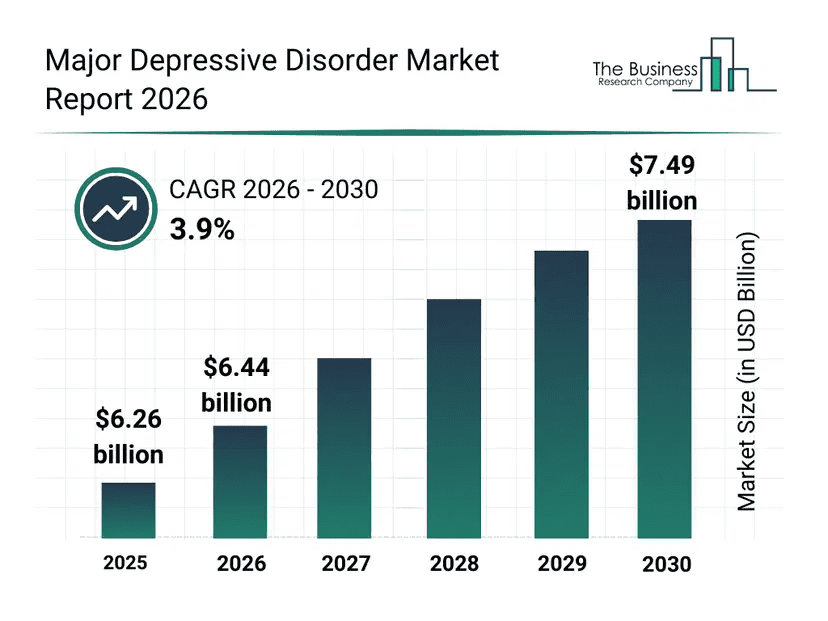
- The major depressive disorder market is projected to increase from USD 6.26 billion in 2025 to USD 6.44 billion in 2026, reflecting a compound annual growth rate of 2.9%.
- Continued market expansion is expected, with the market reaching USD 7.49 billion by 2030, driven by a forecast CAGR of 3.9% during 2026-2030.
By Market Segmentation
SSRIs:
- Lead the market with a 42% share and are used in 68% of first-line treatments.
- Hospital prescriptions account for 54% of usage, while patient adherence improves by 46% and treatment continuation rises by 37%.
- Digital monitoring supports 29% of treatment plans.
SNRIs:
- Hold a 28% market share, and are used in 51% of treatment-resistant cases.
- Hospitals contribute 49% of prescriptions, while pain-related depression increases usage by 36%.
- Clinical trials represent 31% of innovation, and combination therapy improves adherence by 28%.
Antidepressant drugs:
- Account for 24% of the market.
- About 61% of prescriptions are for long-term treatment, and hospitals account for 52% of inpatient use.
- Adherence programs improve outcomes by 33%, while side-effect monitoring is used in 41% of prescriptions.
Benzodiazepines
- Represent 15% of the market and is used in 47% of acute episodes.
- Emergency psychiatric care accounts for 39% of use, while dependency concerns affect 33% of long-term users.
- Crisis programs use them in 42% of interventions.
By Application
- Hospitals dominate the market with a 56% share, and handling 71% of severe depression cases that require inpatient or supervised care.
- Medication-based interventions are used in 63% of hospital treatments, while 49% of facilities provide multidisciplinary care.
- Emergency admissions represented for 42% of hospital-based management, and adherence programs improve patient outcomes by 37%.
- Clinics account for 31% of the market and primarily focus on outpatient services, treating 58% of mild-to-moderate cases.
- Telepsychiatry supports 44% of consultations, behavioral therapy is available in 39% of clinics, follow-up programs enhance continuity of care by 33%, and clinics manage 52% of early-stage diagnoses.
- Other applications accounted for 13%, with community care supporting 47% of rural interventions.
- Meanwhile, digital platforms contribute 41%, workplace programs aid 36% of early detection cases, and mobile health apps assist 29% of ongoing monitoring.
By Regional Insights
- North America holds 38% of the market, with the United States contributing 82% of regional demand, according to Business Research Insights.
- Around 71% of diagnosed patients receive medication treatment, mainly SSRIs, while 54% receive hospital-based psychiatric care.
- Telepsychiatry supports 46% of outpatient services, and insurance coverage improves treatment access for 74% of patients.
- Combination therapy is used by 52% of patients, while digital platforms support 41% of outpatient engagement, and hospitalization is required in 33% of severe cases.
- AI-based diagnostic tools are used in 28% of healthcare systems, and the region accounts for 47% of global antidepressant research activity.
- Europe holds a 29% share of the antidepressant market.
- Well-established healthcare systems oversee nearly 64% of psychiatric treatments, while SSRIs remain the most commonly prescribed medications, accounting for 45% of prescriptions.
- Hospital-based facilities manage around 51% of severe depression cases, and telepsychiatry now supports approximately 33% of outpatient consultations.
- Nearly 48% of patients receive combination therapy as part of their treatment plan, and public healthcare programs facilitate 69% of treatment pathways.
- Efforts to expand mental health services have improved treatment accessibility by 42%, while awareness campaigns contribute to 44% of early intervention cases.
- In addition, personalized psychiatry has been integrated into 26% of treatment strategies, and clinical research activities drive 39% of innovation within antidepressant development pipelines.
- The Asia-Pacific region represents 25% of the global market, with China, Japan, India, and South Korea collectively generating 79% of regional demand.
- Despite increasing awareness, nearly 58% of patients remain undiagnosed during the early stages of depression.
- Hospital-based treatment is utilized in 49% of cases, while SSRIs account for 41% of prescriptions across the region.
- The expansion of digital mental health platforms has contributed to 36% of the growth in outpatient care, and telepsychiatry services now support 31% of urban mental health consultations.
- Government-led awareness programs influence 44% of mental health initiatives, while workplace stress-related depression is responsible for 38% of newly reported cases.
- Pharmaceutical distribution networks facilitate 62% of treatment access, clinical trial participation continues to grow at 27%, and digital health applications are currently used by 33% of urban patients.
Depression Statistics by Global and Regional Burden
- Depression affects around 4% to 5.7% of the global population at any given time and remains a leading cause of disability worldwide.
- In the United States, nearly 19.1% of adults report having depression or receiving treatment for it, reflecting a continued rise since the pandemic.
- In India and across Asia, depression and anxiety are growing public health concerns. More than 80% of Gen Z workers in India say their mental health challenges are linked to workplace conditions.
Demographic Breakdown
- Women are approximately 1.5 to 2 times more likely to experience depression than men, with global rates of 6.9% among women and 4.6% among men.
- Young adults aged 18-25 report some of the highest depression rates, at around 18.6%.
- Depression prevalence generally declines with age, although about 5.9% of adults aged 70 years and older are affected.
- In the workplace, up to 42.5% of corporate employees experience anxiety and depression, highlighting the importance of mental health support.
- According to South Denver Therapy, among adults aged 18-29, depression rates increased from 13% in 2017 to 26.7% in 2025.
- Women are more affected than men, with 36.7% of women having been diagnosed with depression compared to 20.4% of men.
- Current depression affects 23.8% of women versus 17%-18% of men, while recent symptoms were reported by 16.0% of women and 10.1% of men.
Health and Economic Impacts
- Nearly 50% of individuals diagnosed with depression also have an anxiety disorder.
- Depression is the leading psychological risk factor for suicide and is the second leading cause of death among people aged 15–29.
- Effective treatments, including psychotherapy and medication, help 60% to 80% of patients. However, 50% to 80% of people with depression do not receive treatment, often due to stigma, limited awareness, and insufficient healthcare resources.
Depression Statistics by Country, 2026
(Source: worldpopulationreview.com)
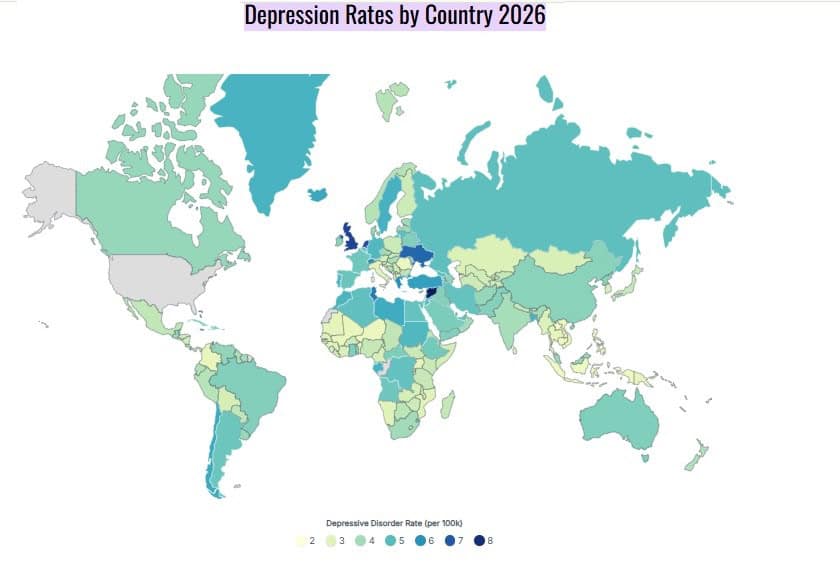
- Syria recorded the highest depression rate at 8.44 per 100k people.
- The United Kingdom followed with 7.44 per 100k, while the Netherlands reported 7.22 per 100k.
- Rates in Ukraine, Tunisia, and Lebanon were 6.75, 6.35, and 6.12 per 100k people, respectively.
Highest Rates of Depression and Anxiety (2025-2026)
(Source: instagram.com)
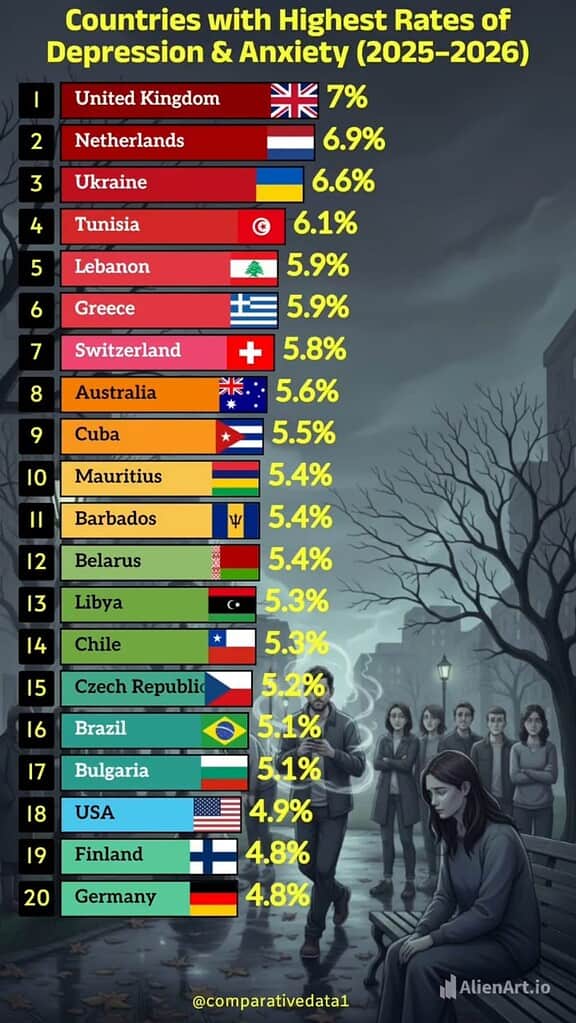
- Topping the global list, the United Kingdom leads with a 7% rate of depression and anxiety, with Netherlands (6.9%), Ukraine (6.6%), Tunisia (6.1%), Lebanon & Greece (5.9% each), Switzerland (5.8%), Australia (5.6%), Cuba (5.5%), and Mauritius, Barbados & Belarus (5.4% each) following closely behind.
- Further down the ranking, Libya and Chile both record 5.3%, while the Czech Republic stands at 5.2%, Brazil and Bulgaria at 5.1% each, and the USA at 4.9%, with Finland and Germany closing the top 20 at 4.8% apiece.
Postpartum Depression Statistics
(Reference: postpartumdepression.org)
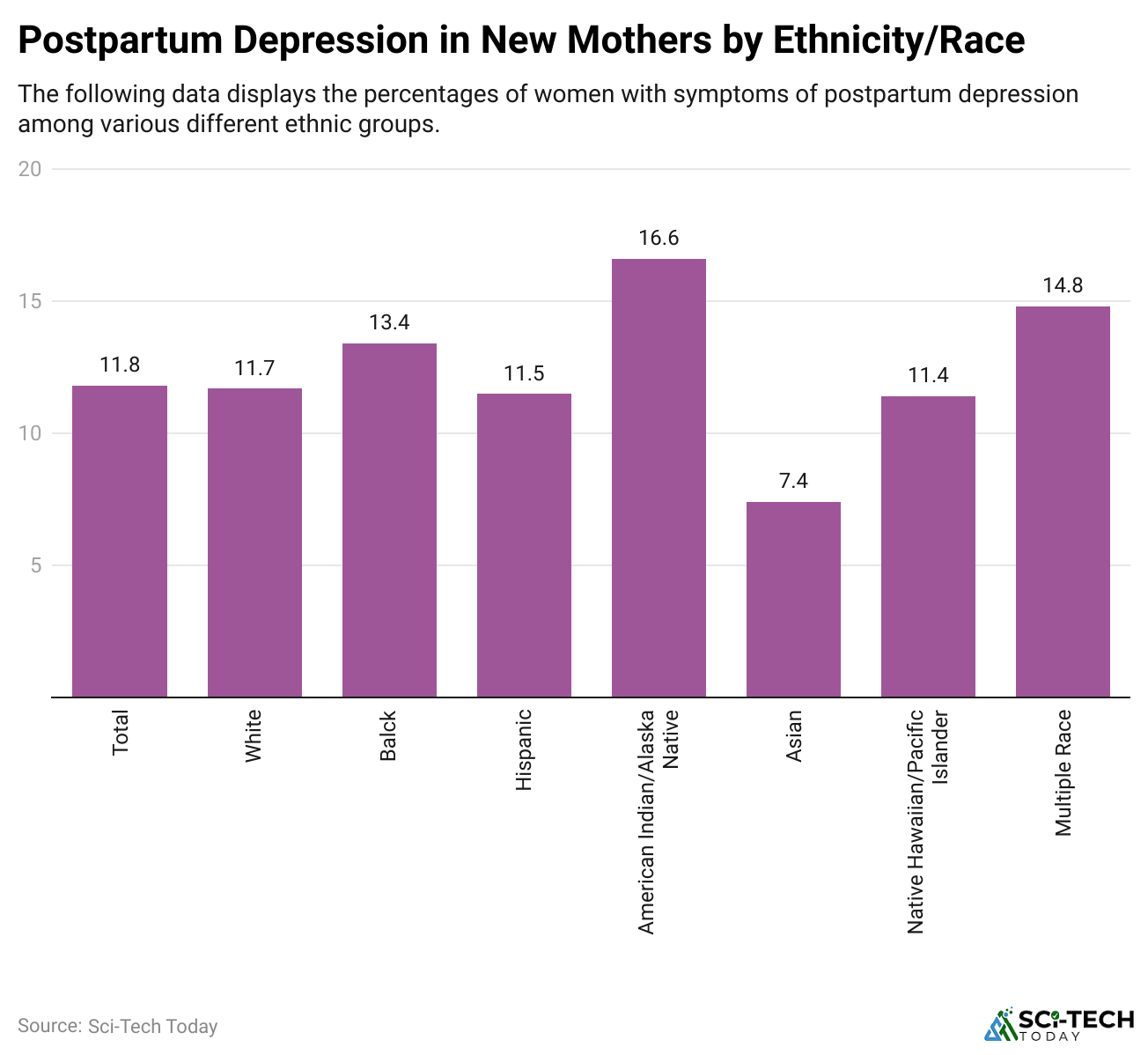
- Postpartum depression (PPD) affects many new mothers around the world. Estimates show that between 10% and 23% of new moms experience PPD. This percentage varies depending on factors like age and income level.
- In Canada, around 23% of new mothers have symptoms of PPD or anxiety after giving birth. Younger mothers, those aged 25 and below, are more likely to experience PPD or anxiety, with a rate of 30%.
- In the UK, about 1 in 10 new mothers face PPD, while 1 in 8 experiences depression during pregnancy. Additionally, about 25% of women with PPD still have symptoms when their baby turns one.
- In Australia, approximately 56,000 new mothers have been diagnosed with PPD. Nearly 1 in 5 women don’t receive proper screenings before and after giving birth, especially those with emotional distress or a family history of depression.
- In the Philippines, 16.4% of new mothers experience PPD six weeks after delivery. The country introduced the Postpartum Depression Research Act of 2007 to support research on postpartum conditions.
- In terms of ethnicity, PPD affects people from all races and backgrounds.
- In terms of fathers, around 50% of men with partners who have PPD may develop depression themselves.
- About 10% of new fathers experience symptoms of depression during the postpartum period.
- In terms of adoptive parents, rates of PPD can be similar to those in biological mothers.
- However, one study found that only about 8% of adoptive parents experience severe PPD, compared to 16.5% of biological mothers.
- Postpartum depression can take different forms, including postpartum blues, anxiety, obsessive-compulsive disorder (OCD), panic disorder, PTSD, and psychosis. Each of these conditions has its own set of symptoms and risk factors.
- Risk factors for PPD include a history of depression or anxiety disorders, previous experiences with PPD, low socioeconomic status, and lack of social support.
- Breastfeeding may lower the risk of PPD, according to a study by Florida Atlantic University.
- The longer a mother breastfeeds, the lower her risk of experiencing PPD.
- Awareness, screening tools, early diagnosis, and treatment are crucial in addressing PPD and improving women’s health.
Males vs. Females Depression Statistics
- In South Africa, a median of almost 27% of women experience depressive disorders at some time in their lifespan, whereas just 18% of men experience depression in their lifetime.
- In France, the one-year prevalence of depression in individuals below 18 years was almost 9.8%, and was 10.9% in women and 7.8% in men.
- In Sweden, the one-year prevalence of depression was almost 11.6% in females and 7.6% in males.
- In Brazil, depression is almost 1,9 times more persistent in 10.1% of women and 5.2% of men.
- In Spain, the prevalence of depression in females is 6.9%, which is almost two times higher than 3.6% in men.
- In Russia, the rate of depression in the 100,000 population was almost 58.91, of which 74.49 were women, and 45.24 were men.
- Roughly 20% of the women, compared to 12.5% of men in the Netherlands, experience depression.
- In Canada, the prevalence of high depression is 5.9% in females and 3.4% in men.
- In Australia, as per estimation, 45% of people will experience a mental health condition in their lifespan.
(Source: researchgate.net)
- In China, the lifetime prevalence of depression was 3.68%, 11.6% in females, and 2.96% in males.
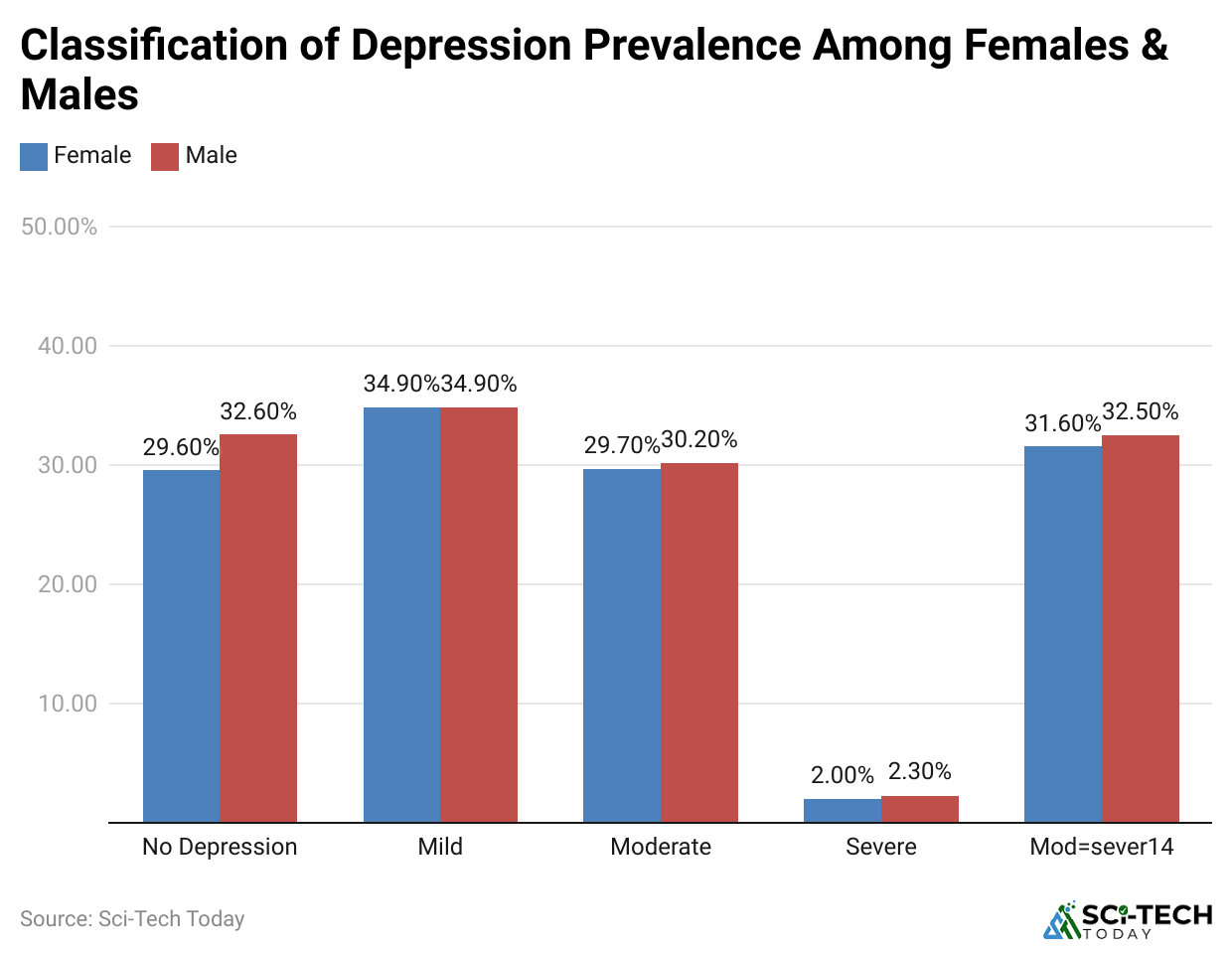
- In the United States, almost 18.8 million adults, or almost 9.5% of the population between 18 years and above, experience depressive disorder. About 12% of females and 6.6% of men experience depression.
- Double British females are more likely to have depression than males.
- Men with depression are rarely diagnosed, and therefore, the suicide rates in men are 3.5 times higher than in women.
- Almost one out of 10 females experiences clinical depression in their entire lifetime.
- The rate of depression is higher in females than in males. In the United States, almost 9% of males have a feeling of depression as compared to 15% of women.
The Most Common Forms of Mental Illness
(Reference: usa.edu)
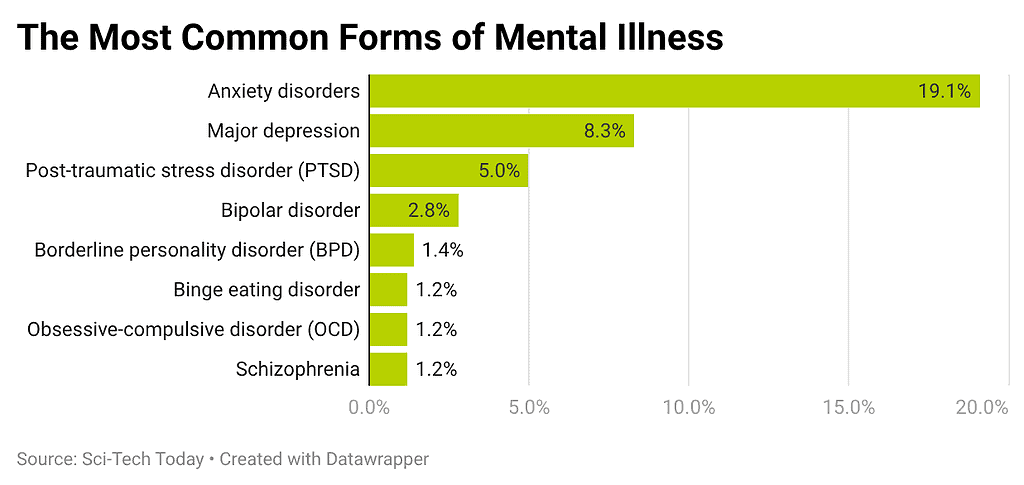
- Anxiety disorders are by far the most widespread mental illness, affecting 19.1% of the population, followed by major depression at 8.3% and post-traumatic stress disorder at 5%.
- Bipolar disorder accounts for 2.8%, while borderline personality disorder stands at 1.4%, and binge eating disorder, obsessive-compulsive disorder, and schizophrenia each report a prevalence of 1.2%.
Common Symptoms of Depression
- Depression often causes a persistent feeling of sadness or emotional emptiness.
- Individuals may lose interest in hobbies and activities they previously enjoyed.
- Changes in appetite can lead to weight gain or weight loss.
- Sleep patterns may change, resulting in insomnia or excessive sleeping.
- Many people experience low energy levels and constant fatigue.
- Some individuals show increased restlessness, such as pacing or engaging in purposeless activities.
- Depression can also cause slower movements and speech.
- Feelings of guilt, worthlessness, and low self-esteem are common.
- Concentration, decision-making, and clear thinking may become difficult.
- People may develop a pessimistic outlook on life.
- In severe cases, depression can lead to self-harm or suicidal thoughts and behaviors.
Among College Students
- According to missiongraduatenm.org, feeling hopeless, sad, or emotionally down was the most commonly reported symptom, affecting 80% of college students.
- About 78% reported difficulty concentrating while reading, watching television, or doing activities they usually enjoy, and 17.8% considered it a major daily challenge.
- Sleep-related problems affected 17.2% of students, including difficulty falling asleep, staying asleep, or sleeping too much.
- Additionally, 4.6% of students reported experiencing suicidal thoughts daily.
Anxiety Disorders and Depression Treatment Market Outlook
(Source: market.us)
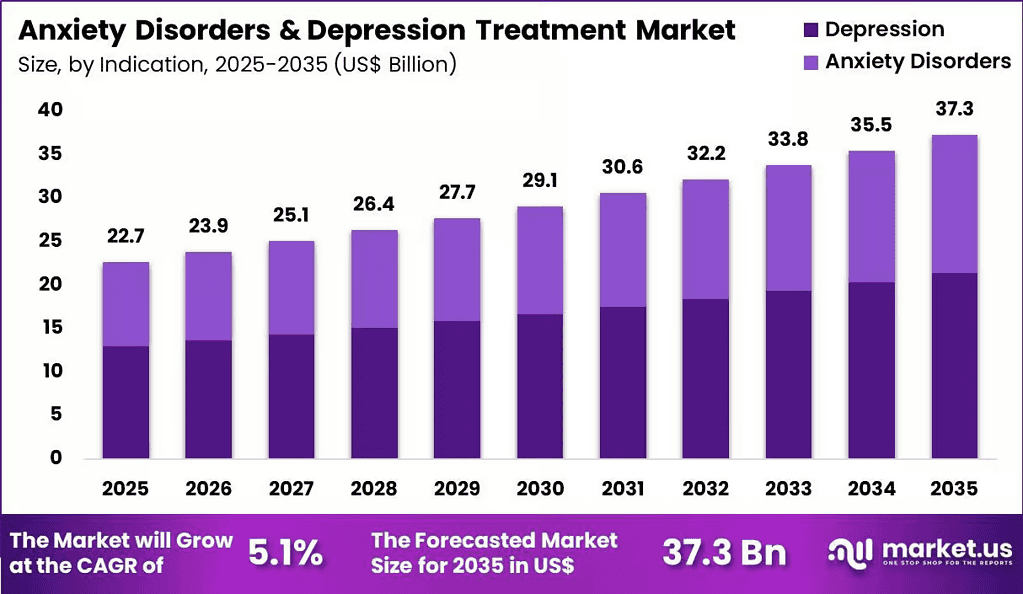
- The global anxiety disorders and depression treatment market was valued at USD 22.7 billion in 2025, rising to USD 23.9 billion in 2026, driven by growing demand across both depression and anxiety disorder indications.
- The market is projected to reach USD 37.3 billion by 2035, expanding at a steady CAGR of 5.1% over the forecast period from 2025 to 2035.
- By product type, antidepressants led the market with a 38.7% share, outperforming anticonvulsants, anxiolytics, antipsychotics, and other treatment categories.
- By indication, depression accounted for the largest share at 57.3%, exceeding anxiety disorder-related treatments.
- In therapy, pharmacotherapy dominated, accounting for 64.5% of revenue, while North America led the regional market with a 64.2% share.
Impact and Severity of Depression
- Depression significantly affects daily life, with 87.9% of people reporting difficulties in work, school, family, or social activities, while 31.2% experience extreme disruption.
- Only 43.0% of women and 33.2% of men with depression reported receiving counseling or therapy in the past year.
- Recovery can be more challenging because approximately 50% of people with depression also have an anxiety disorder, which often increases symptom severity and treatment complexity.
Economic and Social Impact of Depression
- Depression is a leading cause of disability in the U.S. and results in approximately USD 63 billion in lost workplace productivity each year.
- Adults with mental illness are 3-5 times more likely to be unemployed.
- More than 50% of students with mental health disorders drop out of high school, while students with depression are over 2x more likely to leave school than their peers.
Conclusion
While we can take steps to lessen the risk of developing depression, the experts have yet to find a way to prevent it completely. According to the experts, learning to recognize the symptoms of depression and getting to know how to get help when needed can be beneficial for us to meet the symptoms very early, before the case worsens.
Depression statistics can have value, but they may not generally be seen as relevant to a specific situation. No matter what symptoms we witness or how they show up, a trained therapist can help us overcome any depressive situation.

Sources