









Opening
Synthetic Biology Statistics: Synthetic biology is changing how we solve some of the world’s biggest challenges. It combines biology, engineering, and technology to create or improve living organisms for useful purposes. Scientists use it to develop better medicines, grow stronger crops, produce cleaner fuels, and make eco-friendly materials. Fast advances in gene editing, DNA design, and artificial intelligence have made synthetic biology one of the fastest-growing fields in science. As governments, researchers, and biotech companies invest billions in discoveries, the industry continues to expand across healthcare, agriculture, manufacturing, and environmental protection.
This article highlights the latest synthetic biology statistics, including market growth, funding, research trends, and future opportunities
Highlighted Choice
- The global synthetic biology market is projected to grow from USD 23.5 billion in 2025 to USD 96.4 billion by 2033, expanding at a 19.3% CAGR.
- North America is expected to dominate the market in 2026 with a 42.3% market share.
- Oligonucleotides will remain the largest product segment, accounting for 35.47% of the market.
- Genome engineering is projected to lead the technology segment with a 27.1% market share in 2026, while PCR technology contributes 20.3%.
- Gene & cell therapy represents the largest application area, capturing 31% of the synthetic biology market, followed by gene editing (16%) and next-generation sequencing (14%).
- More than 700 companies operate across the synthetic biology value chain, while investors have committed over USD 10 billion to synthetic biology startups in recent years.
- Synthetic biology research investment has increased by more than 30% annually over the past decade, contributing to over 15% of biotechnology innovations.
- Synthetic biology-based materials can reduce carbon emissions by up to 40%, while genetically engineered crops have improved agricultural yields by 20%-30%.
- AI is accelerating innovation by reducing enzyme development time from years to weeks, while cell-free systems improve energy efficiency by 40%-70%.
- The United States is expected to generate approximately USD 9.5 billion in synthetic biology revenue in 2026.
Synthetic Biology Market Overview
- The global synthetic biology market integrates biotechnology, engineering, and computational biology to enable sustainable production across multiple industries.
- The market is expected to grow strongly through 2036, supported by wider adoption of bio-based manufacturing across industries.
- Industrial enzymes are projected to expand at an 8.6% CAGR, driven by demand from food processing, detergents, textiles, biofuels, and pharmaceuticals.
- Key technologies include precision fermentation, cell-free systems with 40%-70% higher energy efficiency, and AI-designed enzymes that reduce development time from years to weeks, according to Global Newswire.
- More than 700 companies operate across the value chain, while biopharmaceuticals remain the largest application segment.
- In industrial enzymes, carbohydrases account for approximately 38% of the market.
Key Insights Supporting the Synthetic Biology Market
- A report published by Cervicorn Consulting shows that the global investment in synthetic biology research has increased by more than 30% annually over the past decade.
- Synthetic biology now contributes to over 15% of biotechnology industry innovations.
- More than 50 synthetic biology-based therapies are currently under development for diseases such as cancer and genetic disorders.
- In agriculture, genetically engineered crops developed using synthetic biology have improved crop yields by 20%-30%.
- Synthetic biology-based materials can reduce carbon emissions by up to 40% compared with conventional manufacturing methods, improving sustainability.
- Investors have committed more than USD 10 billion to synthetic biology startups in recent years.
Global Synthetic Biology Market Size
(Source: market.us)
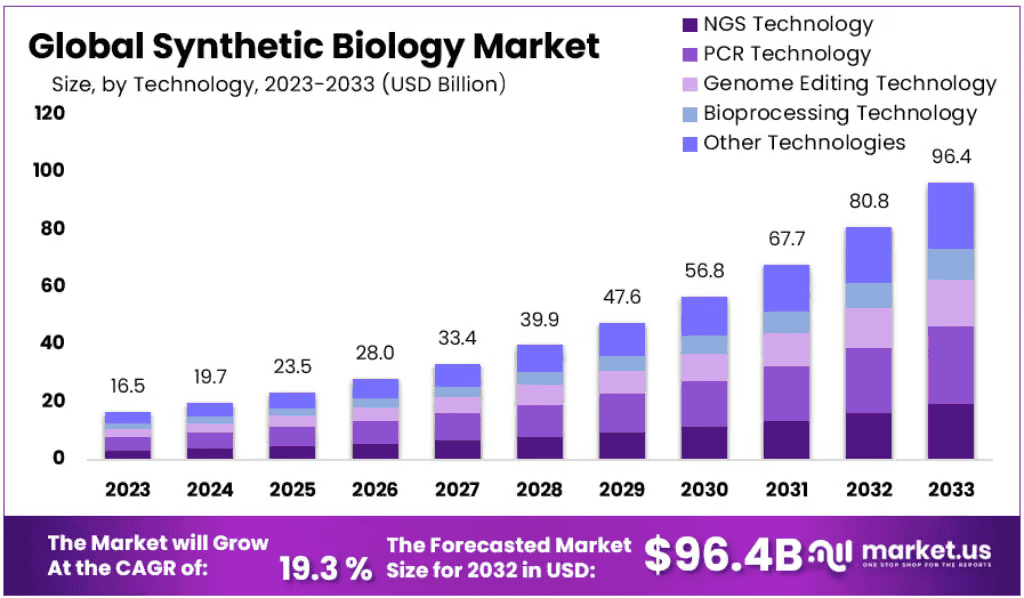
- In 2025, the synthetic biology market is projected to reach about USD 23.5 billion, rising to USD 28.0 billion in 2026.
- By 2033, the market is expected to grow strongly to nearly USD 96.4 billion, driven by wider use of NGS, PCR, genome editing, and bioprocessing technologies.
- Overall, the market is forecast to expand at a robust CAGR of 19.3% from 2023 to 2033.
Segmental Analysis, 2026
- By Product: The Oligonucleotides segment is expected to lead the synthetic biology market with a 29.3% share.
- By Technology: PCR Technology is projected to account for 27.1% of the market because it plays a key role in DNA amplification, mutation detection, and synthetic gene development.
- By End User: Biotechnology Companies are forecast to hold the largest share at 35.1%.
- By Region: North America is expected to capture 42.3% of the market.
Synthetic Biology Market Opportunities by Application
(Source: startus-insights.com)
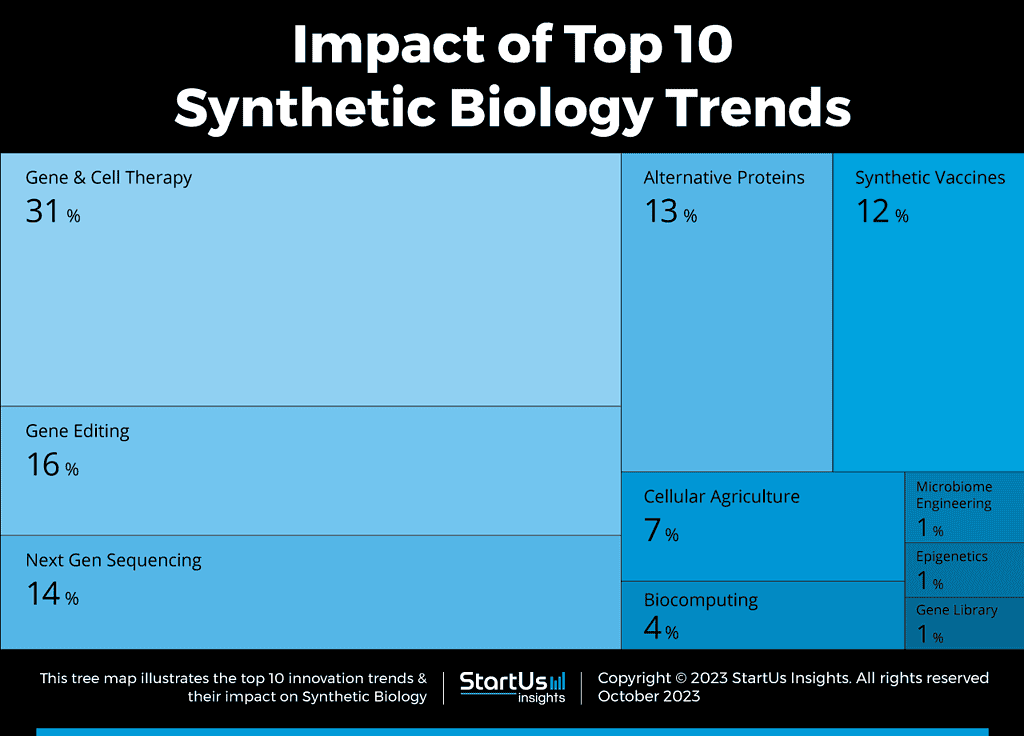
- Gene & cell therapy leads the synthetic biology market with 31%, followed by gene editing (16%) and next-generation sequencing (14%), reflecting strong demand for advanced clinical and diagnostic technologies.
- Emerging commercial opportunities include alternative proteins (13%), synthetic vaccines (12%), and cellular agriculture (7%), while biocomputing (4%) continues to gain research and investment interest.
- Early-stage segments such as microbiome engineering (1%), epigenetics (1%), and gene libraries (1%) currently hold smaller shares but offer promising long-term growth potential.
Top 10 Companies in the Synthetic Biology Market, 2026
- Grand View Research further stated that Thermo Fisher Scientific (U.S.) is a leading supplier of DNA synthesis, CRISPR, sequencing, and bioprocessing tools, supporting a market valued at USD 20.47-22.15 billion in 2026.
- Merck KGaA (Sigma-Aldrich) (Germany) provides DNA, RNA, enzymes, and CRISPR products and is among the largest companies in the USD 22.15 billion market.
- Agilent Technologies (U.S.) offers genomics and analytical solutions in a market projected to grow from USD 26.87 billion (2026) to USD 112.51 billion (2033) at a 22.7% CAGR.
- GenScript Biotech (China) is a major gene synthesis provider in a market expected to rise from USD 21.4 billion (2025) to USD 72.4 billion (2034).
- Illumina (U.S.) supports synthetic biology with DNA sequencing platforms across a USD 20.47-26.87 billion market.
- According to The Business Research Company, Novozymes (Denmark) develops industrial enzymes in a market forecast to reach USD 239.38 billion (2035) from USD 32.04 billion (2026) at a 25.04% CAGR.
- Codexis (U.S.) specializes in engineered enzymes and is recognized as a key player in the USD 22.15 billion market.
- Twist Bioscience (U.S.) focuses on synthetic DNA manufacturing and had an estimated USD 4.1 billion valuation in 2026.
- Amyris (U.S.) develops engineered bio-based products in a market projected to grow at a 14.09% CAGR from 2026-2034.
- Eurofins Scientific (Luxembourg) provides genomics and gene synthesis services in a market expected to expand from USD 22.15 billion (2026) to USD 69.18 billion (2033).
Synthetic Biology Market Pricing Analysis
- The synthetic biology market is projected to grow from USD 22.5 billion in 2023 to USD 65.1 billion by 2030, according to a report shared by Coherent Market Insights.
- DNA synthesis and oligonucleotides typically cost between USD 0.05 and USD 0.30 per base pair.
- Gene synthesis services generally range from USD 1,500 to USD 8,000, while large synthetic genome projects can exceed USD 1 million.
- CRISPR kits are priced between USD 65 and USD 800; cloning and protein expression kits cost USD 150-USD 2,500; software subscriptions range from USD 49 per user per month to USD 500,000 for enterprise projects; and engineered organisms or cell lines cost USD 5,000-USD 100,000.
Global Synthetic Biology Market Revenue Statistics By Region
- In the synthetic biology segment, the North American region accounted for the highest total market revenue of USD 6.51 billion in 2023 and is estimated to reach USD 44.15 billion by the end of 2032.
Furthermore, the table below elaborates on other market revenue in USD billion, analyzed by region.
| Region | 2023 | 2027 | 2032 |
| North America | 6.51 | 14.6 | 44.15 |
| Europe | 4.59 | 10.59 | 33.15 |
| APAC | 4.12 | 9.74 | 31.42 |
| LAMEA | 1.14 | 2.51 | 7.33 |
By Country
(Source: instagram.com)
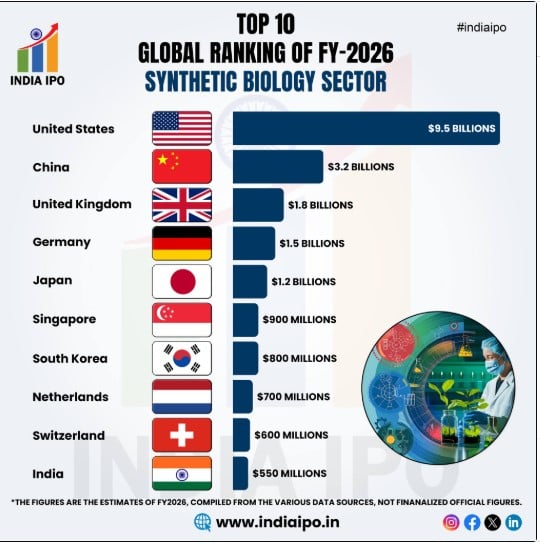
- The United States leads the synthetic biology sector with around USD 9.5 billion in revenue in 2026.
- China follows with USD 3.2 billion, while the United Kingdom, Germany, and Japan report USD 1.8 billion, USD 1.5 billion, and USD 1.2 billion, respectively.
- Singapore (USD 900 million), South Korea (USD 800 million), the Netherlands (USD 700 million), Switzerland (USD 600 million), and India (USD 550 million) form the next tier of emerging and established markets.
Synthetic Biology Statistics By Technology Insights
(Source: coherentmarketinsights.com)
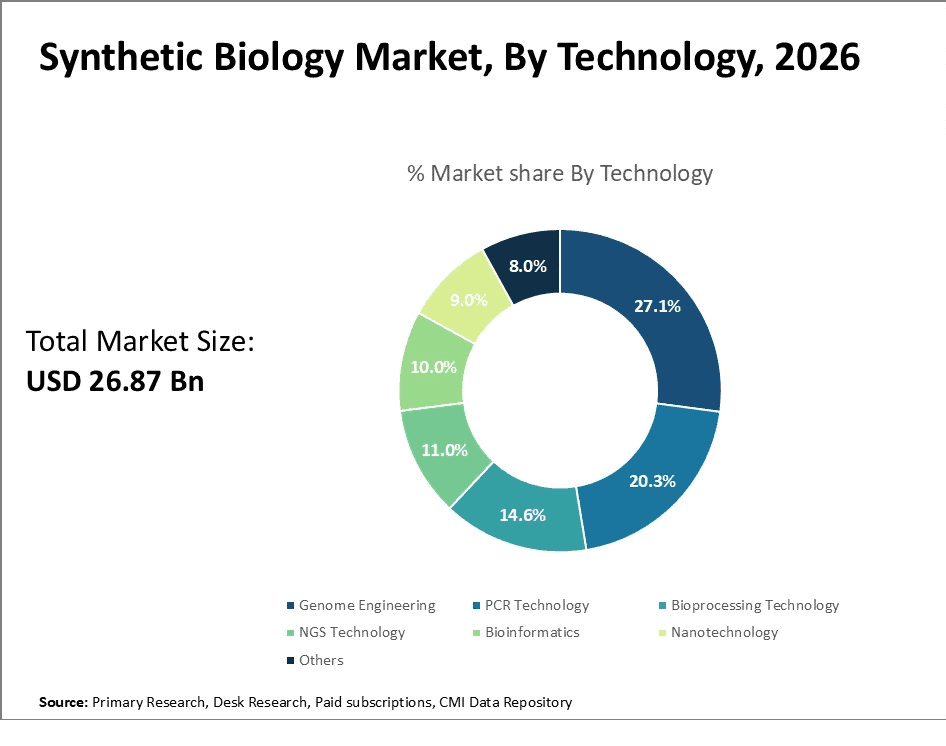
- In 2026, Genome engineering holds the largest share at 27.1%, indicating its central role in revenue generation.
- PCR technology accounts for 20.3%, while bioprocessing technology represents 14.6% of market revenue.
- NGS technology contributes 11%, bioinformatics 10%, and nanotechnology 9%, with other technologies making up 8%.
| Technology | 2023 | 2027 | 2032 |
| PCR | 4.59 | 10.59 | 33.15 |
| NGS | 3.59 | 8.2 | 25.27 |
| Genome Editing | 2.96 | 6.91 | 21.95 |
| Bioprocessing | 1.96 | 4.43 | 13.51 |
| Others | 3.26 | 7.32 | 22.15 |
By Products
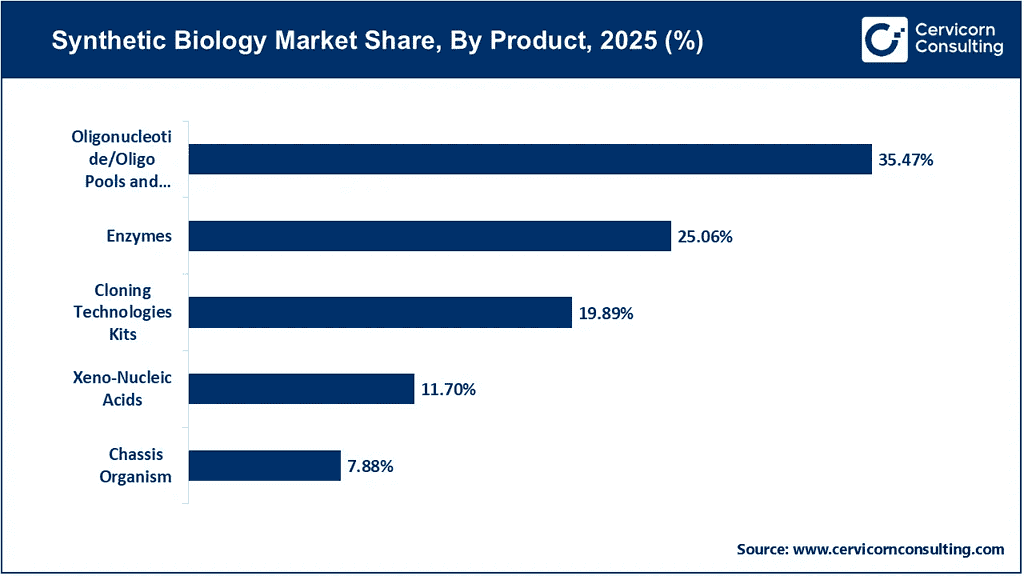
(Source: cervicornconsulting.com)
- As of 2025, oligonucleotide/oligo pools lead the synthetic biology market with 35.47%.
- Enzymes hold 25.06%, while cloning technology kits account for 19.89%, together forming a strong mid-tier product cluster.
- Xeno-nucleic acids at 11.70% and chassis organisms at 7.88% represent smaller shares.
The product’s revenue analysis is stated below from 2023 to 2032:
| Products (USD billion) | 2023 | 2027 | 2032 |
| Oligonucleotide/Oligo Pools & Synthetic DNA | 5.83 | 13.57 | 42.87 |
| Enzymes | 4.09 | 9.41 | 29.30 |
| Cloning Technologies Kits | 3.27 | 7.45 | 22.98 |
| Xeno-Nucleic Acids | 1.95 | 4.38 | 13.24 |
| Chassis Organism | 1.21 | 2.64 | 7.65 |
By Application
- The healthcare sector accounted for the largest share of the synthetic biology market, about 57.7% in 2023.
- Meanwhile, the non-health segment holds a share of 42.3%.
- Whereas revenue was generated by the above applications at the same time as healthcare (USD 9.42 billion) and non-healthcare (USD 6.92 billion).
- The market share of synthetic biology statistics in 2024 will be around healthcare (45%), agriculture (18%), environmental sustainability (20%), industrial biotechnology (12%), and food and beverages (5%).
By End User
- According to Synthetic Biology Statistics, in 2023, Pharmaceutical and biotechnology companies had the biggest revenue share, with 52.1% of the market.
- In addition, the Academic and Research Institutes secured a market share of 25.1%.
- Similarly, all other end users made up a share of 22.8%.
The table below shows the revenue analyses by end-user (in USD billion) from 2023 to 2032:
| End-Use | 2023 | 2027 | 2032 |
| Pharma & Biotech Companies | 8.52 | 19.67 | 61.56 |
| Academic & Research Institutes | 4.10 | 9.55 | 30.19 |
| Others | 3.73 | 8.23 | 24.29 |
Key Numeric Analysis For Challenges In 2024
- Regulatory Hurdles: It is estimated that regulatory challenges in the synthetic biology industry lead to delays and compliance costs of approximately USD 2 to 3 billion annually.
- High R&D Costs: Research and development expenditures account for 20 to 30% of total expenses in synthetic biology companies, posing a significant financial barrier, especially for startups.
- Workforce Shortage: The industry will face around a 15% to 20% shortage of skilled professionals, creating a bottleneck in advancing research and application development.
Top 10 Suppliers of Synthetic Biology Statistics By Revenue
| Startup Names | Revenue (USD million) |
| Ginkgo Bioworks | 725 |
| Zymergen | 480 |
| Twist Bioscience | 260 |
| Synthego | 195 |
| Amyris | 400 |
| Arzeda | 125 |
| DNA Script | 150 |
| Evolva | 100 |
| Asimov | 85 |
| Inscripta | 140 |
Synthetic Biology Market Share Statistics For Agriculture And Food Industries
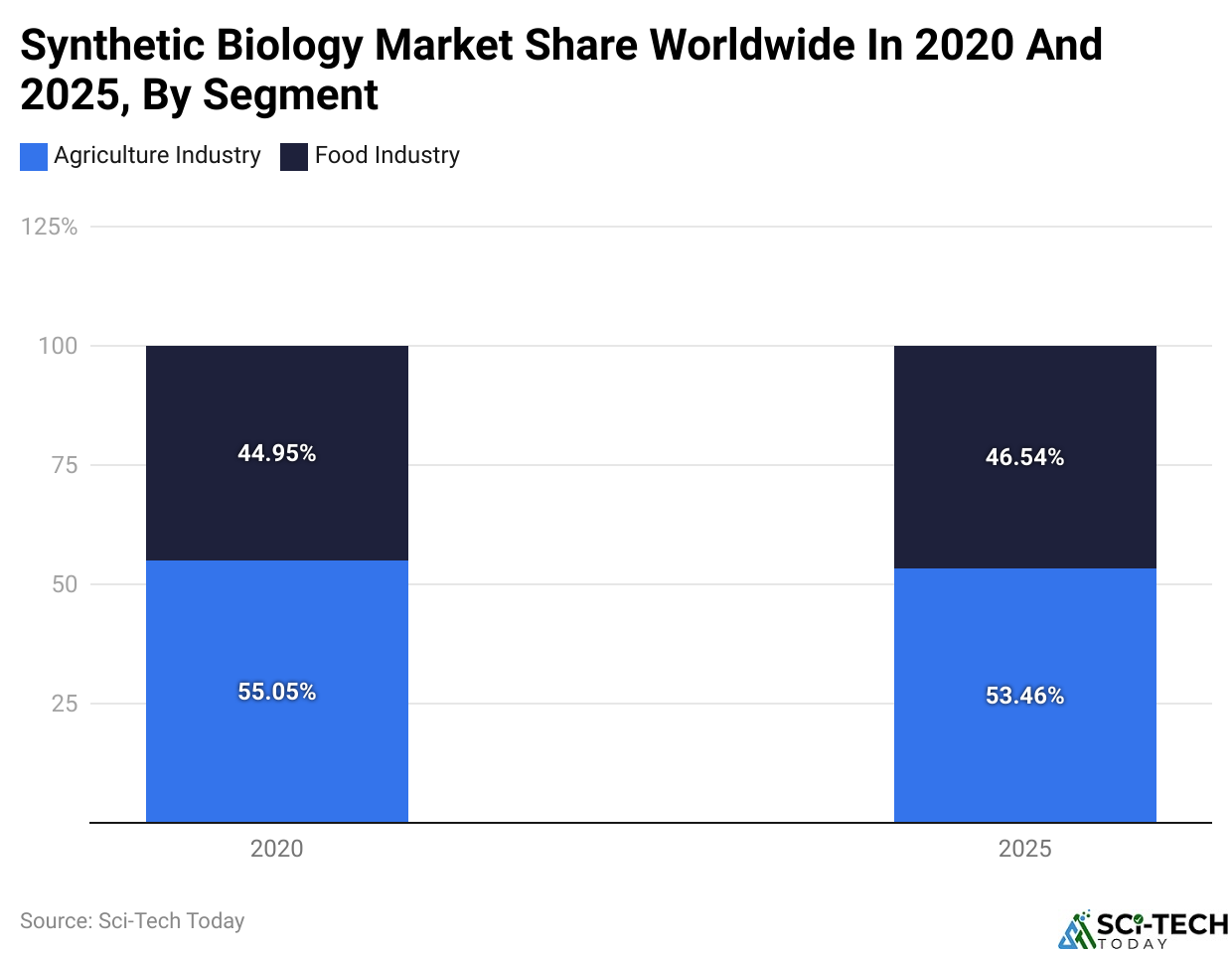
(Reference: statista.com)
- In 2020, the agricultural industry made up about 55.05% of the synthetic biology market, but it will drop to around 53.5% by 2025.
- The above graph further elaborates that the food industry accounted for a market share of 44.95% in the synthetic biology segment in 2020 and is estimated to reach a higher 46.54% share by 2025.
Future Product Releases
- CRISPR and Gene Editing Tools: Companies like Twist Bioscience and Ginkgo Bioworks are expected to roll out enhanced gene-editing platforms in 2024, with improved precision and reduced off-target effects.
- Synthetic Biology-Enabled Vaccines: Ginkgo Bioworks and Amyris are working on synthetic biology platforms to accelerate vaccine production. New vaccine developments are expected in the latter half of 2024.
- Bio-based Materials: Amyris plans to introduce new sustainable bio-based materials for consumer products by the end of 2024.
Conclusion
This article on synthetic biology Statistics includes several effective analyses that describe how the market has gone through enormous changes in recent years, along with many innovations within healthcare, agriculture, and environmental sustainability. Companies like Ginkgo Bioworks, Amyris, Twist Bioscience, and Zymergen are at the forefront and are currently developing new platforms and products that will shape the sector of synthetic biology.
In conclusion, synthetic biology will continue to be a transformative force across industries, addressing critical global challenges and offering new economic opportunities. The industry’s future looks promising, with groundbreaking innovations expected to accelerate in the coming years.
FAQ
Synthetic biology designs or builds new biological systems, while genetic engineering mainly modifies existing genes to improve specific organism traits.
Synthetic biology is widely used in medicine, agriculture, environmental protection, sustainable energy, food production, and industrial manufacturing
Synthetic biology supports vaccine development, targeted therapies, gene treatments, and faster diagnostics, improving healthcare and patient outcomes worldwide

Sources