








Brief Overview
SMS Marketing: Over the years, businesses have increasingly embraced text marketing as a direct means of communicating with customers.
In 2024, SMS marketing continues to thrive with striking engagement: average open rates linger around 98%, and click‑through percentages range between 19% and 35%. Within minutes, 95% of messages are read, often within just three minutes, making texts one of the fastest ways to reach customers. Conversion benchmarks reflect this strength: most campaigns yield between 21% and 30% conversions, with top-performing industries hitting 31‑40%.
Response rates are equally impressive, with nearly half of recipients replying and approximately 45% responding to campaigns. Notably, around 72% of recipients make purchases after receiving branded texts. These numbers highlight SMS marketing’s speed, reach, and return, making it an increasingly powerful channel for today’s data‑driven mobile strategies.
With high open rates, speed of delivery, and large audience coverage, it is expected that SMS marketing will grow significantly in the year 2026, progressing in step with the evolving mobile technology and data-based marketing.
Editor’s Hand-Selected Reads
- With the growing reliance on mobile phones in business today, about 95% of such business activities can be conducted without an internet connection.
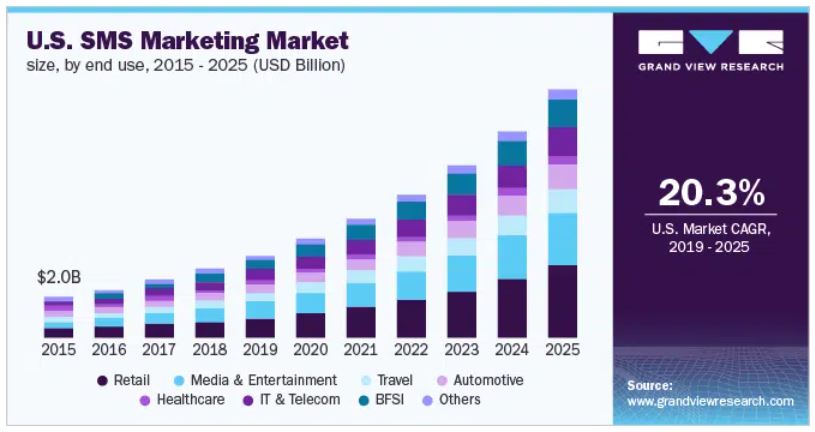
- The text marketing sector within the United States will expand to USD 12.6 billion by 2025 with a compound annual growth rate of 20.3%.
- According to SMS marketing, almost 75% of clients prefer messaging support over making phone calls and engaging in social media.
- The audience response rate through SMS marketing may reach as much as 36%, thus making it an efficient and cost-effective choice.
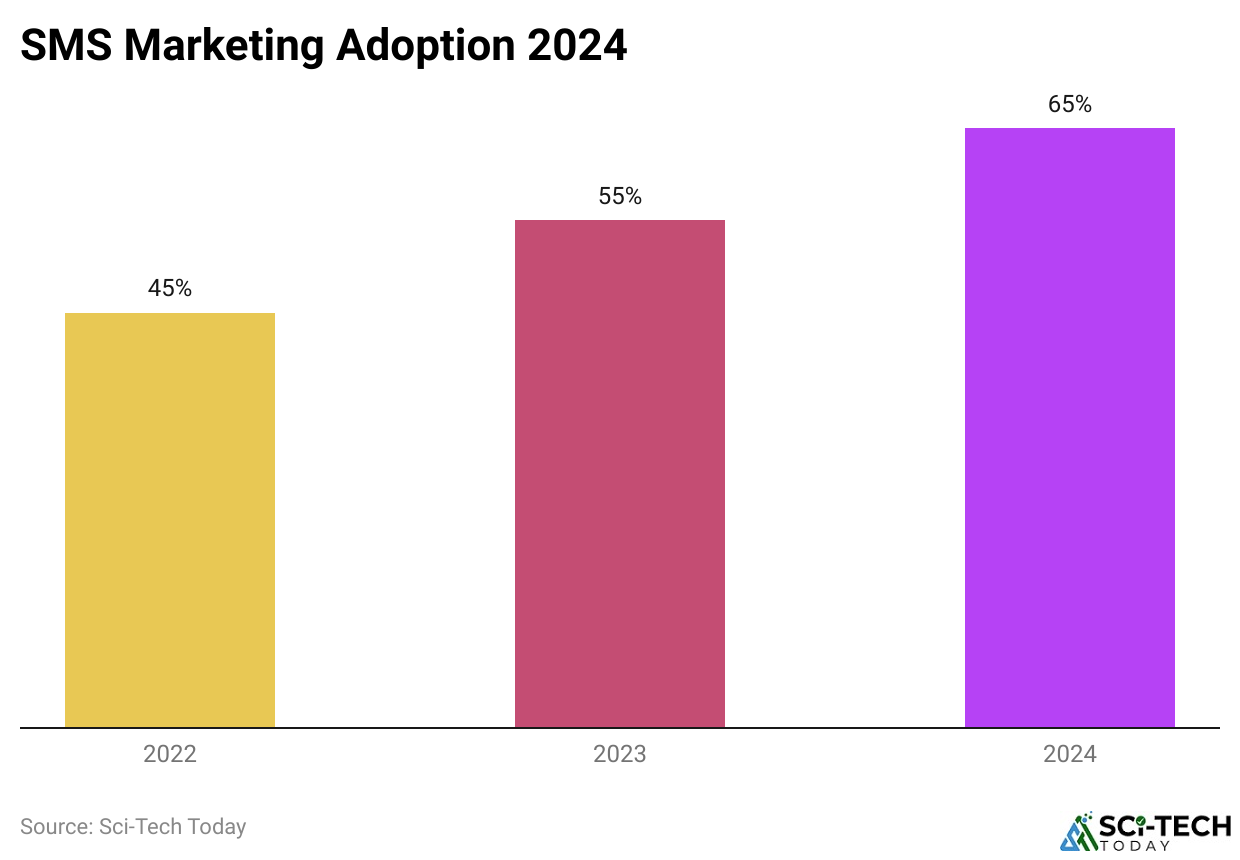
- In 2024, 65% of companies from various sectors implemented SMS services, with constant development from 45% in 2022 and 55% in 2023.
- The retail sector took the lead, with 80%-85% of retailers integrating SMS into their customer engagement strategies, followed by healthcare, e-commerce, and real estate.
- In e-commerce businesses, promotions account for 50% of SMS applications, while retail businesses have an average SMS return on investment of 25 times.
- An estimated 26% of businesses embrace sending promotional campaigns via SMS, whereas 63% do so for customer appointment management.
- The open rates for SMS are 98%, with a conversion rate of 15%, and it takes 1-3 minutes to read 90% of the messages.
- In 2024, consumers had a particular inclination to receive short message service offers, which were very immediate and included time-focused content such as flash sales and exclusive deals.
- 97% of teenagers own mobile phones and send text messages. This means that they can be reached through SMS by businesses.
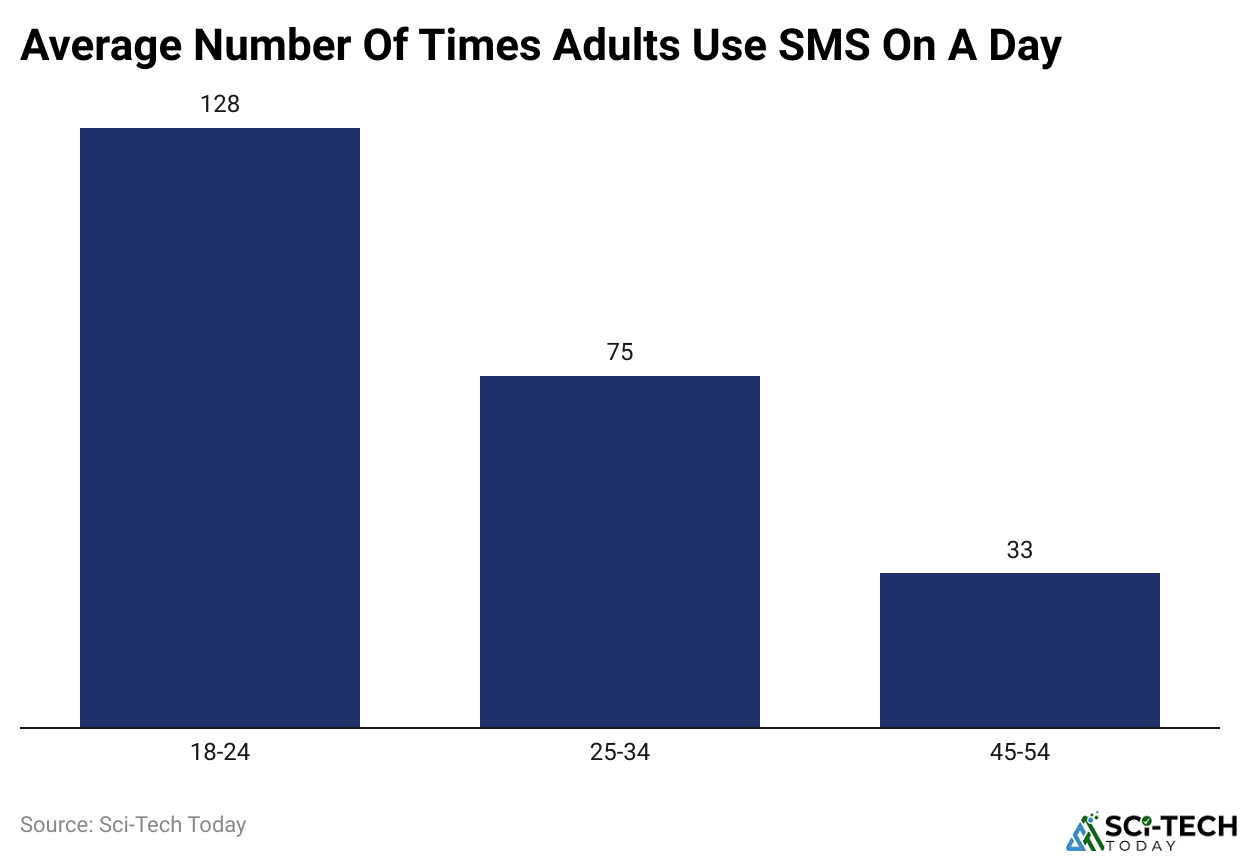
- 18-24-year-olds send approximately 128 text messages per day, 25-34-year-olds send about 75, and 45-54-year-olds send about 33.
- Millennials, on average, will spend 33% of their time on their mobile phones to make and receive texts.
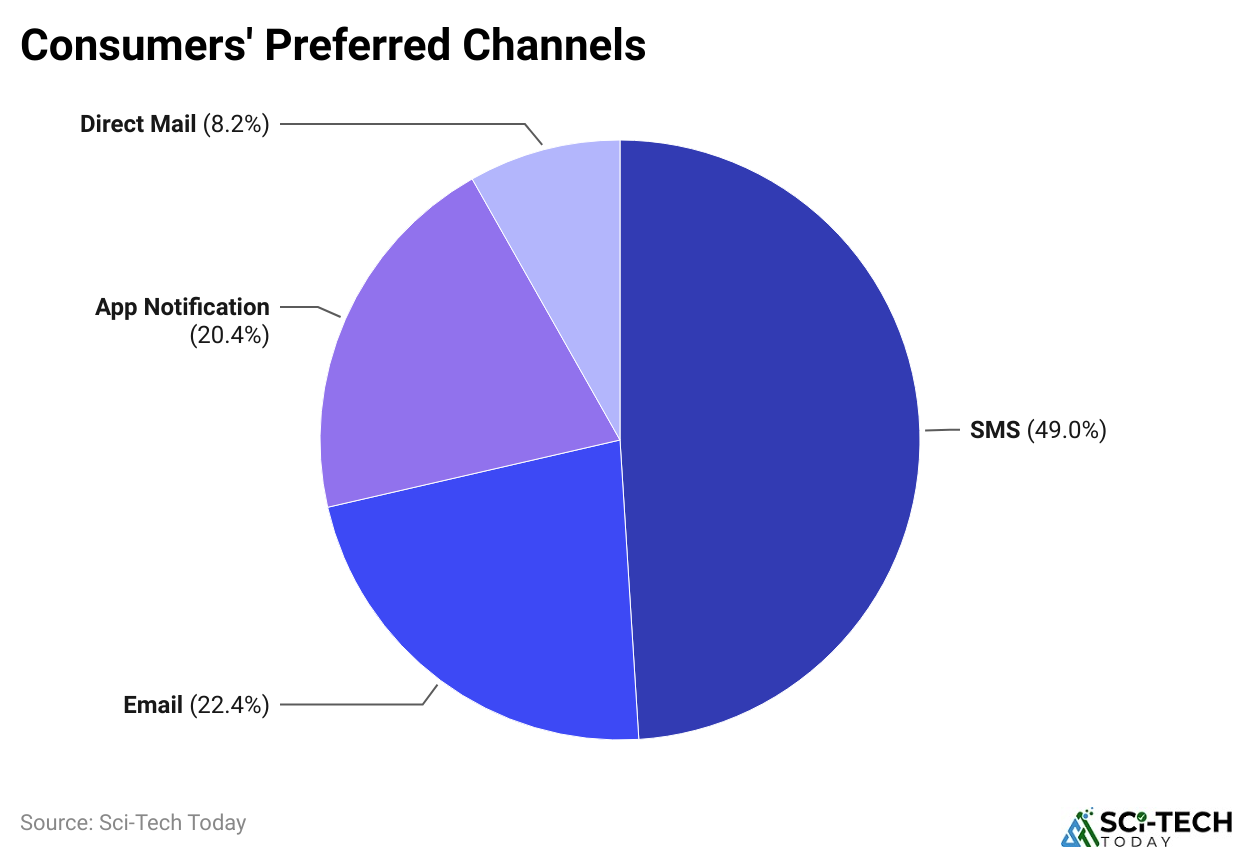
- When it comes to receiving updates regarding loyalty offers, SMS is the most preferred channel by 48% of consumers; 22% prefer emails, 20% app notifications, and 8% prefer direct mail.
- 52% of consumers are receptive to receiving advertising messages via text, 30% like to receive delivery notifications, and 75% like to receive promotional messages via their mobile phones.
- SMS has a click-through rate (CTR) of 9.18%, which outranks that of Facebook (0.90%) and Google AdWords (1.91%).
- In North America, texting wins over every other form of communication as the most preferred (30%), with A/B testing for send times being suggested. Loyal consumers in Europe are more than brand loyalists, as 61% of them are loyal to three other brands, and they engage in SMS subscriptions and repurchases.
- In APAC, the content dissimilarity between email and SMS is preferred since 66 % of consumers usually request SMS coupons.
- Text messages do not require the installation of applications; therefore, they are much more straightforward in terms of communication than emails. 90% of users would, however, prefer SMS for business purposes in the case of reminders of any alerts.
- Business communication using SMS is also found to be within reach and fast, as well as not disruptive to nearly 80% of consumers.
- Text marketing response in 2024 is about 45%, which is relatively higher than that of other marketing channels. This high level of interaction is the reason why text marketing is most preferred when it comes to flash sales and exclusive offers, or short surveys.
- On average, customers receive SMS responses within 90 seconds, which enhances the essence and effectiveness of SMS marketing.
- As of 2024, there are approximately 5.8 billion mobile users across the globe, thus offering a huge market scope for the SMS marketing strategy.
SMS Marketing Market Size
(Source: smscomparison.com)
- Today, SMS marketing is increasingly important to the success of businesses.
- The U.S. SMS services market is expected to grow to 12.6 billion U.S. dollars by 2025, achieving a compound annual growth rate (CAGR) of 20.3%.
- One of the reasons for this noticeable shift is that nearly 75% of customers are reported to prefer using text to reach customer support instead of calling or even posting on social media platforms.
- This change focuses on the ease of conducting advertising via text message, as some online merchants have recorded up to a 36% click-through rate via SMS.
- Such tendencies are encouraging several businesses to adopt the tactical approach of text marketing since it is straightforward and economical as far as reaching customers is concerned.
SMS Marketing Adoption
(Reference: smscomparison.com)
- Research shows that the year 2024 saw a notable increase in the use of SMS marketing, as approximately 65% of companies in various industries embraced SMS as a marketing tool. This is a remarkable improvement from the recent past.
- This somewhat consistent and gradual increase every year indicates a growing trend in the use of text marketing as more and more businesses take advantage of its potential to engage with customers in a more direct and personal manner.
- The ever-increasing rate of acceptance, in turn, reinforces the positioning of SMS as an effective device for engaging customers.
SMS Marketing Usage by Industry
(Reference: smscomparison.com)
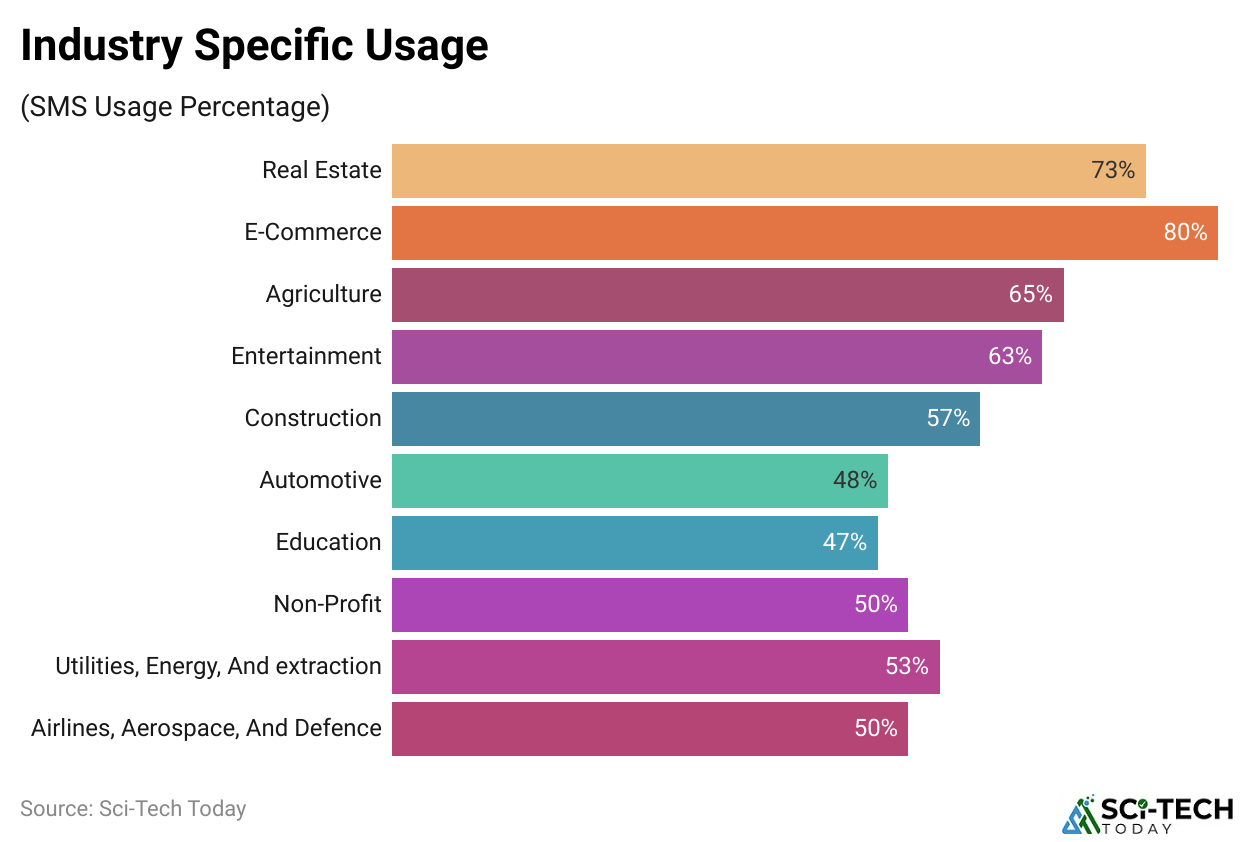
- Retail, in particular, is the top sector that has embraced SMS marketing, with about 80% to 85% of retailers using text messaging to enhance customer connections.
- Other sectors that have greatly adopted SMS include e-health, e-commerce, and real estate.
- The benefits of SMS are in its personalized, simple, and cheap attributes that enable timely reminders, updates, and direct offers to the intended audience.
- In the case of e-commerce, up to 50% of SMS is used to advertise promotional offers.
- However, based on the customer survey, the retail business is mostly associated with the usage of SMS – 47%.
- Hence, SMS marketing is also one of the ways retailers make money, where the average expected return is 25x.
- SMS is highly utilized in industries such as retail and e-commerce, healthcare, real estate, and many more.
- Real estate also leverages SMS marketing to inform prospects of new properties for rent or sale, as well as the current market trends. It is also known that all businesses communicate with customers using this medium, especially during unfortunate events.
- Approximately 26% of organizations employ this means to communicate about promotional offers and discounts and to provide information to clients, while around 63% arrange client appointments to minimize non-attendance.
SMS Marketing by Customer Engagement
- Marketing through SMS has an open rate of approximately 98%, together with average click-through rate figures ranging from 19% to 35%, depending on the type of message and the industry.
- This enhances engagement, resulting in an average conversion rate of nearly 15%, which makes it possible to say that SMS is one of the greatest tools in digital marketing.
- This, too, is significant because 90% of the messages are usually read within one to three minutes of their arrival.
- Engagement patterns have changed, particularly in 2024, as there is a strong preference among consumers towards text messages that are instantly helpful, for instance, exclusive offers, flash sales, or time-bound information.
- This change emphasizes the need for businesses to ensure there is relevant, quality content in the SMS campaigns since customer demand is on the rise.
SMS Marketing Demographics
(Reference: smscountry.com)
- An impressive 97% of the teen population owns a mobile phone, and almost all are actively involved in texting, enabling businesses to reach out to them with ease.
- Globally, an average of 23-27 billion text messages is sent each day.
- When it comes to the age groups in use of texting os, ages 18-24 send 128 text messages on a daily average, while 25-34-year-olds send around 75 messages.
- For the 45-54-year-old age bracket, the average daily text messages sent via SMS is 33. In addition to that, millennials text approximately 33% of the time they are on their mobile devices.
SMS Marketing by Consumers’ Preferred Channels
 (Reference: textdrip.com)
- As per consumers’ preference in the loyalty update channels from brands, SMS leads the ranks, with 48% of the respondents not preferring text messages.
- The other channels include, but are not limited to, email (22%), app notifications (20%), and direct mail (8%).
- Further research indicates that 52% of consumers do not mind receiving promotional texts, 30% appreciate delivery updates via SMS, and 75% are willing to receive special offers through texts.
- Text messaging also enjoys a high click-through rate compared to other advertising platforms, which are 9.18% CTA for text messaging services, Facebook at 0.90%, and Google AdWords at 1.91%.
- Moreover, 90% of the customers also regard loyalty programs sent through sms as being useful.
SMS Marketing by Regions
- North America: Practice Majors important le par SMS, 30% of the people cite it as the most preferred channel of communication, while the global average is 24%.
- North American consumers are also the ones most likely to purchase things and have them done before noon. Even then, this varies, therefore suggesting that brands should A/B test send times very frequently in this region compared to Europe and the APAC regions.
- However, North Americans are more tolerant of receiving more than one SMS in a week. Still, they favor opcode even more than non-promo and informational messages.
- Europe: European consumers enjoy and demonstrate the highest level of brand devotion in the world. 61% of respondents confessed to being loyal to three brands or more, including the fewest NA respondents, 45%, and APAC ones, 48%.
- Besides, they are the most active in subscribing to multichannel SMS ‘brands’, as 46% tend to follow four or more ‘brands’ and 38% in North America, enabling them to have a full range of options.
- In Europe, SMS is functional in converting new customers into loyal ones, and this information is consistent with internal market studies; 23% of European people made SMI purchases 4-5 times this year, in contrast to 18% in the USA and 17% in the Asia-Pacific region.
- APAC: In the context of APAC, the potential for the purchase of a short message service is one of the most promising, for half of the respondents agree that a discount will render them able to register a sms subscription, as opposed to the global directory, which is 59%.
- APAC consumer behavior results in less tolerance towards SMS campaigns, optimally once a week, and content differentiation is required; 40% of APAC respondents feel it is boring to receive the same content via email and SMS channels as opposed to 32% in North America and 31% in Europe.
SMS Marketing Effectiveness
- At the moment, SMS has become an integral element of marketing strategies, as it helps reach customers through mobile phones, as well as computers or laptops.
- This method of communication is relatively easy to use, as it does not require installing a certain program for receiving messages, which makes it quite popular among customers.
- Additionally, SMS texts are delivered, unlike emails that may get lost or be forgotten in the inbox.
- 90% of the Americans surveyed say that they would prefer to get such notifications or reminders alerting them to some communication that they would have to carry out with the person or an organization using a text message.
- More than half of all consumers also report a preference for texting for customer service purposes rather than engaging in voice telephone conversations, and Americans are statistically much more likely to receive and send text messages than make voice calls.
- SMS was also favored the most for loyalty program updates, with 48% of consumers choosing this method over others, including email, in-app notifications, and direct mail.
- Moreover, 52% of the respondents do not mind receiving marketing texts, while 30% appreciate being updated about the progress of delivery via SMS.
- Sales offered through texts are also very common, with 75% of consumers wanting them. The click-through rate of SMS is 9.18%, which is quite high compared to other media such as Facebook (0.90%) and Google AdWords (1.91%).
- Additionally, 90% of customers prefer loyalty programs that attract them through SMS. This makes the channel useful for many companies looking to create and strengthen customer connections.
Challenges and Practices
- There are definitely pros and cons when it comes to running text marketing programs, but when you are aware of those in advance, things become much easier.
- One of the biggest hurdles is managing subscriptions as your list of contacts grows via text message marketing software.
- It becomes very easy to develop, schedule, test, and execute your text marketing program by using the best text marketing software.
- Let users subscribe to such messages before sending any text messages.
- Specifically follow TCPA and 10DLC regulations while conducting campaigns in the United States.
- Always provide clear instructions on how to unsubscribe from any message.
- Make sure that every audience group is addressed to make messages relevant.
- Make sure that messages are customer-oriented by considering their likes and other things.
- Restrict some periods during which messages are sent to recipients so that they are not overwhelmed with information.
- SMS marketing shows that the average SMS unsubscribe rate does not exceed email-based unsubscribe rates, which are about 10% to 15%.
- Tuesday, Wednesday, and Thursday afternoons are also said to be the best days to send an SMS, as people are most likely to engage with it during their work hours.
- Messaging will also matter in SMS marketing, as messages coming in certain hours may cause a rise in the opt-out rates.
Final Thoughts
SMS Marketing in the Year 2026 will be one of the major components that will form part of the marketing plans that many businesses will have across the globe due to its interactive nature and personalization. The success of SMS marketing in the future will arise from the increased investments in personalization, automation, and customer engagement because it has high returns on investment, fast delivery, and high open rates.
From the point of view of brands and services, text message marketing encourages existing customers and potential ones to patronize the business and make purchases, considering that the world has shifted to mobile devices.
FAQ
SMS marketing is a direct digital marketing strategy where businesses send promotional or informational text messages to mobile devices. Because it is a permission-based channel, companies must obtain a customer’s explicit consent before sending texts.
SMS marketing uses text messages to share promotions, updates, and alerts with customers who opt in. Effective campaigns are concise, time-sensitive, and hyper-personalized.
In customer and business communication, SMS messages are primarily categorized into two main types based on their purpose: Transactional and Promotional.

Sources