








Beginning
AI In Career Development Statistics: Artificial intelligence is now a part of employees’ careers. From job searching to skill building, AI tools are now helping people make smarter choices about their professional lives. Many job seekers use AI-powered platforms to find job openings that match their skills, while professionals use AI to learn new skills and improve their resumes. Companies are also using AI to find the right talent, train employees, and help workers grow in their roles. AI tools like career coaches, chatbots, and learning apps make it easier for people to get guidance anytime they need it.
As AI becomes a bigger part of our work lives, it is important to understand how it is changing career growth. This helps both job seekers and companies stay ready for the future of work.
Key Choices by the Editor
- Software engineers represented the largest share of in-demand AI job roles among the top 10, at 8.48%.
- 38% of workers are concerned about job displacement and privacy risks linked to AI.
- Python was the leading AI-related skill in U.S. job postings in 2025, appearing 259,000 times, up 391% from 2013 to 2015.
- Millennials reported the highest AI use in job applications, at 78% in the U.S. and 79% in the UK.
- AI use across organizations rose from 72% in 2024 to 89% later in 2026, with the share scaling AI in at least one business function increasing from 38% to 44% between 2025 and 2026.
- 81% of executive or senior managers said AI improves their productivity, compared with 76% of individual contributors.
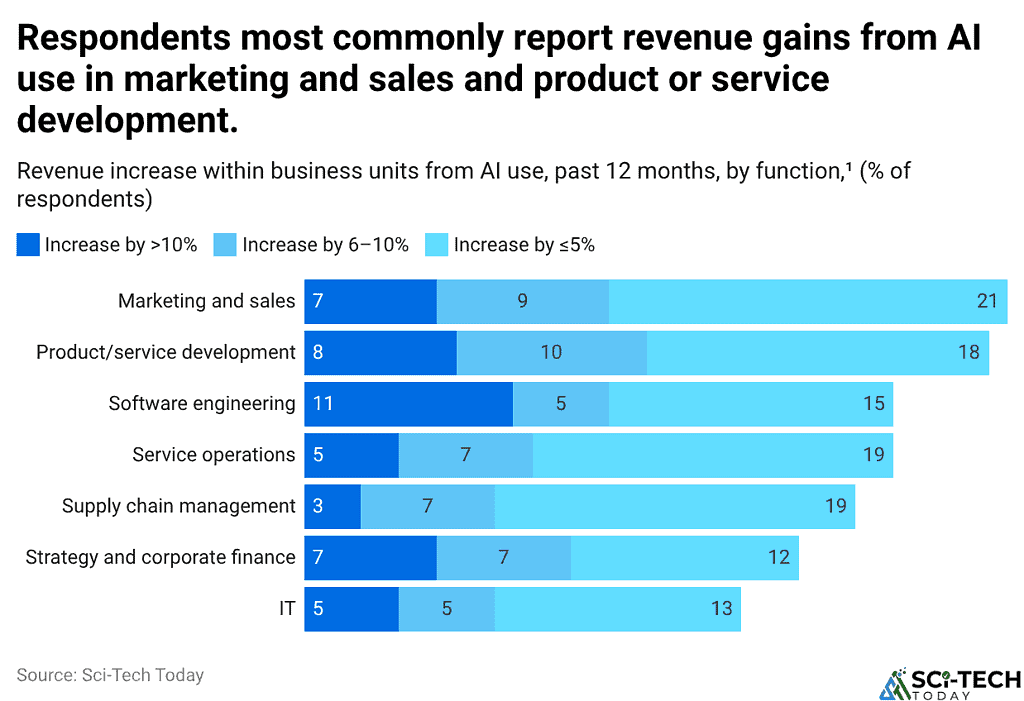
- In software engineering, 11% of organizations reported revenue gains above 10% from using AI, the highest share among business functions measured.
Recent AI in Career Development Developments
- In September 2025, OpenAI announced a Jobs Platform and Certifications initiative, committing to certify 10 million Americans in AI skills by 2030.
- On January 6, 2026, LinkedIn reported that 93% of recruiters planned to increase AI use, while 81% of job seekers used or planned AI use.
- On January 13, 2026, LinkedIn reported 1.3 million new AI-enabled jobs globally over two years; U.S. AI-literacy job postings rose 70% year over year.
- On February 10, 2026, Microsoft expanded Saudi AI skilling, targeting 3 million additional learners by 2030 after training 800,000 people.
- On April 3, 2026, Microsoft committed USD 10 billion in Japan through 2029 and pledged AI training for 1 million engineers and developers.
- On April 21, 2026, Microsoft and NABTU expanded their AI-training partnership after training 1,500 instructors across skilled-trades training centers.
- On April 23, 2026, Microsoft pledged to help 3 million Australians gain workforce-ready AI skills by 2028, backed by USD 18 billion in investment.
- On May 11, 2026, the U.S. Economic Development Administration opened an approximately USD 25 million AI Upskill Accelerator Pilot Program.
- On May 14, 2026, Anthropic and the Gates Foundation launched a USD 200 million partnership supporting career guidance and economic-mobility tools over 4 years.
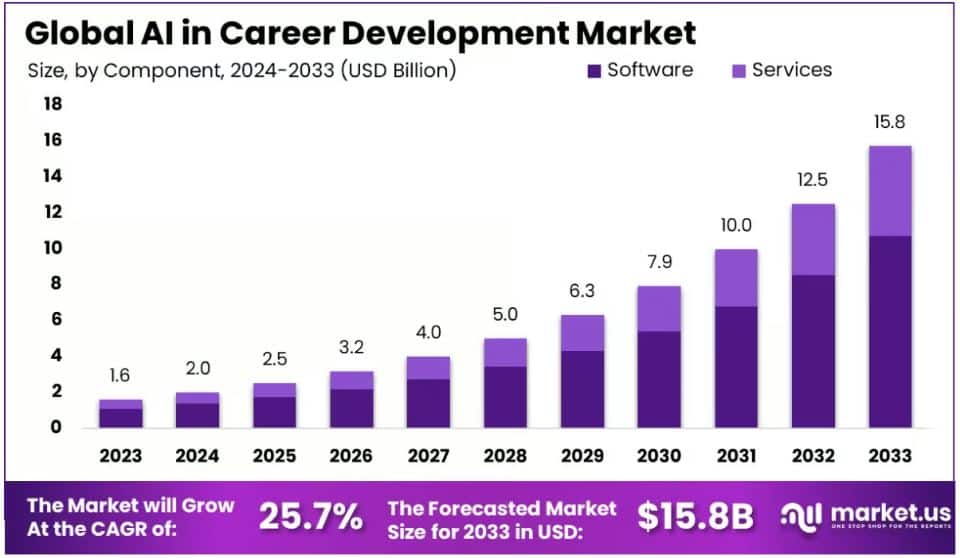
Global AI in Career Development Market Growth
(Source: market.us)
- The global AI in career development market was valued at USD 2.0 billion in 2024 and is projected to reach USD 2.5 billion in 2025.
- The market is forecast to grow to USD 3.2 billion in 2026 and USD 4.0 billion in 2027.
- The market is projected to reach USD 10.0 billion in 2031, USD 12.5 billion in 2032, and USD 15.8 billion in 2033.
- The forecast indicates a compound annual growth rate of 25.7% between 2024 and 2033.
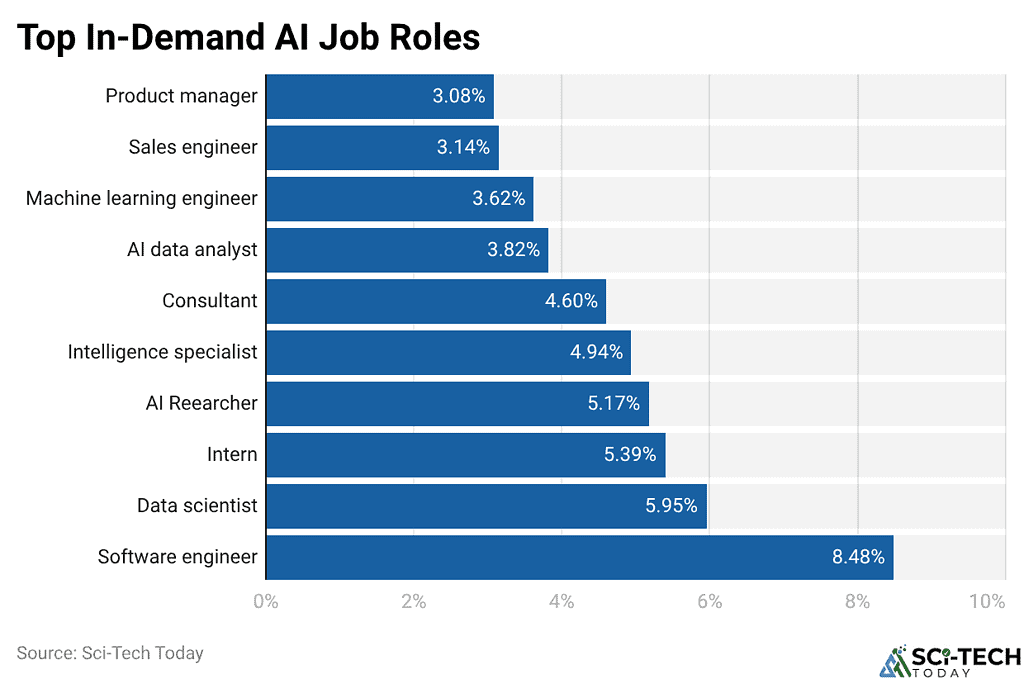
Top In-Demand AI Job Roles
- Software engineers represented the largest share of AI jobs among the top 10 in-demand roles, at 8.48%.
- Data scientists accounted for 5.95% of total AI jobs in the top 10 in-demand roles.
- Intern positions represented 5.39%, while AI researchers accounted for 5.17%.
- Intelligence specialists comprised 4.94% of AI jobs, and consultants represented 4.60%.
- AI data analysts accounted for 3.82%, while machine learning engineers represented 3.62%.
- Sales engineers comprised 3.14% of AI jobs, and product managers accounted for 3.08%.
(Reference: ebsedu.org)
Responsible AI Use in Career Development
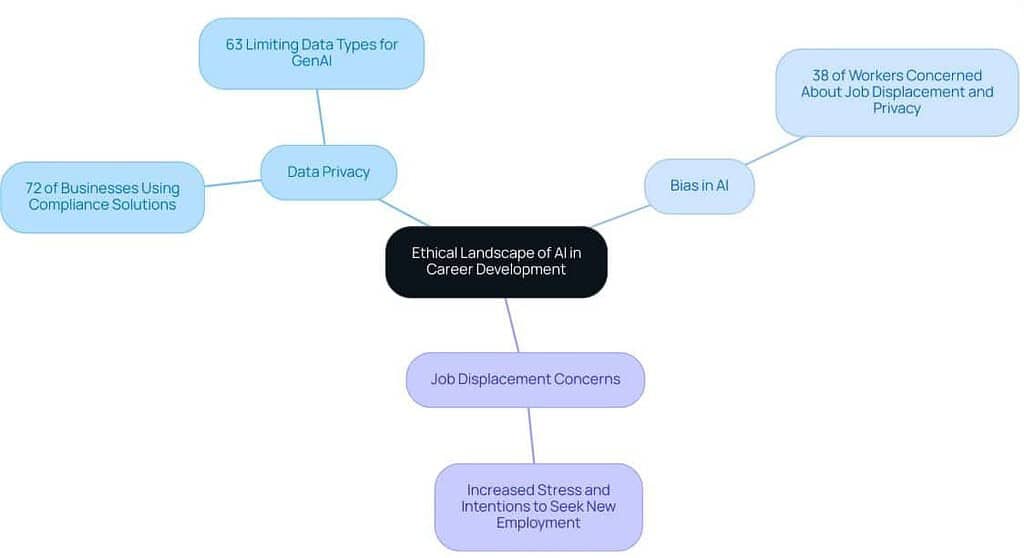
- AI career-development tools often require personal information, so users should choose platforms with strong privacy and security practices.
- 72% of businesses use compliance solutions to meet data-privacy rules.
- 63% of organizations limit the types of data employees can enter into generative-AI applications.
- AI algorithms can create biased job recommendations or assessments if their training data or design is unfair.
- 38% of workers are concerned about job displacement and privacy risks linked to AI.
- Cybersecurity experts expect AI-driven cyberattacks and AI-based defenses to become an ongoing long-term challenge.
- Job seekers should review privacy policies, avoid sharing unnecessary personal data, and use AI recommendations alongside human judgment.
(Source: finalroundai.com)
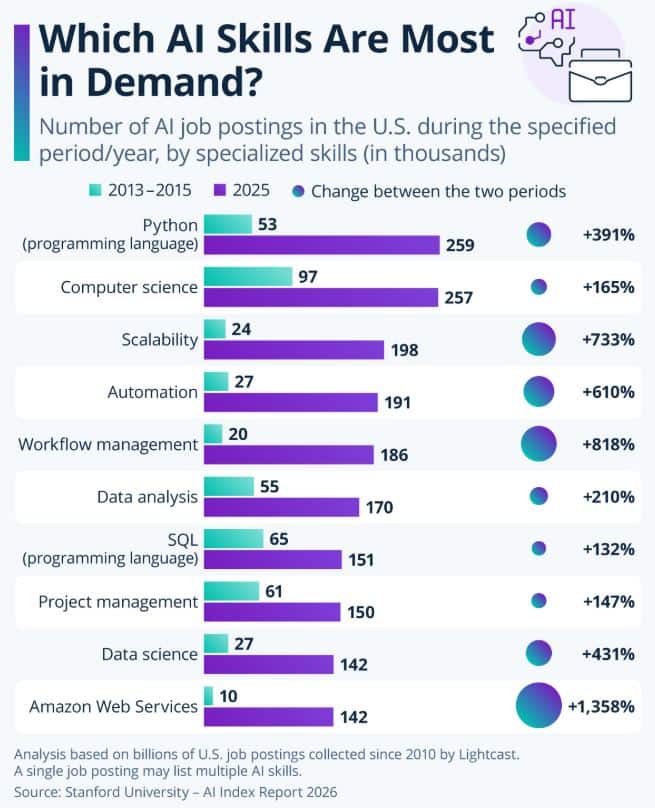
Most In-Demand AI Skills in the U.S.
- Python was the leading AI-related skill, with 259,000 U.S. job postings in 2025, up 391% from 53,000 in 2013–2015.
- Computer science appeared in 257,000 job postings, increasing 165% from 97,000 postings in 2013–2015.
- Scalability was listed in 198,000 job postings, rising 733% from 24,000 postings in 2013–2015.
- Automation appeared in 191,000 job postings, representing a 610% increase from 27,000 postings in 2013–2015.
- Workflow management reached 186,000 job postings, up 818% from 20,000 postings in 2013–2015.
- Data analysis appeared in 170,000 job postings, an increase of 210% from 55,000 postings in 2013–2015.
- SQL was included in 151,000 job postings, rising 132% from 65,000 postings in 2013–2015.
- Project management reached 150,000 job postings, increasing 147% from 61,000 postings in 2013–2015.
- Data science appeared in 142,000 job postings, up 431% from 27,000 postings in 2013–2015.
- Amazon Web Services appeared in 142,000 job postings, recording the largest increase of 1,358% from 10,000 postings in 2013–2015.
(Source: statista.com)
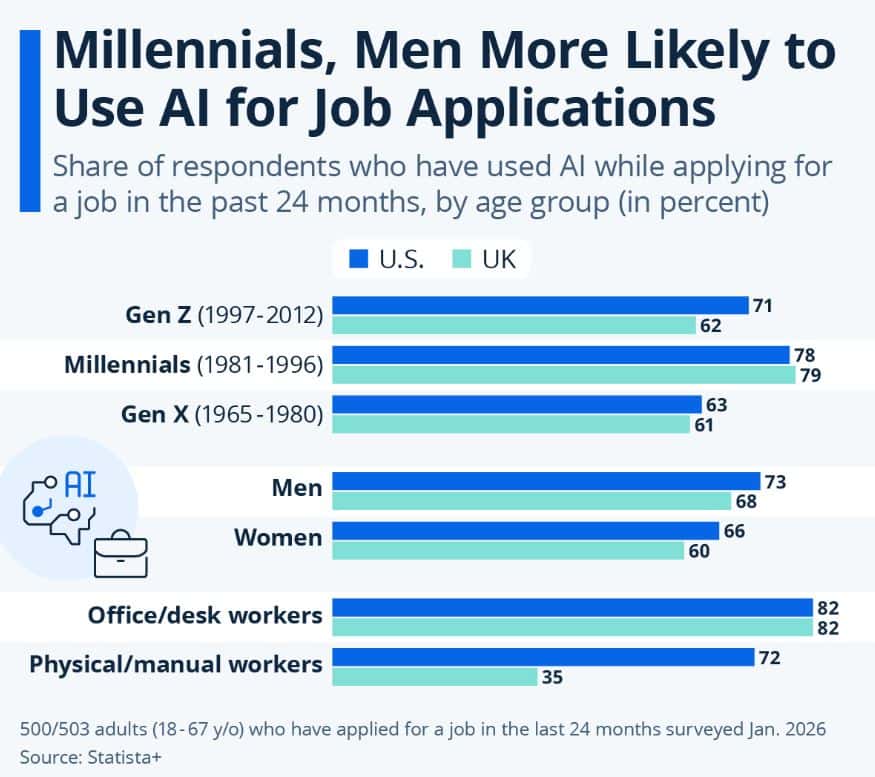
AI Use in Job Applications by Demographic Group
- 71% of U.S. Gen Z job applicants and 62% of UK Gen Z applicants used AI during job applications in the past 24 months.
- Millennials reported the highest AI use: 78% in the U.S. and 79% in the UK.
- Among Gen X applicants, 63% in the U.S. and 61% in the UK used AI when applying for jobs.
- 73% of U.S. men and 68% of UK men used AI for job applications.
- AI use among women reached 66% in the U.S. and 60% in the UK.
- Office and desk workers recorded the highest adoption, with 82% using AI in both the U.S. and UK.
- Physical and manual workers showed a large gap: 72% in the U.S. used AI, compared with 35% in the UK.
- The survey covered 500 U.S. adults and 503 UK adults, aged 18–67, who had applied for a job within the previous 24 months; it was conducted in January 2026.
(Source: statista.com)
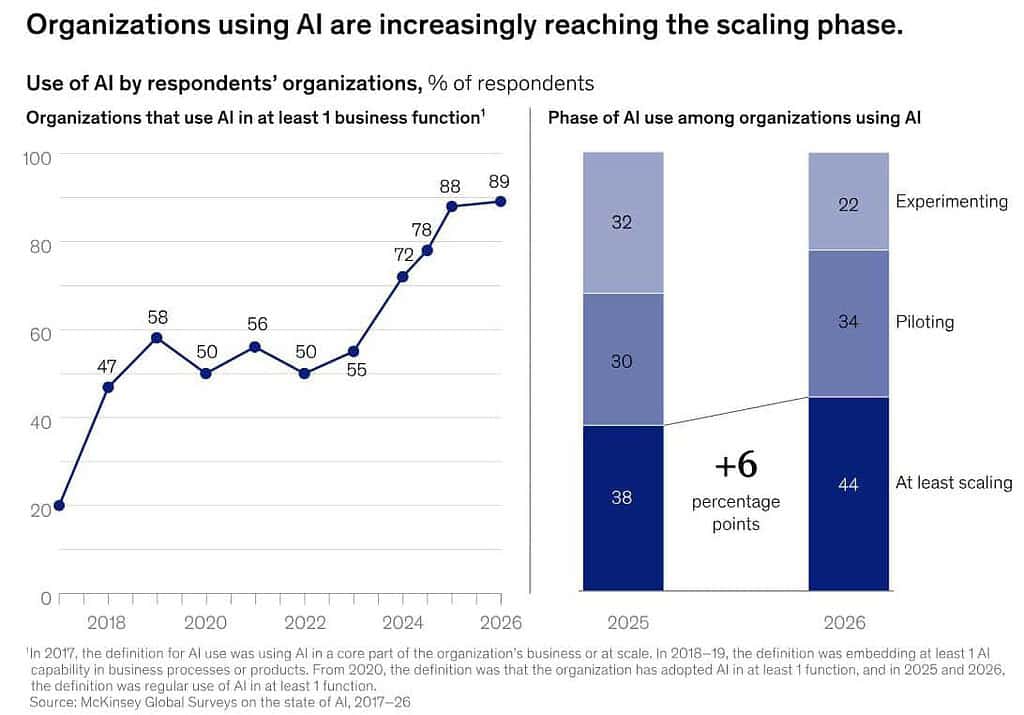
Growth Rate after Using AI in Organizations
- AI use across organizations increased from 72% in 2024, 78% in 2025, 88% in early 2026, and 89% later in 2026.
- Among organizations using AI, the share scaling AI in at least one business function increased from 38% in 2025 to 44% in 2026.
- The share piloting AI rose from 30% in 2025 to 34% in 2026.
- The share experimenting with AI declined from 32% in 2025 to 22% in 2026.
- The rise in organizations scaling AI reached 6 percentage points between 2025 and 2026.
(Source: mckinsey.com)
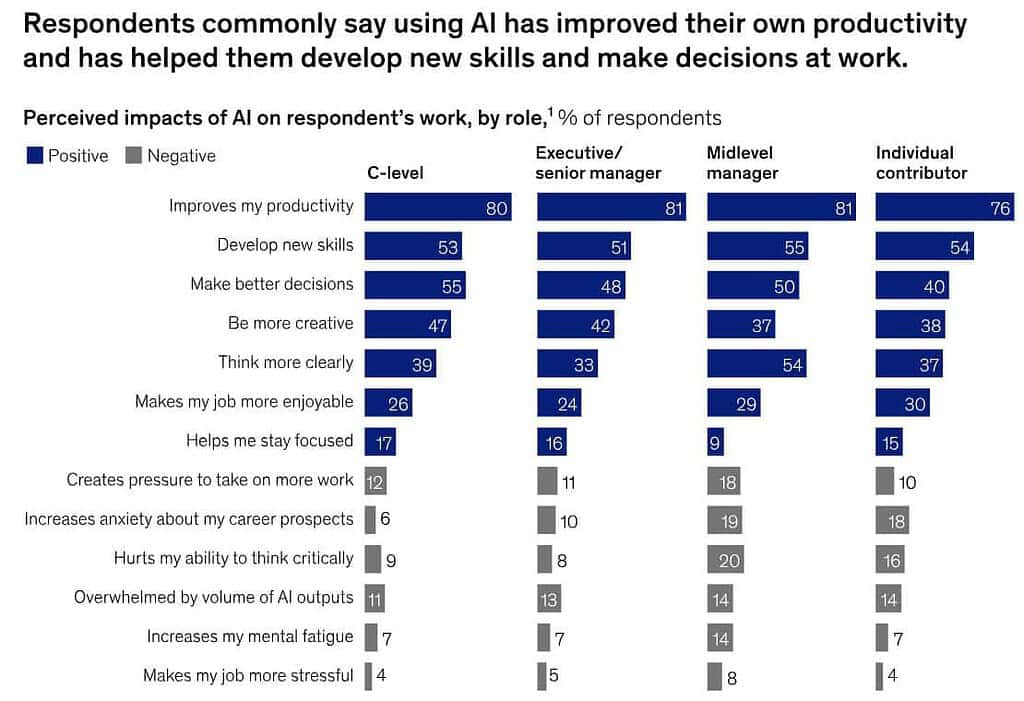
How AI Affects Employee Productivity and Work
- 76% of individual contributors said AI improves their productivity, compared with 80% of C-level leaders and 81% of executive or senior managers.
- 54% of individual contributors said AI helps them develop new skills, compared with 53% of C-level leaders, 51% of executives, and 55% of mid-level managers.
- 40% of individual contributors said AI helps them make better decisions, compared with 55% of C-level leaders, 48% of executives, and 50% of mid-level managers.
- 38% of individual contributors said AI makes them more creative, compared with 47% of C-level leaders, 42% of executives, and 37% of mid-level managers.
- 37% of individual contributors said AI helps them think more clearly, compared with 39% of C-level leaders, 33% of executives, and 54% of mid-level managers.
- 30% of individual contributors said AI makes their work more enjoyable, compared with 26% of C-level leaders, 24% of executives, and 29% of mid-level managers.
(Source: mckinsey.com)
How AI Use in Business Functions Helps in Revenue Growth
- In marketing and sales, 7% reported gains above 10%, 9% reported 6%–10%, and 21% reported gains of 5% or less.
- In product and service development, 8% reported gains above 10%, 10% reported 6%–10%, and 18% reported gains of 5% or less.
- In software engineering, 11% reported gains above 10%, 5% reported 6%–10%, and 15% reported gains of 5% or less.
- In service operations, 5% reported gains above 10%, 7% reported 6%–10%, and 19% reported gains of 5% or less.
- In supply-chain management, 3% reported gains above 10%, 7% reported 6%–10%, and 19% reported gains of 5% or less.
- In strategy and corporate finance, 7% reported gains above 10%, 7% reported 6%–10%, and 12% reported gains of 5% or less.
- In IT, 5% reported gains above 10%, 5% reported 6%–10%, and 13% reported gains of 5% or less.
(Reference: mckinsey.com)
How AI is Changing Workforce Skills
- Workers can expect 39% of their current skills to become outdated or substantially change between 2025 and 2030.
- 77% of employers plan to reskill or upskill their workforce so employees can work more effectively with AI tools.
- 69% of respondents plan to recruit employees with skills in AI-tool design and improvement.
- Skill requirements are changing 66% faster in AI-exposed jobs than in the least AI-exposed roles.
- The rate of change in AI-exposed job skills is up from 25% in the previous year.
- In 2024, 8.8% of ICT job advertisements required AI skills, the highest proportion across industries.
- Demand for AI skills in the information and communication sector increased from 1.4% in 2012 to 9.5% in 2024.
Ending
AI is changing how people manage their careers, from job hunting and building resumes to learning new skills and working more productively. More people across every generation and job type are using AI, with millennials and office workers using it the most for job applications. Employers expect big changes in the skills workers need, so many companies are planning large reskilling programs to keep up.
AI is clearly helping people be more productive and learn new skills, but how much it boosts revenue depends a lot on the type of work. There are also real worries about bias, privacy, and losing jobs to AI.
FAQ
AI analyzes a person’s skills, interests, and work history to suggest suitable career paths, recommend relevant courses or certifications, and highlight in demand roles that match their background and goals.
Yes, many AI tools can review resumes for formatting, keyword optimization, and clarity, and suggest improvements based on job descriptions to help candidates better match applicant tracking systems and hiring criteria.
AI-powered platforms can simulate mock interviews, analyze responses for clarity and confidence, provide feedback on speech patterns, and help candidates practice answers to common or role-specific interview questions.
AI can compare a person’s current skills against those required for a target role or industry trends, helping identify gaps and recommend specific courses, certifications, or experiences to close them.
AI career tools can provide useful, data driven insights, but their accuracy depends on the quality of data used and should be combined with personal judgment, mentorship, and research rather than relied on exclusively.
Companies use AI to create personalized learning paths, recommend internal mobility opportunities, track skill development, and match employees with mentors or projects that align with their career goals.