









Basics of Biologics
Biologics Statistics: Biologics are modern medicines made from living cells and organisms. Unlike regular chemical drugs, they are larger and more complex, and they are produced using advanced biotechnology. These medicines include vaccines, monoclonal antibodies, gene therapies, and protein-based treatments.
Biologics work by targeting specific aspects of disease, making them more precise and effective for many serious conditions, such as cancer, diabetes, autoimmune disorders, and rare genetic diseases.
Today, biologics are changing healthcare by enabling more targeted and personalized treatments. However, they are also complex to produce and require careful storage and handling.
Editor’s Selection
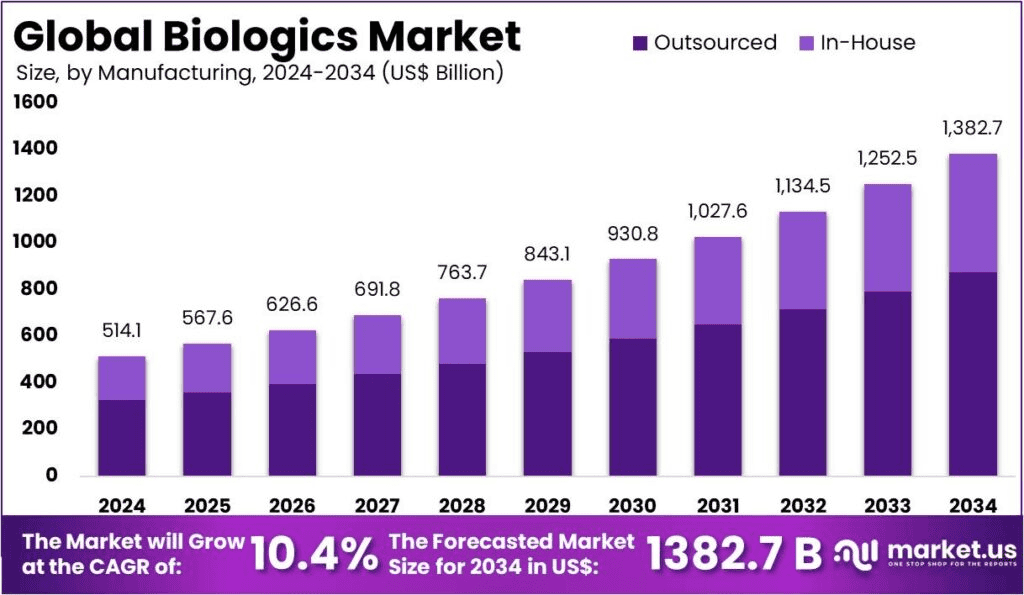
- The global biologics market is valued at USD 567.6 billion in 2025 and is projected to reach USD 626.6 billion in 2026.
- Coherent Market Insights shows that monoclonal antibodies lead the market by product type, holding a 33.6% share in 2026.
- Branded drugs dominate drug classification with a 53.6% share.
- The oral route of administration remains the most commonly used method, accounting for 39.6% of use.
- North America remains the leading region with a 36.7% market share in 2026.
- The biologic excipient market is valued at USD 1.56 billion in 2025 and is expected to reach USD 2.43 billion by 2036.
- Biological materials are grouped for shipping as infectious substances, biological products, genetically modified organisms, or medical waste.
- About 25% of the biologic pipeline targets large patient groups with limited small-molecule alternatives.
- The cost to approve a generic drug is USD 2 million to USD 3 million, taking 2 to 3 years with 20 to 50 patients.
- By 2030, biologics and gene therapies are expected to account for over 60% of new drug approvals.b
- Specifically, Keytruda, with applications in oncology indications, is expected to represent 4% of total biologic sales in 2027.
Biologics Market Size
(Source: market.us)
- In 2025, the global biologics market, spanning both outsourced and in-house manufacturing, is valued at USD 567.6 billion.
- In 2026, the market is projected to reach USD 626.6 billion.
- By 2034, the market is forecast to hit USD 1,382.7 billion, growing at a CAGR of 10.4% over the full forecast period.
- In 2025, the United States is expected to record over 2 million new cancer cases.
- Around 7.2 million Americans aged 65 and above are projected to live with Alzheimer’s disease in 2025.
- Biologics like Leqembi and mRNA vaccines such as Pfizer’s Comirnaty are improving treatment outcomes and expanding use cases.
- Regulatory support from agencies like the FDA is helping speed up approvals for gene and cell therapies.
Biologics Statistics By Products
- According to the Nova Advisor report analyses, in 2025, monoclonal antibodies generate 69% of total biologics revenue.
- Vaccines account for 15% of the market, while recombinant proteins contribute 5%.
- Antisense and RNAi therapeutics hold 3%, and other biologic products represent the remaining 8% of global sales.
By Region
(Source: novaoneadvisor.com)
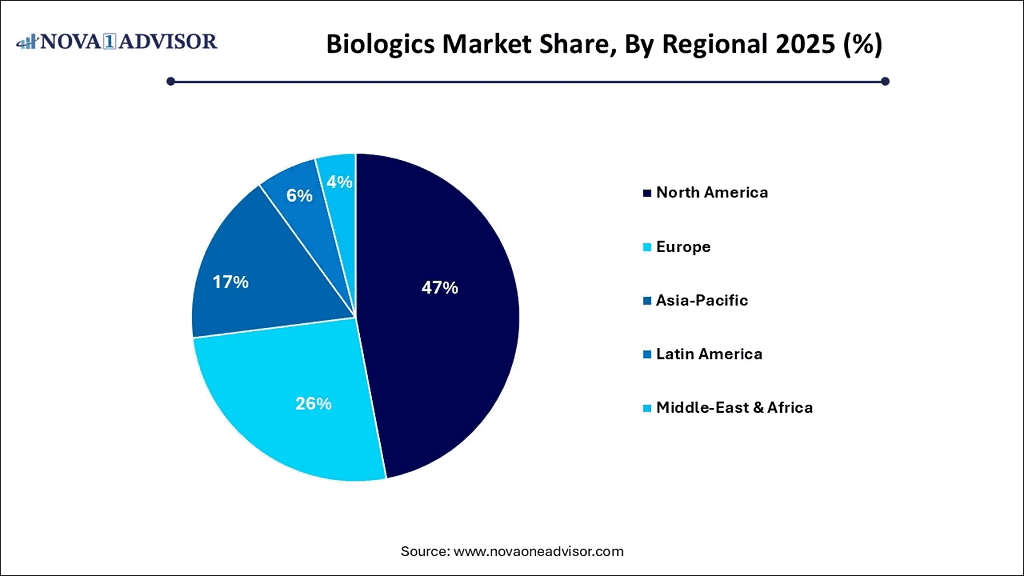
- As of 2025, North America leads with 47% of global biologics revenue.
- Europe holds 26%, followed by Asia-Pacific at 17%.
- Latin America accounts for 6%, while the Middle East and Africa contribute the remaining 4% of the global market.
Biologic Excipient Market Outlook
- A report published by Future Market Insights shows that the biologic excipient market is valued at USD 1.56 billion in 2025 and is expected to reach USD 2.43 billion by 2036.
- The market is projected to grow at a CAGR of 4.1% from 2026 to 2036.
- An incremental growth opportunity of USD 0.80 billion is expected during 2026 to 2036.
- Polymers are the leading excipient type in 2026 with a 30.1% share.
- Biopharmaceutical manufacturers are expected to account for 65.7% of the end-user category.
- Germany is among the fastest-growing markets with 4.5% growth, followed by the UK at 4%.
Shipping of Biological Materials
- Biological materials are grouped for shipping as infectious substances, biological products, genetically modified organisms, or medical waste.
- Infectious substances are materials that may contain pathogens such as bacteria, viruses, fungi, parasites, or prions that can cause disease in humans or animals.
- Category A infectious substances are highly dangerous and can cause serious illness, permanent disability, or death if exposure occurs.
- These materials are classified under UN2814 when they affect humans and UN2900 when they affect only animals.
- The classification depends on medical history, symptoms, local disease conditions, and expert judgment.
- UN2814 is labeled “Infectious Substance, Affecting Humans,” while UN2900 is labeled “Infectious Substance, Affecting Animals.”
- Category B includes infectious substances that are less dangerous than Category A and are assigned UN3373.
- Both Category A and B materials are classified as dangerous goods.
- They must be shipped in accordance with international IATA regulations.
Self‑Administered Biologics Market Outlook
(Source: factmr.com)
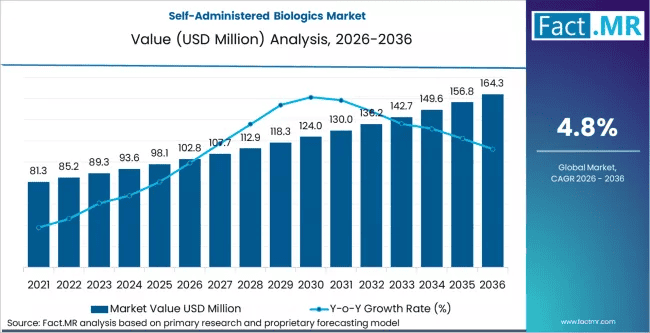
- In 2025, the self‑administered biologics market is valued at USD 95.58 billion, and in 2026, it is expected to reach USD 103.23 billion, growing at around an 8.0% CAGR.
- By 2035, revenues are projected to climb toward USD 141.7 billion.
- China leads growth with a 14.2% CAGR due to improved reimbursement and biosimilar production.
- Canada (11.9% CAGR), the United States (9.8% CAGR), the United Kingdom (6.7% CAGR), and India (12.8% CAGR) show growth driven by different healthcare access and pharma expansion models.
Projected Global Subcutaneous Biologics Market
(Reference: statista.com)
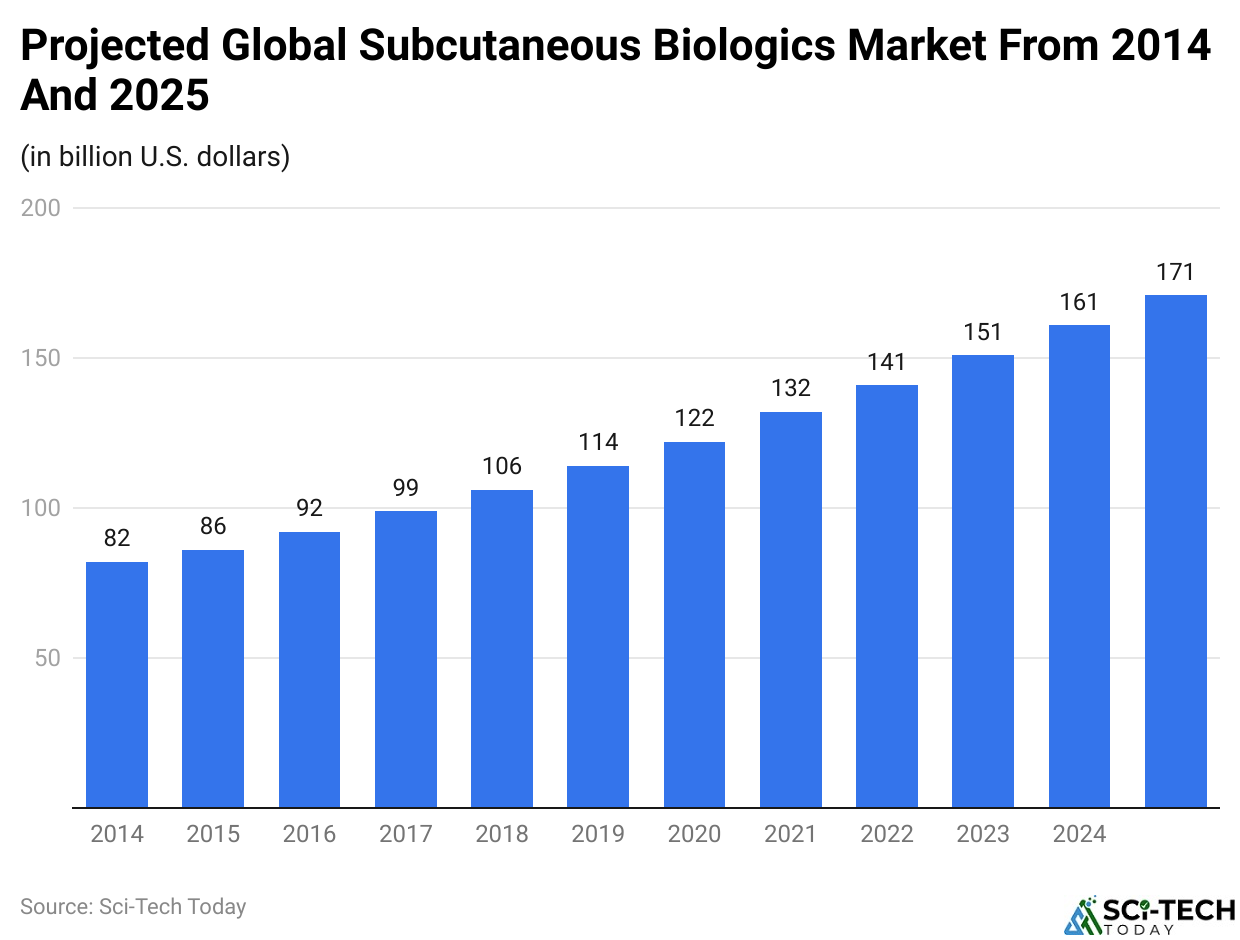
- According to Biologics statistics, the projected market size for subcutaneous biologics in the U.S. billion dollars from 2014 to 2025 is shown in the information given.
- Subcutaneous biologics are medicines injected under the skin, usually to treat various diseases, such as cancers or autoimmune disorders.
- Worldwide, it is estimated that the market size for subcutaneous biologics will reach a whopping 82 billion U.S. dollars in 2014.
- Annual growth is indicated by this constant increase in market value, ramping up to 171 billion U.S. dollars by 2025.
- This growth is expected to increase demand for subcutaneous biologics with each passing year due to improved biotechnology, new treatment development, and the growing patient pool for biologic drugs.
- The market size increased from 82 billion to 86 billion USD from 2014 to 2015. In 2020, the market reached 122 billion and continues to rise to 171 billion by 2025.
Biological Non-traditional Indicators
(Reference: iqvia.com)
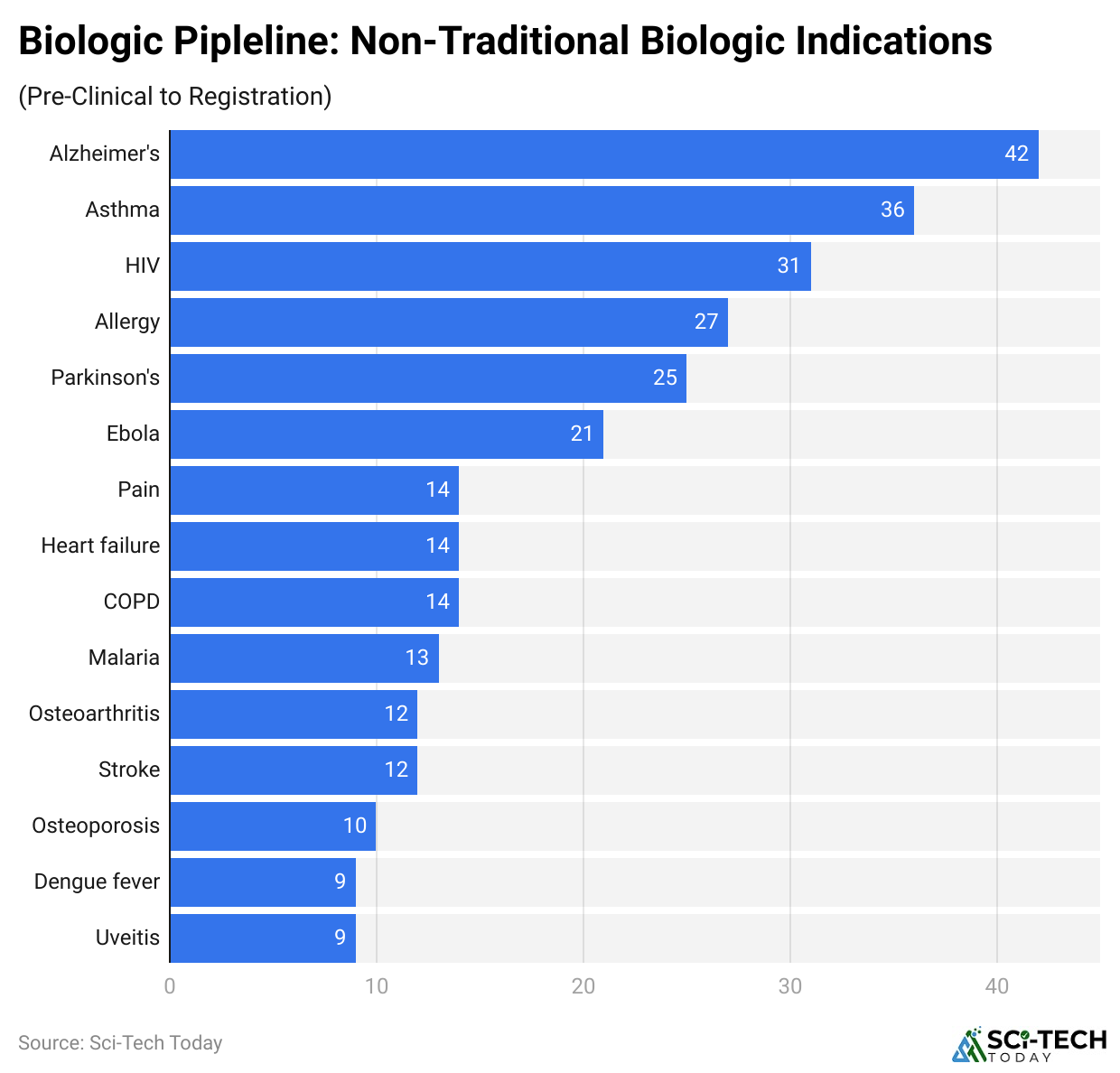
- Biologics statistics show that there is a huge 25% of the current biologic pipeline targeted at indications with very similar characteristics: highly genericised for almost non-existent small molecules and very large patient populations, which might benefit from treatment.
- Indeed, the data describe the number of biologic drug candidates available now under the development pipeline for different non-traditional indications.
- It is observed that Alzheimer’s disease topped the competition with 42 candidates, indicating that there is considerable focused research effort on it.
- Asthma came next, with 36 candidates, while HIV got 31 candidates, indicating progressive efforts geared toward the fight against the agent of infection.
- Biologics statistics show that Allergy, with 27 candidates, made its way deep into the list, followed by 25 candidates in research on Parkinson’s disease, 21 for Ebola, and so on. They reflect different areas of therapeutic priorities.
- Each has 14 candidates for pain, heart failure, and COPD, respectively, thus indicating only a moderate interest in these areas.
- Far lower on the table, 13 candidates could be found for malaria, while for osteoarthritis and stroke, the figure is 12 for each.
- There are 10 for osteoporosis, while 9 each fall under dengue fever and uveitis. This points out that there is very wide coverage of biologics and diseases other than the traditional ones for this intervention.
Biologics Safety Testing Market Outlook
(Source: rootsanalysis.com)
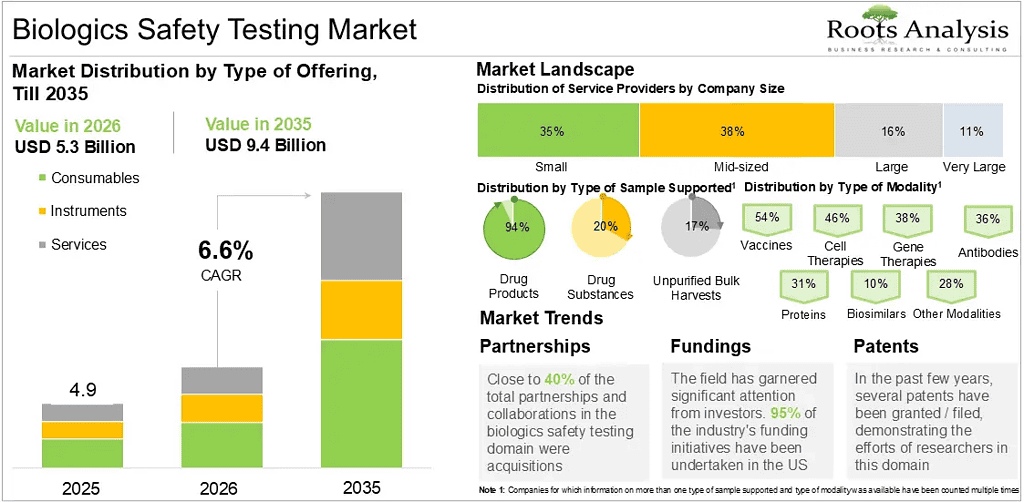
- As of 2025, the biologics safety testing market is valued at USD 4.9 billion.
- In 2026, the market is expected to reach USD 5.3 billion, growing at a 6.6% CAGR toward USD 9.4 billion by 2035.
- Service providers are mainly small (35%) and mid‑sized (38%) companies, with 16% large and 11% very large players.
- Testing focuses on drug products (94%), drug substances (20%), unpurified bulk harvests (17%), covers modalities such as vaccines (54%), cell therapies (46%), gene therapies (38%), antibodies (36%), proteins (31%), biosimilars (10%), and other modalities (28%).
Biologicals and Biosimilars Research and Development Cost
Comparison between the development of different drugs
| Investment | Approval time | Number of patients in studies | |
| Generic drug | US$2 million–US$3 million | 2 to 3 years | 20 to 50 patients |
| Biosimilar | US$100 million–US$200 million | 8 to 10 years | 500 patients |
| Originator biological | US$800 million | 8 to 10 years | 800 to 1,000 patients |
(Source: gabionline.net)
- The above Biologics statistics elaborate on the cost and time difference between various drug types. The investment required for approving a generic drug is generally US$2 million to US$3 million, along with a time frame of two to three years and clinical studies with 20 to 50 patients.
- In contrast, the necessary investment for the development of a biosimilar is between US$100 million and US$200 million. The process requires eight to ten years, with approximately 500 patient clinical studies, before the product can be marketed.
- Developing an originator biological product will take more than US$800 million in expenditure, eight to ten years of time, and studies including 800 to 1,000 patients.
- There are also other costs beyond the development of biological products and biosimilar manufacture.
- Besides that, biological products and biosimilars would, however, have many production problems, such as a complex understanding of both process and product, variability among host cells, and bottlenecks in downstream processing.
- Finally, several scientific, legal, and regulatory hurdles must be overcome for biosimilars in their development.
Future Outlook of the Biologics Market
- A report published by Contract Pharma, by 2030, biologics and gene therapies are expected to account for over 60% of new drug approvals.
- Several pipeline products have the potential to generate more than USD 3 billion in annual sales by treating large patient groups.
- Research is expanding in immunology, autoimmune diseases, gene therapy, mRNA technology, and cell-based treatments.
- AI is speeding up drug discovery, while faster regulatory approvals are supporting innovation.
- Key challenges include manufacturing capacity, long-term safety, and improving patient access.
In The Pharmaceutical Market
- According to Biologics statistics made by the report, ‘Future of Pharma—Looking Ahead to 2022,’ there will be five years when sales of biologics will exceed those of novel small molecules.
- For the coming year of 2027, biologics are forecasted to exceed sales by US$120 billion.
- Most, if not all, subtypes of biologics tracked by GlobalData are expected to have healthy sales growth and are forecasted to represent 55% of all innovative drug sales by 2027.
- Currently, some of the key biologics driving sales opportunities in this segment include monoclonal antibodies such as Opdivo (Ono Pharmaceuticals), Dupixent (Regeneron Pharmaceuticals), and Keytruda (Merck), which account for an estimated 46% of biologic sales in 2027.
- Specifically, Keytruda, with applications in oncology indications, is expected to represent 4% of total biologic sales in 2027.
- Monoclonal antibodies will keep dominating the market, though the highest growth will be shown by gene therapies and gene-modified cell therapies, where an over 1,000% rise between 2022 and 2027 has been projected for both types of molecules in sales.
Closing Statement
Biologics are medicines made from living cells and are used to treat complex diseases like cancer, autoimmune disorders, and genetic conditions. They work in a targeted way, which makes them more effective than many traditional drugs.
Although they are costly and need special handling, they give better patient outcomes. With advances such as biosimilars and gene therapy, biologics are becoming increasingly important and will continue to grow in modern healthcare.
FAQ
Biologics are unique because they are made from living cells and precisely target diseases
Infections, allergic reactions, immune system changes, injection site reactions, and rare serious complications
Biologics require complex living-cell production, rigorous testing, and specialized storage conditions.

Sources