









Introduction
SaaS Statistics: Software as a Service (SAAS) is a type of cloud computing that focuses on using application software to manage physical and software resources used in the application. It is one of the prominent applications that can be accessed using a web application. Based on SaaS Statistics, it works as a software distribution model whose services are hosted by a cloud service provider. It is a subscription model where the client pays an amount to get it to work.
Today, SaaS is one of the IT industry’s most dominant software delivery models. Compared to traditional software models, SaaS caters to the requirements of businesses of different scales and domains. In the future, it is essential to discuss the intricacies of this software deployment system.
Editor’s Choice
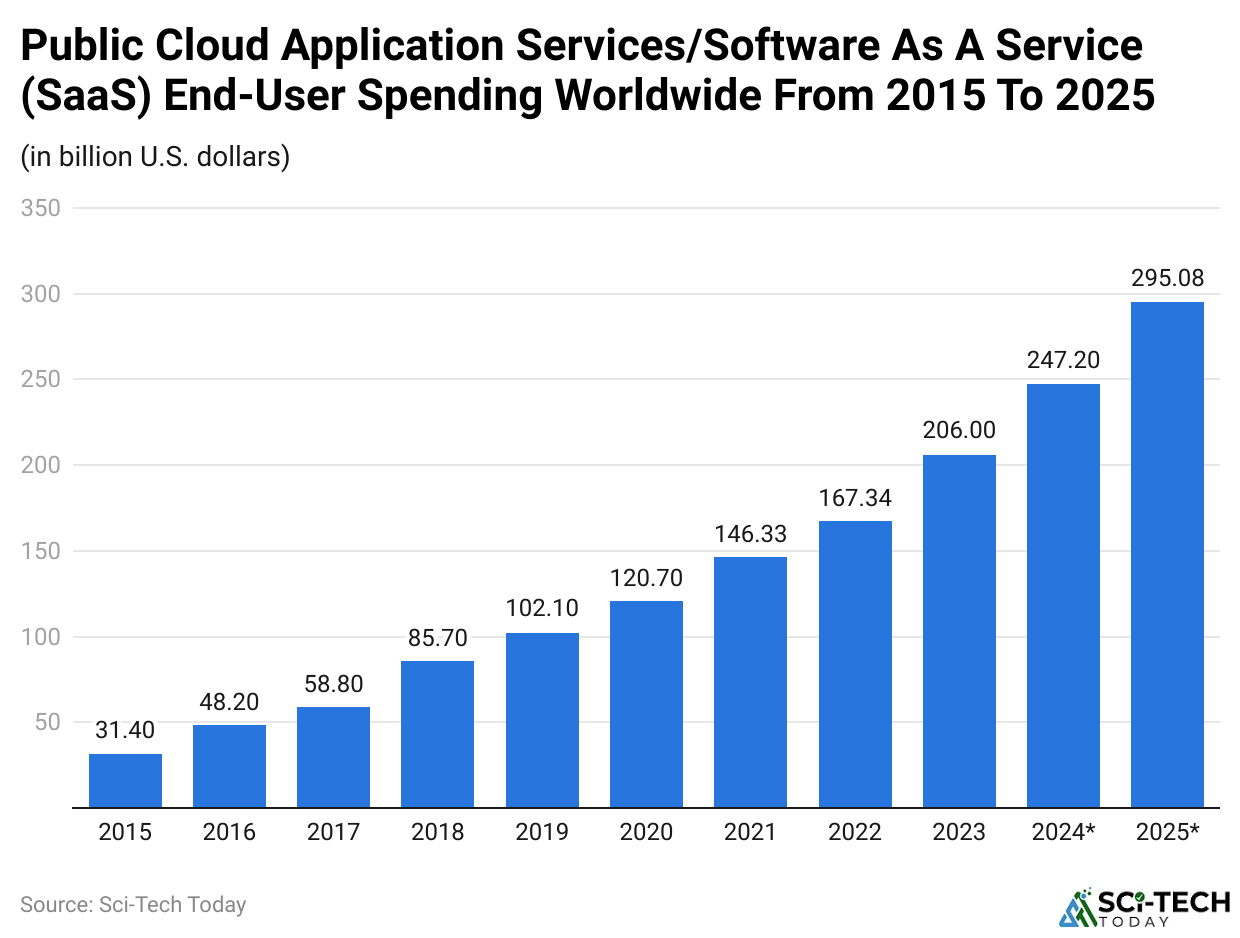
- Based on SaaS statistics, the global user spending has reached USD 206 billion in 2023.
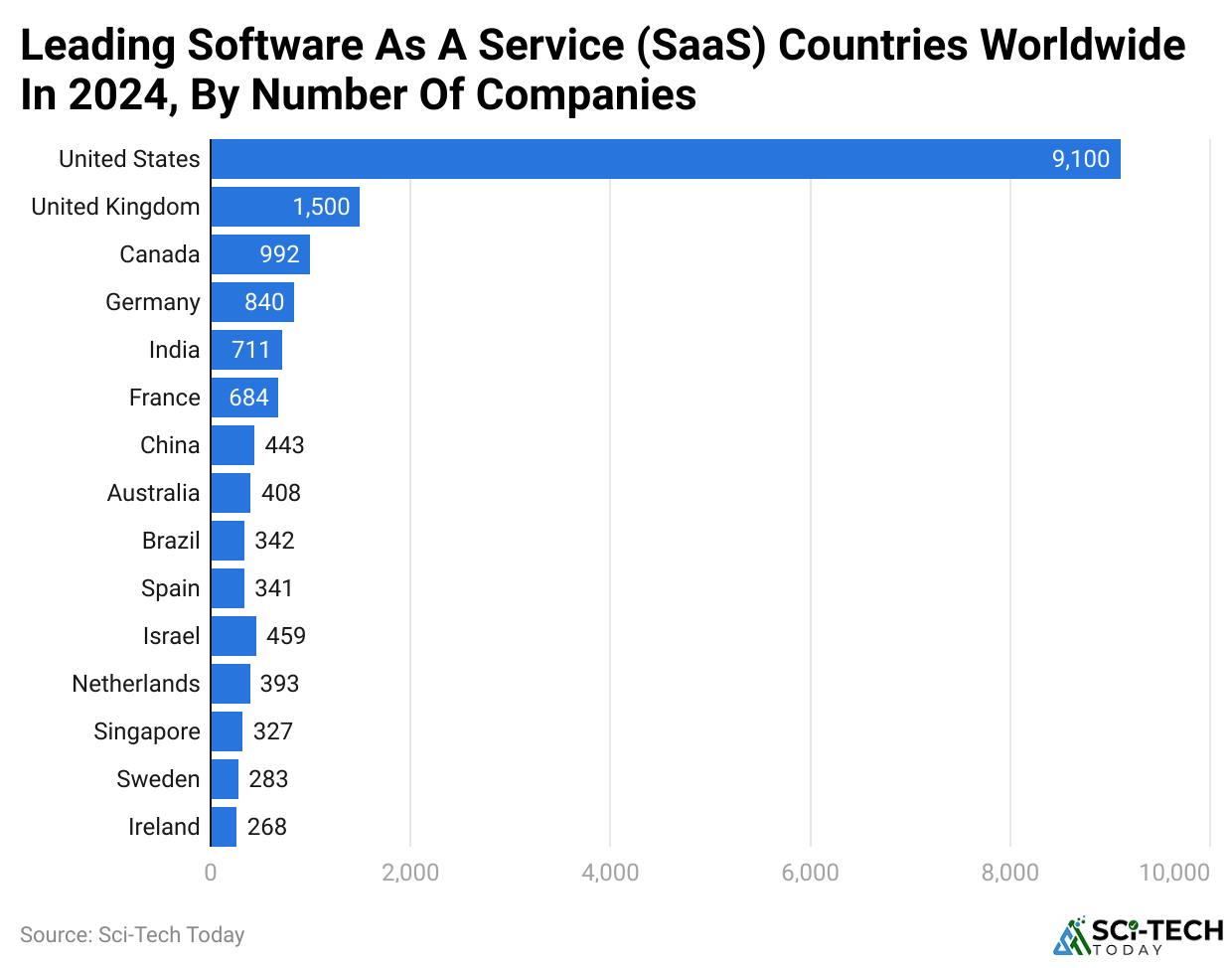
- As of 2024, the USA is the leader with the most SaaS companies, with 9,100.
- On average, a SaaS organization has 371 applications.
- North America has 45% of the global SaaS market share in 2023.
- Microsoft Azure generated USD 22 billion in revenue using SaaS technologies in 2023.
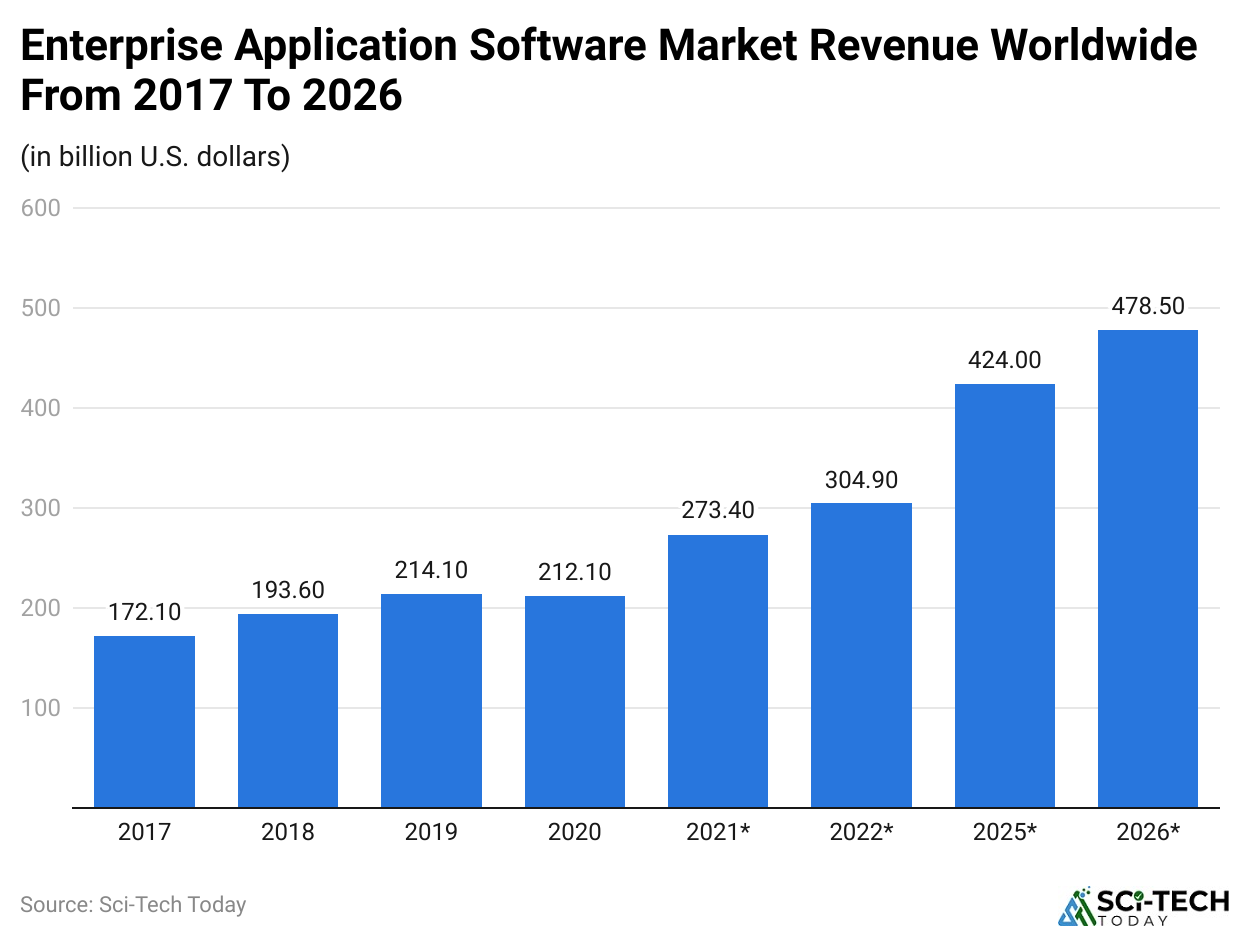
- On a global scale, enterprise application software is expected to reach USD 478.5 billion by 2026.
End-User Payment For SaaS Services
(Reference: statista.com)
- Based on SaaS statistics, it has considerable utilization in the Cloud application services market.
- In 2023, SaaS user spending reached $206 billion globally.
- By 2025, it is predicted to reach $295.08 billion.
- This rise in application spending can be attributed to the consistent development of software infrastructure based on SaaS companies such as SAP, Zoom, and Adobe.
Leading SaaS Company Worldwide By Country
(Reference: statista.com)
- Based on SaaS statistics, it can be inferred that SaaS is a rising segment in IT infrastructure.
- The United States is by far the leader when it comes to SaaS companies in 2024, with 9,100
- The United Kingdom is second with 1,500 companies.
- India has the 5th largest SaaS company with 711.
Top SaaS Companies Worldwide
(Reference: radixweb.com)
- Taking into consideration SaaS statistics, there are 371 SaaS applications used on average.
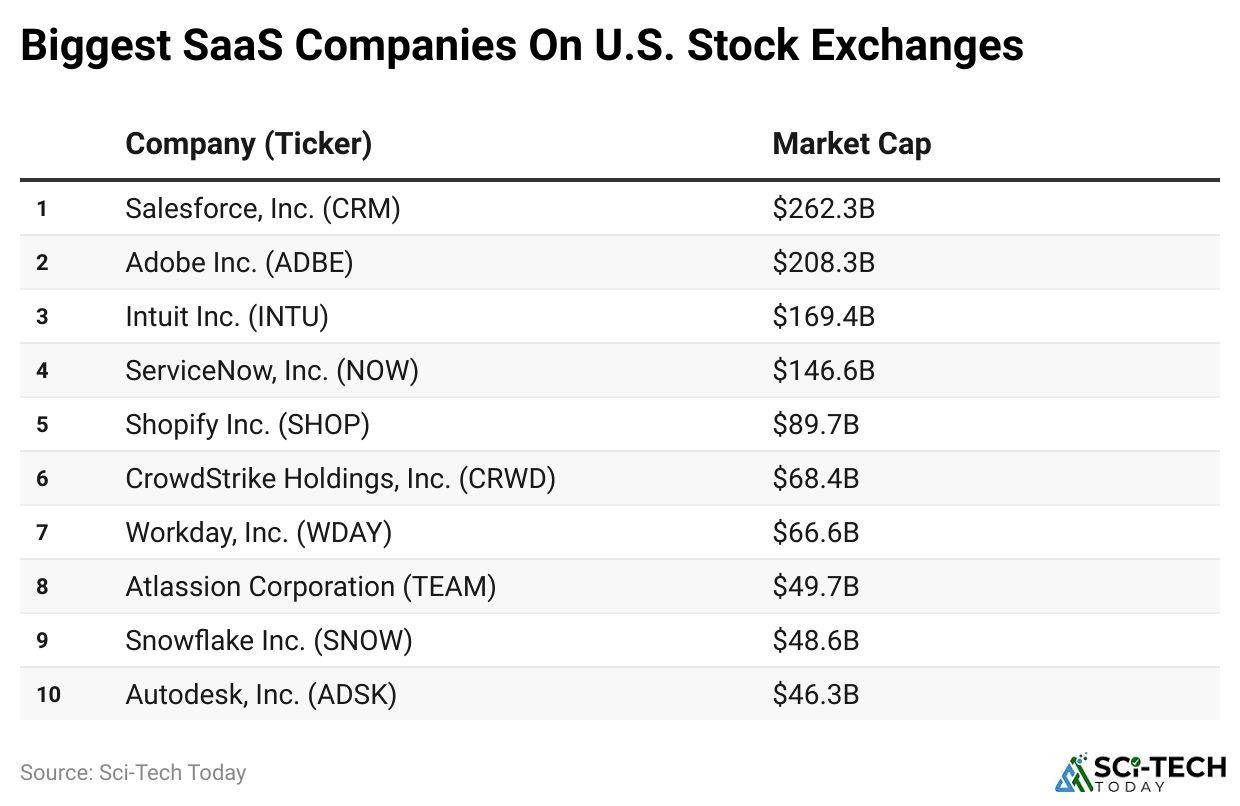
- As of 2024, Salesforce has the highest market cap at the NYSE, at $262.38 billion.
- Adobe follows Intuit and ServiceNow with $208.3 billion, $169 billion, and $146.6 billion.
Rise of the Enterprise Market
(Reference: statista.com)
- If one refers to SaaS statistics, one would find an unprecedented increase in the application software market revenue.
- In 2022, the revenue was $304.9 billion.
- It is predicted that revenue is expected to reach $424 billion by 2026; it can reach $478.5 billion.
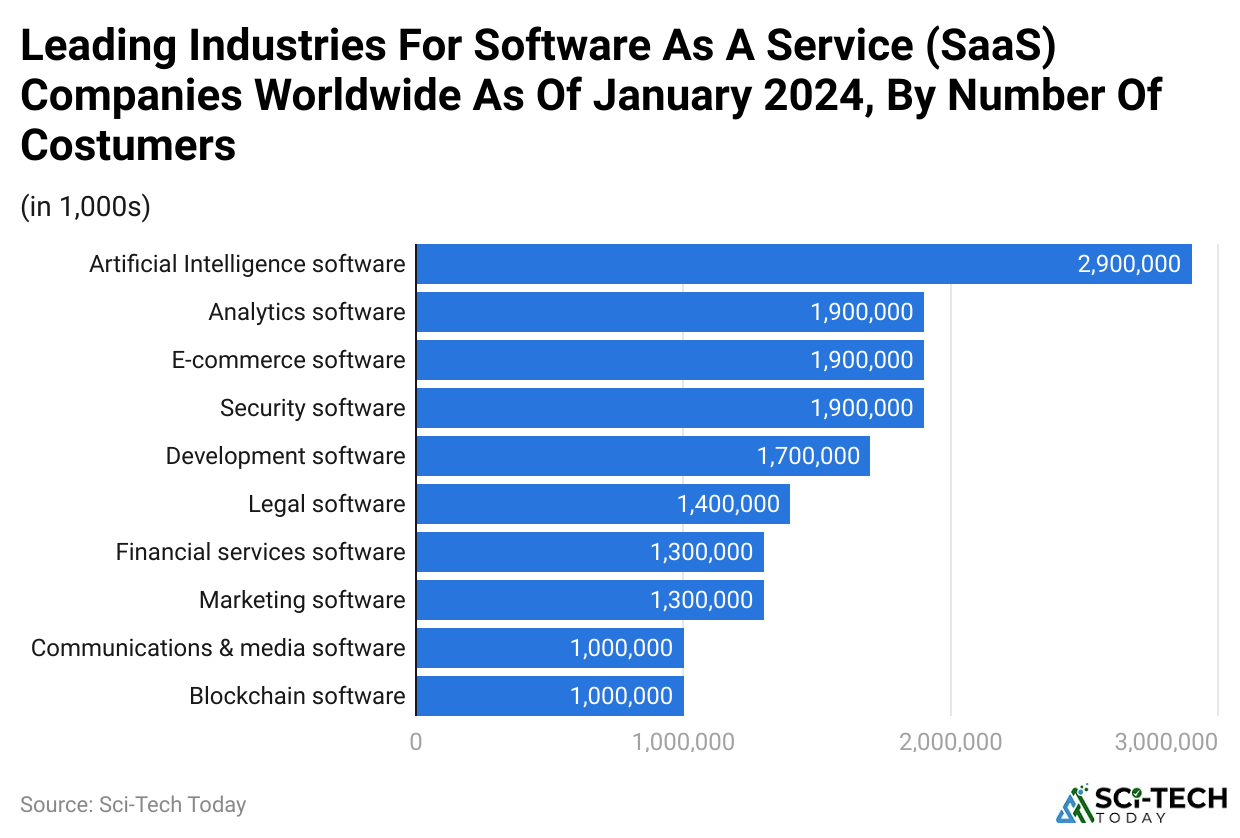
Leading Industries By SaaS Usage
(Reference: statista.com)
- As per SaaS statistics, there is a wide variety of uses.
- With 2.9 million users, artificial intelligence software is the market leader in client base.
- There are 1.9 million users of analytics software and e-commerce software combined.
With 1.9 million users, security software also has a sizable consumer base. - After that, development software had 1.7 million users.
- There are 1.4 million users of legal software.
- There are 1.3 million users of marketing software and financial services software combined.
- Blockchain software and communications and media software each have one million users.
(Reference: statista.com)
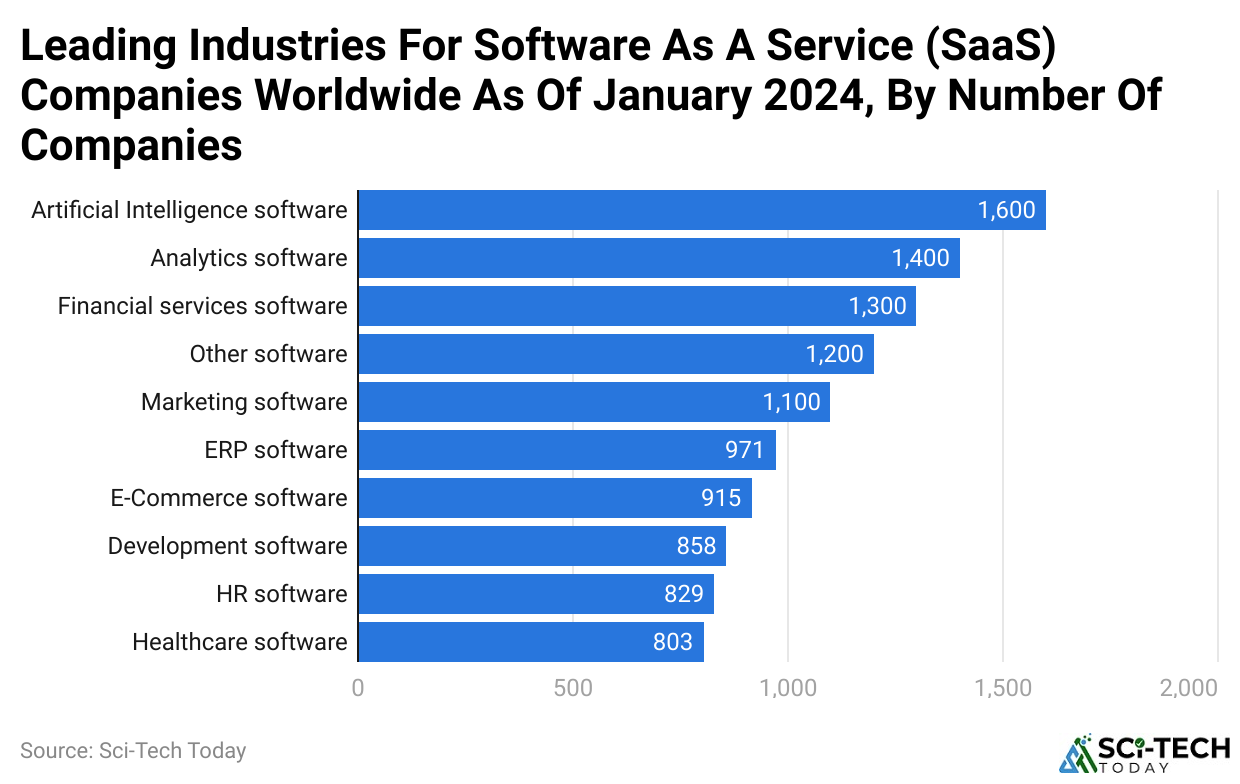
- SaaS companies can be categorized into domains based on their software usage.
- Based on SaaS statistics, Artificial Intelligence software has the highest number of companies, with 1,600.
- Analytics Software and Financial Services follow it.
SaaS General Statistics
In 2023 and 2024, the SaaS industry continues to expand, driven by increasing demand for cloud-based solutions, digital transformation initiatives, and the rise of remote work.
- Global SaaS Market Size: The global SaaS market was valued at approximately $186.6 billion in 2023, reflecting a steady growth from previous years. In 2024, this market is projected to reach around $218.3 billion, representing a year-over-year growth rate of about 17%. This growth is fueled by the widespread adoption of cloud services across various industries, including healthcare, finance, education, and retail.
- Region Analysis: In 2023, North America held the largest share of the global SaaS market, accounting for about 45% of the total revenue. This dominance is attributed to major SaaS providers such as Microsoft, Salesforce, and Adobe, along with a high rate of cloud adoption among regional businesses. Europe followed with a 30% market share, driven by the increasing demand for digital solutions and regulatory initiatives like the General Data Protection Regulation (GDPR) that encourage cloud usage. The Asia-Pacific region accounted for approximately 20% of the market, showcasing significant growth potential due to the rapid digital transformation in countries like China, India, and Japan.
- Key Players Analysis: Several key players dominate the SaaS market, contributing significantly to its growth. With its extensive suite of cloud services, Microsoft Azure remains a market leader, generating an estimated $22 billion in revenue in 2023. Salesforce, known for its customer relationship management (CRM) solutions, reported revenues of approximately $31 billion in 2023. With its creative and marketing cloud services, Adobe also played a significant role, generating around $17 billion in revenue during the same period.
- SaaS Adoption Rate: The adoption of SaaS varies across different industries, each leveraging cloud-based solutions to meet specific needs. In 2023, the healthcare industry accounted for about 15% of the total SaaS market, utilizing these services for electronic health records (EHR), telemedicine, and patient management systems. The finance sector represented around 20% of the market, driven by the need for robust data analytics, customer management, and compliance solutions. The education sector saw a 10% share, mainly due to the rise of e-learning platforms and remote education tools.
- Emerging Trends: Several emerging trends are shaping the SaaS landscape in 2023 and 2024. One significant trend is the increasing integration of artificial intelligence (AI) and machine learning (ML) into SaaS applications. AI-driven analytics, personalized recommendations, and automation enhance the functionality and efficiency of SaaS solutions. Another trend is the growing importance of cybersecurity within SaaS offerings. With the rise of cyber threats, SaaS providers prioritize robust security features, including data encryption, multi-factor authentication, and compliance with global security standards.
- SaaS and Remote Work: The shift towards remote work has significantly impacted the SaaS market. In 2023, approximately 58% of businesses reported using SaaS solutions to facilitate remote work, up from 50% in 2022. Collaboration tools like Microsoft Teams, Slack, and Zoom have become essential, enabling seamless communication and collaboration among remote teams. This trend is expected to continue in 2024, with more organizations adopting remote and hybrid work models, further driving the demand for SaaS solutions.
- SaaS Pricing Models: SaaS providers offer various pricing models to cater to different customer needs. The subscription-based model remains the most popular, with users paying a recurring fee, usually monthly or annually, for access to the software. In 2023, approximately 70% of SaaS providers utilized a subscription-based model. Another common pricing strategy is the freemium model, where basic features are provided for free, and advanced features are available for a fee. This model accounted for about 15% of SaaS providers in 2023. Usage-based pricing, where customers are charged based on their usage levels, is also gaining traction, representing around 10% of the market.
- Customer Retention And Churn Rates: Customer retention is a critical metric for SaaS providers. In 2023, the average customer retention rate for SaaS companies was approximately 85%, indicating high customer satisfaction and loyalty. However, churn rates, which measure the percentage of customers who discontinue their subscriptions, remain challenging. The average churn rate in 2023 was around 15%, highlighting the need for SaaS providers to improve their offerings and customer support to retain users continually.
- Impact of COVID-19 on SaaS: The COVID-19 pandemic accelerated the adoption of SaaS solutions as businesses sought to maintain operations amid lockdowns and social distancing measures. In 2023, the pandemic’s impact continued, with many organizations permanently integrating SaaS solutions into their workflows. The demand for SaaS-based collaboration, project management, and e-commerce platforms significantly boosted during this period. This trend is expected to persist in 2024 as businesses recognize the long-term benefits of cloud-based solutions.
- SaaS in Small and Medium-sized Enterprises (SMEs): Small and medium-sized enterprises (SMEs) increasingly adopt SaaS solutions to enhance their operations. In 2023, SMEs accounted for approximately 40% of the total SaaS market. SaaS solutions’ affordability, scalability, and ease of deployment make them ideal for SMEs looking to improve efficiency and competitiveness. In 2024, the adoption rate among SMEs is expected to grow, driven by the need for digital transformation and the availability of industry-specific SaaS applications.
- Future Projections: The future of the SaaS market looks promising, with several growth opportunities on the horizon. By 2025, the global SaaS market is projected to reach $276 billion, driven by continuous innovation, increasing cloud adoption, and the expansion of internet connectivity. Emerging markets, particularly in the Asia-Pacific and Latin America, offer significant growth potential as businesses increasingly embrace digital solutions. The rise of Industry 4.0 technologies, such as the Internet of Things (IoT) and edge computing, is expected to create new opportunities for SaaS providers.
- SaaS and Artificial Intelligence: Artificial intelligence (AI) is increasingly important in the SaaS market. In 2023, around 25% of SaaS providers incorporated AI and machine learning capabilities into their solutions. AI-driven analytics, automation, and personalization enhance the value of SaaS applications, providing businesses with deeper insights and more efficient processes. By 2024, the integration of AI in SaaS is expected to grow, with more providers leveraging these technologies to offer advanced features and improved user experiences.
- SaaS and Digital Transformation: Digital transformation initiatives are a significant driver of SaaS adoption. In 2023, approximately 60% of businesses reported using SaaS solutions as part of their digital transformation strategies. These initiatives involve integrating digital technologies into all company areas, fundamentally changing how organizations operate and deliver customer value. SaaS solutions enable businesses to streamline operations, enhance customer experiences, and gain a competitive edge. This trend is set to continue in 2024, with more organizations embarking on digital transformation journeys.
- Vertical SaaS Solutions: Vertical SaaS solutions tailored to specific industries are gaining traction in the market. In 2023, vertical SaaS accounted for about 20% of the total SaaS market. These specialized solutions cater to the unique needs of industries such as healthcare, finance, manufacturing, and retail. For example, healthcare providers use vertical SaaS for patient management, telemedicine, and regulatory compliance. Financial institutions leverage these solutions for risk management, compliance, and customer analytics. The demand for vertical SaaS is expected to grow in 2024 as businesses seek more customized and industry-specific solutions.
- SaaS and Customer Experience: Enhancing customer experience is a crucial focus for SaaS providers. In 2023, approximately 55% of SaaS companies prioritized improving customer experience through features like user-friendly interfaces, personalized recommendations, and robust customer support. Providing an exceptional customer experience is crucial for retaining users and reducing churn rates. In 2024, the emphasis on customer experience is expected to intensify, with providers leveraging AI and analytics to offer more personalized and engaging user experiences.
- SaaS and Sustainability: Sustainability is becoming an essential consideration in the SaaS market. In 2023, around 30% of SaaS providers reported implementing sustainability initiatives, such as reducing energy consumption in data centers and promoting green practices. These efforts contribute to environmental conservation and appeal to environmentally conscious customers. In 2024, the focus on sustainability will likely increase, with more providers adopting eco-friendly practices and highlighting their commitment to sustainability in their marketing efforts.
- SaaS and Mobile Applications: The proliferation of mobile devices has led to a growing demand for mobile-friendly SaaS solutions. In 2023, approximately 45% of SaaS providers offered mobile applications to complement their desktop offerings. Mobile SaaS solutions enable users to access software and perform tasks on the go, enhancing productivity and flexibility. This trend is expected to continue in 2024, with more providers optimizing their applications for mobile devices and expanding their mobile capabilities.
Conclusion
The SaaS market is poised for continued growth and innovation in 2023 and 2024. With a projected market size of $218.3 billion in 2024, the industry is set to benefit from increasing cloud adoption, digital transformation initiatives, and the integration of advanced technologies like AI and machine learning.
While challenges such as data security and competition persist, the overall outlook for the SaaS market remains positive. As businesses across various industries embrace cloud-based solutions, SaaS providers must focus on innovation, customer experience, and sustainability to maintain their competitive edge and drive future growth.