









Overview
Content Marketing Statistics: Content marketing has evolved into a powerful and results-oriented strategy for organizations in 2025, aiding in customer engagement, loyalty, and sales. As digital platforms proliferate and consumers begin to rely on Internet resources, businesses are putting more money into content creation to compete effectively.
For instance, the article will discuss content marketing statistics for the year 2026, with specific emphasis on market trends, spending patterns, and consumer behavior. It will incorporate figures, percentages of ages, and explanations in an understandable manner.
Editor’s Top Takeaways
- As of the year 2023, 46% of the respondents claim they are implementing search engine optimization (SEO). Regarding content marketing,
- Content marketing statistics show that 47% target the audience’s psychographics, while 40% further create more visual and video content.
- Also, 41% of the respondents consider competition analysis strategic to the effectiveness of their content strategy.
- Moreover, 45% of marketers are publishing content more often, and 44% of marketers agree that enhancing the value and quality of the content is important.
- Finally, 42% of the respondents revealed that modifying the older content increased the market value.
- Although blogging is the most practiced type of content marketing, organic search is the most effective means of distribution.
- Specialists use website analytics tools to monitor content usage, and page views are the most commonly tracked indicator of this.
- Still, 9% of content marketers assess their failure to measure metrics.
- According to content marketing statistics, the business-to-business (B2B) space is experiencing a shift towards analytics, with the focus shifting to SEO, especially search algorithm changes.
- Among the different types of content used in content marketing, video content remains one of the best returns on investment for advertising.
- Small budgets for content marketing are expected to shift as global spending on the same is projected to increase, with 42% of companies intending to increase their allocation.
- On the same line, about 37% of companies are putting approximately $10,000 into a bid to enrich the customer experience.
Quick Facts
- Content marketing statistics show that the global content marketing sector is valued at approximately USD 600-USD 724 billion as of 2026.
- It is estimated that the market will approach USD 990 billion by 2030, growing at a CAGR of approximately 13-15%.
- Generally, the expenses incurred in content marketing are 62% less than the costs involved in traditional marketing strategies, and it yields three times more leads. This verifies the cheapness of content marketing, as it allows a higher number of customers to be reached at a lower cost and gives a better ROI.
- This verifies the cheapness of content marketing, as it allows a higher number of customers to be reached at a lower cost and gives a better ROI.
- Up to 70% of users would rather connect with a business by reading articles or blog posts than through conventional ads.
- These statistics point out that people are changing the way they consume information. They would rather consume content that is not just straightforward facts but informative and enjoyable without being annoying.
- According to content marketing statistics, in 2025, video will still dominate marketing content across all avenues, with video traffic projected to make up 90% of the total internet traffic.
- As of 2026, mobile devices account for approximately 63% of global web traffic, making mobile optimization not just imperative but foundational to any digital content strategy
- Companies that opt for mobile-oriented content manage to engage their clients by over 25% more than those who do not pay attention to mobile optimization.
- In 2025, 92% of B2B marketers and 95% of B2C marketers will use social media as a content distribution channel.
- Instagram, Facebook, and LinkedIn remain the top platforms for engaging audiences. Brands report that social media content has resulted in an increase in brand awareness among their consumers by 42% on average.
- SEO-oriented content has retained its appeal to marketers. Companies that engage in SEO-oriented content have 5.7 times higher chances of generating quality leads.
- Moreover, more than 50% of the total traffic to all websites is generated by organic search, which additionally emphasizes the need for SEO-compliant content.
- Blogs remain a prominent feature in content marketing, with 88% of marketers adopting blog posts in 2025.
- Content marketing statistics show that long-form content (content exceeding 2,000 words) earns 56% more backlinks, which in turn enhances the site’s ranking on search engines and increases its overall visibility.
- In 2024, 47% of companies will resort to using freelance writers or agencies for content production, a 10% rise from 2023.
B2B Marketing and Content Trends
- The content marketing process is a feature of 92% of marketing strategies of B2B marketers, as reported by the Digital Marketing Institute.
- In 2025, the most effective distribution channels were events (52%), webinars (51%), email without newsletters (42%), social media (42%), blogs on company websites (41%), and email newsletters (37%).
- The most favored content formats, as per Leadfeeder, were customer success stories or case studies (41%), videos (39%), blogs (37%), and podcasts (31%).
- Per HubSpot, blog posts ranked among the top five content formats with the highest return on investment, and in terms of marketers’ investments in content formats for 2026, alongside short, live, and long-form videos, and user-generated content.
- 94% of marketers will use artificial intelligence technology in content creation in 2026.
- On social media sites, Instagram (48%), Facebook (43%), YouTube (42%), TikTok (32%), and Twitter/X (31%) would be used to facilitate short-form video content production in 2026.
- 12% of B2B marketers outdid themselves in achieving goals, 47% managed to meet most of their objectives, while 31% had a mixed report in meeting objectives.
Content Marketing Revenue Worldwide
(Reference: statista.com)
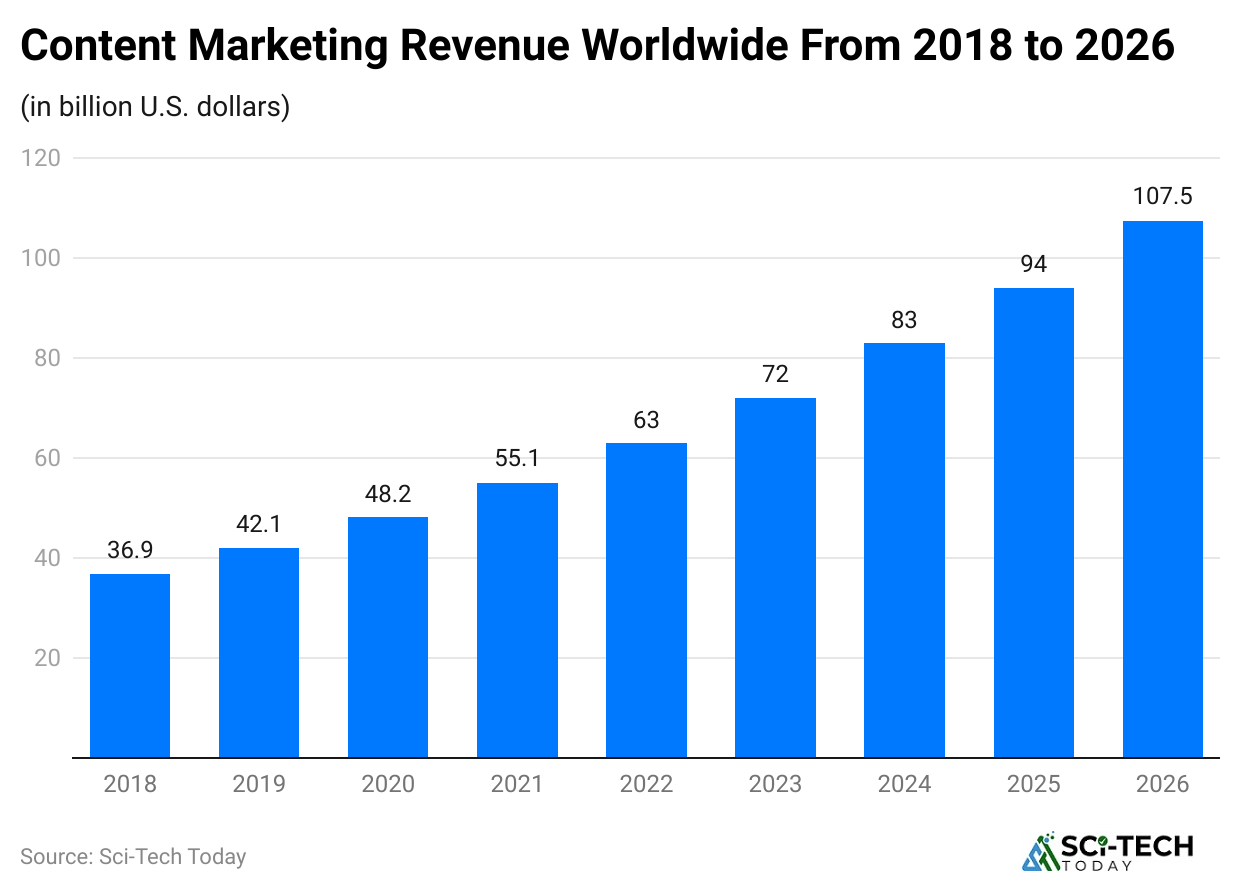
- Overall, the market is set to nearly triple from 2018 to 2026, underscoring content marketing’s transformation into one of the most powerful and revenue-generating segments of the global digital economy.
- In 2026, global content marketing revenue is forecasted to hit USD 107.5 billion, crossing the USD 100 billion milestone for the first time in the industry’s history.
- By 2025, revenue is projected to reach USD 94 billion, demonstrating sustained momentum and the growing role of AI-powered content creation tools.
- The market hit USD 83 billion in 2024, showing strong double-digit growth as brands increasingly relied on content to engage audiences and drive conversions.
- This consistent growth points out how significant and devoted resources are to content marketing across industries. This is caused by the growing need for appealing and effective content to win and keep customers.
Website Content Marketing Insights
(Reference: artios.io)
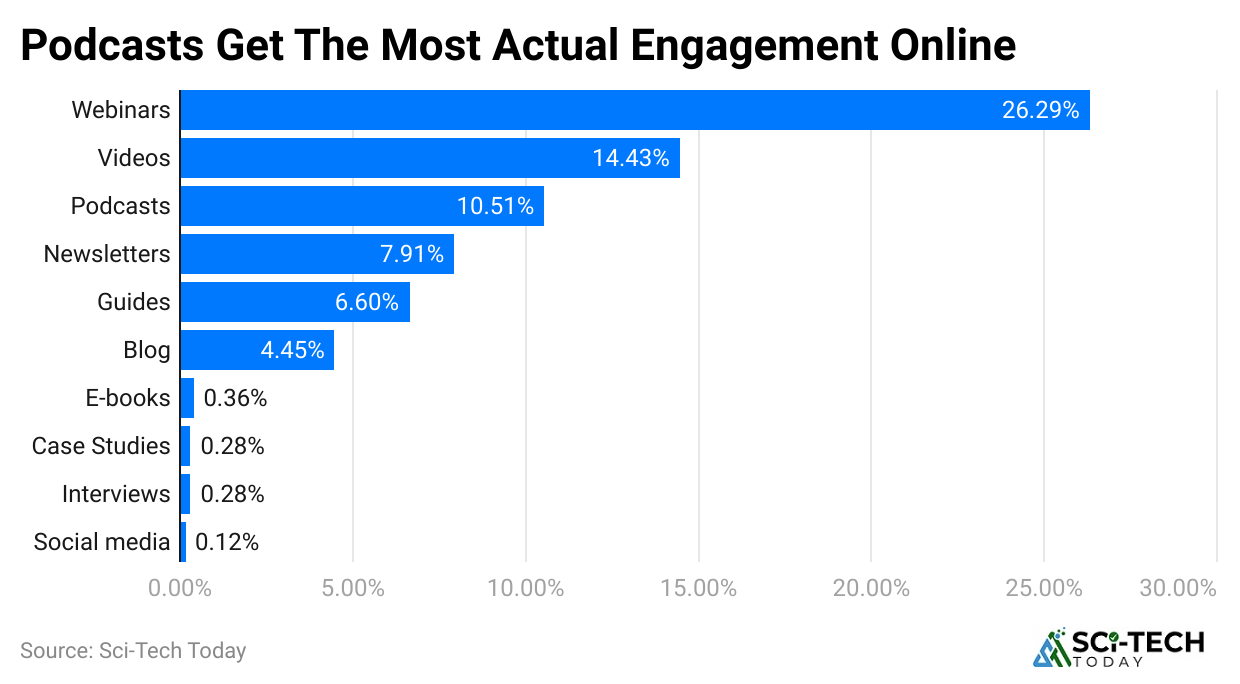
- As content marketing statistics reports forecast, webinars and videos will be the dominant engagement-driven digital content types.
- At the same time, podcasts rank third in popularity despite some projections indicating they would be first ranked.
- So that we can understand the preference of content marketers towards the data given and its engagement, let us use the estimates first and then compare them with the actual engagement rates:
- Webinars: 26.29%
- Videos: 14.43%
- Podcasts: 10.51 %
- Newsletters: 7.91%
- Guides: 6.60%
- Blogs: 4.45%
- E-books: 0.36%
- Case studies: 0.28%
- Interviews: 0.28%
- Social media posts: 0.12%
- This illustrates that podcasts should be considered, for instance, as they effectively create and sustain the marketer-consumer relationship.
- On the other hand, webinars and videos still occupy first and second place, with the most anticipated and most realised engagement with the audience, respectively. Thus, they are still the guns of content marketing.
Content Marketing Statistics By Gender
(Source: artios.io)
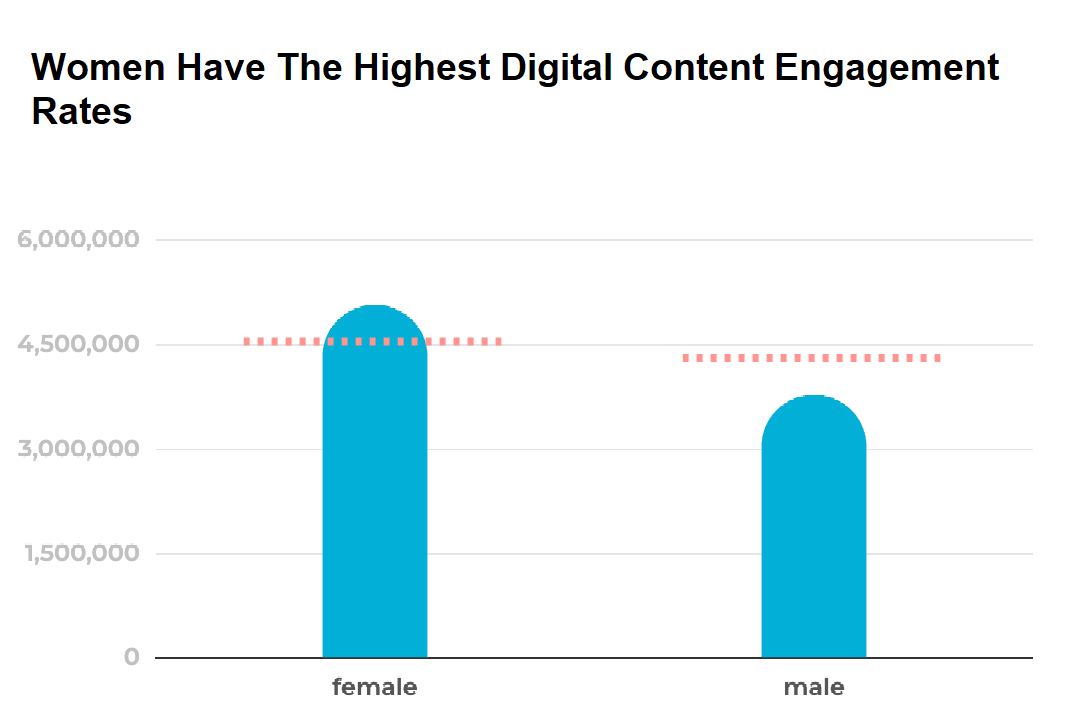
- Content marketing statistics demonstrate not only that a larger percentage of women are more engaged, as depicted by the blue line, but that such engagement even goes beyond what was anticipated, as shown by the red line.
- On the other hand, a male audience seems to be much less engaged, as evidenced by the lower engagement statistics, and expectations are also not met.
- Additional studies provide an understanding of why this may be true. In particular, they noted that men, on average, go on the internet for about 4 hours and consume content, while women do so for about 5.5 hours, which shows some striking differences in how they consume the content.
- This trend is explained by the fact that 43% of women consume entertainment content, almost ten percentage points more than that of men.
- In addition, 76% of women participate in social networking sites, compared to 70% of men.
- Also, nearly all marketing targeting this demographic includes consumer content primarily directed at women, who have traditionally been the chief shopping organizers.
- The growing feminine culture within consumerism led to major brands’ shifting emphasis on women’s interests over gender or even androgynous marketing positioning.
Content Marketing Statistics By Age
(Source: artios.io)
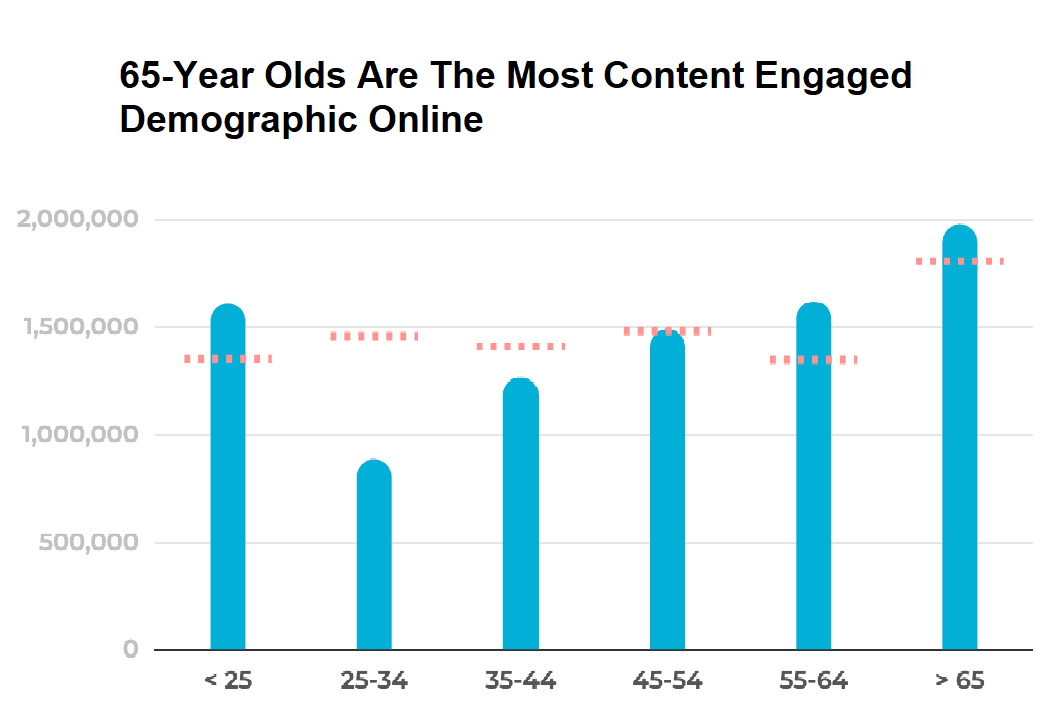
- Despite the high expectations regarding content engagement among the 55-64 subjects, the survey yielded even more surprising findings, i.e., almost two million respondents in the retiree category.
- Content consumption was more or less at the same level for the 55-64 and younger than 25 groups, slightly exceeding the preliminary estimates.
- Additionally, the age group of the most active users varies according to the content platform itself.
- Generation Z and Millennials dominate Instagram, with the 18 to 24-year-old age group accounting for 31.8% of users.
- On the other hand, Facebook is preferred by an older audience, mainly users between the ages of 24 and 35.
- Also, contrary to what was anticipated, the survey targeting the 25-34 demographic had the fewest respondents, only 800,000, whereas 2 million were in the 65+ age range.
- The 35-44 and 45-54 age cohorts reported engagement levels that were slightly lower than anticipated, positioning them in the midrange in relative activity.
Content Marketing Trending Facts
- Thus, affordable content generation is essential in today’s market, as nearly 54% of marketers intend to increase their content marketing budgets.
- Also, 54% of the marketers spent over $2000 on a single piece of content as they found the strategy to be extremely effective.
- According to content marketing statistics, 74% of businesses allocate less than $15,000 monthly to content marketing, which also has a relatively low output performance rate.
- 1/3 of content reporting is effective when businesses invest 10%-50% of their resources into content composition.
- Content created with the help of artificial intelligence is part of an effective content strategy for 19% of companies, while 24% of companies do not utilise any AI solutions.
- Organic search is the channel responsible for 51% of total content consumption.
- Content marketing statistics indicate that 36.7% of content marketing professionals consider the ability to create compelling visual content regularly as one of the major challenges.
- Only 12% of marketers tend to include voice search tactics in their content strategy, while 36% of them include interactive elements in their content strategies.
- As of 2026, approximately 92% of content marketers use websites and blogs as a core platform to distribute content to their target audiences.
- The employment of AI text generator tools by B2B businesses is at interventional higher rate than that of B2C businesses by 24%.
- As of 2026, around 38% of businesses handle content marketing entirely in-house.
- There is an increased focus on video marketing content at the expense of still posts or photos.
- Content marketing statistics reveal that 42% of corporations in every corner of the world are increasing their budgets for Augmented Reality (AR) and Virtual Reality (VR) content.
- Organic search or SEO has a 51% contribution to content marketing activities.
- According to content marketing statistics, 7% of content marketers find it easy to keep a flow of visual content.
- Adapting voice search technology into marketing strategies has only been achieved by 12% of content marketers around the globe.
- 39% of enterprises have embraced the use of infographics for the very first time.
- Only 22% of these companies place weight on backlinks, while 76% of content marketers consider organic search to be the most important factor when measuring the success of content.
- Engagement generated by virtual events was superior to that of physical events in 2021.
- 59% of content marketers incorporate video as the main avenue of communication with audiences on social media.
- 94% of businesses use social networks to improve sales, and as a result, brand awareness has increased.
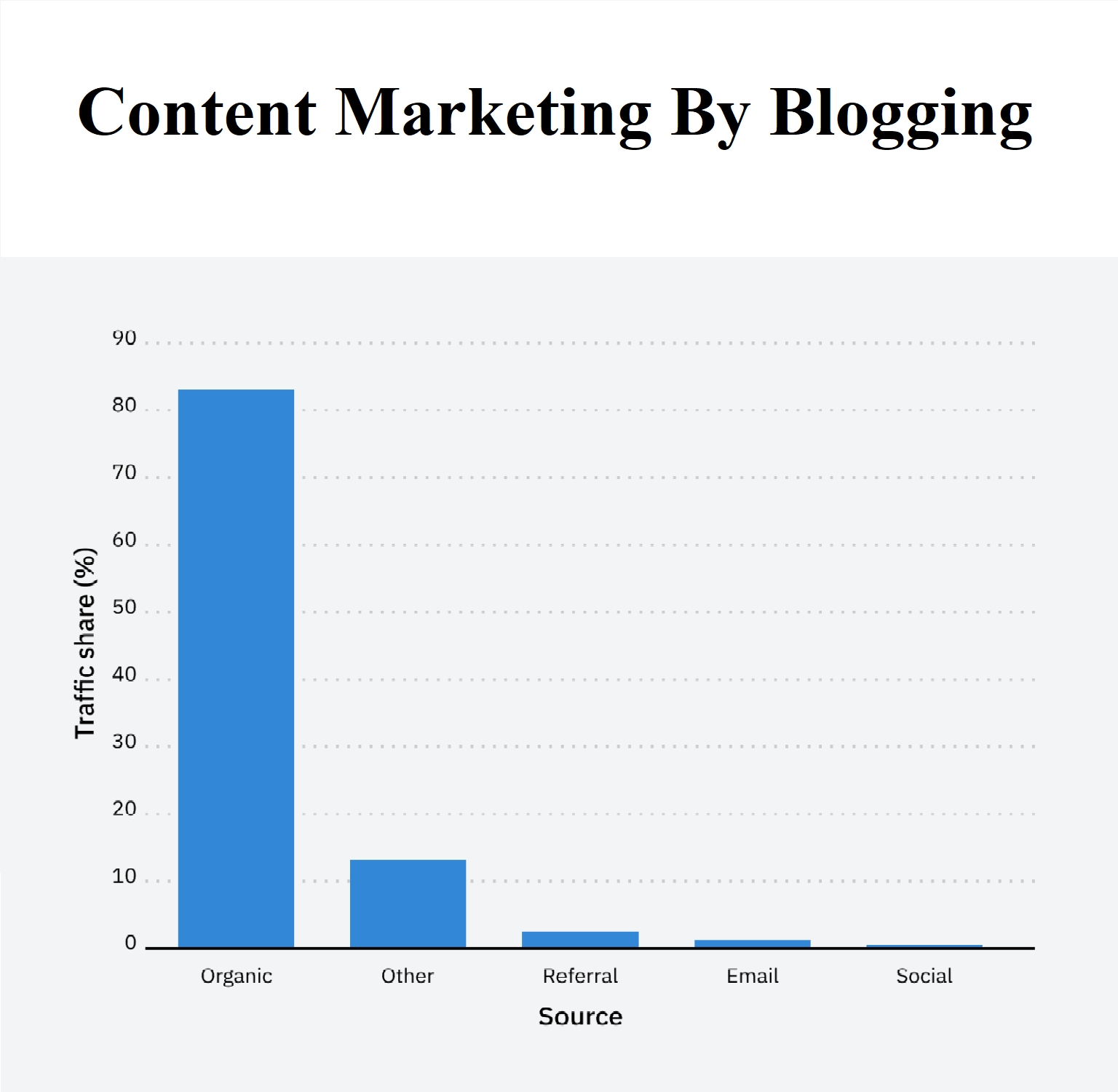
Content Marketing By Blogging
(Source: ahrefs.com)
- It is important to note that 85.19% of all blog traffic is attributed to organic search.
- Typically, engagement starts to diminish after the reader spends an average of 7 minutes reading a given piece of content.
- According to content marketing statistics conducted in 1997, internet users prefer to scan through content rather than read it verbatim, even if the information is available to them.
- People prefer to read blogs rather than information advertisements; this is reported by 70% of them.
- The most preferred blogging content is ‘how-to’ articles (76%), followed by list-based articles (55%) and news-update/trend materials (47%).
- Only one out of three bloggers regularly checks the blog’s traffic analytics.
- Worldwide, there are approximately 600 million blogs, seven out of 1.9 billion websites, with close to 6 million blog posts published daily, or over 2.5 billion posts per year.
Content Marketing ROI Statistics
- When marketers updated their content, 53% reported an increase in engagement.
- 60% of people enjoy reading valuable content from brands.
- 47% of marketers believe audience research has contributed to their content marketing success.
- 83% of marketers found that producing higher-quality content less frequently is more effective than publishing lower-quality content more often.
- 55% of marketers stated that creating more content and posting more frequently improved their content rankings.
- 82% of customers feel more positively about a business after reading its custom content.
- 94% of marketers claim personalised content increases sales (Search Engine Journal).
- Content marketing generates three times more leads than outbound marketing and is 62% more cost-effective.
AI Adoption in Content Marketing
- About 81% to 87% of marketers deploy AI tools for tasks related to content creation.
- Around 51% intend to boost spending on AI-driven content.
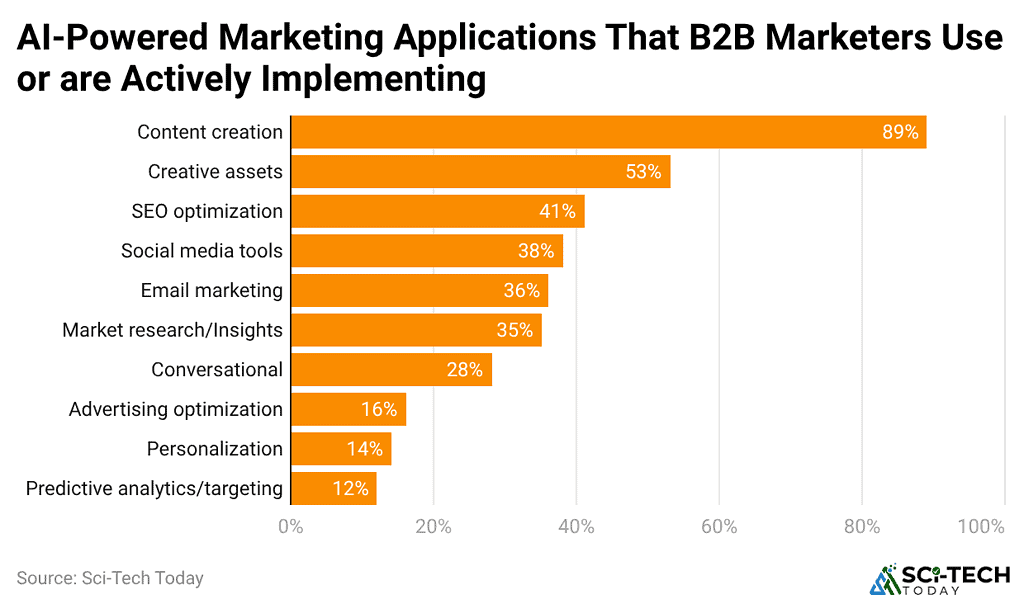
- Five of the most common applications of AI in content creation are copywriting/optimization (89%), visual asset creation/editing (53%), search engine optimization (41%), social media management (38%), and email marketing (36%).
- Marketing professionals think that human-made content is 4.7 times more expensive than content created by AI; many businesses are exploring the idea of blending both human editing with AI-content generation.
(Source: Taboola.com)
Conclusion
Analysing the data provided in the Content Marketing Statistics above, it can be observed that shortly, every business across the globe will adopt content marketing as part of their strategies. Businesses have already grasped the concept of digital marketing and are now, little by little, extending their arms to embrace social media marketing. Content marketing in the year 2026 is of high relevance due to the increasing costs, affirmative response from consumers, and the advent of mobile and video content on portable devices.
Many companies are now putting content strategies in place to create awareness about their brands, attract new clients, and retain current ones. Given that digital consumption is growing and changing all the time, these organizations must keep pace with such developments if they are to carry out effective and successful marketing campaigns.
FAQ
Content marketing is a strategic approach focused on creating and distributing valuable, relevant, and educational content to attract and engage a specific target audience. Instead of directly pitching a product, it builds trust and brand authority by providing information that genuinely solves consumer problems.
The average amount it costs for a content marketing campaign may vary, ranging from USD 6,000 per month to even up to USD 60,000 per month for an enterprise company.
It involves not only improving writing, editing, and storytelling skills but also having the capability to adapt in order to stay ahead in this newly emerging job. The Content Marketing Manager collaborates with the Content Strategist in coming up with different types of content strategies and creating exceptional content.

Sources