









Introduction
ATM Statistics: In 2026, Automated Teller Machines (ATM) will continue to play a vital role in global financial services, particularly in regions where digital banking remains limited. Despite the rise of digital payment systems, there are over 3.5 million ATMs worldwide, providing essential services such as cash withdrawals, deposits, and balance inquiries. In the United States alone, approximately 450,000 ATMs are operational.
The global ATM market was valued at USD 25.29 billion in 2024, with projections indicating growth to USD 31.64 billion by 2030. This growth is driven by the demand for accessible cash services, especially in areas with limited digital infrastructure. In India, for example, certain states have experienced up to an 8% increase in ATM usage, highlighting the ongoing reliance on cash transactions.
On average, an ATM is used 300 times per month, equating to roughly 10 transactions per day. In the United States, ATMs dispense about USD 600 billion in cash monthly. These figures underscore the enduring importance of ATMs in the financial ecosystem, particularly for cash-dependent populations.
In summary, while digital banking continues to expand, ATMs remain a critical component of financial services, ensuring cash accessibility and supporting economic activities worldwide. The analysis below is an analysis of ATM usage statistics, trends, and the economic contribution of ATMs in 2024.
Key Picks By The Editor
- Predictions have stated that the ATM global market will reach USD 28.82 billion by the year 2026.
- According to an ATM statistics report published in 2021, approximately 40% of the population in the US visits an ATM 8 -10 times a month.
- Annually, around 10 billion ATM operations are carried out in the USA. The growth of Smart ATMs has become an important phenomenon within the ATM sector.
- The Asia-Pacific area is at the forefront of global ATM exploitation.
- Expanding markets are beginning to adopt ATM installations at an increasing rate, with growth in the ATM industry projected to be most rapid in China and India over the next few years.
- The banking industry is the major consumer of ATMs, with an estimated 65% of the total transactions carried out in the world through ATMs.
- The global ATM market is further classified into two primary categories: in-network, which is positioned within banks, and out-of-network, which is outside banks.
- ATM statistics reveal that presently, there are over 2.1 million in-network ATMs and more than 1 million out-of-network ATMs functioning across the globe.
- Over the years, cash transactions have gradually reduced owing to factors such as crime and the fear of corruption.
- In addition, the growth of the ATM industry, particularly in developed economies, is facing stiff competition from the emergence and widespread adoption of online and mobile banking.
ATM Global Market Size
(Source: enterpriseappstoday.com)
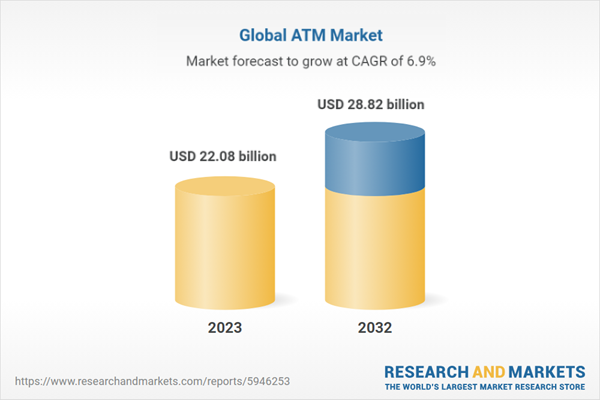
- ATM statistics indicate that the valuation of the worldwide automated teller machine (ATM) market was estimated at USD 22.08 billion in 2020 and is anticipated to rise to USD 28.82 billion by 2028, with an approximate Compound Annual Growth Rate (CAGR) of 4.8% during the year 2021 to 2028.
- An increase in intermediation in the banking industry, regardless of whether it exists in a developed country or a fast-developing economy, is an important element that drives growth in the ATM market.
- During the last decade, there have been substantial technological advances in the global banking industry.
- Nowadays, however, the banks find themselves in a position where they face various threats related to security, as well as additional demands from their clients due to regulatory requirements.
- Therefore, banks have the opportunity to reach more customers, including those who live far away from the banks’ branches, by providing them with services that solve all problems of conventional banking, like filling out paperwork, limited banking hours, and going to the banks’ offices.
- This has improved banking systems for the benefit of the banks and consumers alike, as there is less initial and operational cost in reaching out to more customers, which has led to more ATM installations.
- Additional protective measures, including fingerprint scans, biometrics, two-step verification, and others, are being adopted to prevent illegal activities. Banks continue to make changes in risk policies to cope with the threat posed by counterfeit or stolen cards.
- For instance, in January 2019, the Reserve Bank of India ordered all banks to migrate from magnetic stripe cards to EMV chip cards, which improved security features and reduced the chances of fraud.
- Banks are also deploying other advanced security solutions, such as intelligent anti-skimming devices, which help monitor system breaches and cover the risk of unauthorized access to card and PIN information.
Market Share of Bitcoin ATM Producers Worldwide
(Reference: statista.com)
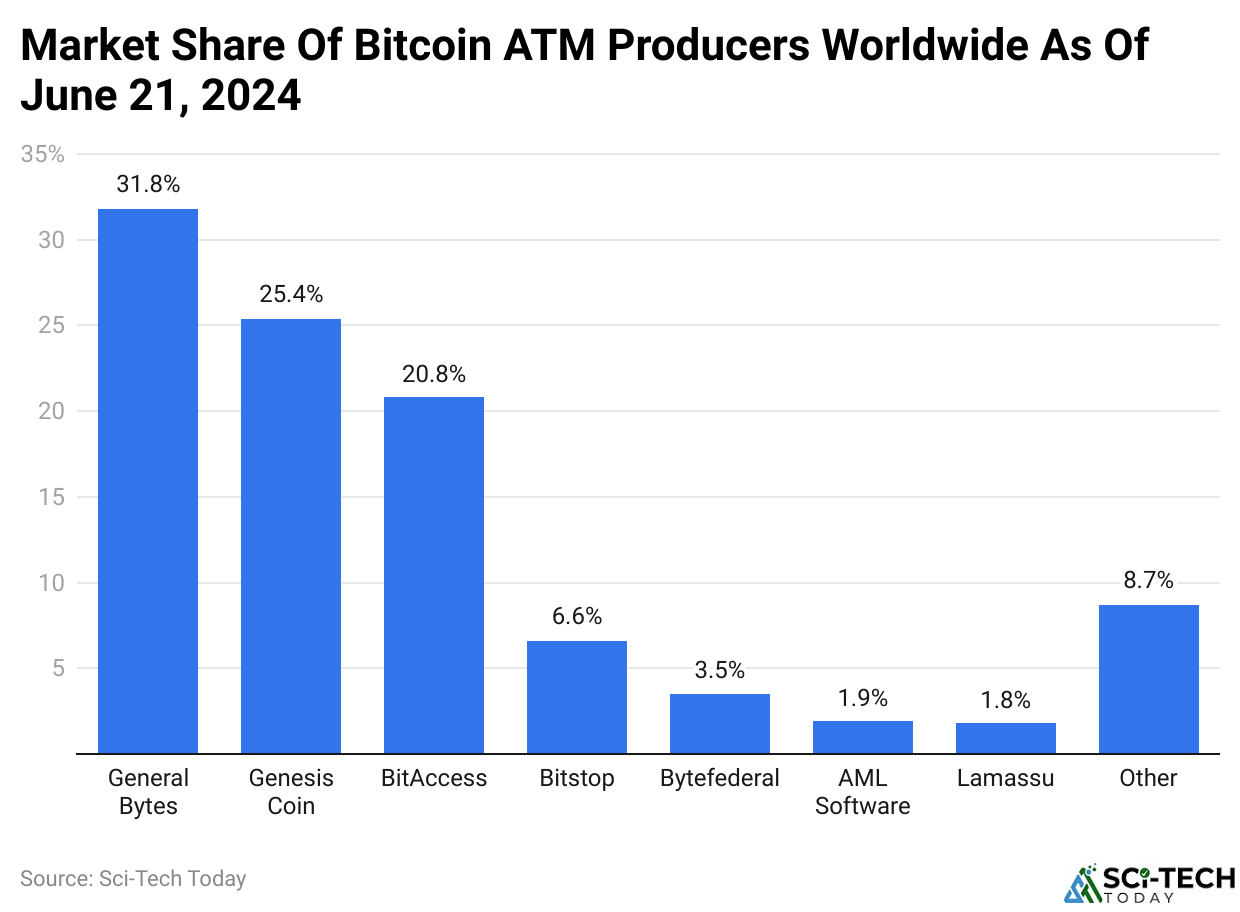
- Two manufacturers dominate the global Bitcoin ATM market in terms of installations.
- A comparative analysis of several producers indicates that as of June 21, 2024, General Bytes is the leading Bitcoin ATM manufacturer, holding approximately 31% of the worldwide market share.
- This leadership was achieved by deploying their ATMs in around 12,000 locations globally, according to the source.
Number of ATMs Provided by Resident PSPs
(Reference: statista.com)
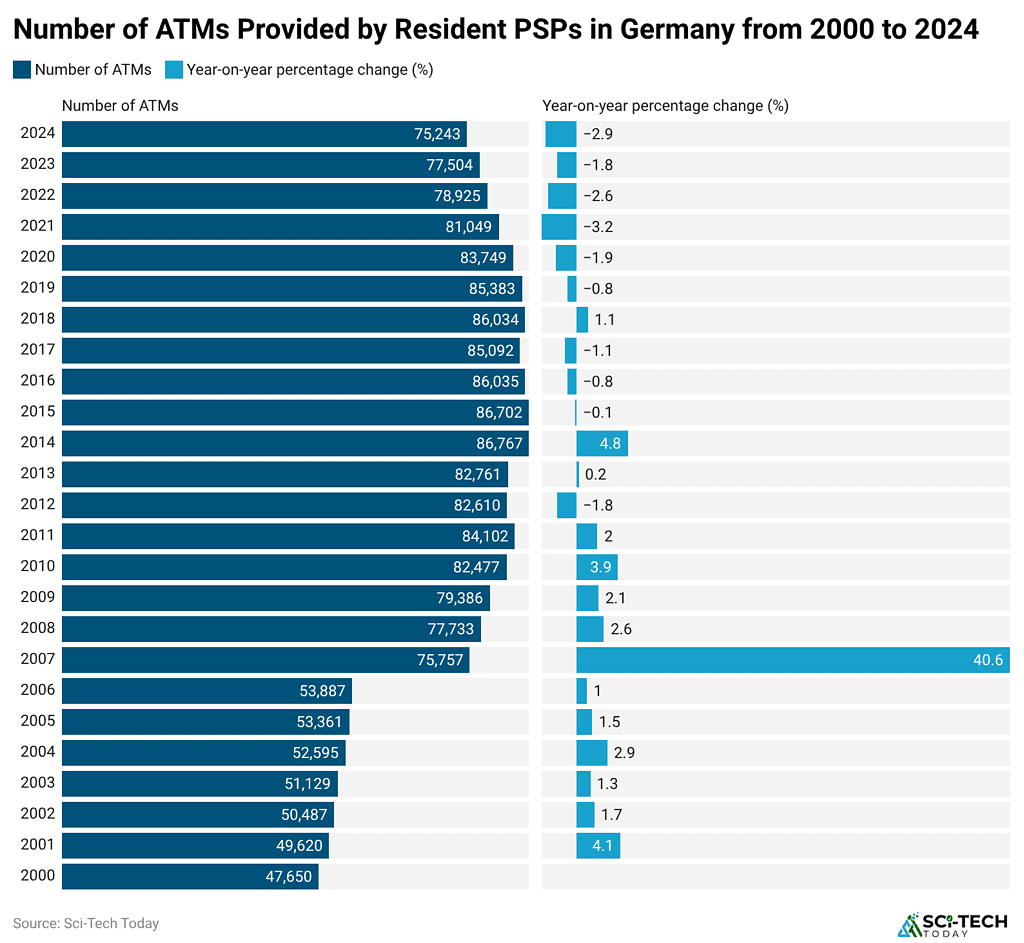
- The number of ATMs (automated teller machines) in Germany saw significant fluctuations between 2000 and 2023.
- The ATM statistics reveal that in 2023, there were about 77.5 thousand ATMs in place, a marginal fall as compared to 79 thousand last year.
- Even in light of this trend, cash is an essential form of payment in the German retail industry, constituting almost 44% of all retail payments in 2022.
Number of ATMs In India
(Source: thehindubusinessline.com)
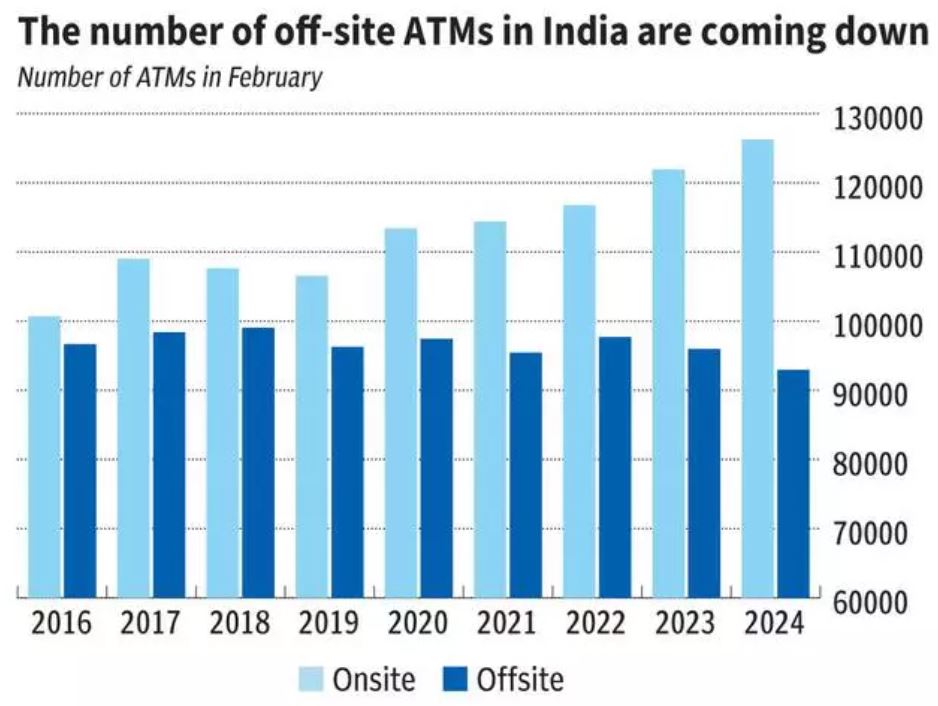
- As per the ATM statistics of the Reserve Bank of India, the installed base of ATMs in India has seen slow growth since the economic year of 2017.
- For instance, as of February 2024, Indian banks had installed only 2.19 lakh ATMs, which is just an increase of 11 % from February 2016, when the number stood at 1.97 lakh ATMs installed both on-site (within the bank premises) and off-site (outside the bank premises).
- A critical analysis of the statistics reveals that in the year 2022, there has been a continuous decline in the total number of off-site ATMs in India.
- According to statistics, in December 2024, India witnessed 92 thousand off-site ATMs, which is lower than the 95 thousand off-site ATMs in December 2023 and 92 thousand off-site ATMs in December 2022.
- Major Banks such as Axis Bank, ICICI Bank, Union Bank of India, Indian Overseas Bank, and Bank of Baroda have also reduced their number of off-site ATMs.
ATM Transaction Statistics
- An ATM is utilized eight times daily on average.
- ATM statistics show that in America alone, ATMs dispense cash worth USD 600 billion every month, while about 90% of banking customers only use ATMs to withdraw cash.
- On average, within a minute, an ATM transaction would last 45 seconds; in addition, 90% of transactions will involve purchasing services, while just 10% will be non-purchasing services such as balance inquiries.
- Diagrams indicate that ATMs are more likely to be used in poorer areas than in richer areas, where around 30% of all transactions are conducted after work hours or during weekends.
- The most frequent time of ATM transactions is between eleven and one.
- About three-quarters of people conduct withdrawals from the ATMs at least once in a month, while the amount withdrawn for casinos exceeds 300.
- The majority of ATM transactions are not unidirectional, since in most cases (33%) non-bank clients use bank ATMs.
- Of the above, the cost of using non-firm bank ATMs by a customer is estimated to be 4.64 US dollars.
- For example, in the case of Korea, there is 1 South Korean who makes 6.5 withdrawals at ATMs, whereas 40 percent of all transactions conducted in the US occur at in-house bank ATMs.
- In Australia, ATM systems dispense cash exceeding 700 billion dollars each year, and it costs the banks an average of 2.20 dollars for every ATM cash withdrawal.
- In the U. S, the average extra fee incurred while withdrawing cash from an ATM that is not found in their network is three dollars and nine cents.
- In Nigeria, over 70% of ATM transactions are cash withdrawals, while in Germany, the average cash withdrawal value is 128 Euros.
- In Canada, the average amount withdrawn is CAD 124. In Argentina, more than half of ATM transactions occur on weekends.
Crypto ATM’s By Country
(Reference: statista.com)
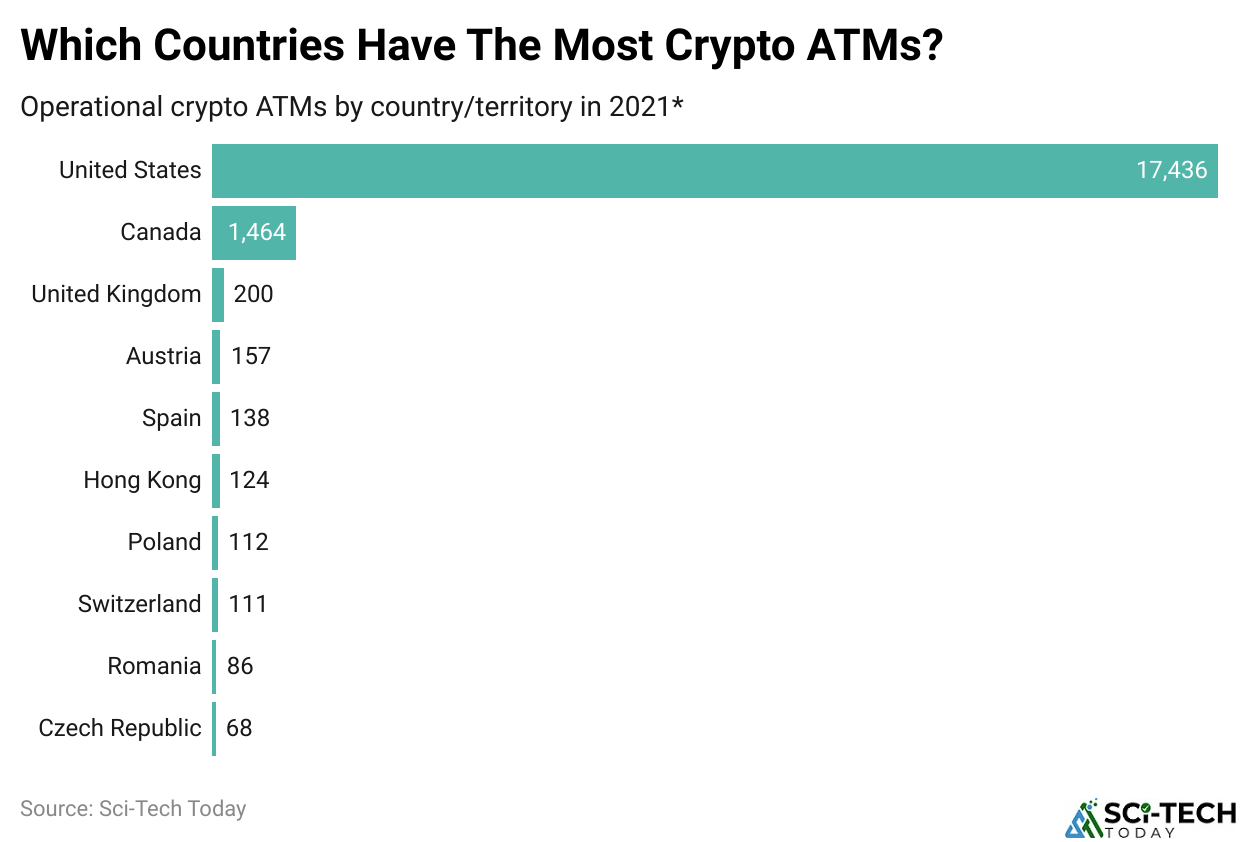
- As per the ATM statistics ranking found on Crypto Head, the USA attained a 7.3/10 rating primarily owing to its reach and growing network of cryptocurrency ATMs.
- Nevertheless, even if the number of countries with such ATMs is limited, the USA remains very much ahead of the rest of them, with the nearest being Canada coming in second place.
- The second is Canada, which had 1,464 crypto ATMs, and the third is the United Kingdom, which had 200 crypto ATMs.
- A crypto ATM refers to a physical device where individuals can convert cash or debit/credit cards into cryptocurrencies.
- In some cases, these crypto ATMs work both ways; hence, individuals can also convert cryptocurrencies into cash.
- There are growing concerns over the crypto ATM network as regards its use for money laundering, a problem that came into focus during the pandemic when cross-border freight to and from the US and Mexico was curbed.
- It was reported that such criminals used virtual currencies to transfer large amounts of money overseas.
- Though there have been no figures provided, the authorities seem to be taking it seriously.
- In British Columbia, where the first crypto ATM was installed, there has been a proposal to ban those machines because of fears of money laundering.
Number of Worldwide ATMs And Branches
(Reference: datos-insights.com)
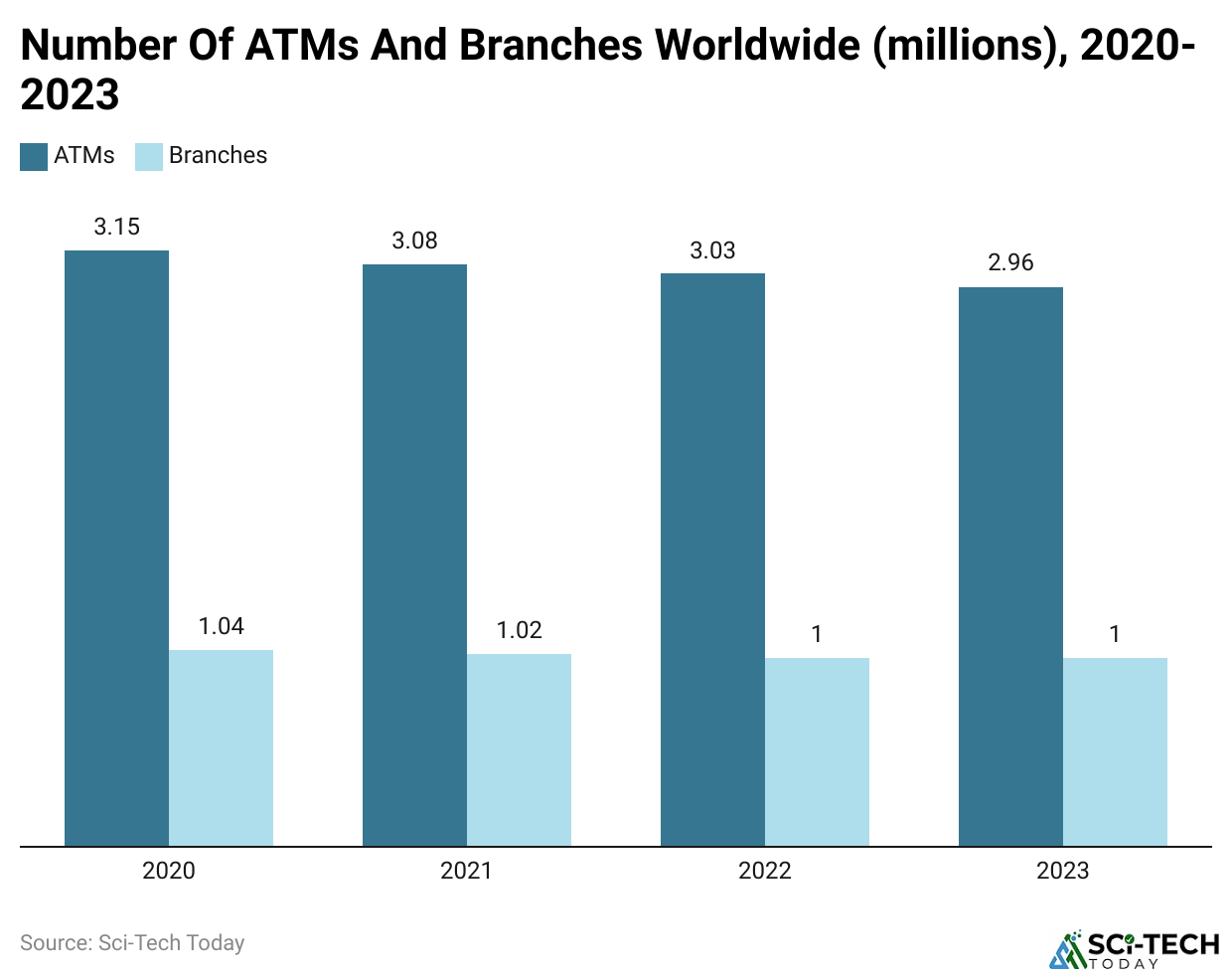
- According to ATM statistics, the number was relatively smaller – 2.96 million in 2023.
- It appears that there is a continuous contraction, and this amounts to 0.19% and is mainly due to the trends in the banking industry, with mobile banking, contactless payments, and digital wallets becoming increasingly common, especially in developed countries.
- Although this trend suggests that there is a degradation of the availability of ATMs, in certain geographic areas, particularly developing regions like India and Africa, where there is no easy access to digital banking systems, ATMs are very significant.
- There is still a tendency for ATMs to be in higher demand in underdeveloped markets, which plays a crucial role in maintaining their numbers globally.
- This is because there is an increasing tendency to utilize the Internet and mobile banking to minimize the need for a physical presence.
- As banks are operating more of their services online, they have closed many branches since they do not see it as plausible to incur the costs of running the branch.
- The pattern is more evident in the advanced markets of North America and Europe due to customers’ preference for banking through digital means instead of physically visiting the bank.
ATM Usage Trends
- Recent ATM statistics show that ATM transaction volumes globally have soared to around USD 14 trillion a year. That is approximately USD 38 billion worth of transactions completed every single day.
- As a research study, more than half (65%) of ATM users in the year 2024 still prefer using cash for daily payments, with only 35% of people not carrying cash with them opting for some form of contactless or online payments.
- While in developing countries, ATMs remain indispensable for providing access to cash for around 73% of people considered “cash only.”
- As against this, in developed countries such as America and Germany, the use of ATM services has declined by around 10% on account of fintech applications.
ATM Security
- The focus on ATM security has significantly increased in 2024, as financial institutions worldwide suffered ATM fraud losses of approximately USD 1.8 billion in 2023.
- This represents a 4% increase from the previous year due to advances in card-skimming techniques and cyberattacks.
- Financial institutions have also spent a lot of money on improving security, with 25% of all new ATM placements in 2024 being biometric ATMs and contactless card transactions.
Cost of ATM Operations
- The annual costs incurred in running ATM hardware, such as maintenance, cash filling, and security, are approximately USD 6,500.
- Nonetheless, each ATM is estimated to earn revenue of about USD 12,000 per year, so they are attractive to banks and independent ATM entrepreneurs.
- For ATM users who are not customers of the bank and use ATMs, the average non-customer withdrawal is charged USD 2.60, but in some locations, this may reach the maximum of USD 5.00. This helps the owners of ATMs to make a profit from their business.
Future of ATMs
- Although it is projected that the use of ATMs will diminish in most digitized areas, it will remain an important component of infrastructure in developing countries.
- Smart ATMs, which provide loan application services, mobile top-ups, and even cryptocurrency transactions, among other things, will be a key factor in the evolution of the industry in the years to come.
Final Thoughts
In summation, the ATM sector will still play an integral part in the financial system globally, even in 2026, despite the increasing embrace of cashless transactions. ATMs still resolve the inconsistencies existing in the traditional methods of banking and the contemporary approaches that are digital.
The use of cash continues to be considered the preferred means of payment for any minor service offered by everyone, irrespective of their age, since it is convenient and accepted across the globe. It is observed that many poor and underdeveloped nations have many people who do not have access to banks.
These ATM statistics accentuate the need for ATMs in the payment industry, and as a result, their primary function of providing cash is maintained.
FAQ
The world’s first electronic ATM debuted on June 27, 1967, at a Barclays Bank branch in Enfield, North London. Invented by John Shepherd-Barron, this machine dispensed cash via paper vouchers rather than the plastic cards we use today.
The world’s first successful electronic ATM was opened by Barclays Bank on June 27, 1967, in Enfield, North London. It was invented by Scottish engineer John Shepherd-Barron and famously dispensed up to £10 using paper vouchers instead of plastic cards.
Eritrea is the only country in the world that generally does not use ATM machines. Its economy is almost entirely cash-based, and the government does not support the installation of ATMs, meaning residents and visitors rely solely on physical banks for financial transactions.

Sources