








Preface
Cannabinoid Pharmaceuticals Statistics: Cannabinoid pharmaceuticals are gaining attention as researchers uncover new medical uses for compounds found in cannabis. Unlike recreational cannabis, these medicines are developed, tested, and regulated to treat specific health conditions. They are being studied for pain management, epilepsy, multiple sclerosis, cancer-related symptoms, and several neurological disorders.
As research grows, more pharmaceutical companies are investing in cannabinoid-based drugs and therapies. At the same time, changing regulations and growing patient interest are creating new opportunities for the industry. However, challenges such as clinical evidence, safety concerns, drug approval, and product consistency remain.
This article explores the cannabinoid pharmaceuticals market, its major drugs and companies, key applications, and the trends shaping its future.
Recommended Pick
- The global cannabis pharmaceuticals market was valued at USD 15.08 billion in 2025 and is projected to reach USD 1,439.34 billion by 2035.
- North America led the cannabis pharmaceuticals market in 2025, with a 37% share.
- The cannabis products market is projected to reach USD 255.43 billion by 2030.
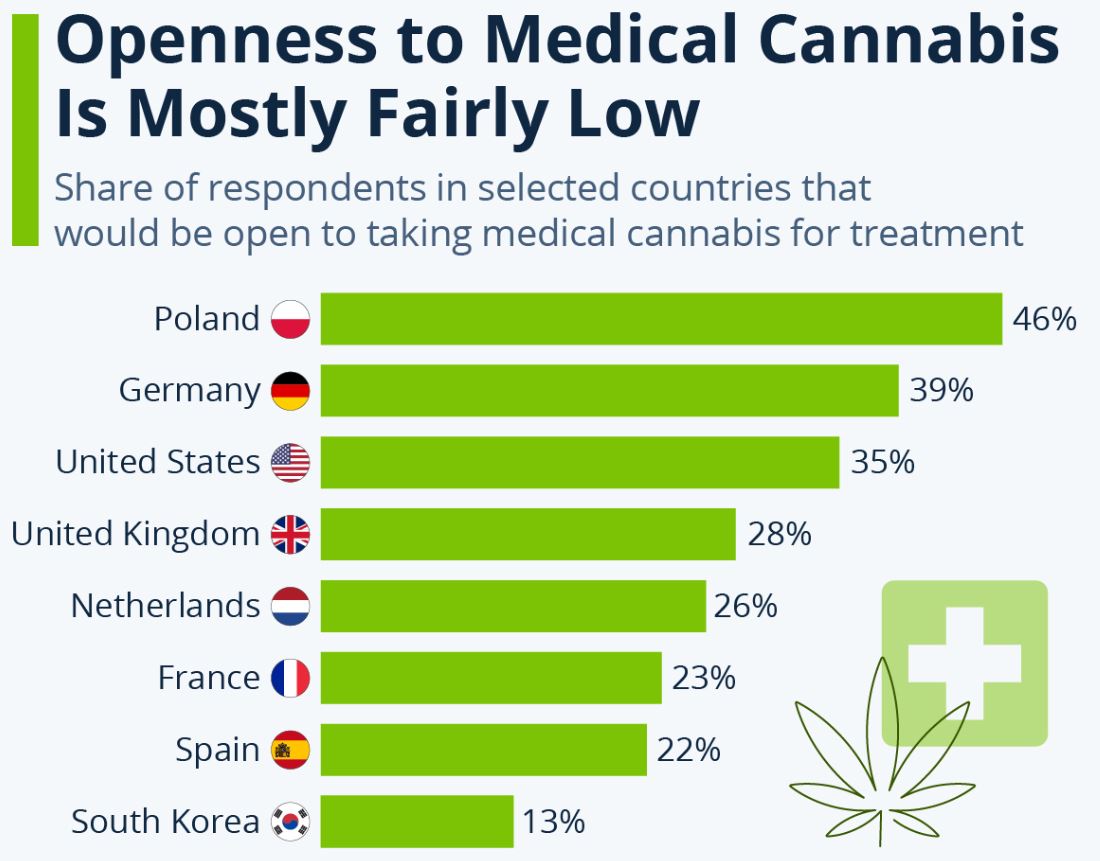
- Poland recorded the highest acceptance of medical marijuana at 46% among selected countries.
- Gummies and edibles are the preferred CBD formats for 26% of U.S. consumers.
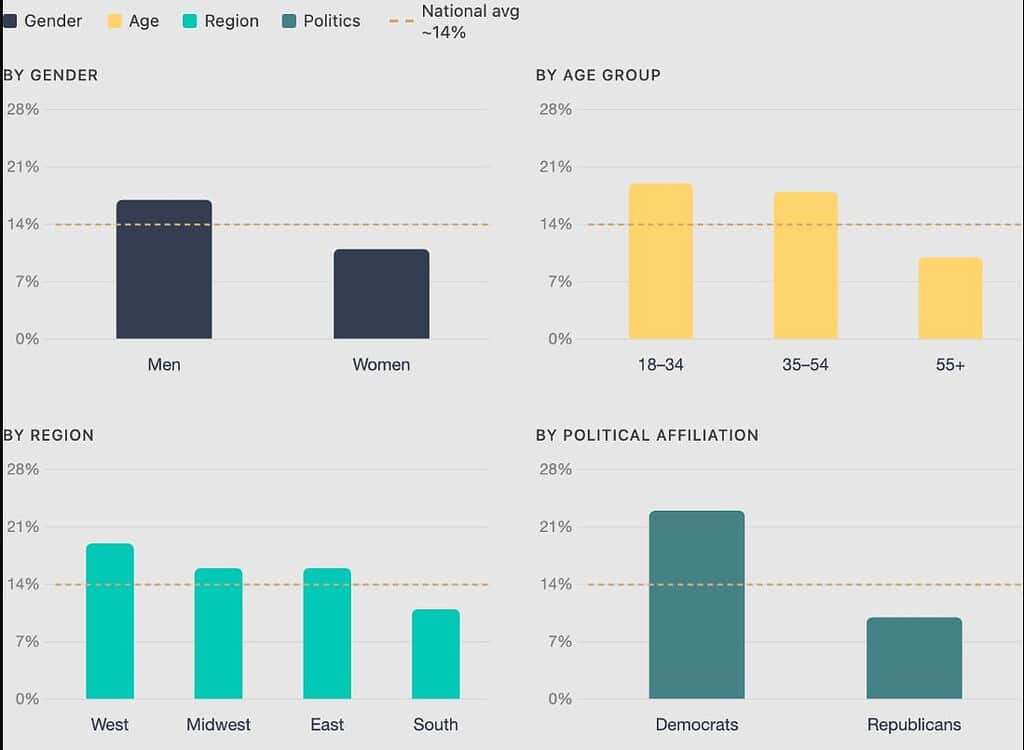
- Men report higher current cannabis use (17%) than women (11%).
- Adults aged 18-34 have the highest cannabis use rate at 19%.
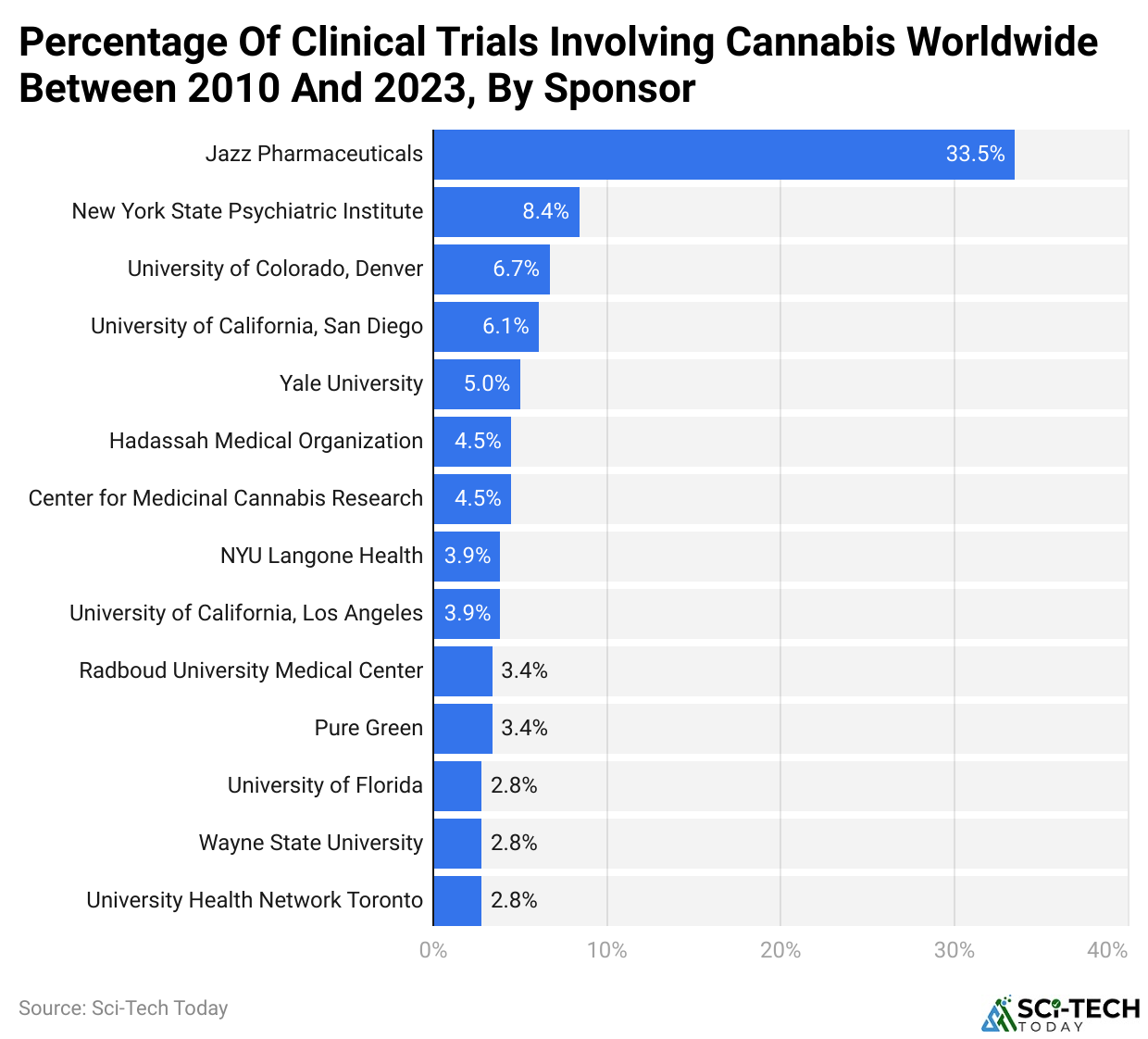
- Jazz Pharmaceuticals accounted for 33.5% of cannabinoid clinical-trial sponsorships.
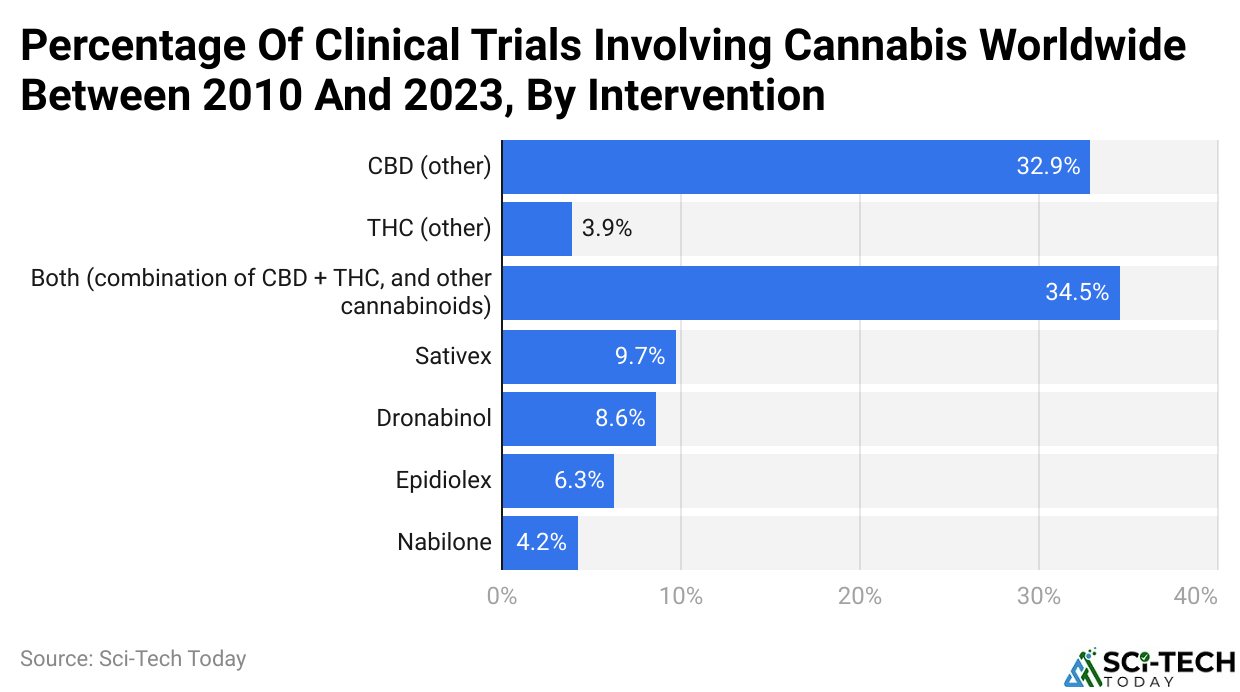
- CBD alone accounted for 32.9% of cannabinoid clinical trials between 2010 and 2023.
- New York’s cannabis market grew 84% in 2025, making it one of the fastest-growing U.S. markets.
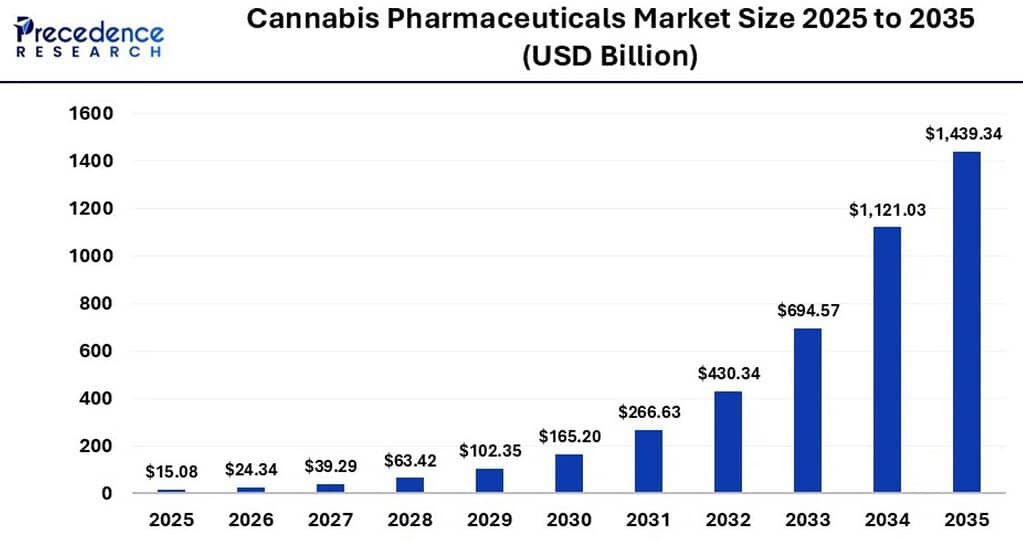
Global Cannabis Pharmaceuticals Market Size
(Source: precedenceresearch.com)
- The global cannabis pharmaceuticals market was valued at USD 15.08 billion in 2025.
- It is expected to reach USD 24.34 billion in 2026.
- By 2035, the market could reach USD 1,439.34 billion, growing at a CAGR of 57.75% from 2026 to 2035.
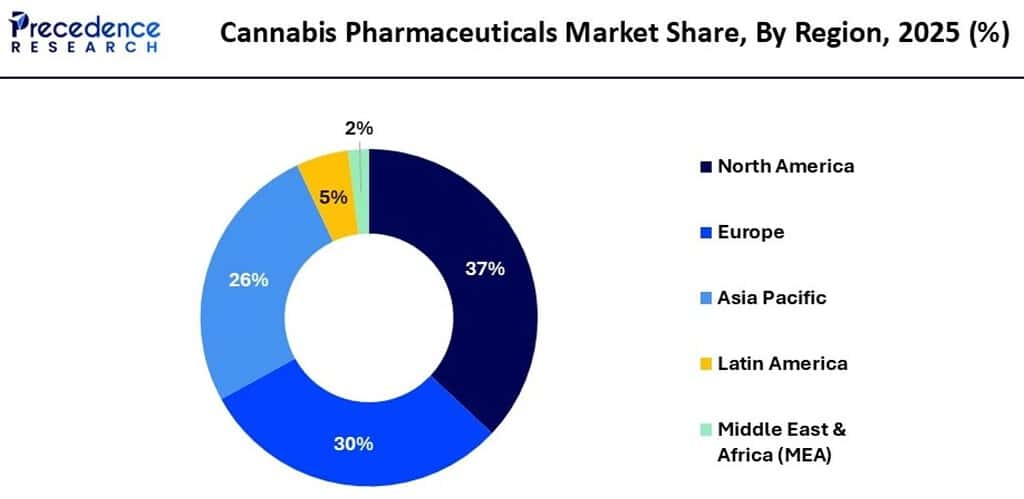
By Region
(Source: precedenceresearch.com)
- In 2025, North America leads with 37%, followed by Europe at 30% and Asia Pacific at 26%.
- Latin America holds 5%, while the Middle East and Africa account for the smallest share at 2%.
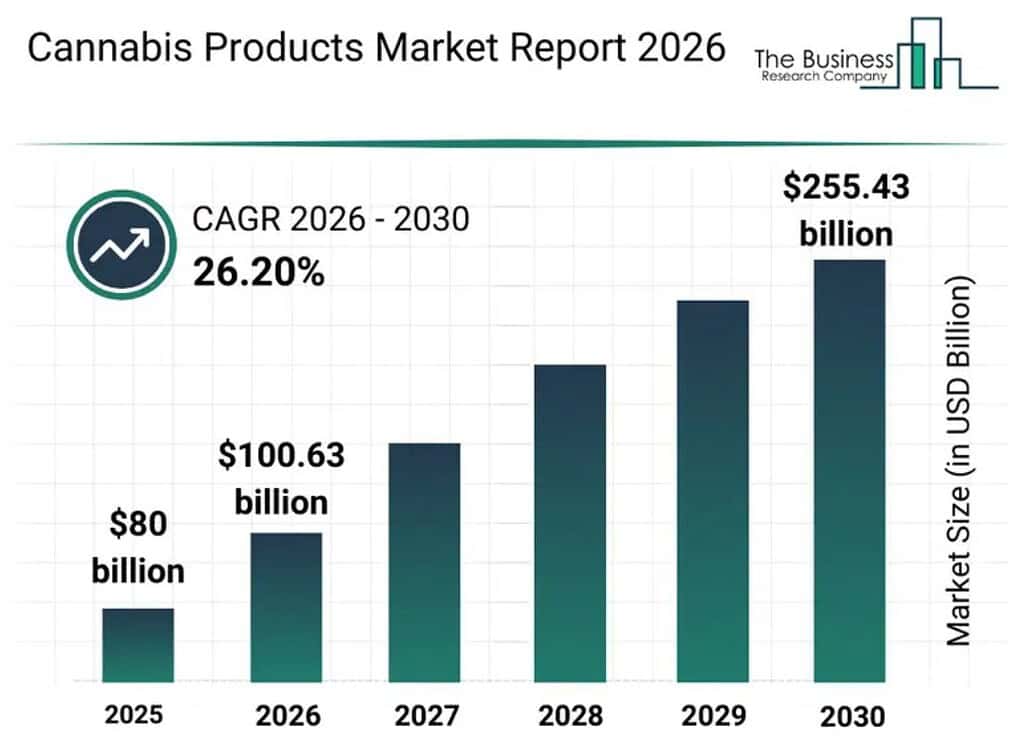
Cannabis Products Market Outlook
(Source: thebusinessresearchcompany.com)
- The cannabis products market is valued at USD 80 billion in 2025.
- It is projected to reach USD 100.63 billion in 2026.
- The market is expected to grow at a CAGR of 26.20% and reach USD 255.43 billion by 2030.
Cannabinoid Pharmaceuticals Treatment Report
(Source: statista.com)
- According to Cannabinoid Pharmaceutical statistics, the willingness to use medical marijuana for treatment is quite low compared to other countries.
- The highest figure among the selected countries is recorded by Poland, with an acceptance level of 46 % of respondents.
- Germany came in second with 39 %, while the United States had 35 % accepting it for medical treatments.
- The United Kingdom has 28 % acceptance; that is even above the Netherlands, which stands at only 26 %.
- France and Spain have even further diminished proportions, namely 23 and 22 %, respectively.
- South Korea shows the lowest level of openness within the surveyed countries, allowing only 13 % of respondents to consider medical marijuana for treatment.
United States Cannabinoid Product Preferences
- According to yougov.com, gummies and edibles are the most preferred CBD formats, with 26% of U.S. consumers reporting use or preference.
- Oil, tinctures, and topical creams or lotions each account for 19%, while vape products account for 12% and capsules for 8%.
- Despite this demand, 52% of consumers have never used CBD, suggesting significant room for market growth. Meanwhile, U.S. CBD product sales are estimated at USD 4.17 billion in 2026.
Cannabinoid Use Cases by Demographics
(Source: covasoftware.com)
- Men report a higher current cannabis use rate at 17%, compared with 11% among women.
- By age group, adults aged 18-34 have the highest usage at 19%, followed by those aged 35-54 at 18%, and adults aged 55+ at 10%.
- Regionally, the West leads with 19% current use, while the Midwest and East each report 16%, compared with 11% in the South.
- Political differences are also visible, with 23% of Democrats reporting current use, more than twice the 10% reported among Republicans.
Main Cannabinoid Production Methods
- Plant cultivation and extraction remain the main commercial method, where cannabis or hemp is grown, and cannabinoids are extracted from the harvested plant. It offers an established supply chain but faces agricultural, regulatory, and purification challenges.
- Semi-synthesis converts one extracted cannabinoid into another, making it useful for producing minor cannabinoids and selected analogs. However, unwanted by-products can increase purification requirements.
- Total chemical synthesis builds cannabinoids from chemical ingredients rather than plants. This approach supports specialty pharmaceutical ingredients and rare compounds but can involve complex, costly production steps.
- Biosynthesis and precision fermentation use engineered microbes or cells to produce specific cannabinoids. It offers controlled, scalable production but remains an emerging technology that requires further validation.
- Plant cell and hairy-root cultures produce cannabinoids using cannabis cells in controlled environments. This approach is mainly used in research and niche applications because scaling production can be challenging.
Cannabinoid Pharmaceuticals By Clinical Trials
(Reference: statista.com)
- Of the one-third of over 500 clinical trials with cannabis sponsorship worldwide during this period, Jazz Pharmaceuticals, the number one cannabis-related pharmaceutical company, held more than a third of all clinical trials involving cannabis sponsorship worldwide between 2010 and 2023.
- The other sponsorships were rather fragmented and were mainly driven by the academe. It includes only sponsors of five trials, from which the data is derived, to show the distribution of sponsorship concerning cannabis.
- Cannabinoid Pharmaceutical statistics show that various other sponsors conducted clinical trials involving cannabinoids, with Jazz Pharmaceuticals holding the highest share at 33.5%.
- The next sponsors are the New York State Psychiatric Institute, with 8.4%, the University of Colorado, Denver, 6.7%, and the University of California, San Diego, 6.1%.
- Yale University weighs in at 5% of trials, Hadassah Medical Organization with 4.5%, and the Center for Medicinal Cannabis Research each with 4.5%.
- NYU Langone Health and the University of California, Los Angeles, contribute 3.9%, while Radboud University Medical Center and Pure Green represent 3.4% each.
- The University of Florida, Wayne State University, and the University Health Network in Toronto each sponsor 2.8% of cannabinoid clinical trials. These %ages reflect the distribution of sponsorship in some leading institutions and organizations.
Cannabinoid Pharmaceuticals Clinical Trials By Intervention
(Reference: statista.com)
- Cannabinoid Pharmaceutical statistics state that around 10% of cannabis clinical trials included Sativex as an intervention from 2010 until 2023. This statistic captures the percentage participation of clinical trials in cannabis worldwide between 2010 and 2023, segmented according to the intervention.
- The data represents the distribution of cannabinoid clinical trials by the various intervention types.
- By far, the largest share (34.5%) is made up of combinations of CBD and THC, together with other cannabinoids.
- Alone, CBD accounts for 32.9% of trials, whereas Sativex is the intervention in 9.7% of trials and Epidiolex in 8.6%. Dronabinol has 6.3% trial involvement, while nabilone has 4.2%.
- Alone, THC comprises 3.9%.
Age-Related Patterns in Cannabidiol (CBD) Use
| Reason for Using CBD | 18-25 | 26-41 | 42-57 | 58-76 | 77+ |
| Alleviate anxiety | 55% | 56% | 50% | 22% | 53% |
| Curiosity | 5% | 25% | 25% | 23% | 44% |
| Doctor suggested | 35% | 54% | 39% | 18% | 73% |
| Fun/recreational purposes | 5% | 37% | 33% | 19% | 57% |
| Improve sleep quality | 40% | 60% | 53% | 42% | 78% |
| Reduce stress/relax | 50% | 65% | 58% | 52% | 77% |
| Relieve pain | 45% | 62% | 62% | 60% | 51% |
Regional Cannabis Pharmaceuticals Market Outlook
- InsightAce Analytics stated that in 2025, North America accounted for approximately 37%-45% of the global market, with the U.S., Canada, and Mexico leading the region; the U.S. market is projected to grow at a CAGR of 54.2%-57.96%.
- According to Research and Markets, Europe is projected to hold approximately 56.3% of the market by 2035, supported by strong pharmaceutical capabilities in Germany, the UK, France, the Netherlands, and Israel.
- Market Data Forecast further reported that the region represented about 20% of the market in industry estimates for 2025, with China, India, Japan, Australia, and South Korea offering strong long-term growth potential.
- Latin America accounted for approximately 10% in 2025 industry estimates, while Brazil, Argentina, and Mexico are expected to support regional expansion.
- The Middle East and Africa accounted for roughly 5% of the industry, with Saudi Arabia, the UAE, and South Africa emerging as potential growth markets.
United States Cannabis Market Performance in 2025
- According to Covasoftware, California declined 7%, as high prices, a strong illicit market, and competition among 3,659 licensed dispensaries pressured the mature market.
- Michigan fell 4%, reflecting market maturity, rising license counts, and continued price pressure.
- New York grew 84%, expanding from about 41 licensed dispensaries to more than 300, with 625+ projected by year-end.
- Ohio generated USD 836 million in recreational sales and USD 233 million in medical sales during 2025, quickly becoming a top-five market.
- Minnesota received 1,322 microbusiness license applications.
United States Consumer Views of Cannabinoids
- Nearly 60% of U.S. survey respondents believe CBD is safe to consume, but only 45% consider its use socially acceptable, as per Forbes.
- In terms of legality, 44% of U.S. adults believe CBD should be legal, while 21% think it should be illegal and 19% remain undecided.
- Consumer views also differ between CBD and THC, with 45% saying CBD is socially acceptable while THC is not.
- Drug testing remains a concern, as 46% of respondents believe CBD use could lead to a positive drug test. The survey was conducted in 2023 among 1,000 CBD users or former users.
Pharmacokinetics of Major Cannabinoids
THC
- According to bpspubs.onlinelibrary.wiley.com, Oral THC has low bioavailability of 4%-12%, with peak blood levels appearing within 0.66=4 hours.
- Its volume of distribution is about 10 L/kg, while inhalation reduces it to around 3.4 L/kg.
- THC is mainly eliminated through feces (65%) and urine (20%), with a terminal half-life of about 22 hours.
- Inhaled THC reaches peak plasma levels within 3-10 minutes, with bioavailability ranging from 2%-56% and an average of about 25%.
CBD
- CBD has an average inhaled bioavailability of 31%, compared with only 6% orally.
- After oral administration, peak concentrations generally occur within 1-4 hours, and its half-life ranges from 1 hour to 5 days, with a mean of 18-32 hours.
- A CBD inhaler produced 3 times higher plasma levels using a 23-fold lower dose than oral CBD, reaching these levels in about 3.8 ± 1.3 minutes.
CBN, CBC, and CBG
- CBN has a smoking bioavailability of about 41%, with a reported range of 8%-77%.
- Meanwhile, it has roughly 10% of THC’s psychoactive potency.
- CBC has an estimated oral bioavailability of 6%-12%, while inhalation may provide 25%- 45%.
- Its reported half-life ranges from 10 to 24 hours.
- CBG has an oral bioavailability of 6%-10%, while inhalation may reach 25%- 35%, with peak plasma levels typically occurring within 5- 10 minutes. Its half-life ranges from 18 to 24 hours.
Summary
The cannabinoid pharmaceuticals market is growing as researchers find new medical uses for cannabinoids. More clinical studies, better drug development, and rising interest in cannabinoid-based treatments could drive future growth. However, strict regulations, limited research, and concerns about safety and long-term effects may slow progress.
Overall, the market has strong potential, but continued research, clear regulations, and better clinical evidence will be important for wider use in healthcare.
FAQ
The main cannabinoids used in pharmaceuticals are THC, CBD, and synthetic cannabinoid-related compounds.
The FDA has approved Epidiolex, Marinol, Syndros, and Cesamet for specific medical conditions.
Yes, cannabinoid medicines can interact with other drugs, affecting their effectiveness or increasing side effects.

Sources


