








Overview
FOMO statistics: If you’ve ever scrolled through Instagram at midnight and suddenly felt like your entire life is boring compared to everyone else’s… (I do). Well, you’ve met FOMO. Short for “Fear of Missing Out,” it’s not just a feeling; it’s a measurable, trackable thing.
And that’s where these FOMO statistics come in. These stats don’t just tell us how common it is; they reveal how it shapes the way we think, spend money, and even sleep. The truth is, FOMO has been studied for years, and the data behind it is honestly shocking.
FOMO is not only seen in the number of people who do not sleep well because of it but also in the frequency at which it causes us to reach for our wallets. Numbers have proven that FOMO has evolved from being a quirky social behaviour into a full-fledged cultural phenomenon. Here, we will look at all the most comprehensive FOMO statistics available about its origin, functions, its targets, and even costs. Let’s get started.
The Editor’s Ultimate Picks
- In 2004, that’s when Patrick McGinnis coined “FOMO.” It’s been around longer than you think, but the name stuck then.
- In 2013, researchers made the 10-item FoMO scale. It’s reliable with an alpha above 0.8, so legit.
- 40 to 60% of social media users report experiencing FOMO in older and newer surveys alike (MyLife, GWI).
- 65 to 70% of millennials especially say they feel FOMO when it comes to events and experiences.
- 37% of social media users say they’ve purchased because of FOMO, massive numbers for marketers.
- In crypto markets, 60 to 80% of retail traders report that at least some FOMO influences their decisions.
- A huge 93% of Gen-Z admit to losing sleep due to checking social media late at night.
- Higher FoMO correlates with higher anxiety, depression, and worse sleep, and some studies show interventions like limiting social media can reduce loneliness and depressive symptoms.
- During COVID, social media usage jumped by 25 to 47%, which likely stoked more FOMO.
- Behaviorally, FoMO drives impulsive buying, binge-drinking, distracted phone use, and compulsive brand behavior, especially in younger people.
| Topic | Statistic / Insight | Context / Significance |
| Year coined | 2004 | When the term “FOMO” entered the lexicon |
| FoMO scale created | 2013, 10-item scale, α 0.8 | Valid measurement tool |
| Social media user prevalence | 40 to 60% report experiencing FOMO | Common across broad surveys |
| Millennials & events | 65 to 70% feel FOMO about events | Younger adults are highly affected |
| Purchases due to FOMO | 37% of social users | Significant consumer behaviour factor |
| Crypto trading & FOMO | 60 to 80% of retail traders are influenced by FOMO | Big role in speculative markets |
| Gen-Z sleep loss | 93% lose sleep due to social media | Major impact on rest and well-being |
| Mental health link | Moderate to strong ties to anxiety and depression | Interventions can reduce these effects |
| Pandemic increase in usage | +25 to 47% social media time during COVID | Elevated FOMO exposure and risk |
| Risky behaviour drivers | FoMO is linked to binge-drinking, impulsive buying, and distraction | Public health concerns for youth |
Definition of FOMO
(Source: changejournal.com)
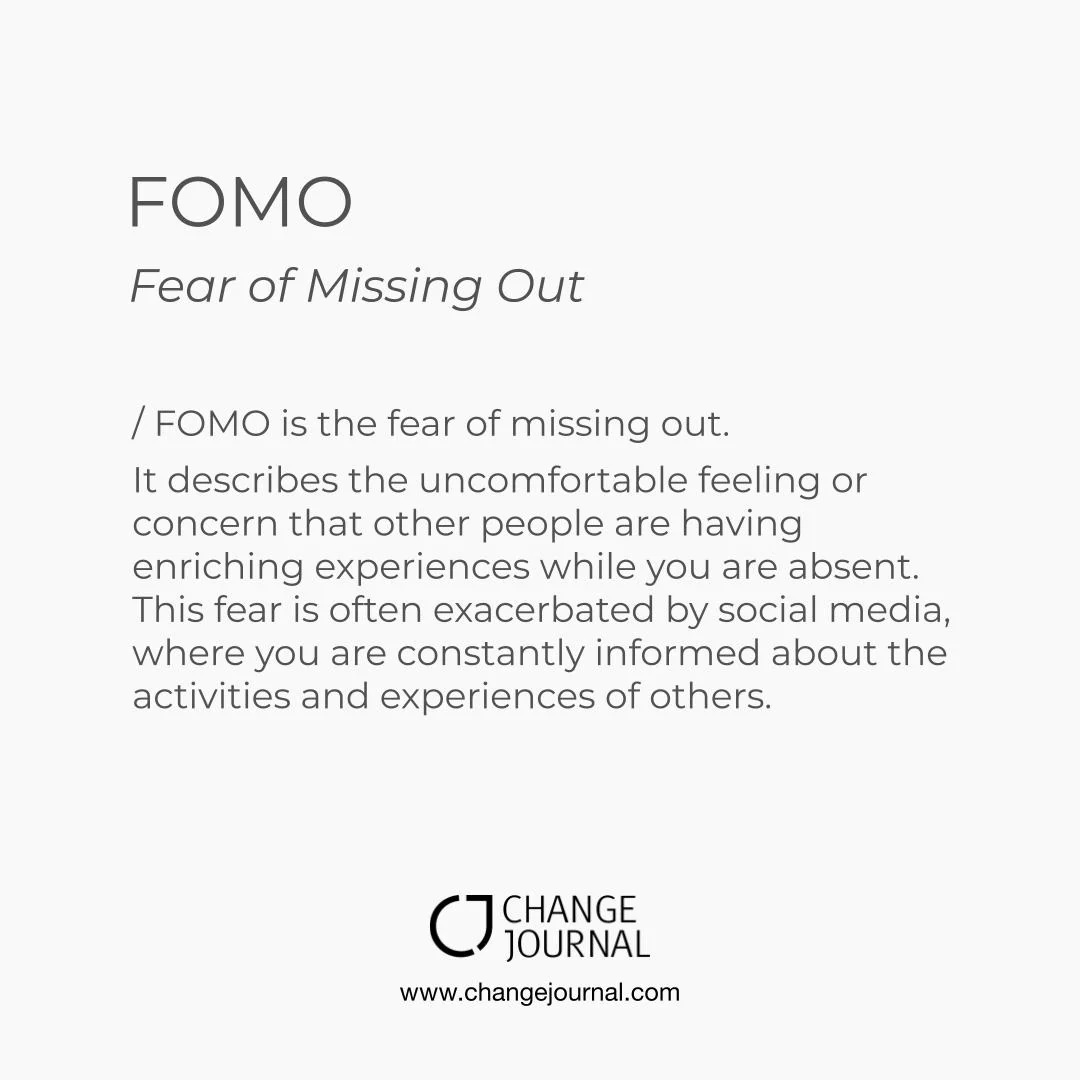
- The term “FOMO” (fear of missing out) was coined by Patrick J. McGinnis in a 2004 student op-ed while he was at Harvard Business School.
- Early academic operationalization came later; by 2013, psychologists formalized a measurable FoMO scale used across studies.
- The dictionary entry and mainstream media came later in the decade, thus further spreading the term.
- Simple and common definition employed in scientific research: a fear that other people may be enjoying themselves without one being there.
- Related opposites/adjacent terms that appear in the literature: FOBO (fear of a better option) and JOMO (joy of missing out).
- The phenomenon predates social media (Keeping Up with the Joneses, etc), but platforms made it continuous and measurable.
- The dictionary entry and mainstream media came next in the early 2010s, contributing to the spread of the term.
- Typical common language definition applied in research: pervasive fear that other people might be experiencing enjoyable things without you.
- In early surveys (2013), nearly half of social networking users have shown FOMO-related fear of being off social networks. The frequently mentioned statistic is 56% from a 2013 MyLife survey.
- Academic definition associates FOMO with frustration regarding unfulfilled social relatedness needs (self-determination theory). This is the only existing theoretical framework.
- Assessment evolved rapidly: short scales, laboratory research, surveys, and large market research all measure the same concept (missed enjoyable experiences).
- Why FOMO Statistics matter: they turn a social feeling into actionable metrics that marketers, clinicians, and platforms use. That’s why you see charts, surveys, and conversion-focused A/B tests.
| Stat / Fact | Value |
| Year term coined | 2004 |
| Early survey: % of social users reporting FOMO | 56% (2013 MyLife) |
| Academic scale introduced | 2013, 10-item FoMO scale |
Rise of FOMO in Modern Life
- FOMO has been experienced by 69% of Americans.
- Back in 2013, the percentage stood at 56% for social media users.
- As per European countries, about 59% of teenagers in Poland and 67% of social media users in Italy suffer from FOMO.
- The 2024 research study found that 15% of college students experience FOMO on a weekly basis.
- Almost 69% of millennials and Gen-Z individuals feel FOMO consistently. The same percentage of 69% indulges in overspending to cope with FOMO.
Measurement and the FOMO scale
(Reference: researchgate.net)
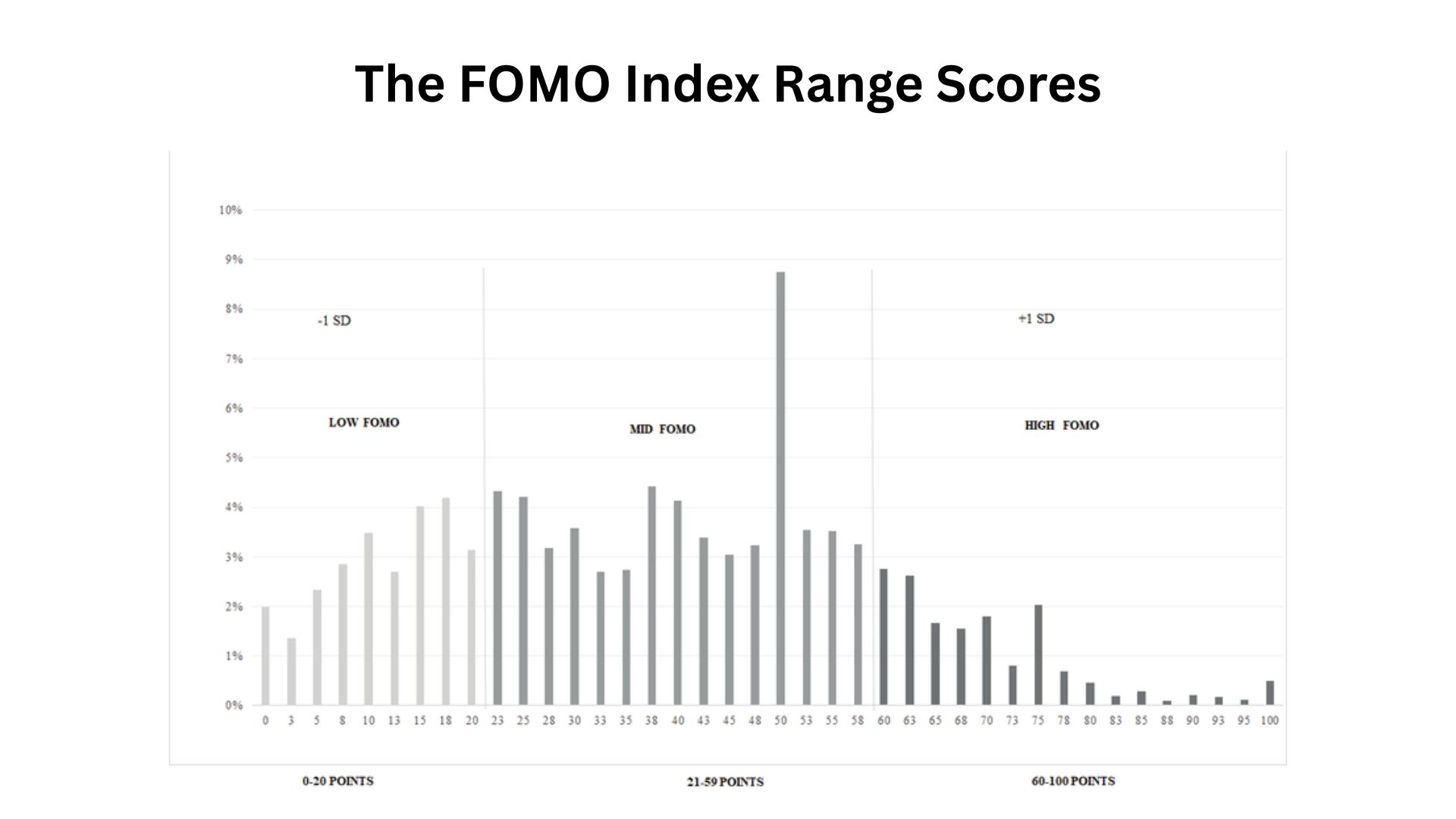
- The standard research tool is the 10-item Fear of Missing Out Scale. Respondents rate items on a 5-point scale; scores are averaged.
- Average sample sizes in most of the validation studies: thousands over several studies (Ns generally from 500 to 2,000+).
- The instrument exhibits excellent internal consistency (typically alpha = .80 in the literature).
- Scholars frequently differentiate between the trait and state versions of FoMO; the former predicts consistent behaviour, while the latter represents sudden spikes in FoMO.
- Most recently published papers measure FoMO along with social media addiction, anxiety, depression, or problematic smartphone usage and find moderate to high correlation.
- It has been demonstrated that FoMO is negatively associated with life satisfaction and well-being and positively associated with spending time on social media.
- FoMO is used in marketing research to predict impulse buying and vulnerability to scarcity tactics.
- Cross-cultural validation exists: FoMO scales have been translated and used worldwide with consistent patterns.
- Newer lab studies use experience sampling (EMA) to capture FoMO in real time; these find momentary FoMO spikes after seeing peers’ posts.
- Takeaway: the FOMO Statistics you see are usually the FoMO scale mean/percentile or derived behaviour metrics (checks-per-day, purchases, sleep latency).
| Measure | Typical value/metric |
| FoMO scale length | 10 items |
| Reliability (alpha) | 0.8+ |
Prevalence and Demographics
(Source: springer.com)
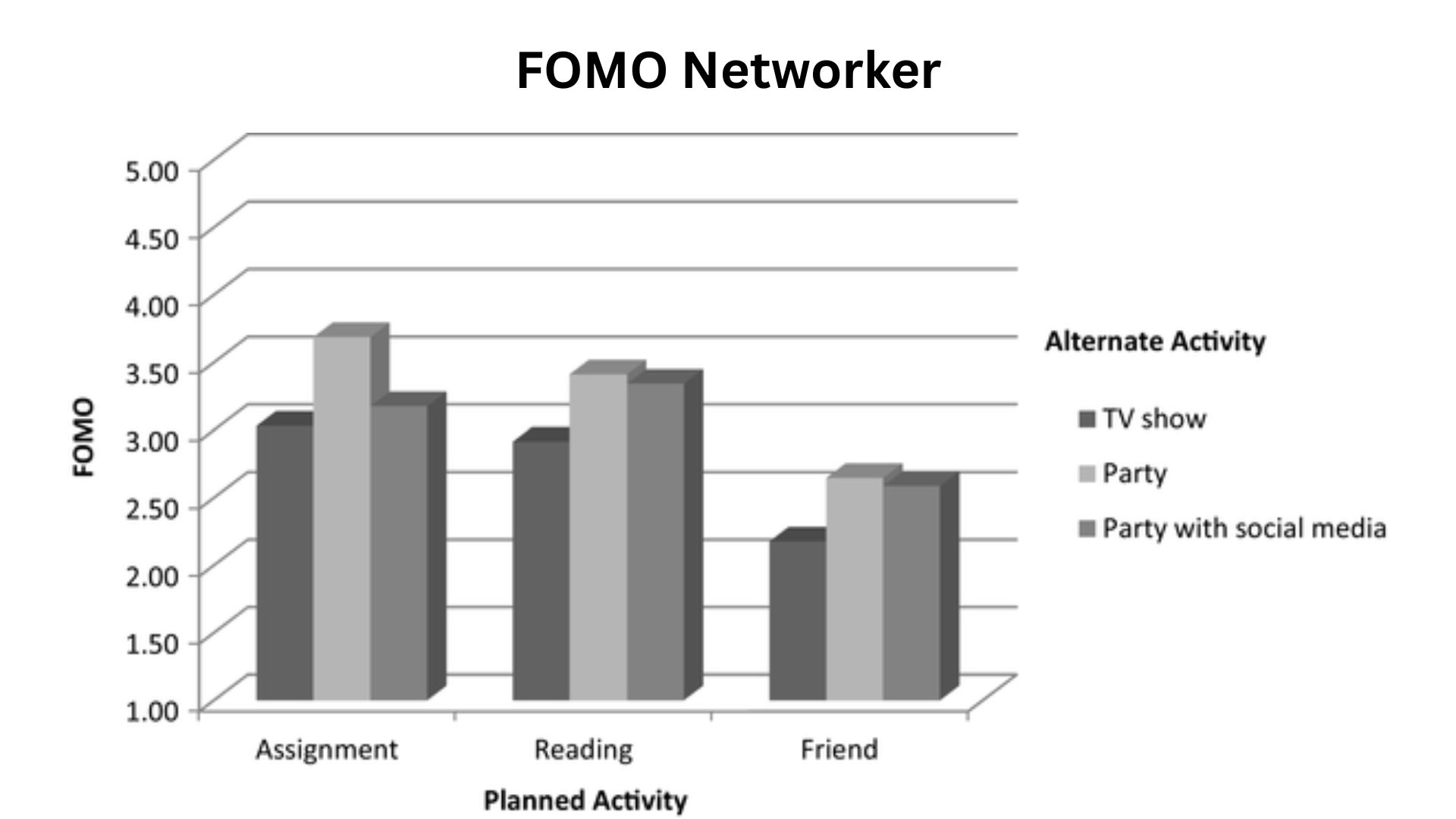
- Large market reports categorize users: GWI (GlobalWebIndex) created the “FOMO Networker” segment and measured prevalence across countries.
- General figure: about 50% of social media users have reported experiencing FOMO according to surveys conducted in the decade; several subsequent studies have estimated figures within this range.
- Members of Generation Y and younger adults always have a higher prevalence: FOMO estimates among millennials in Eventbrite/Harris survey and other surveys are usually between 65 to 69%.
- Teens and college students score higher on FoMO scales in multiple academic samples; some university studies report that 40%+ of students score in moderately high FoMO bands.
- Gender patterns are mixed across studies; some report slightly higher FoMO in males, others in females. The consistent signal is age and gender.
- Geographic diversity (culture is important): Samples from Southern Europe and some samples from Eastern European teenagers tend to score high levels of FoMO in national surveys.
- Urban, well-connected, and wealthy individuals tend to score higher event-FOMO (since they have many more social alternatives).
- Device use: heavy smartphone users report higher FoMO; frequent checkers (multiple times/hour) are more likely to score high.
- Over time, some tracking studies show slight declines in the worst forms of FOMO as digital well-being tools spread, but the phenomenon remains common.
| Group | Rough % who report FOMO |
| General social media users (survey averages) | 40 to 56% |
| Millennials (event FOMO) | 65 to 69% |
| Teen/university samples | Many studies: 40%+ moderate-high FoMO |
Social media platforms
(Source: statista.com)
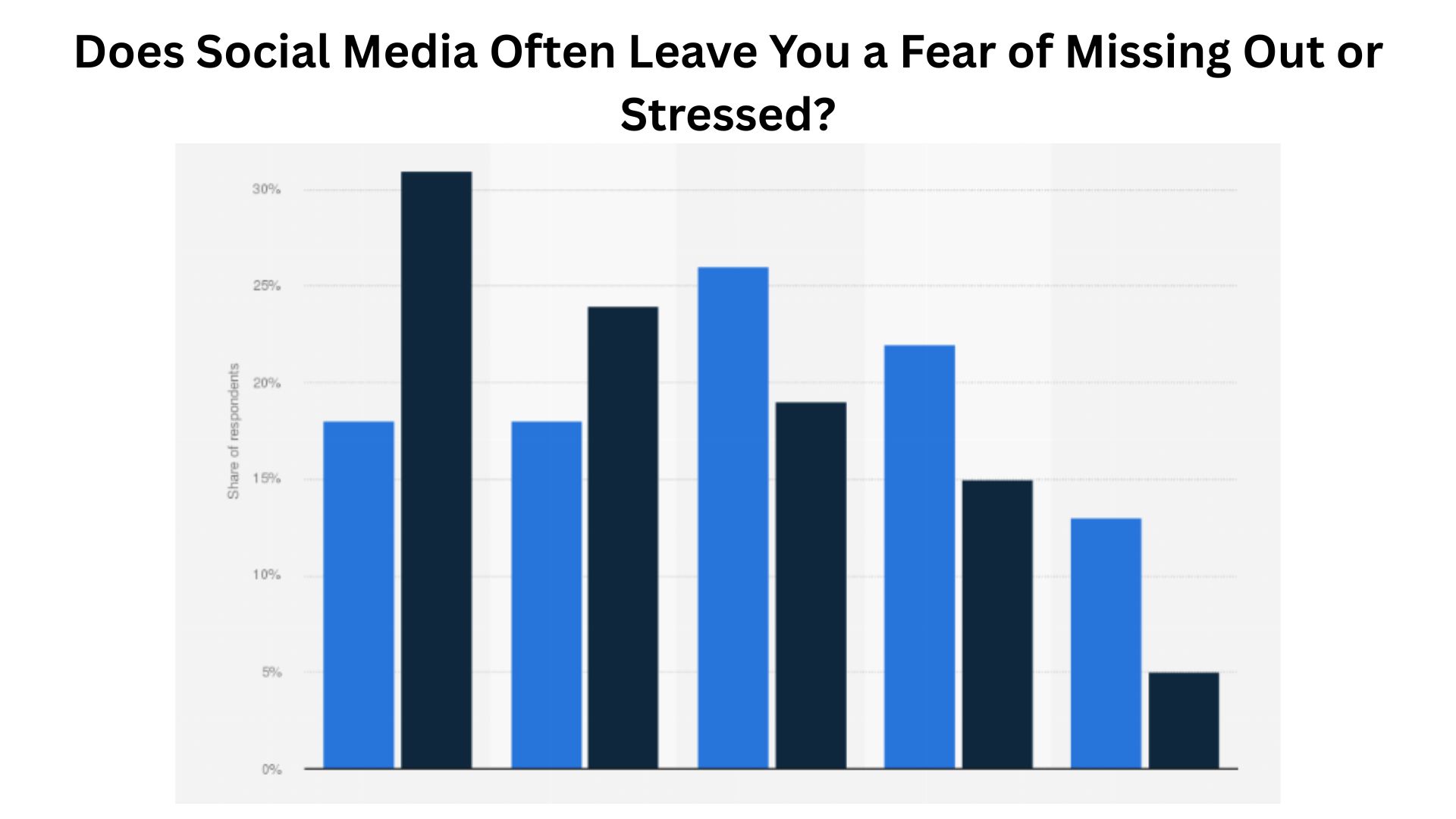
- Strong and repeated finding: more social media engagement predicts higher FoMO scores. That’s robust across samples.
- Platform differences: photo-first platforms (Instagram) and close-network platforms (Facebook, Snapchat, WhatsApp) show strong ties to FoMO in different studies. Instagram is often flagged for image-based social comparison.
- Experimental evidence: brief, randomized exposure to social feeds can lower momentary well-being and increase FoMO-like feelings.
- Before-bed use of social media is common and linked to late-night checking driven by FoMO; YouTube, Facebook, and Instagram rank high in pre-bed usage surveys.
- Platform features that fuel FoMO: stories disappearing (ephemeral content), live counts/attendee lists, visible likes, and algorithmic ranking that surfaces “what’s popular”. These features increase urgency.
- Some market reports: a substantial share of FOMO-driven purchases/discoveries happen after seeing friends or influencers on social platforms. GWI estimated a material link between FOMO networkers and purchase journeys.
- Private messaging platforms can be strong FoMO drivers because they connect you to your real-life close network, where missing out matters more.
- Platform responsibility: regulators and researchers are increasingly focusing on design features that nudge people into constant checking since those features amplify FoMO.
- Social proof/scarcity signals built into apps (e.g., “X people are viewing this now”) explicitly try to create a FOMO response to increase engagement.
| Platform/feature | FOMO link (type) |
| Instagram / image feeds | Social comparison, high FoMO |
| Facebook / private networks | Missing personal events, strong FoMO |
| App features (stories, live counts) | Increase urgency and checking |
Financial Consequences of FOMO
- 60% of millennials will make a purchase within 24 hours of experiencing FOMO.
- 40% of Gen Z overspent in order to be able to keep up with their peers.
- Limited time offers can make a buyer more inclined to purchase, which can increase revenue by more than 300%.
- 52% of the population bought on impulse due to FOMO-like advertisements.
- User-generated content is really influential. 92% of people look for reviews prior to purchasing, and 84% admit that they influence their decision-making process.
Mental Health, Anxiety, Depression
(Reference: click2pro.com)
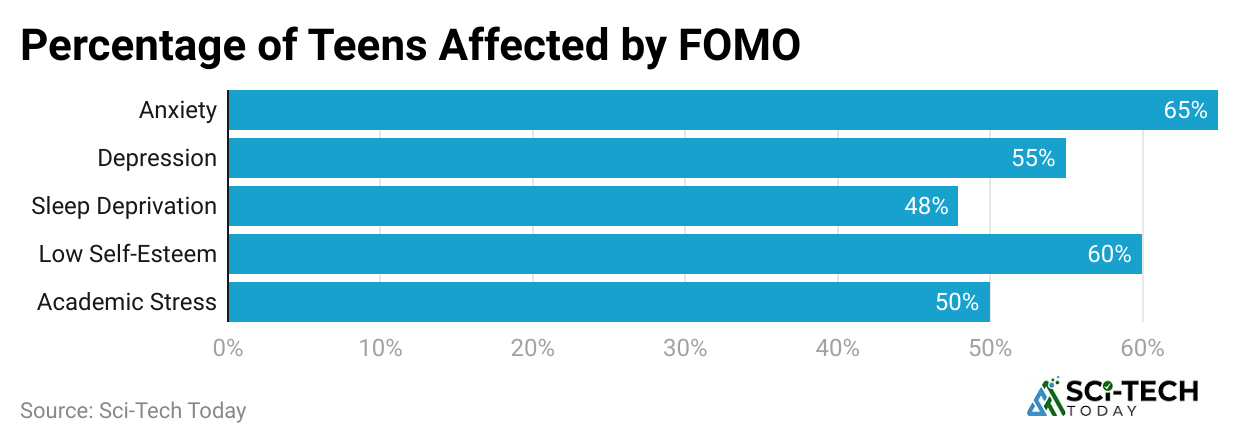
- Multiple reviews and empirical studies link higher FoMO scores with increased anxiety and depressive symptoms. This is a consistent finding.
- Przybylski et al. (2013) showed FoMO correlates with lower life satisfaction and worse mood; many later studies replicate that.
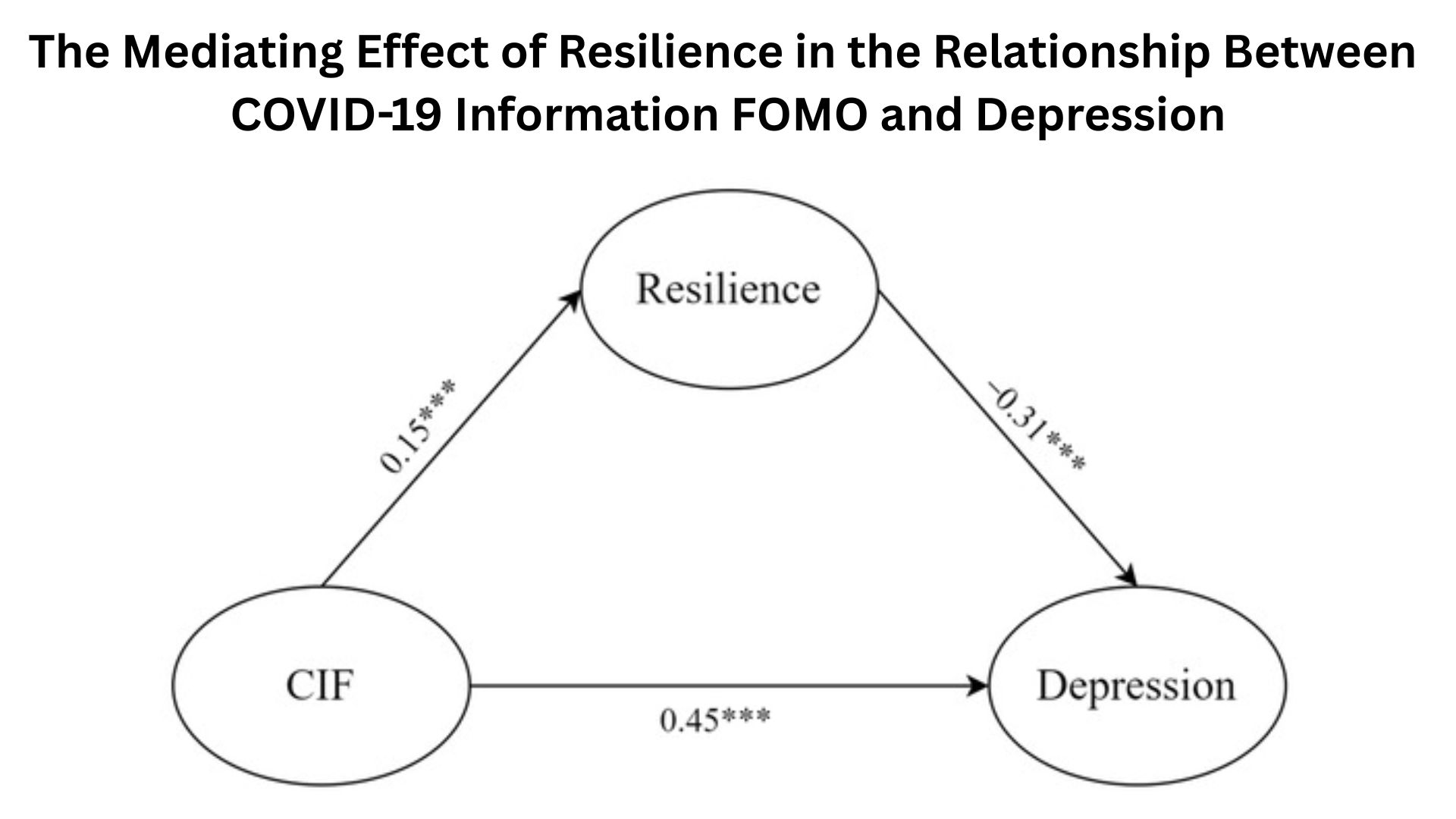
- During the COVID era, there’s evidence that FoMO rose as a mediator between pandemic stress and depressive symptoms in students.
- Effect sizes vary by study, but the relationship is often moderate: FoMO explains measurable but not overwhelming shares of variance in depression/anxiety; it’s one of several contributors.
- Limiting social media (experimental and quasi-experimental studies) has produced reductions in loneliness and depression in short interventions (for example, 3-week trials). That suggests feasible interventions work.
- Public-health scale: WHO summarized a 25% global increase in anxiety/depression prevalence during the first pandemic year; FoMO and increased online exposures are one of many pathways.
- FoMO amplifies rumination and social comparison, psychological mechanisms well-documented in the literature.
- Younger people show the strongest mental health signal linked to FoMO, probably because of higher social media use and life-phase sensitivity.
- Clinical relevance: Researchers suggest screening for problematic social media use and FoMO in youth mental health settings where appropriate.
| Outcome | Typical finding |
| Association with anxiety/depression | Moderate positive correlation |
| Change with social media reduction | Reduced loneliness & depression in short RCTs |
| Pandemic mental health rise | 25% global increase in anxiety/depression (WHO) |
Sleep, Attention, and Productivity
(Reference: click2pro.com)
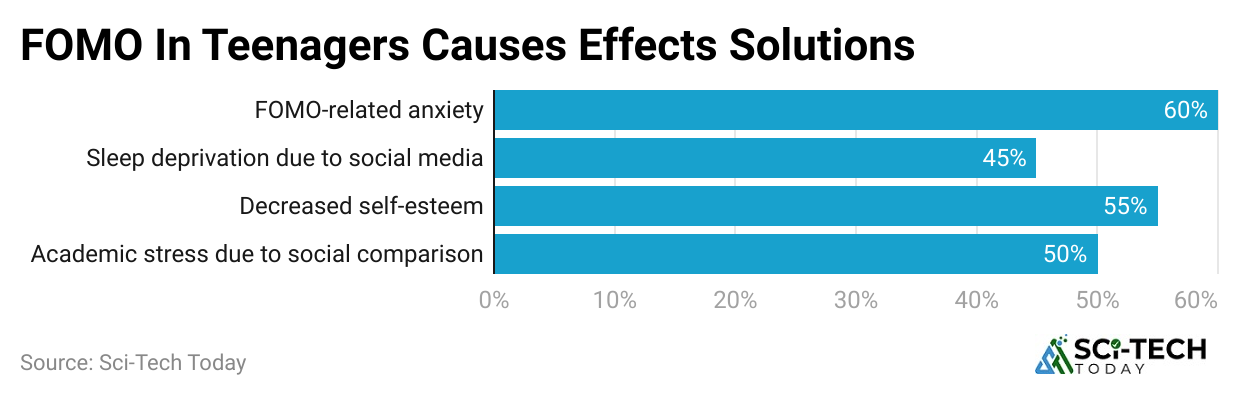
- FoMO drives late-night checking and bedtime social media use; many surveys find that a majority of adults use social media in the hour before bed.
- AASM and Sleep Org surveys report very high rates of Gen Z staying up because of social media; one headline: 93% of Gen Z admit to losing sleep from social platforms.
- Academic studies link FoMO with longer sleep latency (time to fall asleep) and, in some samples, shorter sleep duration. Findings are somewhat mixed but trending toward harm.
- Sleep hygiene interventions and limiting evening phone use improved sleep outcomes in trials.
- Effect on productivity: constant checking (due to FoMO) distracts one’s attention; research on phubbing and multitasking shows that FoMO results in reduced productivity and academic performance.
- For students, there is a relationship between lack of sleep and high level of FoMO as well as negative social media behaviour in all three categories.
- Statistics: according to surveys, almost 78% of adults use social media before going to bed, resulting in spending several hours using social media daily.
- Employers and educators are noticing: some institutions advise digital curfews to protect performance.
- Mechanisms: cognitive arousal, blue light, and notification-driven awakenings. FoMO combines all three.
| Measure | Typical stat |
| Adults using social media before bed | 70%+ in surveys |
| Gen Z reports losing sleep due to social media | 93% (survey) |
| FoMO → increased sleep latency | Supported in recent studies |
Consumer Behaviour- Purchases, Scarcity
(Reference: researchgate.net)
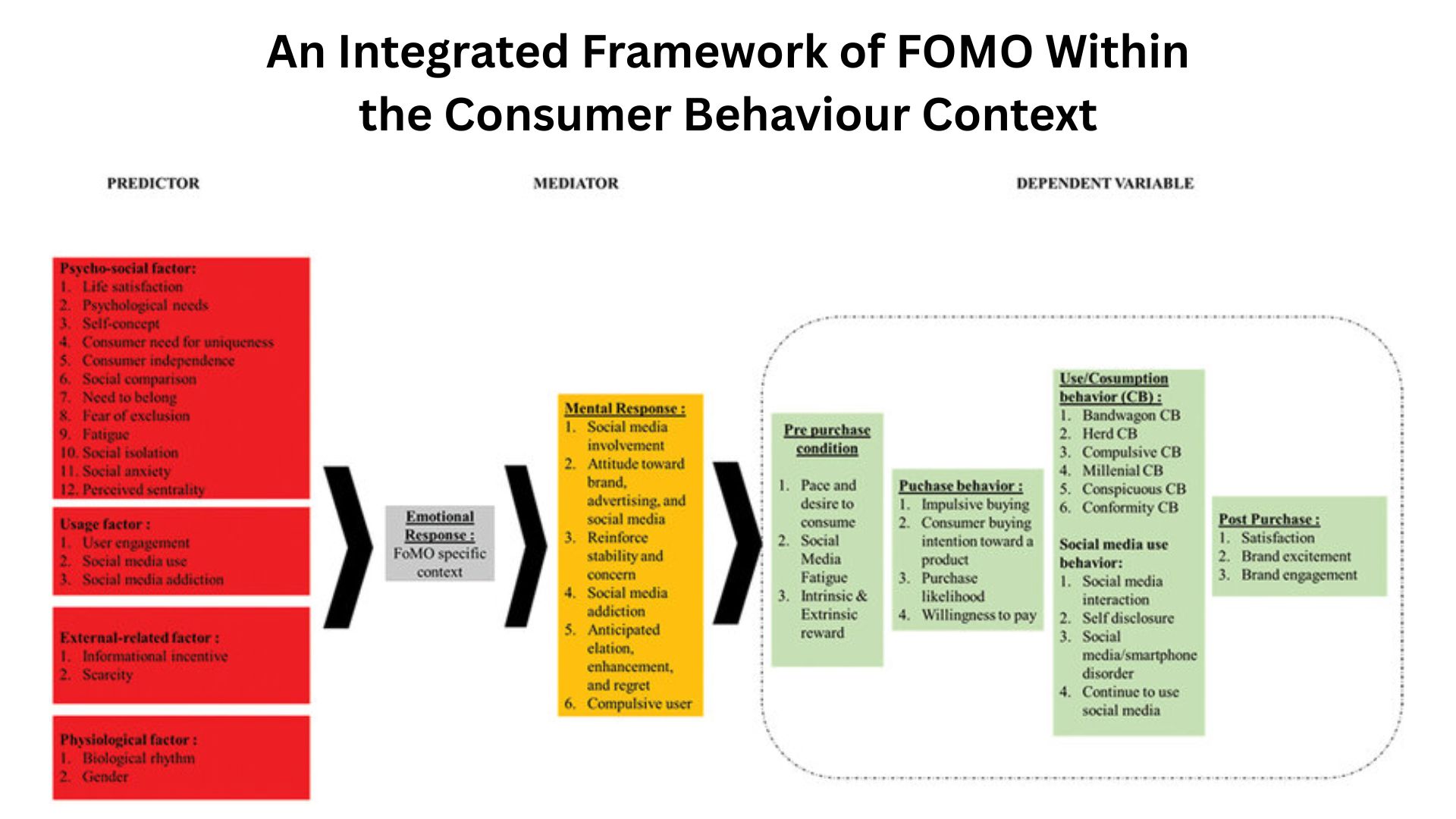
- GlobalWebIndex/GWI and similar reports find that a big chunk of purchases is FOMO-influenced; GWI reported that 37% of social media users say they have purchased because of FOMO.
- Marketing tests repeatedly show scarcity/time-limited offers raise conversion rates; peer-reviewed work finds time-scarcity promotions reliably boost purchases (experimental evidence exists).
- The reports from industry surveys (marketing blogs and conversion sites) state that FOMO has resulted in reactive purchases among millennials over 55%, but these figures come from surveys.
- Live commerce/flash sales explicitly use FOMO cues (limited stock counters, countdown timers) and generate high impulse rates in many markets.
- FOMO-induced conversion is context-specific; time-bound messages increase conversions according to academic studies, but the magnitude varies with products and initial levels of demand.
- High FOMO people tend to seek “best deals” and engage in bargain shopping. According to GWI, high deal seekers among FOMO people.
- Real numbers marketers use: showing low stock or “X people viewing” often increases click-throughs and reduces cart abandonment in A/B tests (platform numbers vary widely).
- On event spending: millennials prioritize experiences, and many report spending more on events to avoid FOMO; Eventbrite/Harris indicated higher experiential spend among younger groups.
- Post-purchase regret is a documented side-effect of FOMO-driven buying; some studies link impulsive purchases to later regret and lower satisfaction.
| Stat | Value |
| % social users who bought because of FOMO | 37% |
| Scarcity/time-limited offers affect | Significant uplift (varied by study) |
| Millennials’ spending on experiences | 69% indicate events matter |
Money Markets, Trading
(Source: ig.com)
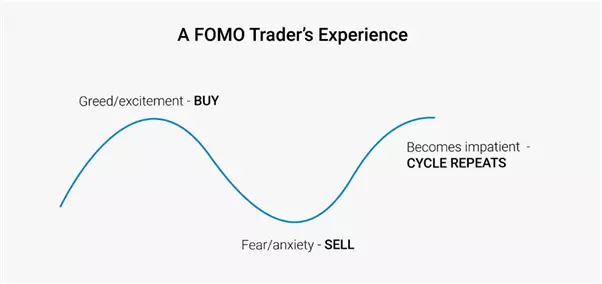
- FOMO is a documented behavioral driver in trading: seeing others “win” pushes late entries, chasing rallies, and poor timing. This is especially visible in crypto markets.
- Industry surveys (exchanges and trading platforms) report high self-reported FOMO in crypto holders; for example, Kraken’s educational report/survey stated very high rates of FOMO-driven decisions (majorities in some samples).
- Many traders admit to buying during peak hype because they feared missing the move; trading studies and qualitative interviews show emotion-driven entries are common.
- New-investor waves (2020 to 2022) brought many first-time buyers into crypto and equities; surveys show a nontrivial share entered via crypto channels out of fear of missing out on quick gains.
- Quantitative trading research links sentiment measures (fear/greed indexes, social sentiment) to short-term price moves in a context where FOMO amplifies volatility.
- Buy-high-sell-low patterns in retail trader interviews are often explained by FOMO + herd behaviour; multiple qualitative studies document that.
- FOMO trading correlates with higher self-reported psychological distress in some trader samples.
- Regulators flagged FOMO-style crypto advertising as problematic because it targets urgency and scarcity cues to retail customers.
- Practical stat: in some exchange surveys, 60% of retail users admit FOMO or FUD influenced trades; numbers vary by platform and year.
| Finding | Typical reported figure |
| % crypto holders influenced by FOMO in some surveys | 60 to 84% (platform surveys vary) |
| New investor share entering via crypto (2022) | 4.9% of adults reported starting via crypto |
Risk Behaviors (Alcohol, Impulsive Buying)
(Source: ejbmr.org)
- FoMO correlates with higher alcohol use, binge drinking risk, and intentions to drink in adolescent and college samples. Several studies find that FoMO predicts drinking behavior above some personality predictors.
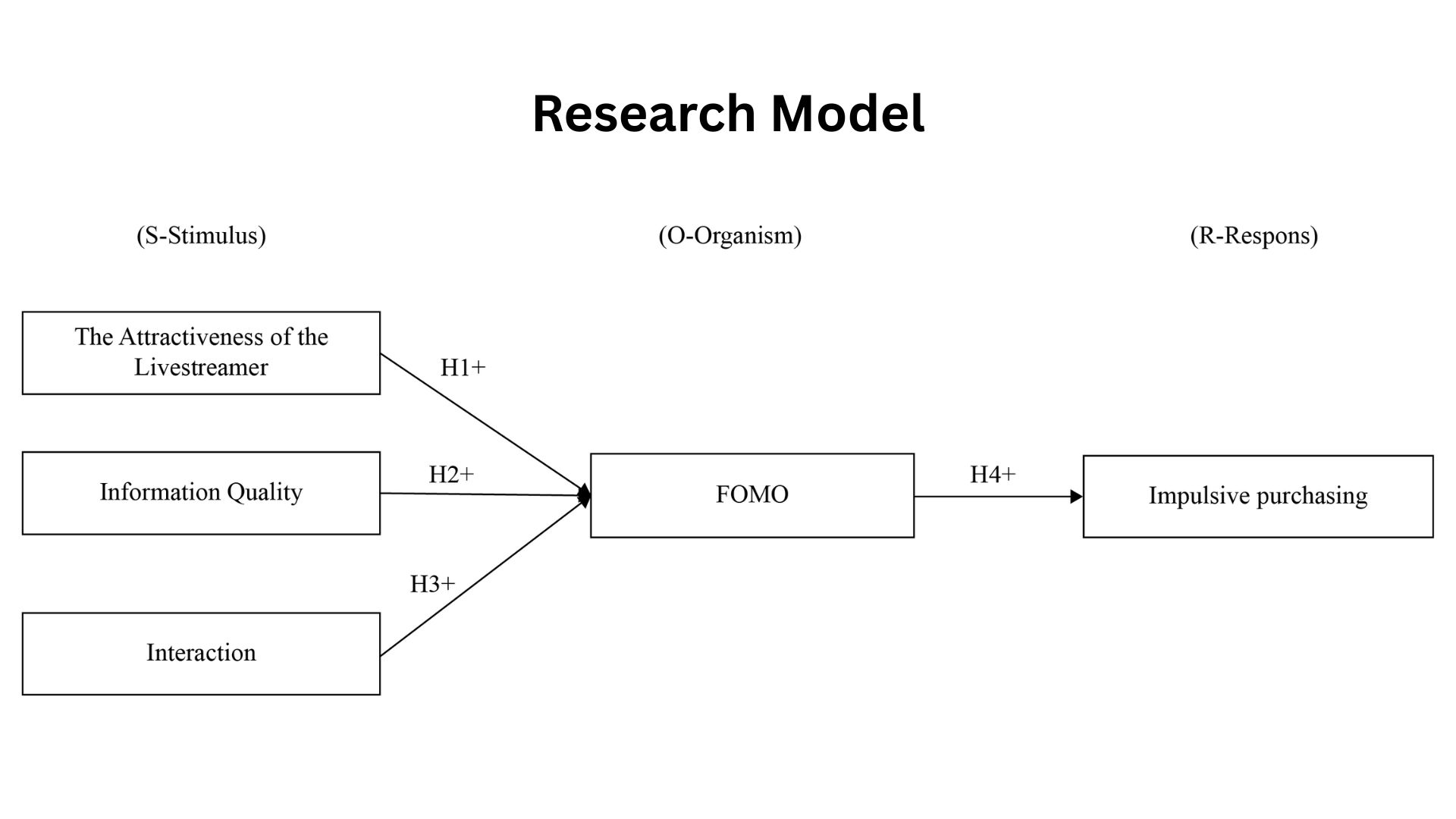
- FoMO also positively predicts impulsive and compulsive buying in consumer studies; recent work ties FoMO to post-purchase regret and compulsive brand buying.
- For adolescents, FoMO increases risky phone behaviors (e.g., distracted driving, sexting) because of immediate checking pressure. Historical surveys flagged this strongly.
- Mechanism plausibility: FoMO increases urgency and perceived value of social presence, which lowers inhibition for risky or impulsive acts.
- Quantitative results: studies show moderate effect sizes; for example, one adolescent binge-drinking paper showed FoMO predicted frequency and harm after controls.
- Health messaging and prevention programs are starting to include FoMO-aware content for youth substance-use prevention.
- Compulsive buying linked to brand passion and FoMO shows rising concern in marketing literature and university research.
- Livestream commerce increases impulsive buys among young users, and FoMO is a mediator in many of those models.
- Financial consequences are real: reported cases in the media show catastrophic consumer debt from impulse/compulsive buying; academic work flags this as a public health issue.
| Risk | Relationship to FoMO |
| Binge drinking (adolescents) | FoMO predicts a higher risk |
| Impulse/compulsive buying | Positive association (mediated by social commerce) |
Pandemic, Trends, and Interventions
(Source: mdpi.com)
- COVID-19: social isolation, online news exposure, and changed event calendars altered FoMO patterns; some studies report higher FoMO as people worried about missing pandemic-era milestones.
- Times devoted to social media usage increased during the lockdowns period as research revealed that time devoted to social media increased by 25 to 47% during the early stages of the pandemic.
- Mental health overall worsened during the pandemic (WHO: 25% rise in anxiety/depression). FoMO is one of many mediators connecting increased online exposure to worse well-being.
- Time on social media increased dramatically during lockdowns: survey data suggested that there was a 25 to 47% increase in time spent on social media in the beginning of the pandemic. This increased the potential for FoMO.
- FoMO reduction techniques: limiting social media to 30 minutes a day and structured digital detoxes led to reductions in loneliness and depression in controlled experiments.
- FoMO-R technique (technical + behavioural) had some positive results in small-scale diary/focus group analysis; it includes filtering, autoresponses, and skill building.
- Efficient interventions that were successful in trials: time restriction, notification management, scheduling, gratitude practices.
- Platform responses: digital wellbeing features (screen time dashboards, quiet hours) aim to reduce FoMO-driven checking, and adoption of these features correlates with lower reported FoMO in some tracking reports.
- Education and habit change produce medium-term benefits; short-term abstinence works fast, but long-term change needs habit-building.
- For marketers and designers: ethical use of scarcity is increasingly urged; regulators scrutinize FOMO-style financial adverts and high-pressure crypto ads.
| Topic | Key stat/result |
| Increase in time on social media early COVID |
25 to 47% increases reported |
|
Social media limits RCT | Reduced loneliness and depression in 3 weeks |
| FoMO-specific intervention (FoMO-R) |
Positive changes in small trials |
Summary
After digging through all these FOMO statistics, one thing’s pretty clear for you and me, too: this isn’t just about missing a party or not buying the latest gadget. FOMO has worked its way into almost every part of modern life. It’s in the way we check our phones first thing in the morning, the way brands market to us, and the way we make big and small decisions.
The numbers prove it’s not just a passing trend; it’s a behavior pattern that’s changing how we connect, spend, and even think. The data shows how powerful it can be, but it also gives us a bit of an edge because once you know the stats, you start seeing the signs everywhere. And maybe next time, when that feeling creeps in, you’ll remember it’s not just you. It’s a universal thing. If you have any questions, kindly let me know in the comments section. Happy to answer 🙂
FAQ
FOMO is an acronym for Fear of Missing Out. It describes the anxiety or uneasy feeling that friends, peers, or others are having exciting experiences, attending great events, or enjoying rewarding opportunities in your absence.
FOMO is not a diagnostic symptom of obsessive-compulsive disorder (OCD). However, the two frequently overlap. People with OCD may experience FOMO as an obsessive fear that they aren’t living life “correctly,” leading to compulsive checking, overcommitting, or endless rumination to alleviate their anxiety.
No, FOMO (Fear of Missing Out) is not a Gen Z word. It was coined in 2004 by Patrick J. McGinnis, a Harvard Business School student, and was later added to the Oxford English Dictionary in 2013.