








Prelude
Wasting Time At the Workplace Statistics: Time is valuable at every workplace, but it is often wasted on small distractions and unimportant tasks. Checking social media, chatting for long periods, attending unnecessary meetings, or delaying work can reduce productivity. These habits not only slow down individual performance but also undermine the team’s success. When time is used wisely, employees can complete tasks faster, reduce stress, and achieve better results. Learning to manage time effectively helps create a positive work environment and improves overall performance.
This article explains the common reasons for wasting time at work, its effects on employees and organizations, and simple ways to stay focused and make every working hour count.
Spotlight Pick
- In 2026, digital distractions continue to reduce workplace productivity, with internet browsing being the biggest distraction, affecting 47% of employees.
- Employees spent almost 21.5 hours in the Workplace within a week and, on average, attended 62 monthly meetings.
- In addition, 24% of employees lose time playing games on their phones, and 22% report that frequent manager check-ins interrupt their workflow.
- 68% of people say they don’t have enough uninterrupted focus time during the workday.
- The average employee switches between apps and websites nearly 1,200 times per day.
- The average worker receives 275 interruptions per day, with notifications from meetings, emails, or chat tools arriving about every 2 minutes.
- Generation Z and Millennials spend an average of 30 minutes each workday socializing with colleagues.
- Workplace distractions cost the U.S. economy around USD 650 billion every year.
- In the United States, private-sector employees worked an average of 34.3 hours per week in June 2026.
- Technology employees lose about 3 hours per week on social media and personal browsing.
- Around 39% of employees spend more than 1 hour per day on social media during work.
- 77% of employees use social media during work hours, making it a common workplace habit.
General Wasting Time At the Workplace Statistics
- Employees spend almost 21.5 hours in the Workplace within a week and, on average, attend 62 monthly meetings.
- On pointless meetings, workplace professionals spend around 13 days annually or 2 hours per week.
- Some companies have blocked many websites for employees, but there is still a weekly time wastage of around 21 hours on other online sites.
- To increase productivity, almost 53% of employees have claimed that they prefer to take short breaks from their work by doing other activities.
- The least productive day for employees was Friday, which was mostly between 3 PM and 5 PM in almost every Workplace.
- During work time, approximately 90.5% of employees have used their work time effectively.
- As of 2024, around 11% of women and 5% of men have used social media for 45 minutes or 1 hour.
Pervasive Procrastination – How Much Time Is Wasted?
On average, this translates to employees frittering away 2.9 hours out of an 8-hour workday on non-work activities. Think about it – that’s nearly a third of your paid time! Broken down further, some studies show that
- 31% of workers waste at least an hour every day.
- A not-so-insignificant 6% waste a whopping 3 hours daily.
These figures paint a clear picture: wasting time is a widespread issue that eats significantly into productivity.
Top Workplace Distractions in 2026 – Digital and Technology Distractions
- According to makerstations.io, in 2026, digital distractions continue to reduce workplace productivity is internet browsing being the biggest distraction, affecting 47% of employees.
- Social media follows closely at 45%, while 44% say texting and personal messaging interrupt their work.
- Another 44% of workers admit they are distracted by checking online news during work hours.
- Communication tools are also a challenge, with 41% saying constant Slack and email notifications reduce their focus.
- In addition, 24% of employees lose time playing games on their phones, and 22% report that frequent manager check-ins interrupt their workflow.
- Around 82% keep their phones within sight during work, and 76% check notifications within five minutes.
- Furthermore, 53% regularly post on social media during work, while 41% do so occasionally.
- 82% of employees keep their smartphones within view during work hours.
- 76% respond to smartphone notifications within 5 minutes of receiving them
- 53% of employees admit to regularly posting on social media during work hours, with another 41% doing so occasionally, per Resume Now’s 2025 Time-Wasting Report.
- 6 in 10 employees blame digital tools for increased workplace stress (Unily 2024 Digital Noise Impact Report), with video conferencing (44%), email (39%), and instant messaging (36%) as the biggest culprits.
- Digital fatigue has surged to 84%, with 77% of workers finding workloads unmanageable.
- 69% of remote employees say digital communication tools have worsened their burnout.
Communication Volume Overload
- The average employee receives 117 emails daily (most are skimmed in under 60 seconds).
- Moreover, an average employee receives 153 Microsoft Teams messages per weekday.
- Combined total: 270 messages/day across email and Teams.
- Slack users send an average of 92 messages/day and check the platform 13 times daily, spending 1 hour 42 minutes actively on Slack.
- 57% of employee time is spent communicating (meetings, email, chat); only 43% creating (documents, spreadsheets, presentations).
- 68% of people say they don’t have enough uninterrupted focus time during the workday.
- 40% of employees check email before 6 a.m.4
- After-hours messages are up 15% YoY; the average worker receives 58 messages outside 9-5.
- By 10 p.m., 29% of active workers are back in their inboxes.
- 85% of employees receive work-related communications outside standard hours at least a few times per month; 60% receive them a few times per week or more.
Coworkers and Meetings
- 71% of respondents identified coworkers as the main reason they lose focus (Insightful 2025 survey) as the #1 stated cause of distraction.
- 62% of employees flagged phone notifications as major disruptions.
- 32% cited frequent email notifications
- 27% found chat applications (Teams, Slack) distracting.
- 22% feel frequent manager check-ins disrupt their focus.
- 17% mentioned meetings (both in-person and video) as a source of distraction.
- 58% of employees waste 30-60 minutes of their workday on activities completely unrelated to their jobs; 33% waste 1-2 hours.
App Switching and Context Switching
- The average employee switches between apps and websites nearly 1,200 times per day, according to Harvard Business Review.
- App switching costs teams up to 9% of annual working time, nearly 5 full working weeks of lost productivity.
- Workers spend nearly 200 hours a year just switching between apps, per a 2025 Slite survey.
- Teams use 18-36 apps per day, draining attention and focus.
- 45% of employees say context switching kills productivity; 43% report it causes fatigue; 62% admit it causes them to miss collaboration opportunities.
- 22% of workers report losing 2+ hours of work each week to tool fatigue, equivalent to 2.5 wasted workweeks/year.
- 41% of workers say Slack and email eat into their productivity as much as meetings do.
Workplace Interruptions Statistics and Trends
- The average worker receives 275 interruptions per day, with notifications from meetings, emails, or chat tools arriving about every 2 minutes.
- According to research by Gloria Mark, it takes an average of 23 minutes and 15 seconds to regain deep focus after one interruption.
- Workers stay focused for only 13 minutes and 7 seconds before another distraction occurs.
- Around 79% of employees experience a distraction within the first hour of work, while 59% cannot stay focused for 30 minutes without being interrupted.
- 89% of employees lose at least 30 minutes each workday to distractions, and 16% lose 2 hours or more.
- On average, employees are productive for only 5 hours and 56 minutes during an 8-hour workday, which equals about 57.5 unproductive workdays per year spent at their desks.
Workplace Time-Wasting Statistics by Socializing and Office Gossip
- Generation Z and Millennials spend an average of 30 minutes each workday socializing with colleagues.
- Around 12% of employees admit they spend time listening to or participating in workplace gossip.
- Baby Boomers are reported to spend more time on workplace gossip than younger employees, which may lower workplace efficiency.
- About 20% of employees say casual office conversations, including gossip about co-workers, lead to significant time loss.
- Office gossip can distract employees from their tasks, causing some workers to lose up to 1 hour of productive time each day.
The Cost of Workplace Distractions
(Reference: makerstations.io)
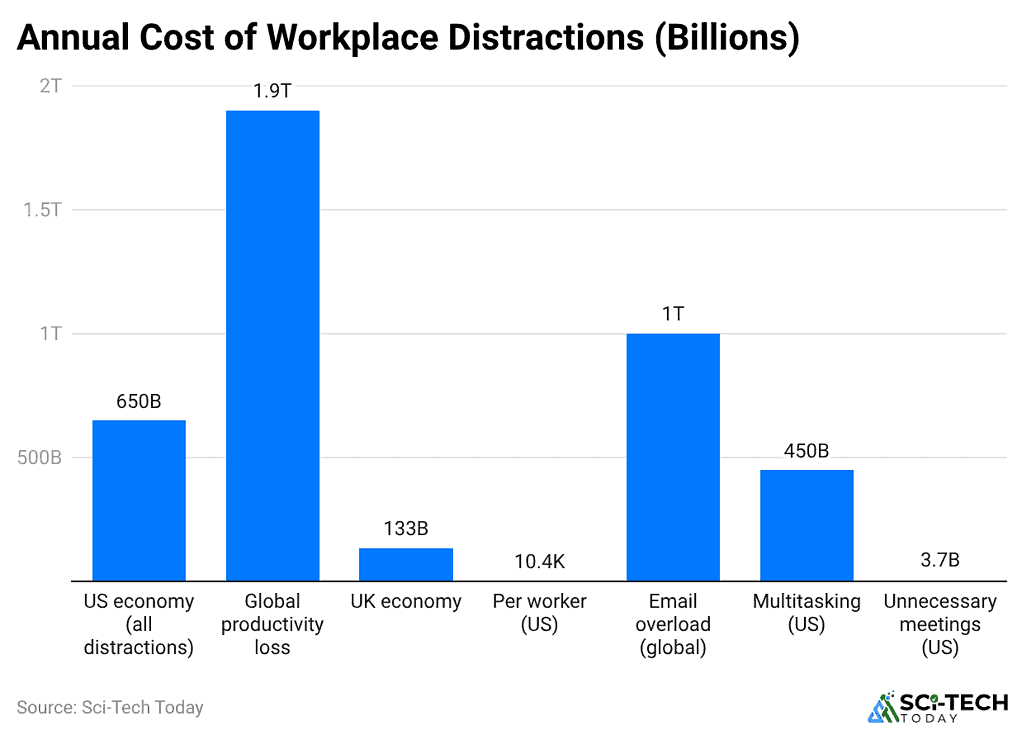
- Workplace distractions cost the U.S. economy around USD 650 billion every year.
- Global productivity losses reach USD 1.9 trillion annually.
- The UK economy loses about GBP 133 billion each year due to workplace distractions.
- The average US employee loses about USD 10,375 per year, which is equivalent to nearly 2 hours of productive work each day.
- Too many emails reduce global productivity by an estimated USD 1 trillion annually.
- Multitasking wastes 20%-40% of productive time and costs the US economy around USD 450 billion every year.
- Unnecessary meetings alone result in annual losses of about USD 37 billion in the U.S.
How Much Do Workplace Distractions Cost Per Employee?
- Workplace distractions cost the average employee about USD 10,375 per year, mainly due to nearly 2 hours of lost productive time each workday.
- On average, employees spend about 57.5 workdays per year at their desks without being fully productive.
- Workers lose around 720 hours per year to distractions, based on an average of 60 interruptions per workday.
- Employees also spend an additional 127 hours per year regaining focus after interruptions, according to Economist Impact.
- Inefficient communication further reduces productivity, with about 75 hours per year lost to unnecessary emails and 78 hours per year spent in unproductive meetings.
- Remote work helps recover focus, saving U.S. companies an average of USD 1,217.95 per employee, with savings increasing to USD 1,937.22 in high-salary states.
Working Hours Statistics 2026
- Global employees work an average of 43.9 hours per week, based on data from the International Labor Organization (ILO).
(Source: fred.stlouisfed.org)
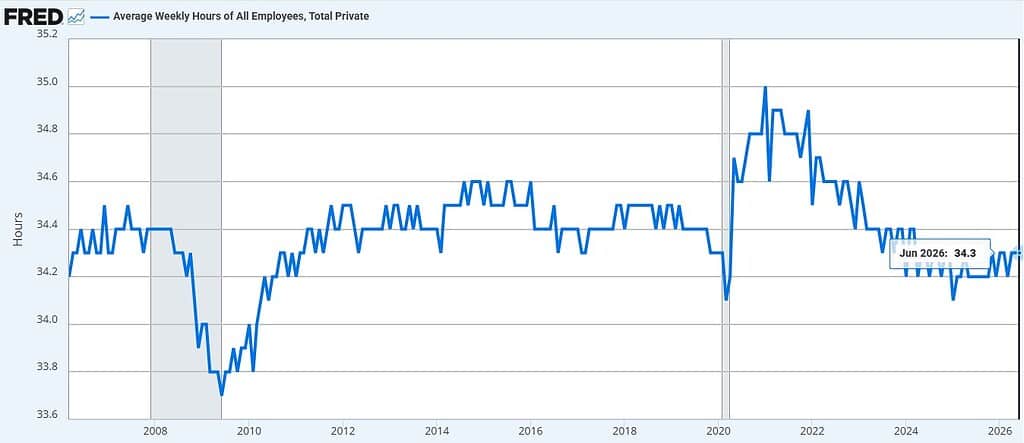
- In the United States, private-sector employees worked an average of 34.3 hours per week in June 2026.
- Workers across the European Union averaged 35.9 hours per week in 2025.
- India is one of the world’s most overworked countries, with employees working about 2,420 hours per year, or around 46.7 hours per week.
- The Netherlands records the lowest average among OECD countries at 1,643 hours per year, or about 31.6 hours per week.
- Working hours vary widely across industries, with employees in mining, utilities, and surgery often working 45+ hours per week, while leisure and hospitality workers average under 26 hours per week.
By Industries
(Source: paychex.com)
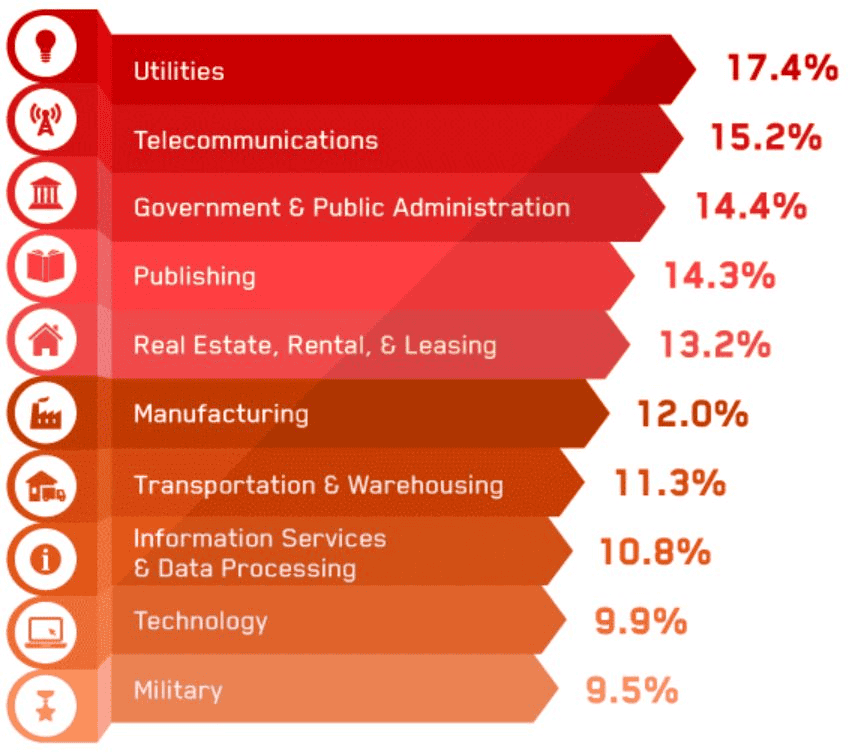
- In recent years, 17.4% of the utilities industry employees have wasted 3 hours or more each day.
- In the Telecommunications and Government & Public Administration industries, 15.2% and 14.4% of employees, respectively, wasted 3 or more hours.
- In addition, the share of employees who wasted 3 hours or more per day by industry is Publishing (14.3%), Real Estate, Rental, and leasing (13.2%), Manufacturing (12%), Transportation and warehousing (11.3%), Information Services and Data Processing (10.8%), Technology (9.9%), and Military (9.5%).
Workplace Time-Wasting Statistics by U.S. State
| State | Avg. Hours Wasted/Day |
| California | 2.5 hours/day |
| New York | 30% of the workday |
| Texas | 37%, 1+ hour/day |
| Florida | 1 hour/day, 5 hours/week |
| Illinois | 29%, 2 hours/week |
| Pennsylvania | 45+ minutes/day |
| Ohio | 25% of the workday |
| Michigan | 30%, 1 hour/day |
| Georgia | 35 minutes/day |
| North Carolina | 23% |
| Virginia | 40+ minutes/day |
| Washington | 32% |
| Colorado | 1.5 hours/day |
By Industry
(Reference: market.biz)
- Technology employees lose about 3 hours per week on social media and personal browsing.
- Finance workers spend around 1.5 hours each day on non-work tasks.
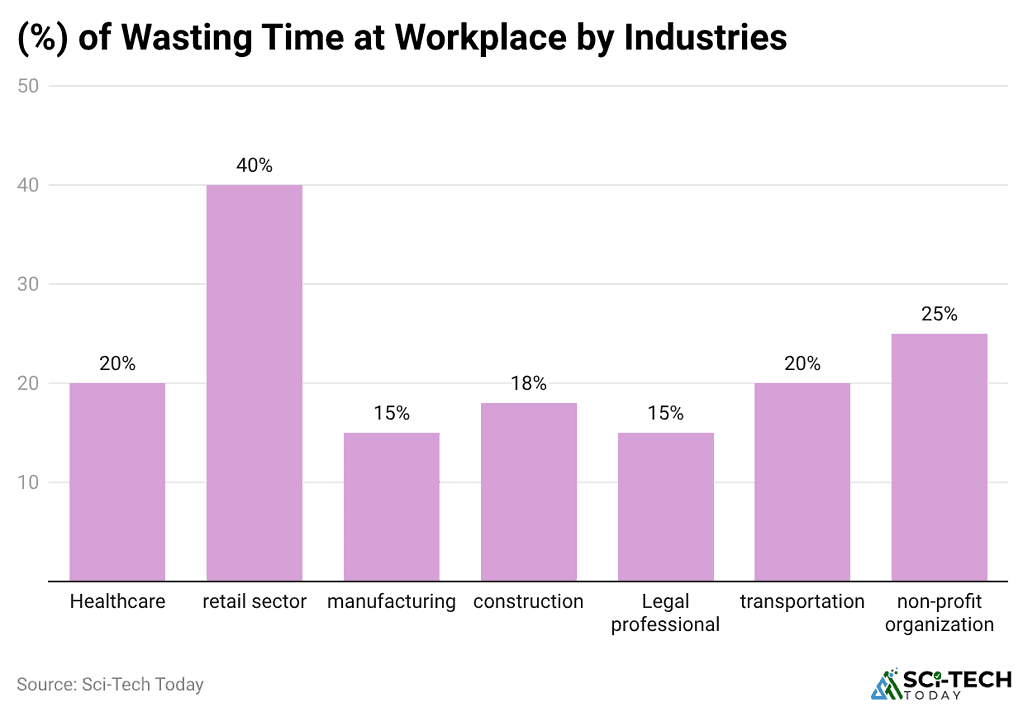
- Healthcare professionals lose 20% of their time to unnecessary administrative work.
- Retail employees report spending 40% of their workday on unproductive activities.
- Manufacturing workers lose up to 15% of their day because of avoidable equipment problems.
- Teachers and administrators spend about 2 hours per week on non-educational tasks.
- Hospitality employees lose nearly 5 hours per week on personal calls and socializing.
- Construction workers spend 18% of their workday dealing with avoidable delays.
- Marketing professionals spend about 30 minutes daily on non-work activities.
- Legal professionals lose up to 15% of their workday to administrative duties.
- Transportation workers spend 20% of their day on equipment issues and downtime.
- Real estate agents lose 1+ hours per day to personal activities.
- Non-profit employees spend about 25% of their time on non-core tasks.
By Work-Related Activities
- As of 2026, employees lose up to 31 hours per month in meetings they believe are unnecessary, according to Market.biz.
- Workers spend about 28% of their workweek managing emails instead of core job tasks.
- Employees spend an average of 2 hours each day switching between tasks, reducing focus and efficiency.
- Around 23% of employees spend time reassigning tasks that should have been completed the first time correctly.
- Unclear priorities can reduce productivity by about 3 hours per week.
By Social Media Distractions
- Around 39% of employees spend more than 1 hour per day on social media during work.
- 47% of workers are distracted by social media notifications while working.
- Social media use can reduce employee productivity by about 20% because it interrupts focus.
- 25% of employees spend more than 30 minutes daily scrolling through social media at work.
By Personal Activities During Work
- 12% of employees spend over 1 hour each day on personal phone calls.
- 31% of workers shop online during work hours, often for up to 30 minutes daily.
- Employees spend nearly 15% of their workday handling personal errands.
- 18% watch videos or stream content during work hours.
- About 34% take longer breaks, with some lasting more than 45 minutes.
Employee Tardiness Statistics by Leading Causes
(Source: zippia.com)
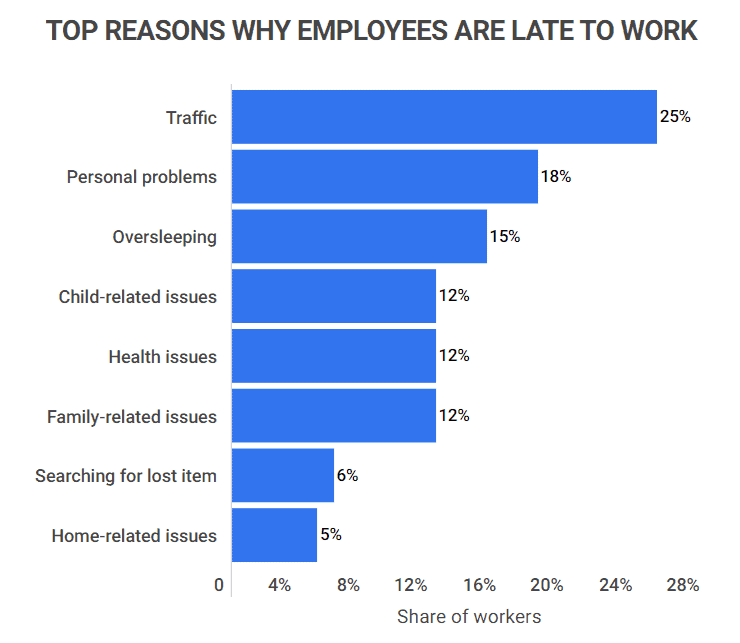
- Traffic is the most common reason for being late, reported by 25% of employees.
- Personal problems account for 18% of workers arriving late.
- About 15% of employees are late due to oversleeping.
- Child-related responsibilities account for 12% of late arrivals.
- Health issues are responsible for 12% of employee tardiness.
- Family-related commitments also contribute to 12% of workers being late.
- About 6% of employees are delayed while searching for lost items.
- Home-related issues account for 5% of employee late arrivals.
Workplace Social Media Statistics 2026
- A report published by Speakwise shows that 77% of employees use social media during work hours, making it a common workplace habit.
- Businesses lose about USD 650 billion each year because of social media distractions.
- Employees spend an average of 1.5 hours each workday on personal social media.
- Around 96% of millennials and 95% of Gen Z use social media while working.
- 92% of employers use social media to recruit candidates.
- Professional social media use can improve employee engagement by up to 20%.
- About 67% of employees use social media to follow industry news and trends.
- 62% of job seekers review a company’s social media before applying.
- Around 54% of businesses encourage employees to share company content online.
- 38% of employers have formal workplace social media policies.
- Internal collaboration through LinkedIn has increased by 23%.
- Social media accounts for about 13% of workplace productivity loss.
- More than 53% of employees post social media updates during work hours.
- Around 82% of organizations use social media to reach passive job candidates.
- In the UK, 92% of employees use social media at work.
- 46% of Gen Z have found a job or internship through TikTok.
AI and Workplace Distractions
- AI use among employees reached 80% in 2025, up from 53% two years earlier.
- About 92% of users continue using AI month after month.
- Generative AI saves the average worker 2.2 hours per week, according to estimates from the Federal Reserve Bank of St. Louis.
- 75% of knowledge workers say AI helps them save time and focus better.
- However, focus efficiency dropped to a 3-year low of 60%.
- Many workers report that more AI tools create more messages, outputs, and coordination tasks, leading to additional screen checking.
- Some companies testing a “third space” outside the home office say it helps employees reset their focus.
- Still, 50% of organizations do not measure AI’s impact on employees.
Taking Back Control: Strategies To Reduce Time Wasting
The good news is that there are steps both employers and employees can take to combat wasted time:
- Prioritization Techniques: Encourage workers to prioritize tasks and create time blocks to focus on specific projects.
- Meeting Makeovers: Streamline meetings by setting clear agendas and time limits and encouraging attendees to come prepared.
- Distraction-Free Zones: Consider creating designated quiet zones or time slots where employees can focus without digital distractions.
- Open Communication: Foster a culture where employees feel comfortable discussing challenges and areas for improvement.
- Engagement Efforts: Businesses should invest in fostering a stimulating work environment and offering professional development opportunities to keep employees engaged.
Closure
Workplace distractions can reduce productivity and affect business performance. Common time wasters include social media, unnecessary meetings, personal tasks, office gossip, and unclear priorities. Even small daily distractions can lead to many lost work hours over time. Companies can improve productivity by setting clear goals, reducing unnecessary interruptions, and encouraging better time management.
A balanced workplace that supports both employee well-being and focused work helps teams perform better and achieve stronger results.
FAQ
Employees commonly waste time on social media, unnecessary meetings, personal tasks, office gossip, and frequent distractions daily.
Yes, excessive personal activities during paid work hours are often considered time theft.
Managers can reduce time waste by setting clear priorities, limiting unnecessary meetings, minimizing distractions, and encouraging effective time-management habits.

Sources