Opening
Yoga Industry Growth Statistics: Yoga has become one of the world’s fastest-growing wellness industries as more people focus on healthy living, fitness, and mental well-being. What started as an ancient practice is now a global business that includes yoga studios, online classes, wellness retreats, clothing, accessories, and fitness apps. The rise of digital platforms and workplace wellness programs has made yoga easier to access than ever before. Growing awareness of stress management, flexibility, and overall health continues to attract millions of new practitioners each year.
This article explores the latest yoga industry growth statistics, market trends, consumer insights, key growth drivers, and future opportunities shaping the global yoga market.
Best Overall
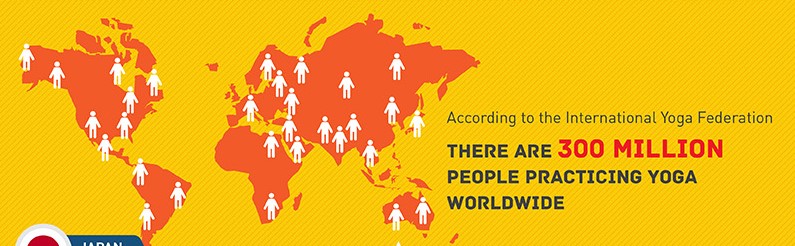
- More than 300 million people practice yoga worldwide, making it one of the most popular wellness activities globally.
- The global yoga market is projected to grow from USD 68.15 billion in 2026 to USD 119.69 billion by 2034, at a 7.29% CAGR.
- North America is66xpected to remain the largest regional market, reaching USD 22.62 billion in 2026.
- Women represent 72% of yoga practitioners worldwide.
- Around 67% of practitioners prefer practicing yoga at home.
- Online yoga is forecast to grow at a 10% CAGR through 2033.
- About 40% of participants now use digital yoga platforms, while 60% still prefer in-person classes.
- 90% of practitioners recognize yoga’s mental health benefits, and 80% say it helps reduce stress.
- 78% of surveyed people want to join a yoga retreat within the next 12 months.
- More than 100,000 yoga teachers are registered with Yoga Alliance worldwide.
Yoga Industry Overview
- Yoga is recognized as the 4th fastest-growing industry, with wellness studios reporting a strong 87% increase in interest over recent years.
- The industry has seen a striking 413% growth over the past five years, reflecting how mainstream yoga has become worldwide.
- More than 16,275,000 people currently practice yoga, spread across studios, gyms, and homes.
(Source: yogitimes.com)
- Over 300 million people around the globe have shown interest in or participated in yoga at some point.
- Yoga is practiced in 190+ countries, making it one of the most popular wellness activities globally.
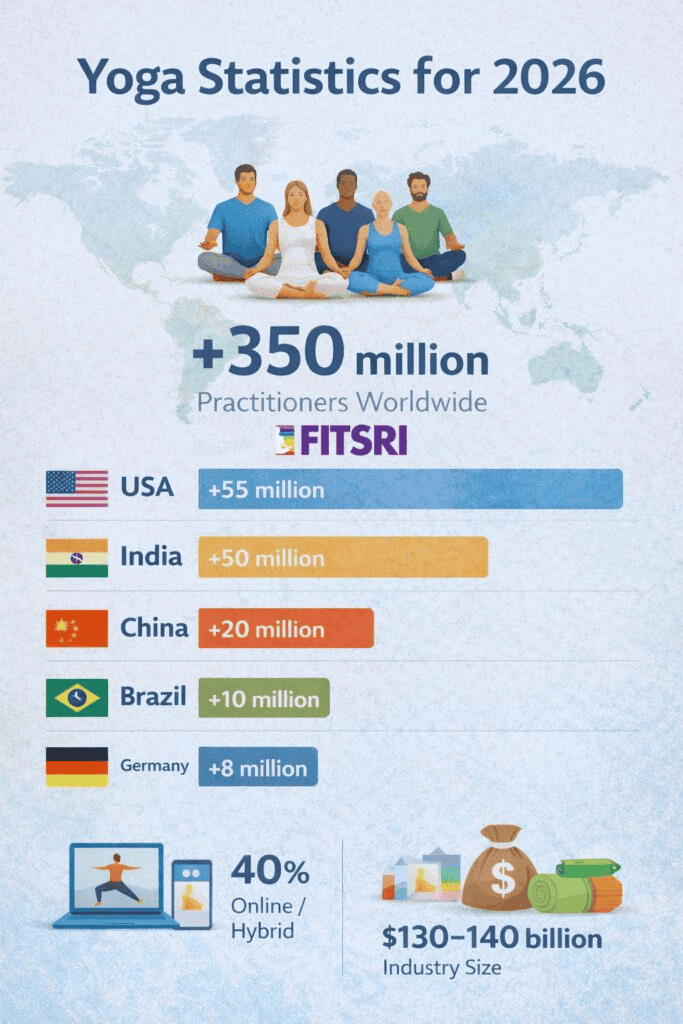
- According to FITSRRI, the global yoga market is valued at approximately USD 130-140 billion in 2026.
- About 35%-45% of yoga participants use online or hybrid classes alongside traditional sessions.
Global Yoga Market Size
- The global yoga market was valued at USD 63.82 billion in 2025 and is expected to grow from USD 68.15 billion in 2026 to USD 119.69 billion by 2034, at a 7.29% CAGR, according to Fortune Business Insights.
- Offline yoga courses are projected to lead the market with a 62.54% share in 2026 because certified instructors provide in-person training.
- Women are expected to account for the largest market share at 68.57% in 2026.
- People aged 30-50 are projected to hold the highest share at 41.29% in 2026.
By Region and Country, 2026
| Region/Country | Market Size / Share |
| North America | USD 22.62 billion |
| United States | USD 18.90 billion |
| Europe | USD 20.33 billion |
| United Kingdom | USD 2.73 billion |
| Germany | USD 3.69 billion |
| Asia Pacific | USD 19.10 billion |
| China | USD 5.33 billion |
| India | USD 4.70 billion |
| Japan | USD 1.96 billion |
| South America | USD 3.89 billion |
| Middle East & Africa | USD 2.22 billion |
Online Yoga Market Statistics
- Online yoga is one of the fastest-growing segments and is expected to grow at a 10% CAGR through 2033, as per Yogajala.
- Around 40% of yoga participants now use digital platforms, including live classes, on-demand videos, and mobile apps, while 60% still prefer in-person studio sessions.
- In 2026, AI-powered wellness apps such as Gaia recorded more than 6.5 million AI-guided member interactions, highlighting the growing use of AI in yoga and wellness.
Yogi Profile: Who Practices Yoga
- Around 82.2% of practitioners are women, while 17.8% are men, showing yoga still attracts a largely female audience.
- According to Yogi Times, 44% of yogis fall between 18 and 44 years old, making millennials and younger adults the core age group.
- Roughly 65% of practitioners hold a college degree, and 78% are described as college educated overall.
- Yogis typically spend around USD 90,000 or more on yoga-related products and experiences within five years.
Yogi Spending Habits
- Yoga clothing brands see practitioners spend heavily, with premium yoga pants priced between roughly USD 15 and USD 90.
- Popular yoga mats and gear from top online retailers range from about USD 20 to USD 90 depending on quality and brand.
- The most expensive yoga mats can cost as much as USD 150, showing a wide price range for equipment.
Popular and Trending Yoga Styles
- Vinyasa, Hatha, and Bikram remain among the most popular yoga styles chosen by practitioners today.
- New trending styles include aerial yoga and power yoga, both gaining traction for combining fitness with flexibility training.
- Yoga class prices vary widely, from around USD 20 on the low end up to roughly USD 31 for premium sessions.
Yoga Teacher Earnings
- Yoga instructors earn an average of about USD 63 per class taught, according to industry data.
Yogi Health and Wellness Patterns
- Around 73% of yogis report getting sick less often since starting their practice.
- About 78% say practicing yoga regularly improves their overall sense of well-being.
Regional Yoga Practice Trends, 2026
(Source: fitsri.com)
- The USA leads with around 55 million practitioners, followed by India at roughly 50 million.
- China accounts for nearly 20 million practitioners, while Brazil and Germany report about 10 million and 8 million, respectively.
- Around 40% of practitioners now prefer online or hybrid yoga formats over traditional in-studio sessions.
India: The Birthplace of Yoga
- India, the birthplace of yoga, actively promotes the practice through the Ministry of AYUSH, which supports Ayurveda, Yoga, Unani, Siddha, and Homeopathy.
- Around 91.5% of Indians believe yoga helps prevent and manage health conditions, showing strong public trust in its health benefits.
Participation Rates
- A report published by Yogi Times stated that approximately 35% of Indian adults have practiced yoga at least once.
- Around 7% practice yoga daily, 6% weekly, 22% monthly or less, while 62% have never practiced yoga.
Demographic Insights
- Yoga participation is higher among college graduates (56%) than people with lower education levels (33%).
- Younger adults are more likely to practice yoga than older adults.
- Male participation is relatively high, with an estimated 50:50 to 40:60 gender ratio.
- Urban participation (12.1%) is slightly higher than rural participation (11.9%).
- By religion, yoga participation is 61% among Jains, followed by Sikhs (50%), Buddhists (38%), Hindus (36%), Muslims (29%), and Christians (24%).
Yoga Statistics in Europe
(Source: yogitimes.com)
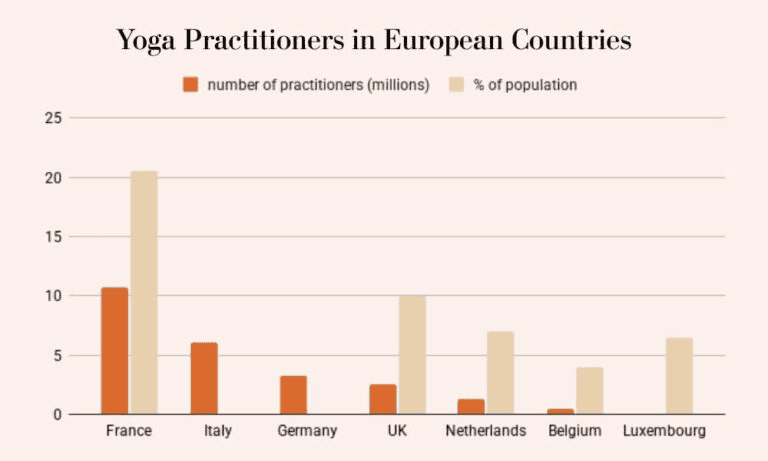
- France: Around 10.7 million people have practiced yoga in the past 3 years, representing 20.5% of the population, or 1 in 5 people. Yoga participation has increased by 300% over the last decade. About 7.9 million people practice at least twice a month, while 52% attend weekly sessions.
- Italy: Approximately 6 million people practice yoga, compared with 2 million 6 years ago, reflecting a 3× increase. The country has 830 yoga schools. The global yoga market was valued at USD 106 billion in 2022 and is projected to reach USD 180 billion by 2027.
- Germany: In 2024, about 3.21 million people aged 14+ practiced yoga regularly during their leisure time. More than 30% of yoga schools offer accredited teacher training.
- Belgium: Around 4%-5% of the population, or about 500,000 people, practice yoga regularly. The average practitioner is around 40 years old.
- United Kingdom: An estimated 2-3 million people practice yoga regularly, while up to 10% of adults have tried it at least once. The average age is 35-45 years.
- Netherlands: Around 1-1.5 million people practice yoga, representing 6%-8% participation. The average age is about 35 years.
- Luxembourg: An estimated 30,000-50,000 people practice yoga regularly, equal to 5%-8% of the population, with an average age of 35-40 years.
North and Central America
- In the United States, Yoga Journal and Yoga Alliance surveys counted about 36.7 million practitioners, roughly 11% of the population, with an average age near 38 years and 87% of teachers being women, across more than 50,000 studios.
- Canada has around 3 to 4 million practitioners, about 10% of adults, typically aged 35 to 45 years.
- Mexico shows 1% to 2% participation, roughly 1.3 to 2.6 million regular practitioners, mostly aged 30 to 40 years.
South America
- In Brazil, about 3%-4% of the population practices yoga regularly, roughly 6 to 8 million people, with an average practitioner age of around 35 years.
- Argentina sees around 2%-3% participation, translating to nearly 1 to 1.5 million regular practitioners, with an average age of 35 to 40 years.
- Smaller markets like Chile show about 1%-2% participation, or roughly 200,000 to 400,000 practitioners, while Peru’s figure stands near 1% of its population.
- Across these smaller markets, the average practitioner age remains close to 35 years.
Asian Countries
- In Thailand and Malaysia, urban surveys show roughly 3% to 5% of adults have tried yoga, though regular practice remains lower, with practitioners typically in their early to mid-30s.
- Singapore reports higher engagement, with around 10% of adults having tried yoga and 5% to 7% practicing regularly, mostly aged 30 to 40 years.
- Japan has about 2 million to 3 million practitioners, roughly 2% to 3% of its population, with an average age near 40 years and a strong female presence.
- China’s urban yoga interest is rising fast, with an estimated 10 million to 15 million regular practitioners, mostly younger adults aged 25 to 35 years.
- Hong Kong mirrors Singapore, with about 10% of adults trying yoga and 5% to 7% practicing regularly, typically between 35 and 45 years old.
Middle East
- In Lebanon, urban yoga participation is estimated at 5%-10%, with practitioners typically aged 30-40 years.
- In Israel, surveys suggest 15%-20% have tried yoga, while 5%-10% practice regularly, mostly aged 30-40 years.
- In Iran, a small but growing urban segment, around 2%-3% of adults, practices yoga, also averaging 30-40 years of age.
Oceania
- Australia has roughly 2.5-3 million yoga practitioners, about 10% of its population, with an average practitioner age of 35-45 years.
- In Indonesia, yoga thrives mainly in urban hubs like Bali and Jakarta, drawing 2%-3% regular participation, with practitioners typically aged 30-40 years.
African Countries and Saudi Arabia
- In Saudi Arabia, growing wellness interest drives 5%-10% engagement among urban and younger groups, typically aged 25-40 years.
- Egypt shows roughly 2%-3% participation concentrated in major cities, with practitioners averaging 30-40 years old.
- Tunisia, Algeria, and Morocco lack solid data, though estimates suggest participation stays below 5%.
- South Africa reports about 10% who have tried yoga, with regular practitioners near 5%-7% (roughly 3-4 million people), mostly aged 30-40 years.
Characteristics of the Yoga Industry Statistics
- Almost 75% of individuals who practice yoga participate in other forms of exercise, such as running and cycling.
- Nearly two-thirds of total yoga practitioners show an interest in doing more yoga than they did last year.
- Vegetarianism is adopted by 41% of the yoga practitioners.
- More than 50% of regular yogis go to 2-3 classes each week. A majority of yoga practitioners give precedence to meditation.
How Do the Yoga Industry Statistics Measure Up?
- As per the Yoga industry statistics, Lod Shiva has talked about 84 well-known and traditional asanas.
- Many more asanas are just practiced without any jargon and are considered normal in daily life.
- Around the globe, more than 300 million individuals practice yoga constantly. Thirty-six million individuals in the USA engage in yoga practices constantly.
- 46% of human beings who admit that they do yoga do it at night.
- 80% of people do this kind of exercise regularly for at least half an hour. However, only about 2% engage in yoga irregularly.
- The market for Yoga is projected to increase by 5.8% before the year 2025. On average, an individual practicing
- Yoga would spend around USD 62,000 on Yoga accessories, workshops, classes, and related things, and every Yogi spends nearly USD 40 during every session.
- The United States of America has a total market share of Yoga classes at 51.3%.
- 67% of people worldwide practice yoga at home, 32% do it outdoors, and 43% are yogis who enjoy doing yoga between gym sessions.
- 38% practice yoga in studios, whereas 20% attend yoga wellness festivals.
- Of the reasons given by practitioners, 27% require some me time, while 21% feel lonely, hence doing yoga exercises.
- People who want to be strong account for 52%, whereas those who use yoga as a stress buster account for 54%.
- The yoga industry statistics are supposed to be valued at USD 66.23 by 2027.
- Yoga is not allowed in countries like Indonesia, Malaysia, or among Muslims. However, yoga centers exist all over the world, with about 20,000 of them. According to yoga industry statistics, 42% of Americans think practicing yoga helps improve their well-being.
- Additionally, 41 % regard daily practice as an instrument for achieving calmness. Most people in the USA engage in yoga practices between 6 a.m. and 10 a.m.
- According to some individuals who were interviewed, approximately 18% of people plan to start doing yoga next year.
- The global health club industry has a market size of USD 96.7 billion, according to statistics related to Yoga that are being studied.
- 53% of menstruating women were healed through daily yoga practices. Meditation is what about half the people who’ve done yoga focus on.
- More than half the volunteers in need of yoga are people, according to yoga industry statistics.
Overall Yoga Industry Statistics
Yoga Industry Statistics in Terms of Popular Yoga Apps
(Reference: enterpriseappstoday.com)
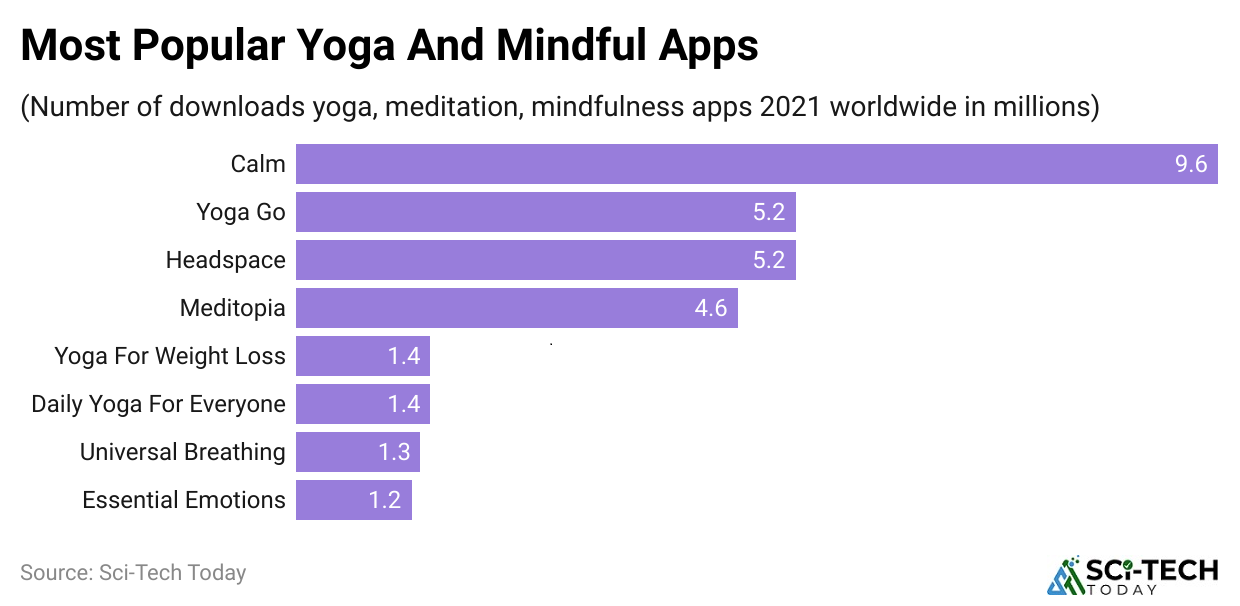
- According to Yoga industry statistics, many mobile applications on iOS and Android were downloaded worldwide as of June 2021.
- 6 million users had downloaded the Calm Yoga App, which was the top-downloaded application in the world.
- The Yoga Go and Headspace apps boast almost equally hefty download figures, at 5.2M, while Meditopia has only a record of 4.6M downloads.
- According to yoga industry statistics, other yoga and meditation apps, such as Yoga for Weight Loss and Daily Yoga, were downloaded 1.4 million times worldwide.
- Meanwhile, Universal Breathing and essential emotions were ranked third on the list, with 1.3 million and 1.2 million, respectively.
- Studies of Yoga industry statistics have shown that among Yogis, 12 % are vegetarians. 50 % of the annual income of those who do Yoga is around 75,000 dollars, while those earning less than 19,000 dollars make up 12%.
Yoga Gender Map
(Reference: enterpriseappstoday.com)
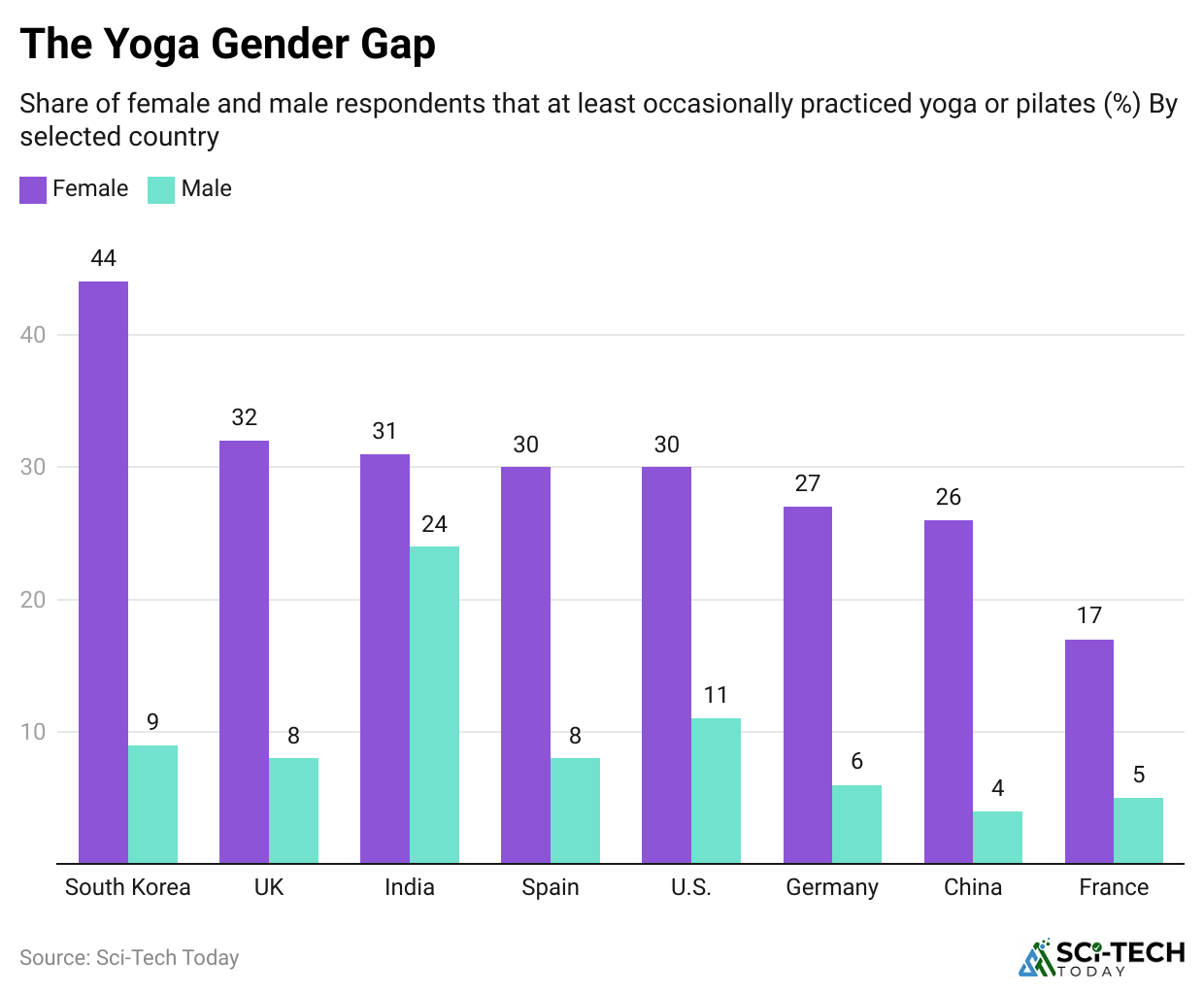
- According to the Yoga industry statistics, the chart above indicates how many women and men have, at one time or another, practiced yoga in select countries.
- In April 2022, 44% of women and 9% of men in South Korea engaged in sporadic yoga practice.
- The UK has 32% females and 8% males, while India has a sporadic yoga practice with 31% females and 24% males, respectively.
- Spain and America have an equal proportion of the female population who occasionally do yoga, about 30%.
- While 8% of the Spanish population is male, 11% of its counterparts in America are male.
- In the same way, countries such as Germany, China, and France have 27%, 26%, and 17%, respectively, female admissions, while 6%, 4%, and 5% of male admissions once engaged in yoga practices.
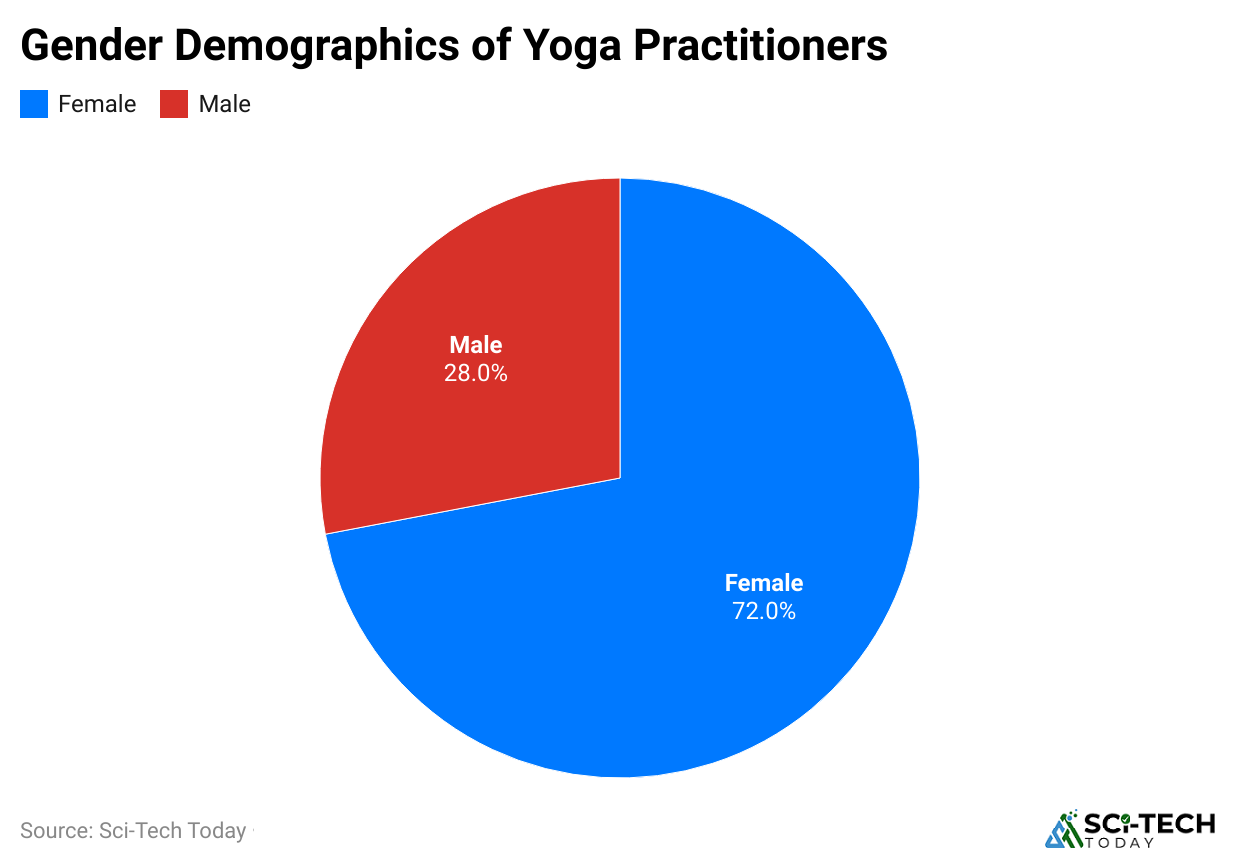
- More than half (72%) of yoga practitioners are female, with men accounting for only 28%.
Gender Demographics of Yoga Practitioners
In the old times, yoga was mostly practiced by men, but now, it has been dominated by women for the last couple of decades. As per the recent yoga industry statistics:
Age Demographics of Yoga Practitioners
People of all ages can perform yoga; it is not restricted to a certain age bracket. Whether you are a middle-aged man or a teenage boy, there are many asanas and yoga-related activities to consider to maintain fitness and health. Here are the statistics of yoga practitioners by age.
| Age Bracket | % of Yoga Practitioners |
| 18 to 29 years of age | 19% |
| 30 to 39 years of age | 23% |
| 40 to 49 years of age | 20% |
| 50 to 59 years of age | 17% |
| 60 years of age and older | 21% |
- The number of yogis is envisioned to come to 206 million at the end of this decade.
- According to the Sports & Fitness Industry Association (2020), 16.9% of the total number of yoga practitioners in the US are aged between 18-24 years.
- In general, a typical person who does yoga in America spends around USD 90 every month, which can be translated into USD 62,640 throughout his or her life.
- Also, 44% of Americans who practice yoga attend classes two to three times every week; their preference is for doing it early in the morning (34%) rather than later at night (18%).
- On average, US yogis pay over USD 40 for special one-time sessions only.
- Moreover, on memorable occasions like anniversaries or birthdays,6% will spend anything above USD 100 on a once-in-a-lifetime yoga class that they could remember all through life.
- As indicated by a study report, 80.7% were women, 51.9% had completed any level of higher education, 46.9% were non-smokers, whereas 72.1% exhibited moderate use of alcohol.”
Country Demographics of Yoga Practitioners
As we know, yoga was invented in India, but there are several other countries globally where yoga is practiced by most of the population. Below are the yoga industry statistics defined by country:
| Country Name | Number of Yoga Practitioners (Approx) |
| Canada | 7.6 Million |
| India | 150 Million |
| Australia | 1.5 Million |
| United States | 35 Million |
| United Kingdom | 0.50 Million |
Demographics of Yoga Growth and Popularity
For many centuries, yoga has been growing from India a few centuries ago and has reached different parts of the world today. There are different reasons why it is popular in so many places around the world, such as the US, UK, Australia, Canada, Singapore, and Chile. The world yoga market is also predicted to reach USD 200 billion by 2025. The following are some factual statistics you should be aware of:
| Growth | Country |
| A 50% rise in yoga practitioners | United States |
| 400% increase in online yoga popularity | UK and France |
Health Benefits of Yoga Industry Statistics
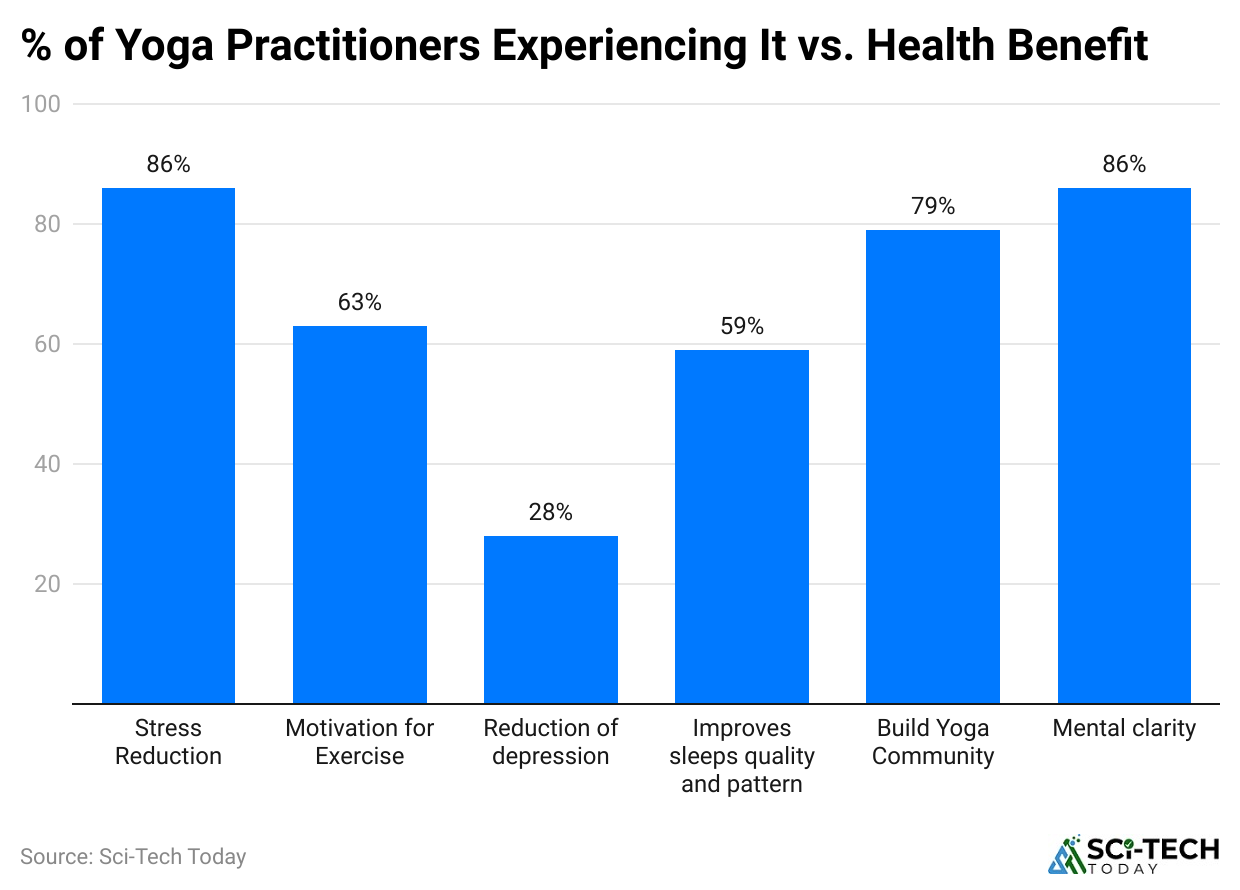
Performing yoga every day improves a person’s health status. Below are yoga industry statistics showing the health benefits of yoga globally. This will help you inculcate the information that yoga calms the mind, body, and soul of individuals.
Physical Benefits of Yoga Industry Statistics
The physical benefits of yoga are well-documented and widely recognized, contributing to its enduring popularity. In 2024, millions of people around the world continue to turn to yoga for improved flexibility, strength, posture, cardiovascular health, and overall well-being. Here, we provide you with the statistics to understand the physical benefits of yoga:
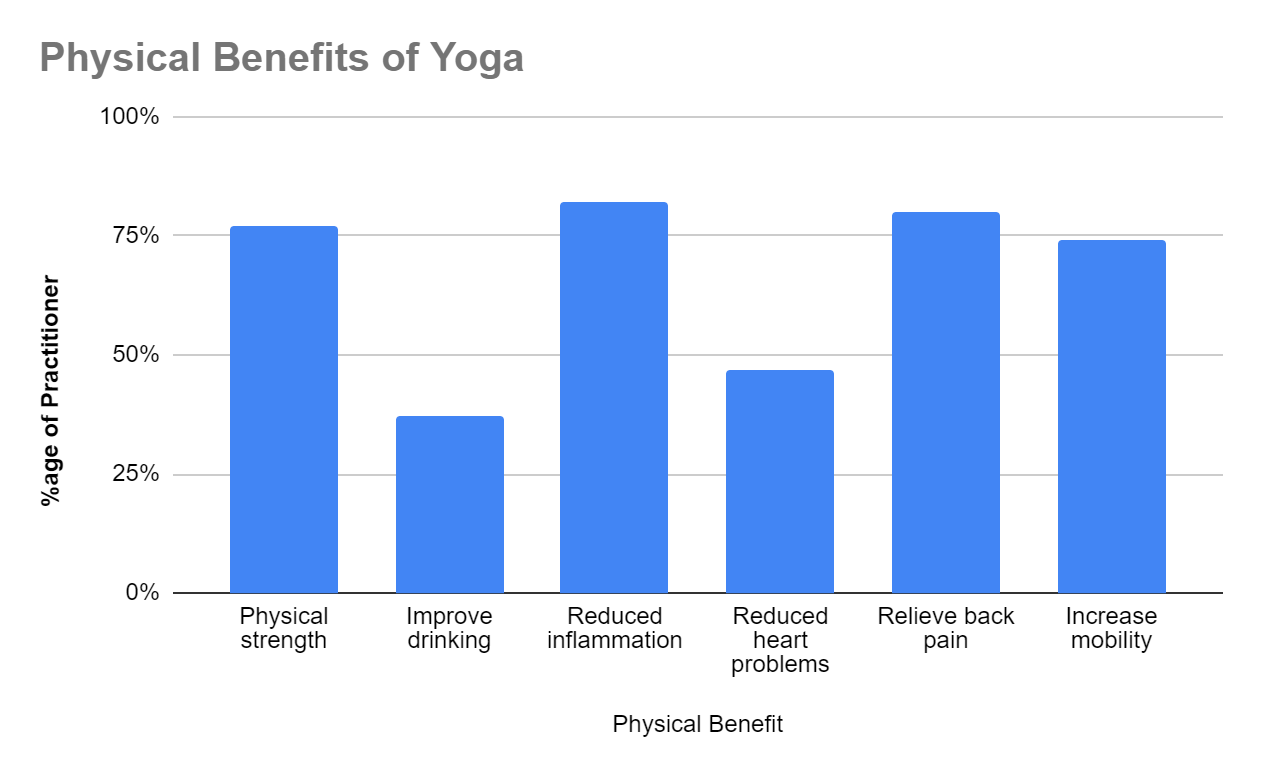
- 77% of practitioners surveyed reported stronger than most people.
- 82% of patients surveyed with chronic inflammation reduced inflammation by nearly half just by doing yoga daily for six weeks. 47% of the respondents who had heart problems showed no progression at all after practicing yoga regularly for one year.
- According to yoga enthusiasts, tips from others helped them to give up drinking and smoking.
- About 74% of adults with arthritis used yoga regularly, according to research carried out in Britain in 2018, as a means of alleviating pain and stiffness and improving mobility.
- In a year-long practice of yoga (12 months), it would lower levels of total cholesterol by 23%. Additionally, it would reduce LDL (‘bad’) cholesterol by 26%.
- A lot more than 80% of people practicing yoga and who have previously complained about lower back aches reported considerable relief from their symptoms.
Yoga Demographics and Adoption Statistics
- More than 300 million people practice yoga worldwide, including 36 million in the United States.
- Women make up 72% of practitioners, while men account for 28%.
- According to a report shared by Gitnux, 43% of practitioners are aged 30–49, while 21% of U.S. practitioners are 55+. Around 37% have children under 18 who also practice yoga.
- Nearly 44% practice yoga 2-3 times each week, and 67% prefer practicing at home.
- 90% recognize yoga’s mental health benefits, 86% report better mental clarity, 80% say it helps manage stress, and 59% experience improved sleep.
- More than 1 in 3 Americans have tried yoga, while 1 in 10 plan to start within the next year.
- 74% of U.S. practitioners have a university degree, and 56% consider themselves beginners.
- Yoga ranks as the 6th most popular fitness activity globally, with 75% practicing for fitness and flexibility.
- Around 14% of people in the UK practiced yoga during the last year, and 1.7 million U.S. children also participate.
- The average student spends about USD 90 per month on classes and equipment. High-income earners (USD 100k+) are 33% more likely to practice yoga.
- Yoga Alliance has over 100,000 registered teachers, 50% value studio communities, 40% follow yoga influencers, and 12.5% have practiced for more than 10 years.
Demographics of Yoga Instructors
(Source: yogajournal.com)
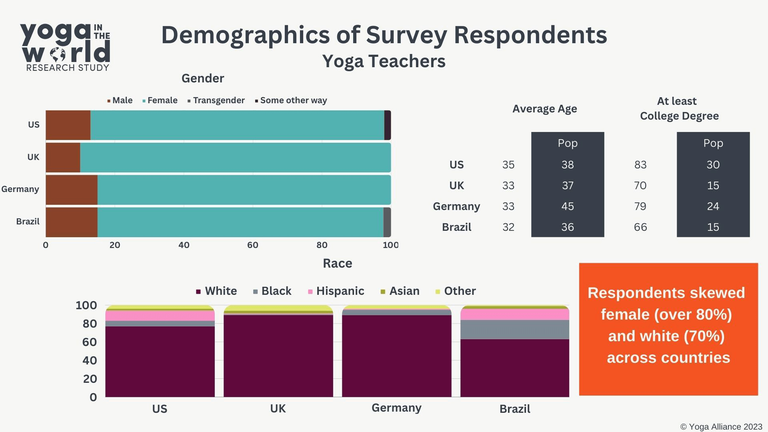
- The above yoga industry statistics show the global statistics of yoga teachers by gender, race, and age.
- Female instructors make a larger contribution, i.e., 80%, to teaching yoga than male instructors globally.
- The percentage is around 88 % in the UK, around 83% in the US, and around 81% in Germany and Brazil. 0 % of the teacher respondents identify as transgender.
- White people have the largest number of Yoga instructors, i.e., 70%, around the globe. The percentage who identify as Black, Hispanic, or Asian collapses to almost single digits.
- The average basic salary of yoga professionals in the United States is USD 30.46 per hour. Among the cities where yoga instructors are located, Orlando, Florida, has the highest wages.
- Florida pays an hourly rate of USD 47.12 for its instructors.
- San Francisco, California, took second place with an hourly pay of USD 42.84, and New York rounded out the top three with an hourly pay of USD 41.47.
- Meanwhile, those specializing in holistic health earn 93.07% more than average base pay rates; time managers earn 67.05% above their peers’ income on the ground.
- USD yoga teachers’ yearly salaries average around 41,000 dollars, which means that rather small groups make as little as 30k, while some other affluent few were reported to have made approximately 56k yearly.
- In the education sector, yoga instructors receive better pay than their colleagues in other industries; they have a yearly salary of USD 47,000.
- In contrast, hospitality industry speakers tend to have the lowest pay, at USD 36,000 annually. The average age of yoga trainers is 37.1.
By Where Yogis Practice Yoga
Yoga is a flexible practice, both physically and metaphorically, as it can be done almost anywhere. Whether you lay your yoga mat outside in your backyard once you have a moment away from your kids or you attend a professional yoga seminar on your days off, here are some interesting facts about where yogis practice yoga:
| Location | Percentage Who Do Yoga |
| Home | 67% |
| Gym | 43% |
| Yoga Studio |
38% |
|
Outdoors | 32% |
| Yoga or wellness festival |
20% |
|
Special event at a unique venue |
20% |
Key Reasons People Practice Yoga
(Reference: zippia.com)
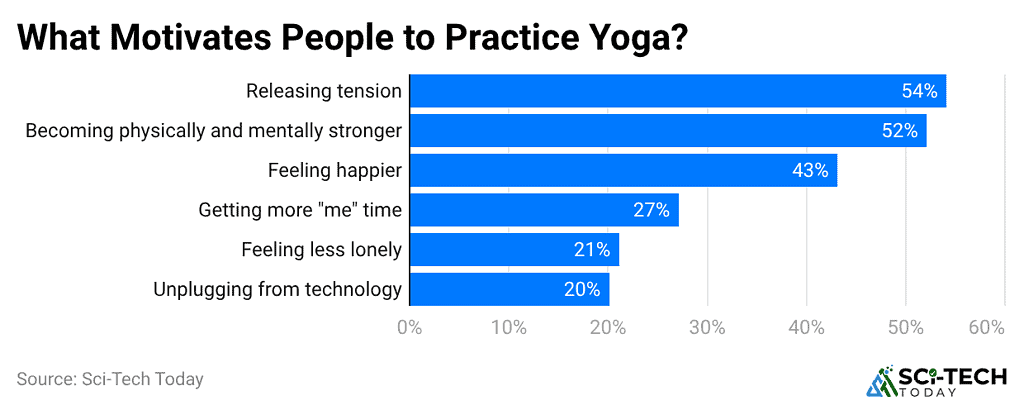
- 54% of people say they practice yoga mainly to release tension and reduce stress.
- 52% are motivated by becoming physically and mentally stronger through regular practice.
- 43% report that yoga helps them feel happier in daily life.
- 27% use yoga to gain more personal “me” time and space for themselves.
- 21% practice yoga to feel less lonely and more connected.
- 20% are driven by the need to unplug from technology and create offline time.
Key Yoga Retreat Statistics
(Source: yogitimes.com)
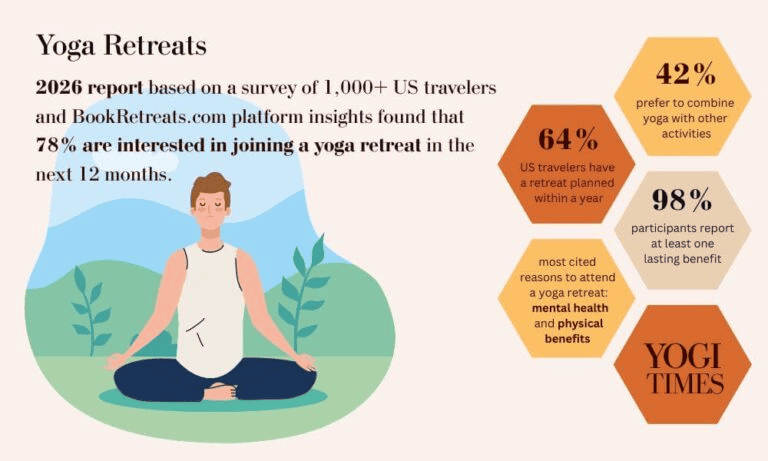
- 78% of survey participants said they are interested in joining a yoga retreat within the next 12 months, while 64% already have a retreat planned during that period.
- The global wellness travel industry now generates 207.5 million trips each year. In the U.S., wellness retreats lead consumer wellness spending, ahead of spas (45%), supplements (44%), gym memberships (36%), and therapy (34%).
- Around 65% of U.S. travelers want a retreat focused on a creative hobby or skill. In addition, 42% of people looking for yoga retreats prefer programs that combine yoga with creative or fitness activities.
- The main reasons for attending a yoga retreat include mental health benefits (56%), physical health benefits (48%), stress relief (43%), connecting with nature (58%), and building a sense of community (91%).
- Gen X is the largest group attending retreats, with 73% planning a retreat and 48% returning as repeat guests in 2026. Gen Z follows at 68%, while Millennials account for 66%.
Summary
The yoga industry is growing as more people focus on staying healthy and reducing stress. Rising interest in fitness, mental wellness, and preventive healthcare is increasing the demand for yoga classes, online sessions, clothing, and accessories.
New digital platforms and workplace wellness programs are making yoga easier to access. As awareness continues to grow worldwide, the yoga industry is expected to expand further, creating new opportunities for businesses, instructors, and wellness brands.
FAQ
As of 2026, more than 300 million people practice yoga worldwide.
Yoga is gaining popularity due to increasing health awareness, stress relief benefits, and accessible online fitness programs.
Yoga fuels the wellness economy through fitness, apparel, retreats, digital services, and preventive healthcare spending.